


If you’ve been flagged under Section 212(a)(6)(C)(i) of the Immigration and Nationality Act, you might be feeling confused, panicked—even devastated. This bar for willful misrepresentation or fraud can feel like a permanent red stamp on your American dream. And here’s the hard truth: without a waiver, it is permanent. ❌
But here’s the good news: here are options. ✅
Whether it was a misstep on a visa application, a misunderstanding during an interview, or something more serious—this isn’t the end of the road. Every year, individuals successfully overcome this harsh immigration bar through legal waivers, proving that even in the face of a fraud finding, redemption is possible. 💼
In this guide, we’ll break down what the 212(a)(6)(C)(i) bar actually means, how it gets applied, and—most importantly—how you can fight it. You’ll learn about waiver types, eligibility, how to prove “extreme hardship,” and what makes an application strong enough to win. 📄💪
Whether you’re stuck abroad or worried about being denied here in the U.S., this article will help you navigate a difficult road with more clarity and confidence. Let’s take the first step together—because hope starts with understanding. 🌟
⚖️ Who Is Eligible for a 212(i) Waiver?
Now that you know how serious the 212(a)(6)(C)(i) bar is, let’s talk solutions—specifically, the 212(i) waiver. This is your potential lifeline. But not everyone qualifies. ⚖️
The 212(i) waiver is designed for certain people who’ve been found inadmissible due to fraud or misrepresentation. But like everything in immigration law, eligibility comes with conditions.
Here’s who may qualify:
👨👩👧 Immediate Relatives of U.S. Citizens or Lawful Permanent Residents (LPRs)
This includes:
- Spouses
- Parents
- Children (under 21 and unmarried)
⚠️ Important: It’s not enough to just know someone who’s a U.S. citizen. You must be their qualifying relative under the law.
💔 You Must Show “Extreme Hardship”
This is the heart of your waiver application. To qualify, you need to prove that denying you entry (or status) would cause extreme hardship to your U.S. citizen or LPR spouse or parent—not to you, but to them.
It’s not about missing each other. It’s deeper than that. Think:
- Serious health issues
- Financial collapse
- Dangerous country conditions
- Psychological distress
Simply being separated isn’t enough. You need strong evidence.
❌ Who’s NOT Eligible?
Unfortunately, not everyone can apply:
- If your only qualifying relative is your U.S. citizen child, you do not qualify for this waiver.
- If you’re applying for a visa that doesn’t allow for a waiver (some employment-based or diversity visa categories), this route may not work either.
📝 What If You’re a Nonimmigrant?
There’s a different process for temporary visas, like tourists or students. That’s the 212(d)(3) waiver, which we’ll cover later. But if you’re aiming for a green card? The 212(i) is what you need.
In short: if you’re the spouse, parent, or child of a U.S. citizen or green card holder—and you can prove extreme hardship—you might have a shot at clearing your name. 💡
Up next: how to actually file the 212(i) waiver and what to include to make it strong.
📄 How to File a 212(i) Waiver
Alright, so you’ve confirmed you’re eligible for a 212(i) waiver—now comes the action part: filing it. This isn’t just about filling out a form and hoping for the best. It’s about building a well-documented, emotional, and legally sound case. 🧩
Let’s walk through the process step by step.
📝 Step 1: Complete Form I-601
This is the official “Application for Waiver of Grounds of Inadmissibility”. You’ll submit this form to USCIS, typically after receiving a denial notice or along with your immigration application (like Form I-485 or immigrant visa processing through the NVC).
What to include:
- Filing fee (currently $930 as of 2025—always check latest fee)
- Copy of your inadmissibility notice
- Proof of relationship to the qualifying U.S. citizen or LPR relative
- Evidence of extreme hardship
📚 Step 2: Gather Strong Supporting Documents
This is where most of your effort should go. Think quality and quantity.
Include:
- Detailed hardship letter from the qualifying relative describing emotional, financial, or medical hardship
- Medical records if the relative is sick or needs care
- Psychological evaluations (very helpful!)
- Affidavits from family, friends, clergy, or community members
- Proof of income loss, debt, housing instability, or danger in your home country
- Any country condition reports (for example, U.S. State Department or human rights reports)
🧠 Tip: Don’t just say “my wife will be sad if I’m not there.” Show how her life will unravel—mentally, emotionally, financially—without you.
👨⚖️ Step 3: Consider Legal Representation
While it’s not required to have a lawyer, a good immigration attorney can make or break your case. They know how to:
- Write persuasive legal briefs
- Address weak points in your case
- Anticipate USCIS concerns
- File the waiver properly with correct formatting
If money is tight, look into legal clinics or nonprofit organizations that offer help.
⏳ Step 4: Wait for a Decision
USCIS processing times can vary, but expect to wait 6 to 12 months, sometimes longer. You might receive a Request for Evidence (RFE)—don’t panic, it’s common. Just respond fully and promptly.
Bottom line: Filing a 212(i) waiver is a lot of work, but it’s doable—especially when you bring honesty, vulnerability, and solid evidence to the table. 💪
Up next, we’ll break down what “extreme hardship” really means and how to prove it the smart way. 💔📊
Let me know when you’re ready!
Here’s the next section under the H2:
💔 Proving Extreme Hardship

Now this is the heart and soul of your 212(i) waiver—proving extreme hardship to your qualifying U.S. citizen or lawful permanent resident relative. And let’s be honest: it’s not easy. USCIS sets the bar high, and just being separated or feeling sad doesn’t cut it. You’ve got to dig deeper. 🪄
So… what actually is extreme hardship?
🎯 It’s More Than Just Missing You
Extreme hardship goes beyond the normal pain of separation. USCIS wants to see that your relative will suffer in ways that are truly severe if you’re denied admission. The key is showing that their life would be significantly worse in either of these two scenarios:
- If they stay in the U.S. without you
- If they follow you to your home country
🧾 What Kinds of Hardship Count?
Here’s where your evidence needs to shine. Some strong areas include:
💸 Financial Hardship
- Your spouse can’t cover basic living expenses without your income
- They would lose their home, job, or healthcare
- You support extended family or special needs children
🧠 Psychological/Emotional Hardship
- Your relative suffers from anxiety, depression, PTSD, or trauma
- Your separation would worsen a mental health condition
- Expert psychological evaluations are a huge plus here
🏥 Medical Hardship
- Your qualifying relative has a serious illness and relies on you for caregiving or emotional support
- Treatment isn’t available or safe in your home country
- You’re their only caregiver or financial provider for medical needs
🌍 Country Conditions
- Your home country is experiencing war, violence, or severe economic crisis
- Healthcare, education, or civil rights are lacking or unsafe
- Relocating would expose your relative to harm or a drastically reduced quality of life
💼 USCIS Looks at the Whole Picture
They’ll weigh the evidence cumulatively, meaning each piece adds up. So even if one type of hardship isn’t severe alone, together they may tip the scales in your favor. 📊
📌 Pro Tips:
- Use real-life examples, not vague statements. Instead of “my wife needs me,” write “My wife has lupus and depends on me to drive her to weekly treatments.”
- Get professional letters—from doctors, therapists, employers, even your child’s school.
- Paint a human story. Let them feel the pain, not just read about it.
If you remember one thing, it’s this: the stronger and more specific your hardship case is, the better your chances of waiver approval. This is your chance to tell USCIS why your family can’t function without you.
Up next: “Nonimmigrant Waivers for Temporary Travel” 🌍✈️
Let me know when you’re ready!
Here’s the next full section under the H2:
🌍 Nonimmigrant Waivers for Temporary Travel
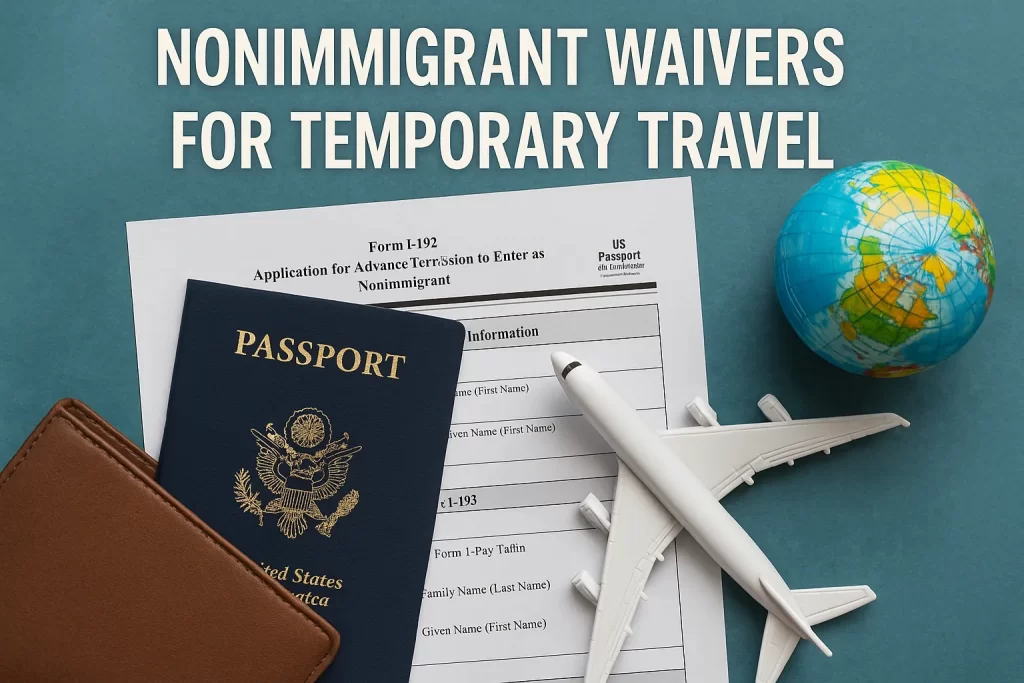
Let’s say you’re not applying for a green card—you just want to visit the U.S. Maybe for a family emergency, a business trip, or even a conference. But the 212(a)(6)(C)(i) bar is still hanging over your head. The good news? You might still have a way in—with a nonimmigrant waiver under Section 212(d)(3). ✈️
This waiver is your best shot at temporary entry even after being found inadmissible.
🛂 What Is the 212(d)(3) Waiver?
This is a discretionary waiver that allows people who are otherwise inadmissible (like for fraud or misrepresentation) to enter the U.S. temporarily—for things like tourism, study, business, or medical treatment.
Unlike the 212(i) waiver, this one:
- Doesn’t require a qualifying relative
- Doesn’t require a showing of extreme hardship
- Applies to most nonimmigrant visas (B1/B2, F1, J1, etc.)
But it’s still up to the U.S. government to say yes or no.
📌 Who Reviews It?
Here’s how it works:
- You apply for your visa at a U.S. consulate
- The consular officer finds you inadmissible under 212(a)(6)(C)(i)
- They recommend you for a waiver and forward your case to CBP’s Admissibility Review Office (ARO)
So yes, two government agencies are involved—DOS and CBP.
🧾 What Do You Need to Show?
You don’t need a relative or hardship—but you do need to convince them of three things:
- Your purpose of travel is legitimate and temporary
- You pose no threat to the U.S.
- Granting the waiver is in the national interest or not against public policy
📂 Supporting documents may include:
- A letter explaining your situation and travel reason
- Invitation letters, hotel reservations, or conference info
- Proof that you’ll return home (job, family ties, property)
⏳ How Long Does It Take?
Timing varies, but typically:
- The consulate sends your case to CBP
- ARO may take 60 to 120 days to decide
- If approved, your visa is issued with a special annotation
🧠 Tip: These waivers are discretionary, so the more organized, respectful, and clear your application, the better.
So if you’ve got urgent reasons to visit and can present a clean, compelling case, the 212(d)(3) waiver could open that door—at least temporarily. 🚪
🔍 Strategies to Strengthen Your Waiver Application
If you’re applying for a 212(i) or 212(d)(3) waiver, one thing is clear: your case needs to stand out. Immigration officers see thousands of applications—and many get denied simply because they’re thin, inconsistent, or lack human depth. So how do you make yours shine? ✨
Here are tried-and-true strategies to help you build a powerful, persuasive waiver application.
💼 1. Tell a Clear, Honest, and Human Story
Your application should read like a journey—not just a legal argument. Tell the officer:
- What happened
- Why it happened
- What you’ve learned
- Why you deserve a second chance
✅ Acknowledge your mistake. Show growth, regret, and awareness. Arrogance or denial rarely works in your favor.
📑 2. Use Professional Documentation
Strong evidence doesn’t just support your claims—it proves them.
Include:
- Medical reports, translated and notarized
- Psychological evaluations detailing your relative’s emotional or mental health
- Expert letters from therapists, doctors, employers, or teachers
- Affidavits from family, neighbors, religious leaders—anyone who can vouch for your character and the hardship your absence causes
🧠 Tip: Include country reports (from sources like the U.S. State Department or Human Rights Watch) if your home country is unsafe or lacks resources.
💸 3. Provide a Solid Financial Picture
Show what’s at stake financially for your qualifying relative:
- Rent/mortgage payments
- Debt, insurance, childcare, school fees
- Pay stubs, tax returns, or bank statements
Even better: use charts or summaries to explain how your absence would collapse your family’s finances.
🧠 4. Hire a Skilled Immigration Attorney (If Possible)
Let’s face it—immigration law is complex. A strong legal brief from an attorney can:
- Frame your waiver within past case law
- Argue that your hardship meets the legal threshold
- Preemptively address any weak points or red flags
If hiring a lawyer is out of reach, look for legal aid clinics or immigration nonprofits that offer pro bono help.
🎯 5. Be Thorough—but Organized
A messy, disorganized file can get overlooked or misread. Use a cover letter and table of contents, clearly label all exhibits, and make it easy for the officer to find your strongest evidence fast.
🧠 Think of it like a courtroom. You’re not just applying—you’re making a case.
Bottom line? Show you’re more than your mistake. Build your waiver around truth, evidence, and compassion, and you’ll give USCIS or CBP a reason to say yes. 🙏
Coming up: “What If Your Waiver Gets Denied?” 😞
Let me know when you’re ready to keep going.
Great! Here’s the next section under the H2:
🔁 What If Your Waiver Gets Denied?
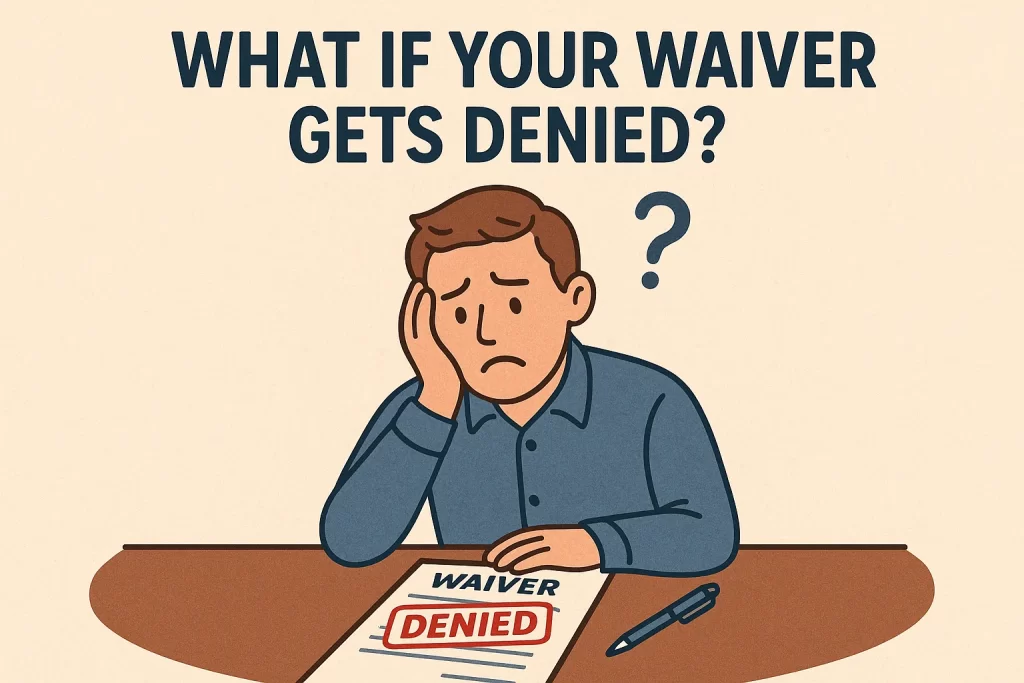
So you went through the emotional labor, the paperwork, the waiting—and still got a denial. 💔 It feels like the floor dropped out from under you. But take a deep breath. A denial doesn’t always mean the end. It just means it’s time for a smarter next move.
Let’s walk through your options if your 212(i) or 212(d)(3) waiver gets denied.
🧾 1. Understand the Reason for Denial
First thing: read the denial notice carefully. USCIS or CBP usually explains why the waiver was denied. It could be:
- Not enough evidence of extreme hardship
- Inconsistencies in your story
- Lack of remorse or acknowledgment of wrongdoing
- Weak documentation
This is gold—because now you know where to improve.
🔄 2. Reapply with a Stronger Case
Yes, you can reapply. There’s no lifetime ban on requesting a waiver again. But don’t just resubmit the same thing.
Improve by:
- Adding stronger evidence (especially new or updated documents)
- Including expert evaluations or third-party support
- Addressing specific reasons for denial head-on in your new cover letter or legal brief
⚠️ Tip: Wait for a reasonable time and gather new circumstances or facts to make your reapplication more persuasive.
📢 3. Consider Filing a Motion or Appeal
Depending on the situation, you may be able to:
- File a Motion to Reopen (if new evidence exists)
- File a Motion to Reconsider (if you believe USCIS misapplied the law)
- Appeal to the Administrative Appeals Office (AAO)
These options are complex and best handled with the help of an immigration attorney. They often involve strict deadlines—usually 30 days from the denial date.
🧠 4. Consult a Legal Professional
After a denial, it’s more important than ever to seek legal guidance. A seasoned immigration attorney can:
- Evaluate the strength of your case
- Suggest alternative strategies (like pursuing a different type of visa or waiver)
- Help you explore litigation if there was an error in the decision
Don’t navigate the next steps alone. Even one consultation could open a new door.
🙌 5. Don’t Lose Hope
We’ve seen clients get denied once, twice—even three times—before finally succeeding. Your story isn’t over. Every denial is feedback. Every step forward is a chance to grow your case and your courage.
Bottom line? A waiver denial is heartbreaking—but it’s not final. With time, strategy, and the right support, you can regroup and try again. 💪
🌟 Conclusion: There Is a Way Forward
Getting hit with a 212(a)(6)(C)(i) misrepresentation or fraud bar feels like your world is crashing down. Whether it was a misunderstood form, a bad piece of advice, or a past mistake—you’re now facing one of the most severe bars in U.S. immigration law. But you know what? You’re not alone. And more importantly—you’re not out of options. ✊
We’ve walked through everything:
- What the bar really means (and how it’s triggered)
- What happens if you’re found inadmissible
- Who qualifies for a 212(i) waiver
- How to file it with strength, strategy, and heart
- What counts as “extreme hardship” and how to prove it
- How nonimmigrant waivers (212(d)(3)) offer temporary hope
- And what to do if your first shot doesn’t succeed
The immigration process is hard. It’s heavy. But it also leaves space for second chances—for people who are honest, thorough, and willing to fight for their future. 🇺🇸
So here’s your next step:
📂 Gather your documents.
🧠 Get informed.
💬 Talk to a qualified immigration attorney.
And most importantly—don’t give up.
Because yes, the bar is real. But with the right waiver and a strong case, you just might clear it.Absolutely! Here’s a clean, organized list of further readings and helpful links that you can include at the bottom of your blog post. These are credible, government or legal resources related to the 212(a)(6)(C)(i) misrepresentation or fraud bar and waiver options.
📚 Further Reading & Helpful Resources
🏛️ Official Government Resources
- USCIS – Form I-601: Application for Waiver of Grounds of Inadmissibility
Learn about the form, instructions, fees, and how to file a 212(i) waiver.
- USCIS Policy Manual – Chapter on Inadmissibility due to Fraud or Misrepresentation
Detailed explanation of how USCIS evaluates fraud and misrepresentation findings.
- Department of State – Visa Denials
Information on why visas are denied, including inadmissibility under 212(a)(6)(C)(i).
- U.S. Customs and Border Protection (CBP) – Admissibility Review Office
Where consular officers send 212(d)(3) waiver requests for review.
⚖️ Legal Guides & Nonprofits
- AILA – American Immigration Lawyers Association
Find expert immigration attorneys and stay updated on waiver-related news.
- Immigrant Legal Resource Center (ILRC)
Community-focused guides and toolkits about waivers and inadmissibility.
- Catholic Legal Immigration Network (CLINIC)
Trusted legal aid nonprofit offering waiver guides and attorney support.
📄 Case Law & Analysis
- BIA and AAO Case Summaries on Waivers
Dig into decisions from immigration courts and appeals to understand trends.
- Nolo: Waiver of Inadmissibility for Immigration
Plain-English explanation of waivers and qualifying hardship examples.
🧠 FOIA Requests (to Access Your Immigration File)
- USCIS FOIA Request Page
File a request to view your complete USCIS record (especially helpful if you’re unsure why you were found inadmissible).