Author: Hasan Abdullah, Esq.
Edited: 22nd of September 2026
Asylum examples can help explain what makes one claim potentially stronger than another, but no single story or checklist determines whether someone qualifies for asylum. U.S. asylum law looks closely at what happened, why the person was targeted, who caused the harm, whether protection was realistically available, and whether the applicant meets the other legal requirements.
To qualify for asylum, an applicant generally must show past persecution or a well-founded fear of future persecution because of race, religion, nationality, political opinion, or membership in a particular social group. The protected ground must be connected to the persecution; serious danger by itself does not always establish an asylum claim.
That distinction is why two people who have experienced serious threats can face very different legal analyses. A person targeted by government authorities because of political activity may present a different asylum issue from a business owner threatened primarily for money. A compelling persecution claim can also face separate problems involving evidence, credibility, internal relocation, or the one-year filing deadline.
American Visa Law Group assists individuals evaluating asylum and humanitarian immigration options, including cases involving political, religious, social-group, and other forms of alleged persecution. The strength of a claim depends on the complete factual and procedural record, not simply whether it resembles another applicant’s case.
The five asylum examples below are fictional scenarios created for educational purposes. They are not AVLG client stories and do not predict how USCIS or an immigration judge would decide any particular case.
Instead, each example highlights a different legal issue: a potentially strong protected-ground connection, private-actor persecution, weak nexus, a filing-deadline problem, and other facts that can materially change an asylum analysis.
A stronger asylum case usually does more than show that someone experienced danger or hardship. The facts generally need to show serious harm, a connection to a protected ground, and a reasonable fear of persecution if the person returns home.
Under U.S. asylum law, the protected grounds are race, religion, nationality, political opinion, and membership in a particular social group. The Executive Office for Immigration Review’s asylum guidance explains the basic legal framework.
One of the most important questions is why the person was targeted. This connection is known as nexus.
For example, someone threatened because of political activity may have a clearer protected-ground connection than someone targeted primarily for money. Both situations may involve serious danger, but asylum law does not treat every type of harm the same way.
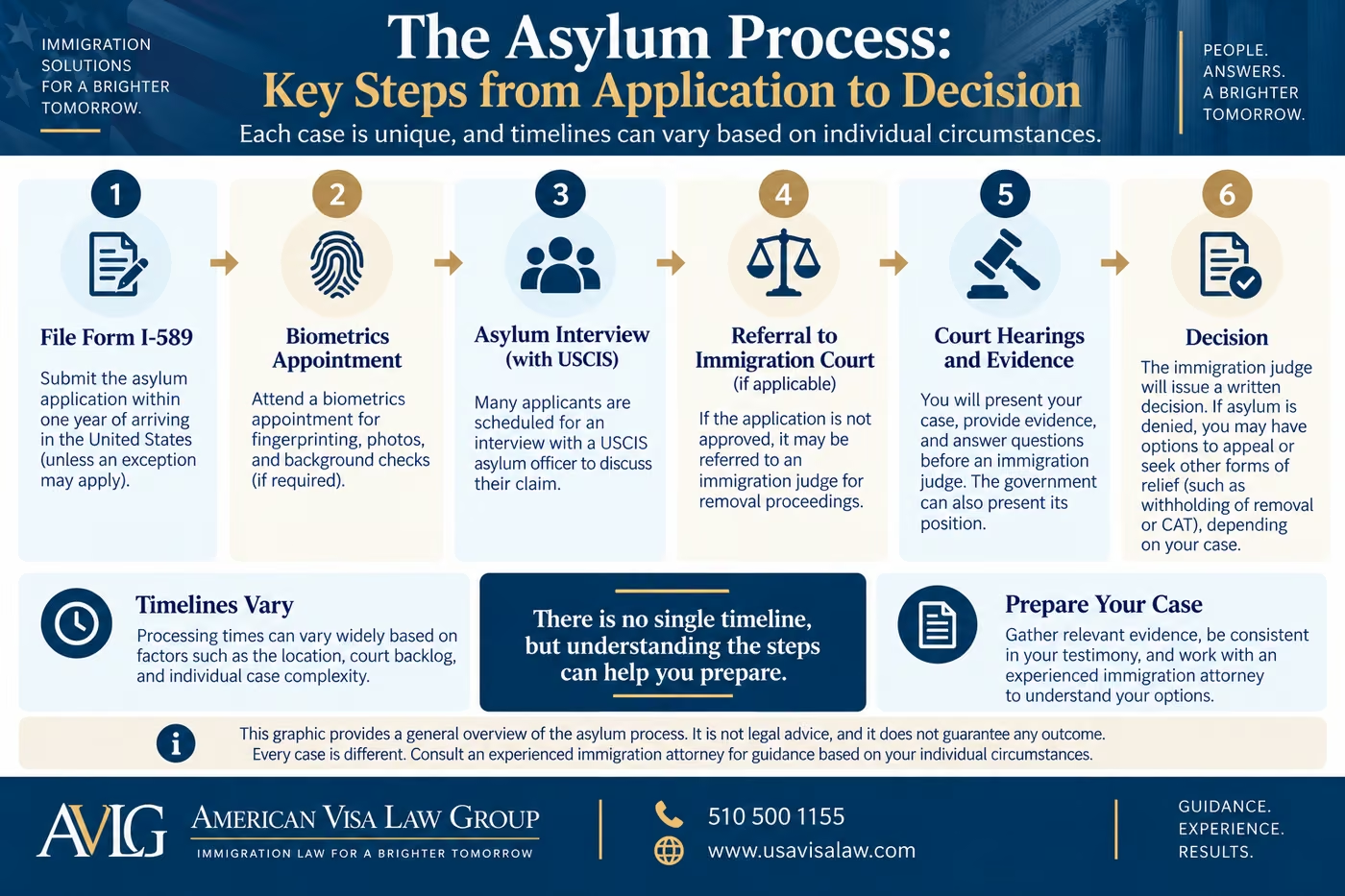
USCIS’s guidance on nexus and protected grounds focuses on the persecutor’s motive and whether a protected ground was a central reason for the harm.
Another important issue is who caused the persecution. Harm may come directly from government authorities, but private actors can also be relevant when the government is unable or unwilling to provide meaningful protection.
Finally, adjudicators may consider whether the applicant would still face danger in the future, whether conditions in the country have changed, and whether safe relocation elsewhere in the country is reasonably possible.
A case can also have strong persecution facts but still face separate problems involving the one-year filing deadline, credibility, evidence, or other asylum bars.
This is why asylum claims should not be judged only by how serious or emotional the story sounds. The legal analysis looks at how the facts fit together.
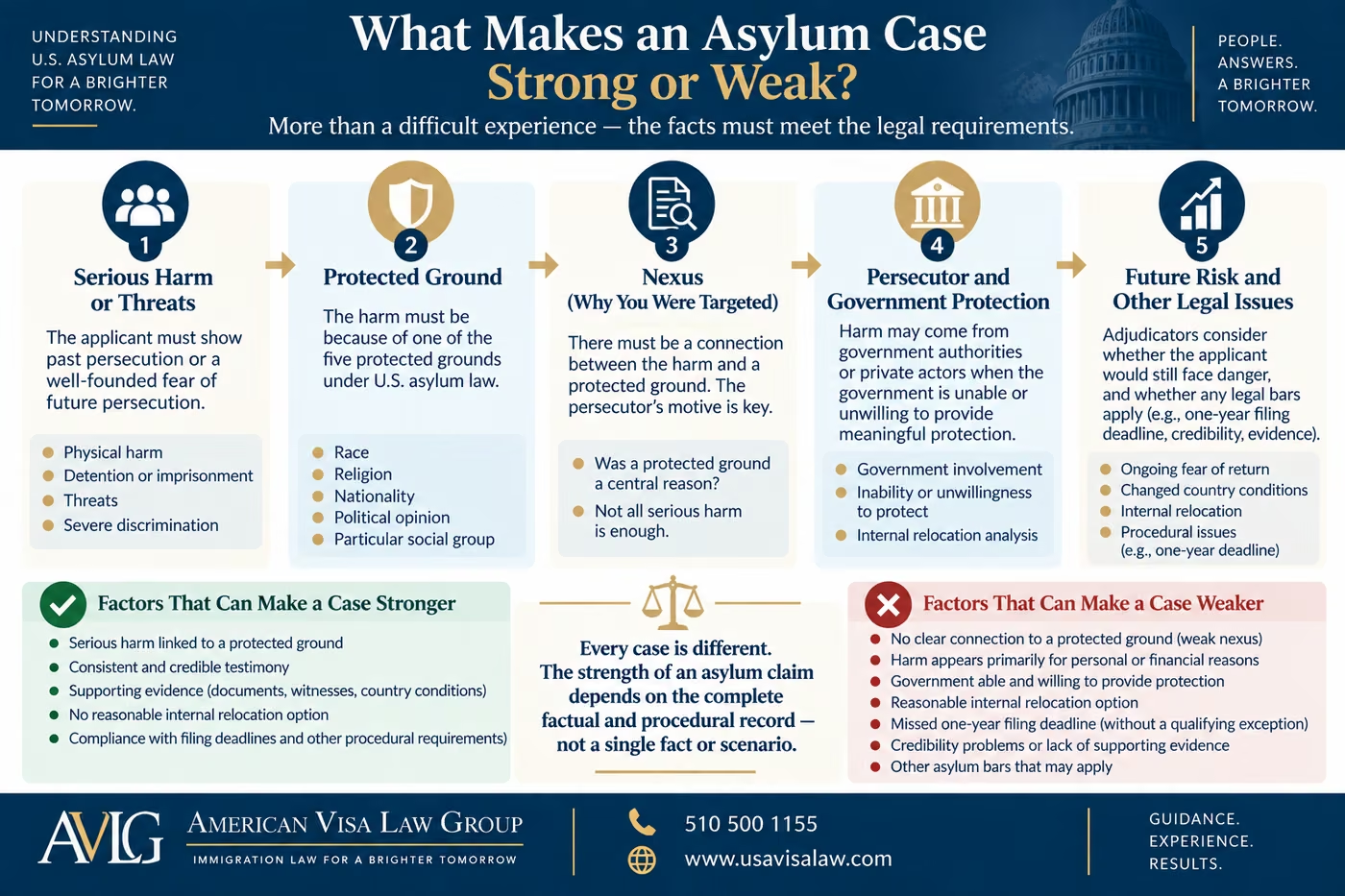
Readers who want to understand how these requirements may apply to their own circumstances can learn more about AVLG’s asylum and humanitarian immigration services.
Consider a hypothetical applicant who belongs to a religious minority in their home country. Local authorities repeatedly question the person about attending religious services, briefly detain them after a gathering, threaten further punishment if they continue practicing their faith, and interfere with the group’s ability to worship.
The applicant later leaves the country after learning that other members of the same religious community have also been detained.
These facts could present a potentially stronger asylum claim because religion is one of the five protected grounds under U.S. asylum law, and the alleged persecutor is the government itself. The Executive Office for Immigration Review’s asylum guidance recognizes religion as a protected ground and explains that persecution may include serious threats, detention, violence, or other severe harm.
The important issue is not simply that the applicant had a disagreement with government officials. The evidence would need to support the conclusion that the authorities targeted the person because of their religious beliefs or practices.
That connection between the harm and the protected ground is critical.
The case may become more persuasive if the applicant can provide consistent testimony along with evidence such as detention records, threatening messages, medical records, witness statements, proof of religious participation, or credible country-condition reports showing similar treatment of members of the same faith.
Country conditions can also help place an applicant’s individual experience in context. If reliable reports show continuing government restrictions, arrests, or violence against the same religious community, that evidence may support the applicant’s claim that the danger would continue after returning home.
At the same time, religious identity alone does not automatically establish asylum eligibility. Adjudicators may still examine the severity of the harm, credibility, future risk, internal relocation, timing, and other eligibility requirements.
The practical lesson from this asylum example is that a potentially strong claim usually involves more than evidence that an applicant belongs to a religious minority. The stronger connection is between the applicant’s religion, serious targeted harm, the persecutor’s motive, and a credible risk of future persecution.
Readers evaluating similar circumstances can also review AVLG’s asylum and humanitarian immigration services for information about individualized asylum case analysis.
Consider a hypothetical university student who regularly participates in peaceful anti-government demonstrations. After appearing at several protests, the student is identified by authorities, questioned about political activity, and warned to stop criticizing the government.
The student continues participating. Soon afterward, officials detain and physically mistreat them, and later send threats referencing their involvement with the opposition movement. Other activists from the same group are also arrested.
These facts may support a potentially stronger political-opinion asylum claim because the alleged harm appears connected to the applicant’s political activity rather than simply to general instability in the country.
Political opinion is one of the protected grounds under U.S. asylum law. The Executive Office for Immigration Review’s asylum guidance explains that an applicant must connect the persecution or feared persecution to a protected ground such as political opinion.
The key issue is motive.
If government officials specifically mention the applicant’s protests, opposition activity, public statements, or perceived political beliefs while threatening or harming them, that can help establish the required connection between the persecution and political opinion.
By contrast, simply living in a country experiencing demonstrations, political violence, or civil unrest does not automatically establish asylum eligibility. The applicant would still need to show why they personally were targeted.
Evidence could include protest photographs, political membership records, social-media activity, threatening messages, arrest or detention documents, witness statements, and credible reports showing how authorities treat similar activists.
The EOIR precedent guidance on political opinion and nexus also reflects an important distinction: retaliation may support an asylum claim when the evidence shows that an actual or perceived political opinion was a central reason for the harm.
The practical lesson from this asylum example is that political unrest and political persecution are not the same thing. A stronger claim usually includes evidence showing that the persecutor knew or believed the applicant held a particular political opinion and targeted the applicant because of it.
Consider a hypothetical applicant who is repeatedly threatened and assaulted by a private group because of a protected characteristic or an asserted particular social group.
The applicant reports the threats to local police several times. Officers refuse to investigate, dismiss the complaints, or tell the applicant that nothing can be done. The threats continue, and the applicant eventually leaves the country.
This type of case can potentially support asylum even though the persecutor is not a government official.
The key question is whether the government is unable or unwilling to provide meaningful protection. Current EOIR asylum guidance recognizes that persecution may come from private individuals when the home government cannot or will not control them.
But one unsuccessful police report does not automatically prove that the government cannot protect someone. Adjudicators may look at the broader record: whether authorities investigated, whether perpetrators were prosecuted, whether officials ignored repeated complaints, and whether similar victims routinely receive meaningful protection.
The applicant would also still need to establish a connection between the harm and a protected ground. That can become especially important when the case involves membership in a particular social group, because the proposed group and the persecutor’s motive may require careful legal analysis.
Useful evidence could include police reports, unanswered complaints, court documents, threatening messages, witness statements, and credible country-condition evidence showing how authorities respond to similar cases.
A recent 2026 BIA decision also illustrates the point that private violence alone is not enough when the record shows meaningful government efforts to investigate or protect the victim.
The practical lesson from this asylum example is that private-actor harm can support asylum, but the case usually depends on more than proving the harm occurred. The applicant may also need to show a protected-ground nexus and why meaningful government protection was not realistically available.
Consider a hypothetical business owner who receives repeated threats from a criminal group demanding money. The threats become serious, and the owner reasonably fears violence if payment stops.
The danger may be very real. But the asylum analysis does not end there.
A central question is why the person was targeted.
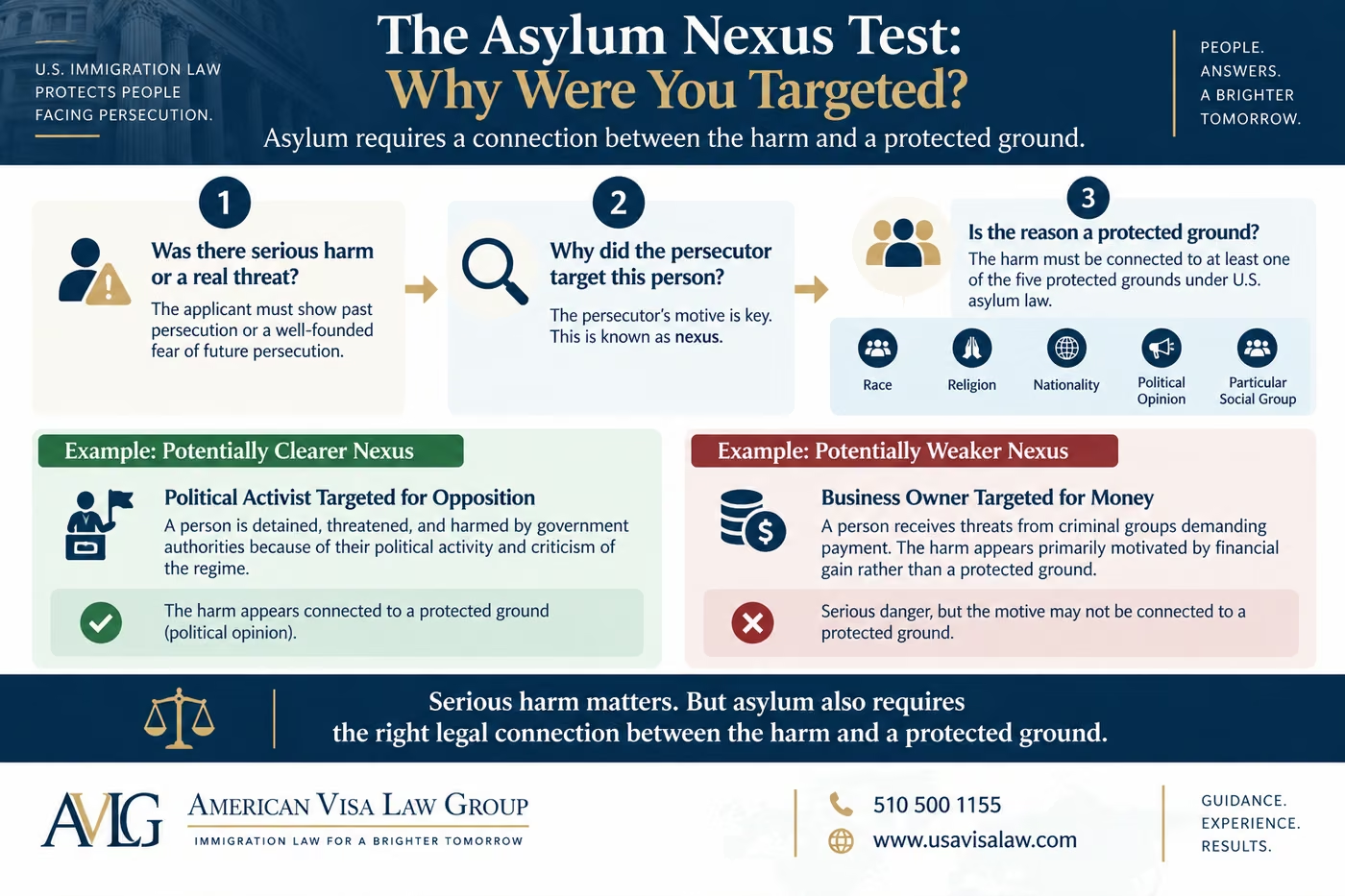
If the criminals are threatening many local business owners primarily because they believe those businesses can pay, the case may have a weaker asylum nexus. U.S. asylum law generally requires the persecution to be connected to race, religion, nationality, political opinion, or membership in a particular social group.
The USCIS guidance on nexus and protected grounds specifically recognizes that economic motives such as extortion do not automatically establish the required protected-ground connection. At the same time, an economic motive does not necessarily end the analysis if evidence shows that the persecutor also selected the applicant because of a protected characteristic.
For example, the legal analysis could change if the criminal group targeted the applicant because of an actual or perceived political opinion, family relationship, religion, ethnicity, or another legally recognized protected ground.
The Board of Immigration Appeals has likewise distinguished ordinary criminal extortion from persecution where the evidence does not show that the threats were motivated by the applicant’s political opinion or another protected ground.
Evidence of serious threats, police reports, witness statements, and country conditions may still be important. But those documents must help establish the legal elements of the claim, not simply prove that crime occurred.
The practical lesson from this asylum example is that serious danger and asylum eligibility are not always the same thing. A criminal extortion case may become stronger or weaker depending on the persecutor’s motive, the asserted protected ground, government protection, and the full factual record.
Consider a hypothetical applicant who was detained and beaten because of political activity, received repeated threats, and has credible evidence supporting the claim. The facts may strongly support persecution and a protected-ground nexus.
But there is another problem: the applicant waits more than one year after arriving in the United States before filing for asylum.
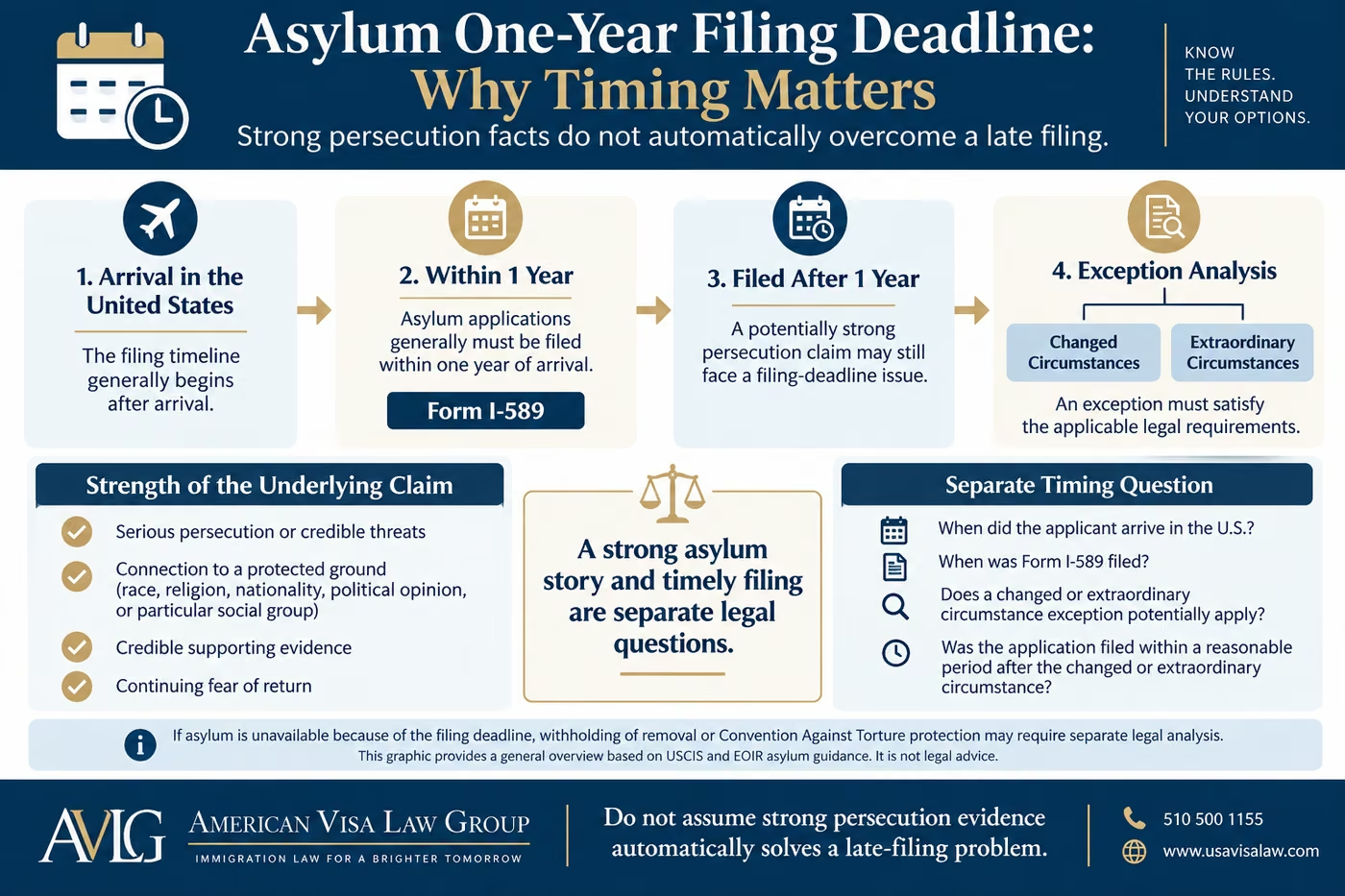
U.S. asylum law generally requires an application to be filed within one year of arrival, unless an exception applies. The EOIR asylum filing guidance explains this deadline and recognizes limited exceptions for changed or extraordinary circumstances.
This means a strong persecution story does not automatically overcome a late filing.
For example, a changed circumstance may materially affect someone’s asylum eligibility, while an extraordinary circumstance may help explain why the application could not reasonably be filed during the first year. Even when an exception exists, the timing of the later filing can still matter. USCIS’s one-year filing deadline guidance discusses these issues in more detail.
A 2026 Board of Immigration Appeals decision also emphasized that changed country conditions alone do not automatically solve the filing problem. The applicant still must show that the change materially affected asylum eligibility and that the application was filed within a reasonable period under the circumstances.
If asylum is ultimately time-barred, other forms of protection such as withholding of removal or protection under the Convention Against Torture may still require separate analysis, but those forms of relief follow different legal standards.
The practical lesson from this asylum example is simple: a case can have compelling persecution facts and still face a serious procedural obstacle. Timing should therefore be evaluated separately from the strength of the underlying persecution claim.
A fabricated asylum claim is not simply a “weak” case. It can create a separate and much more serious legal problem.
For example, imagine an applicant who is advised to invent political activity, exaggerate past harm, submit false documents, or memorize events that never happened. Even if the story appears detailed, deliberately fabricating a material part of an asylum application can have severe immigration consequences.
The Board of Immigration Appeals’ guidance on frivolous asylum applications explains that a frivolous finding requires more than an ordinary credibility concern. The decision-maker must specifically find that the applicant knowingly filed an application containing a deliberately fabricated material element, after the applicant has received the required warning and had an opportunity to explain relevant discrepancies.
A formal frivolous-asylum finding can result in permanent ineligibility for immigration benefits under the Immigration and Nationality Act, although other forms of protection such as withholding of removal may still require separate analysis.
This distinction matters.
An applicant may give inconsistent dates, remember events differently over time, misunderstand a question, experience translation problems, or submit a document that later raises concerns. Those issues can affect credibility, but they are not automatically the same as intentionally fabricating a material part of the claim.
That is why asylum adjudicators must distinguish between credibility problems and deliberate fabrication. BIA precedent requires a separate analysis before a frivolous application finding can be made.
The practical lesson is straightforward: applicants should never invent facts or evidence to make an asylum case appear stronger. A truthful case with legal weaknesses can be evaluated honestly. Deliberate fabrication can create consequences far beyond the denial of the asylum application.
The five scenarios above show why asylum cases cannot be evaluated based on hardship alone. A stronger factual pattern generally connects serious harm to a protected ground, while other claims may face problems involving nexus, government protection, evidence, or filing deadlines.
The USCIS guidance on nexus and protected grounds emphasizes that the reason for the persecution is a central part of the analysis.
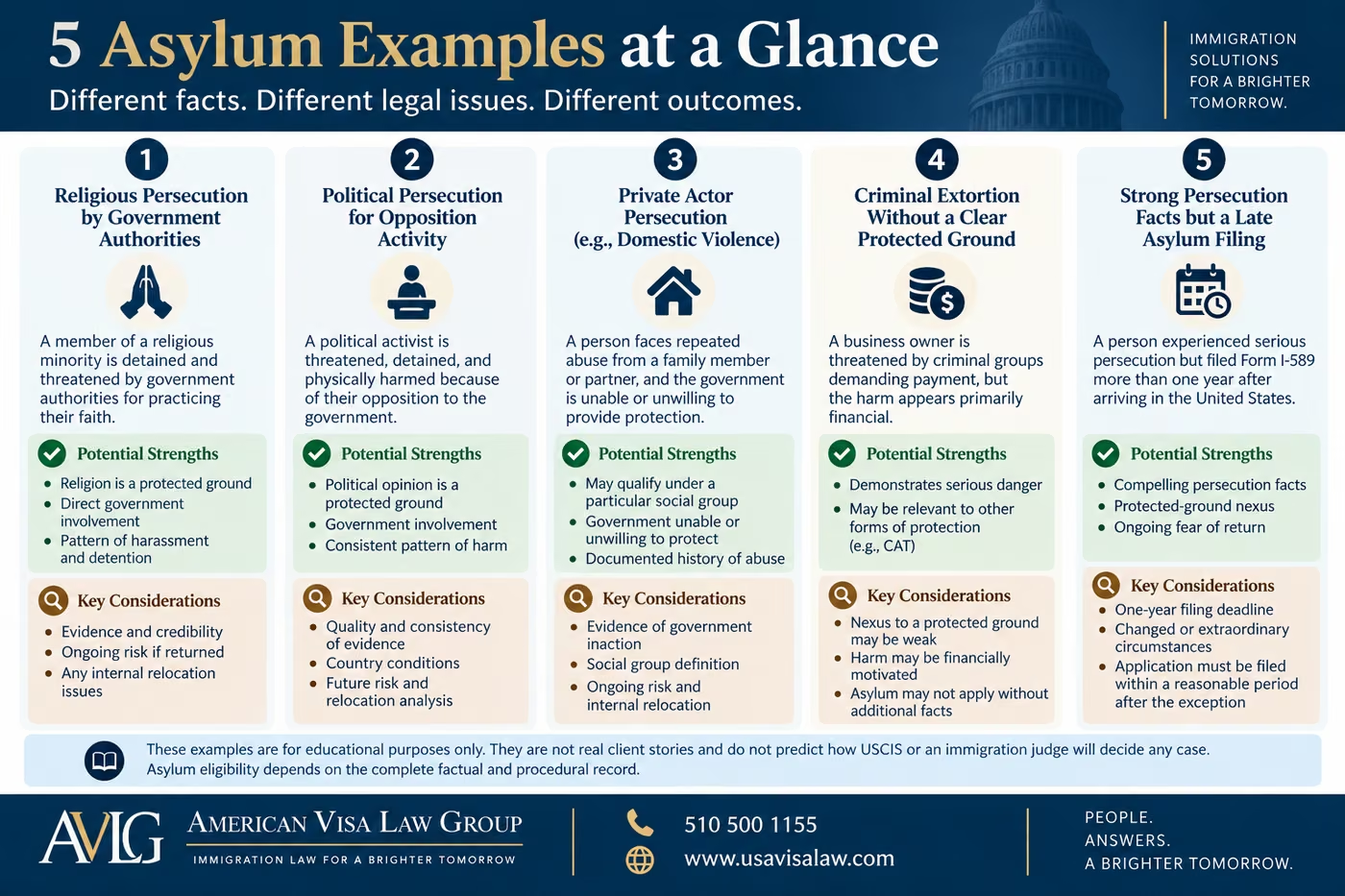
The five asylum examples above show how different facts can change the legal analysis of a claim. Some scenarios may present a clearer connection to a protected ground, while others may face important problems involving nexus, government protection, credibility, or the one-year filing deadline.
The table below compares each fictional scenario side by side, highlighting the main legal issue, potential strength, and principal concern that could affect how an asylum claim is evaluated. It is meant as a practical summary, not a prediction of how USCIS or an immigration judge would decide any individual case.
The key lesson is that there is rarely one fact that makes an asylum claim “strong” or “weak.” The legal analysis looks at how the facts work together.
A claim involving severe persecution may still have a nexus or timing problem. A private-actor case may become more persuasive when evidence shows both a protected-ground motive and a lack of meaningful government protection.
For readers evaluating their own circumstances, AVLG’s asylum and humanitarian immigration services provide more information about individualized case analysis.
A strong asylum application is not necessarily the one with the most documents. The most useful evidence is evidence that helps establish what happened, why the applicant was targeted, who was responsible, and why the danger may continue if the applicant returns.
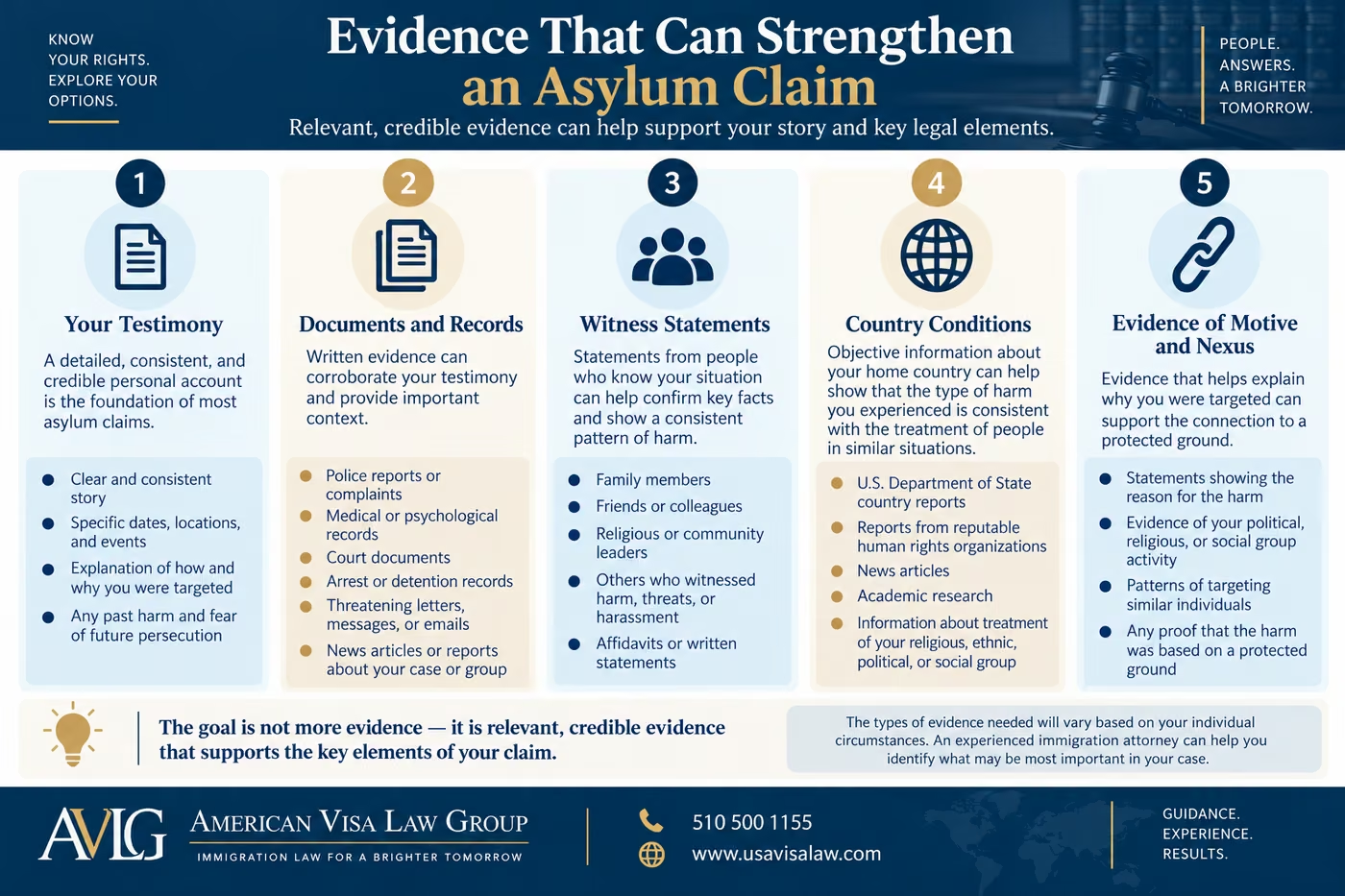
The applicant’s own testimony is often central to an asylum case. It should explain the important events clearly and consistently: what happened, when it happened, who was involved, what was said, and why the applicant believes the harm was connected to a protected ground.
General statements such as “the government threatened me” are usually less useful than specific details explaining the circumstances and the persecutor’s actions or statements.
BIA precedent emphasizes the importance of specific, detailed, and credible testimony, together with corroborating evidence where it is reasonably available. EOIR asylum credibility and corroboration precedent
Depending on the case, useful evidence may include medical records, police reports, arrest or detention documents, threatening messages, photographs, court records, political or religious membership records, and communications from the alleged persecutor.
Witness statements can also help when family members, colleagues, neighbors, religious leaders, fellow activists, or others have firsthand knowledge of relevant events.
USCIS instructs asylum applicants to submit reasonably available evidence concerning both the specific facts supporting the claim and conditions in the applicant’s country. When relevant evidence cannot reasonably be obtained, the applicant should explain why. USCIS Form I-589 Instructions
Country-condition evidence can provide important context. For example, reports documenting arrests of political opponents or persecution of a religious minority may help show that an applicant’s experience fits a broader pattern.
But general country conditions do not replace evidence about the applicant’s individual circumstances.
One of the most valuable forms of evidence is often evidence showing why the persecutor targeted the applicant. A threatening message referring to political activity, religious beliefs, ethnicity, or another protected characteristic may help establish nexus in a way that evidence of the harm alone cannot.
The practical goal is not to collect every possible document. It is to build a coherent record in which the testimony, supporting documents, and country conditions reinforce the same factual and legal story.
Some facts may be serious, frightening, or deeply unfair without automatically establishing asylum eligibility.
For example, living in a country with high crime, political instability, economic hardship, or widespread violence does not by itself prove that an individual qualifies for asylum. The Executive Office for Immigration Review’s asylum guidance explains that the harm generally must rise to the level of persecution and be connected to a protected ground.
The same caution applies to several common situations:
A large amount of evidence also does not automatically make a case stronger. What matters is whether the evidence helps prove the relevant legal elements.
For example, dozens of articles showing that a country is dangerous may have limited value if they do not help explain why this particular applicant would be targeted because of race, religion, nationality, political opinion, or membership in a particular social group.
This is especially important in crime-based cases. BIA precedent distinguishes general criminal activity from persecution where there is no sufficient protected-ground motive. The EOIR precedent chart on persecution and nexus includes decisions addressing that distinction.
The practical lesson is that asylum is not awarded based on which story sounds the most difficult. A stronger claim connects the applicant’s individual facts to the specific legal requirements for asylum.
Yes. An asylum case does not automatically fail because the applicant has limited documentary evidence. In some circumstances, detailed and credible testimony may be enough to establish important parts of a claim.
This matters because asylum seekers do not always leave their home countries with police reports, medical records, arrest documents, or written proof of threats. Some records may never have existed, may be controlled by the persecutor, or may be dangerous or impossible to obtain.
However, that does not mean supporting evidence is unimportant.
The EOIR precedent on asylum evidence and corroboration explains that when corroborating evidence would reasonably be expected and is available, an applicant may be expected to provide it—or explain why it cannot reasonably be obtained.
Useful evidence might include messages, photographs, medical records, witness statements, membership records, police complaints, social-media posts, or credible country-condition reports. The value of the evidence depends on what it actually helps prove.
For example, a country report showing that political activists are routinely detained may support the broader context of a political-persecution claim, but it does not automatically prove that the individual applicant was personally targeted.
Likewise, a lack of documents should not encourage an applicant to create or alter evidence. A truthful explanation for why records are unavailable is very different from submitting fabricated documents.
The practical takeaway is that quality and relevance matter more than the number of documents. A coherent, credible account supported by whatever reliable evidence is reasonably available can be far more useful than a large file of documents that do not connect to the asylum claim.
Asylum examples are useful for understanding how the law works, but they should not be treated as a checklist for predicting whether a case will be approved.
Two applicants may describe similar threats or persecution and still face very different legal outcomes. The difference can come down to details such as why the person was targeted, who caused the harm, whether government protection was available, and whether the applicant still faces a reasonable risk of persecution today.
The Executive Office for Immigration Review’s asylum guidance reflects this fact-specific approach. Asylum adjudication can involve past persecution, protected-ground nexus, credibility, country conditions, internal relocation, filing deadlines, and other eligibility requirements.
For example, two people may both have received death threats. One may have been targeted because of documented political activity, while the other may have been threatened during a personal or financial dispute. The severity of the threat could be similar, but the protected-ground analysis may be very different.
Evidence also matters differently from case to case. A police report may be highly relevant in one claim, while political records, medical documentation, witness testimony, or country-condition evidence may be more important in another.
Procedural issues can further change the analysis. An applicant with compelling persecution evidence may still face a problem involving the one-year filing deadline or another asylum bar.
That is why comparing a personal situation with a successful asylum story found online can only go so far.
The central question is not whether an applicant’s story resembles another asylum case. It is whether that applicant’s own facts and evidence satisfy the legal requirements for asylum.
For applicants who need individualized analysis, AVLG’s asylum and humanitarian immigration services provide additional information about evaluating asylum claims and related immigration options.
A potentially stronger asylum case may involve serious targeted harm that is clearly connected to a protected ground. For example, a political activist who is detained, beaten, and threatened by government authorities specifically because of documented opposition activity may have facts supporting persecution and political-opinion nexus.
That does not guarantee asylum. Credibility, evidence, future risk, filing deadlines, internal relocation, and other eligibility requirements can still affect the case.
A potentially weaker asylum claim may involve genuine danger but no clear connection to a protected ground.
For example, a business owner threatened by criminals solely because they want money may have experienced serious harm, but asylum generally requires persecution connected to race, religion, nationality, political opinion, or membership in a particular social group.
Additional facts can change the analysis, so crime-based cases should not automatically be dismissed without reviewing the persecutor’s motive and the complete circumstances.
The five protected grounds are:
Race, religion, nationality, political opinion, and membership in a particular social group.
An applicant generally must show that past persecution or feared future persecution is connected to at least one of these grounds.
The EOIR asylum eligibility guidance provides an overview of these requirements.
Threats can potentially contribute to an asylum claim, but not every threat amounts to persecution.
The analysis may depend on the seriousness and frequency of the threats, who made them, whether the person had the ability to carry them out, what other harm occurred, and why the applicant was targeted.
A repeated death threat from government officials following political activity, for example, may present a different legal issue from an isolated anonymous threat with no identifiable motive.
Possibly, but crime or gang violence alone does not automatically establish asylum eligibility.
The applicant generally still must establish the required connection between the feared persecution and a protected ground. Private-actor cases may also involve questions about whether the government is unable or unwilling to provide meaningful protection.
The specific motive, proposed protected ground, government response, and applicable law can make these cases particularly fact-sensitive.
Yes. The absence of documents does not automatically defeat an asylum claim.
An applicant’s credible testimony can be highly important, particularly when records were impossible or dangerous to obtain. However, reasonably available corroborating evidence may still be expected depending on the circumstances.
Useful evidence can include medical records, police reports, messages, photographs, witness declarations, political or religious records, and credible country-condition information.
The goal is not to submit the most documents—it is to submit reliable evidence that actually supports the claim.
An asylum application generally must be filed within one year after arriving in the United States, unless an applicable exception is established.
Changed circumstances or extraordinary circumstances may excuse a late filing in certain situations, but the exception itself must satisfy legal requirements. The EOIR guidance on asylum filing deadlines provides additional information about the one-year rule.
A late-filing issue should therefore be analyzed separately from whether the underlying persecution claim appears strong.
False information can create serious credibility and immigration consequences.
There is an important difference between an honest mistake or inconsistency and deliberately fabricating a material element of an asylum claim. Under the rules governing frivolous asylum applications, a formal frivolous finding can carry severe consequences, including permanent ineligibility for immigration benefits under the Immigration and Nationality Act.
Applicants should never invent events, alter documents, or submit false evidence to make a case appear stronger. The USCIS Form I-589 instructions explain the warnings associated with false statements and frivolous asylum applications.
For readers who want to explore U.S. asylum law in greater depth, the following official government resources provide additional guidance on eligibility, protected grounds, evidence, filing deadlines, credibility, and related forms of protection.
The EOIR Asylum, Withholding of Removal, and Convention Against Torture guidance explains the basic legal standards for asylum, including persecution, the five protected grounds, government protection, internal relocation, and the differences between asylum, withholding of removal, and CAT protection.
The USCIS Instructions for Form I-589, Application for Asylum and for Withholding of Removal provide official filing guidance and important information concerning asylum eligibility, supporting evidence, filing requirements, false statements, and frivolous asylum applications.
The USCIS Nexus and the Protected Grounds training guidance provides a deeper explanation of persecutor motive and how asylum officers analyze whether past or feared harm is connected to race, religion, nationality, political opinion, or another protected ground.
The EOIR BIA Precedent Chart on Asylum collects significant Board of Immigration Appeals decisions addressing issues such as credibility, corroboration, country conditions, persecution, extortion, particular social group claims, the one-year filing deadline, and frivolous applications.
The USCIS One-Year Filing Deadline for Asylum training guidance provides additional detail on the one-year filing requirement and the changed-circumstances and extraordinary-circumstances exceptions that may become relevant in late-filed asylum cases.
The EOIR guidance for people who have been harmed, mistreated, or threatened offers a practical overview of how persecution, protected grounds, government protection, internal relocation, and fear of future harm fit into the asylum analysis.
Together, these resources provide authoritative background for the legal concepts discussed in the five asylum examples and help readers better understand why asylum decisions depend on the complete factual and legal record rather than on any single fact or scenario.

Hasan Abdullah, Esq. is the Founder and Managing Attorney of American Visa Law Group. His practice focuses on U.S. immigration law, including family-based immigration, employment-based immigration, adjustment of status, consular processing, waivers, PERM labor certification, NIW, EB-1, H-1B, O-1, and complex immigration strategy.
Through American Visa Law Group, Mr. Abdullah helps individuals, families, professionals, investors, and employers understand their immigration options and plan around changing government policies, USCIS procedures, and Visa Bulletin movement. His work emphasizes practical legal analysis, realistic expectations, and strategy tailored to each applicant’s immigration history and long-term goals.


