Author: Hasan Abdullah, Esq.
For most applicants, the citizenship cost in 2026 begins with the Form N-400 filing fee: $710 when filed online or $760 when submitted by paper. Eligible applicants may qualify for a reduced $380 fee or a complete fee waiver, and USCIS does not charge a separate biometrics fee for Form N-400. Those amounts answer the basic filing-cost question, but they do not always represent the applicant’s complete budget.
Additional expenses may include legal representation, certified translations, court records, medical-provider charges for a disability exception, travel to USCIS appointments and a U.S. passport after naturalization. Cases involving arrests, extended international travel, tax problems, the three-year marriage rule, prior immigration inconsistencies or an earlier N-400 denial may also require more legal analysis than a routine application. Because the scope can vary significantly, applicants should distinguish government charges from the cost of professional assistance. American Visa Law Group publishes its immigration attorney fees to make that comparison clearer.
This guide explains the current USCIS fees, reduced-fee and waiver options, citizenship lawyer fees, additional expenses and realistic total-cost examples. It also identifies the circumstances in which reviewing eligibility before filing may help an applicant avoid paying a nonrefundable fee before understanding the legal risks in the case.
In 2026, the Form N-400 filing fee is $710 for an online application or $760 for a paper application. Applicants who meet the financial requirements may qualify for a reduced $380 fee or a complete fee waiver. USCIS does not charge a separate biometrics fee for Form N-400.
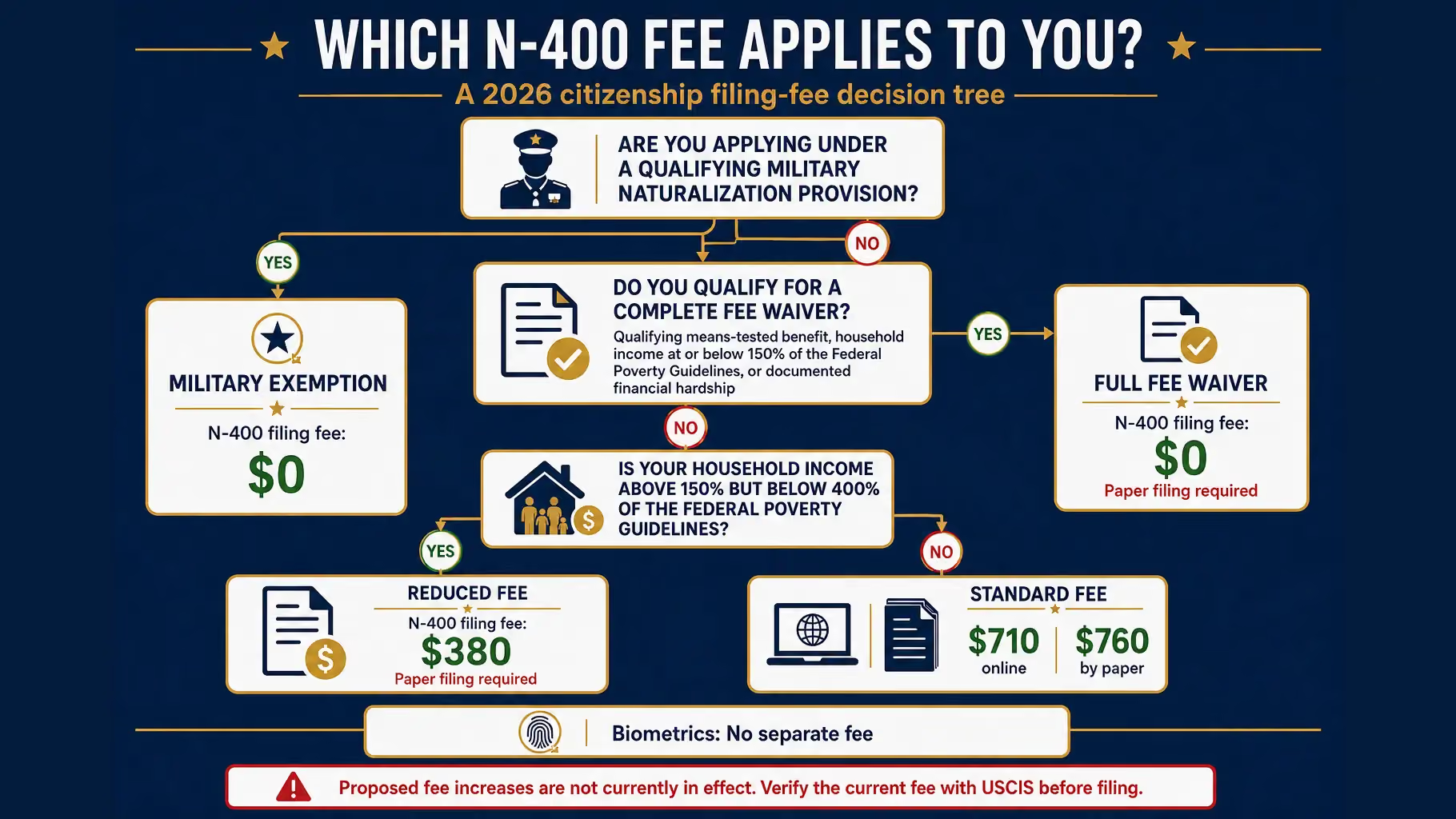
These amounts apply to each applicant individually. A married couple filing at the same time, for example, must submit separate N-400 applications and pay separate filing fees unless each person independently qualifies for a reduction, waiver or military exemption.
For a straightforward self-filed case, the starting cost is generally $710 to $760, plus any incidental expenses such as translations, certified records, mailing or travel to USCIS appointments. Applicants who qualify for the reduced fee may begin with a government cost of $380, while an approved fee waiver or qualifying military application can reduce the USCIS charge to zero.
Hiring an immigration lawyer adds a separate legal fee. The total may also increase when the application requires analysis of criminal history, extended travel, tax compliance, the three-year marriage rule, a medical disability exception or inconsistencies in earlier immigration records. The most useful budget therefore separates the mandatory government fee from legal services and case-specific expenses.
The Form N-400 filing fee covers USCIS’s processing and adjudication of the naturalization application. It is a processing fee—not a payment for approval—and it is generally nonrefundable once USCIS accepts the application, regardless of the final decision.
USCIS uses the fee to review the form and supporting documents, conduct required background checks, schedule appointments and determine whether the applicant satisfies the legal requirements for naturalization. The fee does not include immigration lawyer fees, translations, certified records, transportation or other third-party expenses.
Yes. USCIS does not currently charge N-400 applicants a separate biometrics fee. However, an applicant may still receive an appointment notice to provide fingerprints, a photograph or a signature. In some cases, USCIS may reuse biometrics already on file, but applicants should follow the instructions in their individual notice rather than assume an appointment will be waived.
There is no additional USCIS fee for the standard naturalization interview, English test, civics test or Oath of Allegiance ceremony. Applicants may choose to pay for private citizenship classes, tutoring or interview preparation, but those services are optional and separate from the government filing fee.
If an applicant does not pass part of the English or civics examination at the initial interview, USCIS generally provides another opportunity to take the failed portion. This standard reexamination does not require a new N-400 filing fee. A denial, however, may create separate costs if the applicant requests a hearing or files a new application.
No. USCIS does not offer premium processing for Form N-400. Paying an attorney or another service provider cannot purchase a guaranteed USCIS decision within a fixed period.
Limited expedite requests may be considered in appropriate circumstances, but they are discretionary and are not a paid premium-processing service. Applicants should be cautious of anyone who promises faster approval in exchange for an unofficial “expedite fee.”
The filing method affects the N-400 government fee. An online application costs $710, while a paper application costs $760. The $50 difference reflects USCIS’s lower fee for online filing; it does not change the legal eligibility requirements or the standard applied to the case.
For applicants paying the full fee, online filing is generally the least expensive option. A USCIS online account allows the applicant to complete the form electronically, upload supporting documents, receive case updates and access many notices in one place.
The convenience of online filing does not eliminate the need for a careful review. Incorrect travel dates, incomplete disclosures or inconsistencies with earlier immigration filings can still create problems during the interview, even when the online system accepts the application.
A paper filing costs $50 more and requires the applicant to use the correct form edition, sign the application properly, include the required evidence and send the package to the appropriate USCIS filing address. An incorrect payment, missing signature or outdated form edition can cause USCIS to reject the filing before substantive review begins.
Applicants should retain a complete copy of the application and supporting documents. This is particularly important because the naturalization officer will review the N-400 answers during the interview.
Applicants requesting the reduced $380 fee or a complete fee waiver must file Form N-400 by paper and include the required financial documentation. They should not submit the standard online fee and expect USCIS to adjust it later.
The filing method should therefore be selected only after determining whether the applicant will pay the full fee, request the reduced fee or seek a complete waiver. Saving $50 through online filing is useful, but choosing the correct fee category and submitting consistent evidence is more important than the filing-channel discount.
Some applicants who cannot reasonably afford the full $710 or $760 N-400 fee may qualify to pay a reduced fee of $380. This option is based primarily on documented annual household income and is different from requesting a complete fee waiver.
The reduced fee generally applies when the applicant’s household income is above 150% but below 400% of the applicable Federal Poverty Guidelines. Applicants whose income is at or below 150% may instead qualify to request a complete fee waiver.
A reduced-fee request must be submitted with a paper Form N-400. The applicant should complete the relevant fee-reduction portion of the current form, provide the required income evidence and submit the $380 payment. Reduced-fee applicants cannot file the N-400 online.
Eligibility is not automatic. USCIS must be able to determine the applicant’s household size and annual household income from the documentation provided. If the request is incomplete or the payment is incorrect, USCIS may reject the filing before reviewing the underlying naturalization application.
USCIS considers more than the applicant’s individual paycheck. The analysis can involve household size, the income of qualifying household members, tax filing information and changes in financial circumstances. Supporting evidence may include federal tax documents, pay statements, employer records or other reliable proof of current annual income.
The figures should be consistent across the N-400 and the financial evidence. Applicants should explain material changes—such as a recent job loss or a substantial difference between the most recent tax return and current income—rather than submitting conflicting records without context.
The income limit depends on household size and may differ for applicants living in Alaska or Hawaii. Because USCIS updates these thresholds, applicants should compare their documented household income with the official 2026 USCIS poverty guidelines immediately before filing.
Older articles and forms may still display previous N-400 fees or outdated income limits. The correct approach is to use the current Form N-400 edition, current filing instructions and poverty guidelines in effect on the filing date.
Yes. USCIS may waive the entire N-400 filing fee for an applicant who demonstrates an inability to pay under the applicable fee-waiver standards. If the request is approved, the applicant pays $0 for Form N-400, including biometrics.
A fee waiver is different from the $380 reduced fee. It is intended for applicants with lower household income or other qualifying financial circumstances, and USCIS requires documentation supporting the specific basis of the request.
An applicant may qualify based on one of the following grounds:
A financial hardship request should explain the circumstances clearly and include evidence of the applicant’s income, assets, expenses and unexpected financial obligations where relevant. Job loss, substantial medical expenses, homelessness or another serious change in financial circumstances may require more documentation than an income-based request.
Applicants generally request the waiver by submitting Form I-912, Request for Fee Waiver, with a paper Form N-400. A written fee-waiver request may be permitted if it contains the required information and is signed, but using the current USCIS form can make it easier to address each required element systematically.
The applicant should not include the N-400 filing fee when requesting a complete waiver. If USCIS does not approve the waiver request, it may return the naturalization filing, requiring the applicant to submit a new package with the correct fee or stronger waiver evidence.
USCIS reviews the documentation rather than relying solely on the applicant’s statement that payment would be difficult. Benefit notices, tax records, income evidence and documents supporting a claimed hardship should be current and internally consistent. Applicants can review the official USCIS fee-waiver guidance before preparing the request.
Applicants should select the category that accurately reflects their circumstances. Submitting both a reduced-fee request and a complete fee-waiver request for the same N-400 can create confusion and may result in the package being rejected.
Qualifying current and former members of the U.S. armed forces may apply for naturalization without paying the Form N-400 filing fee. USCIS also does not charge them a separate biometrics fee. However, military service does not make every service member or veteran automatically eligible for citizenship.
The Immigration and Nationality Act provides two principal military naturalization pathways. INA 328 generally applies to applicants with qualifying honorable military service during peacetime, while INA 329 provides special rules for service during designated periods of military hostilities.
The residence, physical-presence and lawful-permanent-resident requirements may differ from those applied in an ordinary five-year naturalization case. The applicable rules depend on factors such as when the person served, the length and character of service, how the person entered the United States and whether the applicant separated from the military under honorable conditions.
Applicants may need military records or a certified Form N-426, Request for Certification of Military or Naval Service, to establish qualifying service. Veterans should also obtain their discharge documents and confirm that their service characterization supports the requested naturalization category.
The fee exemption applies to the qualifying military applicant; it does not automatically waive the filing fee for a spouse, child or other relative. Family members must establish their own basis for naturalization or another applicable citizenship process.
Because military naturalization rules can be more favorable but also category-specific, applicants should identify whether INA 328, INA 329 or the ordinary naturalization requirements apply before completing Form N-400. USCIS provides additional guidance on naturalization through military service.
Citizenship lawyer fees are separate from the Form N-400 filing fee paid to USCIS. The amount generally depends on the scope of representation and whether the case involves issues requiring additional legal analysis, records or interview preparation.
A straightforward application may primarily require eligibility confirmation, form preparation and evidence review. A case involving criminal history, lengthy travel, tax concerns, the three-year marriage rule or a medical disability exception may require substantially more work.
American Visa Law Group publishes the following legal fees for citizenship and naturalization matters:
These amounts are legal fees rather than government charges. Applicants must ordinarily pay the applicable N-400 filing fee separately unless they qualify for a reduction, waiver or military exemption. The firm’s current pricing and other immigration lawyer fees are available in AVLG’s published immigration attorney fee schedule.
The final fee and scope should be confirmed in a written engagement agreement. An unusually complicated history, a prior denial or work outside the original scope may affect the quoted amount.
The value of representation depends on what the lawyer has agreed to handle. For many naturalization matters, the scope may include reviewing eligibility, preparing Form N-400, identifying required evidence, checking the applicant’s immigration and travel history, submitting the application and reviewing routine USCIS notices.
Applicants should confirm whether the quoted fee also includes:
Not every service is included automatically. A lower quote may cover only form preparation, while a higher quote may include legal analysis, evidence strategy and post-filing support. Comparing the scope is therefore more useful than comparing the headline fee alone.
The N-400 filing fee pays USCIS to process the application. Attorney fees compensate the law firm for legal advice, case preparation and representation. Paying one does not cover the other.
An approved USCIS fee waiver eliminates the government filing fee, but it does not automatically waive a private lawyer’s fee. Similarly, hiring an attorney does not guarantee approval or faster USCIS processing. The practical purpose of legal representation is to identify eligibility concerns, present accurate information and reduce avoidable filing and interview problems.
Naturalization legal fees often increase when the lawyer must do more than prepare Form N-400. Complicated facts may require obtaining historical records, comparing earlier immigration filings, researching the applicable law, preparing written explanations or developing a strategy for the USCIS interview.
The government filing fee generally remains the same, but the scope of legal work can change significantly.
An arrest or criminal charge does not automatically prevent naturalization, but it requires careful review. USCIS evaluates good moral character and may examine conduct that occurred both within and, in some circumstances, before the required statutory period.
The attorney may need to review certified court dispositions, police reports, sentencing records, probation documents and evidence that all court requirements were completed. This analysis may still be necessary when a charge was dismissed, reduced, sealed or expunged because the N-400 asks broad questions about arrests, citations, charges and criminal conduct.
The legal work becomes more extensive when the record may affect good moral character, create an immigration consequence or conflict with an earlier visa or Green Card application.
Travel history can affect both continuous residence and physical presence. Trips lasting more than six months may raise questions about whether the applicant maintained continuous residence in the United States. An absence of one year or longer generally creates a more serious issue unless a specific exception or preservation rule applies.
A lawyer may need to reconstruct the applicant’s travel history and review tax filings, employment, housing, family ties and other evidence showing whether the United States remained the applicant’s principal residence. The analysis must also distinguish continuous residence from physical presence because satisfying one requirement does not automatically satisfy the other.
Complex travel histories require additional preparation when dates are missing, passport records are incomplete or prior immigration filings contain inconsistent information.
A lawful permanent resident applying under the three-year rule must establish more than the existence of a valid marriage. The applicant generally must show that the U.S. citizen spouse held citizenship for the required period and that the couple lived in marital union as required by law.
Separation, different residential addresses, extended travel, prior marriages or uncertainty about when the spouse became a citizen can require additional analysis and documentation. A lawyer may also need to determine whether the applicant should file under the three-year rule or wait until eligible under the standard five-year rule.
USCIS may examine whether the applicant complied with tax obligations, court-ordered support and other legal responsibilities. Unfiled tax returns, unpaid taxes without an established payment arrangement or inconsistent claims about marital status and dependents can raise questions during the naturalization process.
Failure to pay required child support may also affect the good-moral-character analysis. Selective Service issues can require additional explanation when an applicant who was required to register did not do so.
These matters are fact-specific. The lawyer may need to review transcripts, payment arrangements, court orders or evidence explaining why a legal obligation was not satisfied.
USCIS can compare Form N-400 with earlier visa applications, Green Card filings, asylum records, border statements and other government records. Differences involving names, addresses, employment, marriages, children, travel or prior immigration violations may require explanation.
Particularly serious concerns can include prior removal proceedings, allegations of fraud or misrepresentation, false claims to U.S. citizenship, unlawful voting or an earlier naturalization denial. These issues should be evaluated before filing rather than discovered for the first time during the interview. Applicants can also review the common reasons N-400 applications are denied when assessing potential risks.
An applicant who cannot satisfy the English, civics or both requirements because of a qualifying physical or developmental disability or mental impairment may request an exception using Form N-648.
Although USCIS does not charge a separate filing fee for Form N-648, the medical professional may charge for the examination and certification. Legal fees may also be higher when the lawyer must coordinate the N-400 and N-648 submissions, review the certification for completeness and prepare the applicant for how USCIS may evaluate the requested exception.
A higher legal fee in these situations reflects the additional analysis, documentation and preparation involved. It should not be interpreted as a guarantee of approval or as an additional government charge.
The N-400 filing fee is usually the largest mandatory government expense, but it may not be the applicant’s only cost. Additional expenses depend on the person’s documents, immigration history, language needs, travel and whether professional assistance is required.
Some applicants may have very few additional expenses. Others may need certified records, translations, medical documentation or substantial help reconstructing their history.
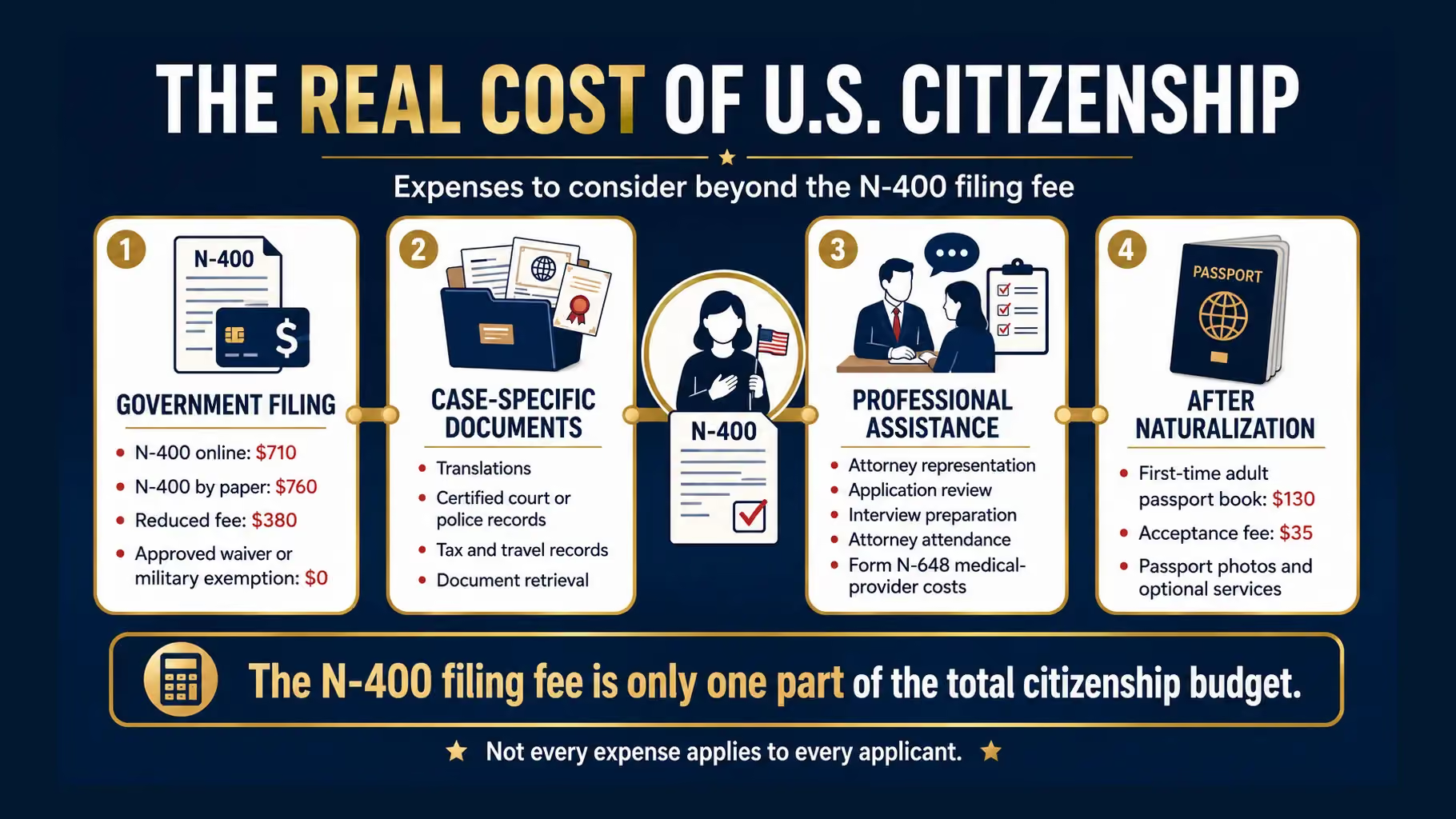
Documents submitted in a foreign language generally require a complete English translation accompanied by the translator’s certification of competence and accuracy. The cost depends on the language, document length, urgency and whether the document contains technical or handwritten material.
Possible translation expenses include foreign birth certificates, marriage or divorce records, court documents and evidence concerning travel or residence abroad. Applicants should avoid submitting informal summaries when USCIS requires a complete certified translation.
Applicants with an arrest, criminal charge or court case may need certified dispositions and related records, even when the charge was dismissed or the record was sealed or expunged. Courts and law-enforcement agencies may charge search, certification or copying fees.
Historical immigration records can also create expenses. An applicant who does not have copies of earlier visa, asylum, Green Card or removal filings may need to obtain government records or pay for professional assistance reviewing a lengthy file. Obtaining these records before filing can be especially valuable when the applicant is uncertain how a prior application answered a material question.
USCIS may request evidence relating to tax compliance, child support, marriage, residence or travel. Some records can be obtained without charge, while archived or certified documents may carry agency or professional-service fees.
The greater cost is sometimes the time required to locate and reconcile the information. Travel dates, residential addresses and employment history should be consistent with passports, tax documents and earlier immigration filings.
USCIS does not charge a filing fee for Form N-648, Medical Certification for Disability Exceptions. However, the licensed medical doctor, doctor of osteopathy or clinical psychologist completing the form may charge for the examination, record review and certification.
The cost varies by provider and is separate from both the N-400 fee and any attorney fee. Paying a medical professional does not guarantee that USCIS will accept the requested English or civics exception; the certification must adequately explain the qualifying impairment and its connection to the applicant’s inability to meet the testing requirements.
Applicants do not have to purchase a course to prepare for the naturalization examination. USCIS provides free English and civics materials, including the official questions and answers for the 2025 naturalization civics test, which generally applies to N-400 applications filed in 2026.
Private classes, tutoring and mock interviews remain optional. They may be useful for applicants who want structured instruction, language support or individualized practice, but their prices should not be confused with mandatory USCIS charges.
Applicants may need to travel to a biometrics appointment, naturalization interview and oath ceremony. Transportation, parking, lodging and time away from work can become meaningful expenses, particularly when the assigned USCIS office is far from the applicant’s home.
Rescheduled or additional appointments can increase those costs. Applicants should therefore keep their address current with USCIS and monitor notices carefully.
Paper filers should budget for printing, copying, mailing and delivery tracking. Applicants should preserve a complete copy of the signed N-400, supporting evidence and payment documents for use when preparing for the interview.
Online filers may avoid much of the mailing expense, but they should still retain organized copies of everything submitted through their USCIS account.
A U.S. passport is not included in the N-400 filing fee. After taking the Oath of Allegiance, a newly naturalized citizen may apply separately through the Department of State.
A first-time adult passport book currently costs $130 plus a $35 acceptance fee, for a total of $165. Passport photographs, expedited service and optional delivery services may add to the cost. Current amounts should be confirmed using the official Department of State passport fee schedule.
These post-naturalization expenses are optional for completing the citizenship process itself, but they are useful to include in the overall budget when the applicant plans to obtain a passport immediately after the oath ceremony.
The total citizenship cost depends on the filing method, eligibility for fee relief, use of legal representation and case-specific expenses. The following examples combine the current N-400 filing fee with AVLG’s published naturalization legal fees where representation is included.
These totals are starting estimates. They do not automatically include certified translations, court records, medical-provider charges, travel, mailing, passport expenses or legal work outside the agreed scope.
An applicant who qualifies for a reduced fee or waiver can still hire an attorney. For example, standard $1,600 representation combined with the reduced $380 government fee would produce a starting total of $1,980. If the same applicant receives a complete USCIS fee waiver, the starting total would be the $1,600 legal fee.
Optional services can also change the budget. Based on AVLG’s published fee schedule, interview preparation adds $350, while attorney attendance at the naturalization interview adds $800. Selecting both services would add $1,150 to the applicable filing and representation costs.
The least expensive scenario is not necessarily the most appropriate one. A straightforward applicant may reasonably choose self-filing, while someone with arrests, long absences, tax problems or inconsistent immigration records may benefit from resolving those issues before paying a nonrefundable government fee. The most accurate budget is therefore based on both the filing method and the legal work the individual case actually requires.
Naturalization is an individual application process. USCIS does not offer a combined N-400 filing or discounted family government fee, even when spouses or relatives apply at the same time. Each applicant must submit a separate form, establish individual eligibility and pay the applicable filing fee.
These figures cover government filing fees only. Each family member may also have separate expenses for translations, records, legal assistance, travel or interview preparation.
Marriage does not combine the applicants’ residence, physical presence or good-moral-character histories. One spouse may qualify under the five-year naturalization rule while the other applies under the three-year rule based on marriage to a U.S. citizen. Their eligibility dates, travel histories and supporting evidence may therefore be different.
Fee relief is also evaluated for each application. Spouses may rely on much of the same household-income evidence, but each applicant must properly request the reduced fee or waiver with the individual N-400 filing. Approval of one spouse’s request does not automatically determine the other spouse’s filing fee.
AVLG’s published fee for a standard naturalization application is $1,600, with a reduced legal fee of $1,350 for an additional relative’s application. If two relatives have straightforward cases and both file online, the combined starting budget would be:
If both submit paper applications, the corresponding starting total would be $4,470. Different legal fees may apply if one applicant has criminal records, extended travel, a medical exception, a previous denial or another complication requiring additional work.
Parents should not assume that every family member needs Form N-400. Form N-400 generally applies to applicants who are at least 18 years old. Some children may already have acquired or derived U.S. citizenship through a parent and may instead need evidence of that citizenship, such as a U.S. passport or Certificate of Citizenship.
Determining the correct process before filing can prevent a family from paying for an unnecessary or incorrect application. The appropriate form and cost depend on the child’s age, the parent’s citizenship history, lawful permanent resident status, custody and residence in the United States.
USCIS generally does not refund the N-400 filing fee when an application is denied, withdrawn or abandoned. The fee pays for processing and adjudication; it is not conditioned on approval.
A denial can therefore create costs beyond the original $710 or $760 payment. Depending on the reason, the applicant may need to obtain additional records, hire an attorney, request a hearing or submit a new naturalization application.
A rejected application is different from a denied application. USCIS may reject an N-400 before accepting it because the form is unsigned, the payment is incorrect, the form edition is outdated or another basic filing requirement was not met. When this happens, USCIS generally returns the package without adjudicating naturalization eligibility.
A denial occurs after USCIS accepts and reviews the application. The filing fee is generally nonrefundable even when USCIS concludes that the applicant does not qualify.
An applicant who submits a new N-400 after denial must ordinarily pay the filing fee again, unless eligible for a reduced fee, complete waiver or military exemption. New expenses may also include updated records, translations, legal analysis and interview preparation.
Refiling immediately is not always the best strategy. If the denial involved continuous residence, physical presence, good moral character, marital-union requirements or unresolved criminal or tax issues, submitting the same application again may lead to the same result. The applicant should first determine whether the problem can be corrected or whether additional time must pass before eligibility is established.
An applicant who believes USCIS incorrectly denied the N-400 may request an administrative hearing by filing Form N-336, Request for a Hearing on a Decision in Naturalization Proceedings. Form N-336 has its own government filing fee, separate from the original N-400 payment, and strict filing deadlines apply.
The hearing process is not simply a second interview. The applicant should identify the factual or legal error in the denial, submit relevant evidence and address the reasons USCIS gave in its written decision. Attorney fees for an N-336 matter are also generally separate from the fee charged for preparing the original naturalization application.
Because USCIS fees can change, applicants should verify the current N-336 amount before filing rather than relying on the amount previously paid for Form N-400.
The filing fee is only one part of the financial risk. A premature or inaccurate application can expose inconsistencies, require additional legal work and delay the point at which the applicant can successfully naturalize.
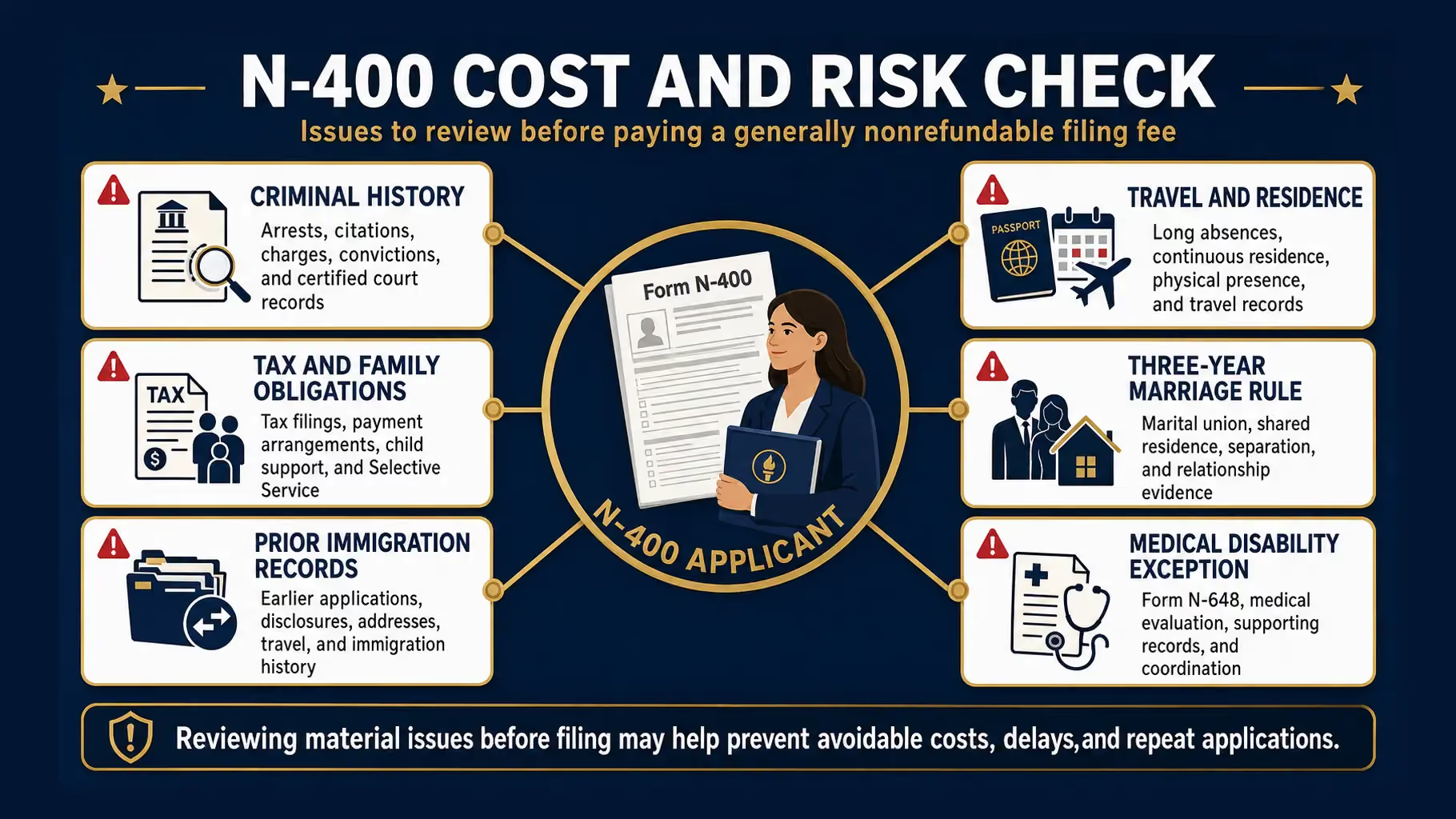
Review before filing is particularly important when the applicant has lengthy absences, arrests, unpaid taxes, removal history, possible voting issues, a prior false claim to citizenship or conflicting answers in earlier immigration records. Identifying those concerns in advance can help the applicant decide whether to file now, gather stronger evidence or wait until a legal eligibility issue has been resolved.
No. U.S. immigration law does not require an applicant to hire a lawyer to file Form N-400. Many lawful permanent residents successfully prepare and submit straightforward naturalization applications on their own.
The more useful question is not whether a lawyer is mandatory, but whether the applicant’s history contains an issue that requires legal analysis before it is disclosed to USCIS. Naturalization allows USCIS to review the applicant’s immigration history, travel, taxes, criminal record and conduct during the relevant period—and sometimes events that occurred earlier.
Self-filing may be appropriate when the applicant clearly satisfies the applicable three-year or five-year residence rule, has an accurate travel history and has no criminal, tax, immigration or good-moral-character concerns.
The applicant should also be comfortable reviewing earlier immigration records, completing the form accurately and explaining every answer during the naturalization interview. An online filing system can make submission more convenient, but it does not determine whether the applicant is legally eligible.
Even in a straightforward case, the applicant should retain a complete copy of the N-400 and every supporting document. The interview is conducted under oath, and the USCIS officer may compare the application with information previously provided to immigration agencies.
An attorney review may be particularly valuable when the case involves:
These issues do not all produce the same legal result. Some may be resolved through documentation or explanation, while others may make waiting or pursuing a different strategy more appropriate. The purpose of a legal review is to identify that distinction before the applicant commits to a filing position.
A lawyer can evaluate eligibility, identify missing records, review earlier filings, explain legal risks, prepare the N-400 and help the applicant understand what to expect at the interview. In an appropriate case, counsel may also prepare written legal arguments or attend the interview.
A lawyer cannot change unfavorable facts, guarantee approval or purchase faster USCIS processing. Representation is most valuable when it helps the applicant make an informed decision, provide accurate information and avoid filing before an eligibility problem has been properly evaluated.
Applicants comparing legal services should ask what the quoted fee includes, who will review the case and whether interview preparation, attendance or post-filing complications are covered. That provides a more meaningful comparison than choosing representation based only on the lowest advertised price.
Applicants can often control part of the citizenship cost by choosing the correct filing method, checking eligibility for fee relief and avoiding unnecessary paid services. The goal should be to reduce legitimate expenses without creating errors that later require a second filing or additional legal work.
An applicant paying the standard N-400 fee can save $50 by filing online. The online fee is $710, compared with $760 for a paper application.
This savings does not apply to applicants requesting the $380 reduced fee or a complete fee waiver because those requests must be submitted by paper. Applicants should therefore determine their fee category before selecting the filing method.
Applicants with qualifying household income may be able to pay the reduced $380 fee. Those receiving a qualifying means-tested benefit, earning no more than the applicable income threshold or experiencing financial hardship may qualify for a complete waiver.
A fee-relief request should be accurate and supported by consistent evidence. Submitting an unsupported request solely to avoid the full fee can result in the package being returned and may delay the naturalization process.
USCIS provides the official civics questions, English-test resources, videos and other naturalization study materials without charge. Many applicants can prepare effectively without purchasing a commercial course.
Paid citizenship classes or tutoring may still be useful for someone who needs structured language instruction or individualized practice. They are optional, however, and should be selected based on the applicant’s actual learning needs rather than presented as a required part of the citizenship process.
Obtaining immigration, travel, tax and court records before submitting Form N-400 can reduce the risk of inconsistent or incomplete answers. Although some records may carry copying or certification costs, reviewing them early can be less expensive than responding to problems after filing or paying for a second application.
This is especially important for applicants who do not remember how an earlier visa, asylum or Green Card application described their history. Guessing at an answer can create a discrepancy that requires additional explanation during the interview.
USCIS may reject a filing submitted with an incorrect payment. Applicants should confirm the amount immediately before filing through the official USCIS Fee Calculator and follow the payment instructions for the chosen filing method.
Older websites, downloaded instructions and previously prepared checks may reflect a superseded fee. The amount in effect on the filing date controls.
Applicants who cannot afford full representation may look for reputable nonprofit immigration organizations, citizenship clinics or Department of Justice-accredited representatives. Some attorneys may also offer limited-scope services, such as an eligibility consultation, application review or interview-preparation session.
The applicant should understand exactly what the service includes. A document-preparation service cannot provide legal advice unless the provider is authorized to do so.
In the United States, a notary public is not the same as a licensed attorney. Applicants should be cautious of anyone promising guaranteed approval, secret access to USCIS or faster processing in exchange for an unofficial fee.
Choosing an unqualified provider may appear less expensive initially, but correcting inaccurate forms, missed disclosures or unauthorized legal advice can cost substantially more. Legitimate assistance should be transparent about qualifications, scope and fees—and should never promise a particular USCIS outcome.
A short review before submission can help an applicant choose the correct fee, budget for related expenses and avoid paying for an application that is incomplete or premature.
For most applicants, the government portion of the citizenship cost in 2026 is $710 for an online N-400 or $760 for a paper filing. Eligible applicants may pay the reduced $380 fee, receive a complete fee waiver or qualify for fee-free naturalization through military service.
The government fee, however, is only the starting point. Certified records, translations, medical documentation, legal representation, travel and a U.S. passport can increase the total budget. Cases involving arrests, extended absences, tax problems, the three-year marriage rule or inconsistencies in earlier immigration records may also require more preparation than a routine application.
The least expensive filing strategy is one that is both accurate and appropriate for the applicant’s circumstances. Saving money through online filing, free USCIS study materials or legitimate fee relief can be valuable. Filing prematurely or overlooking an eligibility issue may ultimately cost more if USCIS denies the application and a new filing or hearing becomes necessary.
Applicants who are uncertain about their eligibility or the appropriate scope of assistance may schedule a consultation with American Visa Law Group or call 510-500-1155 for an individualized review. Legal representation cannot guarantee approval, but a careful assessment can help clarify the filing strategy, expected costs and potential issues before Form N-400 is submitted.
USCIS filing fees are generally final and nonrefundable once an application has been accepted for processing. If USCIS denies Form N-400, the applicant ordinarily does not receive the $710 online fee, $760 paper fee or reduced $380 fee back.
The fee pays USCIS to review and adjudicate the application; it does not purchase approval. The same rule generally applies when an applicant withdraws the N-400 after USCIS has accepted it.
A rejection usually occurs before USCIS accepts the application for substantive review. Common reasons include an incorrect fee, missing signature, outdated form edition or incomplete payment authorization. USCIS generally returns the rejected package so the applicant can correct and resubmit it.
A denial occurs after USCIS has accepted and reviewed the application. It may result from an eligibility problem, failure to provide requested evidence, unresolved concerns at the interview or failure to satisfy the English or civics requirements after the permitted testing opportunities.
A request for additional evidence, continued examination or second test appointment is not itself a denial and does not normally require a new N-400 filing fee.
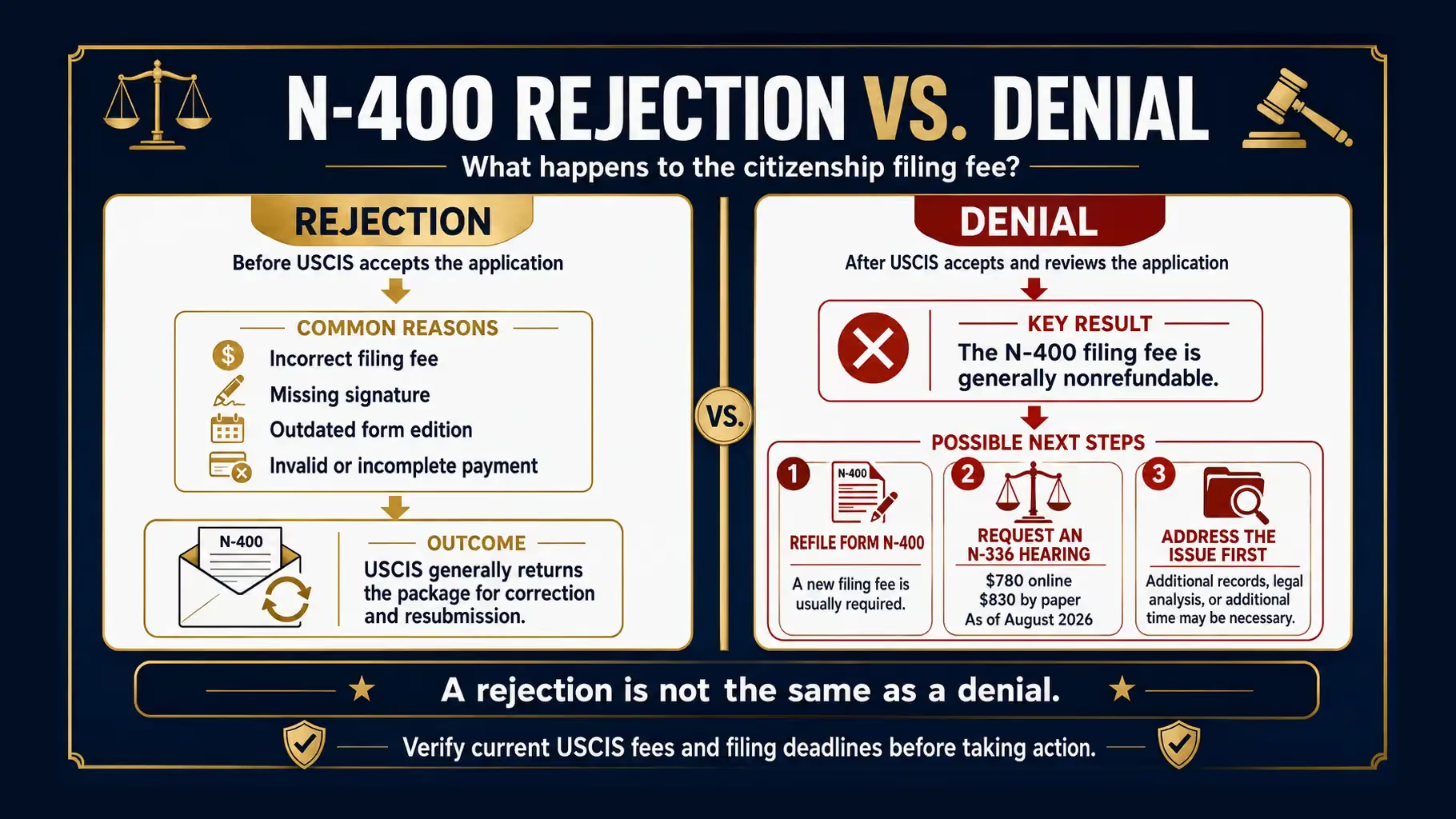
An applicant who decides to file a new N-400 must generally pay a new filing fee unless eligible for a reduced fee, waiver or military exemption at the time of refiling. New legal fees, updated records, translations and interview preparation may also be required.
Refiling immediately is not always the best approach. If the denial involved continuous residence, physical presence, good moral character, criminal history or an unresolved tax issue, submitting the same application again without addressing the underlying problem may lead to another denial and another lost filing fee.
The applicant should first determine whether the issue can be corrected, whether additional time must pass or whether USCIS made a factual or legal error.
Instead of immediately refiling, an applicant may be able to submit Form N-336, Request for a Hearing on a Decision in Naturalization Proceedings. The request must be filed within the deadline stated in the denial notice.
As of August 2026, the N-336 fee is $780 when filed online or $830 when filed by paper, according to the current USCIS Fee Schedule. This is a separate fee and is not covered by the original N-400 payment.
At the hearing stage, USCIS reviews the naturalization decision again. The applicant may present legal arguments, corrected information and additional evidence addressing the reasons for denial. Whether an N-336 hearing or a new N-400 is the better option depends on the denial basis, available evidence, timing and likelihood that the problem can be corrected through refiling.
DHS published a proposed rule in June 2026 that would increase the N-336 fee to $1,425 online and $1,475 by paper. The same proposal would raise N-400 fees and eliminate most reduced-fee and waiver options. These proposed amounts are not currently in effect.
Because a final rule could change the cost of a later hearing or refiling, applicants should verify the fee immediately before submission. The proposal and its current legal status are available in the Federal Register naturalization fee notice.
A careful eligibility review can help identify problems before the applicant pays a nonrefundable fee. This is particularly valuable when the case involves arrests, lengthy travel, tax noncompliance, unpaid child support, voter registration, a false citizenship claim or inconsistent answers in earlier immigration filings.
Legal review cannot guarantee approval, but it can clarify whether the applicant should file now, obtain additional records, wait until a statutory issue has passed or address a legal problem first. In some cases, the most economical strategy is not the fastest filing—it is avoiding an application that is not yet ready to succeed.
No. U.S. immigration law does not require an applicant to hire a lawyer to file Form N-400. Many lawful permanent residents successfully prepare and submit straightforward naturalization applications on their own.
The more useful question is not simply whether a lawyer is required, but whether the applicant understands the legal significance of every answer on the form. Naturalization involves more than proving that someone has held a Green Card for the required number of years. USCIS may examine residence, travel, taxes, criminal history, family obligations, prior immigration filings and good moral character.
Self-filing may be appropriate when the applicant has a clear eligibility history, accurate records and no known legal complications. A relatively straightforward case might involve an applicant who:
Even in a simple case, the applicant should review every answer carefully. The naturalization officer will go through the application during the interview and may compare it with information already contained in government records.
Legal assistance may be particularly valuable when the applicant is uncertain about eligibility or when an incorrect disclosure could create consequences beyond the N-400 itself.
Examples include arrests or citations, trips lasting six months or longer, possible abandonment of residence, unpaid taxes, child-support issues, Selective Service concerns, prior removal proceedings, inconsistent immigration records, voter registration, a possible false claim to U.S. citizenship or an earlier naturalization denial.
Applicants using the three-year marriage rule may also benefit from legal review when there has been a separation, different residential addresses or uncertainty about the marital-union requirement. Form N-648 cases can require coordination between the applicant, attorney and medical professional to ensure the requested disability exception is properly documented.
In these situations, the lawyer’s most important work may occur before the form is filed. A legal review can help determine whether the applicant should proceed, obtain additional records, wait until a timing problem is resolved or address another legal issue first.
A lawyer can analyze eligibility, review prior immigration history, prepare the application, identify supporting evidence and help the applicant understand questions likely to arise at the interview. Representation may also include responding to USCIS notices, preparing legal explanations or attending the interview when that service is included.
A lawyer cannot change the applicant’s history, guarantee approval or purchase faster USCIS processing. The applicant remains responsible for providing complete and truthful information, even when an attorney prepares the form.
When comparing lawyers, applicants should ask what the quoted fee includes, whether interview preparation or attendance is separate and how the firm handles complications outside the original scope. The objective is not necessarily to find the lowest fee; it is to understand what work will be performed and whether that work matches the risks in the case.
Applicants who choose professional assistance should use a licensed immigration attorney or a properly accredited representative. Unlicensed consultants and “notarios” cannot provide legal advice merely because they offer form-preparation services.
The citizenship cost cannot always be avoided, but applicants can reduce unnecessary expenses by choosing the correct filing method, checking eligibility for fee relief and preparing the application carefully. The goal should be to save money without creating a filing problem that later requires another fee.
Applicants paying the standard N-400 fee can save $50 by filing online. The online fee is $710, compared with $760 for a paper application.
Online filing may also reduce printing, copying and mailing expenses. It allows applicants to upload evidence, access notices and monitor the case through a USCIS account. However, the discount does not make online filing appropriate for applicants requesting a reduced fee or complete waiver, because those requests must currently be submitted by paper.
Applicants should determine whether they qualify for the $380 reduced fee or a complete waiver before paying the full amount. The analysis should use current household income, household size and the Federal Poverty Guidelines in effect on the filing date.
A person should not request fee relief without adequate documentation merely to see whether USCIS will accept it. An unsupported request can result in the package being returned and may delay filing. Applicants should also verify whether the proposed 2026 fee changes have become final because the existing reduction and waiver rules may change.
USCIS provides free materials for the English and civics portions of the naturalization examination. Many applicants can prepare effectively without purchasing an expensive course.
Private classes or tutoring may still be useful for someone who needs structured instruction, additional language practice or individual support. Before paying, the applicant should confirm that the course uses the correct test version and offers assistance beyond materials already available for free.
Preventing avoidable errors is one of the most effective ways to control the total cost. Applicants should gather passports, tax records, travel dates, court documents and copies of earlier immigration filings before completing the N-400.
Missing information can lead to inconsistent answers, additional document requests or problems at the interview. If an applicant is uncertain what was stated in an earlier case, obtaining the relevant records before filing may be less expensive than responding to a denial or paying for a second application.
Applicants using a lawyer can also help control legal costs by providing organized, complete documents and responding promptly to reasonable requests. Disorganized or incomplete records may require additional work outside a standard representation scope.
USCIS fees, form editions and payment procedures can change. Applicants should use the official USCIS Fee Calculator immediately before filing rather than relying on an older article, saved form or previous applicant’s payment amount.
The payment must be for the exact required amount and submitted using an accepted method. A filing sent with an incorrect fee or invalid payment authorization may be rejected without reaching substantive review.
Applicants who cannot afford private representation may explore nonprofit immigration organizations, legal-aid programs or properly accredited representatives. Some applicants may also benefit from a limited legal consultation or application review rather than full representation, depending on the lawyer’s available services and the complexity of the case.
Unlicensed consultants and “notarios” should not be treated as substitutes for legal counsel. Paying less for incorrect advice can become significantly more expensive if the application must be corrected, refiled or defended after a damaging disclosure.
Cost-saving decisions should support an accurate and timely application. Filing before the case is legally ready simply to avoid a possible future fee increase may ultimately cost more than waiting and addressing the underlying issue first.
Citizenship Cost Checklist Before Filing
Before paying the N-400 fee, applicants should confirm that both the application and the overall budget are ready. A short pre-filing review can help prevent rejection, unnecessary expenses and avoidable problems at the naturalization interview.
A filing is financially ready when the applicant understands not only how much must be paid, but also whether the case is legally prepared for USCIS review.
The current government cost to apply for citizenship is $710 for an online Form N-400 or $760 for a paper filing. Eligible applicants may pay the reduced $380 fee or receive a complete fee waiver, while qualifying military applicants pay no N-400 filing fee. Biometrics are included without a separate charge.
The complete citizenship cost may be higher once legal representation, translations, certified records, medical documentation, travel and post-naturalization passport expenses are considered. Applicants should also remember that each family member files separately and must establish individual eligibility for any fee reduction or waiver.
DHS has proposed substantial increases to the N-400 and N-336 fees and the elimination of most reduced-fee and waiver options. Those changes are not currently in effect, but applicants should confirm the applicable USCIS fee and payment requirements immediately before filing.
Cost matters, but filing readiness matters more. An applicant with a straightforward history may be comfortable preparing Form N-400 independently. Someone with arrests, extended travel, tax problems, prior immigration inconsistencies, voting concerns or an earlier denial may benefit from reviewing those issues before paying a nonrefundable government fee.
American Visa Law Group assists applicants with standard and complex naturalization matters, including eligibility analysis, N-400 preparation and interview-related services. Applicants who want advice based on their individual history may schedule a consultation to discuss the appropriate filing strategy and scope of representation.
The current Form N-400 fee is $710 for an online application or $760 for a paper application. Applicants who qualify may pay a reduced $380 fee or receive a complete fee waiver. Qualifying military applicants do not pay the N-400 filing fee.
These amounts do not include attorney fees, translations, certified records, travel or passport expenses.
USCIS provides a $50 discount for online N-400 filings, making the online fee $710 instead of the $760 paper fee. Online filing also allows applicants to upload evidence, access notices and track the case through a USCIS account.
Applicants requesting a reduced fee or complete waiver cannot use online filing under the current rules.
No. USCIS does not currently charge a separate biometrics fee for Form N-400. Biometrics are included in the filing fee.
USCIS may still require the applicant to attend a biometrics appointment or may reuse biometrics already on file. The applicant should follow the instructions in the individual appointment notice.
The reduced fee generally applies to applicants whose documented annual household income is above 150% but below 400% of the Federal Poverty Guidelines.
The request must be supported with income and household-size evidence and submitted with a paper N-400. USCIS must approve the request; the applicant cannot simply submit $380 without establishing eligibility.
Yes. An applicant may qualify for a complete waiver based on receipt of a qualifying means-tested benefit, household income at or below 150% of the Federal Poverty Guidelines or documented financial hardship.
The applicant generally submits Form I-912 with a paper N-400 and supporting evidence. If USCIS approves the waiver, the N-400 government fee is $0.
Qualifying current and former members of the U.S. armed forces applying under INA 328 or INA 329 do not pay the N-400 filing fee. The exemption also covers biometrics.
Military service does not create automatic citizenship eligibility. The applicant must still satisfy the requirements of the applicable military naturalization provision and document qualifying service.
AVLG’s published fee is $1,600 for a standard naturalization application, $1,900 for specified cases involving criminal documents, extended travel, a medical exception or the three-year marriage rule, and $2,050 for complex cases.
The attorney fee is separate from the USCIS filing fee. Applicants should confirm whether the quoted scope includes interview preparation, attorney attendance, responses to additional requests or work following a denial.
Yes. Each spouse must submit an individual Form N-400 and pay the applicable filing fee. A couple filing online would pay a combined government fee of $1,420, while two paper filings would cost $1,520.
Each spouse must also qualify individually for naturalization and for any reduced-fee or waiver request.
Yes. USCIS does not charge a separate fee for the standard English and civics examination. Applicants may use free USCIS study materials or pay separately for optional private classes and tutoring.
If an applicant fails part of the test at the first interview, USCIS generally provides one additional opportunity to take the failed portion without requiring a new N-400 fee.
Generally, no. The filing fee pays USCIS to process and decide the application, not to guarantee approval. The fee is ordinarily nonrefundable after USCIS accepts the N-400, even if the applicant later withdraws the case or receives a denial.
A new N-400 filing usually requires a new fee unless the applicant qualifies for fee relief at that time.
An applicant may be able to request a hearing using Form N-336. As of August 2026, the fee is $780 for an online N-336 or $830 for a paper filing.
The N-336 fee is separate from the original N-400 payment. Attorney fees for reviewing the denial, preparing legal arguments and attending the hearing may also apply.
No. Form N-400 is not eligible for USCIS premium processing. An applicant cannot pay an additional government fee for a guaranteed decision within a fixed period.
USCIS may consider a discretionary expedite request in limited circumstances, but that is different from premium processing and approval is not guaranteed.
No. A passport is issued by the Department of State after naturalization and has a separate fee. A first-time adult passport book currently costs $130 plus a $35 acceptance fee, for a total of $165.
Passport photos, expedited processing and optional delivery services may add to that amount.
USCIS does not charge a separate filing fee for Form N-648, which is used to request a disability exception from the English, civics or both requirements.
The medical professional completing the certification may charge for the examination and record review. Legal assistance with coordinating the N-400 and N-648 may also involve an additional fee.
No. The current fees remain $710 online and $760 by paper. DHS has proposed increasing them to $1,280 online and $1,330 by paper while eliminating most reduced-fee and waiver options, but the proposal is not yet a final rule.
Applicants should verify the fee and current legal status immediately before filing rather than submitting a proposed amount.

Hasan Abdullah, Esq. is the Founder and Managing Attorney of American Visa Law Group. His practice focuses on U.S. immigration law, including family-based immigration, employment-based immigration, adjustment of status, consular processing, waivers, PERM labor certification, NIW, EB-1, H-1B, O-1, and complex immigration strategy.
Through American Visa Law Group, Mr. Abdullah helps individuals, families, professionals, investors, and employers understand their immigration options and plan around changing government policies, USCIS procedures, and Visa Bulletin movement. His work emphasizes practical legal analysis, realistic expectations, and strategy tailored to each applicant’s immigration history and long-term goals.


