Author: Hasan Abdullah, Esq.
The E-2 visa cost in 2026 is not one filing fee or one predictable total. A realistic budget has three distinct components: government application and filing fees, E-2 lawyer fees and other professional expenses, and the capital committed to the U.S. business. The investment itself is not a government fee or an attorney fee. Keeping these categories separate is essential when deciding whether an E-2 strategy is financially workable.
The government portion depends heavily on how the case is processed. An investor applying abroad generally follows the Department of State’s E-2 consular process, which currently carries a $315 visa application fee for each applicant and may involve a separate nationality-based issuance fee. A qualifying investor requesting a change or extension of status inside the United States may instead face Form I-129 filing fees, the Asylum Program Fee, dependent filing costs, and optional premium processing. These routes are not interchangeable: USCIS approval of E-2 status does not place an E-2 visa in the applicant’s passport, so later international travel may create an additional consular expense.
The investment amount must also be evaluated separately. There is no universal dollar minimum that guarantees eligibility. Under the USCIS E-2 treaty investor requirements, the investment must be substantial in relation to the cost of purchasing or establishing the enterprise, sufficient to support its successful operation, and genuinely placed at risk. A lower-cost business may therefore require a different investment analysis from a capital-intensive franchise, manufacturing company, or established-business acquisition.
Legal fees are another case-specific part of the budget. The work required can vary significantly depending on the filing route, ownership structure, source and path of funds, number of investors, family applications, business condition, and any prior immigration issues. American Visa Law Group maintains competitive, transparent pricing and publishes its current immigration lawyer fees and E-2 attorney costs. The firm’s published schedule currently lists $6,200 for a new E-2 petition, with different fees for extensions, renewals, a second partner’s concurrent application, and visa processing after a previous approval. The engagement agreement ultimately determines the precise scope and fee for an individual matter.
This article explains the principal USCIS and consular fees, E-2 lawyer fees, premium processing, dependent expenses, business-plan and documentation costs, renewal expenses, and the difference between professional fees and qualifying investment capital. It also examines how consular processing and a USCIS filing can produce different short- and long-term costs, helping investors build a more realistic budget before committing funds or finalizing a filing strategy. For broader eligibility and evidence considerations, review AVLG’s E-2 visa requirements and application guidance.
The E-2 visa cost depends first on where and how the application is filed. As of August 2026, a direct consular application generally begins with a $315 visa application fee for each applicant. For an E-2 change or extension of status filed with USCIS, the principal applicant’s standard government filing fees generally total between $460 and $1,615, depending on the petitioner’s size, nonprofit status, filing method, and eligibility.
These figures do not include attorney fees, business-plan preparation, translations, dependent applications, travel expenses, or the capital invested in the E-2 business. Optional premium processing adds another $2,965 to an eligible USCIS filing.
A person applying directly for an E-2 visa through a U.S. embassy or consulate ordinarily pays the $315 nonimmigrant visa application fee listed in the Department of State’s visa fee schedule. The fee applies to each person seeking a visa, including an accompanying spouse or child. A family of three, for example, would ordinarily pay $945 in application fees.
Some applicants must also pay a visa issuance fee after approval. This fee is based on nationality and may be zero for citizens of some treaty countries. Applicants can check the Department of State’s country-specific reciprocity schedules to determine whether an additional issuance fee applies.
A direct consular E-2 application does not ordinarily require Form I-129, so the USCIS filing fee and Asylum Program Fee generally do not apply. However, the government charges are only part of the budget. Legal preparation, a credible business plan, document translations, corporate records, source-of-funds evidence, and travel to the interview can materially increase the overall treaty investor visa cost.
Applicants who are already in the United States in a qualifying nonimmigrant status may request E-2 classification or an extension through Form I-129. The current Form I-129 base fees for an E-2 filing are:
The petitioner must generally add the Asylum Program Fee: $600 for a regular petitioner, $300 for a qualifying small employer, or $0 for a qualifying nonprofit. This produces standard principal-filing totals ranging from $460 to $1,615. The amounts and filing categories appear in the current USCIS fee schedule for immigration benefit requests.
Premium processing is optional and adds $2,965. It provides expedited USCIS action within the applicable processing period, but it does not guarantee approval or prevent USCIS from requesting additional evidence. USCIS explains the current amount and effective date in its premium-processing fee announcement.
An E-2 spouse or child requesting dependent status may also require a separate Form I-539 filing and related government fee. Those dependent costs are not included in the principal-applicant totals above.
Two applicants investing similar amounts can face very different total costs. The filing route, number of family members, nationality-based issuance fees, business structure, source-of-funds history, document volume, and need for expedited processing all affect the final budget.
Legal and professional expenses also vary with the work required. A straightforward purchase of an operating business may involve different preparation than a startup with multiple funding transfers, overseas assets, or complicated ownership arrangements. Attorney-fee estimates should therefore be treated as ranges tied to the scope of representation, not as universal prices.
Most importantly, the investment itself is not a government filing fee. It is capital placed at risk in the business and should be evaluated separately from legal and administrative expenses. Choosing between consular processing and a USCIS filing should likewise involve more than comparing filing fees; travel plans, current immigration status, timing, and the need for a future visa stamp can all influence which route is strategically appropriate.
E-2 lawyer fees commonly range from approximately $3,000 to $7,500 or more for a new, full-service case in 2026. The actual fee depends on the filing route, business structure, source of investment funds, number of applicants, and amount of legal and documentary work required.
American Visa Law Group currently lists a legal fee of $6,200 for a new E-2 petition, with lower published fees for certain extensions, renewals, and related filings. Applicants can review AVLG’s 2026 immigration lawyer fee schedule for current prices and possible additional charges. Published amounts remain subject to the facts and scope of each case.
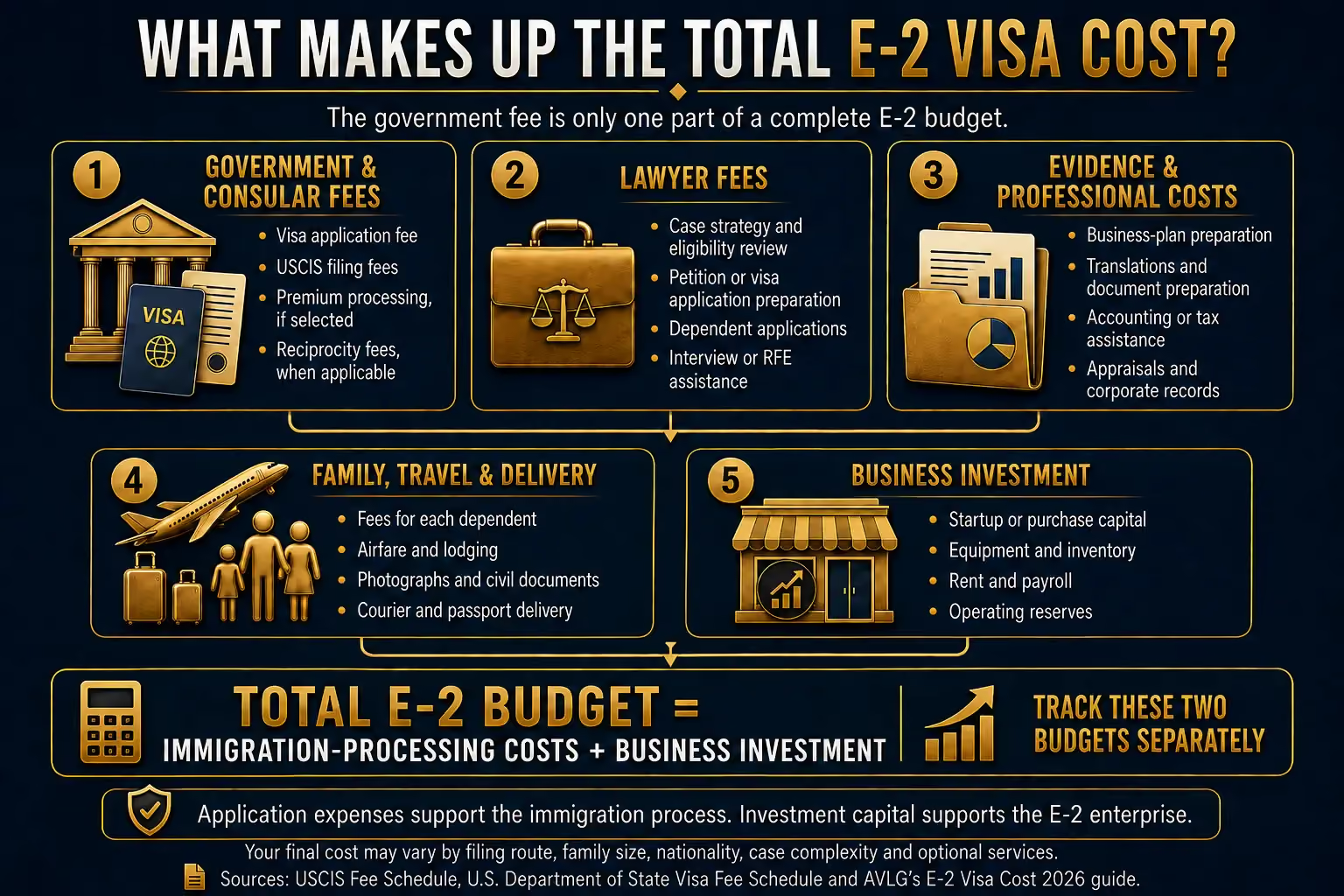
A full-service legal fee may cover eligibility analysis, filing-route strategy, review of the investment and business structure, preparation of immigration forms, and organization of supporting evidence. It may also include a legal support letter, filing or consular submission, routine communication, and review of government notices.
E-2 cases often require more than completing forms. The attorney may need to analyze treaty nationality, ownership and control, whether the investment is substantial and at risk, whether the enterprise is real and operating, and whether the business is likely to satisfy the marginality requirement.
Business-plan preparation, detailed source-of-funds tracing, translations, and interview preparation may be included by some firms but separately priced by others. The written engagement agreement should identify the exact scope.
A straightforward case involving a documented purchase of an operating business may require less work than a startup funded through multiple international transfers. Fees may increase when the investment funds come from property sales, gifts, inheritance, loans, cryptocurrency, or several accounts that require detailed tracing.
Multiple owners, complex corporate structures, prior immigration problems, urgent deadlines, substantial translation needs, or an earlier E-2 refusal may also increase the attorney’s work. A lower fee may be available for an uncomplicated extension or renewal when the lawyer already possesses a complete copy of the previous filing.
Many immigration firms charge a flat fee for a defined E-2 service. This gives the applicant a clearer starting budget, but the agreement may exclude unexpected work such as responding to a complex Request for Evidence or addressing a prior status violation.
Hourly billing may be used for consultations, limited document review, unusual legal research, or work that cannot be predicted accurately. Some firms use a hybrid structure: a flat fee for the standard filing and separate charges for complications.
A quote for the principal investor may not cover the spouse, children, second business partner, or employees seeking E-2 classification. Extensions, renewals, material business changes, amended filings, and later consular applications may also be treated as separate matters.
Applicants should ask how the firm charges for Requests for Evidence, visa refusals, motions, and refiling after a denial. AVLG’s published schedule, for example, lists different prices for new petitions, extensions, renewals, and certain RFE responses rather than treating every E-2 service as identical.
Compare the scope of each quote, not simply the total. A lower estimate may cover forms and filing but exclude the business plan, source-of-funds analysis, legal brief, dependent applications, or interview preparation.
Before retaining counsel, ask who will develop the case strategy, whether an attorney will review the final package, what happens if the business structure changes, and which events trigger additional fees. The answers make an accurate comparison possible and reduce unexpected expenses later.
Unless the agreement expressly says otherwise, attorney fees do not include government filing fees, the business investment, visa issuance fees, premium processing, translations, expert business-plan services, courier costs, or travel to a consular interview.
These expenses should be listed separately when calculating the complete E-2 budget. Paying an attorney also does not guarantee approval; the legal fee compensates the firm for professional analysis, preparation, and representation within the agreed scope.
For an applicant applying through a U.S. embassy or consulate, the government cost generally begins with the E-category visa application fee. The final amount may increase based on family size, nationality, interview location, and travel or document expenses.
The Department of State currently charges a $315 nonimmigrant visa application fee for an E-2 visa. This fee is generally nonrefundable, including when the application is refused or the applicant later decides not to proceed.
The fee applies separately to every person requesting a visa. A principal investor applying with a spouse and two children would therefore normally pay $1,260 in visa application fees. The current amount appears in the official Department of State visa fee schedule.
Some applicants must pay an additional visa issuance fee after approval. The amount depends on the applicant’s nationality and may be zero for citizens of certain treaty countries.
The Department of State reciprocity tables identify any applicable issuance fee. They also show the typical visa validity period and number of permitted entries for each nationality. Reciprocity therefore affects more than the initial E-2 cost: a visa with a shorter validity period may require the investor and dependents to apply and pay again sooner.
Family members should be checked individually, particularly when they do not share the principal investor’s nationality.
E-2 submission procedures vary among consular posts. Some embassies require a substantial electronic filing package before an interview can be scheduled, while others impose specific page limits, file formats, or document-order rules. Applicants should follow the instructions of the U.S. embassy or consulate where they will apply.
A realistic consular budget may also include:
These are not additional federal E-2 filing fees, but they can materially affect the total cost—especially for a family or an applicant who must travel to another city or country for the interview. Because appointments and processing times vary, applicants should also avoid booking nonrefundable travel until the consulate’s procedures and timing are clear.
An applicant requesting E-2 status from within the United States generally faces more government fees than a direct consular applicant. The exact total depends on the petitioner’s classification, filing method, family members, and whether premium processing is requested.
The principal E-2 investor or qualifying employee generally uses Form I-129 to request an initial change of status or an extension through USCIS.
For a regular petitioner, the current E-classification fee is $1,015 for a paper filing or $965 for an eligible online filing. A qualifying small employer or nonprofit pays $510 on paper or $460 online, according to the current USCIS fee schedule.
A small employer generally means a petitioner with 25 or fewer full-time-equivalent U.S. employees. Eligibility for the reduced fee depends on the petitioner’s actual organization and workforce—not simply the amount invested in the business or the fact that the enterprise is new.
The Asylum Program Fee is a separate charge submitted with most Form I-129 filings. A regular petitioner generally pays $600, while a qualifying small employer pays $300 and a qualifying nonprofit pays $0.
The Form I-129 and Asylum Program Fee must be calculated together, but they remain separate government charges. Using the wrong petitioner category or submitting an incorrect fee combination may cause USCIS to reject the filing before reviewing the E-2 evidence.
Premium processing is optional for qualifying Form I-129 E-2 filings. As of 2026, the Form I-907 premium-processing fee is $2,965.
This service requires USCIS to take an adjudicative action within the applicable premium-processing period. That action may be an approval, denial, Request for Evidence, or another formal notice; it is not a guarantee of approval.
If USCIS issues an RFE, the premium-processing timeline is affected while the agency waits for the response. Applicants should therefore consider whether faster initial action justifies the additional cost based on their immigration status, business schedule, and evidence readiness. USCIS provides current instructions through its premium-processing request guidance.
An E-2 spouse or unmarried child under 21 requesting a change or extension of dependent status generally uses Form I-539. The current fee is $470 for a paper filing or $420 for an eligible online filing.
Family filing mechanics matter. Eligible dependents applying together may use one paper Form I-539 package with the required co-applicant supplements, while USCIS generally limits online filing to applicants filing only for themselves. Applicants should therefore confirm the correct filing configuration before multiplying the fee by every family member.
Expediting the principal applicant’s Form I-129 does not automatically expedite the dependents’ Form I-539 requests. The USCIS online-filing eligibility rules for Form I-539 should be reviewed before choosing between paper and online submission.
E-2 attorney fees vary according to the filing route, business structure, ownership arrangement, source of funds, and amount of evidence involved. A new investor petition generally requires more legal work than a straightforward extension or visa renewal based on an already approved case.
Legal fees are separate from government charges, business-plan expenses, and the capital invested in the enterprise.
American Visa Law Group publishes competitive E-2 pricing so applicants can estimate the likely legal cost before retaining the firm.
Readers can review AVLG’s 2026 immigration lawyer fee schedule for current pricing and related terms. These published fees may change, and unusual complexity can affect the final quote. The signed engagement agreement controls the services included in each case.
Depending on the agreed scope, representation may include an initial eligibility assessment, selection of the appropriate USCIS or consular route, and analysis of treaty nationality.
The attorney may also review the ownership and control structure, trace the lawful source and path of investment funds, and evaluate whether the business documentation addresses substantiality, marginality, and the requirement that the capital be placed at risk.
Other services may include preparing immigration forms, developing an evidence checklist, reviewing business records, drafting the legal support letter, assembling the filing package, submitting the case, and monitoring routine government notices. Interview preparation and dependent applications should be confirmed separately rather than assumed to be included.
An E-2 legal fee does not ordinarily include USCIS or Department of State charges, premium processing, reciprocity fees, or the investment itself.
Third-party services may also be separate, including:
Work arising after the original filing—such as a complex RFE, amendment, visa refusal, renewal, dependent application, or refiling—may require a separate fee unless expressly covered by the agreement. Applicants should compare legal quotes based on the complete scope of representation, not the headline price alone.
The E-2 investment is not a government filing fee or attorney fee. It is capital committed to the U.S. business and exposed to possible financial loss. However, because it is usually the largest financial component of an E-2 project, applicants should track it alongside—but separately from—the cost of preparing and filing the immigration case.
E-2 law does not establish a universal minimum investment of $100,000 or any other specific amount. The appropriate investment depends on the cost, nature, and scale of the enterprise.
A lower-cost service business may qualify with less capital than a restaurant, manufacturing company, or inventory-heavy operation. Applicants can review AVLG’s detailed explanation of how much investment is required for an E-2 visa for a closer examination of this issue.
The investment must be substantial in relation to the total cost of purchasing or establishing the business. Generally, a lower-cost enterprise requires a higher percentage of its total cost to be committed.
The capital must also be at risk and genuinely committed to the commercial enterprise. Money remaining uncommitted in a personal or business bank account is usually insufficient by itself. The USCIS E-2 treaty investor requirements also require a real, operating enterprise rather than an idle or speculative investment.
No investment amount guarantees approval. Officers evaluate the financial commitment together with the business model, operating readiness, source of funds, ownership, control, and ability of the investor to develop and direct the enterprise.
Qualifying investment capital may include documented expenditures such as equipment, inventory, lease commitments, licenses, initial marketing, or amounts paid to acquire an operating business.
By contrast, USCIS fees, consular charges, attorney fees, visa-interview travel, and personal living expenses are not automatically treated as qualifying business investment. Some professional or startup expenses may require case-specific analysis. Applicants should therefore avoid combining every E-2-related payment into one claimed investment figure.
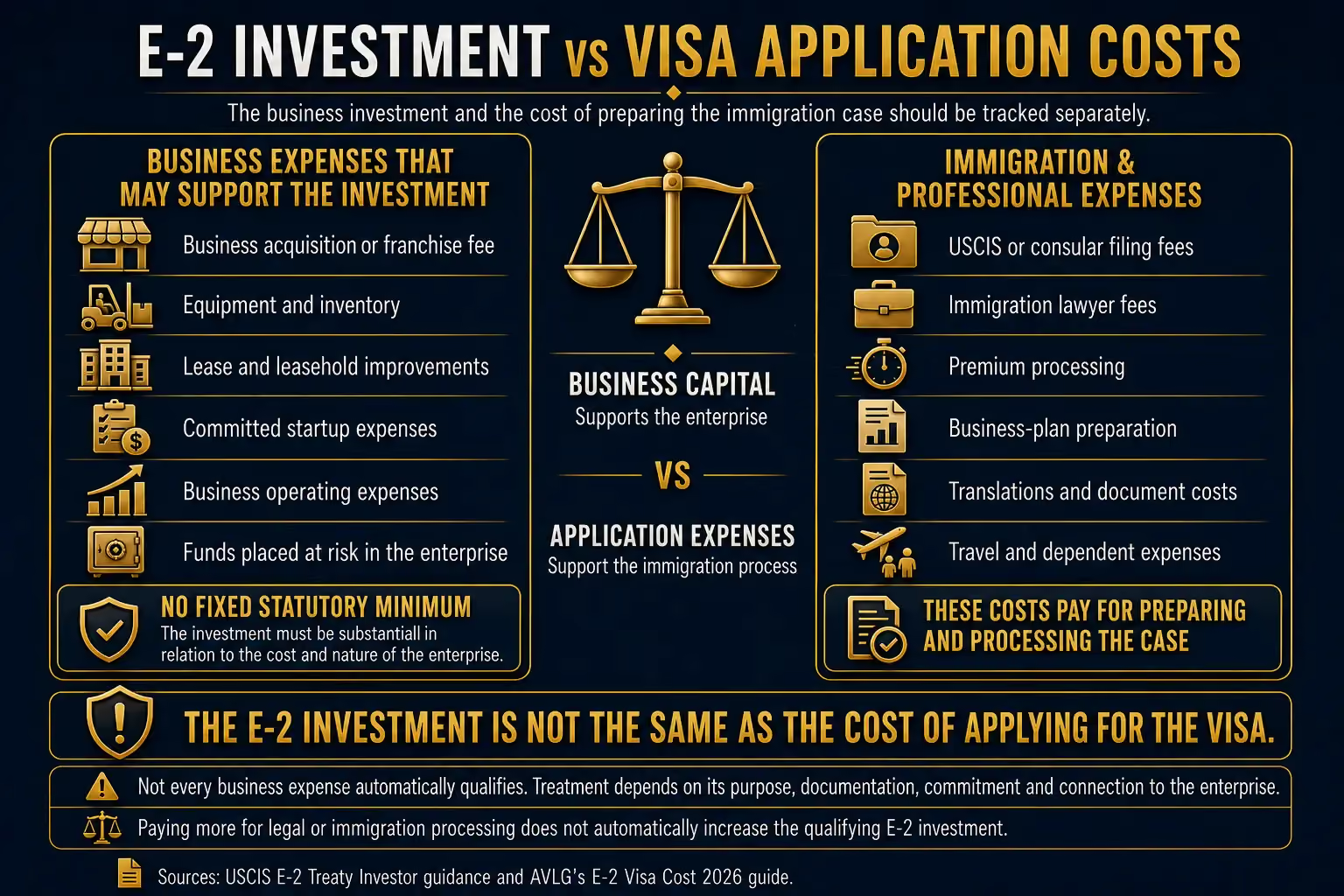
The type of transaction affects both the required capital and the supporting evidence. A startup may require leases, equipment purchases, licenses, and operating reserves. A business acquisition may involve due diligence, valuation records, and a purchase agreement. A franchise can add franchise fees, buildout costs, and mandatory vendor expenses.
Escrow can sometimes help protect the investor when purchasing a business, provided the funds are genuinely committed and the release conditions are structured correctly. Poorly drafted refund provisions may undermine the argument that the capital is at risk.
Before committing substantial funds, investors should coordinate immigration strategy with appropriate business, tax, and transactional advice. This helps ensure that the commercial arrangement supports both the E-2 application and the investor’s broader financial interests.
Government and lawyer fees are not the only expenses involved in an E-2 case. Applicants may also need professional assistance to explain the business, document the investment, and trace the lawful source and path of funds. These costs vary significantly because the evidence required for a simple startup may differ from that needed for an acquisition, franchise, or multi-owner enterprise.
An E-2 business plan should connect the company’s operations, market, staffing strategy, revenue model, and financial projections to the legal requirements for a real and non-marginal enterprise.
A specialized writer or financial professional may be appropriate when the business is new or the projections require detailed market research. Cost generally increases with the number of business locations, revenue streams, employees, products, and supporting financial assumptions. The U.S. Small Business Administration’s business-planning guidance provides a useful overview of standard business-plan components, although an E-2 plan must also address immigration-specific issues.
Some cases require assistance beyond immigration counsel. A CPA or bookkeeper may prepare financial statements, verify transactions, or organize payroll and tax records. Tax professionals may advise on the consequences of funding or operating the U.S. enterprise.
Corporate or transactional counsel may assist with entity formation, ownership agreements, franchise documents, leases, contracts, or a business purchase. The IRS overview of U.S. business structures explains common entity types, but selecting the appropriate structure requires individualized business and tax analysis.
Applicants should confirm which professionals are needed and whether their services are included in the legal quote.
Source-of-funds evidence may include foreign bank statements, property-sale records, tax returns, gift documents, loan agreements, probate records, and transfer confirmations. Certified translations may be necessary when those records are not in English.
Other possible expenses include business valuations, equipment or property appraisals, licenses, certificates, foreign corporate records, printing, scanning, and delivery.
More expensive evidence is not automatically more persuasive. Each document should answer a specific factual or legal question—such as where the funds originated, how they reached the U.S. business, what was purchased, or whether the enterprise is operational. A focused evidence plan can control costs while producing a clearer application.
An E-2 investor’s budget should account separately for a spouse and unmarried children under 21. Dependent costs vary depending on whether the family applies at a U.S. consulate or requests E status from within the United States.
Each spouse or child applying for an E-2 dependent visa generally pays the $315 E-category visa application fee listed in the Department of State fee schedule.
A nationality-based reciprocity fee may also apply after approval. Families should additionally budget for photographs, certified translations, marriage and birth certificates, passport delivery, and travel or lodging for the interview. These practical expenses can make family size an important part of the overall E-2 visa cost.
A spouse or child already in the United States may need Form I-539 to request an initial change to E dependent status or an extension. The current filing fee is $470 on paper or $420 for an eligible online filing.
The total should not automatically be calculated by multiplying the fee by every family member. Eligible dependents may sometimes file together in one paper package, while online filing is generally limited to applicants filing only for themselves. The correct arrangement depends on who is applying and how the forms are submitted. Current instructions are available on the USCIS Form I-539 page.
A qualifying E-2 spouse is generally employment authorized incident to valid E status and is not required to file Form I-765 simply to obtain permission to work. An unexpired Form I-94 showing the E-2S classification can serve as evidence of that authorization.
A spouse may still choose to request an Employment Authorization Document in some circumstances, but doing so may create an optional filing expense. The USCIS guidance for E spouses explains the documentation rules.
E-2 dependent children are not employment authorized incident to status. Families should therefore avoid assuming that the spouse and children have identical work-authorization rights or related costs.
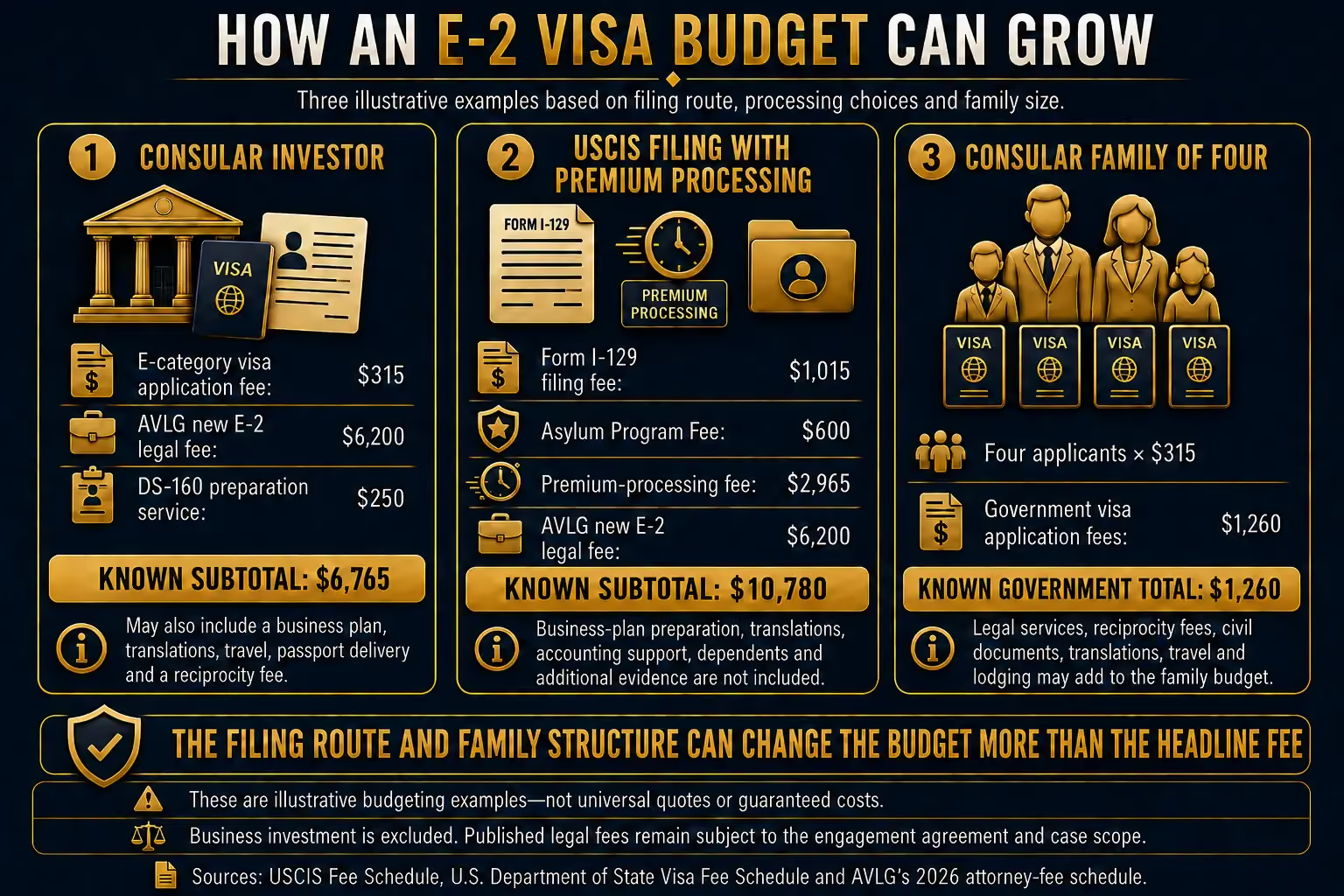
The following examples illustrate how the filing route and family structure can change the E-2 visa cost. They are budgeting tools, not universal quotes. Each example excludes investment capital and variable third-party expenses unless specifically identified.
Consider a principal investor applying alone through a U.S. consulate. Using AVLG’s currently published fees, the initial calculation may include:
The known subtotal would be $6,765. However, the applicant may also need to budget for a business plan, translations, photographs, passport delivery, interview travel, and any nationality-based reciprocity fee. The legal fee and scope should always be confirmed in the engagement agreement.
Assume a regular petitioner files Form I-129 on paper and requests premium processing:
The known subtotal would be $10,780, before business-plan preparation, translations, accounting support, or other evidence costs. A qualifying small employer or nonprofit may pay lower Form I-129 and Asylum Program Fees. Applicants should verify the correct petitioner category against the current USCIS fee schedule.
A principal investor applying at a consulate with a spouse and two children would generally pay four separate $315 visa fees, producing a government application-fee total of $1,260.
The family may also incur separate reciprocity fees, photographs, birth and marriage document expenses, translations, travel, and passport delivery. Reciprocity charges should be checked individually when family members hold different nationalities.
If the family instead requests status from within the United States, the principal generally uses Form I-129 while the dependents may require Form I-539. Qualifying dependents filing together may sometimes use one paper Form I-539 package with a $470 filing fee, depending on the filing configuration.
The headline government fee rarely represents the complete budget. A practical calculation is:
Total E-2 budget = government fees + lawyer fees + evidence and business-document expenses + dependent costs + contingency.
Investment capital and operating reserves should be tracked separately because they serve the business rather than paying for immigration processing.
E-2 expenses do not necessarily end after the first approval. Investors may later need to extend their status through USCIS, renew a visa at a consulate, or obtain legal advice when the business changes. Each event can create a new filing cycle with separate government, legal, and evidence costs.
An E-2 investor seeking additional authorized stay in the United States generally files another Form I-129. The petitioner may again owe the applicable Form I-129 fee and Asylum Program Fee, plus optional premium processing if requested.
Dependents may require a separate Form I-539 filing. The business must also provide updated evidence showing that it remains real, operating, and compliant with E-2 requirements. Tax returns, payroll records, bank statements, licenses, contracts, financial statements, and revised projections may create additional accounting or document-preparation expenses.
AVLG currently publishes a $4,350 legal fee for an E-2 extension, subject to the confirmed scope and complexity. Current pricing appears in AVLG’s 2026 immigration lawyer fee schedule.
Visa renewal is different from extending status through USCIS. A person may hold valid E-2 status in the United States while having an expired visa stamp. International travel can require a new consular visa application before returning.
Each applicant generally pays the $315 E-category visa fee, plus any applicable reciprocity charge. AVLG’s published legal fee for an E-2 visa renewal is $2,700. Travel, translations, photographs, passport delivery, and updated business evidence may increase the total.
A renewal is a new adjudication. Prior approval does not guarantee that a consular officer will issue another visa.
Changes involving ownership, business structure, operations, location, investment, or the investor’s role may require legal review. A substantial change in the basic characteristics of the enterprise may require an amended Form I-129 filing or a new consular application.
Not every ordinary business adjustment automatically requires an amendment. The legal question is whether the change materially affects the facts supporting E-2 eligibility.
Before completing a merger, ownership transfer, major restructuring, or significant change in operations, the investor should evaluate possible immigration consequences. Early review can help identify filing fees, updated evidence, and legal costs before the transaction becomes difficult to modify.
Most E-2 cases do not follow exactly the same path after filing. USCIS or a consular officer may request additional documents, and some cases require a revised strategy. These events can create costs beyond the original government and legal fees, although applicants should not assume that complications will occur.
A Request for Evidence asks the applicant or petitioner to provide additional information before USCIS makes a decision. A Notice of Intent to Deny identifies concerns that may lead to denial unless they are adequately addressed.
Responding may involve additional attorney work, updated financial statements, revised business-plan projections, accounting records, translations, source-of-funds documents, or evidence that the enterprise is operating and non-marginal. The USCIS policy on RFEs and NOIDs explains how the agency uses these notices during adjudication.
AVLG’s E-2 listing identifies an additional $1,000 RFE fee where applicable, subject to the scope and complexity of the response. Applicants should confirm the current amount through AVLG’s published immigration lawyer fee schedule and written engagement terms.
Government filing and visa application fees are generally not refunded merely because USCIS denies a petition or a consulate refuses a visa. Refilling may therefore require new government fees, updated evidence, and additional legal preparation.
The appropriate response depends on why the case was unsuccessful. Options may include correcting and refiling the case, pursuing consular processing, filing an eligible motion, or evaluating another immigration strategy. A prior refusal may also require a more detailed legal and factual explanation in the next application.
Before spending money on another filing, the investor should review the decision carefully. Repeating the same evidence without addressing the underlying concern can increase costs without improving the case.
There is no single payment arrangement for every E-2 case. Responsibility depends on whether the applicant is the principal investor or an E-2 employee, how the enterprise is structured, and what the legal-services agreement requires.
A principal E-2 investor often personally pays the initial investment and may also pay the visa application, legal, travel, and dependent expenses. However, the U.S. enterprise may pay certain business-related legal or professional costs when properly authorized and recorded.
The analysis may differ for an E-2 executive, supervisor, or essential employee. In an employee case, the E-2 enterprise commonly serves as the petitioner or sponsoring employer and may pay the Form I-129 and attorney fees. The employee may remain responsible for personal visa, travel, or family expenses, depending on the company’s policy and written arrangement.
The engagement agreement should identify the client, payment source, services covered, and responsibility for government or third-party charges.
The E-2 enterprise may be able to pay appropriate legal, filing, accounting, or business-plan expenses. However, payment by the company can raise tax, bookkeeping, capitalization, reimbursement, and corporate-authorization questions.
The fact that an expense relates to an E-2 case does not automatically make it deductible. Likewise, a payment should not automatically be counted toward the qualifying investment merely because it came from the business account.
The IRS guide to business-expense resources distinguishes among deductible, capitalized, and other business costs, but it does not replace case-specific advice. Investors should consult an appropriate CPA, tax adviser, or corporate attorney about classification and recordkeeping.
Clear payment records are particularly important because the E-2 application may need to show who provided the investment funds, how the money moved, and which expenditures were made for the enterprise.
Yes. U.S. immigration law does not generally require an E-2 applicant to hire a lawyer. Investors may prepare their own consular applications or file for E-2 status through USCIS. Self-filing can reduce upfront legal fees, but the applicant remains responsible for choosing the correct route, completing the forms, meeting deadlines, and presenting a consistent evidentiary record.
An E-2 case involves more than submitting business documents. Applicants must establish treaty nationality, qualifying ownership or control, a substantial investment, and the ability to develop and direct the enterprise. They must also document the lawful source and path of the invested funds and show that the business is real, operating or close to operating, and not marginal. The USCIS requirements for E-2 treaty investors provide the governing framework, but applying those standards to a particular transaction may require careful judgment.
Self-filing may be more realistic when the ownership structure is simple, the funds came from an easily documented source, the business records are complete, and there are no prior immigration or admissibility concerns. The applicant should also be able to organize financial evidence, explain business projections, follow consular-post instructions, and respond effectively if USCIS issues a request for evidence.
Legal guidance may be particularly useful for business acquisitions, franchises, multiple-owner companies, gifted or borrowed funds, complicated money transfers, prior visa denials, or time-sensitive status filings. Consular applicants must also account for procedures that can vary by embassy or consulate under the Department of State’s E-visa application guidance.
An attorney can help identify weaknesses and present the evidence clearly, but representation does not guarantee approval. The decision should reflect the case’s complexity, the applicant’s ability to manage detailed documentation, and the financial consequences of delay or refiling.
A realistic E-2 visa budget should cover the entire process—not only the government filing fee or attorney’s quote. Expenses arise at different stages, and some may not become clear until the business documents and immigration strategy have been reviewed.
Organize the budget into five categories:
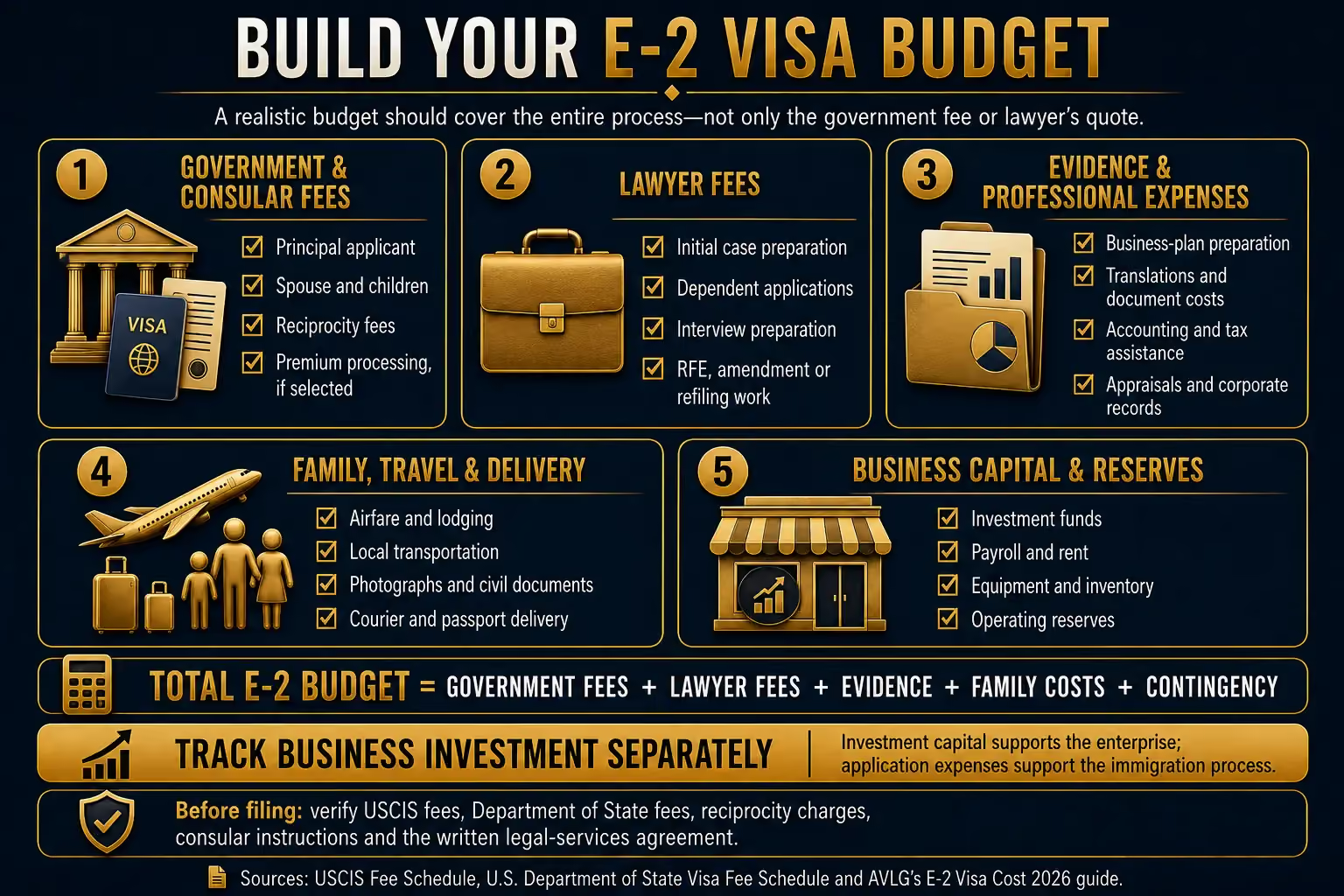
Applicants should also maintain a reasonable contingency fund. Additional expenses may arise if updated financial records or translations are required, USCIS issues a request for evidence, an interview must be rescheduled, or the applicant later needs to apply for an E-2 visa at a consulate after receiving a change of status in the United States.
Before finalizing the budget, verify current charges through the Department of State visa fee schedule, the applicant’s country-specific reciprocity information, the applicable embassy’s instructions, and the attorney’s written fee agreement. This approach provides a more useful estimate while leaving room for case-specific developments.
Before hiring an E-2 visa lawyer, ask for a written explanation of the representation scope and fee structure. A quoted flat fee may appear straightforward, but applicants should understand which services are included, which are optional, and which circumstances could result in additional charges.
Useful questions include:
Applicants purchasing an existing business or franchise should also confirm whether entity formation, tax advice, corporate work, franchise review, and purchase-agreement services are excluded. Immigration counsel may review these documents for E-2 purposes without representing the applicant in the underlying commercial transaction.
A published resource such as AVLG’s 2026 immigration lawyer fee schedule can provide a useful starting point, but the signed legal-services agreement should identify the actual fee and scope for the individual case. Comparing lawyers based only on the initial price can be misleading when one quote includes substantial preparation and another covers only limited filing assistance. Clear expectations at the beginning make it easier to compare services and build an accurate overall budget.
American Visa Law Group helps E-2 investors select the appropriate filing route based on their current location, immigration status, travel plans, and business timeline. This may involve applying through a U.S. embassy or consulate or requesting a change or extension of status through USCIS.
The firm evaluates the proposed business and investment structure, including treaty nationality, ownership and control, substantiality, and whether the enterprise is likely to satisfy the non-marginality requirement. The legal team can also examine the lawful source and path of funds, identify documentation gaps, and develop an evidence plan suited to the particular transaction.
Within the scope established by the legal-services agreement, AVLG may prepare immigration forms, organize supporting records, draft legal arguments, coordinate with business-plan professionals or other advisers, and help applicants prepare for filing or a consular interview. Prospective clients can meet the AVLG immigration team to review the professionals who work on immigration matters.
AVLG serves clients nationwide and can assess both immediate E-2 filing costs and longer-term issues, including dependent applications, renewals, material business changes, and future immigration planning. Applicants may also read AVLG client reviews when evaluating the firm’s communication and service approach.
Investors seeking advice based on their specific business, funding history, and immigration circumstances can schedule an E-2 consultation. Representation can improve planning and case organization, but no lawyer can guarantee approval by USCIS or a consular officer.
Frequently Asked Questions About E-2 Visa Costs
There is no single total. A consular applicant generally begins with a $315 visa fee per person, while a USCIS filing involves Form I-129 and other possible charges. Lawyer fees, business-plan preparation, translations, travel, dependents, and supporting financial work can bring the total—excluding the business investment—to several thousand dollars.
The Department of State charges a $315 nonimmigrant visa application fee for each E-2 applicant. This includes the principal investor and every spouse or child applying for a visa. Some nationalities may also owe an issuance fee under the Department of State reciprocity schedule.
The Form I-129 fee for E classifications is generally $1,015, with a reduced $510 amount for qualifying small employers and nonprofit organizations. An Asylum Program Fee may also apply—generally $600, $300, or zero, depending on the petitioner. Applicants should confirm the amount through the current USCIS Fee Schedule.
As of March 1, 2026, premium processing for eligible E-1, E-2, and E-3 Form I-129 filings costs $1,780. This fee is optional and is paid in addition to the regular filing charges. Premium processing accelerates USCIS action but does not guarantee approval.
No fixed dollar minimum applies to every E-2 case. The investment must be substantial in proportion to the cost of purchasing or establishing the specific enterprise. Lower-cost businesses generally require a higher percentage of their total value to be committed than more expensive businesses.
The investment should be tracked separately from application expenses. It is the capital committed to purchasing, establishing, and operating the enterprise. Government fees, legal fees, translations, business-plan expenses, and travel costs are processing-related expenses and generally do not establish the required investment by themselves.
E-2 lawyer fees vary according to the filing route, business structure, funding history, family applications, and case complexity. Full-service representation commonly costs several thousand dollars. Applicants should request a written agreement identifying what is included and whether business-plan preparation, interview assistance, RFEs, amendments, or renewals cost extra.
For consular processing, yes. Each family member submitting a visa application generally pays the $315 fee separately. For USCIS filings, dependents normally request E status using Form I-539, with Form I-539A used for additional co-applicants where applicable. The fee structure therefore differs from consular processing.
An eligible E spouse admitted with E-2S status is generally employment authorized incident to status and does not need to file Form I-765 solely to obtain work authorization. A spouse may still choose to apply for an EAD as evidence, in which case the applicable filing fee may be required.
Government fees are generally nonrefundable after submission, even if USCIS denies the filing or a consular officer refuses the visa. Attorney fees and third-party charges are governed by their respective contracts. Applicants should review refund and refiling terms before paying or signing a legal-services agreement.
A USCIS extension may involve the Form I-129 fee, the applicable Asylum Program Fee, dependent Form I-539 charges, optional premium processing, and attorney fees. A consular renewal generally requires a new $315 fee for each applicant, plus any applicable reciprocity, travel, and professional expenses.
Consular government fees are often lower, but the overall route is not automatically cheaper. Applicants must consider airfare, lodging, dependent fees, reciprocity charges, and post-specific requirements. USCIS filing may cost more initially, while a change of status also does not place an E-2 visa in the passport for future travel.
The total E-2 visa cost in 2026 depends on more than one government fee. The final budget is shaped by whether the applicant uses consular processing or files through USCIS, the scope of legal representation, the number of accompanying family members, the evidence required, and the structure of the proposed business.
Investment capital should remain separate from application expenses. The funds committed to purchasing, establishing, or operating the enterprise serve a different purpose from visa fees, attorney fees, business-plan charges, translations, travel, and document preparation. Keeping these categories separate produces a clearer financial plan and helps prevent unexpected expenses from affecting business operations.
Before committing to a filing strategy, applicants should verify the latest USCIS and Department of State fees, review any applicable consular instructions, and obtain an estimate based on their chosen route and circumstances. For case-specific guidance, call (510) 500-1155 or schedule an E-2 consultation with American Visa Law Group.

Hasan Abdullah, Esq. is the Founder and Managing Attorney of American Visa Law Group. His practice focuses on U.S. immigration law, including family-based immigration, employment-based immigration, adjustment of status, consular processing, waivers, PERM labor certification, NIW, EB-1, H-1B, O-1, and complex immigration strategy.
Through American Visa Law Group, Mr. Abdullah helps individuals, families, professionals, investors, and employers understand their immigration options and plan around changing government policies, USCIS procedures, and Visa Bulletin movement. His work emphasizes practical legal analysis, realistic expectations, and strategy tailored to each applicant’s immigration history and long-term goals.


