Author: Hasan Abdullah, Esq.
The EB-1A cost in 2026 generally starts at $1,015 in mandatory USCIS fees for an individual self-petitioner. This amount consists of the $715 Form I-140 filing fee and the reduced $300 Asylum Program Fee. Applicants who request premium processing must pay an additional $2,965, bringing the petition-stage government fees to $3,980.
Government fees, however, represent only one part of the EB-1A budget. American Visa Law Group currently publishes a legal fee of $6,800 for an initial EB-1A petition. Based on that fee schedule, an individual self-petitioner could expect a starting petition-stage cost of approximately $7,815 without premium processing or $10,780 with premium processing. These estimates do not include translations, expert evaluations, medical examinations, adjustment of status, consular processing, dependent applications, or additional work arising from an RFE or another complication.
The final cost depends on more than the number of forms filed. The quality and organization of the evidence, the complexity of the applicant’s field, prior immigration history, family size, and the chosen green-card process can all affect the overall expense. This guide explains the USCIS filing fees, EB-1A lawyer costs, premium-processing charges, evidence-related expenses, and later green-card costs applicants should consider when building a realistic 2026 budget.
For an individual self-petitioner, the EB-1A petition-stage government cost generally starts at $1,015 in 2026. This consists of the $715 Form I-140 filing fee and the reduced $300 Asylum Program Fee. Adding the optional $2,965 premium-processing fee increases the petition-stage government total to $3,980.
These amounts cover only the filing of the EB-1A immigrant petition. They do not represent the complete cost of obtaining permanent residence. Attorney fees, translations, expert evaluations, evidence-development services, adjustment of status, consular processing, medical examinations, and applications for a spouse or children can substantially increase the overall budget.

The petition stage begins with Form I-140, Immigrant Petition for Alien Workers. An EB-1A applicant may file this petition without a permanent job offer or employer sponsor, which is why many extraordinary-ability applicants file as individual self-petitioners.
The Form I-140 filing fee is $715. In addition, USCIS requires the petitioner to submit the applicable Asylum Program Fee. An individual self-petitioner generally pays the reduced $300 fee, producing a petition-stage total of $1,015 before premium processing or legal representation.
An employer filing the petition may owe a different Asylum Program Fee. The amount can depend on whether the petitioner is a regular employer, a qualifying small employer, or a nonprofit organization. Applicants should therefore avoid assuming that every EB-1A petition carries the same government total.
Premium processing is optional. An applicant who requests it files Form I-907 and pays an additional $2,965 for an eligible EB-1A Form I-140 petition. The fee increased from $2,805 to $2,965 effective March 1, 2026.
For a typical individual self-petitioner, the calculation is:
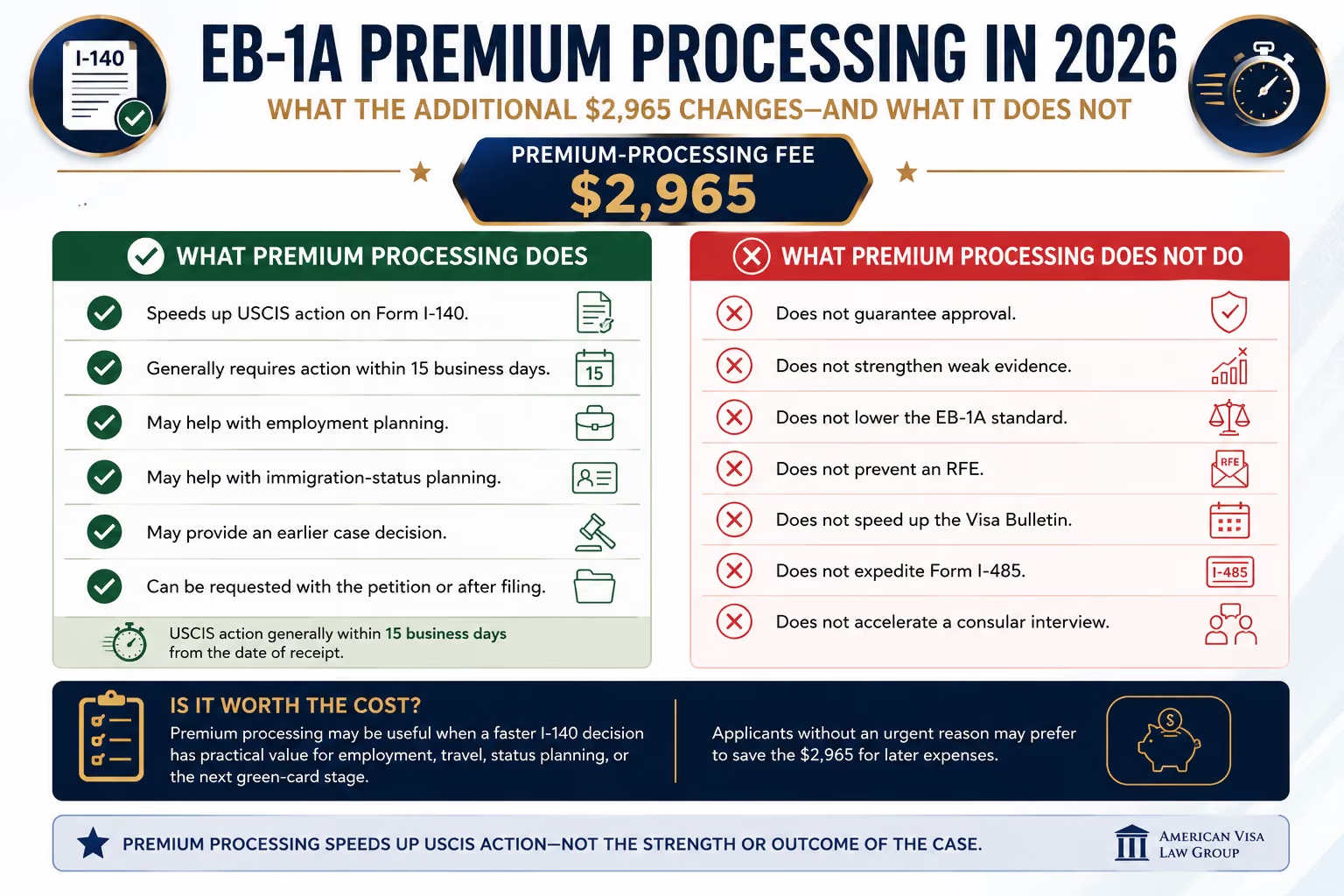
Premium processing purchases faster USCIS action on the I-140 petition. It does not lower the EB-1A evidentiary standard, improve the legal merits of the case, guarantee approval, or accelerate later stages of the green-card process.
The decision should therefore be based on whether faster action has practical value. For some applicants, receiving an earlier decision may help with employment, travel, nonimmigrant-status planning, or determining when to proceed with the next stage. For others, regular processing may be a reasonable way to reduce the immediate cost.
An approved Form I-140 establishes the underlying immigrant classification, but it is not the final step in becoming a permanent resident. Depending on the applicant’s location and visa availability, the person will generally proceed through either adjustment of status inside the United States or immigrant-visa processing through a U.S. consulate.
That later stage introduces separate expenses. These may include:
As a result, the phrase “EB-1A cost” can refer to three different numbers: the cost of filing Form I-140, the cost of preparing the legal petition, or the total cost of completing the entire permanent-residence process. A useful estimate should specify which of these stages is included.
Two applicants filing under the same immigrant classification can have very different total expenses. One applicant may already possess organized, independently verifiable evidence and need only the petition and legal preparation. Another may require extensive translations, expert analysis, documentation of business impact, or substantial work connecting achievements to the EB-1A regulatory criteria and final-merits standard.
The total also changes when premium processing is requested, family members are included, or USCIS issues a Request for Evidence. For this reason, applicants should build an EB-1A budget around the full filing strategy rather than relying on a single advertised government fee or attorney quote.
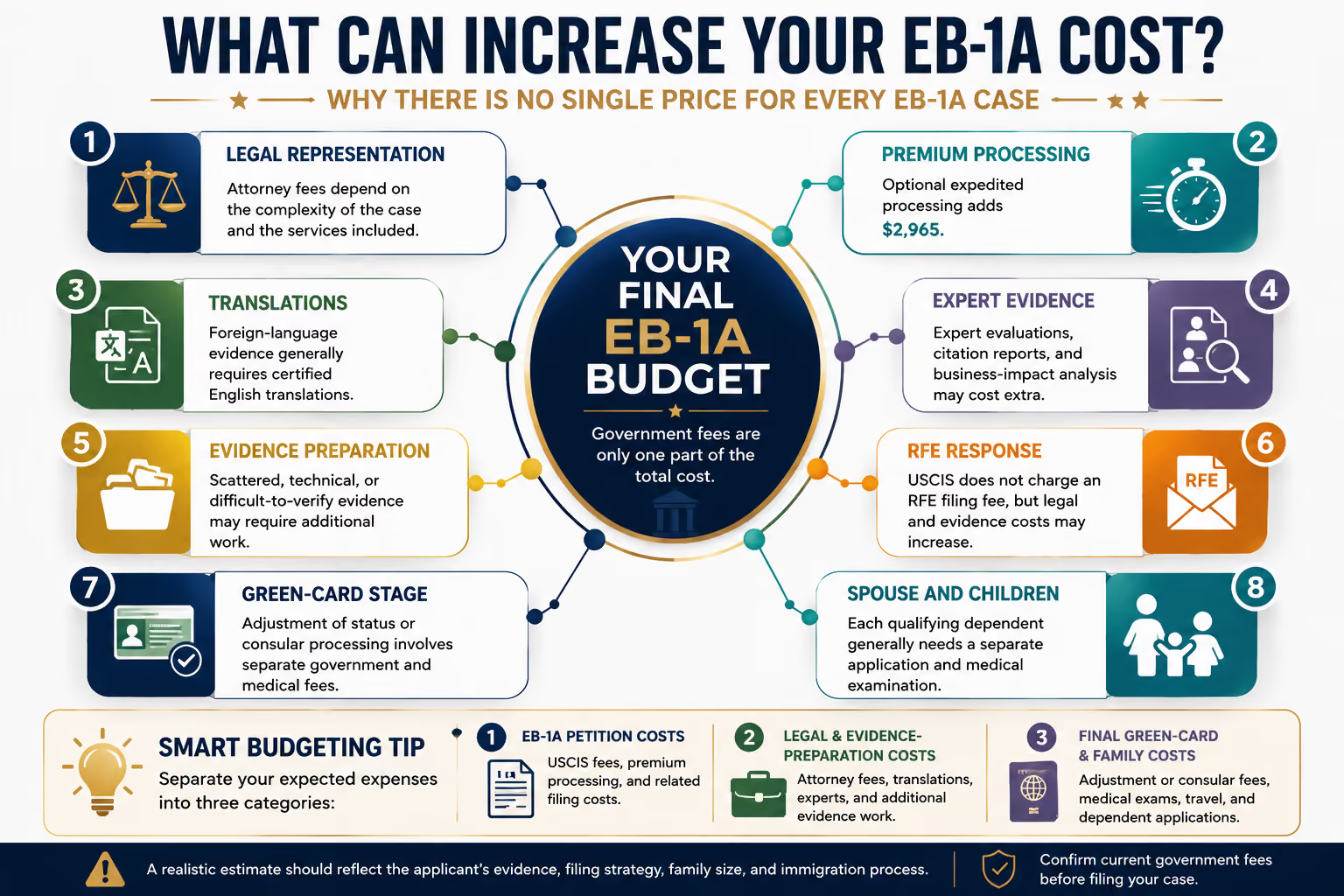
For most individual self-petitioners, the mandatory EB-1A USCIS filing fees total $1,015 in 2026.
This total covers the initial EB-1A petition only. It does not include premium processing, attorney fees, evidence-related expenses, or the later cost of applying for permanent residence.
The EB-1A petition is filed using Form I-140, Immigrant Petition for Alien Workers. The filing fee is $715.
EB-1A applicants may generally file the petition on their own behalf without an employer sponsor or PERM labor certification. However, self-petitioning does not remove the USCIS filing fees.
Form I-140 filings may also require an Asylum Program Fee. Despite its name, this fee applies to certain employment-based immigration petitions and does not mean the applicant is seeking asylum.
The amount depends on who files the petition:
Most EB-1A applicants filing on their own behalf pay the reduced $300 fee. Applicants should not assume the fee is automatically $0 simply because no employer is involved.
USCIS may reject the petition if the filing fee is missing or incorrect. A rejection does not decide whether the applicant qualifies for EB-1A, but it can delay the case and require the entire filing package to be submitted again.
Before filing, confirm:
USCIS fees can change, so applicants should review the official USCIS fee schedule immediately before submitting the petition.
EB-1A premium processing costs $2,965 in 2026. It is optional and requested by filing Form I-907 with the EB-1A Form I-140 petition or after the petition is already pending. The current fee applies to requests filed on or after March 1, 2026.
For a typical individual self-petitioner, premium processing increases the initial government cost as follows:
For an eligible EB-1A petition, premium processing generally requires USCIS to take action within 15 business days. That action may be an approval, denial, Request for Evidence, Notice of Intent to Deny, or another official case action. It does not necessarily mean the applicant will receive a final approval within 15 business days.
If USCIS issues an RFE, the premium-processing clock stops while the petitioner prepares a response. A new processing period begins after USCIS receives the response.
Premium processing only speeds up USCIS review of the Form I-140 petition. It does not:
Applicants should not treat premium processing as a way to strengthen a weak petition. The quality of the evidence and legal argument remains the same regardless of the processing speed.
Premium processing may be useful when the applicant needs a faster decision for employment planning, immigration-status strategy, international travel, or deciding when to begin the next green-card stage.
However, it is not necessary for every case. An applicant without an urgent deadline may prefer to keep the additional $2,965 available for attorney fees, evidence expenses, adjustment of status, or consular processing.
The practical question is not simply whether premium processing is faster. It is whether receiving a faster USCIS decision provides enough personal or professional value to justify the additional cost.
American Visa Law Group currently lists an EB-1A attorney fee of $6,800 for preparing an EB-1A extraordinary-ability petition. This legal fee is separate from the $1,015 in standard government filing fees and the optional $2,965 premium-processing fee.
Based on AVLG’s published pricing, the initial petition-stage budget would be approximately:
These totals do not include adjustment of status, consular processing, medical examinations, translations, dependent applications, or other third-party expenses.
An EB-1A petition requires more than completing Form I-140. The attorney must evaluate the applicant’s achievements, determine which EB-1A criteria are supported, identify weaknesses, and present the evidence in a clear legal argument.
Depending on the engagement agreement, the legal fee may cover:
AVLG explains that its immigration legal fees generally cover case strategy, forms, cover letters, evidence planning, organization, and attorney or paralegal preparation time.
Government filing fees and third-party expenses are generally not included in the attorney fee. Separate costs may include:
Applicants should review the written engagement agreement carefully. A lower quote may not be less expensive overall if important services are excluded or billed separately later.
The best way to compare EB-1A lawyer costs is to compare the scope of representation—not only the advertised price. Ask what work is included, who will prepare the case, whether RFE assistance is covered, and whether the quoted fee applies only to Form I-140 or to later green-card stages as well.
EB-1A attorney fees vary because no two extraordinary-ability cases require the same amount of analysis, evidence development, and legal work. A well-documented applicant with organized records may require less preparation than someone with strong achievements but limited independent proof.
Several factors can affect the legal fee.
Applicants who already have clear records of awards, publications, media coverage, judging activity, major contributions, or leadership roles may be easier to evaluate and present.
When evidence is scattered, outdated, difficult to verify, or written in several languages, the attorney may need additional time to identify gaps and build a coherent record.
Some professions are easier to document than others. Academic researchers may rely heavily on publications and citations, while entrepreneurs may need to prove business impact, critical roles, revenue growth, or industry influence.
Artists, physicians, executives, athletes, and technology professionals may each require a different evidence strategy. The attorney must explain the significance of the achievements in a way that a USCIS officer can understand.
USCIS requires evidence of a major internationally recognized award or documentation satisfying at least three regulatory criteria. However, claiming more criteria does not automatically create a stronger case.
A careful attorney will usually focus on the criteria supported by credible evidence rather than adding weak arguments simply to increase the number claimed. Cases involving several overlapping or unusual criteria may require more legal analysis.
Meeting three criteria is only part of the EB-1A review. USCIS also considers the evidence as a whole to determine whether the applicant has sustained national or international acclaim and is among the small percentage at the top of the field.
Preparing this broader argument can require substantial work, especially when the applicant’s achievements are strong but do not fit neatly into the regulatory categories.
Previous visa filings, RFEs, denials, inconsistent job descriptions, or status issues can increase the complexity of a case. The attorney may need to review earlier records and make sure the new petition remains accurate and consistent.
Attorney fees may also increase when the applicant needs expedited preparation, extensive recommendation-letter assistance, complex business documentation, or support responding to an RFE or Notice of Intent to Deny.
For this reason, applicants should request a case-specific quote rather than assuming that every EB-1A petition will cost the same. The fee should reflect the actual work required, the condition of the evidence, and the scope of representation.
Some EB-1A cases require expenses beyond USCIS and attorney fees. These costs depend on the applicant’s field, the condition of the evidence, and whether outside professionals are needed to explain or verify achievements.
Common third-party expenses may include:
Any foreign-language document submitted to USCIS generally needs a complete English translation with the required translator certification. This may apply to media articles, awards, contracts, academic records, government documents, and professional memberships.
Translation costs can increase quickly when a petition contains a large number of foreign-language exhibits. Applicants should focus on documents that materially strengthen the case rather than translating every available record.
Some applicants use expert reports to explain the importance of their work, the reputation of an award, the impact of a business, or the significance of academic citations.
These reports can be useful when they add independent context, but they should support objective evidence rather than replace it. A paid expert opinion alone will not establish extraordinary ability if the underlying record is weak.
Researchers may pay for citation reports or journal-ranking data. Entrepreneurs and executives may need company records, financial documentation, market research, or independent evidence of business impact.
The amount spent should match the value of the evidence. A longer petition is not necessarily a stronger petition. Clear, credible, and relevant documentation is usually more useful than a large volume of repetitive material.
Before paying for an outside service, applicants should confirm whether the evidence is genuinely needed and whether the provider’s work will be useful under the EB-1A legal standard.
Applicants already living in the United States may be able to apply for permanent residence through adjustment of status by filing Form I-485. The applicant must still be eligible to adjust status, and an immigrant visa must be available under the applicable Visa Bulletin category.
For most adult applicants, the main adjustment-of-status fees are:
The Form I-765 reduced fee applies when the work-permit application is based on a qualifying Form I-485 filed on or after April 1, 2024.
For an individual self-petitioner, the estimated government cost from the initial EB-1A petition through adjustment of status would be:
These figures cover government filing fees only. They do not include attorney fees, medical examinations, vaccinations, translations, or applications for family members.
Form I-765 allows an eligible adjustment applicant to request an Employment Authorization Document while Form I-485 is pending. Form I-131 may allow the applicant to request advance parole for international travel.
Applicants should not assume that filing these forms is necessary in every case. Someone maintaining valid H-1B or L-1 status, for example, may have different work and travel considerations than an applicant relying entirely on a pending adjustment application.
International travel while Form I-485 is pending can carry immigration consequences. Applicants should review their status and travel plans carefully before leaving the United States.
Adjustment applicants generally must submit Form I-693, completed by a USCIS-designated civil surgeon. USCIS does not set the doctor’s price, so the cost varies by provider, location, required vaccinations, and whether additional testing is needed.
Applicants should request a complete price estimate before booking the examination because some clinics charge separately for laboratory tests or vaccines.
A spouse and each qualifying child generally file a separate Form I-485 and complete a separate medical examination. Optional work-permit and travel-document fees may also apply separately.
Family size can therefore significantly increase the total EB-1A cost. A legal-fee quote for the principal applicant may not include representation for dependents, so the engagement agreement should clearly identify whose applications are covered.
Applicants living outside the United States generally complete the green-card process through a U.S. embassy or consulate after Form I-140 is approved and an immigrant visa is available.
For one EB-1A applicant, the main government costs are:
Adding premium processing increases the estimated government total to $4,560.
The Department of State charges $345 per person for an employment-based immigrant visa application processed through an approved Form I-140. The USCIS Immigrant Fee is generally paid after the immigrant visa is issued and is used to produce the physical green card.
These totals do not include attorney fees, medical examinations, translations, travel, or applications for family members.
Every immigrant visa applicant must complete a medical examination with an authorized panel physician before the interview. The cost varies by country and may include vaccinations, laboratory tests, and X-rays. The fee is paid directly to the physician rather than to the Department of State.
Applicants may also need to budget for:
A spouse and each qualifying child generally pay a separate $345 immigrant visa application fee, complete an individual medical examination, and pay the applicable USCIS Immigrant Fee.
Because these expenses apply to each person, the total cost can increase significantly for a family. Applicants should also confirm whether their attorney’s fee covers only the principal EB-1A applicant or includes dependent consular applications.
The total EB-1A cost depends on who files the petition, whether premium processing is selected, and whether attorney fees are included.
For most applicants filing on their own behalf:
USCIS currently charges $715 for Form I-140 and a reduced $300 Asylum Program Fee for individual self-petitioners.
American Visa Law Group currently publishes a $6,800 legal fee for an initial EB-1A petition.
These estimates do not include translations, expert reports, adjustment of status, consular processing, medical examinations, dependent applications, or other additional services.
When an employer files the EB-1A petition, the government cost may depend on the employer’s size and nonprofit status.
The difference comes from the Asylum Program Fee, which is $600 for a regular employer, $300 for a qualifying small employer, and $0 for a qualifying nonprofit.
A spouse and qualifying children do not need separate EB-1A petitions, but each family member generally needs a separate green-card or immigrant-visa application.
This means a family may need to budget for additional:
The easiest way to avoid an unexpected expense is to separate the budget into two stages: the EB-1A petition and the final green-card process for each family member.
USCIS does not charge a separate government filing fee simply because it sends a Request for Evidence, commonly called an RFE. However, responding may create additional attorney, translation, expert-report, or document-preparation costs.
An RFE means USCIS wants more information before deciding the Form I-140 petition. It may question whether a specific EB-1A criterion was satisfied or whether the evidence as a whole shows sustained national or international acclaim. USCIS sets a response deadline, which can be up to 84 days depending on the request. Extensions are generally not available.
That depends on the law firm’s agreement. An RFE response may be:
The response can require reviewing USCIS’s concerns, collecting new evidence, revising legal arguments, and reorganizing parts of the petition. A detailed or complex RFE will usually require more work than a simple document request.
Before hiring an attorney, applicants should ask:
Is an RFE or Notice of Intent to Deny response included in the quoted EB-1A attorney fee?
The answer should appear clearly in the written engagement agreement.
Additional expenses may also arise if the case requires:
Receiving an RFE does not automatically mean the petition will be denied. It does mean the response must directly address every issue USCIS raised and be submitted by the deadline.
Yes. An EB-1A applicant may self-petition without an employer sponsor or immigration attorney. A permanent job offer and PERM labor certification are also not required for this category.
However, filing without a lawyer means the applicant must handle the entire petition, including:
The main challenge is usually not filling out the form. It is showing that the evidence meets the EB-1A requirements and, when reviewed as a whole, demonstrates sustained national or international acclaim.
Self-filing may be practical for applicants who have strong, clearly documented achievements, understand the EB-1A requirements, and have enough time to prepare a detailed petition.
It may also reduce the immediate cost by removing attorney fees from the petition-stage budget.
An attorney may be especially helpful when:
Hiring an attorney does not guarantee approval. The value of legal representation is usually in case assessment, evidence selection, organization, and presenting the applicant’s achievements under the correct legal standard.
Applicants considering self-filing should compare the money saved against the time, responsibility, and risk of preparing the petition alone.
The lowest EB-1A lawyer fee is not always the least expensive option. Two firms may quote very different prices because they include different services.
Before choosing an attorney, ask for a written explanation of what the fee covers.
Check whether the quote includes:
Some quotes cover only the initial petition. Adjustment of status, consular processing, dependent applications, and RFE responses may cost extra.
Find out whether the petition will be handled mainly by an attorney, paralegal, legal writer, or another team member. Also ask how often you will communicate directly with the attorney and who will review the final filing.
The agreement should clearly explain:
No attorney can guarantee that USCIS will approve an EB-1A petition. A strong law firm should explain the strengths and weaknesses of the case, not promise a result.
The best quote is usually the one that clearly explains the work included, the possible extra costs, and the level of attorney involvement—not simply the lowest number.
The goal is not to make the petition as cheap as possible. It is to avoid paying for work or evidence that adds little value.
Before paying for translations, expert letters, or premium processing, confirm that the existing evidence supports a credible EB-1A strategy.
An early assessment can help identify:
This can prevent applicants from spending money on unnecessary services or filing too early.
Applicants can reduce preparation costs by collecting and organizing records such as:
Clear file names, complete documents, and short explanations of each item can make the attorney’s review more efficient.
Foreign-language documents generally need certified English translations before they are submitted to USCIS. However, not every available document belongs in the petition.
Focus on evidence that directly supports the EB-1A criteria or helps explain the applicant’s overall level of achievement.
Expert letters, citation reports, business valuations, and industry analyses can be helpful, but only when they add meaningful independent context.
Several similar reports will not automatically make the petition stronger. Quality and relevance matter more than the number of pages.
Premium processing can provide a faster USCIS response, but it does not improve the chance of approval.
Applicants without a time-sensitive reason may choose to save the $2,965 fee for later expenses such as adjustment of status, consular processing, medical examinations, or dependent applications.
Before signing an agreement, ask whether the quoted fee includes:
Understanding these exclusions at the beginning helps prevent unexpected costs later.
An EB-1A lawyer may be worth the cost when the case is complex, the evidence is difficult to organize, or the applicant is unsure how USCIS may view the record.
The value is not simply in completing Form I-140. Legal representation can help with:
A lawyer can also help an applicant avoid spending money on evidence that adds little value.
However, hiring an attorney does not guarantee approval. A strong petition still depends on the applicant’s actual achievements and the quality of the supporting documents.
Applicants with clear, well-organized evidence and a strong understanding of the EB-1A requirements may decide to self-file. Others may prefer legal support because they do not have the time, experience, or confidence to prepare the petition alone.
The decision should be based on the complexity of the case, the applicant’s budget, the quality of the evidence, and the level of risk they are comfortable managing.
Online fee charts can provide a useful starting point, but they cannot show the exact cost of an individual EB-1A case.
A realistic estimate should consider:
Before hiring an attorney, ask for a written quote that clearly separates legal fees, USCIS filing fees, and possible third-party expenses.
American Visa Law Group can review the applicant’s background, evidence, filing strategy, and green-card process to provide a more accurate estimate of the likely EB-1A cost.
Applicants can contact AVLG to discuss their qualifications, possible filing options, and the expected scope of legal representation.
For an individual self-petitioner, the initial USCIS fees generally total $1,015. This includes the $715 Form I-140 filing fee and the reduced $300 Asylum Program Fee. Attorney fees, premium processing, evidence expenses, and the final green-card application are separate.
Attorney fees vary depending on the complexity of the case and the services included. American Visa Law Group currently lists a $6,800 legal fee for an initial EB-1A petition. Government fees and most third-party expenses are separate.
Premium processing for Form I-140 costs $2,965 for requests filed on or after March 1, 2026. For an individual self-petitioner, this raises the petition-stage government total from $1,015 to $3,980.
No. Premium processing only requires USCIS to take faster action on the petition. It does not lower the EB-1A requirements, prevent an RFE, or guarantee approval.
Yes. An EB-1A applicant may generally file Form I-140 on their own behalf. A permanent job offer and PERM labor certification are not required, although the applicant must still prove eligibility under the EB-1A standards.
Not usually. Form I-140 is only the immigrant-petition stage. Adjustment of status through Form I-485 or immigrant-visa processing through a U.S. consulate involves separate government, medical, legal, and document expenses.
USCIS does not charge a separate filing fee for an RFE response. However, the applicant may need to pay additional attorney fees, translation costs, expert fees, or document-preparation expenses. Whether legal work is included depends on the engagement agreement.
A spouse and qualifying children do not need separate EB-1A I-140 petitions. However, each family member generally needs a separate adjustment-of-status or immigrant-visa application, medical examination, and supporting documents.
Yes. An employer may agree to pay some or all of the petition, legal, premium-processing, or green-card expenses. Unlike PERM-based cases, however, an EB-1A petition may also be filed and paid for directly by the applicant.
Usually, attorney fees pay for the legal work performed rather than a guaranteed result. Refund and refiling terms depend on the written agreement with the law firm. Applicants should review these terms before signing.
Yes. USCIS may update its filing fees and payment instructions. Applicants should check the current Form G-1055 fee schedule and USCIS Fee Calculator shortly before submitting the petition.

Hasan Abdullah, Esq. is the Founder and Managing Attorney of American Visa Law Group. His practice focuses on U.S. immigration law, including family-based immigration, employment-based immigration, adjustment of status, consular processing, waivers, PERM labor certification, NIW, EB-1, H-1B, O-1, and complex immigration strategy.
Through American Visa Law Group, Mr. Abdullah helps individuals, families, professionals, investors, and employers understand their immigration options and plan around changing government policies, USCIS procedures, and Visa Bulletin movement. His work emphasizes practical legal analysis, realistic expectations, and strategy tailored to each applicant’s immigration history and long-term goals.


