Author: Hasan Abdullah, Esq.
Updated: The 1st July 2026
The EB-2 National Interest Waiver, often called EB-2 NIW, is a green card option for professionals whose work may benefit the United States. As applicants prepare NIW petitions under current USCIS guidance, one of the biggest advantages remains the ability to self-petition without a job offer or PERM labor certification.
However, EB-2 NIW is not approved simply because someone has a strong degree, impressive experience, or an important job title. USCIS looks closely at whether the applicant’s proposed work has national importance, whether the applicant is well-positioned to advance that work, and whether it makes sense to waive the normal employer-sponsored process.
In this article, we explain the main EB2 NIW requirements, the evidence USCIS usually reviews, common denial and RFE risks, and what applicants should understand about processing time and filing strategy before moving forward.
The EB-2 NIW is different from many employment-based green card cases because it does not require a permanent job offer from a U.S. employer. It also does not require the employer to complete the PERM labor certification process with the Department of Labor.
That flexibility is the reason many professionals, researchers, entrepreneurs, and highly skilled workers are interested in the NIW category. But the flexibility also comes with a higher burden: the applicant must prove that their work is important enough to justify waiving the normal employer-sponsored process.
In simple terms, USCIS is asking three big questions:
This is why the EB2 NIW requirements are not only about education or experience. A master’s degree, Ph.D., strong resume, or respected job title may help, but those facts alone usually do not answer the full legal question.
For 2026 filings, applicants should think carefully about how their petition explains the proposed endeavor, the national importance of the work, and the evidence supporting future impact. A strong NIW petition should not feel like a general resume package. It should tell a clear, evidence-based story about why the applicant’s work matters and why the national interest waiver makes sense.
Before USCIS decides whether someone qualifies for a National Interest Waiver, the applicant must first qualify for the EB-2 category itself. This is an important point because EB-2 eligibility and NIW eligibility are related, but they are not the same thing.
The EB-2 NIW analysis usually has two main layers.
First, the applicant must show that they qualify for EB-2. This is usually done by proving that they have an advanced degree, such as a master’s degree or higher, or that they have exceptional ability in their field. For some applicants, a bachelor’s degree plus at least five years of progressive experience may also support EB-2 eligibility.
Second, the applicant must show that they qualify for the National Interest Waiver. This means proving that their proposed work has substantial merit and national importance, that they are well-positioned to advance that work, and that the United States would benefit from waiving the normal job offer and PERM labor certification requirement.
This distinction matters because many applicants focus only on their qualifications. A strong academic background, respected job title, or impressive work history may help, but it does not automatically prove that the case qualifies for NIW. USCIS still needs to understand what the applicant plans to do, why that work matters to the United States, and why the applicant is positioned to make a meaningful contribution.
For applicants preparing EB-2 NIW petitions in 2026, the strongest cases are usually not built around credentials alone. They are built around a clear proposed endeavor, strong supporting evidence, and a well-organized explanation of how the applicant meets both the EB-2 standard and the national interest waiver standard.
One way to qualify for EB-2 is by showing that the applicant is a member of the professions holding an advanced degree or its equivalent. In most cases, this means the applicant has a master’s degree, Ph.D., or another advanced professional degree related to the field of work. USCIS also recognizes a U.S. bachelor’s degree, or foreign equivalent, plus at least five years of progressive experience in the specialty as the equivalent of an advanced degree.
For EB-2 NIW applicants, the degree should connect clearly to the proposed endeavor. A strong academic background can help, but the petition should still explain how the applicant’s education supports the work they plan to advance in the United States. For example, a degree in engineering, public health, business, computer science, medicine, or another specialized field may be useful, but USCIS still needs to see how that background fits the national interest argument.
Foreign degrees should also be handled carefully. If the degree was earned outside the United States, the applicant may need a credential evaluation showing that the foreign education is equivalent to a U.S. degree. This is especially important when the case depends on proving that the applicant meets the EB-2 advanced degree requirement.
The advanced degree requirement is only the starting point. It may help establish EB-2 eligibility, but it does not automatically prove eligibility for the National Interest Waiver. The applicant must still show that the proposed work has national importance, that they are well-positioned to advance it, and that waiving the PERM labor certification process would benefit the United States.
Another way to qualify for EB-2 is by showing exceptional ability. This does not mean the applicant must be famous or at the very top of the field. It means the applicant must show a level of expertise significantly above what is normally found in their profession.
For EB-2 NIW cases, exceptional ability may be useful for applicants who do not fit neatly into the advanced degree category, or whose strongest evidence comes from professional achievements rather than education alone. This can include entrepreneurs, business professionals, researchers, technical experts, artists, consultants, or other professionals with a strong record of accomplishment.
USCIS generally looks for evidence such as academic records, professional experience, licenses or certifications, high salary or other compensation, membership in professional associations, and recognition for achievements in the field. The evidence should not just show that the applicant has worked for many years. It should show that the applicant’s work stands out in a meaningful way.
In an EB-2 NIW petition, exceptional ability must also connect to the proposed endeavor. For example, if the applicant is relying on business achievements, the petition should explain how those achievements support the work they plan to continue in the United States. If the applicant is relying on technical expertise, the evidence should help show why that expertise matters for the proposed national interest work.
Like the advanced degree requirement, exceptional ability only helps establish the EB-2 foundation. The applicant must still prove the separate NIW requirements: national importance, being well-positioned to advance the work, and why waiving the PERM labor certification process would benefit the United States.
After the applicant shows that they qualify for EB-2, USCIS applies the National Interest Waiver test from Matter of Dhanasar. This is the main framework used to decide whether the job offer and PERM labor certification requirement should be waived.
Under this test, the applicant must show three things.
First, the proposed endeavor must have substantial merit and national importance. This means the work should be valuable and connected to a broader U.S. interest, such as economic growth, public health, technology, education, national security, environmental improvement, or another important field.
Second, the applicant must be well-positioned to advance the proposed endeavor. USCIS wants to see that the applicant has the background, experience, skills, record of achievement, or support needed to realistically continue the work. This is where evidence such as publications, citations, patents, awards, funding, business traction, expert letters, or prior accomplishments may become important.
Third, the applicant must show that, on balance, it would benefit the United States to waive the job offer and labor certification requirement. In other words, the petition should explain why the applicant’s work is important enough that requiring the normal employer-sponsored PERM process would not make sense under the circumstances.
A strong EB-2 NIW petition should address all three prongs clearly. It is not enough to show that the applicant is talented, educated, or working in a respected field. The petition must explain the proposed endeavor, support it with evidence, and connect the applicant’s qualifications to a broader national interest argument.
For 2026 filings, this framework remains the center of the EB2 NIW requirements. Applicants should be careful not to treat the three prongs as separate boxes to check. The strongest cases usually present one consistent story: what the applicant plans to do, why it matters to the United States, and why the applicant is positioned to move that work forward.
Here’s the next section, written in the same clear blog style while staying aligned with USCIS’s current NIW framework. USCIS guidance explains that this prong focuses on whether the specific proposed endeavor has both substantial merit and national importance.
The first NIW prong asks whether the applicant’s proposed work has both substantial merit and national importance. These two ideas are connected, but they are not exactly the same.
Substantial merit means the work has real value. This value can be economic, scientific, medical, educational, cultural, environmental, technological, or related to another important area. The work does not have to be limited to STEM, and it does not always need to involve a government project. What matters is that the proposed endeavor has meaningful value beyond ordinary employment.
National importance is usually the harder part. USCIS wants to understand why the work matters beyond the applicant’s own career, employer, company, or local community. A strong petition should explain how the proposed endeavor may affect a broader field, industry, public need, national priority, or U.S. interest.
This is where many EB-2 NIW petitions become weak. Applicants sometimes describe their job duties instead of explaining the proposed endeavor. For example, saying that someone is a software engineer, doctor, researcher, or entrepreneur is usually not enough. The petition should explain what specific work the applicant plans to advance and why that work has broader importance.
Evidence can also make a major difference. Industry reports, government priorities, publications, citations, patents, funding, media coverage, contracts, expert letters, or proof of adoption may help show that the work matters beyond one person or one company.
For 2026 EB-2 NIW filings, applicants should be especially careful to define the proposed endeavor clearly. A strong national importance argument usually starts with a focused explanation of the work, then connects that work to a broader U.S. benefit.
The second NIW prong asks whether the applicant is well-positioned to advance the proposed endeavor. In simple terms, USCIS wants to know whether the applicant has a realistic ability to continue the work they say they plan to do in the United States.
This part of the case is not only about potential. The applicant should show a record of past progress, relevant skills, and practical evidence that supports future success. A strong petition usually explains what the applicant has already done, what they plan to do next, and why their background makes that plan credible.
Evidence may include education, professional experience, publications, citations, patents, awards, funding, contracts, business growth, expert letters, media recognition, or leadership in important projects. The right evidence depends on the field. A researcher may rely heavily on publications and citations, while an entrepreneur may rely more on funding, revenue, partnerships, business plans, or product adoption.
This is also where the proposed endeavor must feel realistic. USCIS does not need proof that the applicant will definitely succeed, but the petition should show more than ambition. It should show that the applicant has the qualifications, support, experience, or traction needed to move the work forward.
For 2026 EB-2 NIW filings, applicants should avoid submitting evidence without explaining its importance. A long resume or large document package may not help if USCIS cannot clearly see how the evidence supports the proposed endeavor. The strongest petitions connect the applicant’s achievements to a practical future plan.
The third NIW prong asks whether, on balance, it would benefit the United States to waive the normal job offer and PERM labor certification requirement. This is one of the most important parts of the EB-2 NIW analysis because it explains why the applicant should be allowed to self-petition.
In a regular EB-2 case, a U.S. employer usually sponsors the applicant and completes the PERM process to show that there are no qualified U.S. workers available for the offered position. The National Interest Waiver is different. Instead of relying on an employer-sponsored job offer, the applicant must show that their work is important enough that waiving this process makes sense.
This does not mean the applicant has to prove that no one else in the United States can do similar work. The stronger argument is usually that the applicant’s specific background, proposed endeavor, and potential contribution make the waiver beneficial to the country.
Evidence may include proof of specialized expertise, national need, funding, contracts, letters from experts, business plans, research plans, public benefit, or work connected to important U.S. priorities. For entrepreneurs, this may involve showing innovation, market demand, job creation, or economic impact. For researchers or professionals, it may involve showing how their work advances an important field or addresses a recognized problem.
For 2026 EB-2 NIW filings, applicants should avoid treating NIW as simply an easier alternative to PERM. USCIS still expects a clear explanation of why the waiver is justified. The petition should show why the applicant’s work matters, why the applicant is positioned to advance it, and why requiring the regular employer-sponsored process would not best serve the national interest.
A strong EB-2 NIW petition is built around evidence. The legal argument matters, but USCIS also needs documents that support each part of the case. The petition should show that the applicant qualifies for EB-2, that the proposed endeavor has national importance, and that the applicant is well-positioned to advance it.
The core filing is usually Form I-140, Immigrant Petition for Alien Workers. USCIS uses Form I-140 for employment-based immigrant petitions, including EB-2 cases. For NIW applicants, the petition may be filed without a traditional employer sponsor because the applicant is asking USCIS to waive the job offer and labor certification requirement.
Evidence of EB-2 eligibility may include degrees, transcripts, credential evaluations, professional licenses, experience letters, proof of specialized training, salary evidence, memberships, awards, or other documentation showing advanced degree qualification or exceptional ability.
The petition should also include evidence supporting the proposed endeavor. This may include publications, citations, patents, research summaries, business plans, contracts, grants, funding records, media coverage, expert letters, government reports, industry reports, or proof that the applicant’s work has been adopted or recognized by others.
For the NIW portion, the evidence should be organized around the three-prong framework. USCIS policy explains that a petitioner must first show qualification for the underlying EB-2 classification, then establish eligibility for the national interest waiver. In practice, this means the documents should not be submitted as a random collection of achievements. They should be arranged to show why the work matters, why the applicant can advance it, and why waiving the PERM process benefits the United States.
For 2026 filings, applicants should be especially careful with outdated, vague, or unsupported evidence. A strong petition usually does not rely on volume alone. It relies on relevance, organization, and a clear connection between the applicant’s background, proposed endeavor, and national interest argument.
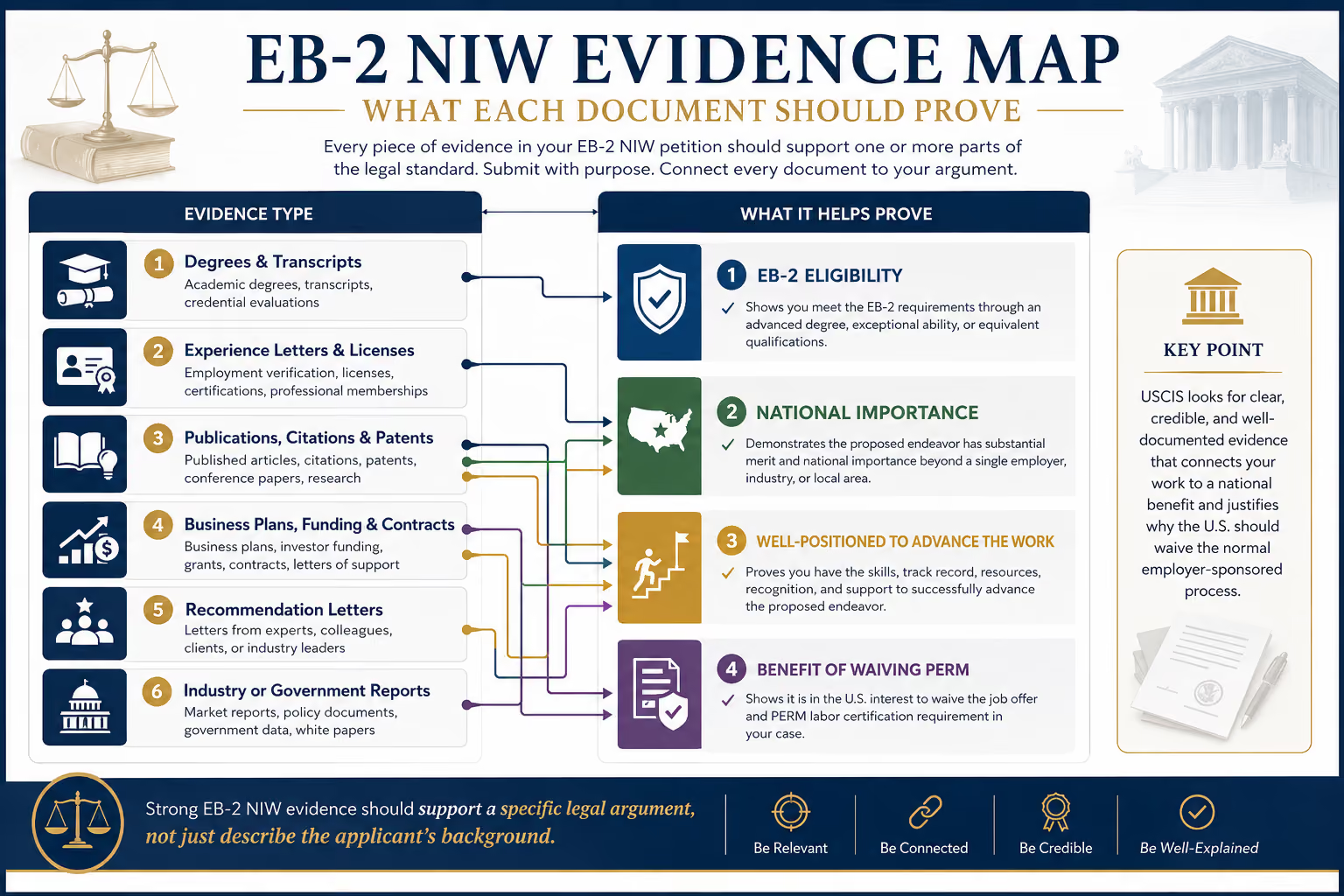
Recommendation letters can play an important role in an EB-2 NIW petition, but they should not simply say that the applicant is hardworking, talented, or respected. USCIS is usually looking for something more specific: evidence that helps explain the applicant’s impact, expertise, and ability to advance the proposed endeavor.
A strong NIW recommendation letter should connect the applicant’s work to the legal requirements. The letter should explain what the applicant has done, why the work matters, how it relates to a broader U.S. interest, and why the applicant is well-positioned to continue that work. The more specific the letter is, the more useful it usually becomes.
Independent letters can be especially helpful. A letter from a supervisor, colleague, or professor may still have value, but a letter from an independent expert who knows the field and can evaluate the applicant’s contributions may carry more weight. This is because independent letters can help show that the applicant’s work is recognized beyond their immediate workplace or academic circle.
The best letters usually include concrete details. For example, they may discuss the applicant’s research, technology, business achievements, publications, citations, patents, leadership, public health work, economic impact, or industry influence. A vague letter that only repeats the applicant’s resume may not add much value.
For 2026 EB-2 NIW filings, applicants should focus on quality over quantity. A few detailed, credible, and well-targeted letters are usually stronger than many generic letters. Each letter should serve a clear purpose in the petition and help USCIS understand why the applicant’s work matters under the national interest waiver standard.
Researchers, scientists, and engineers are often strong candidates for EB-2 NIW because their work may connect to areas the United States considers important, such as technology, healthcare, energy, infrastructure, national security, artificial intelligence, cybersecurity, climate science, or advanced manufacturing.
Still, working in a STEM field does not automatically make a case approvable. USCIS will usually look at the specific proposed endeavor, not just the applicant’s job title or academic background. A petition should explain what the applicant is working on, why that work matters, and how it may create broader value for the United States.
For research-based cases, useful evidence may include publications, citations, peer review activity, patents, grants, conference presentations, funded projects, expert letters, and proof
Entrepreneurs and founders may qualify for EB-2 NIW when their work supports a broader U.S. interest, such as innovation, job creation, economic growth, public benefit, or development in an important industry. The key issue is not simply that the applicant owns a business. The petition should explain why the business or proposed endeavor matters beyond the founder’s personal success.
For entrepreneur NIW cases, USCIS may look closely at whether the business has real traction and whether the founder is well-positioned to advance it. Useful evidence may include a detailed business plan, revenue records, funding, investor interest, contracts, customer adoption, hiring plans, intellectual property, accelerator participation, media coverage, or letters from industry experts.
A strong entrepreneur petition should also explain the national importance of the company’s work. For example, a startup connected to healthcare access, artificial intelligence, clean energy, supply chain improvement, cybersecurity, education technology, or advanced manufacturing may have a clearer national interest argument if the evidence supports it.
One common risk is relying too heavily on future projections. A business plan may help, but USCIS usually wants more than ambitious goals. The petition should show why the plan is credible and how the founder’s background, prior achievements, funding, partnerships, or market progress support the proposed endeavor.
For 2026 EB-2 NIW filings, entrepreneurs should be especially careful to connect the business evidence to the three NIW prongs. The strongest cases do not just say, “This company will create jobs.” They explain what the company does, why it matters to the United States, why the founder can realistically advance it, and why waiving PERM labor certification makes sense.
Healthcare and public health professionals may have strong EB-2 NIW arguments when their work connects to broader U.S. needs, such as medical research, patient care access, healthcare innovation, disease prevention, mental health, rural healthcare, or underserved communities.
For physicians, there is also a specific physician National Interest Waiver pathway. USCIS explains that one reason it may grant a physician NIW is when a physician has worked or agrees to work for a required period in a designated underserved area or qualifying facility.
However, healthcare work is not automatically enough. The petition should still explain the applicant’s specific proposed endeavor and why it matters beyond one clinic, hospital, employer, or local patient population. For example, a physician serving an underserved area, a researcher developing treatment methods, or a public health professional addressing disease prevention may all have different kinds of national interest arguments.
Useful evidence may include medical credentials, licenses, clinical experience, research publications, public health projects, institutional support letters, evidence of work in shortage areas, grants, program outcomes, policy work, or expert letters explaining the importance of the applicant’s contribution.
For 2026 EB-2 NIW filings, healthcare applicants should be careful to connect their work to a broader U.S. benefit. The strongest cases usually do more than say the applicant is a doctor, researcher, or healthcare professional. They explain the problem being addressed, why it matters, what the applicant has already done, and why the applicant is well-positioned to continue that work in the United States.
EB-2 NIW processing time depends on several factors, including USCIS workload, whether premium processing is used, whether the applicant later files Form I-485, and whether an immigrant visa number is available under the Visa Bulletin.
The first major step is usually the Form I-140 petition. This is the immigrant petition USCIS uses for employment-based categories, including EB-2 NIW. Standard processing can vary, so applicants should check current USCIS processing times instead of relying on a fixed estimate.
Premium processing is available for EB-2 NIW Form I-140 petitions, but applicants should understand what it does and does not do. USCIS currently lists premium processing for National Interest Waiver Form I-140 classifications as 45 business days, not 15 calendar days. Premium processing requires Form I-907 and speeds up USCIS action on the petition, but it does not guarantee approval.
After I-140 approval, the next step depends on visa availability and the applicant’s location. Applicants inside the United States may be able to file Form I-485 for adjustment of status if their priority date is current. Applicants outside the United States may go through consular processing. In both situations, the Visa Bulletin can affect timing.
For 2026 filings, this point is especially important for applicants from countries with EB-2 backlogs. For example, the July 2026 Visa Bulletin states that EB-2 numbers for India are unavailable for the remainder of FY 2026 because the category reached its limit. This means an approved NIW petition may still not allow immediate green card issuance if the priority date is not current.
Applicants should also remember that faster I-140 processing does not always mean a faster green card. Premium processing may help applicants receive a quicker decision on the NIW petition, but the overall green card timeline can still depend on the Visa Bulletin, adjustment of status processing, consular scheduling, background checks, and USCIS or State Department workload.
For this reason, EB-2 NIW timing should be treated as a strategy issue, not just a processing-time question. Before filing, applicants should understand their country of chargeability, current priority date movement, whether premium processing makes sense, and how the I-140 approval fits into the larger green card plan.
A Request for Evidence, often called an RFE, does not automatically mean an EB-2 NIW petition will be denied. It usually means USCIS wants more information before making a final decision. In an NIW case, the RFE often focuses on whether the applicant has clearly proven one or more parts of the legal standard.
One common reason for an EB-2 NIW RFE is a weak explanation of national importance. USCIS may accept that the applicant’s work is valuable, but still question whether it has broader importance to the United States. This can happen when the petition describes the applicant’s job duties, business, or research topic without clearly explaining the larger impact.
Another common issue is whether the applicant is well-positioned to advance the proposed endeavor. USCIS may ask for more proof of the applicant’s past achievements, future plans, professional recognition, funding, publications, citations, contracts, or other evidence showing that the applicant can realistically move the work forward.
RFEs can also focus on the third NIW prong: whether it benefits the United States to waive the job offer and PERM labor certification requirement. If the petition does not explain why the waiver is justified, USCIS may question why the applicant should be allowed to self-petition instead of going through the regular employer-sponsored process.
For 2026 EB-2 NIW filings, applicants should treat an RFE as a serious opportunity to strengthen the record. The response should not simply add more documents without strategy. It should answer USCIS’s specific concerns, organize the evidence clearly, and explain how the new and existing documents satisfy the EB-2 NIW requirements.
Timing also matters. The RFE notice will include a deadline, and the response should be complete and filed on time. A late or incomplete response can create serious risk, even if the applicant may otherwise have a strong case.
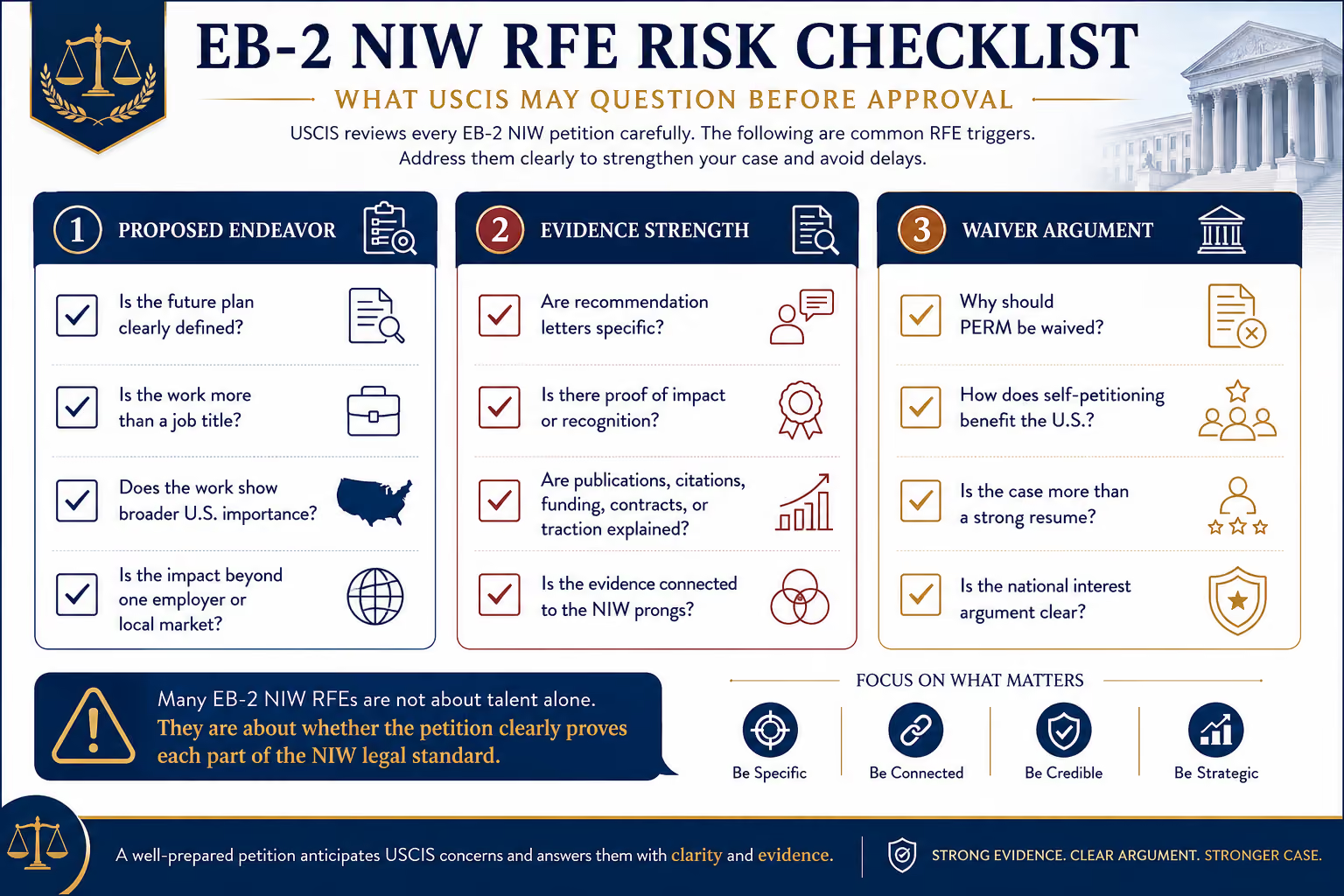
An EB-2 NIW petition can be denied even when the applicant has a strong education, impressive experience, or an important professional background. In many cases, the issue is not whether the applicant is talented. The issue is whether the petition clearly proves the EB-2 NIW requirements under the legal framework USCIS applies.
One common denial risk is a weak proposed endeavor. If the petition describes the applicant’s occupation too generally, USCIS may not understand what specific work the applicant plans to advance in the United States. For example, saying that the applicant works in artificial intelligence, healthcare, engineering, or business may not be enough. The petition should define the proposed endeavor clearly and explain why that work matters.
Another risk is failing to prove national importance. USCIS may agree that the applicant’s work has value, but still question whether it has broader importance beyond one employer, one company, one research group, or one local market. A strong petition should connect the work to a larger U.S. interest, industry need, public benefit, or field-level impact.
A petition may also be denied if the applicant does not show that they are well-positioned to advance the proposed endeavor. This can happen when the evidence is too thin, too generic, or not clearly tied to the applicant’s future work. Degrees and experience may help, but they should be supported by evidence of progress, recognition, expertise, funding, partnerships, research impact, business traction, or other relevant proof.
The third prong can also create problems. If the petition does not explain why waiving the job offer and PERM labor certification requirement benefits the United States, USCIS may decide that the applicant has not justified the waiver. NIW is not just a way to avoid employer sponsorship. It requires a clear explanation of why the waiver makes sense under the applicant’s specific facts.
For 2026 EB-2 NIW filings, applicants should avoid treating the petition like a resume submission. A strong case should be organized, evidence-based, and legally focused. It should define the proposed endeavor, explain the national importance, show why the applicant is well-positioned, and clearly address why the United States benefits from waiving the normal labor certification process.
EB-2 NIW can be a strong option for professionals who want to self-petition, but it should not be reviewed in isolation. In many cases, applicants should compare NIW with other employment-based green card options before deciding which path makes the most sense.
A regular EB-2 PERM case usually requires a U.S. employer, a permanent job offer, and labor certification through the Department of Labor. The PERM process is designed to test the U.S. labor market before the employer can move forward with the immigrant petition. EB-2 NIW is different because the applicant asks USCIS to waive the job offer and labor certification requirement based on the national interest.
EB-1A is another self-petition option, but it has a different legal standard. EB-1A is for individuals with extraordinary ability who can show sustained national or international acclaim and that they will continue working in their area of expertise. This can be a powerful category for applicants with major awards, strong publications, high citations, original contributions, media recognition, judging experience, or other significant evidence.
For some applicants, EB-2 NIW may be more realistic than EB-1A because NIW focuses on the proposed endeavor, national importance, and whether the applicant is well-positioned to advance the work. For others, EB-1A may be worth considering if the evidence of extraordinary ability is especially strong. The right strategy depends on the applicant’s field, immigration status, evidence, timing, country of chargeability, and long-term goals.
Other options may also matter. Some applicants may use H-1B, O-1, or another nonimmigrant status while preparing a green card strategy. Others may pursue PERM through an employer while also considering NIW as a self-petition option. These strategies are not always mutually exclusive, but they should be planned carefully.
For 2026 filings, applicants should avoid assuming that EB-2 NIW is automatically the fastest or easiest path. It is flexible, but it still requires a strong legal argument and well-organized evidence. A careful comparison of NIW, EB-1A, PERM, and other options can help applicants choose a strategy that fits both their qualifications and their immigration timeline.
Some applicants choose to file an EB-2 NIW petition on their own, especially if they have strong evidence, a clear proposed endeavor, and the ability to organize the legal argument carefully. Self-filing may be realistic for applicants who understand the NIW framework and can clearly explain how their work satisfies each requirement.
However, EB-2 NIW is not just a document collection process. The petition must explain why the applicant qualifies for EB-2, why the proposed endeavor has national importance, why the applicant is well-positioned to advance it, and why the United States benefits from waiving the job offer and PERM labor certification requirement.
An immigration attorney can help identify the strongest theory of the case, organize the evidence, frame the proposed endeavor, and address weaknesses before USCIS raises them in an RFE. This can be especially important for applicants with complex profiles, entrepreneur cases, prior immigration issues, limited publications, weak recommendation letters, or unclear national importance arguments.
Attorney review may also be useful when timing matters. For example, applicants on F-1 OPT, STEM OPT, H-1B, O-1, or another temporary status may need to think carefully about filing strategy, visa bulletin delays, travel, adjustment of status, and long-term immigration planning.
For 2026 EB-2 NIW filings, the decision to self-file or work with an attorney should depend on more than cost alone. The more complex the facts, the more important it becomes to have a clear legal strategy. A strong petition should not only describe the applicant’s background. It should present a persuasive, evidence-based argument that fits the EB-2 NIW requirements.
Before filing an EB-2 NIW petition, applicants should review whether the case is ready from both an eligibility and strategy perspective. A strong petition usually depends on more than having good credentials. It should be organized around a clear proposed endeavor, strong evidence, and a persuasive explanation of why the national interest waiver is justified.
At a minimum, applicants should confirm that they can meet the basic EB-2 requirement. This usually means showing an advanced degree, a bachelor’s degree plus at least five years of progressive experience, or exceptional ability in the field. If the applicant is using a foreign degree, a credential evaluation may also be important.
Applicants should also define the proposed endeavor before preparing the petition. This should not be a vague job title or broad career goal. It should explain the specific work the applicant plans to advance in the United States and why that work has broader importance.
The evidence should then be reviewed carefully. Strong EB-2 NIW evidence may include education records, publications, citations, patents, grants, contracts, funding, business plans, recommendation letters, expert opinions, media coverage, awards, leadership roles, or proof that the applicant’s work has been adopted or recognized.
Timing is another important part of the checklist. Applicants should consider their current immigration status, country of chargeability, Visa Bulletin movement, whether premium processing makes sense, and whether they may later be eligible to file Form I-485. An approved I-140 is important, but it does not always mean the green card can be issued immediately.
Finally, applicants should review the case for weak points before filing. Common issues include an unclear proposed endeavor, limited evidence of national importance, generic recommendation letters, weak future plans, or poor explanation of why PERM labor certification should be waived.
For 2026 EB-2 NIW filings, a practical pre-filing review can help reduce avoidable risks. The question is not only, “Do I have strong qualifications?” The better question is, “Does my petition clearly show how my work, evidence, and future plans satisfy the EB-2 NIW requirements?”
The EB-2 NIW can be a valuable green card option for professionals, researchers, entrepreneurs, healthcare workers, and other highly skilled applicants whose work may benefit the United States. Its flexibility is a major advantage because applicants may be able to self-petition without a job offer or PERM labor certification.
But that flexibility does not make the category simple. A strong EB-2 NIW petition must do more than show that the applicant is educated, experienced, or successful. It must explain the proposed endeavor, show why the work has national importance, prove that the applicant is well-positioned to advance it, and justify why the United States benefits from waiving the normal employer-sponsored process.
For 2026 filings, applicants should pay close attention to current USCIS guidance, premium processing rules, Visa Bulletin movement, and the strength of their evidence before filing. A petition that is organized, specific, and strategically framed will usually be stronger than one that simply includes a long resume and many documents.
If you are considering EB-2 NIW, the best first step is to review your qualifications, your proposed endeavor, your evidence, and your timing before deciding how to move forward. American Visa Law Group assists professionals, entrepreneurs, researchers, and employers with NIW strategy, petition preparation, RFEs, and broader employment-based immigration planning.
To qualify for EB-2 NIW, you must first qualify for the EB-2 category through either an advanced degree or exceptional ability. You must then satisfy the three-part National Interest Waiver test by showing that your proposed endeavor has substantial merit and national importance, that you are well-positioned to advance it, and that waiving the job offer and PERM labor certification requirement would benefit the United States.
No. One of the main advantages of EB-2 NIW is that applicants may self-petition without a permanent job offer. However, you must still convince USCIS that your work justifies waiving the normal employer-sponsored process.
Yes. A Ph.D. is not required. Many successful applicants qualify with a master's degree, a bachelor's degree plus at least five years of progressive experience, or by demonstrating exceptional ability in their field.
Processing times vary depending on USCIS workload, whether premium processing is used, and visa availability. Even after I-140 approval, some applicants must wait for their priority date to become current before moving forward with the green card process.
The strongest petitions usually include evidence that directly supports the legal requirements. Depending on the case, this may include publications, citations, patents, grants, business plans, funding, contracts, recommendation letters, awards, leadership roles, or proof that the applicant's work has made a meaningful impact.
Many denials happen because the petition does not clearly explain the proposed endeavor or fails to connect the evidence to the three NIW requirements. Strong qualifications alone are not enough if the legal argument is unclear or unsupported.
Yes. Entrepreneurs may qualify if they can show that their business or proposed endeavor has substantial merit and national importance, that they are well-positioned to advance it, and that waiving the labor certification requirement would benefit the United States.
That depends on the complexity of your case. Some applicants successfully self-file, while others benefit from legal guidance, particularly if the case involves a startup, extensive evidence, prior immigration history, an RFE, or a more challenging national interest argument.
For readers who want to review the official legal framework behind EB-2 and National Interest Waiver cases, the following government resources provide useful guidance:
Together, these resources provide the official legal, procedural, and visa-availability framework that underlies EB-2 and National Interest Waiver cases.
Hasan Abdullah, Esq. is the Founder and Managing Attorney of American Visa Law Group. His practice focuses on U.S. immigration law, including family-based immigration, employment-based immigration, adjustment of status, consular processing, waivers, PERM labor certification, NIW, EB-1, H-1B, O-1, and complex immigration strategy.
Through American Visa Law Group, Mr. Abdullah helps individuals, families, professionals, investors, and employers understand their immigration options and plan around changing government policies, USCIS procedures, and Visa Bulletin movement. His work emphasizes practical legal analysis, realistic expectations, and strategy tailored to each applicant’s immigration history and long-term goals.


