Author: Hasan Abdullah, Esq.
Edited: The 25th of September 2026
For U.S. visa applicants, the difference between an embassy and a consulate is simpler than it may seem. A U.S. embassy is generally the United States’ main diplomatic mission in another country, usually located in the capital. A U.S. consulate is typically a regional diplomatic office located in another major city. Both can provide consular services, including visa processing.
For immigration purposes, however, the name of the building is often less important than whether that particular post handles your visa category.
A visa interview may take place at the consular section of either a U.S. embassy or a U.S. consulate. Some posts process both immigrant and nonimmigrant visas, while others handle only certain categories. The location of an interview can depend on factors such as the applicant’s country of residence, nationality, visa type, local jurisdiction, and the services offered by the post.
This distinction becomes especially important for applicants completing consular processing, applying for a work or student visa abroad, considering an interview in a third country, or trying to understand whether an appointment can be transferred to another location.
It is also important to distinguish the roles of USCIS and the U.S. Department of State. USCIS may approve an underlying immigration petition, but visa interviews abroad are generally conducted by Department of State consular officers at U.S. embassies and consulates.
This guide explains the practical difference between an embassy and consulate, where U.S. visa interviews take place, how interview locations are assigned, what consular processing means, and what applicants should consider before scheduling or transferring an overseas visa appointment.
The main difference between an embassy and a consulate is their role within a country. A U.S. embassy is generally the United States’ principal diplomatic mission in another country, while a U.S. consulate is usually a regional office that extends diplomatic and consular services beyond the capital.
For visa applicants, however, both locations can play an important role in the immigration process.
The most important point for immigration applicants is that visa processing is generally handled through a consular section, whether that section is located inside an embassy or a consulate.
This means a tourist visa applicant might attend an interview at a U.S. embassy in one country, while an H-1B or student visa applicant in another country may attend a U.S. consulate instead. Neither location is automatically “better” or more authoritative for visa purposes.
What matters is whether that particular post processes the applicant’s visa category and has jurisdiction or authority to accept the case.
Applicants should also avoid assuming that every U.S. embassy processes every type of visa. In some countries, immigrant visa interviews may be concentrated at one designated post, while other consulates handle primarily non immigrant visas.
So, when comparing an embassy vs. consulate, the practical immigration question is not simply which one is larger or more important. It is:
Which post is responsible for processing your particular visa application?
The answer can depend on the visa category, the applicant’s residence or nationality, and the services offered by the specific U.S. diplomatic post.
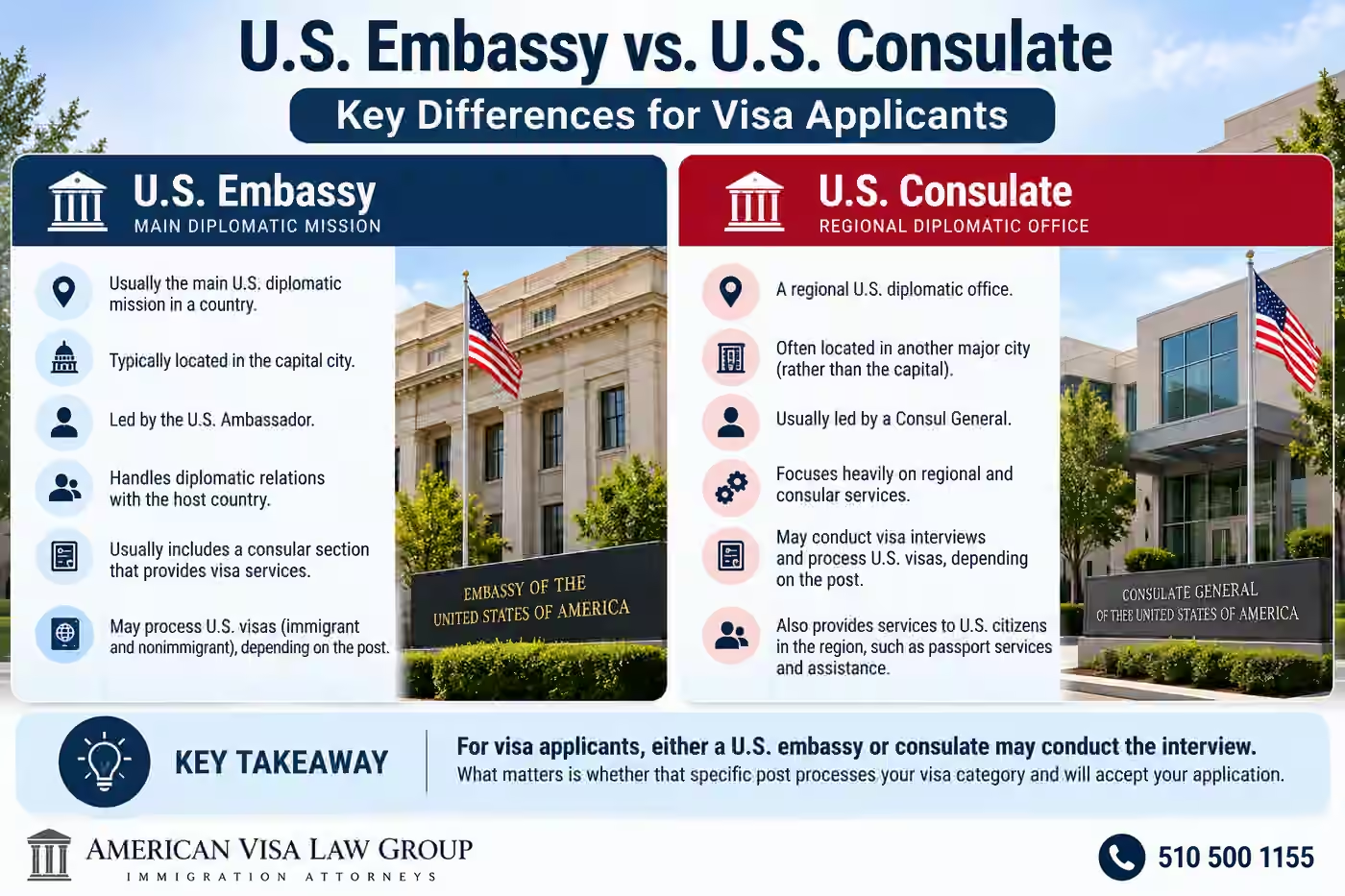
A U.S. embassy is the principal diplomatic mission representing the United States in another country. It usually serves as the headquarters for U.S. diplomatic activity in that country and is typically located in the capital city.
Embassies handle a broad range of responsibilities, including diplomatic relations, political and economic engagement, security cooperation, public diplomacy, assistance to U.S. citizens, and—at many posts—visa and immigration services.
For visa applicants, the most important part of the embassy is usually the consular section.
That section may handle services such as:
The U.S. Department of State describes embassies as the headquarters for U.S. government representatives serving in foreign countries, while consulates generally provide many of the same services on a regional basis. Find U.S. Embassies and Consulates.
No. Not every U.S. embassy processes every type of visa.
Some embassies handle both immigrant and nonimmigrant visa applications. Others may process only certain categories, while a different embassy or consulate in the region may be designated for immigrant visa interviews.
This is why applicants should not assume that the nearest U.S. embassy is automatically the correct place for their interview.
The practical question is whether the post has responsibility for the applicant’s visa category, jurisdiction, and type of case.
Applicants should always review the specific embassy or consulate’s current visa instructions before scheduling, transferring, or traveling for an interview.
A U.S. consulate is a regional diplomatic office that extends U.S. government services beyond the main embassy. Consulates are often located in major commercial, population, or regional centers rather than in the national capital.
For visa applicants, consulates are especially important because many conduct large volumes of immigrant or nonimmigrant visa interviews.
Depending on the post, a U.S. consulate may provide services such as:
Many applicants interact more directly with a consulate than with an embassy simply because their assigned visa-processing post is located there.
No.
An embassy is generally the United States’ principal diplomatic mission in a country, while a consulate is usually a regional post.
However, for visa applicants, the distinction can be less dramatic than it sounds because both may operate a consular section and both may process visas.
A consulate is not a “less official” place to obtain a visa. If the Department of State has designated that post to handle a particular visa category, the consular officers there perform the same core visa-adjudication function.
The more important question is whether the particular consulate accepts the applicant’s visa category and case.
For example, one consulate may handle large numbers of B-1/B-2, F-1, H-1B, or L-1 interviews, while immigrant visa processing may be centralized at another post.
Applicants should therefore check the specific post’s current visa services and instructions rather than choosing an embassy or consulate based only on location or name.
The consular section is the part of a U.S. embassy or consulate that handles many of the services most relevant to visa applicants and U.S. citizens abroad.
For immigration purposes, this is usually the department that matters most.
A consular section may handle:
Visa applications abroad are generally reviewed by Department of State consular officers, not USCIS officers.
That distinction is important because USCIS and the Department of State perform different roles in the immigration process.
For example, USCIS may approve an employer’s Form I-129 petition for an H-1B or L-1 worker, or approve a family-based Form I-130 petition. But if the beneficiary must obtain a visa abroad, the next stage may involve the Department of State and a consular officer at a U.S. embassy or consulate.
The consular officer reviews the visa application, supporting documents, interview responses, and any other information relevant to visa eligibility.
This is also why the phrase “embassy interview” can sometimes be misleading. The interview may physically take place inside an embassy, but the case is generally being handled by its consular section.
Similarly, an applicant attending a U.S. consulate may go through essentially the same type of visa-adjudication process.
For applicants, the key question is therefore not simply whether the appointment is at an embassy or consulate. It is whether that post’s consular section handles the applicant’s visa category and has accepted the case for processing.
For immigrant visa applicants, the difference between an embassy and consulate matters less than which U.S. post has been designated to process the case.
Not every U.S. embassy or consulate handles immigrant visas. In some countries, immigrant visa processing is centralized at one embassy. In others, a particular consulate may handle immigrant visa interviews for an entire region.
This can affect applicants pursuing family-based, employment-based, diversity visa, or other immigrant visa categories through consular processing.
After an approved immigrant petition reaches the Department of State process, the National Visa Center (NVC) may collect fees and supporting documents before the case is scheduled for interview at the appropriate overseas post.
The interview location may depend on factors such as:
Applicants should therefore avoid assuming that they can simply select whichever embassy or consulate has the shortest travel distance or earliest appointment.
For example, a country may have several U.S. consulates that process tourist and student visas, while immigrant visa interviews are handled only at the embassy in the capital, or the reverse may occur.
The applicant’s appointment notice and the instructions from the NVC or assigned post should control where the interview takes place.
If circumstances change, such as relocation to another country, an applicant may be able to request that the case be transferred to a different immigrant visa post. However, a transfer is not automatic and the receiving post generally must be willing and able to accept the case.
The practical takeaway is simple: for immigrant visas, the key issue is not whether the interview is at an embassy or consulate. It is whether that specific post has responsibility for processing the applicant’s immigrant visa category.
For nonimmigrant visa applicants, both U.S. embassies and consulates may handle visa interviews, depending on the country and the services offered by each post.
Common nonimmigrant visa categories include:
In some countries, applicants may have more than one possible interview location. A U.S. embassy in the capital and one or more regional consulates may all process nonimmigrant visas.
However, that does not mean every applicant can freely choose any post.
The correct location may depend on:
For example, an H-1B applicant may see an appointment available at a consulate in another city or country, but availability alone does not necessarily mean that post will accept the case.
Applicants considering H-1B visa stamping or another employment-based nonimmigrant visa should review the specific embassy or consulate’s current instructions before scheduling.
The same applies to students and visitors. A post that processes F-1 student visas may have different appointment procedures or document requirements from another post, while B-1/B-2 visitor visa availability may vary significantly by location.
The practical point is that nonimmigrant visa applicants may sometimes have more flexibility than immigrant visa applicants, but the embassy vs. consulate distinction is still secondary to the specific post’s rules.
Before scheduling, applicants should confirm that the chosen post processes their visa category and is willing to accept the application.
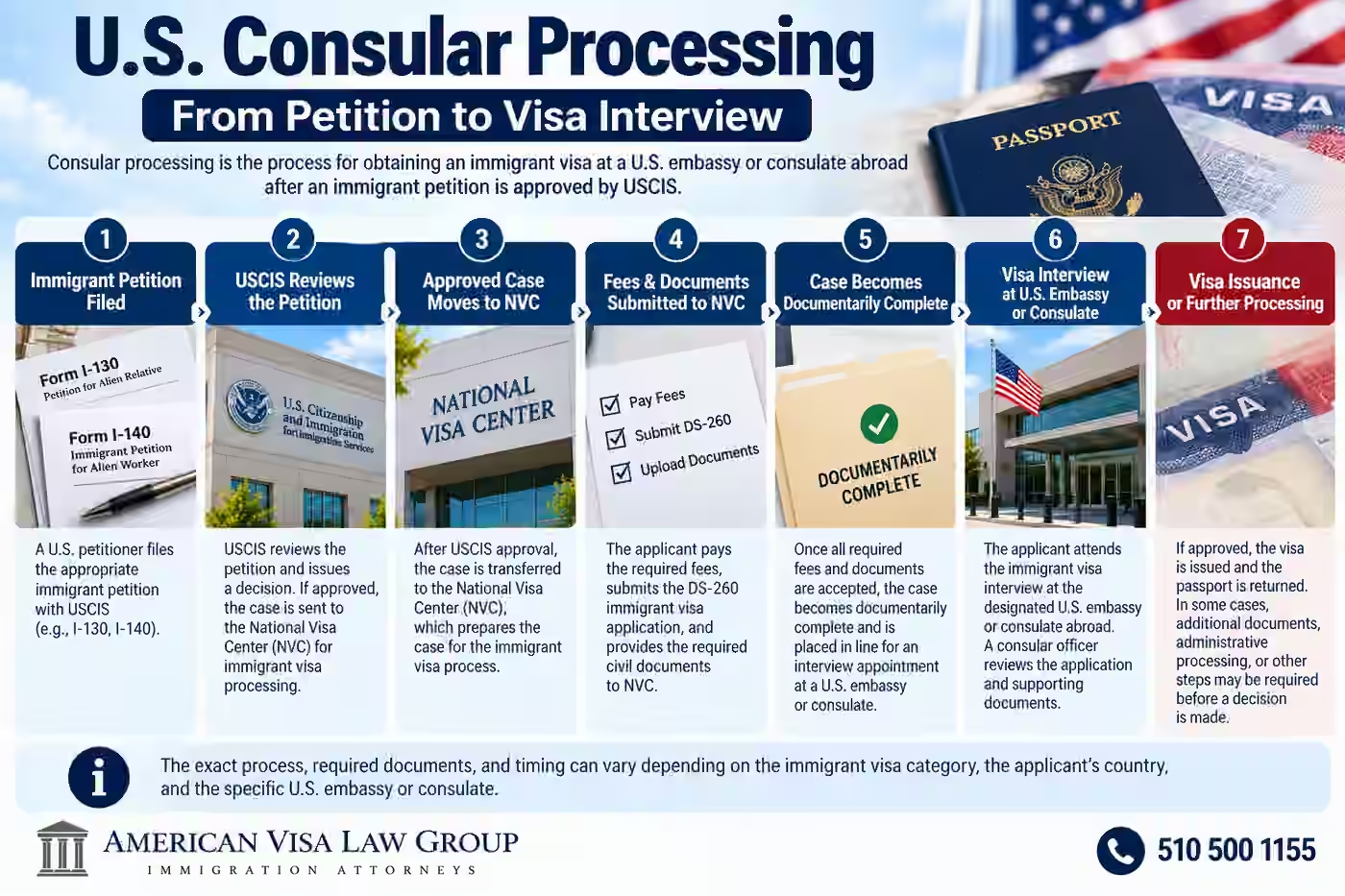
Consular processing generally refers to completing the U.S. immigrant visa process from outside the United States through a U.S. embassy or consulate.
It is commonly used by people who qualify for permanent residence but are living abroad rather than applying for adjustment of status inside the United States.
The process usually involves several stages.
After the underlying immigrant petition is approved, an eligible case may move to the Department of State’s National Visa Center (NVC). The applicant may then complete required forms, submit civil and financial documents, pay applicable fees, and eventually attend an immigrant visa interview at the designated U.S. embassy or consulate.
The interview is conducted by a Department of State consular officer.
During the interview, the officer may review issues such as:
Consular processing is different from adjustment of status, which generally allows an eligible person already in the United States to apply for permanent residence through USCIS without completing the immigrant visa process abroad.
Our guide to adjustment of status vs. consular processing explains that distinction in more detail.
The embassy-versus-consulate question becomes relevant because the immigrant visa interview may take place at either type of post. What matters is whether that specific location has been designated to process the applicant’s immigrant visa case.
Applicants should not assume that they can freely choose the embassy or consulate with the shortest wait time. Interview location can depend on residence, nationality, visa category, jurisdiction, and whether another post is willing to accept the case.
For applicants living abroad, understanding where the case will be processed is therefore an important part of planning the overall immigrant visa process.
Sometimes, but not always. Whether a visa applicant can choose a particular U.S. embassy or consulate depends on the visa category, country of residence, nationality, consular jurisdiction, and the policies of the individual post.
For immigrant visa cases, applicants generally have less flexibility because the case is usually assigned to a designated post based on residence, nationality, or regional processing arrangements. A different embassy or consulate may be able to accept the case, but a transfer request is not automatically approved.
Nonimmigrant visa applicants may sometimes have more options, particularly in countries with several U.S. embassies or consulates that process the same visa category.
However, an available appointment does not necessarily mean that the applicant is eligible to schedule there.
A post may limit appointments based on:
Applicants should therefore review the specific embassy or consulate’s instructions before paying fees, scheduling travel, or booking an interview.
This becomes particularly important when someone is considering applying in another country because the appointment calendar appears faster.
A shorter wait time may look attractive, but the applicant should first confirm that the post is willing to accept the application and understand how passport retention, travel permission, local entry requirements, and possible administrative processing could affect the plan.
For immigrant visa applicants, the appointment notice and instructions from the National Visa Center or assigned post are especially important.
The practical rule is simple: do not choose a visa interview location based only on convenience or appointment availability.
First confirm that the embassy or consulate processes your visa category and is authorized or willing to handle your application.
Sometimes, yes. A visa applicant may be able to apply at a U.S. embassy or consulate in a country other than their country of citizenship or permanent residence, but the rules depend on the visa category and the policies of the specific post.
Applicants in this situation are often referred to as third-country nationals.
A third-country national is generally someone applying for a U.S. visa in a country where they are neither a citizen nor a permanent resident.
For example, an Indian citizen temporarily living or traveling in Thailand who applies for a U.S. visa there may be treated as a third-country national for consular-processing purposes.
This can be attractive when appointment availability appears better in another country, but applicants should not assume that every U.S. embassy or consulate accepts nonresident applications.
Some do, while others limit or restrict appointments for applicants who are not local residents.
The answer may depend on factors such as:
For employment-based applicants, third-country visa stamping can sometimes be an option, but the practical risks should be considered carefully.
For example, if the visa application enters administrative processing, the applicant may need to remain outside the United States longer than expected. Passport retention, local immigration status, travel expenses, and the ability to stay in the third country can all become relevant.
Applicants should also avoid assuming that an earlier appointment automatically makes another post the better choice.
The safest approach is to review the specific embassy or consulate’s current instructions before scheduling and confirm that the post is willing to accept the application.
In short, applying in another country may be possible, but it should be treated as a post-specific consular strategy, not a universal right.
Sometimes, but a transfer is not automatic. Whether a U.S. visa interview can be moved to another embassy or consulate depends on the visa category, where the applicant lives, the reason for the transfer, and whether the receiving post is willing and authorized to accept the case.
For immigrant visa applicants, current Department of State policy generally requires interviews to take place in the applicant’s country of residence, country of nationality, or another designated processing post, subject to limited exceptions.
If an immigrant visa case has already been scheduled and the applicant wants to move it to another post, the request should generally be made through the National Visa Center (NVC) rather than by contacting the new embassy or consulate directly.
The NVC may ask for evidence showing that the requested location is the applicant’s place of residence or country of nationality, or that an exception is appropriate.
Possible reasons for requesting a transfer may include:
A transfer request does not guarantee that the new post will accept the case.
For nonimmigrant visas, the process is different. Applicants generally schedule directly through the appointment system used by the embassy or consulate, but they still need to follow the post’s rules. Current Department of State guidance advises nonimmigrant applicants to schedule in their country of nationality or residence.
Changing the interview location may therefore involve more than simply finding an earlier appointment.
Applicants should consider:
The practical rule is to confirm eligibility for the new post before cancelling an existing appointment or making travel plans.
Visa interview wait times can vary substantially from one U.S. embassy or consulate to another. The difference is usually driven by local demand, staffing, visa category, appointment capacity, and post-specific operations rather than simply whether the location is called an embassy or a consulate.
For nonimmigrant visas, the U.S. Department of State publishes a Global Visa Wait Times tool that allows applicants to compare appointment availability by post and visa category.
The Department of State currently reports separate appointment information for categories such as:
These estimates should be treated as planning tools rather than guarantees.
A post may release new appointments, applicants may reschedule into earlier slots, and local staffing or operational conditions can change. The Department of State also distinguishes between the next available appointment and, for certain visitor-visa posts, the average time applicants actually waited during the previous month.
Immigrant visa scheduling works differently. Appointment timing may depend on the National Visa Center, document completion, visa availability, the applicant’s category, and the capacity of the assigned immigrant visa post.
Applicants should also be careful about choosing another country solely because its published wait time appears shorter.
Current Department of State guidance generally directs nonimmigrant visa applicants to schedule in their country of nationality or residence, subject to designated processing arrangements and limited exceptions.
The practical approach is to check the official wait-time information, review the specific embassy or consulate’s instructions, and confirm that the post will accept the application before changing locations or making travel arrangements.
Once the correct embassy or consulate is confirmed, applicants should focus on the specific instructions issued by that post.
Requirements can vary by visa category and location, so preparation should be based on the appointment notice and the embassy or consulate’s current guidance rather than a generic checklist.
Make sure the appointment is actually at the embassy or consulate and not at a separate Visa Application Center, document drop-off location, or medical facility.
Depending on the visa category, applicants may need documents such as:
Embassies and consulates may restrict phones, laptops, large bags, cameras, and other items. These rules vary by location.
Applicants should be ready to explain the purpose of the visa application clearly and consistently with the information already submitted.
For employment, student, family, or visitor visas, the officer may focus on different eligibility issues.
The most important practical step is simple: follow the instructions for the specific post handling your case.
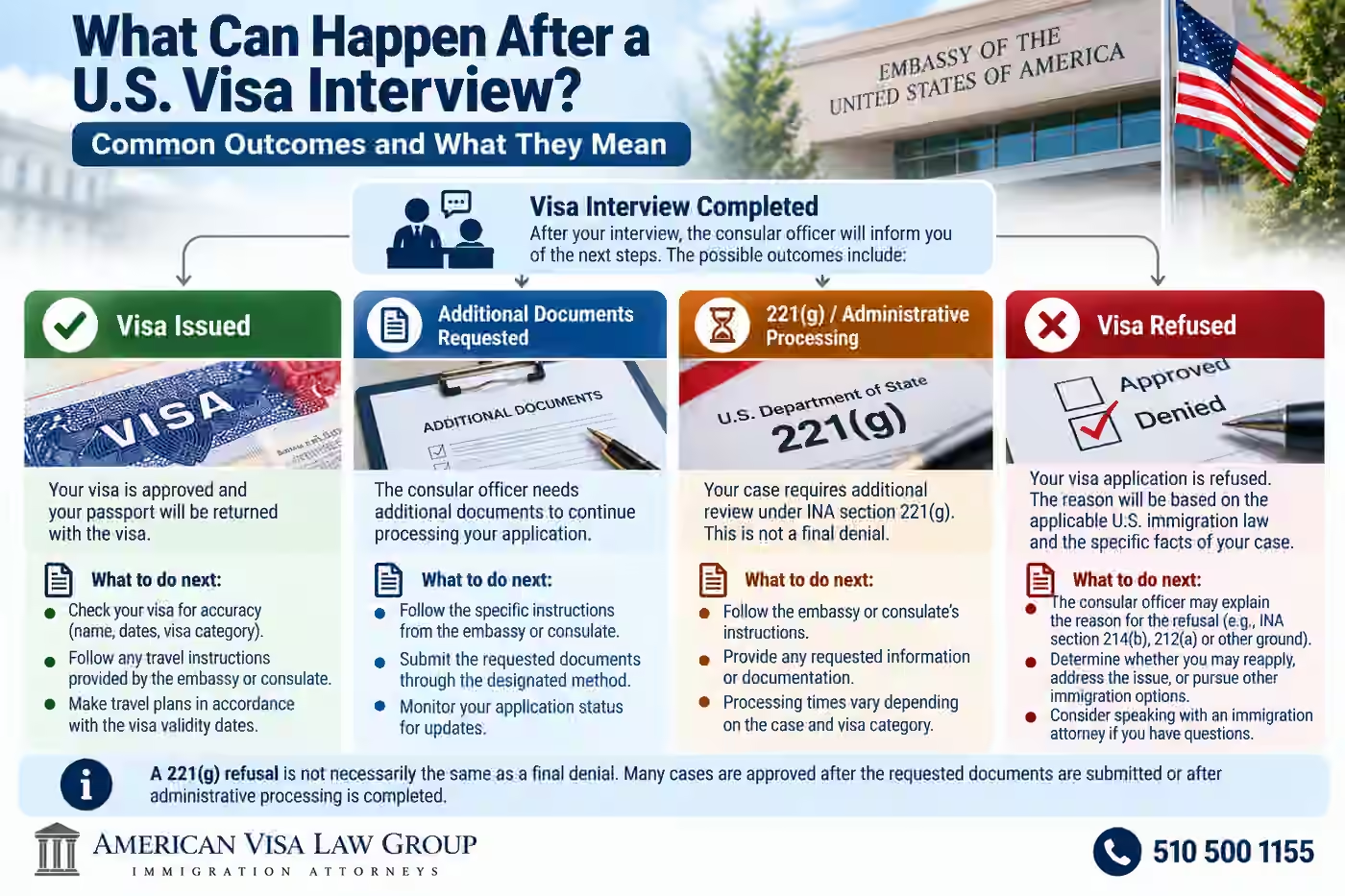
After a U.S. visa interview, the case may move in several different directions depending on the visa category, the applicant’s eligibility, and whether the consular officer needs anything further.
Possible next steps may include:
Applicants should not assume that keeping the passport automatically means the visa is approved, or that a request for more information means the case will ultimately be denied.
If additional documents are requested, the embassy or consulate will usually provide instructions explaining what should be submitted and how.
Applicants should also monitor email carefully after the interview because posts may send updates about document requests, passport return, or further processing.
Processing times after the interview can vary significantly by post and by case, especially when additional review is required.
The practical takeaway is to follow the specific embassy or consulate’s instructions and avoid making irreversible travel plans until the visa has actually been issued and the passport returned.
Some visa applications require administrative processing after the interview.
In these cases, the consular officer has not yet concluded that the applicant qualifies for the visa and may need additional information, documentation, or case-specific review before making a final decision. The Department of State explains that these cases are generally refused under INA section 221(g) while the additional processing is pending.
Administrative processing can arise for different reasons, so applicants should follow the instructions provided by the embassy or consulate rather than assuming that every 221(g) case means the same thing.
If additional documents are requested, they should be submitted according to the post’s instructions. If no additional documents are required, the applicant may simply need to wait while the review is completed.
Processing time varies by case and is not included in ordinary visa appointment wait-time estimates.
The key point is that administrative processing is not the same as a final visa approval, but a 221(g) refusal may later be reconsidered if the outstanding issue is resolved.
For U.S. visa applicants, the practical differences can be summarized like this:
The key point is that the visa-processing function depends on the specific post, not simply whether it is called an embassy or consulate.
Applicants should confirm three things before scheduling:
For visa purposes, those questions matter more than the diplomatic title of the location.
A U.S. embassy is generally the main diplomatic mission in another country and is usually located in the capital. A consulate is typically a regional diplomatic office located in another major city. For visa applicants, both may operate consular sections and process visa applications, depending on the services offered by that specific post.
No. They serve different diplomatic roles, but their visa functions can overlap. Both embassies and consulates may conduct visa interviews and provide consular services. What matters most for applicants is whether the particular post handles their visa category and will accept their case.
Yes. Both U.S. embassies and consulates may process and issue visas if the Department of State has assigned that function to the post. Not every location processes every visa type, so applicants should confirm the services offered by the specific embassy or consulate.
A U.S. visa interview generally takes place in the consular section of a U.S. embassy or consulate. The location may depend on the visa category, country of residence, nationality, jurisdiction, and which posts are designated to process that type of application.
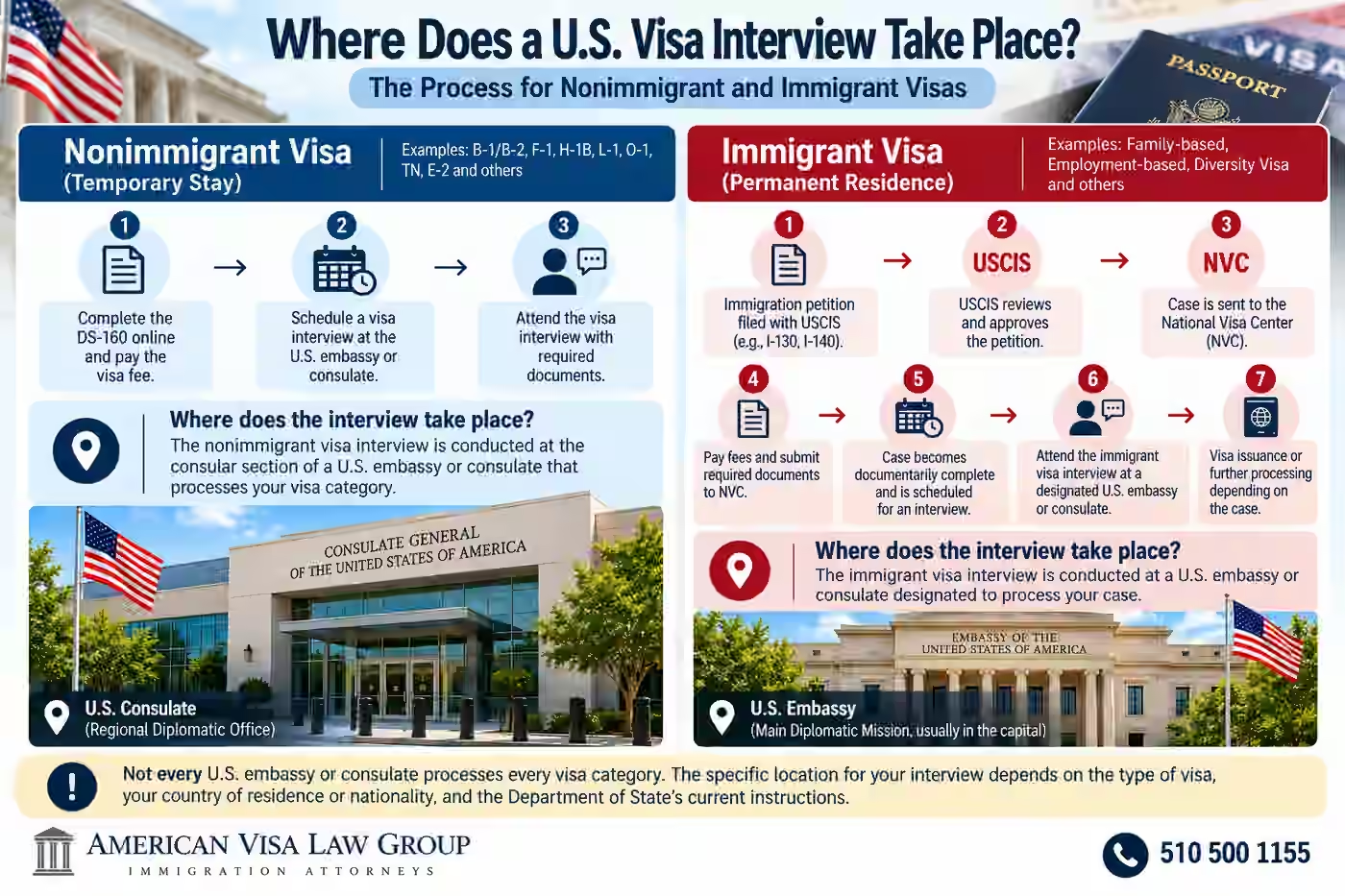
Consular processing generally refers to completing the immigrant visa process outside the United States through a U.S. embassy or consulate. It is different from adjustment of status, which generally takes place through USCIS for eligible applicants already in the United States.
Sometimes, but not always. Applicants may have some flexibility, particularly for certain nonimmigrant visas, but post-specific rules, residence, nationality, visa category, and jurisdiction can limit where the interview may be scheduled.
In some circumstances, yes. Applicants who apply outside their country of citizenship or residence are often treated as third-country nationals. Whether another U.S. embassy or consulate will accept the application depends on that post’s current rules and the applicant’s visa category.
Generally, no. Overseas visa interviews are conducted by consular officers from the U.S. Department of State. USCIS may adjudicate an underlying petition before the case reaches the consular stage, but the visa application abroad is handled through the Department of State.
Questions about embassies, consulates, and visa interview locations are often straightforward. But the situation can become more complicated when the case involves consular processing, a prior visa refusal, a third-country application, administrative processing, or uncertainty about which post should handle the interview.
A careful review may be useful when an applicant is dealing with issues such as:
American Visa Law Group assists individuals, families, professionals, and employers with consular processing and other U.S. immigration matters.
If you are unsure where your case should be processed or whether a change in interview location could affect your strategy, you can contact American Visa Law Group to discuss the situation.
No attorney can guarantee that a visa will be issued, but understanding the applicable process, jurisdiction, and post-specific requirements before acting can help avoid unnecessary mistakes and delays.
For readers who want to review official U.S. government guidance on embassies, consulates, visa interviews, and overseas visa processing, the following resources are especially useful:

Hasan Abdullah, Esq. is the Founder and Managing Attorney of American Visa Law Group. His practice focuses on U.S. immigration law, including family-based immigration, employment-based immigration, adjustment of status, consular processing, waivers, PERM labor certification, NIW, EB-1, H-1B, O-1, and complex immigration strategy.
Through American Visa Law Group, Mr. Abdullah helps individuals, families, professionals, investors, and employers understand their immigration options and plan around changing government policies, USCIS procedures, and Visa Bulletin movement. His work emphasizes practical legal analysis, realistic expectations, and strategy tailored to each applicant’s immigration history and long-term goals.


