Author: Hasan Abdullah, Esq.
The main difference between a green card and U.S. citizenship is legal status and the rights that come with it. A green card gives someone lawful permanent resident status, allowing them to live and generally work permanently in the United States as long as they maintain that status. U.S. citizenship provides additional rights and protections, including the ability to vote in federal elections, obtain a U.S. passport, and generally greater security in the right to remain in the United States.
For many permanent residents, the practical question is not simply whether citizenship offers more benefits. It is what actually changes after naturalization, and whether those differences matter for their long-term plans.
Citizenship can affect international travel, family sponsorship, voting rights, access to certain government opportunities, and concerns about maintaining permanent resident status. Green card holders can travel internationally and petition for certain family members, but extended time abroad may raise questions about abandonment of permanent residence and can also affect eligibility for naturalization. U.S. citizens generally have broader family sponsorship options and do not face the same residence-abandonment concerns merely because they live abroad.
Permanent residents who are considering U.S. citizenship and naturalization should also understand that eligibility depends on more than simply holding a green card for a certain number of years. Continuous residence, physical presence, good moral character, travel history, and other requirements may matter. USCIS citizenship guidance provides the governing framework.
This guide compares green card vs citizenship across the differences that matter most: rights, voting, travel, family sponsorship, status security, and the path from permanent residence to naturalization.
Both green card holders and U.S. citizens can live and generally work in the United States, but the two statuses are not legally equivalent. Lawful permanent residents retain an immigration status that must be maintained, while U.S. citizens receive additional political rights, travel protections, family sponsorship options, and greater security in their ability to remain in the United States.
The differences become especially important when considering voting, extended international travel, sponsoring relatives, and whether a person can lose or abandon their status.
The practical distinction is therefore larger than simply having a different immigration document. A green card provides lawful permanent residence. Citizenship builds on that status by adding rights and protections that can affect a person's civic participation, international mobility, family immigration options, and long-term connection to the United States.
The sections below explain where those differences matter most and why they can influence a permanent resident's decision about whether and when to pursue naturalization.

The fundamental difference between a green card and U.S. citizenship is that a green card gives a person lawful permanent resident status, while citizenship establishes a more permanent legal relationship with the United States and provides rights that permanent residents do not have.
A green card holder, also called a lawful permanent resident, generally has the right to live and work permanently in the United States. However, permanent residence remains an immigration status. That status can be affected by certain conduct, immigration violations, or circumstances suggesting that the person has abandoned residence in the United States.
U.S. citizens, by contrast, are not maintaining an immigration status in the same way. Citizens may vote in federal elections if eligible, obtain a U.S. passport, petition for a broader range of qualifying relatives, and generally have stronger protection against losing the right to live in the United States.
This distinction becomes especially important over time. A permanent resident who spends substantial periods outside the United States, for example, may need to consider both the effect of travel on maintaining permanent residence and the separate continuous-residence requirements for naturalization. A U.S. citizen does not face the same abandonment-of-permanent-residence analysis simply because of extended residence abroad.
In practical terms, a green card provides permanent residence, but citizenship adds political rights, broader immigration benefits, and greater security of status. That is why the decision to naturalize can involve much more than replacing a green card with a different document.
The primary benefits of U.S. citizenship compared with a green card involve voting rights, international travel, family sponsorship, access to certain government opportunities, and greater security in the right to remain in the United States. Permanent residents already receive significant rights, but naturalization can remove several limitations that continue to apply to green card holders.
One of the clearest differences is political participation. Lawful permanent residents cannot vote in federal elections, while eligible U.S. citizens can. Citizenship also allows a person to obtain a U.S. passport and generally eliminates the concern that extended residence abroad could be viewed as abandonment of lawful permanent resident status.
Family immigration is another important distinction. Green card holders can petition for certain qualifying relatives, but U.S. citizens have access to broader family sponsorship categories. In some cases, citizenship can therefore materially change the immigration options available to a spouse, child, parent, or sibling.
Citizenship may also be required for certain federal jobs, public positions, security-clearance-related opportunities, or other benefits restricted by law to U.S. citizens. In addition, naturalized citizens no longer need to maintain or periodically renew a Permanent Resident Card.
Perhaps most importantly, citizenship generally provides greater security of status. A lawful permanent resident can lose or abandon permanent residence in certain circumstances and may be subject to removal under applicable immigration law. A U.S. citizen does not face those same permanent-residence concerns, although citizenship itself can still be affected in limited circumstances, such as voluntary renunciation or certain denaturalization cases.
For long-term permanent residents, these differences can make naturalization more than a symbolic milestone. It can materially change their legal rights, mobility, family immigration options, and long-term security in the United States.
Green card holders cannot vote in federal elections. U.S. citizens who meet the applicable voting requirements may vote in federal elections.
Lawful permanent residence gives a person significant rights in the United States, including the ability to live and generally work permanently in the country, but it does not provide the same political rights as U.S. citizenship. In particular, having a green card does not make someone eligible to vote in federal elections.
Voting rules can differ depending on the type of election and the jurisdiction involved, so permanent residents should be careful not to assume that eligibility in one context applies everywhere. Noncitizens should also exercise caution when completing voter-registration forms or responding to questions about U.S. citizenship.
This distinction can have immigration consequences beyond the election itself. A permanent resident who is unsure whether they are legally eligible to register or vote should verify the applicable rules before taking action rather than relying on assumptions about their green card status.
For permanent residents who want full participation in federal elections, naturalization is the path through which an eligible green card holder may become a U.S. citizen and obtain federal voting rights.
International travel is one of the areas where the difference between a green card and U.S. citizenship can have significant practical consequences. Both permanent residents and U.S. citizens may travel abroad, but green card holders must remain mindful of maintaining lawful permanent residence and, if they plan to naturalize, preserving continuous residence for citizenship purposes.
Green card holders can travel outside the United States, but lengthy or repeated absences may raise questions about whether they have maintained the United States as their permanent home.
There is no single period of travel that automatically determines abandonment in every case. Immigration authorities may consider the length and purpose of the trip, ties maintained in the United States, employment, family connections, tax treatment, and other evidence of the person's intent to maintain U.S. permanent residence.
For some permanent residents expecting an extended stay abroad, a reentry permit may be relevant. A reentry permit can help demonstrate an intention to return to the United States, but it does not guarantee admission or prevent every possible abandonment issue.
Travel can also create a separate concern for someone planning to become a citizen. Extended absences may affect the continuous residence and physical presence requirements for naturalization, even when the person still holds lawful permanent resident status. This is why travel history should be reviewed in the context of both maintaining a green card and future Form N-400 eligibility.
U.S. citizens generally have substantially greater flexibility when living or traveling abroad. A citizen can obtain a U.S. passport and does not ordinarily risk losing citizenship simply because they spend an extended period outside the United States.
Unlike a lawful permanent resident, a U.S. citizen is not required to maintain U.S. residence to preserve an immigration status. Citizens also retain the right to return to the United States, subject to applicable travel and documentation requirements.
For permanent residents who travel frequently, maintain substantial ties abroad, or may eventually live outside the United States for long periods, this difference can be one of the most important practical benefits of naturalization.

U.S. citizens generally have broader family sponsorship options than green card holders. Both can petition for certain relatives, but citizenship can expand which family members qualify and, for some relationships, change how the immigration process is structured.
Lawful permanent residents may file Form I-130, Petition for Alien Relative, for certain qualifying family members, including a spouse and unmarried children.
These cases generally fall within family-preference categories, meaning immigrant visa availability can depend on the applicable preference category, country of chargeability, and the beneficiary’s priority date. As a result, filing an I-130 does not necessarily mean an immigrant visa is immediately available.
This distinction can become particularly important when a permanent resident is considering naturalization while a family petition is pending. In some situations, becoming a U.S. citizen may change the classification of an eligible relative and affect the immigration path available to that family member.
U.S. citizens can petition for a broader range of qualifying relatives. This includes spouses and qualifying children, as well as parents of U.S. citizens who meet the applicable age requirement and certain siblings.
Some qualifying relatives of U.S. citizens are classified as immediate relatives under U.S. immigration law. Immediate relatives are not subject to the same annual numerical limits that apply to family-preference categories, although they must still satisfy the applicable immigration requirements and complete the appropriate USCIS or consular process.
Citizenship therefore does more than add a personal benefit for the applicant. For someone with close relatives who may eventually immigrate to the United States, naturalization can also affect the family’s broader immigration strategy.
The important question is not simply whether a green card holder can sponsor a relative, but which category applies, whether a visa number is available, and whether becoming a U.S. citizen could create additional options for that particular family relationship.

Yes. Lawful permanent resident status can be lost or abandoned in certain circumstances. A green card is called “permanent” residence, but permanent residents still must maintain their status and remain subject to U.S. immigration law.
One common issue is abandonment of permanent residence. A green card holder who spends substantial time outside the United States or establishes their primary home in another country may face questions about whether they intended to keep the United States as their permanent residence. There is no single travel period that automatically proves abandonment in every case; immigration authorities may consider the person’s travel pattern, employment, family ties, property, tax filings, and other evidence of continuing U.S. residence.
Permanent resident status can also be affected by certain grounds of removability under immigration law. Depending on the circumstances, criminal convictions, fraud or misrepresentation, or other immigration violations may expose a permanent resident to removal proceedings. In limited situations, permanent residence may also be rescinded if USCIS determines that the person was not actually eligible for adjustment of status when residence was granted.
A person may also voluntarily give up lawful permanent residence, including through the formal abandonment process.
Importantly, an expired green card is not necessarily the same as losing lawful permanent resident status. The physical Permanent Resident Card serves as evidence of status and generally must be renewed when required, but expiration of the card itself does not automatically terminate permanent residence.
The practical takeaway is that a green card provides long-term residence, but it is still an immigration status that must be maintained. This is one of the major differences between a permanent resident and a U.S. citizen, whose right to remain in the United States is generally much more secure.
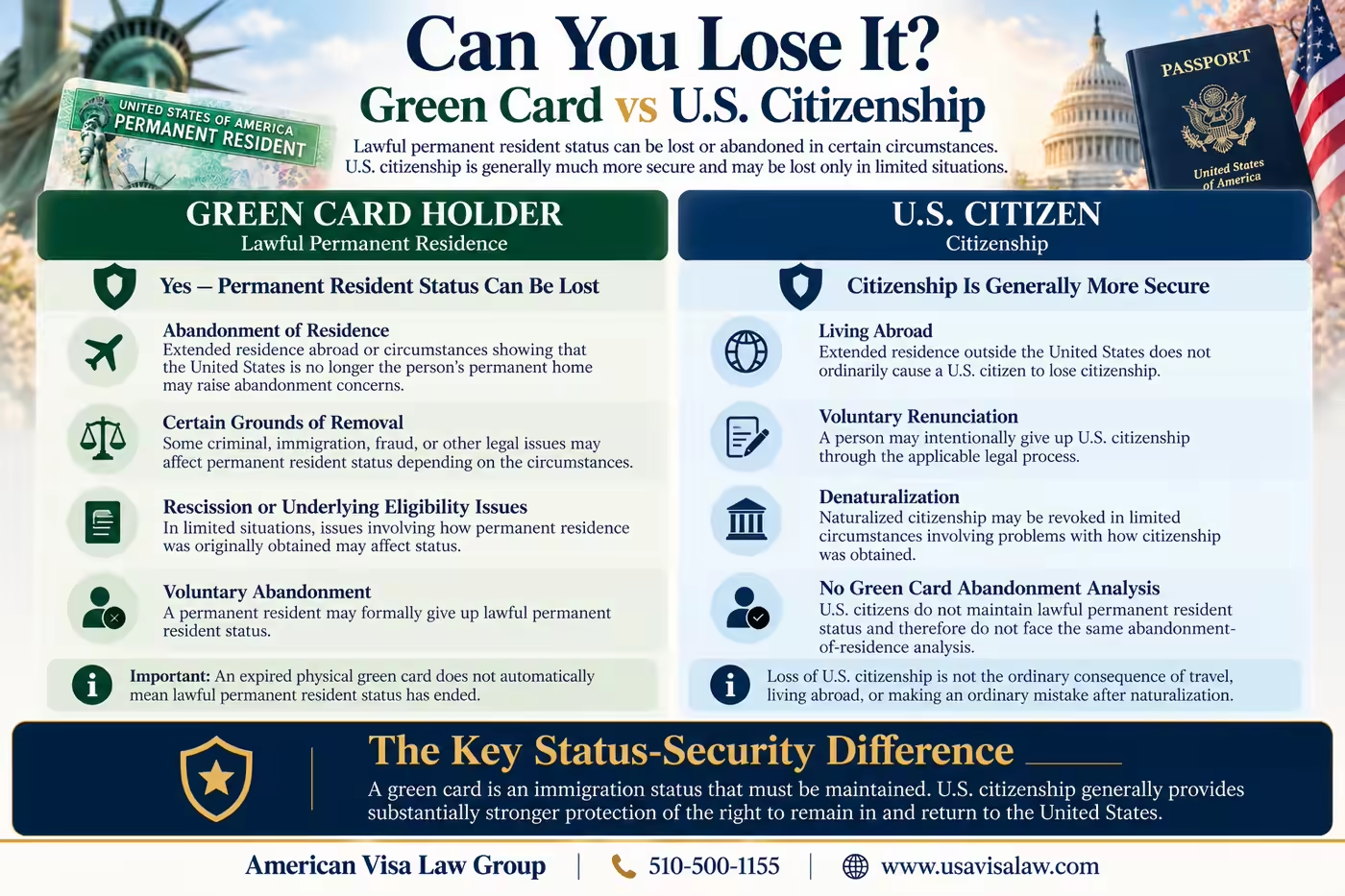
U.S. citizenship is generally much more secure than lawful permanent resident status, but it can be lost in limited circumstances. Unlike a green card holder, a U.S. citizen does not ordinarily risk losing citizenship simply because they live outside the United States for an extended period.
One way citizenship can be lost is through voluntary renunciation or relinquishment. This generally involves an intentional decision to give up U.S. nationality and is very different from accidentally losing citizenship because of ordinary travel or residence abroad.
Naturalized citizenship can also be revoked through denaturalization in limited circumstances. This may arise when the government establishes that citizenship was illegally obtained or that a material fact was concealed or misrepresented during the naturalization process. Denaturalization is not the normal consequence of making an ordinary mistake after becoming a citizen, and it should not be viewed as comparable to the status-maintenance concerns that lawful permanent residents face.
This is an important distinction in the green card vs citizenship comparison. A permanent resident may face questions about abandonment after extended residence abroad and may also be subject to removal under applicable immigration law. A U.S. citizen generally does not face those same immigration-status risks.
For many long-term permanent residents, this greater permanence is one of the most significant practical benefits of naturalization. Citizenship does not eliminate every possible legal consequence, but it provides substantially stronger protection of a person's right to remain in and return to the United States.
The difference between a green card holder and a U.S. citizen is not limited to additional rights and immigration benefits. Both statuses can also carry significant tax and civic responsibilities, and becoming a citizen does not eliminate existing U.S. tax obligations.
For federal tax purposes, lawful permanent residents are generally treated as U.S. tax residents and, like U.S. citizens, may be required to report worldwide income to the Internal Revenue Service. The exact tax consequences depend on the person's circumstances, including residence, income sources, applicable tax treaties, foreign tax credits, and other rules. U.S. citizens may continue to have U.S. tax filing obligations even while living abroad.
The distinction can become more complicated when a green card holder gives up permanent residence. Certain long-term permanent residents may face additional tax considerations when terminating U.S. residency, so surrendering a green card should not be viewed as simply an immigration paperwork decision when significant tax issues are involved.
Citizenship also carries civic responsibilities. Qualified U.S. citizens may be called for jury service, including federal jury duty. Selective Service rules can also apply to certain individuals, although these requirements are not limited exclusively to citizens and depend on factors such as age, sex, and immigration status.
Both citizens and permanent residents are expected to comply with federal, state, and local law, and both may have substantial financial and legal obligations in the United States.
The practical point is that U.S. citizenship provides important additional rights, but it also creates a lasting legal relationship with the United States. Permanent residents considering naturalization—particularly those who live internationally, hold significant foreign assets, or maintain ties to multiple countries—may want to consider immigration and tax consequences together rather than evaluating citizenship solely by its benefits.
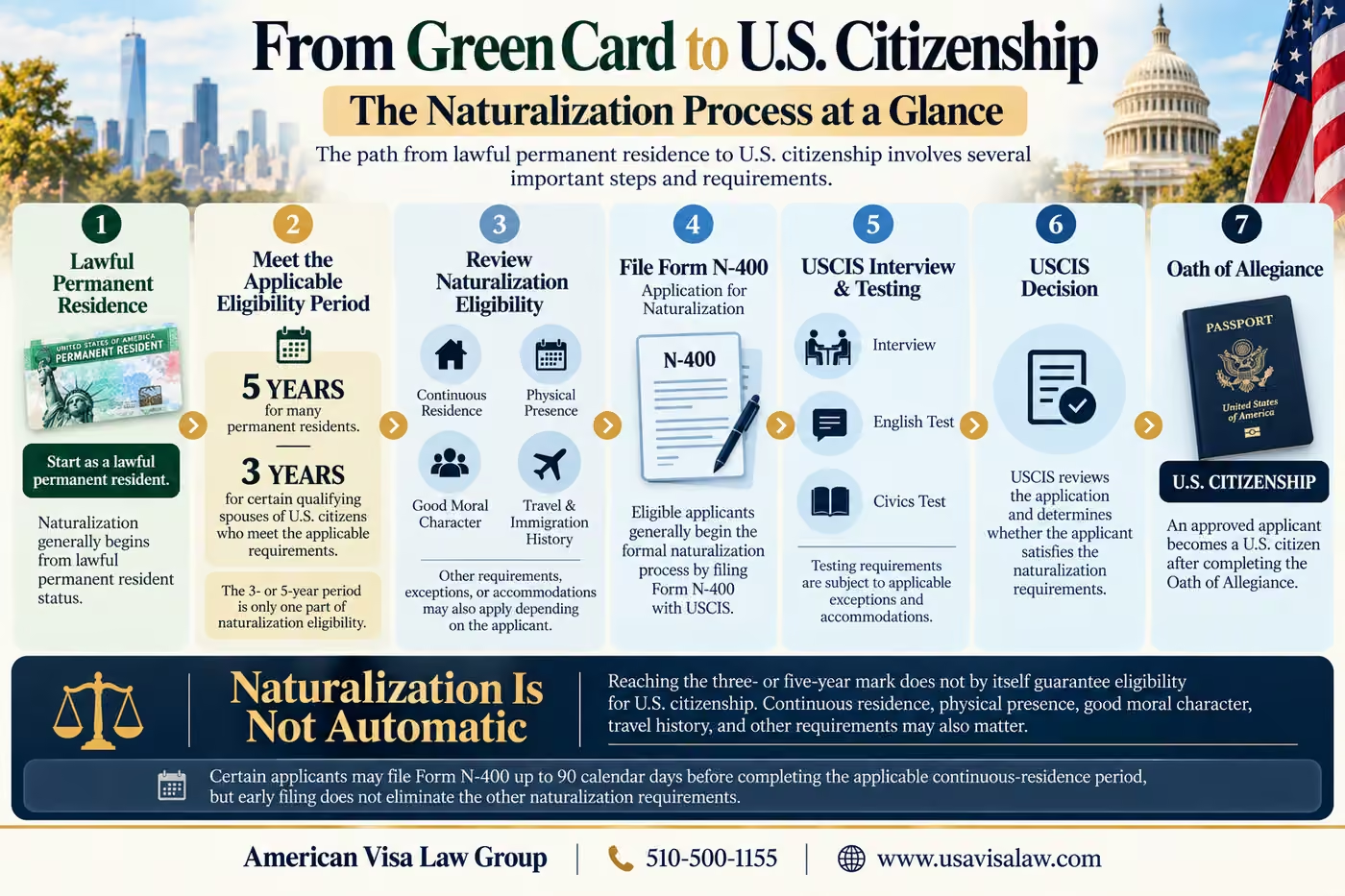
Many lawful permanent residents may apply for U.S. citizenship after five years of permanent residence. Some spouses of U.S. citizens may qualify under a three-year naturalization rule if they meet the additional requirements that apply to that category.
The five-year rule is the standard path for many green card holders. In general, an applicant must have been a lawful permanent resident for the required period and satisfy the other naturalization requirements before filing Form N-400, Application for Naturalization.
A shorter three-year rule may apply to certain permanent residents who obtained or hold their green card while married to a U.S. citizen. The three-year period alone is not enough. The applicant generally must also meet the applicable marital-union and citizenship requirements involving the U.S. citizen spouse.
Time as a permanent resident is only one part of naturalization eligibility. USCIS also considers requirements such as continuous residence, physical presence, good moral character, and English and civics requirements, subject to applicable exceptions and accommodations.
Travel history can be particularly important. A permanent resident may have held a green card for five years yet still encounter naturalization issues if extended trips abroad disrupted continuous residence or prevented the applicant from meeting the required physical-presence period.
The filing date also deserves careful attention. USCIS permits certain applicants to file Form N-400 up to 90 calendar days before completing the applicable continuous-residence period, but early filing does not eliminate the need to satisfy the other eligibility requirements.
For that reason, the better question is not simply, “Have I had my green card for three or five years?” It is whether the applicant has satisfied the full naturalization framework—including residence, physical presence, travel history, and other eligibility requirements—before submitting Form N-400.
Yes. A green card holder may become a U.S. citizen through naturalization if they satisfy the applicable eligibility requirements. Lawful permanent residence is often the status from which an eligible applicant begins the naturalization process.
The general path is:
Permanent residence → eligibility period → Form N-400 → USCIS interview and testing → decision → Oath of Allegiance → U.S. citizenship.
Most applicants must first meet the applicable period of lawful permanent residence, commonly five years or, for certain qualifying spouses of U.S. citizens, three years. But simply reaching that anniversary does not automatically make someone eligible for citizenship.
USCIS may also evaluate continuous residence, physical presence in the United States, good moral character, and English and civics requirements, subject to applicable exceptions or accommodations. Travel history, prior immigration issues, criminal matters, tax concerns, or questions about how permanent residence was obtained can also become relevant during the naturalization process.
An eligible applicant generally begins by filing Form N-400, Application for Naturalization. USCIS then reviews the application and immigration history, conducts an interview, and administers the required English and civics testing when applicable. If the application is approved, the applicant must complete the Oath of Allegiance before becoming a U.S. citizen.
Naturalization therefore is not an automatic conversion from a green card to citizenship. It is a separate legal process in which USCIS determines whether the permanent resident satisfies the requirements for U.S. citizenship.
For green card holders considering this step, reviewing eligibility before filing can be particularly important when there have been long trips abroad or other issues that could affect the naturalization application.
For many permanent residents who qualify and intend to make the United States their long-term home, U.S. citizenship can provide significant advantages over remaining a green card holder. However, whether naturalization is the right choice depends on the person’s immigration history, international ties, and long-term goals.
Citizenship provides rights and protections that lawful permanent residence does not. Eligible U.S. citizens can vote in federal elections, obtain a U.S. passport, access broader family sponsorship options, and generally live abroad without facing the same concerns about abandonment of permanent resident status. Naturalized citizens also no longer need to renew a green card.
For someone who travels frequently or expects to spend substantial time outside the United States, that additional security can be particularly important. Green card holders must continue maintaining lawful permanent residence, and extended absences can affect both their immigration status and future naturalization eligibility. Citizens generally do not face those same residence-maintenance requirements.
Citizenship may also be valuable for permanent residents who want to sponsor family members. U.S. citizens can petition for a broader range of qualifying relatives, and some relatives may qualify as immediate relatives rather than being subject to a family-preference category.
Still, citizenship is not automatically the best decision for every permanent resident. Dual citizenship and nationality rules vary by country, and naturalizing as a U.S. citizen can have consequences under another country’s laws. People with significant international financial interests may also want to understand any related tax or legal implications.
A person’s immigration history should also be considered before filing Form N-400. Prior arrests or convictions, lengthy travel, tax issues, questions about past immigration filings, or concerns about how permanent residence was obtained may warrant careful review before applying.
The better question, therefore, is not simply whether citizenship is “better” than a green card. It is whether the additional rights, greater status security, travel flexibility, and family immigration opportunities of citizenship align with the permanent resident’s circumstances and long-term plans.
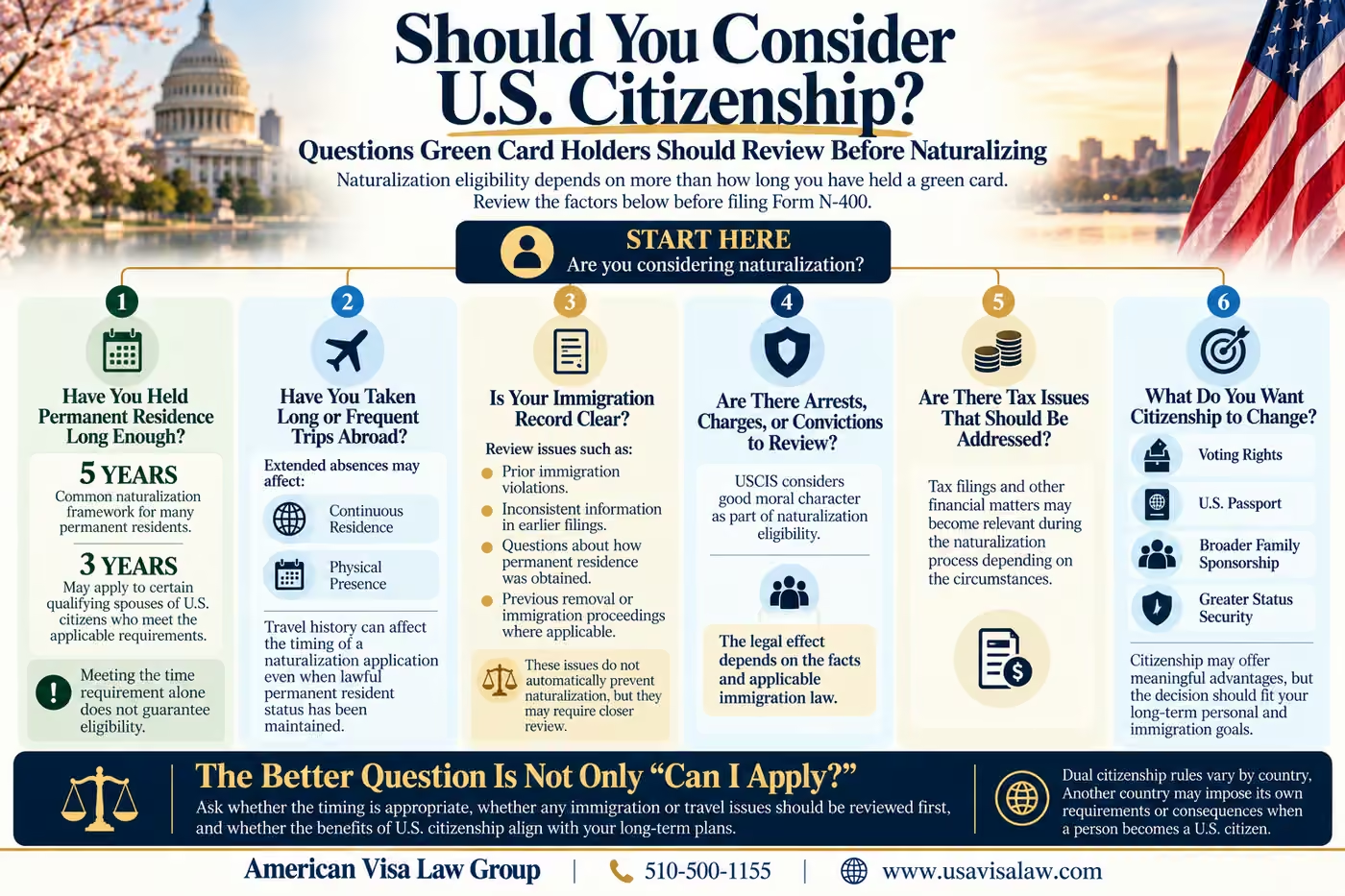
Deciding whether to remain a lawful permanent resident or apply for U.S. citizenship is usually not a one-size-fits-all decision. The better approach is to evaluate whether naturalization fits your immigration history, travel patterns, family goals, and long-term plans in the United States.
A permanent resident considering citizenship should first confirm that they have met the applicable residence period and other naturalization requirements. For many applicants, that means looking beyond the date printed on the green card and reviewing continuous residence, physical presence, travel history, and good moral character.
Extended trips outside the United States deserve particular attention. Even when a person has maintained lawful permanent resident status, lengthy absences can create separate issues for naturalization. Frequent international travel may therefore affect both the timing of an application and how USCIS evaluates continuous residence.
Immigration history also matters. Before filing Form N-400, applicants should consider whether there are prior arrests or convictions, tax issues, past immigration violations, inconsistent statements in earlier filings, or questions about how permanent residence was obtained. These issues do not automatically mean someone cannot naturalize, but they may require closer review before applying.
Family and lifestyle goals can also influence the decision. Someone who wants broader options to sponsor relatives, vote in federal elections, obtain a U.S. passport, or spend long periods abroad without maintaining permanent resident status may place greater value on citizenship.
Finally, dual citizenship should be considered before naturalizing. The United States generally does not require a naturalizing citizen to formally renounce another nationality under U.S. law, but another country may impose its own restrictions or consequences.
For many green card holders, the key question is therefore not simply, “Am I eligible to file?” It is whether the timing is appropriate, whether there are risks that should be reviewed first, and whether the benefits of citizenship fit the person’s long-term plans.
No. Green card holders have many important rights, including the ability to live and generally work permanently in the United States, but they do not have all of the rights available to U.S. citizens.
For example, lawful permanent residents cannot vote in federal elections and cannot obtain a U.S. passport. Citizens also generally have broader family sponsorship options and greater protection against losing the right to remain in the United States. Permanent residents must continue maintaining their immigration status, while citizenship is generally more secure.
Green card holders cannot vote in federal elections. Voting rights are one of the clearest legal differences between lawful permanent residence and U.S. citizenship.
Because election rules can vary by jurisdiction, noncitizens should be cautious about voter registration or participating in elections when they are not eligible. Improper voting or a false claim to U.S. citizenship can create serious immigration consequences depending on the circumstances.
Many permanent residents may qualify to apply for citizenship after five years of lawful permanent residence. Certain spouses of U.S. citizens may qualify under a three-year rule if they satisfy the additional requirements that apply to that naturalization category.
Reaching the three- or five-year mark does not by itself guarantee eligibility. USCIS may also examine continuous residence, physical presence, good moral character, travel history, and other naturalization requirements before approving Form N-400.
A green card holder can travel and spend time outside the United States, but extended or repeated absences may raise questions about whether the person has maintained the United States as their permanent residence.
There is no single travel period that automatically determines abandonment in every case. Immigration authorities may consider the length and purpose of the absence, family and employment ties, tax treatment, property, and other evidence of whether the person intended to maintain U.S. residence. Travel may also affect continuous residence for naturalization.
Generally, yes. A U.S. citizen can live abroad for an extended period without facing the same abandonment-of-permanent-residence concerns that apply to green card holders.
Citizenship itself is not ordinarily lost simply because someone establishes a home in another country. However, U.S. citizens living abroad may continue to have U.S. tax, passport, and other legal responsibilities, depending on their circumstances.
Yes. Lawful permanent resident status can be lost or abandoned in certain circumstances. Extended residence outside the United States, certain grounds of removability, voluntary abandonment, or specific immigration problems can affect permanent resident status.
An expired physical green card, however, does not automatically mean that lawful permanent resident status itself has ended. The card is evidence of the status, while the underlying immigration status is a separate legal issue.
No. A lawful permanent resident is not generally required to become a U.S. citizen simply because they become eligible for naturalization.
Some people remain permanent residents for many years, while others choose citizenship because they want voting rights, a U.S. passport, broader family sponsorship options, or greater security of status. The decision should take into account immigration history, international travel, dual-nationality rules, tax considerations, family goals, and the person’s long-term connection to the United States.
For readers who want to review the official rules behind the green card vs citizenship comparison, the following government resources provide useful additional guidance.

Hasan Abdullah, Esq. is the Founder and Managing Attorney of American Visa Law Group. His practice focuses on U.S. immigration law, including family-based immigration, employment-based immigration, adjustment of status, consular processing, waivers, PERM labor certification, NIW, EB-1, H-1B, O-1, and complex immigration strategy.
Through American Visa Law Group, Mr. Abdullah helps individuals, families, professionals, investors, and employers understand their immigration options and plan around changing government policies, USCIS procedures, and Visa Bulletin movement. His work emphasizes practical legal analysis, realistic expectations, and strategy tailored to each applicant’s immigration history and long-term goals.


