USCIS’s new Adjustment of Status policy memo is already creating shockwaves across the immigration bar, and AILA has now released a detailed practice pointer confirming many attorneys’ concerns.
The May 22, 2026 USCIS Policy Memorandum reframes Adjustment of Status (“AOS”) as “extraordinary relief” rather than a routine immigration process. In practical terms, USCIS officers are now being instructed to more aggressively scrutinize whether applicants should be required to leave the United States and complete immigrant visa processing abroad instead.
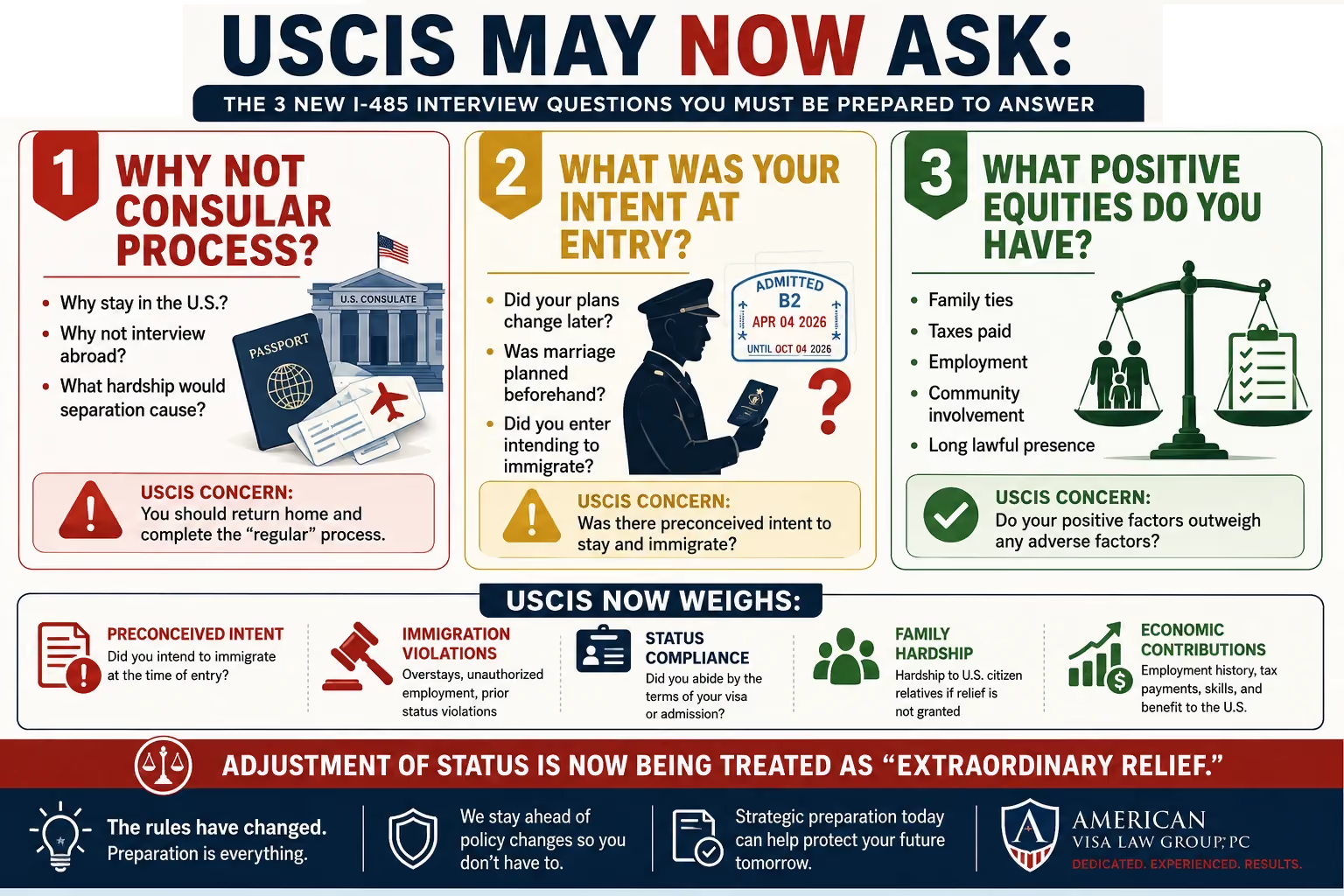
And according to AILA, this is not theoretical anymore. USCIS officers are already issuing RFEs and asking applicants difficult discretionary questions during interviews.
AILA notes that for decades:
The new memo changes the tone dramatically.
USCIS now states that Adjustment of Status is:
“extraordinary relief that permits applicants to dispense with the ordinary consular visa process.”
That language matters.
It signals that USCIS officers are now being encouraged to ask:
“Why should this person be allowed to adjust status inside the United States instead of leaving for consular processing?”
One of the more alarming parts of the AILA practice pointer is the confirmation that dual intent status alone may no longer be enough.
The memo specifically notes that:
maintaining lawful status in a dual intent category is not sufficient on its own to warrant favorable discretion.
In other words:
may no longer automatically insulate applicants from discretionary scrutiny.
That does not mean USCIS will deny all H-1B-based AOS cases. Far from it.
But it does mean officers may increasingly expect applicants to demonstrate positive discretionary factors beyond mere eligibility.
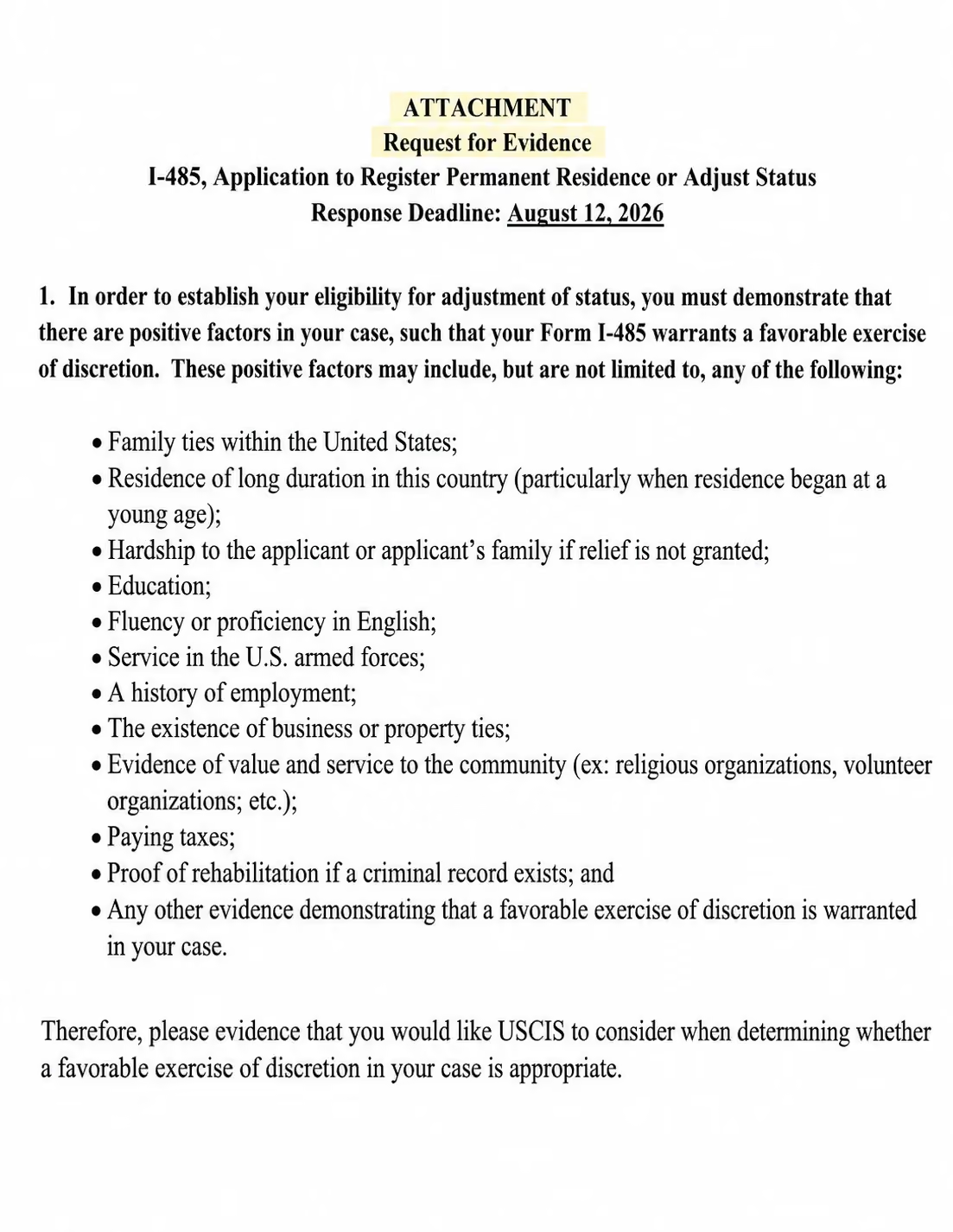
AILA reports that USCIS officers are already:
Reported officer questions include:
This is a major operational shift.
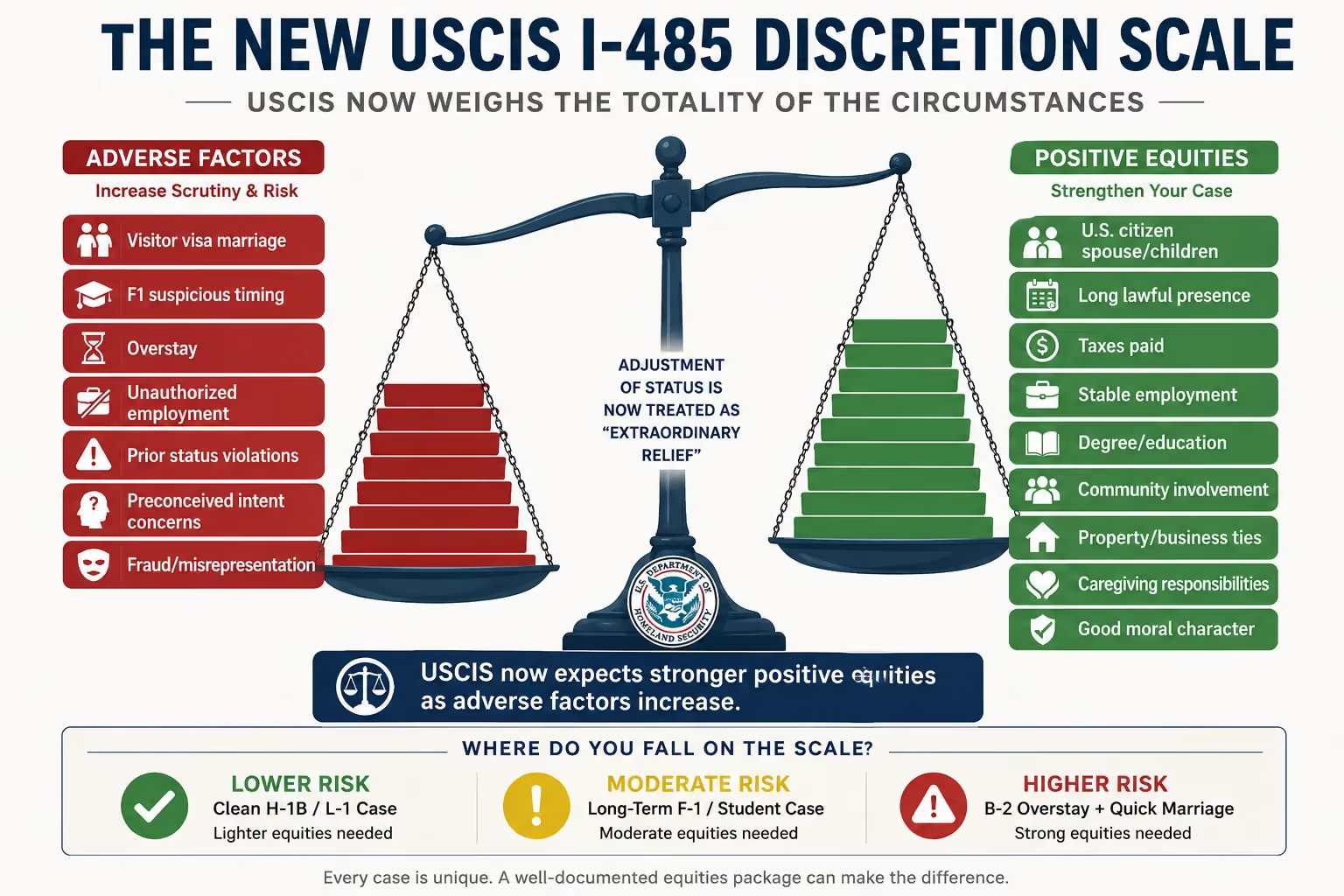
According to the memo and AILA’s analysis, officers are now instructed to weigh factors such as:
This last issue — preconceived intent — is especially important for:
Marriage shortly after entry, especially on a visitor visa, will likely receive increased scrutiny moving forward.
AILA emphasizes that the memo explicitly states:
the absence of negative factors alone is not enough.
Instead, USCIS is increasingly looking for affirmative positive equities such as:
For applicants with overstays or status violations, the memo suggests USCIS may now expect “unusual or outstanding equities.”
AILA recommends that attorneys consider proactively documenting positive discretionary factors in many cases.
Depending on the case type and risk profile, this may include:
Not every case requires a massive discretionary package. A clean long-term H-1B case is very different from a B-2 overstay case involving a quick marriage after entry.
But the days of assuming “if you’re eligible, you’re fine” may be ending.
Some online commentators dismiss these concerns by saying:
“Just go do consular processing.”
But that oversimplifies reality.
Consular processing can involve:
AILA specifically notes that AOS provides significant procedural protections that consular processing does not.
Interestingly, AILA strongly hints that the memo may eventually face legal challenges.
The practice pointer argues that USCIS:
AILA specifically references favorable cases such as:
which continue to support favorable discretion in many immediate-relative and equities-heavy cases.
This policy shift does not mean Adjustment of Status is dead.
But it does mean the environment has changed.
USCIS officers are now being instructed to scrutinize:
Applicants — especially those with:
should take these developments seriously and seek competent legal advice before filing.
The biggest mistake right now is complacency.
Hasan Abdullah is the President and Managing Attorney of American Visa Law Group, PC, an immigration law firm based in the San Francisco Bay Area representing clients nationwide and internationally.
He has over 17 years of immigration law experience handling family-based immigration, employment visas, adjustment of status applications, waivers, extraordinary ability cases, PERM labor certifications, removal-related strategy, and complex discretionary matters before USCIS, the Department of State, and immigration courts.
Hasan regularly analyzes emerging immigration policy developments and their real-world impact on applicants, employers, students, families, and professionals navigating the U.S. immigration system.
American Visa Law Group focuses on strategic, detail-oriented representation in an increasingly complex immigration environment.


