Author: Hasan Abdullah, Esq.
The H-1B visa cost in 2026 can vary significantly depending on the type of filing, the size of the employer, whether premium processing is requested, and whether the case involves additional complexity. Employers should usually budget for several separate cost categories, including USCIS filing fees, statutory H-1B fees, possible premium processing, and H-1B lawyer fees.
For many employers, the mistake is looking only at one government filing fee and assuming that represents the full cost of an H-1B petition. In practice, an H-1B filing may involve multiple required fees, and some of those fees depend on factors such as whether the company is a small employer, a nonprofit, a cap-subject petitioner, or an employer filing a transfer, extension, or amendment.
Attorney fees are also part of the overall H-1B budget. A well-prepared H-1B petition usually requires more than completing forms. The case may require specialty occupation analysis, Labor Condition Application coordination, employer document review, beneficiary qualification review, wage and worksite analysis, and careful preparation of the legal support letter.
American Visa Law Group keeps competitive prices for H-1B and other immigration matters. Employers and foreign professionals can review our full immigration lawyer fees and attorney costs schedule, which includes H-1B legal fees and many other immigration-related fees.
This guide explains the main H-1B visa costs in 2026, including USCIS fees, H-1B filing fees, H-1B attorney fees, premium processing, and common cost issues employers should understand before filing.
The total H-1B visa cost in 2026 usually includes more than one fee. For a cap-subject H-1B case, the process may begin with the electronic registration fee. If the registration is selected, the employer may then need to budget for Form I-129 filing fees, statutory H-1B fees, possible premium processing, and legal fees for preparing and filing the petition.
A practical way to understand H-1B cost is to separate the expenses into government filing fees, attorney fees, and optional or case-specific costs. This matters because not every H-1B case has the same fee structure. A new cap petition, H-1B transfer, extension, amendment, or cap-exempt petition may involve different costs.
In general, H-1B employers should expect some combination of the following:
The key point is that there is no single universal H-1B cost for every employer. A small nonprofit filing an H-1B extension may face a very different cost structure than a large for-profit company filing a new cap-subject H-1B petition with premium processing.
This is also why employers should be careful when comparing online fee estimates. Some estimates include only USCIS filing fees. Others include attorney fees. Some include premium processing, while others leave it out. A useful H-1B cost estimate should make clear what is included, what is optional, and what may change based on the employer’s facts.
American Visa Law Group publishes its immigration lawyer fees and attorney costs so employers and foreign professionals can review legal fee expectations before moving forward. For H-1B cases, legal fees are only one part of the overall budget, but they can be important because the quality of the petition may affect how clearly the case explains the specialty occupation, the employer’s need, the beneficiary’s qualifications, and the required wage and worksite details.
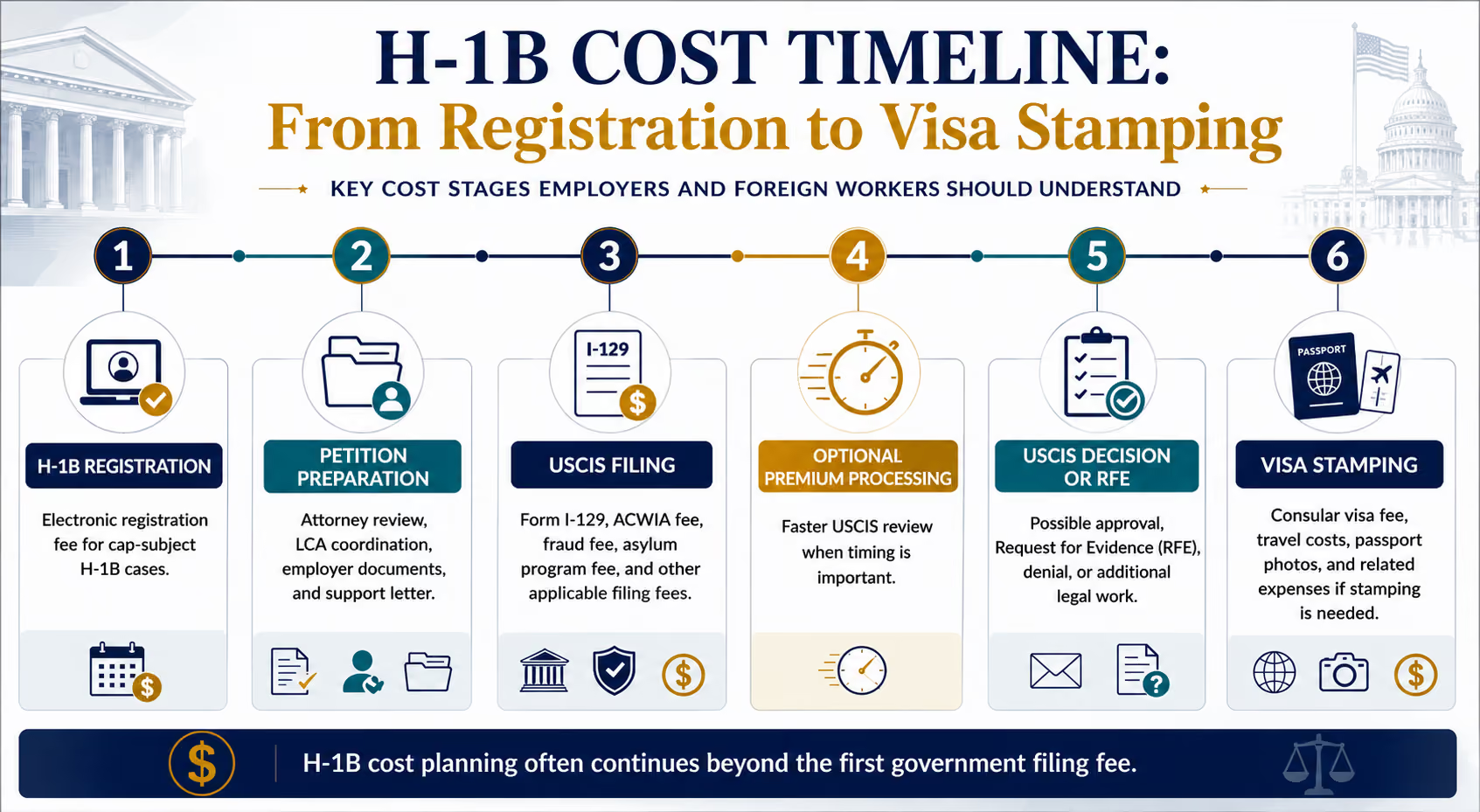
For cap-subject H-1B cases, the process usually starts with the electronic H-1B registration. The employer, or the employer’s attorney, submits a registration for the foreign worker during the USCIS registration period.
The H-1B registration fee is $215 per registration. This fee only covers entry into the H-1B selection process. It does not include the full H-1B petition, attorney fees, premium processing, or other USCIS filing fees.
This is an important distinction. Paying the registration fee does not mean the H-1B petition has been filed. If the registration is selected, the employer must still prepare and file the full H-1B petition with USCIS.
Employers should also remember that the registration fee usually applies only to new cap-subject H-1B cases. Many H-1B transfers, extensions, amendments, and cap-exempt petitions do not go through the annual H-1B lottery registration process.
For budgeting purposes, employers should treat the registration fee as the first step, not the total cost of H-1B sponsorship.
After an H-1B registration is selected, the employer must file the full H-1B petition with USCIS using Form I-129, Petition for a Nonimmigrant Worker.
For H-1B petitions, the Form I-129 filing fee is generally $780 for most employers. Small employers and qualifying nonprofits may pay a reduced filing fee of $460. This is only the base petition filing fee and does not include other H-1B costs, such as the ACWIA fee, Fraud Prevention and Detection Fee, Asylum Program Fee, premium processing, or attorney fees.
This is why employers should not treat the Form I-129 fee as the full cost of an H-1B case. A complete H-1B budget usually includes several separate fees, and the correct amount may depend on the employer’s size, nonprofit status, and type of filing.
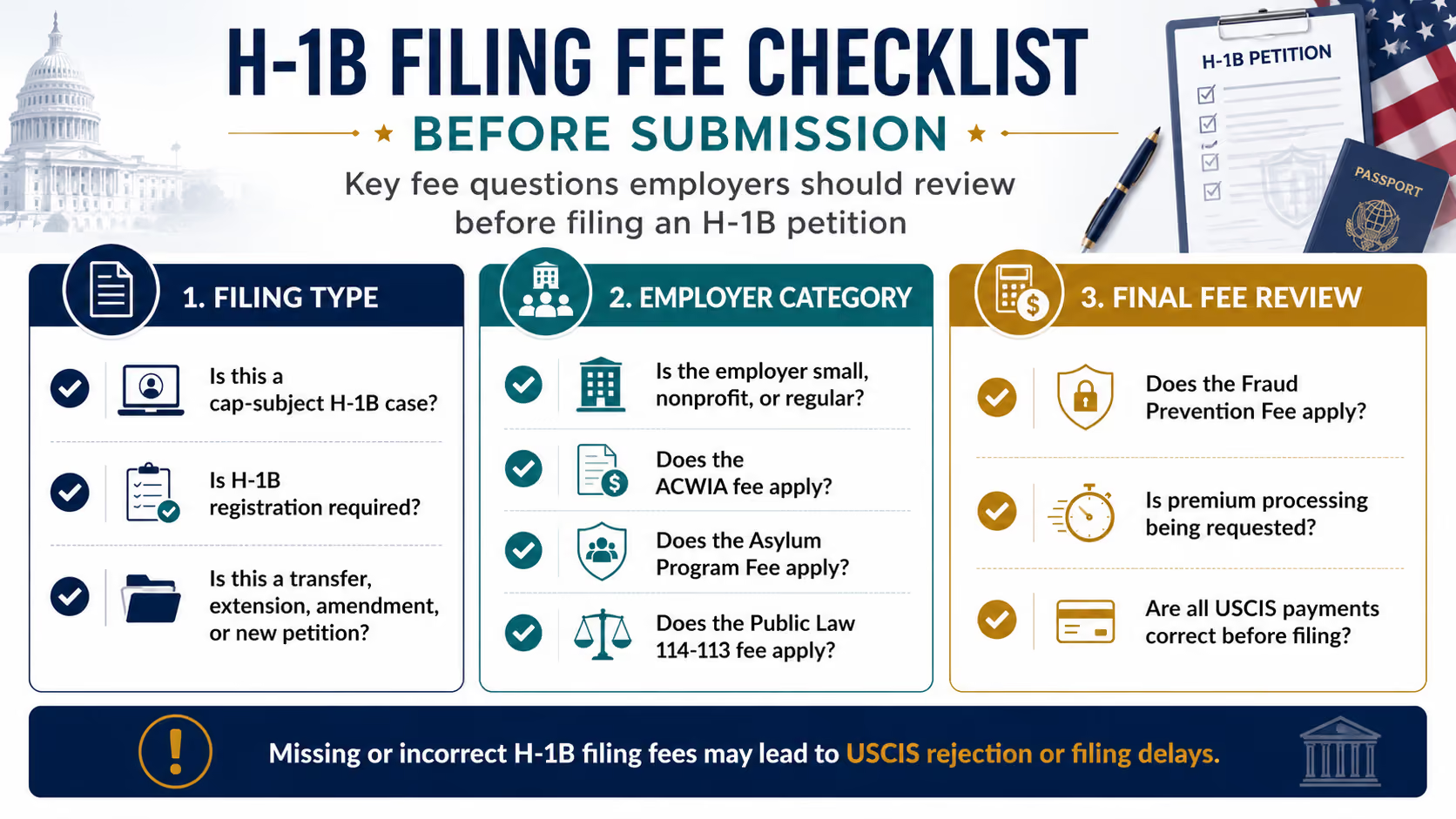
Submitting the wrong filing fee can create avoidable problems. USCIS may reject a petition if the required fee is missing or incorrect. Before filing, employers should confirm the current USCIS fee schedule and make sure the petition includes the right filing fee for the specific H-1B case.
Many H-1B petitions also require an ACWIA fee, which is a training fee connected to the American Competitiveness and Workforce Improvement Act. This fee is separate from the Form I-129 filing fee.
The ACWIA fee is generally $750 for employers with 25 or fewer full-time employees and $1,500 for employers with more than 25 full-time employees. Certain employers, including some institutions of higher education, nonprofit research organizations, and government research organizations, may qualify for an exemption.
This fee often applies to new H-1B petitions and H-1B change of employer cases. It may not apply to every H-1B extension or every type of employer, so the correct fee should be reviewed before filing.
For employers, the ACWIA fee is one reason the total H-1B cost can be much higher than the basic USCIS filing fee. A complete H-1B budget should account for this fee early, especially when preparing multiple petitions or planning around the H-1B cap season.
Many H-1B petitions also require a $500 Fraud Prevention and Detection Fee. This fee is separate from the Form I-129 filing fee and the ACWIA fee. USCIS uses it to support fraud prevention and program integrity for certain H-1B and L-1 filings.
The fraud prevention fee commonly applies to new H-1B petitions and H-1B change of employer cases. It may not apply to every extension with the same employer, so the filing type should be reviewed carefully before submitting the petition.
For employers, this is another reason the total H-1B cost can be higher than expected. Even when the base petition filing fee is clear, additional required fees may apply depending on the case. A complete H-1B cost estimate should include this fee when it is required, rather than treating it as an afterthought.
Many H-1B employers must also pay the Asylum Program Fee when filing Form I-129. This is a separate USCIS fee added to many employment-based petitions, including H-1B filings.
For most employers, the Asylum Program Fee is $600. Small employers with 25 or fewer full-time equivalent employees generally pay $300. Qualifying nonprofit employers may pay $0 for this fee.
This fee is one of the newer costs employers may overlook when estimating the total H-1B visa cost. It is separate from the Form I-129 filing fee, ACWIA fee, Fraud Prevention and Detection Fee, premium processing fee, and H-1B attorney fees.
Before filing, employers should confirm which Asylum Program Fee category applies to them. The wrong fee amount can create filing problems, especially when the petition requires multiple separate USCIS payments.
Some H-1B employers may also need to pay an additional Public Law 114-113 fee. This fee does not apply to every employer, but it can significantly increase the total H-1B visa cost when it is required.
For H-1B petitions, the Public Law 114-113 fee is generally $4,000 for certain employers with 50 or more employees in the United States where more than 50% of the workforce is in H-1B or L-1 status. USCIS explains that this fee may be required when the petitioner also has to pay the Fraud Prevention and Detection Fee.
This fee is most relevant for larger employers that rely heavily on H-1B and L-1 workers. Many small employers, nonprofits, and companies with only a limited number of H-1B employees will not fall into this category.
Because this fee depends on the employer’s workforce facts, it should be reviewed carefully before filing. For affected employers, the Public Law 114-113 fee can make a major difference in the total H-1B filing budget.
Premium processing is an optional USCIS service that allows an employer to request faster review of an H-1B petition by filing Form I-907, Request for Premium Processing Service.
For H-1B petitions, the premium processing fee is $2,965 for requests postmarked on or after March 1, 2026. This fee is separate from the Form I-129 filing fee, ACWIA fee, Fraud Prevention and Detection Fee, Asylum Program Fee, and H-1B attorney fees.
Premium processing can be useful when timing matters. Employers may request it for urgent start dates, H-1B transfers, expiring work authorization, travel planning, or cases where a faster USCIS decision is important for business operations.
However, premium processing does not increase the chance of approval. It only speeds up USCIS review. A petition can still receive a Request for Evidence, denial, or other USCIS action if the case is not properly prepared.
For employers, premium processing should be treated as a strategic timing decision, not a substitute for a strong H-1B petition.
H-1B lawyer fees are separate from USCIS filing fees. These fees usually cover the legal work required to prepare the petition, coordinate the Labor Condition Application, review the employer and employee documents, draft the legal support letter, and file the case with USCIS.
In 2026, employment-based nonimmigrant visa lawyer fees, including H-1B, L-1, and O-1 cases, often range from $2,000 to $6,000+, depending on the law firm and the complexity of the case. American Visa Law Group’s published fee schedule lists H-1B Specialty Occupation Workers at $2,750, with possible additional fees for forced RFEs, expedited work, short-deadline filings, or special complications such as OPT/CPT-related issues.
Attorney fees may vary because not every H-1B petition requires the same level of work. A straightforward extension may be different from a startup H-1B, a third-party placement case, a wage-level issue, or a petition involving unusual job duties or prior immigration complications.
For employers, the goal should not be to find the cheapest H-1B quote. The better question is what the fee includes. A strong H-1B petition should clearly explain the specialty occupation, the employer’s need for the role, the beneficiary’s qualifications, the wage and worksite details, and any case-specific risks.
American Visa Law Group keeps competitive H-1B legal fees and publishes its full immigration attorney fee schedule so employers and foreign professionals can review expected costs before moving forward.
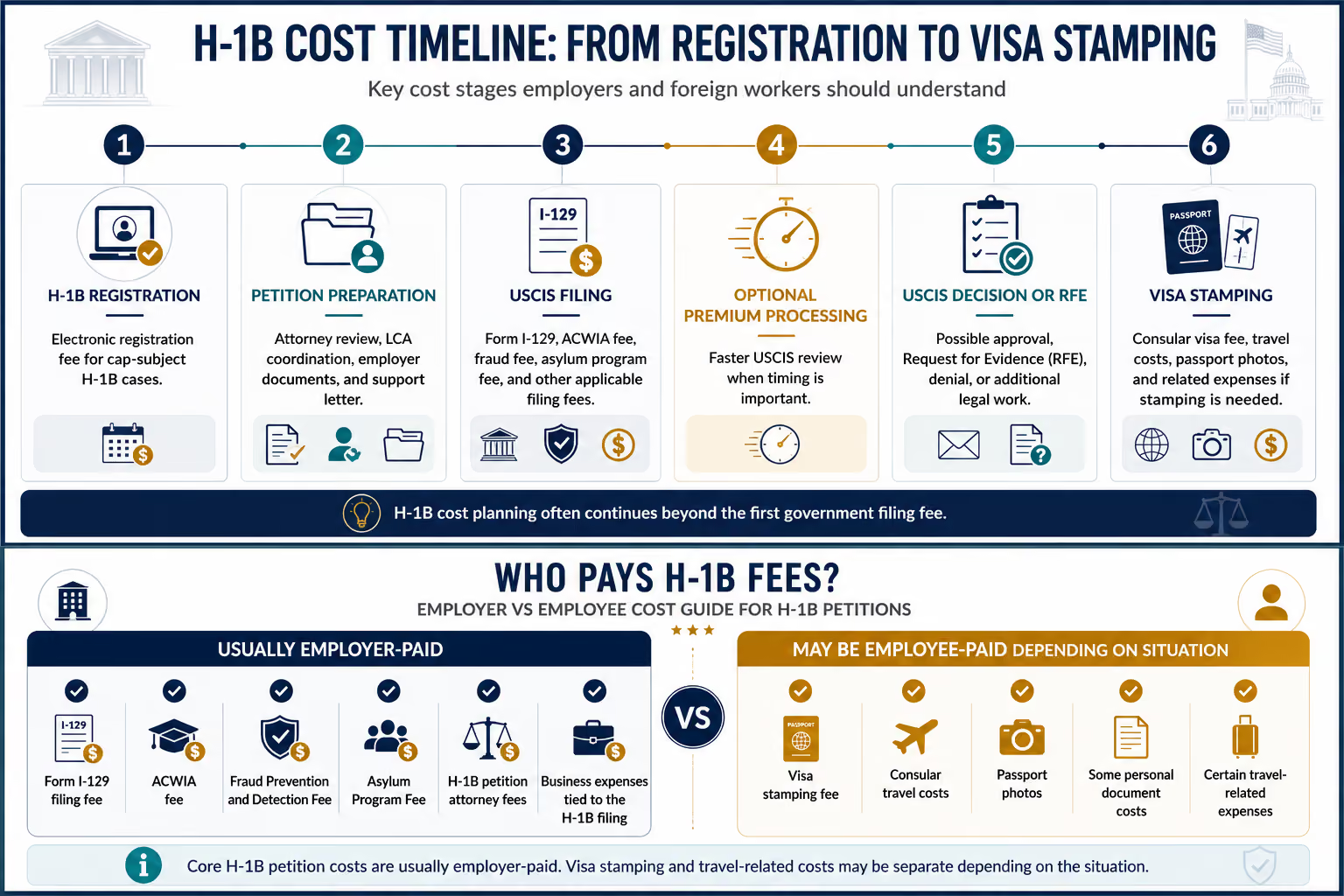
In most H-1B cases, the employer is responsible for the main petition-related costs. This usually includes required USCIS filing fees, the ACWIA fee, the Fraud Prevention and Detection Fee, and other employer business expenses connected to preparing and filing the H-1B petition.
This payment issue matters because H-1B cases are tied to wage and labor compliance. The Department of Labor explains that deductions from an H-1B worker’s pay may be improper if they are used to recover the employer’s business expenses or if they reduce the worker’s pay below the required wage.
Some costs may be separate from the employer’s petition obligations. For example, a foreign worker may personally pay certain visa stamping costs, travel expenses, or document-related expenses, depending on the situation. But employers should be careful about shifting H-1B sponsorship costs to the employee without reviewing the rules.
For practical purposes, employers should treat the core H-1B filing costs as employer-paid expenses unless there is a clear legal basis to handle a specific cost differently. This helps avoid wage deduction issues, LCA compliance problems, and misunderstandings with the sponsored worker.
H-1B lawyer fees are separate from USCIS filing fees. These fees usually cover the legal work required to prepare the petition, coordinate the Labor Condition Application, review the employer and employee documents, draft the legal support letter, and file the case with USCIS.
In 2026, employment-based nonimmigrant visa lawyer fees, including H-1B, L-1, and O-1 cases, often range from $2,000 to $6,000+, depending on the law firm and the complexity of the case. American Visa Law Group’s published fee schedule lists H-1B Specialty Occupation Workers at $2,750, with possible additional fees for forced RFEs, expedited work, short-deadline filings, or special complications such as OPT/CPT-related issues.
Attorney fees may vary because not every H-1B petition requires the same level of work. A straightforward extension may be different from a startup H-1B, a third-party placement case, a wage-level issue, or a petition involving unusual job duties or prior immigration complications.
For employers, the goal should not be to find the cheapest H-1B quote. The better question is what the fee includes. A strong H-1B petition should clearly explain the specialty occupation, the employer’s need for the role, the beneficiary’s qualifications, the wage and worksite details, and any case-specific risks.
American Visa Law Group keeps competitive H-1B legal fees and publishes its full immigration attorney fee schedule so employers and foreign professionals can review expected costs before moving forward.
In addition to USCIS filing fees and H-1B lawyer fees, employers may need to budget for other case-related costs. These costs are not always required in every case, but they can become important depending on the worker’s background, the job, and the filing strategy.
Some H-1B cases require a foreign credential evaluation if the worker earned a degree outside the United States. This helps show that the foreign degree is equivalent to a relevant U.S. degree. If documents are not in English, certified translations may also be needed.
Employers should also consider the administrative work connected to the Labor Condition Application and public access file. While the LCA itself does not usually involve a large government filing fee, it is a key part of the H-1B process and must be handled carefully.
There may also be additional costs if the case receives a Request for Evidence, requires urgent filing, involves unusual job duties, or includes complications such as third-party worksites, prior status issues, CPT/OPT history, or wage-level concerns.
These costs are not always predictable at the start. That is why employers should review the full case early, rather than assuming the H-1B cost is limited to the basic USCIS filing fee.
H-1B visa stamping is separate from the USCIS petition process. An employer may pay USCIS filing fees and attorney fees to obtain H-1B petition approval, but the worker may still need a visa stamp from a U.S. consulate before traveling to the United States from abroad.
The Department of State currently lists the application fee for petition-based temporary worker visas, including H visas, as $205. Some applicants may also have visa issuance or reciprocity fees depending on their nationality. These fees are separate from Form I-129, premium processing, and other USCIS petition costs.
Visa stamping may also involve practical expenses such as travel to the consulate, document preparation, passport photos, courier fees, and time away from work. These costs are not always part of the employer’s USCIS filing budget, but they can still matter for the worker’s overall planning.
Employers and employees should also understand that H-1B petition approval does not automatically guarantee visa issuance at the consulate. The consular officer may still review eligibility, documentation, prior immigration history, and admissibility before issuing the visa.
For cost planning, H-1B visa stamping should be treated as a separate stage after petition approval, especially when the worker is outside the United States or plans to travel internationally.
When comparing H-1B attorney fees, employers should look beyond the total dollar amount. A lower quote may seem attractive, but it may not include the full legal work needed to prepare a strong H-1B petition.
A useful H-1B fee quote should explain what is included. For example, employers should ask whether the fee covers the Labor Condition Application, Form I-129 preparation, employer document review, beneficiary qualification review, support letter drafting, filing coordination, and basic case strategy.
Employers should also ask what is not included. Some legal fee quotes may exclude premium processing, government filing fees, Request for Evidence responses, urgent filing work, consular support, dependent family filings, credential evaluations, translations, or complex issue analysis.
This matters because H-1B cases are not always simple form filings. A petition may require careful analysis of the specialty occupation, the wage level, the worksite, the employer’s business, and the worker’s qualifications. If those issues are not reviewed properly at the beginning, the case may face avoidable delays or additional costs later.
The best H-1B attorney fee quote is not always the cheapest quote. It is the quote that clearly explains the scope of work, the expected legal fees, the government filing fees, and any possible extra costs before the employer moves forward.
For many employers, hiring an H-1B lawyer is worth the cost because the petition is not just a form filing. A strong H-1B case usually requires legal analysis, document organization, wage review, LCA coordination, and a clear explanation of why the offered position qualifies as a specialty occupation.
This is especially important when the case involves a startup employer, third-party worksite, unusual job title, lower wage level, nontraditional degree background, prior status issue, or urgent filing deadline. These facts do not automatically mean the case is weak, but they often require more careful preparation.
An immigration lawyer cannot guarantee approval. USCIS can still issue a Request for Evidence, denial, or other action based on the facts of the case. However, legal guidance can help reduce avoidable mistakes, clarify the employer’s position, and make sure the petition is presented in a complete and organized way.
For employers, the value of legal representation is not only the filing itself. It is also the strategy behind the filing: identifying risks early, explaining the job properly, documenting the worker’s qualifications, and avoiding preventable issues that may cause delays or extra costs later (RFE's).
American Visa Law Group helps employers and foreign professionals understand the legal, practical, and cost-related issues involved in an H-1B petition. The goal is not only to file forms, but to prepare a petition that clearly explains the job, the employer’s need, the worker’s qualifications, and the basis for H-1B eligibility.
For H-1B cases, AVLG may review the offered position, job duties, wage level, worksite, employer documents, beneficiary credentials, immigration history, and filing timeline. This review can be especially important for employers dealing with startups, specialized roles, third-party worksites, transfer timing, OPT or CPT history, or prior USCIS concerns.
AVLG also keeps competitive legal fees and publishes a full immigration lawyer fees and attorney costs schedule so employers can review expected pricing before moving forward. This helps employers budget more clearly for H-1B attorney fees, USCIS filing fees, and possible additional costs.
If your company is preparing an H-1B cap petition, transfer, extension, or amendment, AVLG can help review the case, explain the expected costs, and identify filing issues before the petition is submitted.
The H-1B visa cost in 2026 is not limited to one USCIS filing fee. Employers may need to budget for the H-1B registration fee, Form I-129 filing fee, ACWIA fee, Fraud Prevention and Detection Fee, Asylum Program Fee, possible premium processing, attorney fees, and other case-specific expenses.
The total cost depends on the employer, the type of H-1B filing, and the strategy needed for the case. A new cap-subject H-1B petition may have different costs than an H-1B transfer, extension, amendment, or cap-exempt filing.
For employers, the safest approach is to review the full cost structure before filing. This helps avoid missing fees, incorrect payments, rushed filings, or misunderstandings about who is responsible for each cost.
American Visa Law Group keeps competitive H-1B legal fees and provides a full immigration attorney fee schedule so employers and foreign professionals can better understand expected costs before moving forward. If you are preparing an H-1B petition, transfer, extension, or amendment, speaking with an immigration attorney can help you confirm the likely fees and identify issues before the case is filed.
The total H-1B visa cost in 2026 depends on the employer, filing type, and whether premium processing is requested. A complete budget may include the H-1B registration fee, Form I-129 filing fee, ACWIA fee, Fraud Prevention and Detection Fee, Asylum Program Fee, attorney fees, and possible visa stamping costs.
The H-1B registration fee is $215 per registration for cap-subject H-1B cases. This fee only covers the electronic registration process. It does not include the full H-1B petition or other USCIS filing fees.
H-1B lawyer fees vary depending on the law firm and case complexity. Some cases are straightforward, while others require more analysis because of startup issues, third-party worksites, wage-level concerns, unusual job duties, or prior immigration problems. Employers should review what the fee includes before choosing an attorney.
In most H-1B cases, the employer pays the main petition-related costs. The Department of Labor states that an H-1B worker cannot be required to pay the statutory training and processing fee, the $500 fraud fee, or employer business expenses if those deductions would reduce pay below the required wage.
No. Premium processing is optional and separate from the regular H-1B filing fees. Employers may request it when faster USCIS review is important, but it does not guarantee approval.
No. Premium processing only speeds up USCIS review. It does not make a weak petition stronger, prevent a Request for Evidence, or guarantee that USCIS will approve the case.
The cost of an H-1B transfer depends on the employer, filing fees, attorney fees, and whether premium processing is requested. The worker usually does not need to go through the H-1B lottery again if they were already counted against the cap, but the new employer must still file a new H-1B petition with USCIS.
No. H-1B visa stamping is separate from the USCIS petition process. A worker who needs a visa stamp at a U.S. consulate may have separate consular fees, travel costs, document costs, and possible reciprocity fees.
If the wrong filing fee is submitted, USCIS may reject the petition or delay processing. Because H-1B fees can depend on employer size, nonprofit status, filing type, and optional services, employers should confirm the correct fee structure before filing.
American Visa Law Group publishes its legal fees on its full immigration lawyer fees and attorney costs schedule. This allows employers and foreign professionals to review expected legal fees for H-1B and other immigration matters before moving forward.
For readers who want to review official guidance on H-1B filing fees, employer obligations, premium processing, and visa stamping costs, the following resources may be helpful:
Hasan Abdullah is the Founder and Managing Attorney of American Visa Law Group. He advises employers, professionals, families, and individuals on U.S. immigration matters, including H-1B petitions, employment-based immigration, adjustment of status, waivers, RFEs, and complex USCIS strategy.
His work focuses on helping clients understand both the legal requirements and practical risks involved in immigration filings, including cost planning, timing, documentation, and case strategy.


