“Laid off? Breathe. You’ve got options.”
Let’s not sugarcoat it — getting laid off sucks. But getting laid off while you’re on an H1B visa? That’s a whole different level of stress. One moment you’re building a life in the U.S., and the next, you’re staring down a 60-day countdown clock wondering if you’ll have to pack your bags. 🎯💼
Contents
But before you spiral, pause.
Here’s the truth: you’re not the first, and you won’t be the last. Thousands of H1B workers have faced layoffs—and bounced back. The key is understanding your rights, the timeline, and the steps you need to take right now to stay in legal status and land your next opportunity.
In this guide, we’re going to walk through everything:
You’ve worked hard to get here. Let’s make sure one layoff doesn’t undo it all.
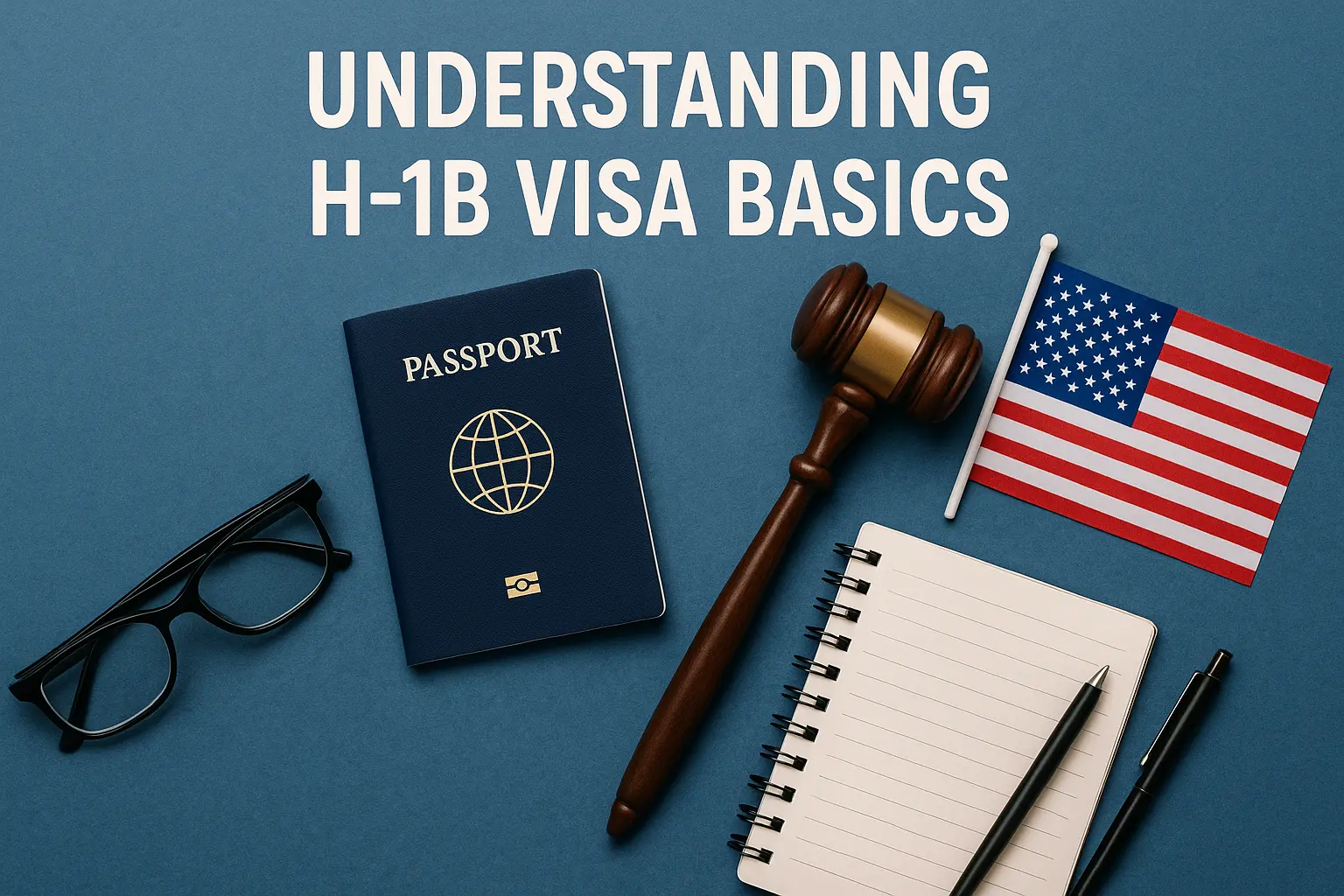
If you’re feeling overwhelmed, it helps to start with the basics. Because understanding what the H1B visa is—and isn’t—can make everything that follows a lot clearer. 🧩
The H1B is a non-immigrant work visa that lets U.S. companies hire foreign professionals for specialized roles—think tech, finance, engineering, healthcare, and more. To qualify, you typically need:
But here’s the catch: it’s employer-tied. That means your legal status in the U.S. hinges on your employer keeping you on payroll. The moment you’re terminated or laid off, your H1B sponsorship is in jeopardy.
Unlike U.S. citizens or green card holders, H1B workers don’t have the luxury of “taking time off” or “figuring it out later.” The clock starts ticking the moment you’re officially unemployed. That’s why people call it a “visa cliff”—you’re either transferring your H1B or falling out of status.
Plus, with the H1B being capped annually, many folks have waited years to land this visa. Losing it doesn’t just feel like a job loss—it feels like losing everything you’ve built.
Legally, your employer is required to:
Once USCIS is informed, your H1B status is no longer active… which brings us to that famous 60-day grace period (we’ll dive into that next).
If you didn’t fully understand your H1B terms before, you’re not alone. Most of us didn’t. But now that you’re here? It’s time to get sharp, fast.
So the HR call just ended. Your access card doesn’t work. And now you’re wondering: “Am I still legal?” 😵💫
Welcome to the most nerve-wracking part of the H1B layoff journey — understanding what happens the moment your job ends, and what that means for your visa status.
USCIS gives you a 60-day grace period (or until your I-94 expires — whichever comes first) from the last day of employment to either:
This grace period isn’t automatic magic — it starts the moment you’re laid off, not when USCIS gets the withdrawal notice. That means you need to count from your last paycheck, not from the day you feel ready to act. Big difference.
Technically, you’re not out of status during the grace period — you’re in a permitted transition window. But if you don’t take action within those 60 days, you will be considered out of status, and staying in the U.S. after that point can lead to:
And trust me, USCIS doesn’t do “grace period extensions.”
Severance doesn’t extend your visa, but some lawyers argue that if you’re being paid on payroll, your employment is technically still active. If your employer lets you remain on payroll as part of the severance package, and you’re getting W-2s — that could buy you more time legally.
But don’t assume. Confirm with your employer AND an immigration attorney.
Once your employer notifies USCIS that you’re no longer employed, your visa petition is withdrawn. From that point:
The 60-day clock is real. And it’s ticking from the day you’re let go — not from when you feel emotionally ready. 🎯

Okay, the layoff happened. You’ve got 60 days. Now what?
The good news? You’ve got options. The not-so-good news? You’ve gotta act fast. 🕰️💼
This is the cleanest route. If you get a new job offer from a company willing to sponsor you:
👉 Pro tip: Make sure your new job is in a similar field to avoid RFE (Request for Evidence) nightmares.
If you’re struggling to find work fast, you can apply for a change of status to stay in the U.S. legally. Most common options:
⚠️ Warning: These changes must be filed within the 60 days. If you file even one day late, you may be denied.
If your employer had already filed your PERM or I-140 petition, talk to your lawyer immediately. Some H1B holders can stay in the U.S. while the green card is pending — but you’ll likely need:
It’s tricky, but doable with solid legal help.
If all else fails, you can leave before the 60 days are up and re-enter later with a new job offer and H1B approval. It’s not ideal, but it’s better than overstaying.
Also, remote jobs from abroad are an option. Some people work remotely for U.S. companies from Canada, Mexico, or India while waiting for a transfer visa to process. It’s not perfect, but it keeps income flowing.
Did you know certain employers are not subject to the H1B lottery? These include:
These are called “cap-exempt” and can sponsor you year-round — a great hack if you’re running out of time.
Bottom line? The 60 days is tight, but not hopeless. The sooner you act, the more doors stay open.
When you’re on the clock with only 60 days to lock down a new employer, job hunting stops being “strategic” and becomes “survival mode.” But that doesn’t mean it has to be chaotic. With the right moves, you can absolutely land an H1B transfer job in time. 🕵️♂️⚡
Focus your time where it counts:
Avoid wasting time on companies that don’t even know what an H1B is. Seriously.
Tailor your resume for recruiters who understand H1B:
This isn’t the time for generic fluff. Get specific, fast.
Tell everyone you know that you’re looking—but be smart about how:
People want to help—you just have to ask clearly.
If a company is willing to sponsor you, you’ll need to:
Time is oxygen. Every day counts.
Desperation attracts shady folks. Watch out for:
If it feels sketchy, it probably is. Trust your gut.
Bottom line: You’re not job hunting like a citizen—you’re job hunting like an H1B warrior. Be fast. Be precise. Be relentless. 💼🔥
Let’s be real—immigration law isn’t exactly a light read. And when you’re laid off on an H1B visa, navigating all the rules solo can lead to expensive mistakes. 🧾🚫 That’s why it’s crucial to know when (and how) to get help.
Not everyone needs an attorney immediately, but if you fall into any of these categories, don’t hesitate:
Immigration attorneys can help you file quickly and correctly. And many offer free consultations or discounted rates for H1B layoffs.
You’ll need:
Even if HR seems awkward about it, ask. You have the right to this documentation.
You’re not in this alone—and you don’t have to figure it all out from scratch.
When you’re in the thick of a layoff, it’s easy to feel like you’re the only one going through it. But you’re not. Thousands of H1B holders have been here before — and they made it out stronger. 💡✨
Amit was let go from a mid-size fintech startup in Austin. He had no backup plan — just a savings account and a half-updated resume. He spent the first three days panicking… then snapped into action.
He:
By day 28, Amit had a job offer from a larger company, which filed his H1B transfer with premium processing. He never had to leave the U.S.
Sara, a UX designer from Egypt, was laid off from a San Francisco startup. She couldn’t find a job fast enough, so she pivoted—applying to a short-term UX certification program that issued her an I-20 for F1 status.
She filed her change of status with USCIS by day 42, and it was approved. That extra time helped her land a new design job six months later, and her new employer took over her H1B process from scratch.
Ravi, a data engineer, decided to return to India when he couldn’t find a sponsor fast enough. But instead of giving up, he reached out to U.S. companies offering remote work. One hired him on a contract basis.
A few months later, they agreed to sponsor him back on an H1B, and he returned to the U.S. under a new employer. His message?
“Leaving doesn’t mean it’s over—it can just be a reset.”
Many workers talk about how the uncertainty wrecked their confidence, even more than their career. But the ones who got through it said the same thing: you have to give yourself grace.
They meditated. Talked to therapists. Walked a lot. Slept weird hours. Cried. And still moved forward.
Your story might feel chaotic right now, but it’s still being written. You’re not stuck — you’re transitioning. And thousands have walked this path before you. You’ve got this.

Once you’ve survived a layoff on an H1B, something shifts. You don’t just want to survive — you want to be ready next time. Because if the tech market, layoffs, and visa chaos have taught us anything, it’s this: being proactive beats being reactive. Every. Single. Time.
Don’t wait for disaster. Treat your resume like your toothbrush — update it regularly and keep it fresh:
This way, when an opportunity pops up (or something falls apart), you’re ready in hours — not days.
Create job alerts on:
Make a spreadsheet of H1B-friendly companies with open roles that match your skills — and check it weekly.
Even if you’re not looking right now, building your digital footprint can make you stand out when it matters:
When companies Google you (and they will), give them something good to find.
Even if your H1B is solid now, explore:
Understanding your full immigration toolbox gives you control — not just hope.
This experience can mess with your confidence. Even after you bounce back, you might feel anxious or burned out. Take time to:
Career volatility is hard — but it can also be a reset. Use it.
Being on an H1B in 2025 means living with a constant undercurrent of uncertainty. But with the right habits, network, and mindset, you can turn any layoff into a launchpad.
Let’s wrap it all up with some strength and clarity 💬💼
Getting laid off while on an H1B visa is scary. No doubt. It throws your plans, your status, and your peace of mind into chaos overnight. But here’s the truth: you’re not powerless. 💥
You’ve got a 60-day window
You’ve got
options
You’ve got a
community of thousands who’ve been here and made it through.
You’ve got skills, drive, and experience that brought you to the U.S. in the first place.
That didn’t go away just because you lost a job.
Make a list.
Ask for help.
Apply like crazy.
Follow up.
Stay legal.
Stay focused.
And don’t let fear drive the bus. 🚍
https://rjimmigrationlaw.com/resources/i-was-laid-off-or-fired-while-on-an-h1b-visa-now-what/


