Contents
Ugh. Those words hit like a gut punch, don’t they?
If you’re here, there’s a good chance you’ve received an H1B RFE—or you’re worried you might. And trust me, you’re not alone. In 2025, RFEs have become a regular speed bump in the H1B journey. More scrutiny. More paperwork. More “prove this, explain that.”
But here’s the thing: an RFE is not the end of the road. It’s not a denial. It’s a second chance. And with the right knowledge, strategy, and documentation, it’s totally winnable. Thousands of applicants get approved after an RFE every single year—and you can too.
In this guide, I’ll walk you through:
Whether you’re the applicant, the employer, or just an anxious partner in the background—I got you. Let’s take this complicated mess of legal jargon, dig through it, and make it make sense.
Let’s start with the basics: what the heck is an RFE, and why do they keep landing in H1B inboxes like confetti?
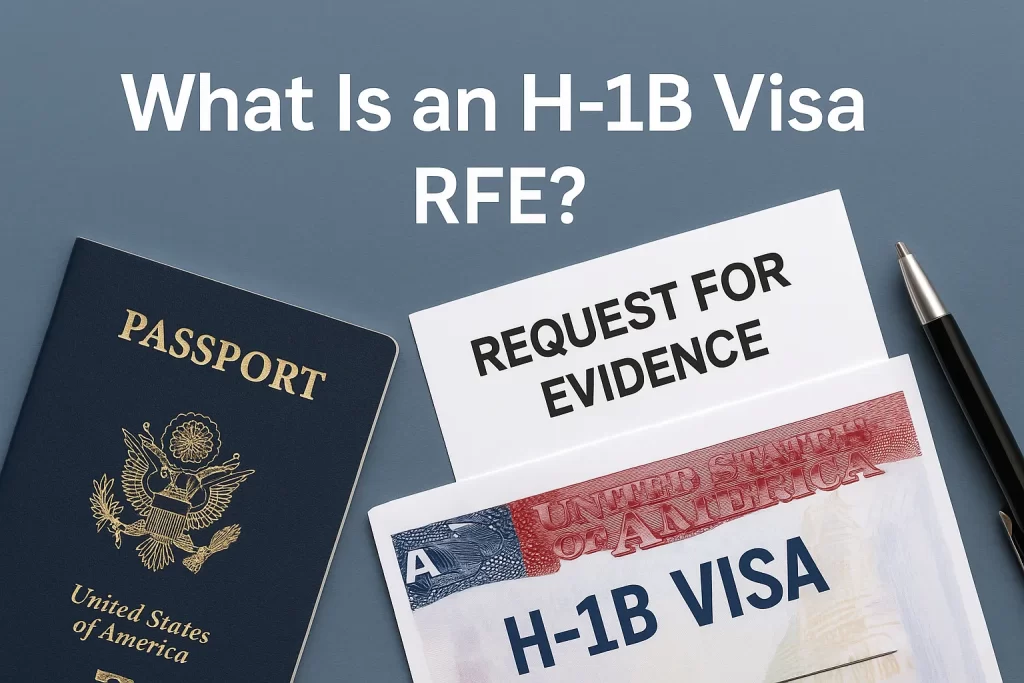
Alright, before we panic (or panic harder), let’s take a breath and understand what an RFE actually is.
RFE stands for Request for Evidence “Hey, we’re not rejecting your case—yet. But we need more info before we decide.”
It’s like a yellow light. Not red. Not green. Just… wait, and prove yourself.
Usually, RFEs come after your H1B petition is filed—whether you’re part of the lottery or doing a transfer or extension. If something doesn’t look right to the officer reviewing your case, they’ll flag it. You’ll receive a formal notice (by mail or electronically if you’re set up with online access), and it’ll list exactly what they want.
The clock starts ticking the moment you receive it. Most RFEs give 60 to 87 days to respond. Miss the deadline? Game over. The petition gets denied.
Think of it as a USCIS “checklist meets interrogation.” It’ll say:
Some RFEs are just one issue—others are a whole buffet of demands.
A NOID (Notice of Intent to Deny) is harsher. It means the officer has already decided there’s enough to deny your petition—but they’re giving you a final chance to prove them wrong. It’s like being on the edge of the cliff.
An RFE, though? That means they’re still open to approving your case—they just need convincing.
The RFE stage is where cases are won or lost. And not because the petition was bad—but because the response was sloppy, rushed, or incomplete.
So if you (or your employer) get one, don’t treat it like a casual request. It’s your one shot to clarify, clean up, and nail your argument.
You submitted everything. You dotted the i’s, crossed the t’s. So why did you still get hit with an RFE? 😤
Welcome to 2025—where USCIS loves to double-check everything. The smallest inconsistency can trigger a request for evidence. And no, it’s not always your fault. Sometimes, it’s the way job roles are framed, how wage levels are interpreted, or just good ol’ government bureaucracy doing its thing.
Let’s break down the most common culprits behind H1B RFEs this year:
This one is still the number one reason. USCIS doesn’t just want to know your job is technical—they want proof it requires at least a bachelor’s degree.
Your title might say “Analyst” or “Developer,” but that’s not enough anymore. They want:
Pro Tip: Vague job descriptions = RFE magnet.
Especially with remote work and third-party placement, USCIS wants to know: Are you actually being supervised by the petitioner?
They’ll question:
If you’re working offsite or at a consulting client, expect scrutiny.
Filing with a Level I wage? You better justify why. USCIS often sees Level I wages as “too junior” for an H1B role, especially for IT or engineering positions.
You’ll need to explain how the job is still complex and degree-dependent—even if it’s entry-level.
Got your degree from another country? Not directly related to your job title? Get ready.
They may ask for:
And if you’re trying to qualify with work experience? You’ll need airtight documentation.
For those changing from F-1, CPT, OPT, or other statuses, USCIS may want proof that you maintained lawful presence in the U.S. throughout.
Any gaps, overstays, or unauthorized employment = red flag.
Working at a third-party site (like a tech client or contractor office)? You’ll likely need:
No vague contracts. No placeholders. They want receipts.
Bottom line? USCIS in 2025 is playing it cautious. Every detail matters, and even the smallest inconsistency can open the RFE floodgates.
Don’t stress—just stay sharp. And when the RFE hits, be ready with your response.
Okay, so you got the RFE. Your stomach’s in knots, your inbox feels cursed, and your boss is asking, “What does this mean for your start date?”
Here’s the truth: how you respond to an RFE can make or break your H1B case. This is the moment to stay cool, get organized, and treat the next few days like you’re prepping for the biggest presentation of your life. Because in a way—you are.
Let’s break it down.
First things first—read every single word of that RFE. Don’t skim it. Don’t guess what it means. Every RFE spells out exactly what USCIS wants and why they’re not yet convinced.
Pay attention to:
📌 Tip: If you’re unsure about the legal terms, get help from a qualified immigration attorney. This isn’t the time to wing it.
This is where most people either win or lose. Your response should be clear, complete, and convincing.
Here’s what to include:
📎 Everything should connect directly to the issue raised. No fluff. No missing links.
Even if you didn’t use one for the initial petition—this is your moment to get pro help. Lawyers who specialize in H1Bs know how to phrase things, what USCIS wants to hear, and how to frame your case for success.
Seriously, don’t go it alone if you don’t have to.
Send your RFE response:
Bottom line? Treat your RFE response like a job application that could change your life. Because it kinda is.
If it feels like H1B RFEs have become the norm instead of the exception—you’re not imagining things. Over the past five years, USCIS has shifted its approach, and RFEs have gone from “rare and alarming” to “expected and annoying.” 😒
Let’s break down what’s been happening—and what 2025 looks like so far.
Here’s the tea. Between FY 2020 and FY 2022, we saw sky-high RFE rates—nearly 40% of H1B petitions received one. Under the Trump administration, scrutiny peaked, especially for tech roles and third-party placements.
Then came 2023–2024:
Now in 2025, early data shows:
So yeah—it’s better than before, but still far from smooth sailing.
Here’s the good news: most RFEs don’t end in denial. According to USCIS data and immigration attorneys on the ground:
So if you get one, don’t freak—just respond like a champ.
Some fields are RFE magnets. Why? USCIS loves to nitpick roles that might be too “general” or “non-specialized.”
Top industries flagged:
STEM fields like engineering and software development tend to fare better—if the job duties are detailed clearly.
The Trump era brought rigid memos, stricter adjudication, and denial-first culture. Many of those policies were later rescinded, but some mindsets linger inside USCIS.
2025 is a rebuilding year—policies are more relaxed on paper, but officers still vary wildly in how they interpret RFEs.
Bottom line? H1B approval is part luck, part prep, and part knowing what trends to expect.
Next, let’s get practical and show you how real people respond and win.
You know what makes RFEs less scary? Seeing how other people beat them. Let’s dig into realistic H1B RFE scenarios and how people turned a frustrating obstacle into a glowing approval notice. Because yes—it happens all the time when you play it smart.
What Worked:
Result: Approval granted within 3 weeks of submission.
What Worked:
Result: RFE overcome, petition approved.
What Worked:
Result: USCIS approved the petition with zero follow-up.
Every winning RFE packet included a well-structured, professional cover letter. It should:
There’s no “one-size-fits-all” RFE response. But when you understand the issue, gather airtight evidence, and speak USCIS’s language, your odds go way up.
You’ve seen how to defend yourself. Now let’s talk about prevention 🛑
If you’re getting ready to file—or helping someone who is—these tips can seriously save you months of headaches.
This is the most common RFE trap. Vague job titles or generic duties raise red flags.
✅ Do this instead:
🚫 Avoid copy-pasting from other petitions or internal HR docs—they’re not written for USCIS.
Your job code and wage level must match your position and experience. Mismatches = instant suspicion.
Level I is often fine for junior roles—but ONLY if you justify it.
📌 Pro tip: Add a paragraph in your petition explaining why the wage level makes sense based on the candidate’s background and job expectations.
If you’re working at a third-party site, a signed, specific client letter is GOLD. Don’t wait until USCIS asks for it—include it with the initial filing.
The letter should:
If the beneficiary’s degree is:
…go ahead and include a credential evaluation in the initial petition. It helps avoid confusion and shows you’re serious about proving qualifications.
Don’t dump papers and hope for the best.
✅ Include a
cover letter
✅ Double-check every document for consistency—spelling, dates, job titles, addresses.
Remember, adjudicators go through hundreds of cases. Make it easy for them to say yes.
It’s not always required—but it can seriously lower your RFE risk.
Immigration attorneys know the patterns, the traps, the templates. And they know how to pre-respond to common USCIS doubts before the RFE ever hits your mailbox.
No strategy is foolproof, but if you follow these steps, your chances of sailing through without an RFE are way higher. And even if you still get one—you’ll be ready.
You don’t need to face an RFE with just Google and panic. Whether you’re an HR manager, a startup founder trying to keep your talent, or the H1B hopeful yourself—having the right tools makes a huge difference.
Here are the best places to find help, examples, and support when dealing with H1B RFEs in 2025:
Yes, it’s dry. Yes, it’s useful.
✅ Link: This page breaks down the basics: timelines, delivery methods, and what happens if you don’t respond.
📝 They won’t give you strategy—but they will tell you the rules.
Want to see what a real RFE response looks like? Some legal blogs and immigration forums post sanitized templates.
Try:
⚠️ Heads up: These are examples, not one-size-fits-all templates. Always adapt to your case.
If you’re not working with an immigration attorney yet, now might be the time.
Trusted firms that offer RFE help:
Many of these offer free consultations or affordable one-time RFE review services.
Want to level up your H1B knowledge? These resources break it down in plain English:
Sometimes, what you need most is someone who’s been there.
Try:
You’ll find people swapping stories, sharing updates, and offering tips based on real experiences.
Information is power—and having the right links, questions, and examples makes a tough process feel just a little less overwhelming.
Getting an H1B RFE can feel like a punch to the gut—but let’s be clear: it’s not a rejection. It’s a second chance. A curveball, sure. But one you can absolutely hit out of the park if you respond with clarity, evidence, and confidence.
In 2025, RFEs are part of the game. They don’t mean your case is weak. They mean USCIS wants more—and you have the power to give it to them.
Let’s recap your keys to success:
Thousands of H1B petitions that get RFEs go on to be approved. Yours can be one of them.
So take a breath. Get your docs in order. Talk to your team. And face this head-on.
Because the RFE isn’t the end—it’s just the middle of your approval story. And you’ve got what it takes to finish it strong.
Want to dive deeper into H1B visas, RFEs, and winning strategies? Here are some resources and guides to help you stay one step ahead:


