Author: Hasan Abdullah, Esq.
If your I-485 was denied due to unauthorized employment, the denial does not necessarily end every path to permanent residence. It does, however, require prompt review because the correct response depends on your adjustment category, employment dates, immigration history and any exceptions that may apply.
Under the USCIS rules on unauthorized employment, working without authorization can create a bar to adjustment of status. However, the rule does not affect every applicant equally. Immediate relatives of U.S. citizens are generally exempt from certain unauthorized-employment bars, while some employment-based applicants may qualify under INA Section 245(k) if their combined violations do not exceed 180 days.
The first step is to determine whether USCIS used the correct employment dates, applied the right legal standard and considered every available exception. The denial should also be reviewed for separate issues involving immigration status, admissibility or the underlying petition.
Timing matters. Although there is generally no direct appeal from an I-485 denial, you may be able to file a motion to reopen or reconsider using Form I-290B. Other options may include refiling Form I-485, pursuing consular processing or renewing adjustment before an immigration judge.
Before continuing to work, traveling internationally or submitting another application, understand what the denial changed. This guide explains the available options, important deadlines and evidence needed to choose the strongest next step.
After an I-485 denial for unauthorized employment, focus on four immediate priorities: understand the denial, calculate the response deadline, confirm your current immigration and work authorization, and avoid travel or refiling before the case has been reviewed.
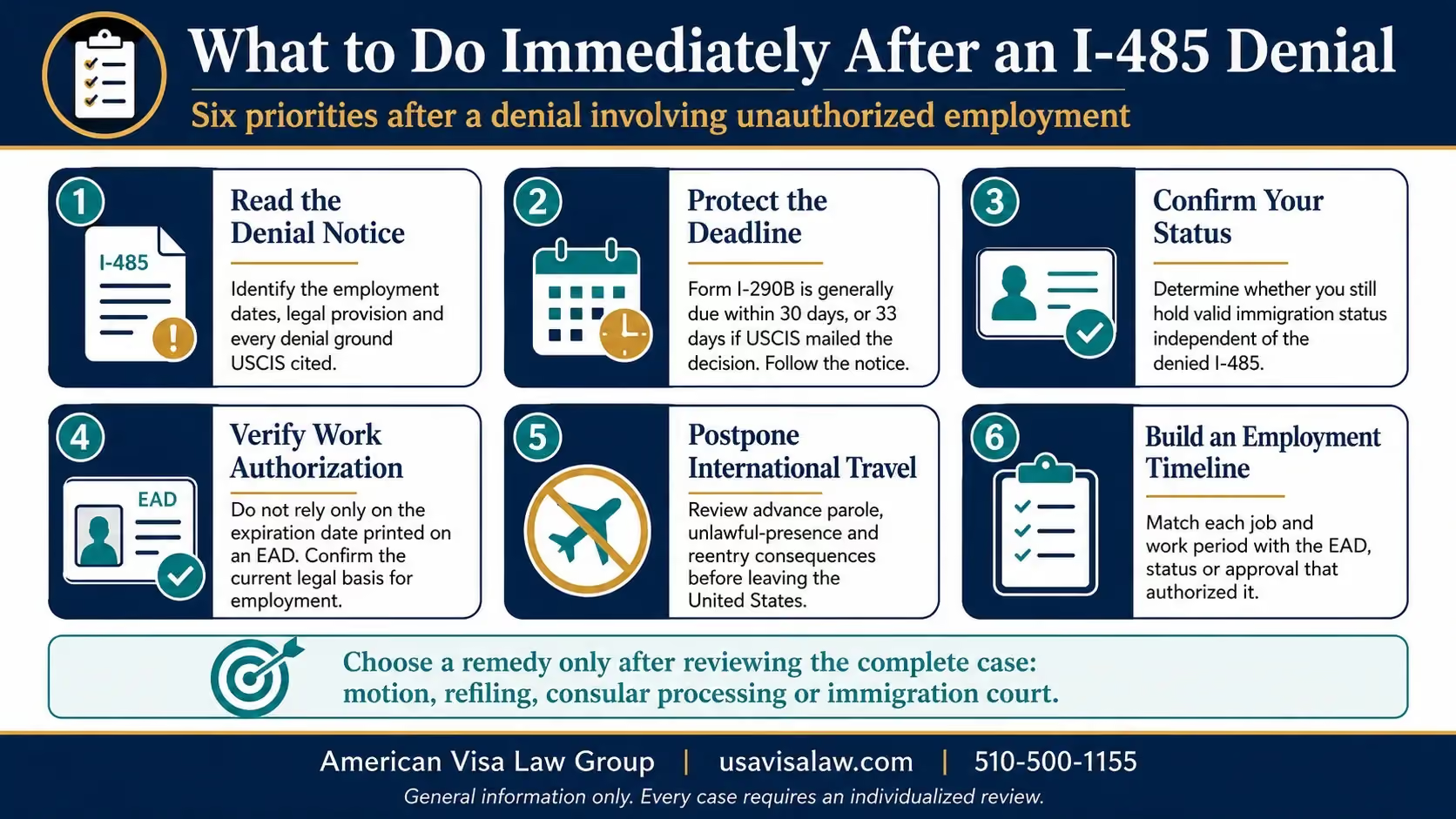
Read the complete decision carefully. USCIS should identify the employment it considered unauthorized and the legal provision supporting the denial. Check whether the agency used the correct work dates, recognized your source of employment authorization and considered any exception that may apply.
Also look for additional denial grounds involving your immigration status, underlying petition, admissibility or eligibility for adjustment. Correcting the employment issue may not be enough if USCIS identified another independent problem.
Although an I-485 denial generally cannot be appealed directly, you may be able to file a motion to reopen or reconsider using Form I-290B. The deadline is usually 30 calendar days from service of the decision, or 33 calendar days if USCIS mailed it. Follow the deadline stated in the notice and preserve the envelope as evidence of mailing.
Determine whether you still hold an immigration status independent of the denied I-485, such as valid H-1B, L-1, O-1 or F-1 status. An applicant who maintained separate status may be in a different position from someone whose ability to remain in the United States depended entirely on the pending adjustment application.
Do not assume that you may continue working simply because the EAD card has not expired. Employment authorization after denial depends on the EAD category, the validity of the document and whether a timely motion is pending. Filing Form I-290B does not automatically reopen the I-485 or independently authorize employment.
International travel should also be postponed until the possible effects on advance parole, unlawful presence and reentry have been reviewed. Likewise, avoid immediately filing another I-485. The better next step may be a motion, refiling, consular processing or adjustment before an immigration judge, but that choice should follow a careful review of the denial and employment history.
Unauthorized employment can lead to an I-485 denial because federal law prevents certain applicants from adjusting status after working in the United States without permission. The result depends on the applicant’s green-card category and whether a legal exception applies.
INA Sections 245(c)(2) and 245(c)(8) contain restrictions involving unauthorized employment. These provisions can affect work performed before the I-485 was filed and, in some cases, employment that continues while the application is pending.
Filing Form I-485 does not itself authorize employment. An applicant generally needs a valid Employment Authorization Document or another immigration status that permits the particular work. For example, an employer-specific status may authorize work for one company but not freelance services or employment with another business.
USCIS defines unauthorized employment as work performed for an employer in the United States without authorization or beyond the scope of the authorization granted. The USCIS Policy Manual explains how these rules apply to adjustment applicants.
USCIS may compare the I-485 with EAD records, I-94 information, immigration petitions, tax documents and statements made during an interview. The applicant must show that the employment was authorized or that an exception applies.
This is why the dates are so important. Employment may become unauthorized if it begins before an EAD is valid, continues after authorization expires or involves work not permitted by the applicant’s status.
Unauthorized employment should also be separated from unlawful status and unlawful presence. These concepts can overlap, but they are not identical and may create different immigration consequences. A denial notice should therefore be reviewed to determine exactly which rule USCIS applied and whether the finding is supported by the record.
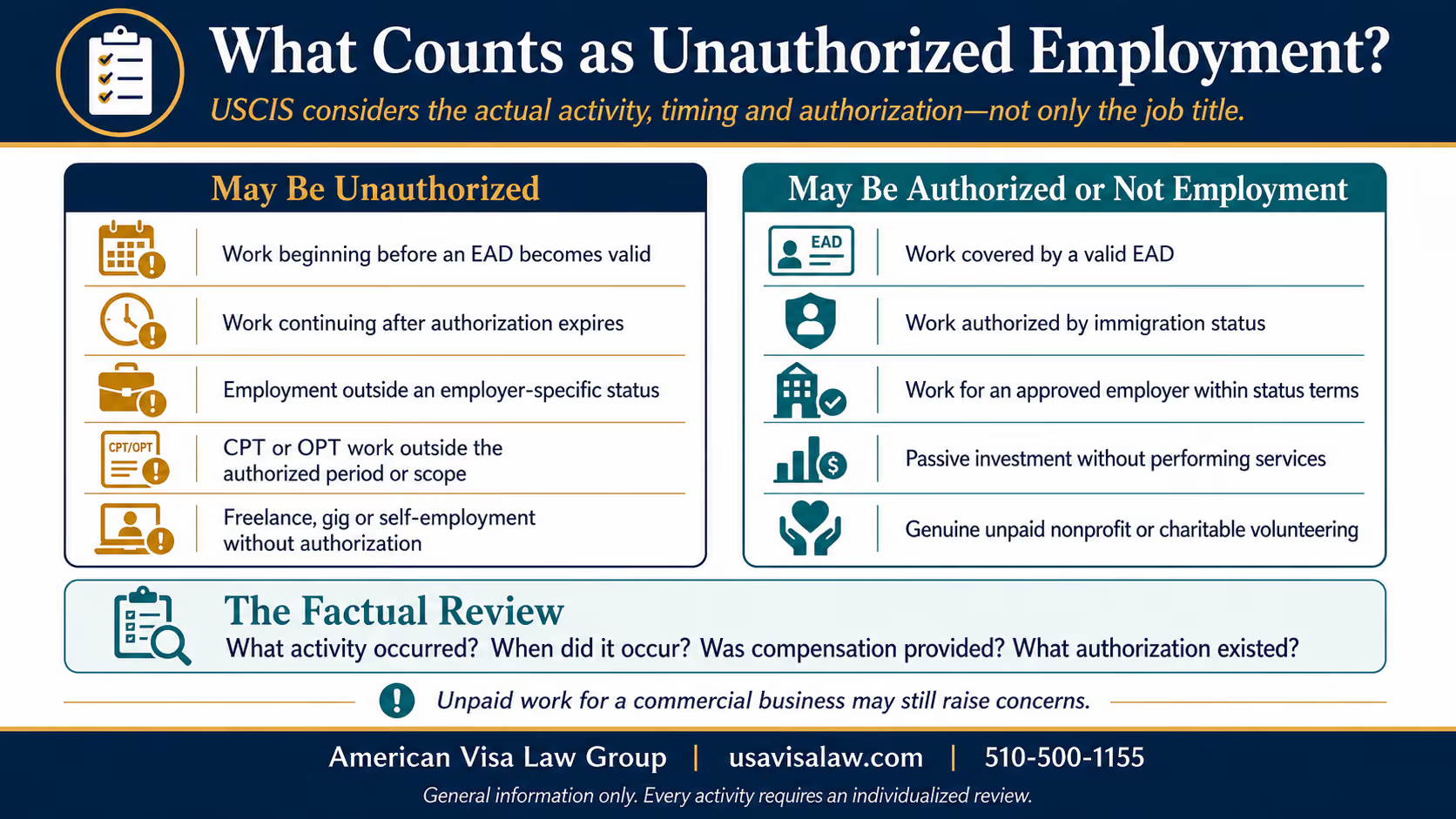
Unauthorized employment generally means performing work in the United States without permission or continuing beyond the limits of the authorization granted. USCIS considers the actual activity performed, not simply the title used by the worker or employer.
Common examples may include:
An applicant may also have valid authorization during one part of the employment period but not another. For this reason, USCIS often compares payroll dates with EADs, approval notices and status records.
A pending Form I-765 does not normally authorize employment unless another legal basis permits the work. Similarly, filing Form I-485 does not create permission to work. USCIS provides its definition and guidance in the Policy Manual’s unauthorized-employment chapter.
Freelance services, gig work and self-employment can count as employment when the applicant performs labor in exchange for money or another form of compensation. Describing someone as an independent contractor or issuing Form 1099 instead of Form W-2 does not automatically make the activity permissible.
Business ownership also requires a factual review. Passive investment, such as owning shares without performing services, is different from actively managing operations, serving customers or completing paid projects.
Genuine volunteering for a charitable or nonprofit organization may not be considered employment when there is no compensation and the position is normally performed by volunteers. However, unpaid work for a commercial business, or work performed with an expectation of future payment , may raise concerns.
The key questions are what the applicant actually did, when the activity occurred, whether compensation was provided and what immigration authorization existed at the time.
Unauthorized employment does not automatically prevent every applicant from receiving a green card. Several statutory exceptions can allow adjustment to continue, although the applicant must still satisfy all other eligibility requirements.
The unauthorized-employment bars under INA Sections 245(c)(2) and 245(c)(8) generally do not apply to immediate relatives of U.S. citizens. This category includes qualifying spouses, unmarried children under 21 and parents of adult U.S. citizens.
For example, a spouse who entered the United States lawfully and later worked without authorization may still qualify for adjustment through a U.S. citizen spouse. The exception does not forgive every immigration problem, however. Issues involving entry without inspection, fraud, criminal history or inadmissibility require separate analysis.
INA Section 245(k) may protect certain employment-based applicants whose covered immigration violations after their most recent lawful admission do not exceed 180 days.
The calculation can include:
The 180-day calculation is fact-specific. Employment records, I-94 information, status approvals and EAD dates should be compared carefully. Exceeding the limit may make the applicant ineligible for the exemption. USCIS explains Section 245(k) and other exceptions in its Policy Manual.
INA Section 245(i) may allow certain applicants to adjust despite unauthorized employment or other status violations if they are grandfathered through a qualifying immigrant petition or labor certification filed on or before April 30, 2001. Some applicants must also establish physical presence in the United States on December 21, 2000. USCIS provides detailed eligibility guidance for Section 245(i).
VAWA self-petitioners and certain other adjustment categories may also be exempt from particular bars or governed by different rules.
The existence of an exception is only one part of the analysis. The applicant must still prove that the exception applies and satisfy the remaining adjustment requirements.
An exception to the unauthorized-employment bar removes one possible obstacle. It does not automatically make the applicant eligible for permanent residence.
Even when unauthorized employment is excused, the applicant may still need to establish:
For example, an immediate relative of a U.S. citizen may be exempt from the unauthorized-employment bar but still face a problem involving entry without inspection, criminal history, fraud or a prior removal order. Each issue must be analyzed separately.
USCIS will not necessarily apply an exception without supporting evidence. An immediate relative may need to establish the qualifying relationship and the petitioner’s U.S. citizenship. A Section 245(k) applicant needs accurate records showing that covered violations stayed within the 180-day limit. A Section 245(i) applicant must prove that the grandfathering requirements were met.
Unauthorized employment may also lead to separate concerns if the applicant gave inconsistent answers, used false documents or made a false claim to U.S. citizenship. An exception to the employment bar does not automatically resolve those issues.
Most adjustment applications are also decided as a matter of discretion, meaning USCIS may weigh favorable and unfavorable factors after determining that the basic legal requirements are met. The USCIS Policy Manual explains the role of discretion in adjustment decisions.
The practical question is therefore not only whether unauthorized employment can be forgiven, but whether the applicant remains eligible for adjustment as a whole.
An I-485 denial may be challengeable when USCIS relied on incorrect employment facts, overlooked important evidence or applied the wrong adjustment rule. The error must be material, meaning correcting it could affect the outcome.
Compare the denial notice with the documents in the original filing. Common factual problems may include:
A clear timeline can make these errors easier to identify. Match each employment period with the EAD, immigration status or employer-specific approval that permitted the work.
A legal error occurs when USCIS has the correct facts but applies the wrong statute, regulation or policy. Examples may include failing to recognize that the applicant is an immediate relative of a U.S. citizen, applying the wrong Section 245(k) calculation or overlooking possible eligibility under Section 245(i).
USCIS may also incorrectly treat unauthorized employment, unlawful status and unlawful presence as if they were the same issue. These concepts can overlap, but each has different legal rules and consequences.
The denial should be reviewed alongside the evidence previously submitted and the USCIS policy that applied when the decision was issued. A motion to reconsider generally argues that USCIS made a legal error based on the existing record, while a motion to reopen presents new facts supported by documentary evidence. USCIS explains the distinction between these motions in its Administrative Appeals Office Practice Manual.
Not every disagreement with USCIS establishes an error. The strongest challenge identifies the exact finding, explains why it is incorrect and shows how correcting it changes adjustment eligibility.
A USCIS denial of Form I-485 generally cannot be appealed through the ordinary administrative appeal process. However, the applicant may be able to request a motion to reopen, a motion to reconsider or both using Form I-290B.
A motion to reopen is appropriate when new facts or evidence may change the result. For example, the applicant may submit an EAD or approval notice that USCIS did not previously consider.
A motion to reconsider argues that USCIS incorrectly applied the law or policy based on the existing record. This may apply when the agency overlooked an immediate-relative exemption or incorrectly calculated eligibility under INA Section 245(k).
The filing deadline is generally 30 calendar days from service of the decision, or 33 calendar days when USCIS mailed it. The denial notice and current Form I-290B instructions should always be reviewed before filing.
A motion should identify the exact factual or legal error and explain how correcting it establishes eligibility. Filing Form I-290B without supporting evidence or a clear legal argument is unlikely to succeed.
The process is different when an immigration judge denies an I-485 renewed in removal proceedings. That decision may generally be appealed to the Board of Immigration Appeals using Form EOIR-26, subject to a separate 30-day deadline. A USCIS motion and an immigration-court appeal are therefore not interchangeable.
.avif)
Yes, refiling may be possible if the applicant remains eligible for adjustment and the issue that caused the first denial can be resolved. A previous denial does not automatically prohibit a new I-485, but refiling does not erase the unauthorized-employment history.
A new I-485 may make sense when:
The new application must satisfy the eligibility requirements in effect when it is filed. USCIS generally requires an immigrant visa to be immediately available before Form I-485 can be submitted. The current filing requirements are available on the USCIS Form I-485 page.
A new filing does not cancel the previous denial or prevent USCIS from reviewing the earlier record. The applicant must disclose the employment accurately and explain why it does not bar adjustment.
Refiling may be ineffective if the applicant remains subject to the same unauthorized-employment bar, no exception applies or the underlying petition is no longer valid. It also requires new filing fees and, where applicable, new requests for employment authorization or travel permission.
Jurisdiction must also be checked. If removal proceedings have begun, the immigration judge, not USCIS, may have authority over the new adjustment application, subject to special rules for arriving aliens.
Refiling is therefore strongest when the original problem has been clearly identified and corrected. When USCIS made a legal or factual error, a timely motion may be more appropriate than starting the entire process again.
An I-485 denial can affect the applicant’s ability to remain, work and travel, but the result depends on whether those benefits came from the adjustment application or from another immigration status.
A pending I-485 does not itself create lawful nonimmigrant status. If the applicant separately maintained valid H-1B, L-1, F-1 or another status, that status may continue according to its own terms.
If the applicant relied entirely on the pending I-485 after another status expired, the denial may leave the person without lawful immigration status. Whether unlawful presence begins, and whether removal proceedings may follow, requires a separate review of the complete history. USCIS explains the distinction between a pending adjustment application and lawful status in its Policy Manual.
USCIS policy generally allows continued eligibility for employment authorization when the applicant timely files an appeal or motion to reopen and that filing remains pending. However, eligibility for an EAD is not always the same as having current permission to work.
The applicant should confirm:
Do not continue working based only on the physical expiration date printed on the card. Current USCIS guidance on post-denial employment-authorization eligibility appears in its Policy Manual.
An advance-parole document connected to the I-485 should not be assumed usable after denial. Filing Form I-290B does not automatically restore the adjustment application or guarantee permission to return.
Departure may also trigger unlawful-presence bars or create difficulties at inspection. Before traveling, review the denial, current immigration status, parole document and any pending motion. The consequences of leaving can be far more difficult to correct than postponing a trip.
In some cases, a denied I-485 can be renewed before an immigration judge if the applicant is placed in removal proceedings and the judge has jurisdiction. A USCIS denial alone does not automatically send the case to immigration court.
Renewing the I-485 means asking the immigration judge to decide the adjustment application as part of the removal case. It is not the same as reopening the USCIS decision.
The applicant must still establish eligibility, including a valid immigrant petition, visa availability, admissibility and any applicable exception to the unauthorized-employment bar. The judge can consider the evidence presented in court and make an independent decision on the adjustment application.
Removal proceedings do not create a new exception. If unauthorized employment bars adjustment and no exemption applies, the judge generally cannot approve the I-485 simply because the case is now in court.
For most non-arriving aliens placed in removal proceedings, the immigration judge has jurisdiction over the I-485. Different rules generally apply to arriving aliens, whose applications usually remain under USCIS jurisdiction unless a narrow regulatory exception applies.
An underlying visa petition may also remain with USCIS even when the judge controls the adjustment application. A denied or revoked I-130 or I-140 may therefore require a separate response.
The jurisdiction rules are explained in 8 C.F.R. § 1245.2.
Not every I-485 denial results in a Notice to Appear, and an applicant generally cannot request removal proceedings simply to obtain court review.
Waiting for a court case may cause the USCIS motion deadline to expire. Form I-290B is generally due within 30 calendar days, or 33 calendar days when the decision was mailed. The possibility of immigration-court renewal should therefore be evaluated alongside, not instead of, a timely motion strategy.
The evidence should answer three questions: when the work occurred, what authorization existed at the time and whether an adjustment exception applies.
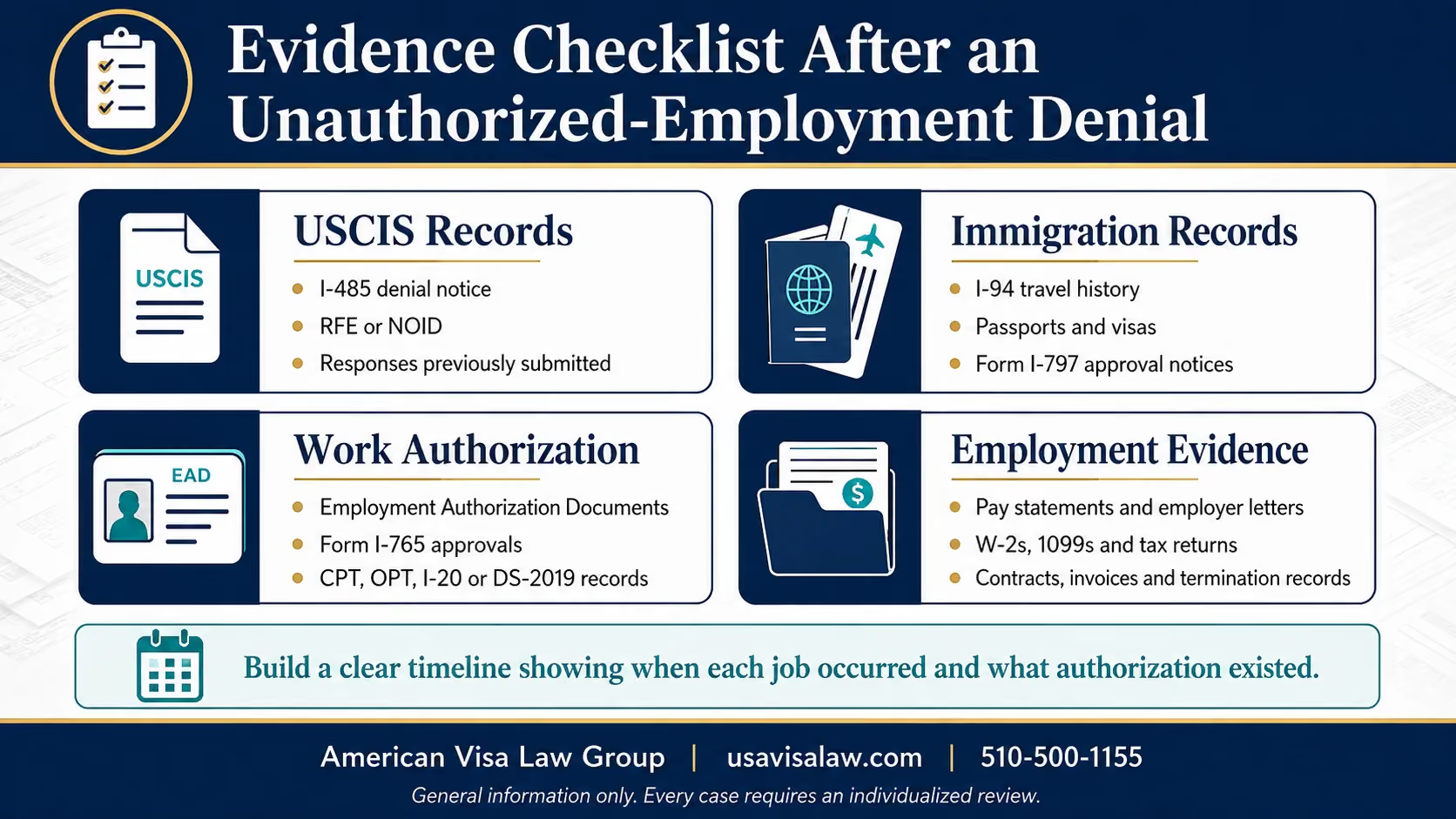
For every job, freelance project or compensated business activity, record:
This timeline can reveal whether USCIS used incorrect dates or treated an authorized period as unauthorized. It may also show that only part of the employment period created a problem.
Include all work accurately. Omitting an employer or changing dates can create credibility concerns beyond the original employment issue.
Relevant records may include:
The applicant should also collect documents supporting any exception. These may include proof of the petitioner’s U.S. citizenship and qualifying relationship, records needed for a Section 245(k) calculation, or evidence of grandfathering under Section 245(i).
An EAD is one way to prove employment authorization, but some immigration categories permit work incident to status or for a specific employer. USCIS provides general information about employment-authorization documents here.
The strongest submission is usually not the largest one. Organize the documents around a clear explanation of why the employment was authorized, why USCIS’s finding was incorrect or why a statutory exception applies.
The period after an I-485 denial is sensitive. Missing a deadline, continuing unauthorized work or giving inconsistent information can create problems that are harder to correct than the original denial.
Do not assume that USCIS will reconsider the case automatically. Form I-290B is generally due within 30 calendar days, or 33 calendar days when the decision was mailed. Always follow the denial notice and current USCIS filing instructions.
A rushed motion can also fail. The filing should identify the exact error, provide the necessary evidence and explain how correcting the issue establishes eligibility.
Likewise, refiling Form I-485 without addressing the original problem may produce another denial. A new application does not erase the employment history.
Do not rely only on the expiration date printed on an EAD. Confirm whether the document remains valid, whether a timely motion affects eligibility and whether another status independently authorizes employment.
International travel can be equally risky. Departure may affect advance parole or trigger an unlawful-presence bar. Travel should be postponed until the denial’s consequences have been reviewed.
Do not change employment dates, omit an employer or describe compensated work as volunteering without factual support. USCIS may compare the I-485 with tax returns, prior applications, employment petitions and interview statements.
Applicants should never alter records, obtain an inaccurate employer letter or hide unfavorable facts. A limited period of unauthorized employment may have a legal solution; a false statement can create a separate immigration issue.
Finally, do not ignore a Notice to Appear or immigration-court hearing notice. If removal proceedings begin, keep the court informed of address changes and attend every scheduled hearing.
If your I-485 was denied due to unauthorized employment, the next step should be based on the specific reason for the decision, not simply on which option appears fastest.
A practical response involves four steps:
Organize the denial notice, EADs, I-94 records, approval notices and employment documents before choosing a strategy. A clear timeline often reveals whether USCIS made an error or whether an adjustment exception applies.
Because several deadlines and immigration consequences may overlap, an early legal review can help prevent an unsupported filing or an irreversible travel decision. Applicants may contact American Visa Law Group for an individualized evaluation.
No. The outcome depends on the applicant’s immigration category, employment dates and available exceptions. Immediate relatives of U.S. citizens and certain applicants protected by INA Sections 245(k) or 245(i) may still qualify for adjustment.
In many cases, yes. The unauthorized-employment bars generally do not apply to qualifying immediate relatives of U.S. citizens. The applicant must still satisfy the other adjustment requirements, including lawful admission or parole when required and admissibility.
Section 245(k) may protect certain employment-based applicants when covered violations after their most recent lawful admission do not exceed 180 days. The calculation can include unauthorized employment and other status violations.
Do not assume that you may continue working solely because the EAD card has not expired. Employment authorization may depend on the EAD category, the validity of the document and whether a timely motion is pending.
Possibly. Refiling may be available if the applicant still has a valid immigration basis, a visa is available and the original employment issue can be legally addressed. A new application does not erase the prior denial or employment history.
USCIS may issue a Notice to Appear after denying an I-485, particularly when the applicant lacks another lawful status, but removal proceedings do not begin after every denial. Monitor official mail and keep your address current.

Hasan Abdullah, Esq. is the Founder and Managing Attorney of American Visa Law Group. His practice focuses on U.S. immigration law, including family-based immigration, employment-based immigration, adjustment of status, consular processing, waivers, PERM labor certification, NIW, EB-1, H-1B, O-1, and complex immigration strategy.
Through American Visa Law Group, Mr. Abdullah helps individuals, families, professionals, investors, and employers understand their immigration options and plan around changing government policies, USCIS procedures, and Visa Bulletin movement. His work emphasizes practical legal analysis, realistic expectations, and strategy tailored to each applicant’s immigration history and long-term goals.


