Donald Trump’s administration has laid out a vision for what it calls the “largest deportation operation in American history.” This initiative has sparked both fervent support of mass deportation
Donald Trump’s administration has unveiled an ambitious plan for what they refer to as the largest deportation operation in American history. This proposal has generated strong reactions, with some fervently supporting mass deportation and others vehemently criticizing it. Supporters of this agenda, particularly those aligned with Trump’s tough immigration stance, have actively advocated for immediate mass deportations. However, it is imperative to assess the feasibility of this far-reaching plan. A comprehensive analysis will provide a clear understanding of its viability.
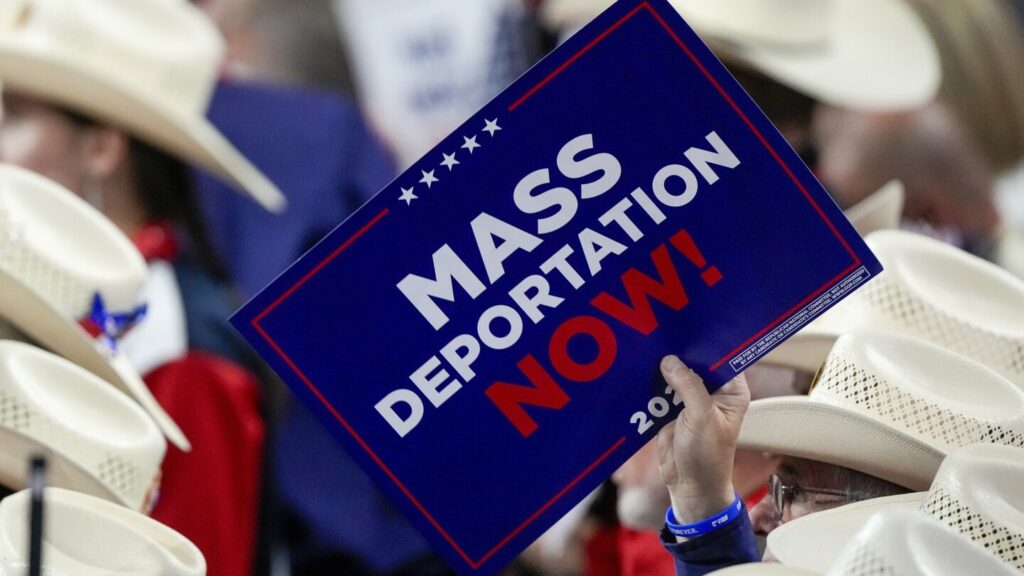
Proponents of this agenda, many of whom support Trump’s hardline stance on immigration, have rallied around the idea of mass deportations, even carrying signs that demand “mass deportation now.” But just how feasible is this ambitious plan? Let’s break it down.
As of the latest estimates, the United States is home to over 11 million undocumented immigrants. During Trump’s first term, approximately 1.5 million deportations took place over a four-year period. However, the administration’s new goal appears to be to deport as many as 1 million people annually, a dramatic increase. This means the pace of deportations could potentially escalate to an unprecedented scale, dramatically altering the nation’s immigration landscape.
To achieve this goal, the Trump administration would likely rely on a combination of aggressive measures, including immigration raids, expedited removals, and an expansion of detention facilities.
The implementation of these measures is expected to focus on both “sanctuary cities” and red states that support enforcement. Sanctuary cities are jurisdictions that have adopted policies limiting cooperation with federal immigration authorities, while red states are likely to be more supportive of federal immigration actions.
While the Trump administration’s plan to escalate deportations is ambitious, it faces significant legal and logistical hurdles. Deportation is a complex process that involves arrests, court proceedings, appeals, and physical removal. The potential for lengthy delays, court battles, and the question of whether the system can handle the volume of cases has already been raised by critics.
The economic implications of a large-scale deportation campaign are substantial. Immigrant labor is crucial to many industries in the U.S., including agriculture, construction, and service sectors. The removal of large numbers of undocumented workers could disrupt these industries, leading to worker shortages, higher wages, and decreased productivity.
The Trump administration’s immigration agenda will undoubtedly be one of the most defining aspects of its legacy. Supporters argue that this plan is necessary to restore law and order, while critics warn that it risks causing significant harm to the economy, immigrant communities, and the nation’s legal system. As these policies unfold, it is clear that they will shape the direction of U.S. immigration policy for years to come.


