Author: Hasan Abdullah, Esq.
Updated on the 19th of August 2026
Receiving a Notice to Appear in immigration proceedings can be unsettling, especially when the document raises an immediate question: does this mean you are already being deported? A Notice to Appear, commonly called an NTA, is Form I-862, the charging document the Department of Homeland Security uses in connection with removal proceedings. Understanding how the NTA fits into possible removal defense options is an important first step.
Receiving an NTA is serious, but it is not the same as receiving a final removal order. The form lists factual allegations and legal charges that DHS believes support removability, and those issues may still need to be addressed in immigration court. What happens next depends on the allegations, the person’s immigration history, whether the NTA has been filed with the court, and the procedural posture of the case.
This guide explains how to read Form I-862, check immigration-court information, prepare for a first hearing, and identify legal issues that may require individualized review.
A Notice to Appear (NTA) is Form I-862, the charging document DHS uses in removal proceedings. It identifies factual allegations and legal charges explaining why DHS believes a person may be removable. An NTA is not itself a final removal order, but receiving one requires careful and timely attention.
A Notice to Appear in immigration proceedings is a formal charging document used by the Department of Homeland Security (DHS) to state why it believes a noncitizen may be removable from the United States. The document is officially known as Form I-862, or an NTA.
The Executive Office for Immigration Review (EOIR) explains that an NTA contains factual statements about the person, known as allegations, as well as one or more charges of removability. Those charges identify the legal grounds DHS is relying on to pursue removal proceedings.
That distinction matters. An NTA tells you what the government is alleging; it does not, by itself, establish that every allegation is correct or determine the final outcome of the case.
NTA stands for Notice to Appear. Form I-862 identifies the person DHS seeks to place in removal proceedings and sets out the factual and legal basis for doing so.
For example, the allegations may address when and how someone entered the United States, what immigration status the person obtained, or whether DHS believes that status was violated. The charges then connect those alleged facts to provisions of U.S. immigration law that DHS believes make the person removable.
This is why the NTA is often described as a charging document. It begins the government's formal presentation of the removal case rather than serving as the final decision in that case. EOIR likewise identifies Form I-862 as the charging document used in removal proceedings.
Receiving an NTA does not automatically mean that you have already been ordered deported.
DHS is asserting that there is a legal basis for removal. In removal proceedings, however, an immigration judge may need to determine whether the person is removable after considering the allegations, charges, applicable law, and evidence presented in the case. EOIR explains that immigration judges determine removability in these proceedings and that respondents may submit evidence addressing whether they are removable.
Depending on the circumstances, a person may dispute factual allegations, challenge a legal charge, or potentially pursue a form of relief from removal. The available response can vary considerably based on factors such as immigration history, prior entries or departures, previous applications, family relationships, criminal history, and the specific statutory provisions cited in the NTA.
For that reason, the first question should not simply be, “Does this mean I will be deported?” A more useful question is: What exactly is DHS alleging, and what legal consequences follow if those allegations are accepted or contested?
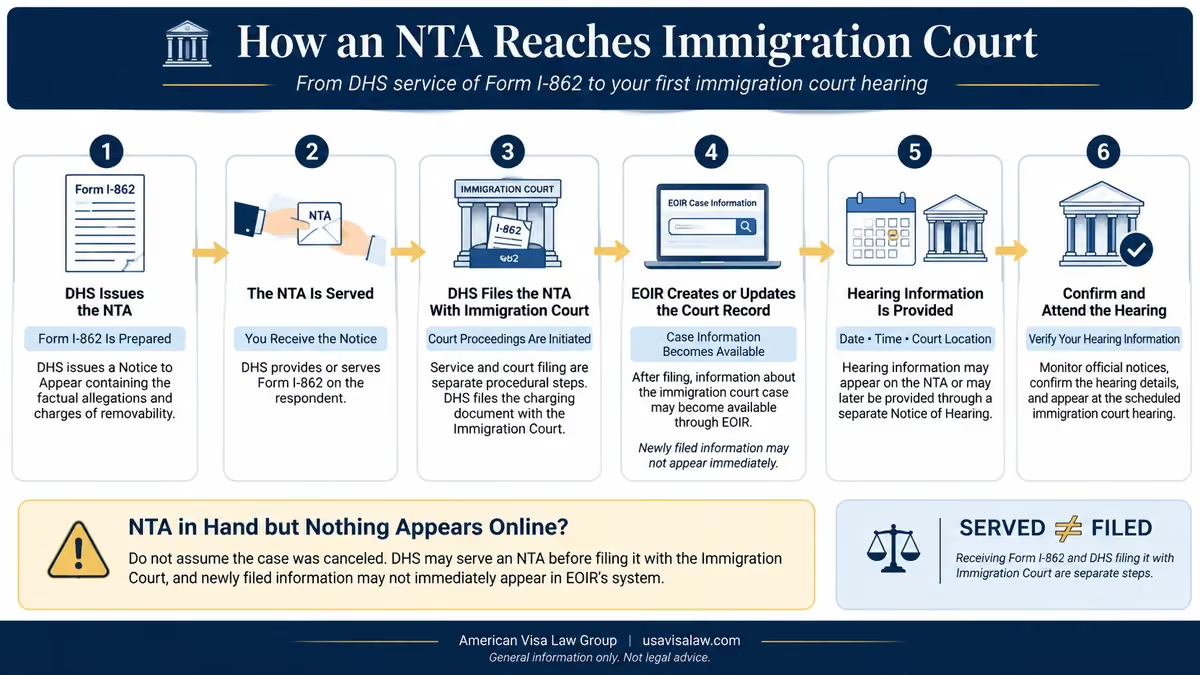
One of the most important—and often misunderstood—parts of the NTA process is the difference between being served with an NTA and the document being filed with the immigration court.
DHS may first provide, or “serve,” Form I-862 on the person. But possessing an NTA does not necessarily mean that the immigration court has already received and docketed the case.
Under 8 C.F.R. § 1003.14, immigration-court proceedings generally commence when the charging document is filed with the Immigration Court. Current EOIR guidance similarly explains that removal proceedings begin when DHS files Form I-862 with the court after service.
This timing difference can explain why someone may have an NTA in hand but initially find no case information in EOIR's system.
That does not mean the NTA has disappeared or that the matter can safely be ignored. Filing may occur later, hearing information may arrive separately, and the procedural status of the case should be confirmed through official records and notices.
Understanding this service-versus-filing distinction is particularly important because it affects what the person should check next: the information written on Form I-862, whether the case has reached immigration court, and whether a separate hearing notice has been issued.
A Notice to Appear is issued by the Department of Homeland Security (DHS) rather than by the immigration court itself. Depending on how a person comes into contact with the immigration system, the NTA may originate through U.S. Citizenship and Immigration Services (USCIS), Immigration and Customs Enforcement (ICE), or Customs and Border Protection (CBP).
The agency involved often provides useful context for why the NTA was issued. Someone may receive one following a USCIS benefit decision, for example, while another person may receive an NTA after an encounter with ICE or CBP. In each situation, however, Form I-862 serves the same basic function: it identifies the allegations and legal charges DHS intends to pursue in removal proceedings.
There is no single event that automatically leads to a Notice to Appear. An NTA may arise in different circumstances, including when DHS believes that a person:
The precise basis should be identified in the factual allegations and charges of removability printed on Form I-862. That is why two people who have both received an NTA may be facing very different legal issues.
An enforcement encounter can also lead to removal proceedings. ICE materials, for example, specifically address individuals who have received Form I-862, while CBP procedures contemplate the use of Notices to Appear in certain border and admission-related situations.
Yes, USCIS can issue an NTA after denying an immigration application or petition in certain circumstances, but an unfavorable decision does not mean that an NTA will automatically be issued in every case.
USCIS's February 2025 Notice to Appear policy memorandum expanded the circumstances in which USCIS officers are directed to consider or issue NTAs involving people the agency believes are inadmissible or deportable. USCIS subsequently stated that, under that guidance, it was generally moving toward NTA issuance after certain unfavorable benefit decisions when the person was removable.
The practical result is that the consequences of a USCIS denial may extend beyond the benefit application itself. The analysis can depend on the type of application, whether the person continues to have another lawful immigration status, and what ground of removability DHS believes applies.
For example, an adjustment-of-status denial may raise different questions from the denial of a petition that does not itself control the beneficiary's underlying status. Readers dealing specifically with adjustment issues may also want to review our discussion of an I-485 denial and possible removal proceedings.
USCIS has also continued to address NTA issuance in later policy guidance. In 2025 family-based immigration guidance, for instance, the agency clarified that an NTA may be issued when a beneficiary is otherwise removable, illustrating why the immigration consequences of a denial cannot be evaluated solely from the approval or denial notice itself.
The key point is that a USCIS denial and an NTA are separate legal events. If an NTA follows a denial, the next step is to examine not only why the immigration benefit was denied, but also the factual allegations and statutory removal charges DHS has placed on Form I-862.
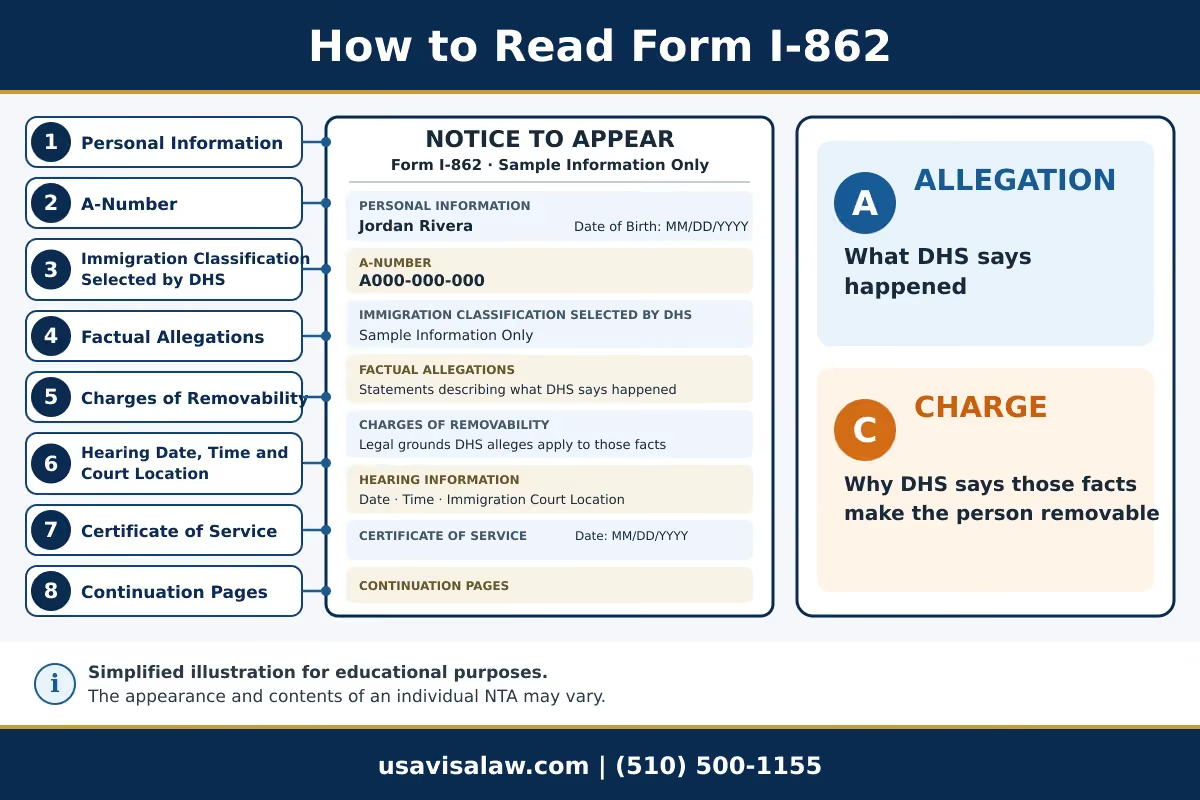
Once you receive a Notice to Appear, the next step is to read Form I-862 carefully from beginning to end. The form is not simply a court notice. It contains the factual and legal foundation DHS intends to rely on in removal proceedings, so small details can matter.
Do not assume that every statement on the NTA is correct just because it appears on a government form. Names, entry dates, immigration classifications, prior status, and other facts should be compared against your own records before any position is taken in immigration court.
The information that generally must appear in a Notice to Appear is addressed in 8 C.F.R. § 1003.15.
Start by reviewing the identifying information near the beginning of Form I-862.
This may include your:
An A-Number, or Alien Registration Number, is the identifying number the government uses in many immigration records. It is particularly important when checking immigration-court information or communicating with government agencies about the case.
Even a basic error should not automatically be dismissed as insignificant. A misspelled name may be straightforward to address, while an incorrect nationality, entry date, or immigration history may have more meaningful consequences depending on the charges DHS is asserting.
Form I-862 also identifies how DHS is classifying the person for purposes of the removal case.
Depending on the circumstances, the form may characterize the respondent as:
These categories have specific legal meanings. They should not be treated simply as descriptive labels.
The classification DHS selects may affect procedural and substantive issues later in the case, including which statutory provisions apply and, in some situations, how certain forms of immigration relief are analyzed.
For a reader reviewing an NTA for the first time, the important point is not to try to resolve that legal question alone. Instead, identify which classification DHS selected and whether the underlying facts stated on the form match your actual immigration history.
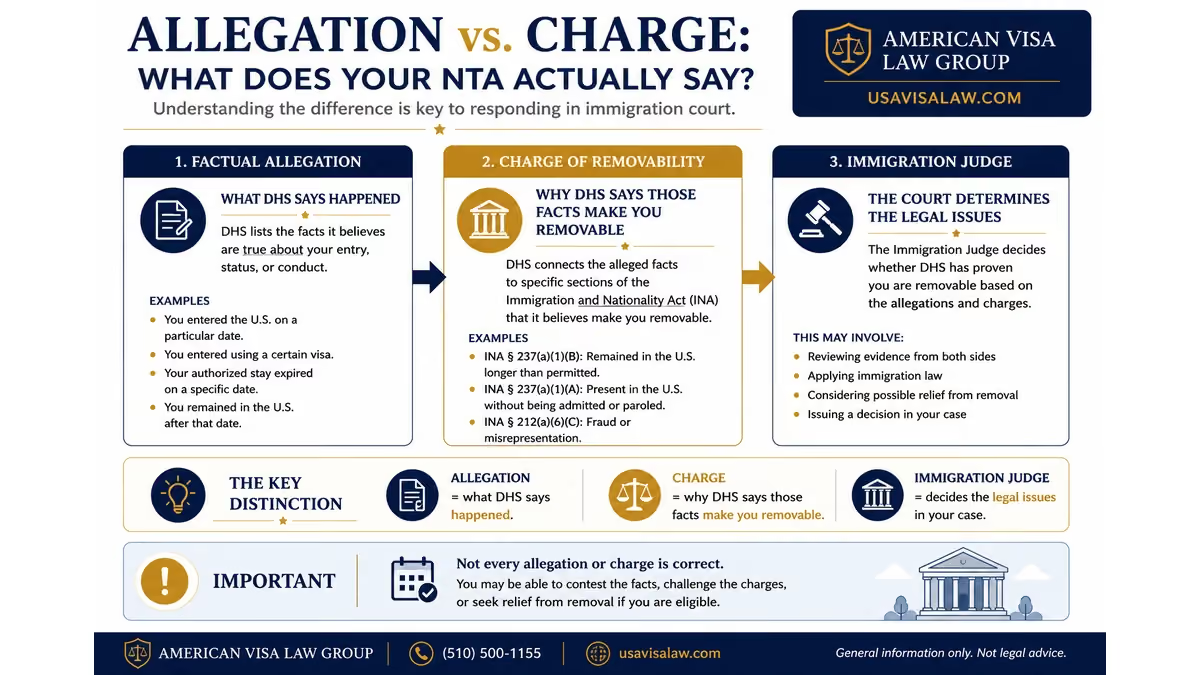
The NTA normally contains a numbered series of factual allegations.
These allegations may describe matters such as:
Think of these allegations as DHS's version of the facts underlying the case.
They are different from the legal charges that follow.
For example, DHS might allege that a person entered the United States on a particular visa, was authorized to remain until a certain date, and remained afterward. A separate portion of the NTA would then identify the immigration statute DHS believes makes the person removable based on those alleged facts.
That distinction becomes particularly important at the first immigration-court hearings because respondents may eventually be asked to address the allegations and charges.
After the factual allegations, Form I-862 identifies one or more charges of removability.
These charges usually cite provisions of the Immigration and Nationality Act (INA) that DHS believes apply to the respondent.
A useful way to understand the form is:
Allegation = what DHS says happened.
Charge = why DHS says those facts make the person removable under immigration law.
The two have to be evaluated together.
A factual statement could be inaccurate even if the statutory citation itself is correct. Conversely, the basic facts may be undisputed while there is still a legal question about whether they support the particular removal charge DHS selected.
This is one reason it can be risky to agree to allegations or charges without first understanding their legal significance.
Form I-862 may also contain information about where and when the person must appear before an immigration judge.
Look for:
In some cases, the original NTA may not contain complete hearing information. A separate Notice of Hearing can later provide or update the date, time, and location.
The absence of a date on the NTA should therefore not be interpreted as permission to ignore the document. Later sections of this guide explain how to check whether the case has been filed with EOIR and what to do if the NTA does not include a court date.
Finally, keep the entire NTA, not just the first page.
The form contains a certificate or information documenting how the Notice to Appear was served. Continuation pages may also contain additional allegations or charges.
Keep together:
These records can become important when reviewing when and how notice was provided, determining what DHS actually alleged, and reconstructing the procedural history of the case.
The goal at this stage is simple: know exactly what the NTA says before deciding how to respond to it. The next question is equally important—whether receiving Form I-862 means removal is already inevitable.
No. Receiving a Notice to Appear does not automatically mean that you will be deported. An NTA begins—or is used to initiate—the government's removal case by identifying the allegations and legal charges DHS believes make a person removable. It is not, by itself, a final removal order.
In removal proceedings, an immigration judge considers whether the person is removable and, when applicable, whether the person qualifies for relief from removal. The Executive Office for Immigration Review describes these as core functions of the immigration court.
What ultimately happens depends on the legal and factual circumstances of the individual case. The allegations may be disputed, the legal charges may require closer analysis, and some respondents may have applications or defenses that can be considered before an immigration judge.
The government's burden in removal proceedings depends in part on the person's immigration circumstances and the type of charge involved.
For example, when DHS charges a person who has been admitted to the United States with deportability, federal law generally requires the government to establish deportability by clear and convincing evidence. The applicable burden-of-proof rules are set out in 8 C.F.R. § 1240.8.
Different rules may apply in cases involving a person seeking admission or when the respondent is applying for a particular form of immigration relief. That is one reason the classification, allegations, and statutory charges appearing on Form I-862 should be reviewed together rather than treating every NTA as the same type of case.
The practical point is straightforward: the issuance of an NTA is an allegation of removability, not the immigration judge's final determination that removal must occur.
An NTA is also easy to misunderstand in the opposite direction. Receiving one does not grant an immigration benefit simply because the person now has a case before the immigration court.
An NTA does not automatically:
Some forms of relief—including certain applications for adjustment of status or cancellation of removal—can potentially be considered in removal proceedings when the legal requirements and jurisdictional rules are satisfied. Federal regulations specifically provide for immigration judges to consider certain applications in removal proceedings.
But eligibility is highly case-specific. Simply being in immigration court does not create eligibility that did not otherwise exist.
One of the most important things a person can do after receiving an NTA is understand exactly what DHS is alleging.
Details that may initially appear minor can affect the legal analysis. These can include:
Consider the difference between an incorrect date and a legally significant entry classification. Both might appear as a few words on the NTA, but they may have very different consequences for the government's charge or for possible immigration options.
Similarly, agreeing with a factual allegation can have consequences beyond simply confirming that a date or event occurred. During removal proceedings, respondents may eventually be asked to take a position on the allegations and charges contained in the NTA.
That is why the appropriate response should be based on the complete immigration record, not simply on the fact that Form I-862 was issued.
Receiving an NTA should therefore be taken seriously, but it should not be treated as a foregone conclusion. The more immediate priority is understanding the government's case and then determining what procedural steps, defenses, or forms of relief may be relevant.
Receiving an NTA does not mean you should immediately assume the worst, but it does require action. The most useful first steps are practical: understand what DHS is alleging, preserve the documents you received, confirm whether the case has reached immigration court, and make sure the government has accurate contact information.
Here is what to do after receiving Form I-862.
Start by comparing the information on the NTA with your own immigration records.
Pay particular attention to your:
Not every mistake has the same legal significance. A typographical error may be relatively straightforward, while an incorrect entry date, admission category, or allegation about immigration history could affect the government's legal theory.
Do not assume an allegation is correct simply because DHS placed it on Form I-862.
Preserve the entire document, including continuation pages and the envelope if the NTA arrived by mail.
You should also keep any related USCIS decisions, ICE or CBP paperwork, Notices of Hearing, and later correspondence from the immigration court.
These records can help establish what information was provided, when notices were received, and how the case developed procedurally. That can become particularly important if there is later a dispute involving notice, hearing information, or the contents of the charging document.
A simple practical step is to scan the documents and keep a secure electronic copy in addition to the originals.
After reviewing the NTA, check whether the case appears in the EOIR Automated Case Information System.
EOIR's system allows respondents to view basic information about certain immigration-court and Board of Immigration Appeals cases. However, not every case or every case detail appears in the system, and newly filed information may not appear immediately.
This is especially important if you recently received an NTA but cannot find your case online. As discussed earlier, DHS may serve Form I-862 before it is filed with the immigration court.
An empty search result should therefore not be treated as confirmation that the case has been canceled or abandoned.
If a hearing has been scheduled, verify the date, time, and immigration court carefully.
Compare:
EOIR specifically cautions that court documents, including hearing notices, are the official source of case-status information.
This matters because hearing dates can change. If a later Notice of Hearing gives different information from the original NTA, do not simply rely on an older document or an online search performed weeks earlier.
Missing an immigration-court hearing can carry serious consequences, which we discuss later in this guide.
Address changes deserve special attention once removal proceedings are involved.
For a case pending before an immigration court, EOIR currently instructs respondents to submit Form EOIR-33/IC to update their address or contact information. The form may also be completed online through Respondent Access where available. If several family members each have their own immigration-court case, EOIR requires a separate address update for each person.
The current EOIR-33/IC instructions state that the form must generally be filed with the immigration court within five working days of a change in contact information.
Do not assume that updating one immigration agency updates every other agency.
For example, filing an address change with USCIS does not update the address on file with the immigration court. USCIS has its own address-reporting requirements, while EOIR maintains a separate process for immigration-court cases.
That distinction is easy to overlook and can become extremely important when hearing notices are being mailed.
Before evaluating how to respond to the NTA, build a complete immigration record rather than looking only at Form I-862.
Useful documents may include:
A chronological immigration timeline can also be useful. Dates that seem unimportant—such as a departure, visa expiration, filing date, or change of status—may become significant once they are compared against the allegations and charges in the NTA.
One of the biggest mistakes after receiving an NTA is acting before understanding what the document means for the specific case.
That can include agreeing to allegations without understanding their legal consequences, signing immigration documents that are unclear, filing an application without confirming whether the immigration court or USCIS has jurisdiction, or leaving the United States without first reviewing how departure could affect the case.
Similarly, a person should not skip a hearing simply because the case cannot currently be found online.
An immigration attorney can review the charging document alongside the person's full history and identify which facts or legal issues deserve closer attention. If you are unfamiliar with the role counsel can play once immigration proceedings begin, our guide on what an immigration lawyer does provides additional context.
An NTA should be reviewed in the context of the person's complete immigration history. If you are unsure what the allegations or charges mean, American Visa Law Group can review the notice and discuss the next steps that may apply to your circumstances.
An NTA that does not list a hearing date or time should not be ignored. In some cases, the immigration court schedules the initial hearing after DHS issues the Notice to Appear and sends the respondent a separate notice with the missing information.
Current EOIR guidance states that when the date and time of the first hearing are not included on Form I-862, the immigration court will send a follow-up Notice of Hearing. Federal regulations similarly provide that, where practicable, the initial hearing information should appear on the NTA; otherwise, the Immigration Court is responsible for scheduling the hearing and providing notice.
If your NTA says something similar to “date to be set” or does not contain complete scheduling information, monitor the case rather than waiting passively.
The EOIR Notice to Appear guidance advises respondents that a subsequent Notice of Hearing may provide the first hearing date, time, and location. EOIR also allows people to check scheduled hearings through its Automated Case Information system.
Keep in mind that a recently issued or newly filed case may not immediately show a scheduled hearing online. Court documents remain particularly important, and keeping your address current with EOIR helps reduce the risk of missing mailed notices.
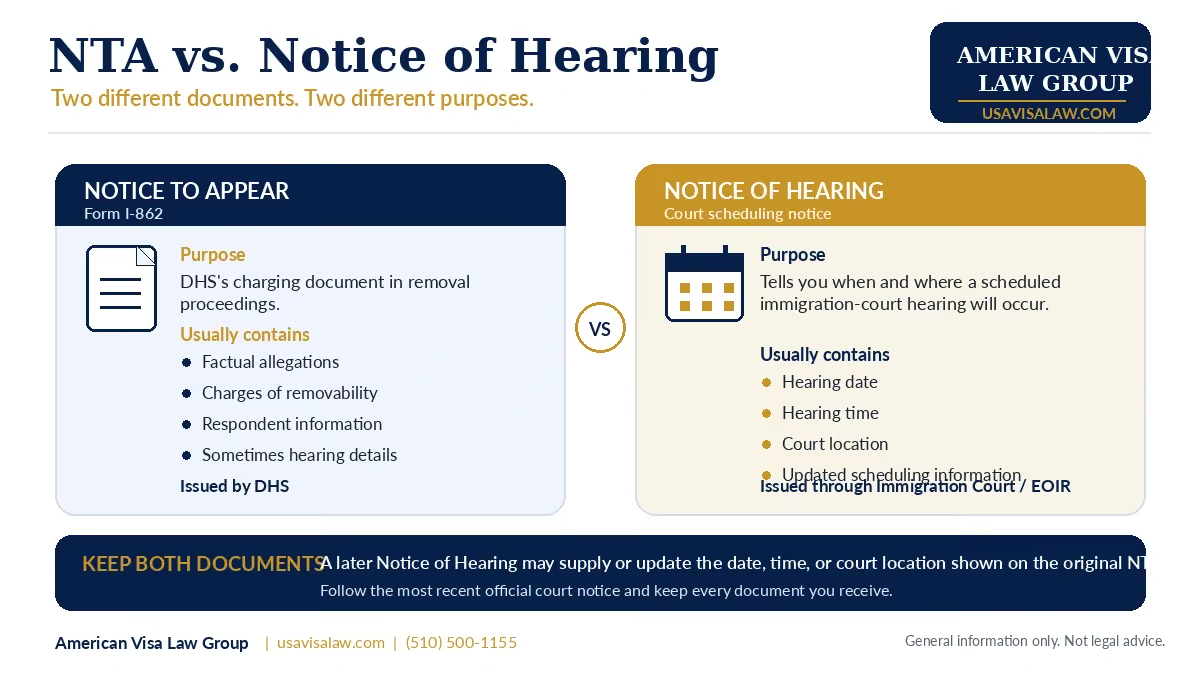
The two documents serve related but different purposes:
A later Notice of Hearing therefore should not be mistaken for a second NTA. It may supply or update information that was missing when Form I-862 was first issued.
If you receive both documents, keep both. Do not rely only on the date appearing on the older document if the immigration court later provides updated hearing information.
No. A missing date or time on the original NTA should not be treated as automatically canceling or invalidating the removal case.
The consequences of an incomplete NTA involve technical questions of immigration procedure and can depend on what happened afterward—including whether another hearing notice was properly provided.
The Supreme Court addressed an important part of this issue in Campos-Chaves v. Garland. In that case, the initial NTAs lacked specific hearing information, but the individuals later received notices specifying the hearings they subsequently missed. The Court held that they could not obtain rescission of their in absentia removal orders on the notice ground at issue simply because the original NTA lacked the hearing information.
That decision is significant, but it should not be stretched into a universal rule about every defective NTA. Questions involving commencement of proceedings, notice, termination, missed hearings, and potential motions can involve different statutes, regulations, and procedural circumstances.
For a regular reader, the practical rule is simpler: if your NTA has no court date, do not assume that you have no case or no obligation to appear. Watch for a Notice of Hearing, keep your contact information current with EOIR, check official case information, and carefully preserve every notice you receive.
For many people who receive an NTA, the first appearance before an immigration judge is a master calendar hearing. This is generally a preliminary hearing rather than the day when the entire removal case is decided.
The hearing gives the immigration judge an opportunity to address the Notice to Appear, explain certain procedural rights, determine how the respondent will respond to DHS's allegations and charges, identify potential applications for relief, and establish deadlines for what comes next. EOIR describes these matters as part of the normal scope of a master calendar hearing.
Think of the master calendar hearing as the procedural starting point for the immigration-court case.
Depending on the circumstances, the immigration judge may address issues such as:
These issues can carry significant legal consequences. Responding to an allegation on the NTA, for example, is different from simply confirming a biographical detail on a form. A response can affect how the removability issue is framed later in the case.
For that reason, a respondent who does not understand an allegation or charge should avoid treating the master calendar hearing as a routine administrative appointment.
Usually, no. A master calendar hearing generally focuses on preliminary and scheduling matters rather than conducting a full evidentiary hearing on a contested application or defense.
If factual disputes remain or the respondent is pursuing relief from removal, the immigration judge may later schedule an individual calendar hearing, sometimes called an individual merits hearing.
EOIR describes an individual calendar hearing as an evidentiary hearing involving contested matters, including challenges to removability and applications for relief. At that later stage, the judge may consider testimony, documentary evidence, legal arguments, and other evidence relevant to the issues being decided.
Not every case follows exactly the same sequence, however. The number and type of hearings depend on the issues presented and how the case develops.
A person in removal proceedings has the right to obtain qualified legal representation, but the government generally does not provide an immigration attorney at government expense.
EOIR specifically recognizes the respondent's right to an attorney or other authorized representative at no expense to the government, along with rights that include presenting evidence and examining or objecting to evidence presented by DHS.
People who cannot afford private counsel may also be able to explore available pro bono legal-service resources.
Representation can be particularly important when the NTA contains disputed allegations, criminal or prior immigration issues, or when the respondent may qualify for a form of relief that requires a separate application and supporting evidence.
Whether represented or not, do not miss the hearing. EOIR warns that failing to appear—or even arriving late in circumstances where the hearing proceeds without the respondent—can result in an immigration hearing being conducted in absentia.
The first hearing is therefore not necessarily the day the case will be won or lost, but it can shape how the case proceeds. Understanding the allegations, possible legal options, and deadlines before appearing can make the process considerably easier to manage.

Receiving an NTA does not mean that every case follows the same path. Depending on the allegations, immigration history, and individual circumstances, a person may be able to challenge the government's case, apply for relief from removal, or pursue an appropriate procedural strategy.
There is no universal “NTA defense.” The available options depend on factors such as how the person entered the United States, current and prior status, length of residence, family relationships, previous immigration filings, fear of returning to another country, and any criminal or immigration history.
EOIR recognizes several potential forms of relief that may be considered in immigration proceedings, but each has its own statutory requirements.
The first question is whether DHS has correctly stated both the facts and the legal basis for removability.
A respondent may have grounds to dispute a factual allegation, challenge whether the cited provision of immigration law applies, or require DHS to establish elements of its charge. The appropriate response depends on the particular NTA and the underlying immigration record.
This is why reviewing Form I-862 against passports, I-94 records, USCIS decisions, prior applications, and other immigration documents can be more important than simply asking what type of “defense” is available.
Even when removability is established or conceded, that does not necessarily end the case. Some individuals may qualify to request relief from removal before the immigration court.
Depending on the circumstances, potential forms of relief can include:
EOIR provides information about various relief options available in immigration proceedings, including voluntary departure and other applications that may arise before an immigration judge.
These are examples, not a prediction of eligibility. Each option has separate requirements, and some are available only in particular procedural or factual circumstances.
For readers facing removal proceedings, our overview of immigration waiver and removal defense options provides additional context on the types of issues that may require individualized legal analysis.
Not every NTA case is resolved solely by filing an application for immigration relief. Procedural issues may also affect how the case proceeds.
Depending on the facts and current law, an attorney may evaluate matters such as:
These strategies are highly case-specific. Immigration judges do not simply terminate proceedings because a respondent asks them to, and the respective authority of DHS and the immigration courts can depend on the governing regulations and precedent. Recent BIA decisions continue to distinguish the immigration court's role from DHS's exercise of prosecutorial discretion.
The practical takeaway is that the best response to an NTA cannot be determined from Form I-862 alone. The allegations and charges must be evaluated alongside the person's complete immigration history, possible forms of relief, and the procedural status of the court case.
Missing an immigration court hearing can have serious consequences. If a respondent does not appear at a scheduled hearing, an immigration judge may proceed without that person and, when the legal requirements are met, issue a removal order in absentia—meaning in the respondent’s absence. EOIR specifically warns that even a delay in appearing for a master calendar or individual hearing may result in an in absentia order.
That does not necessarily mean there is nothing left to do. Depending on why the hearing was missed and how notice was provided, it may be possible to ask the immigration court to reopen the proceedings. The available grounds and deadlines, however, are highly dependent on the circumstances.
An in absentia removal order is an order entered when the immigration judge conducts the hearing without the respondent present and determines that the applicable requirements for removal in the person’s absence have been satisfied.
A missed hearing should therefore never be treated like a routine appointment that can simply be rescheduled.
If you believe you missed a hearing, check your case status promptly and determine whether an order has already been entered. EOIR provides official immigration court case information, although court notices and records remain particularly important when determining exactly what happened in the case.
Questions about notice are often central when a hearing was missed.
The immigration court sends official correspondence to the contact information provided in its records. EOIR currently requires respondents to update changes in address or other contact information using Form EOIR-33/IC, generally within five working days of the change.
That is why it is useful to preserve:
If a hearing notice was sent to an old address because the court was never properly notified of a move, that can create a different legal issue from a situation in which the court had the correct address but the notice was allegedly never received.
The details matter.
If you discover that you missed an immigration court hearing, act promptly rather than assuming the court will automatically schedule another date.
First, determine the current status of the case and obtain the relevant hearing notices and court records. If an in absentia order was entered, the next question is whether there is a legally supportable basis for a motion to reopen and rescind the order.
EOIR provides specific guidance on motions to reopen in absentia orders and instructs respondents filing such motions to ensure that the immigration court has their current address.
The rules do not provide one deadline that applies to every missed-hearing situation. For example, different rules may apply when the argument involves exceptional circumstances versus inadequate notice, and other statutory exceptions can affect the analysis. EOIR itself describes motions involving missed hearings as subject to different filing requirements depending on the basis asserted.
For that reason, someone who has missed a hearing should avoid assuming either that the case can easily be reopened or that nothing can be done. The more useful question is why the hearing was missed, what notice the court provided, and what the immigration-court record actually shows.
A Notice to Appear can create uncertainty, and some of the most damaging problems arise not from the NTA itself, but from what happens afterward. Avoiding a few common mistakes can make it much easier to understand the case and respond appropriately.
An NTA is not a final deportation order, but that does not make it optional. It is a formal charging document that may lead to immigration-court proceedings and should be reviewed promptly.
A person may receive Form I-862 before DHS files it with the immigration court. If the case does not immediately appear in EOIR’s system, do not assume it has been canceled or forgotten.
The original NTA may not contain complete hearing information. A Notice of Hearing may later provide or change the date, time, or court location. Keep and review every document you receive from the immigration court.
Updating an address with USCIS does not necessarily update the immigration court’s records. If your case is before EOIR, follow the court’s separate address-change requirements so important hearing notices are not sent to an old address.
The factual allegations and legal charges on Form I-862 are not merely administrative information. Admissions made during removal proceedings can have legal consequences. Understand what DHS is alleging before deciding how to respond.
Being in removal proceedings can affect where certain immigration applications must be filed and which agency has authority to decide them. Filing the right form in the wrong place can create unnecessary delays or complications.
International travel after receiving an NTA can raise separate immigration issues depending on the person’s history, status, pending proceedings, and prior periods of unlawful presence. Departure should not be treated as a routine travel decision without understanding the potential consequences.
Removal proceedings can involve deadlines, statutory eligibility requirements, and procedural rules that are difficult to evaluate from general online information alone. Be cautious about advice from individuals who are not authorized to provide immigration legal services.
The safest approach is to treat the NTA as the starting point for a careful review, not as either an automatic removal order or a document that can be ignored.
Not every Notice to Appear presents the same level of complexity, but removal proceedings can involve consequences that are difficult to evaluate from Form I-862 alone. An immigration attorney can review the NTA together with the person's immigration history, prior filings, and court record to determine what issues actually require attention.
Legal review becomes particularly important when the NTA contains disputed facts, the immigration history is complicated, or a hearing is approaching.
Consider speaking with an immigration attorney promptly if:
These circumstances do not necessarily mean that removal is inevitable. They mean that the legal analysis may depend on facts that are not obvious from the NTA itself.
EOIR explains that immigration judges determine both removability and, where applicable, eligibility for relief from removal. Because those are separate questions, determining whether DHS can establish a removal charge is not necessarily the same analysis as determining whether a person has another immigration option.
A consultation is generally more useful when the attorney can see the complete record rather than only the first page of Form I-862.
If available, bring:
Do not worry if every document is not immediately available. Identifying what is missing can itself become part of preparing the case.
A meaningful NTA review should go beyond answering whether the person is “in deportation proceedings.”
Depending on the case, counsel may evaluate whether the factual allegations are accurate, whether DHS's legal charges are supported, whether the court has the relevant jurisdiction, what deadlines apply, and whether any form of relief or procedural motion deserves further consideration.
For readers comparing the financial side of obtaining representation, AVLG publishes information about immigration attorney costs, including fees associated with different types of immigration matters.
Ultimately, the value of legal review is not simply having someone explain what “NTA” means. It is understanding what this particular NTA means in the context of the person's complete immigration history and what decisions may need to be made next.
If you have received Form I-862 and want your circumstances reviewed, you can speak with an immigration attorney about your NTA. American Visa Law Group offers consultations by appointment, including by phone, Google Meet, and in person.
A Notice to Appear is serious, but it is not a final removal order. Form I-862 sets out the factual allegations and legal charges DHS believes support removal, and those statements should be reviewed carefully rather than assumed to be correct.
After receiving an NTA, confirm whether the case has been filed with immigration court, monitor official hearing information, keep your address current with EOIR, and preserve every notice you receive. Missing a scheduled hearing can create serious consequences.
Most importantly, the appropriate response depends on the person’s complete immigration history, the specific removal charges, and the procedural posture of the case. Possible defenses, relief, or procedural options must be evaluated individually.
A Notice to Appear (NTA) is Form I-862, the charging document DHS uses to state why it believes a person may be removable from the United States. It includes factual allegations and one or more legal charges of removability. EOIR describes Form I-862 as the document DHS provides to the immigration court to explain the basis for removal proceedings. Learn more from EOIR.
No. An NTA is not itself a final removal order. It states DHS's allegations and charges and is used to place a person into removal proceedings. EOIR explains that removal proceedings begin when DHS files Form I-862 with the immigration court after service, and the immigration judge then determines whether the person is removable.
Form I-862 is the official Notice to Appear. USCIS describes it as a charging document that instructs a noncitizen to appear before an immigration judge. The form generally identifies the respondent, lists factual allegations, states the legal charges DHS is asserting, and may include information about the immigration court and first hearing.
Yes, in certain circumstances. A USCIS denial does not automatically mean an NTA will be issued in every case, but USCIS has authority and policy guidance addressing when officers should issue Form I-862. Its February 2025 NTA policy memorandum expanded guidance concerning issuance when USCIS determines that a person is removable following certain unfavorable benefit decisions. Review the USCIS NTA policy memorandum.
Do not ignore it. If Form I-862 does not contain the date, time, and location of the initial master calendar hearing, EOIR states that the respondent may later be mailed a Notice of Hearing containing that information. Keep your address current with the immigration court and continue monitoring official case information.
You can check certain case and hearing information through the EOIR Automated Case Information System. However, the online system should be used together with official court documents. If you receive a Notice of Hearing with updated information, preserve it and follow the instructions issued by the immigration court.
Do not assume that an error is harmless, and do not automatically admit an allegation you believe is inaccurate. Compare the NTA against your immigration records, including passports, I-94 records, prior USCIS filings, and approval or denial notices. The significance of an error depends on what is incorrect and whether it affects the factual or legal basis DHS is relying on.
An immigration judge may conduct the hearing without you and, if the legal requirements are satisfied, issue an in absentia removal order. EOIR warns that failure to appear can result in removal in the respondent's absence. Depending on why the hearing was missed and how notice was provided, a motion to reopen may be available, but the rules and deadlines vary according to the circumstances.
For readers who want to explore the rules and procedures surrounding Notices to Appear and immigration-court proceedings in more detail, the following official resources provide additional guidance:
For additional guidance on removal proceedings, possible immigration options, and legal representation, you may also find these American Visa Law Group resources helpful:

Hasan Abdullah, Esq. is the Founder and Managing Attorney of American Visa Law Group. His practice focuses on U.S. immigration law, including family-based immigration, employment-based immigration, adjustment of status, consular processing, waivers, PERM labor certification, NIW, EB-1, H-1B, O-1, and complex immigration strategy.
Through American Visa Law Group, Mr. Abdullah helps individuals, families, professionals, investors, and employers understand their immigration options and plan around changing government policies, USCIS procedures, and Visa Bulletin movement. His work emphasizes practical legal analysis, realistic expectations, and strategy tailored to each applicant’s immigration history and long-term goals.


