Author: Hasan Abdullah, Esq.
Edited: On the 12th of September 2026
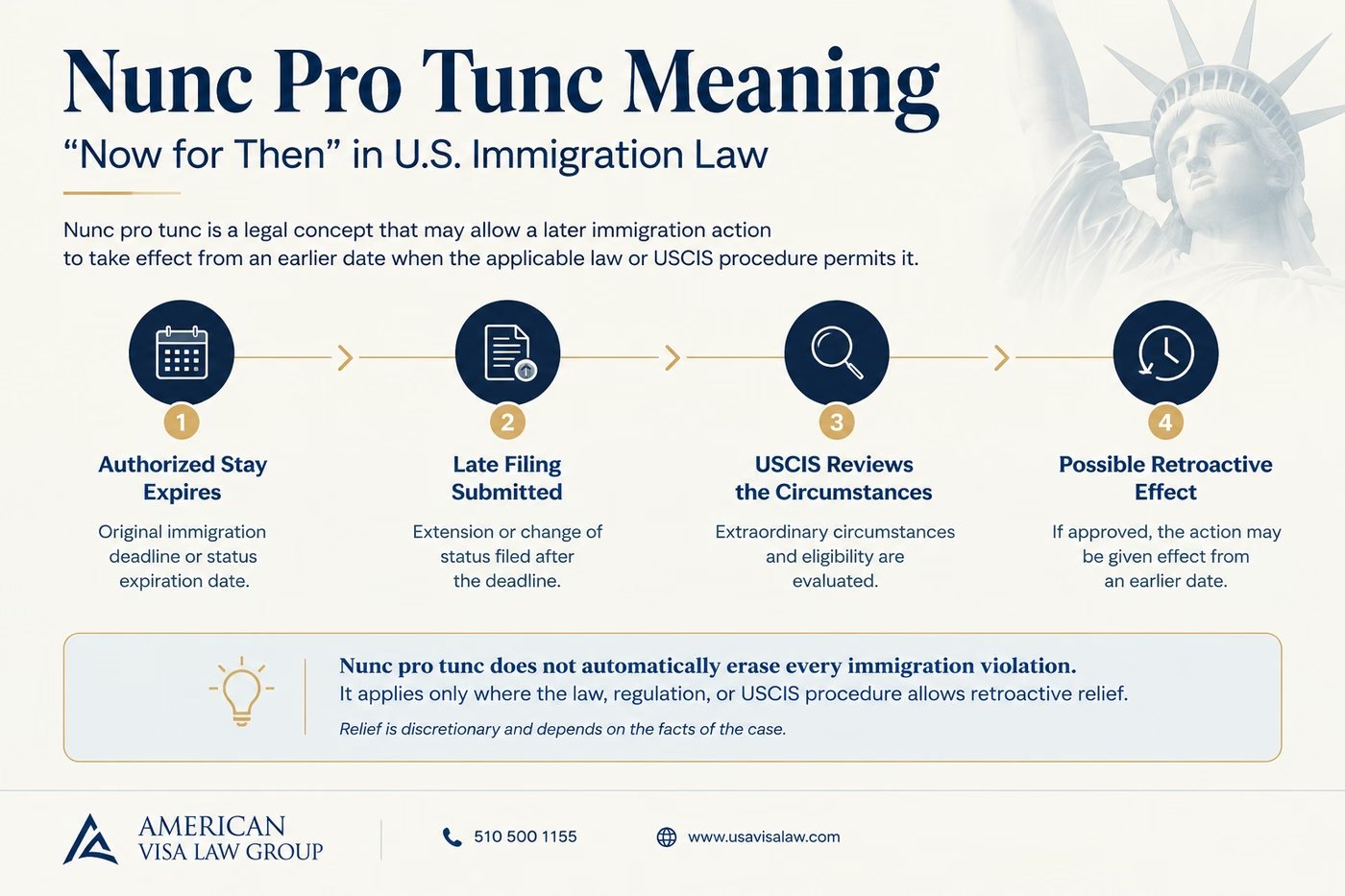
“Nunc pro tunc” is a Latin phrase meaning “now for then.” In U.S. immigration law, it refers to limited situations in which USCIS or another immigration authority may give a later action retroactive effect, treating it as effective from an earlier date.
In practice, nunc pro tunc relief may arise when an extension of stay or change of status was filed late because of extraordinary circumstances beyond the applicant’s or petitioner’s control. The concept also appears in certain asylum-related procedures, although the legal framework is different.
Nunc pro tunc is not a general way to erase every status violation, period of unlawful presence, or instance of unauthorized employment. Whether relief is available depends on the immigration benefit involved, the reason for the delay, the applicant’s immigration history, and the evidence supporting the request.
American Visa Law Group assists clients with complex U.S. immigration matters, including status problems, late filings, employment-based cases, and USCIS procedural issues.
This guide explains what nunc pro tunc means, when USCIS may allow it, what evidence may be required, and the limits applicants should understand before relying on this form of relief.
Nunc pro tunc means “now for then.” It is a legal term used when an action taken today is given effect as of an earlier date. In U.S. immigration law, nunc pro tunc may provide retroactive relief in limited circumstances, but it is not a single immigration benefit and is not automatically available whenever a filing is late.
USCIS uses the term expressly in certain immigration procedures, including nunc pro tunc asylum cases, where eligible derivative asylees may receive principal asylum status effective from an earlier date. (USCIS)
In other immigration contexts, similar retroactive issues can arise when USCIS considers whether to excuse an untimely extension of stay or change of status. The governing rules and requirements depend on the specific immigration benefit involved.
The key point is that nunc pro tunc does not simply erase a past immigration problem. It allows retroactive legal effect only where the applicable law, regulation, or agency procedure permits it.
In U.S. immigration law, nunc pro tunc can refer to different forms of retroactive relief depending on the type of case. It is not a single USCIS benefit, and the rules that apply to one immigration situation should not automatically be applied to another.
One common context involves a late extension of stay or change of status. USCIS generally expects these requests to be filed before a person’s authorized stay expires. However, under limited circumstances, USCIS may use its discretion to excuse an untimely filing when the delay resulted from extraordinary circumstances beyond the applicant’s or petitioner’s control and the other regulatory requirements are satisfied. USCIS reaffirmed this framework in its guidance on untimely extension-of-stay and change-of-status requests. (USCIS)
Nunc pro tunc also has a distinct meaning in asylum law. USCIS’s Affirmative Asylum Procedures Manual explains that an Asylum Office may, in certain derivative-asylee situations, grant asylum nunc pro tunc and make the principal asylum grant effective from an earlier date. (USCIS)
These are legally different situations. A nunc pro tunc asylum grant is not the same as asking USCIS to excuse a late Form I-129 or Form I-539 filing.
The central idea is the same: a later immigration action may sometimes be given effect from an earlier date. But whether that is possible depends on the specific statute, regulation, USCIS procedure, and facts of the case.
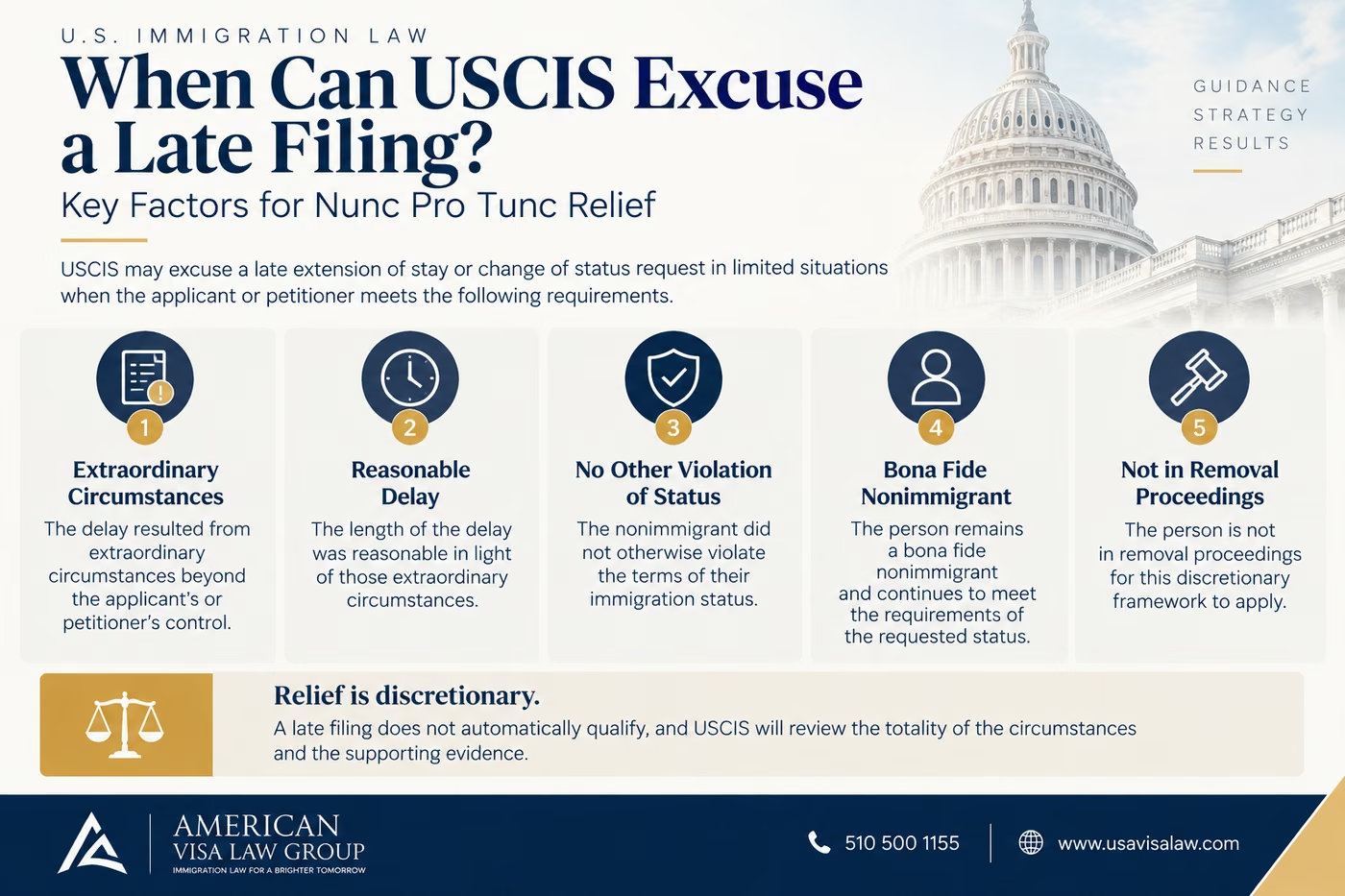
USCIS may excuse certain late extension-of-stay or change-of-status filings when the applicant or petitioner can show that the delay resulted from circumstances outside their control and that the other regulatory requirements are satisfied. This authority is discretionary, meaning that a late filing does not automatically qualify for retroactive relief.
Under the USCIS rules for untimely extension of stay and change of status requests, USCIS may excuse a failure to file before the authorized period of stay expired when the facts support the applicable regulatory standard. (USCIS)
Generally, the applicant or petitioner must demonstrate that:
USCIS includes the same basic requirements in its current Form I-539 instructions for extending or changing nonimmigrant status. Those instructions also emphasize that extension or change-of-status applications generally should be filed before the current authorized stay expires. (USCIS)
For extension-of-stay cases, the underlying authority comes from 8 CFR § 214.1(c)(4). A related discretionary framework applies to certain untimely change-of-status requests under 8 CFR § 248.1(b). USCIS has explained that these provisions allow the agency, in appropriate cases, to excuse a late filing rather than treating every missed deadline as automatically fatal. (USCIS)
However, nunc pro tunc relief is not simply granted because an applicant provides a reason for filing late. USCIS evaluates the specific circumstances, supporting documentation, the length of the delay, and the applicant’s overall immigration history.
A strong nunc pro tunc request therefore needs to explain not only why the filing was late, but also why the delay was reasonable and why the applicant continues to satisfy the requirements of the requested immigration status.
There is generally no separate USCIS form called a “nunc pro tunc application.” Instead, the applicant or petitioner normally files the underlying immigration request—such as a late extension of stay or change of status—and asks USCIS to excuse the untimely filing under the applicable regulatory standard.
Depending on the immigration classification, the underlying filing may involve Form I-539, Application to Extend/Change Nonimmigrant Status, or an employer-filed Form I-129, Petition for a Nonimmigrant Worker. USCIS regulations specifically allow qualifying late extension requests to be excused in the agency’s discretion “without separate application.” (USCIS)
A strong nunc pro tunc request should do more than simply state that the filing was late. It should explain, with supporting evidence, why the applicant or petitioner satisfies each part of the applicable standard.
Depending on the facts, supporting documentation may include:
USCIS’s policy guidance on untimely extensions of stay and changes of status makes clear that the agency may excuse a late filing only when the applicable requirements are established and the delay resulted from extraordinary circumstances beyond the person’s control. (USCIS)
The length of the delay also matters. An applicant should explain not only what prevented timely filing, but also why the time between the extraordinary circumstance and the eventual submission was reasonable.
For that reason, a persuasive nunc pro tunc request should connect the evidence to a precise chronology: what happened, why it prevented timely filing, when the obstacle ended, and how quickly the applicant or petitioner acted afterward.
For a late immigration filing, USCIS may consider whether the delay was caused by extraordinary circumstances beyond the applicant’s or petitioner’s control.
Examples may include:
USCIS’s guidance on late extension-of-stay and change-of-status requests makes clear that the circumstances must be more than ordinary inconvenience or simple forgetfulness.
The length of the delay also matters. Even when a valid emergency exists, USCIS may look at how quickly the applicant acted once the problem ended.
In other words, a strong nunc pro tunc request should explain both why the filing was late and why the delay was reasonable under the circumstances.
Nunc pro tunc relief can sometimes be relevant when a nonimmigrant files an extension of stay or change of status after their authorized stay has already expired.
For extension requests, 8 CFR § 214.1(c)(4) allows USCIS to excuse certain late filings when the delay was caused by extraordinary circumstances beyond the applicant’s or petitioner’s control and the other requirements are met.
A similar rule applies to certain late change-of-status requests under 8 CFR § 248.1.
If USCIS accepts the late filing, the agency may grant the requested immigration benefit despite the missed deadline. But approval is not automatic, and the applicant still has to show that the underlying extension or change of status is otherwise approvable.
It is also important to separate a late filing from other immigration problems. Nunc pro tunc relief does not automatically cure issues such as unauthorized employment, a separate status violation, inadmissibility, or an underlying defect in the petition.
For that reason, the first step is usually to identify exactly what went wrong and whether the problem involves a late filing, a status violation, or both.
Nunc pro tunc issues can also arise in employment-based nonimmigrant cases, especially when an H-1B, L-1, O-1, or other worker’s extension of stay is filed after the person’s authorized stay has expired.
For H-1B workers, the employer generally uses Form I-129, Petition for a Nonimmigrant Worker to request an extension of stay. USCIS requires evidence showing that the worker maintained valid status and continues to qualify for the requested classification. (USCIS)
If the extension was filed late, USCIS may still excuse the delay under the extraordinary-circumstances rule in 8 CFR § 214.1(c)(4), but only if the regulatory requirements are met. USCIS decisions involving H-1B cases confirm that the petitioner must establish the reasons for the delay and satisfy the other conditions before the agency can excuse an untimely extension request. (USCIS)
This does not mean a late H-1B filing automatically receives retroactive approval. USCIS still evaluates the underlying petition, the worker’s maintenance of status, and any other immigration issues.
For workers dealing with a status gap or late H-1B extension, AVLG’s H-1B visa attorney guidance provides more information about H-1B eligibility and case strategy.
Nunc pro tunc also has a specific meaning in certain asylum cases, and this use is different from asking USCIS to excuse a late extension or change-of-status filing.
Under the USCIS Affirmative Asylum Procedures Manual, an Asylum Office may grant asylum nunc pro tunc in certain cases involving derivative asylees. This can allow a person who originally received asylum as a dependent to be granted principal asylum status effective from an earlier date. (USCIS)
The retroactive date depends on how the person originally obtained derivative asylum. For example, USCIS may use the principal applicant’s original asylum approval date, the derivative’s date of entry into the United States, or the date an approved Form I-730, Refugee/Asylee Relative Petition, took effect.
This type of nunc pro tunc asylum relief is highly specific and should not be confused with late H-1B, I-539, or other nonimmigrant filings.
The key distinction is simple: in asylum cases, nunc pro tunc may be used to correct or restructure certain derivative-asylee situations, while late extension or change-of-status cases are governed by separate USCIS rules.
Not automatically.
A nunc pro tunc approval may help resolve a particular late filing or status gap, but it should not be treated as a blanket cure for every immigration violation.
In immigration law, these concepts are different:
For example, USCIS separately analyzes unlawful presence under the Immigration and Nationality Act and whether a person worked without proper authorization. A retroactive extension or change of status may affect part of that analysis, but it does not automatically erase unauthorized employment or another independent violation. (USCIS)
This distinction is important because the immigration consequences can vary depending on what happened, how long the problem lasted, and what benefit the person later seeks.
Before relying on nunc pro tunc relief, applicants should identify exactly whether the issue involves a late filing, a status violation, unlawful presence, unauthorized employment, or a combination of these.

If USCIS denies a nunc pro tunc request, the consequences depend on the type of filing and the person’s immigration history.
For example, a denied late extension or change of status may leave a gap in lawful status. In some cases, the person may need to consider a new filing, departure from the United States, or consular processing rather than trying to continue the same request from inside the country.
USCIS explains the general rules for extensions and changes of nonimmigrant status and when a person must maintain valid status while a request is pending.
A denial can also raise separate questions about:
The right next step depends on the specific benefit involved. Some USCIS decisions may allow a motion to reopen or reconsider, while others may require a different strategy.
For this reason, a nunc pro tunc denial should be reviewed together with the person’s full immigration timeline, including I-94 expiration dates, prior filings, employment history, and any other status violations.
A nunc pro tunc request should clearly explain what was filed late, why the deadline was missed, and why USCIS should exercise discretion to excuse the delay.
There is generally no separate USCIS form called a “nunc pro tunc request.” Instead, the request is usually made as part of the underlying filing, such as Form I-539 for an extension or change of status or an employer-filed Form I-129 petition.
A strong request should usually include:
USCIS’s guidance on untimely extension and change-of-status filings emphasizes that the agency considers both the cause of the delay and whether the other regulatory requirements are satisfied.
The request should also be filed as soon as possible after the problem is discovered or the extraordinary circumstance ends. A long unexplained delay can make it harder to show that the filing was reasonable.
Because nunc pro tunc relief is discretionary and highly fact-specific, the strongest requests focus on a simple question: what prevented timely filing, and what evidence proves it?
Filing deadlines are becoming even more important in 2026, particularly for certain students, exchange visitors, and foreign media representatives.
DHS published a 2026 final rule changing admission periods for F, J, and I nonimmigrants. The rule replaces the traditional “duration of status” framework with fixed periods of admission and creates extension-of-stay procedures for people who need additional time in the United States. As currently published, the rule is scheduled to take effect on September 15, 2026, although DHS may announce a different effective date following congressional review. (Federal Register Public Inspection)
For affected nonimmigrants, this makes it even more important to monitor the expiration date on the I-94 and file any required extension or change of status on time.
Nunc pro tunc relief may still be relevant when a deadline is missed because of qualifying extraordinary circumstances, but it should be viewed as limited discretionary relief—not as a substitute for timely filing.
Nunc pro tunc requests can fail when applicants focus only on the missed deadline and do not fully explain the surrounding facts.
Common mistakes include:
USCIS makes clear in its guidance on untimely extension and change-of-status filings that relief depends on the specific facts and whether the regulatory requirements are met.
Another common mistake is treating nunc pro tunc as a cure-all. It may help address a late filing in certain situations, but it does not automatically fix every immigration issue connected to the case.
The strongest approach is to identify the exact problem first, then determine whether nunc pro tunc relief actually applies to that type of filing.
Nunc pro tunc means “now for then” and refers to limited situations where an immigration action may be given retroactive effect.
For immigration cases, the main points to remember are:
Applicants dealing with a late filing or status gap should review the USCIS rules on untimely extension and change-of-status requests and carefully evaluate whether the facts actually fit the nunc pro tunc standard.
Nunc pro tunc means “now for then.” In immigration law, it refers to limited situations where USCIS or another immigration authority may give a later action retroactive effect from an earlier date.
In immigration cases, nunc pro tunc may apply when USCIS considers whether to excuse certain late extension-of-stay or change-of-status filings, or in specific asylum situations. It is not one single immigration benefit.
Yes, in limited circumstances. USCIS may excuse certain late filings when the delay resulted from extraordinary circumstances beyond the applicant’s or petitioner’s control and the other requirements are satisfied. The USCIS guidance on untimely extensions and changes of status explains this discretionary framework.
There is generally no separate USCIS form specifically for nunc pro tunc relief. The request is usually included with the underlying filing, such as Form I-539 or Form I-129, along with an explanation and supporting evidence.
Possible examples include serious illness, hospitalization, natural disasters, certain labor disputes, or other events genuinely outside the applicant’s or petitioner’s control. USCIS also considers whether the length of the delay was reasonable.
Not automatically. A retroactive approval may affect part of a person’s immigration history, but unlawful presence, unauthorized employment, and failure to maintain status are separate legal issues. USCIS provides additional guidance on unlawful presence.
No. Nunc pro tunc relief is discretionary. Even when an applicant presents extraordinary circumstances, USCIS must still determine that the applicable regulatory requirements are met and that the underlying immigration request is otherwise approvable.
For readers who want to review the official rules and forms related to nunc pro tunc relief, late filings, and immigration status, these resources are useful:

Hasan Abdullah, Esq. is the Founder and Managing Attorney of American Visa Law Group. His practice focuses on U.S. immigration law, including family-based immigration, employment-based immigration, adjustment of status, consular processing, waivers, PERM labor certification, NIW, EB-1, H-1B, O-1, and complex immigration strategy.
Through American Visa Law Group, Mr. Abdullah helps individuals, families, professionals, investors, and employers understand their immigration options and plan around changing government policies, USCIS procedures, and Visa Bulletin movement. His work emphasizes practical legal analysis, realistic expectations, and strategy tailored to each applicant’s immigration history and long-term goals.


