Author: Hasan Abdullah, Esq.
The October 2026 Visa Bulletin for India opens fiscal year 2027 with several important changes for employment-based green card applicants.
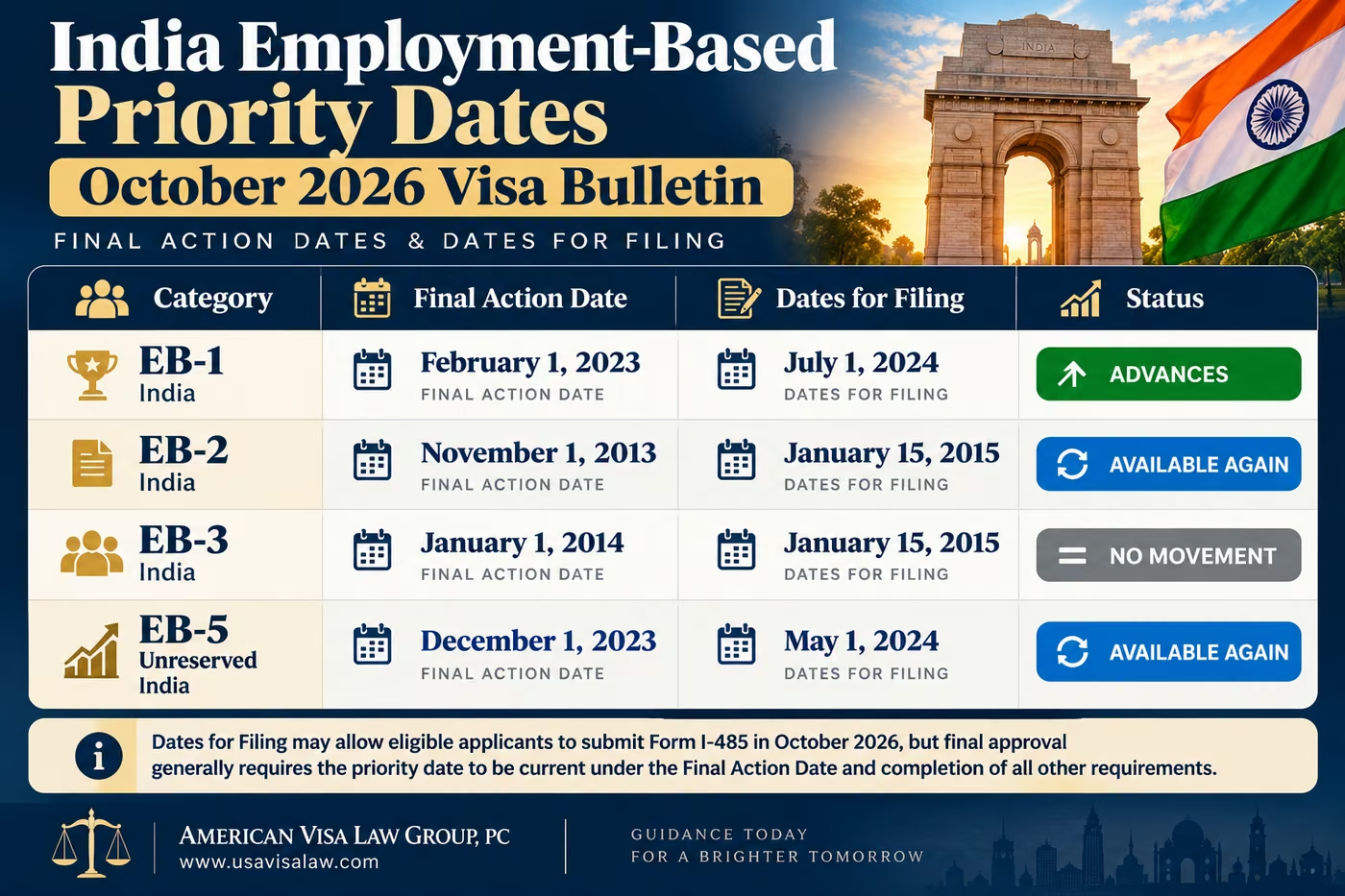
The biggest developments are concentrated in EB-1, EB-2, and EB-5. EB-1 India advances to February 1, 2023. EB-2 India becomes available again with a Final Action Date of November 1, 2013. EB-5 Unreserved India also returns from unavailable status with a December 1, 2023 cutoff. EB-3 India, however, remains unchanged at January 1, 2014. Pasted markdown
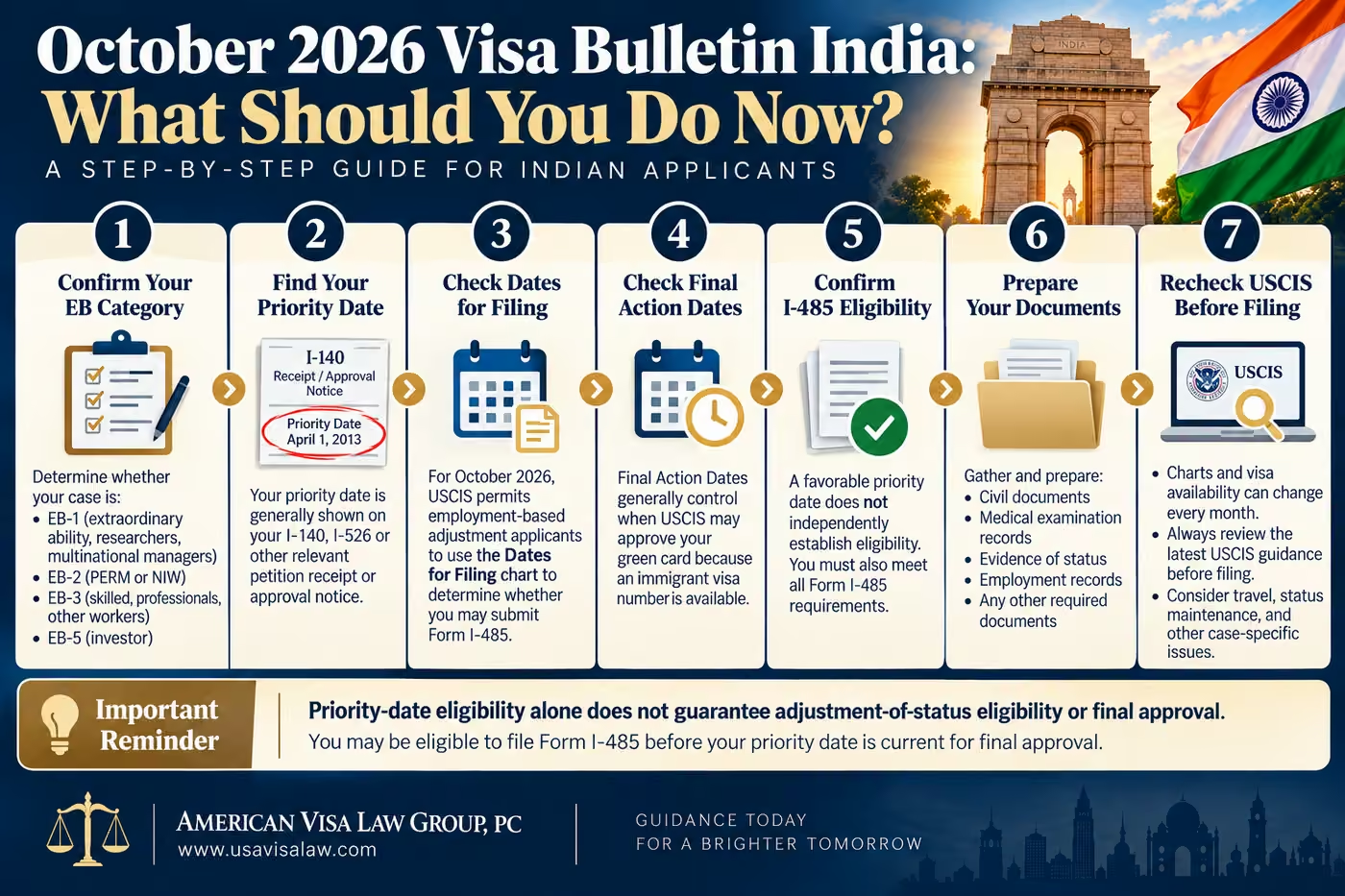
USCIS has also confirmed that employment-based adjustment applicants may use the Dates for Filing chart in October 2026. This is particularly important for Indian applicants because the filing dates for several categories are significantly later than their Final Action Dates. A person may therefore become eligible to submit Form I-485 before the priority date becomes current for final approval. Pasted markdown
For Indian professionals, employers, investors, and families considering permanent residence, the priority date is only one part of the analysis. Applicants should also confirm the correct immigrant classification, country of chargeability, filing chart, and complete adjustment-of-status eligibility.
American Visa Law Group assists applicants with employment-based green card options, including EB-1, EB-2, EB-3, National Interest Waiver, PERM-based, and other employment-based cases.
This guide explains the October 2026 Visa Bulletin India priority dates, compares Final Action Dates with Dates for Filing, reviews the changes from September 2026 and October 2025, and explains what Indian applicants should consider next.
October brings a mixed but generally more favorable employment-based picture for India.
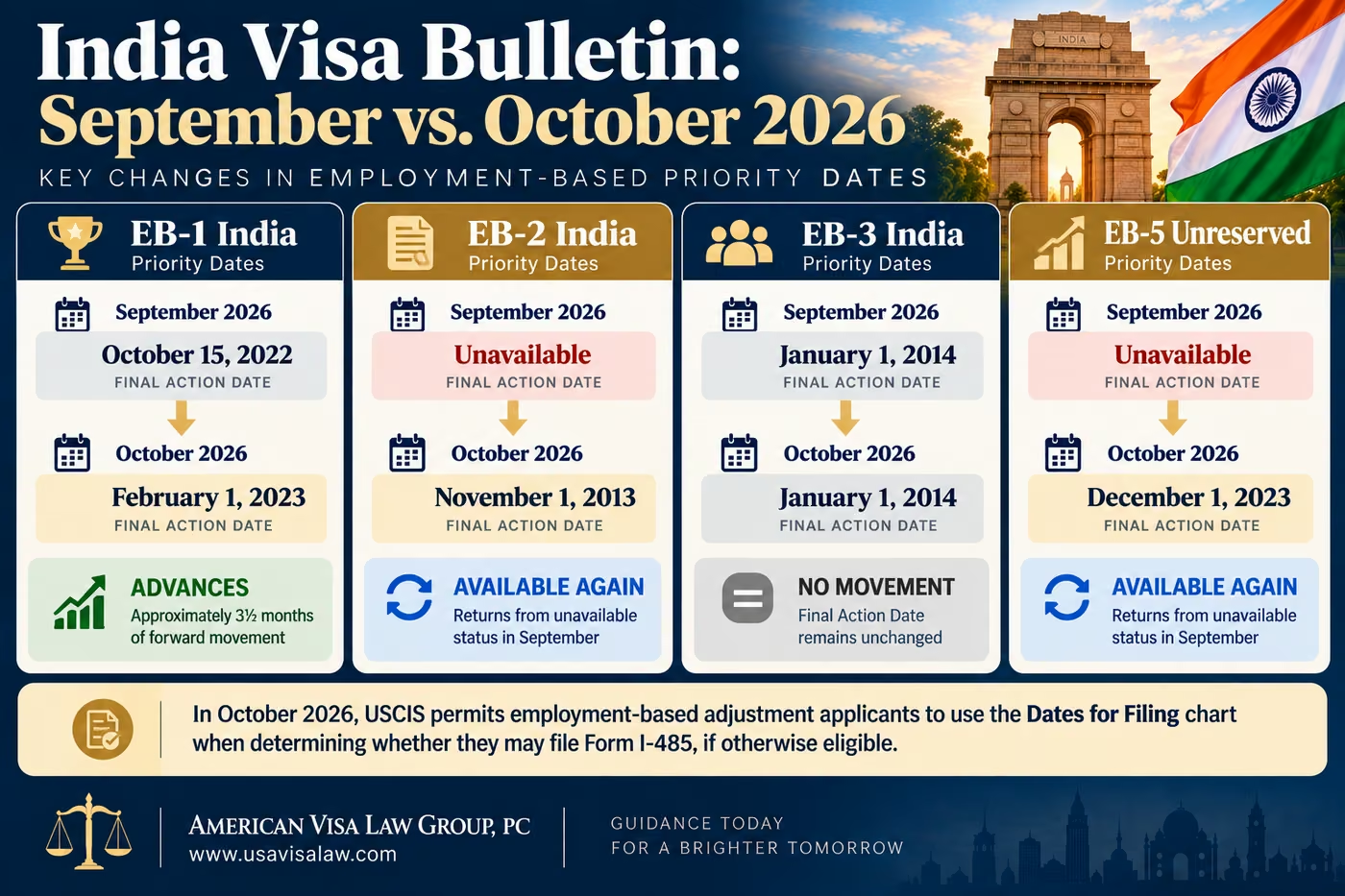
EB-1 moves forward by approximately three and a half months. EB-2 and EB-5 Unreserved become available again after being unavailable in September. EB-3 and Other Workers remain unchanged. Pasted markdown
The phrase “available again” does not mean that every pending case may immediately receive a green card.
The applicant’s priority date generally must be earlier than the applicable Final Action Date, and all other eligibility requirements still apply.
USCIS determines each month whether adjustment-of-status applicants may use the Dates for Filing chart or must use the Final Action Dates chart.
For October 2026, USCIS permits both family-sponsored and employment-based adjustment applicants to use Dates for Filing. Pasted markdown
For Indian employment-based applicants, this is an important change from September 2026.
In September, employment-based applicants were required to use Final Action Dates when determining whether they could file Form I-485. In October, eligible applicants may use the more favorable Dates for Filing chart. Pasted markdown
That can potentially allow some applicants to submit Form I-485 even though their priority dates are not yet current for final approval.
But the distinction is critical.
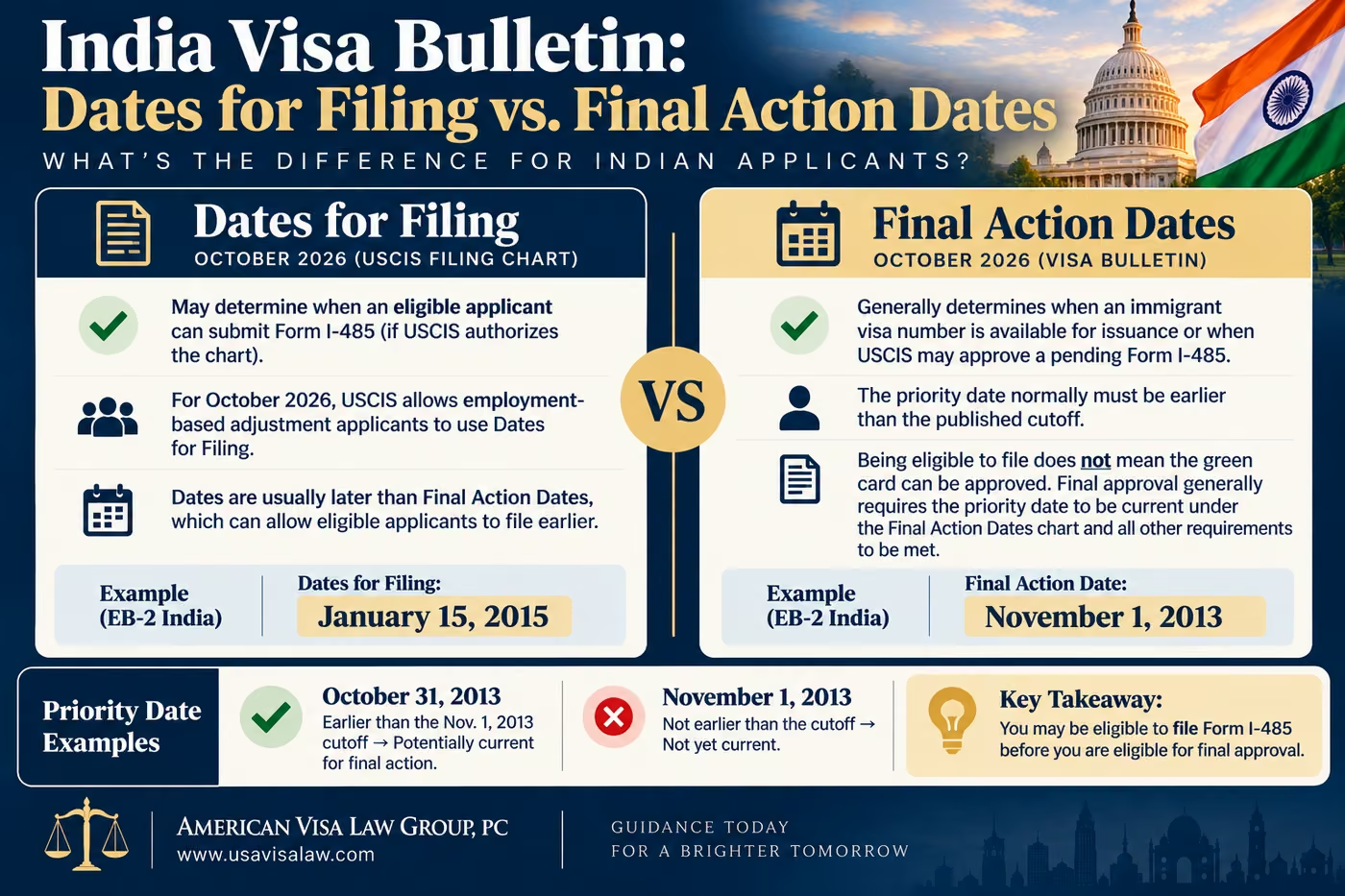
Dates for Filing can affect when an eligible applicant may submit Form I-485.
Final Action Dates generally control when USCIS may approve the green card because an immigrant visa number is available.
A person may therefore be eligible to file in October while still waiting for the priority date to become current under the Final Action Dates chart.
The Final Action Dates chart determines when an immigrant visa number may generally be issued or when USCIS may approve a pending adjustment-of-status application.
For India, October 2026 produces very different results depending on the employment-based preference category. Pasted markdown
The EB-1 India Final Action Date advances to February 1, 2023.
In September 2026, the cutoff was October 15, 2022.
That represents approximately three and a half months of forward movement. Pasted markdown
EB-1 includes several distinct classifications, including extraordinary ability, outstanding professors and researchers, and qualifying multinational managers or executives.
The priority-date movement may allow additional EB-1 India cases to reach final-action eligibility, but approval still depends on the applicant’s own priority date and all other case requirements.
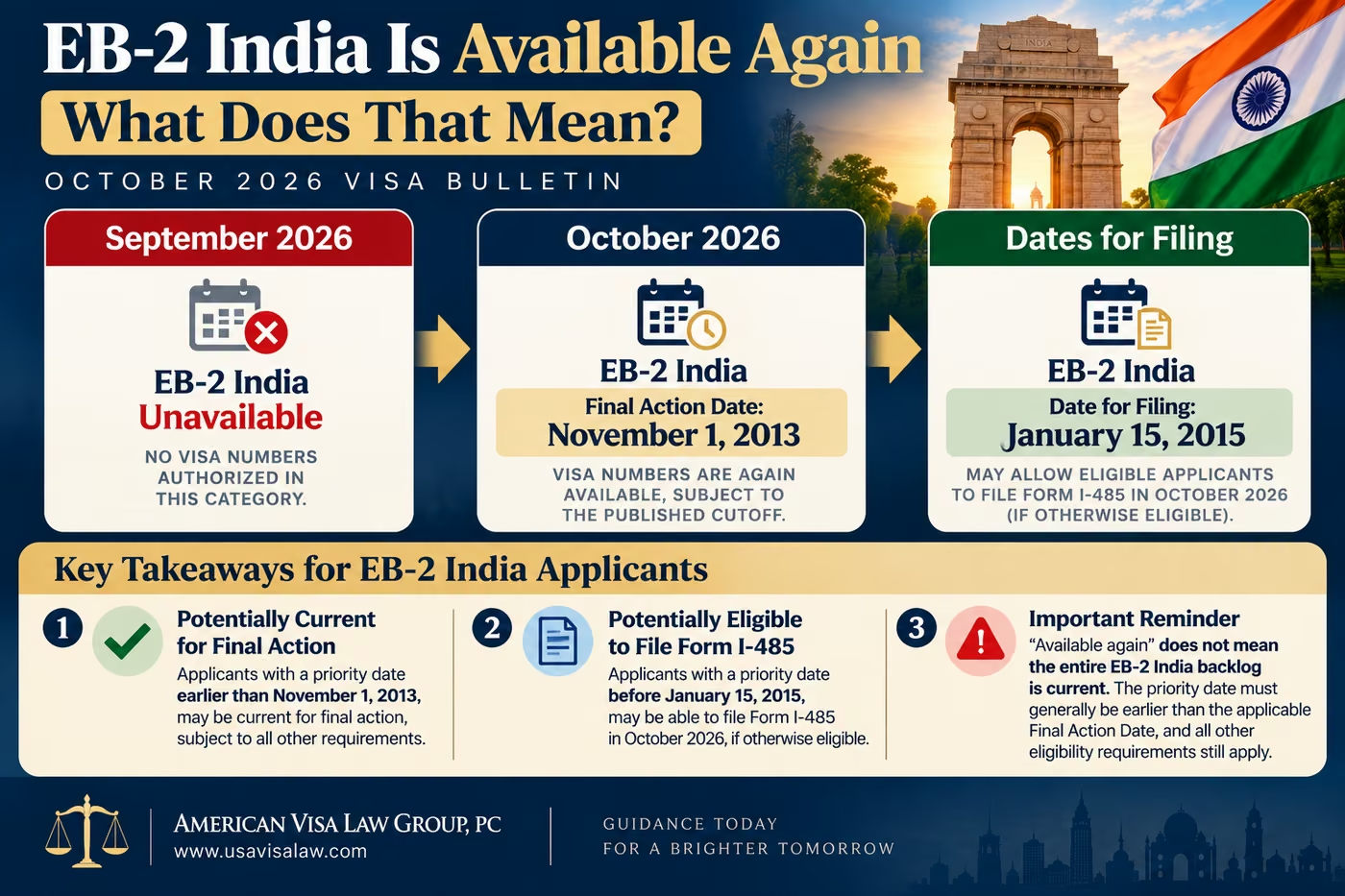
The EB-2 India Final Action Date for October 2026 is November 1, 2013.
This is particularly significant because EB-2 India was unavailable in September.
October therefore restores visa availability to the category, subject to the published cutoff. Pasted markdown
An applicant with an EB-2 India priority date earlier than November 1, 2013, may potentially be current for final action, assuming all other requirements are satisfied.
An applicant with a priority date on or after November 1, 2013, is not yet current under this chart.
The EB-3 India Final Action Date remains January 1, 2014.
There is no month-over-month movement from September. Pasted markdown
That means EB-3 India applicants do not receive additional Final Action Date advancement in October.
It is also important not to assume that EB-2 is automatically preferable to EB-3 simply because it is a higher preference category. The appropriate immigrant classification depends on the legal requirements of the case, while priority-date availability is a separate issue.
The Other Workers India Final Action Date also remains January 1, 2014.
There is no change from September. Pasted markdown
EB-5 Unreserved India becomes available again with a Final Action Date of December 1, 2023.
The category had been unavailable in September. Pasted markdown
As with EB-2 India, renewed availability does not mean that all pending EB-5 cases may immediately receive final approval.
The applicant’s priority date must generally be earlier than the cutoff, and the case must satisfy all other requirements.
The EB-5 rural, high-unemployment-area, and infrastructure set-aside categories remain current for every country, including India. Pasted markdown
“Current” means that no priority-date cutoff is published for that category during the month.
The Dates for Filing chart is especially important in October because USCIS has authorized employment-based adjustment applicants to use it when determining whether Form I-485 may be filed.
For Indian applicants, the key dates are:
For example, the EB-2 India Final Action Date is November 1, 2013, while its Date for Filing is January 15, 2015.
An otherwise eligible applicant may therefore potentially be permitted to submit Form I-485 under the filing chart even though the case cannot yet receive final approval.
Indian applicants should avoid treating the two Visa Bulletin charts as interchangeable.
Dates for Filing can determine when a qualifying applicant may begin submitting immigrant visa documentation or, when USCIS authorizes the chart, submit Form I-485.
In October 2026, USCIS authorizes employment-based applicants to use this chart. Pasted markdown
Final Action Dates generally determine when an immigrant visa number is available for issuance or when a pending Form I-485 may receive final approval.
The priority date normally must be earlier than the published cutoff. Pasted markdown
For example, if the cutoff is November 1, 2013, a priority date of October 31, 2013, is earlier.
A priority date of November 1, 2013, is not yet earlier than the cutoff.
The practical takeaway is straightforward:
An Indian applicant may become eligible to file Form I-485 before becoming eligible for final green card approval.
EB-2 India is one of the most important developments in the October 2026 Visa Bulletin.
In September, the category was listed as unavailable.
For October, the Final Action Date is restored at November 1, 2013. Pasted markdown
“Unavailable” means no visa numbers were authorized for issuance in the category during that month.
When a cutoff date returns, visa numbers may again be available for qualifying applicants whose priority dates fall before the published date. Pasted markdown
However, there are two different dates Indian EB-2 applicants should watch in October.
Final Action Date: November 1, 2013.
Date for Filing: January 15, 2015.
The distinction can be important.
An applicant with a priority date that qualifies under the Dates for Filing chart may potentially be able to submit Form I-485 in October, while still waiting for the Final Action Date to advance before USCIS may approve the case.
Renewed EB-2 availability is therefore important, but it should not be interpreted as meaning that the entire Indian EB-2 backlog has become current.
EB-1 India receives one of the clearer advances in October.
The Final Action Date moves:
October 15, 2022 → February 1, 2023.
That is approximately three and a half months of advancement. Pasted markdown
The Dates for Filing movement is even larger.
EB-1 India advances from:
December 1, 2023 → July 1, 2024. Pasted markdown
This means Indian EB-1 applicants should check both charts carefully.
The July 1, 2024 filing date can potentially affect whether an eligible applicant may submit Form I-485.
The February 1, 2023 Final Action Date generally controls whether a visa number is available for final approval.
No.
The EB-3 India Final Action Date remains January 1, 2014.
The Date for Filing remains January 15, 2015. Pasted markdown Pasted markdown
That means there is no month-over-month movement for EB-3 India under either chart.
Applicants should still check their individual priority dates against the applicable cutoff because a person who was already within the filing window may remain eligible even without additional movement this month.
EB-5 Unreserved India returns from unavailable status in October.
The Final Action Date is December 1, 2023.
The Date for Filing is May 1, 2024. Pasted markdown
This means the category again has authorized visa availability, subject to the published cutoff.
The rural, high-unemployment-area, and infrastructure EB-5 set-aside categories remain current. Pasted markdown
Indian investors should therefore distinguish between the Unreserved category and the separate reserved categories when reviewing visa availability.
October marks the beginning of fiscal year 2027, and India receives several important employment-based changes.
EB-1 India: advances from October 15, 2022, to February 1, 2023.
EB-2 India: moves from unavailable to November 1, 2013.
EB-3 India: remains January 1, 2014.
Other Workers India: remains January 1, 2014.
EB-5 Unreserved India: moves from unavailable to December 1, 2023.
The USCIS chart selection also changes for employment-based adjustment applicants.
In September, employment applicants were required to use Final Action Dates for filing eligibility.
In October, USCIS permits use of Dates for Filing. Pasted markdown
For some Indian applicants, that filing-chart change may be as important as the movement in the Final Action Dates themselves.
The year-over-year comparison also shows movement in several major India employment categories.
These comparisons show longer-term movement, but they do not predict what will happen in future Visa Bulletins.
Applicants should rely on the current cutoff applicable to their category rather than assuming that previous movement will continue at the same pace. Pasted markdown
Although the most significant India developments occur in employment-based immigration, there is also movement in the family-sponsored F4 category.
The F4 India Final Action Date advances from November 1, 2006, to December 15, 2006.
That is approximately six weeks of forward movement. Pasted markdown
Under the Dates for Filing chart, F4 India advances from December 15, 2006, to February 1, 2007.
The article’s underlying Visa Bulletin review indicates that India’s F1, F2A, F2B, and F3 Dates for Filing remain unchanged in October. Pasted markdown
Because USCIS also permits family-sponsored adjustment applicants to use Dates for Filing in October, qualifying applicants should compare their own priority dates with the correct family-preference cutoff.
The October Visa Bulletin creates opportunities for some applicants, but the published dates should not be used in isolation.
Indian applicants should consider the following steps before filing or making immigration decisions:
Applicants with a pending Form I-485 generally do not need to file a new application simply because the category later retrogresses or becomes unavailable. USCIS may continue processing the case, but final approval normally must wait until a visa number becomes available. Pasted markdown
The EB-2 India Final Action Date is November 1, 2013.
The Date for Filing is January 15, 2015. Pasted markdown
Yes.
EB-2 India was unavailable in September but returns in October with a Final Action Date of November 1, 2013. Pasted markdown
The EB-1 India Final Action Date is February 1, 2023.
The category advances from October 15, 2022, in September. Pasted markdown
No.
The EB-3 India Final Action Date remains January 1, 2014, and its Date for Filing remains January 15, 2015. Pasted markdown Pasted markdown
For EB-5 Unreserved India, the Final Action Date is December 1, 2023, and the Date for Filing is May 1, 2024. Pasted markdown
USCIS permits both family-sponsored and employment-based adjustment applicants to use Dates for Filing in October 2026. Pasted markdown
Potentially, if USCIS authorizes the Dates for Filing chart and the applicant satisfies all other adjustment-of-status requirements.
The priority date alone does not establish complete eligibility.
No.
Final approval normally requires the priority date to become current under the applicable Final Action Date and an immigrant visa number to be available. Pasted markdown
Generally, no.
The priority date normally must be earlier than the published cutoff. Pasted markdown
Yes, India F4 moves forward.
The Final Action Date advances to December 15, 2006, while the Date for Filing advances to February 1, 2007. Pasted markdown Pasted markdown
Priority-date movement can create important filing opportunities, but the Visa Bulletin is only one part of an employment-based green card case.
Indian applicants may need to evaluate the correct immigrant classification, whether an employer-sponsored or self-petition strategy applies, the priority date, USCIS filing-chart selection, Form I-485 eligibility, status maintenance, travel, and other case-specific issues.
This can be particularly important for applicants considering EB-1, EB-2, EB-3, EB-5, adjustment of status, or multiple employment-based strategies.
American Visa Law Group assists professionals, employers, researchers, executives, investors, and other applicants with employment-based immigration matters.
To discuss your circumstances with an immigration attorney, contact American Visa Law Group.
For applicants who want to verify the October 2026 India priority dates or review the official rules governing visa availability and Form I-485 filing, the following government resources are useful:

Hasan Abdullah, Esq. is the Founder and Managing Attorney of American Visa Law Group. His practice focuses on U.S. immigration law, including family-based immigration, employment-based immigration, adjustment of status, consular processing, waivers, PERM labor certification, NIW, EB-1, H-1B, O-1, and complex immigration strategy.
Through American Visa Law Group, Mr. Abdullah helps individuals, families, professionals, investors, and employers understand their immigration options and plan around changing government policies, USCIS procedures, and Visa Bulletin movement. His work emphasizes practical legal analysis, realistic expectations, and strategy tailored to each applicant’s immigration history and long-term goals.


