Author: Hasan Abdullah, Esq.
Edited: The 15th of September 2026
Green card holders generally may travel outside the United States and return, but international travel can affect permanent resident status when trips become long, frequent, or inconsistent with maintaining the United States as a permanent home. USCIS specifically warns that extended absences can raise questions about maintaining lawful permanent resident status, even when a traveler returns to the United States periodically. (USCIS)
In 2026, lawful permanent residents should also distinguish ordinary green card travel rules from broader U.S. entry restrictions. Current nationality-based restrictions expressly exempt lawful permanent residents, but green card holders are still subject to the normal rules governing reentry, abandonment of residence, admissibility, and inspection at the border. (The White House)
This guide explains the main travel restrictions for green card holders, including how long you can stay abroad, when a reentry permit may be needed, how travel can affect citizenship eligibility, and what to consider before an extended trip. Applicants with complex travel or status histories can also review American Visa Law Group’s U.S. immigration legal services for additional guidance. (USCIS)
Yes. Lawful permanent residents generally may travel outside the United States and return, but the length and pattern of travel can affect reentry, permanent resident status, and future naturalization eligibility.
USCIS explains that permanent residents may travel internationally, and temporary or brief trips usually do not affect green card status. However, longer or frequent absences can raise questions about whether the person still intends to make the United States their permanent home. (USCIS)
For trips approaching one year, a reentry permit for lawful permanent residents may be important. USCIS states that a green card generally is not sufficient by itself for return after an absence of one year or more, while a valid reentry permit can help show that the trip was intended to be temporary. (USCIS)
Current 2026 nationality-based U.S. entry restrictions also expressly exempt lawful permanent residents, although normal reentry and admissibility rules still apply. (whitehouse.gov)
The key issue is not simply whether a green card holder can travel, but how long they remain abroad and whether their overall conduct continues to show that the United States is their permanent residence.
Green card holders generally have broad freedom to travel internationally, but several rules can affect their ability to return to the United States and keep permanent resident status.
The main travel restrictions for green card holders involve how long they remain abroad, whether the trip still appears temporary, what documents they have when returning, and whether the travel affects future naturalization.
USCIS explains that lawful permanent residents may travel outside the United States, but lengthy absences can lead to questions about whether the person has abandoned permanent residence. USCIS also cautions that simply returning to the United States once each year is not necessarily enough to preserve green card status if the overall circumstances suggest the person is actually living abroad. (USCIS)
The main issues to keep in mind are:
The next question is usually the most important one: how long can a green card holder safely remain outside the United States?
There is no single number of days that automatically determines whether a green card holder has abandoned permanent residence. However, certain time periods can create additional immigration or naturalization concerns.
Short trips generally do not affect permanent resident status when the United States remains the person's primary home. USCIS explains that temporary or brief travel outside the United States normally does not affect lawful permanent residence.
However, repeated short trips can still raise questions if the overall pattern suggests that the green card holder actually lives abroad.
An absence of more than 180 days can receive additional scrutiny when a lawful permanent resident returns to the United States. USCIS notes that a permanent resident who has been abroad for at least 181 days may be subject to inspection as an applicant for admission. (USCIS)
Trips lasting more than six months can also affect continuous residence for U.S. citizenship. An absence of more than six months but less than one year generally creates a presumption that continuous residence was interrupted, although the applicant may be able to overcome that presumption with evidence. (USCIS)
If a green card holder remains outside the United States for one year or longer, the Permanent Resident Card generally is no longer sufficient by itself as the travel document for returning.
Someone planning an extended absence should consider applying for a reentry permit using Form I-131 before leaving the United States. Reentry permits are generally valid for up to two years, although shorter validity periods can apply in some circumstances. (USCIS)
A reentry permit can help show that the trip was intended to be temporary, but it does not guarantee admission or automatically protect future naturalization eligibility.
.avif)
A reentry permit is a travel document that can help a lawful permanent resident return to the United States after a longer temporary trip abroad. It is especially useful for green card holders who expect to remain outside the United States for close to one year or longer.
According to USCIS guidance on reentry permits for permanent residents, the document can help show that the trip was intended to be temporary and that the green card holder did not intend to abandon U.S. permanent residence.
To apply, the green card holder files Form I-131, Application for Travel Document while physically present in the United States. Biometrics may also be required before departure.
A reentry permit is generally valid for up to two years, although shorter validity periods may apply in some cases.
It is important to understand its limits. A reentry permit does not guarantee admission to the United States and does not automatically preserve continuous residence for future U.S. citizenship.
Its main purpose is to support longer temporary travel while helping demonstrate that the United States remains the green card holder’s permanent home.
For most international trips, a green card holder should carry a valid Permanent Resident Card and any passport or travel document required by the destination country or airline.
USCIS explains that a Permanent Resident Card can generally be used to return to the United States after temporary travel abroad, while longer trips may require a valid reentry permit instead. (USCIS)
Depending on the situation, useful travel documents may include:
CBP lists several documents that lawful permanent residents may use when returning to the United States, including a green card, ADIT stamp, or valid reentry permit. (Customs and Border Protection)
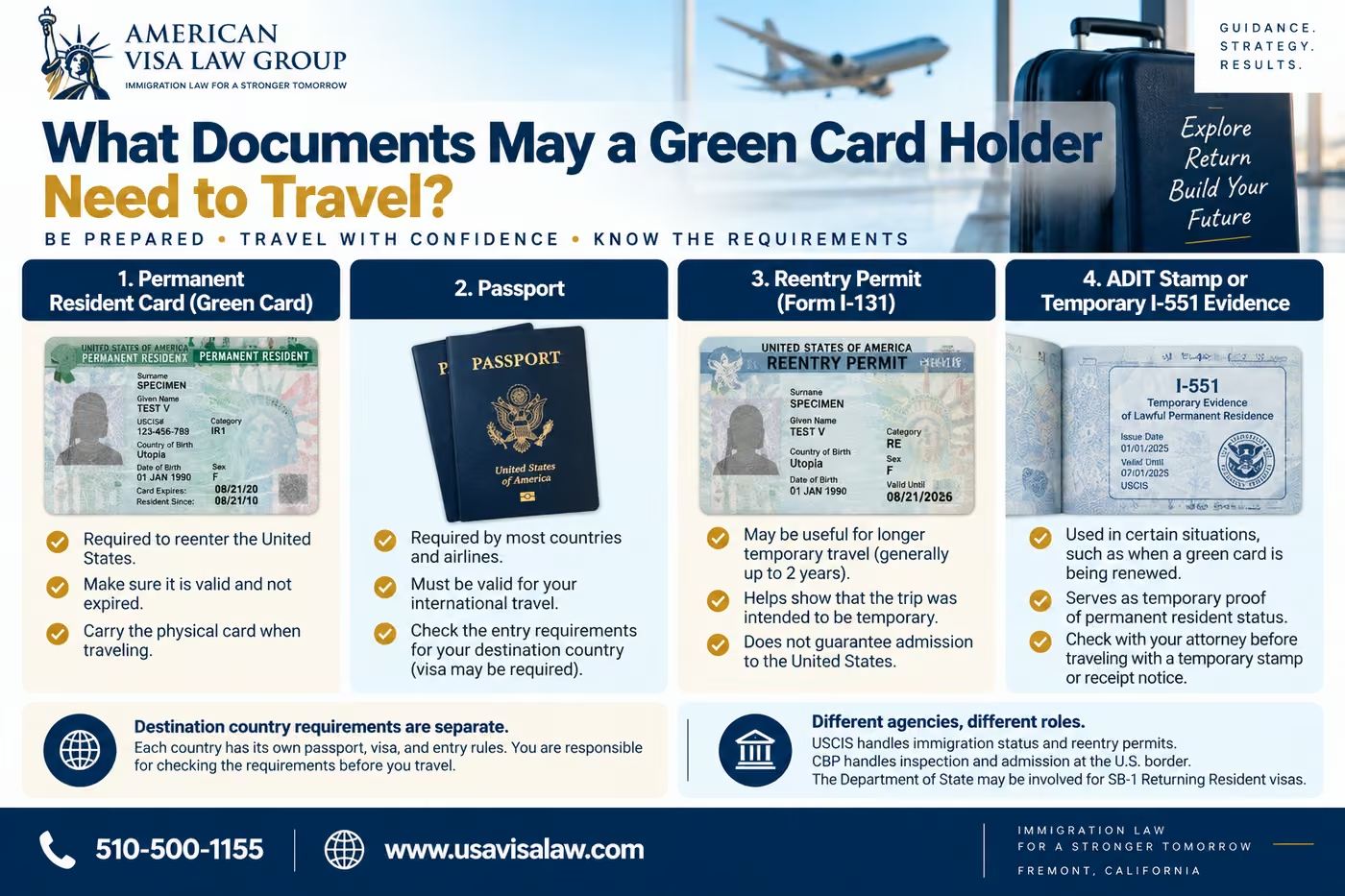
A passport is not always required solely to reenter the United States as a lawful permanent resident, but the destination country or airline may still require one. CBP guidance specifically notes that lawful permanent residents are not required to present a passport for U.S. entry when they have an acceptable permanent-resident travel document. (Customs and Border Protection)
Before traveling, green card holders should check both U.S. reentry requirements and the separate entry rules of the country they plan to visit.
If a 10 year green card expires while you are outside the United States, the main issue is usually proving your permanent resident status for boarding and reentry.
USCIS currently extends green card validity for 36 months for many lawful permanent residents who properly file Form I 90 to renew a Permanent Resident Card. The I 90 receipt notice can be presented together with the expired green card as evidence of continued permanent resident status while the renewal is pending. CBP has also issued carrier guidance confirming the 36 month green card extension for travel purposes.
If the traveler does not have a valid green card, reentry permit, or qualifying extension evidence, boarding can become more complicated. USCIS allows certain permanent residents abroad to request Form I 131A carrier documentation, such as a boarding foil or transportation letter, when their green card is expired, lost, stolen, damaged, or otherwise unavailable. (USCIS)
A 2 year conditional green card is different. Conditional residents generally should not use Form I 90 simply because their status is expiring. Instead, they typically need to file Form I 751 to remove conditions on residence or Form I 829 in qualifying investor cases. (USCIS)
An expired card also should not be confused with abandonment of permanent residence. The travel document issue and the question of whether the person actually maintained U.S. residence are separate analyses.
If a green card holder remains outside the United States for more than one year, the Permanent Resident Card generally is no longer enough by itself to return as a travel document. USCIS advises lawful permanent residents planning an absence of one year or more to apply for a reentry permit before leaving the United States. (USCIS)
If the green card holder stayed abroad beyond one year without a valid reentry permit, or remained outside the United States beyond the permit’s validity, the U.S. Department of State explains that the person may need to apply for an SB-1 Returning Resident visa. (U.S. Department of State Travel)
An SB-1 visa is intended for certain lawful permanent residents who remained outside the United States longer than expected because of circumstances beyond their control.
To qualify, the applicant generally must show that they:
The application is made through a U.S. Embassy or Consulate, typically using Form DS-117 and evidence of continued ties to the United States.
A long absence does not automatically mean permanent resident status is lost. But after more than one year abroad, the person’s intent, travel documents, U.S. ties, and reason for the extended stay can become especially important.

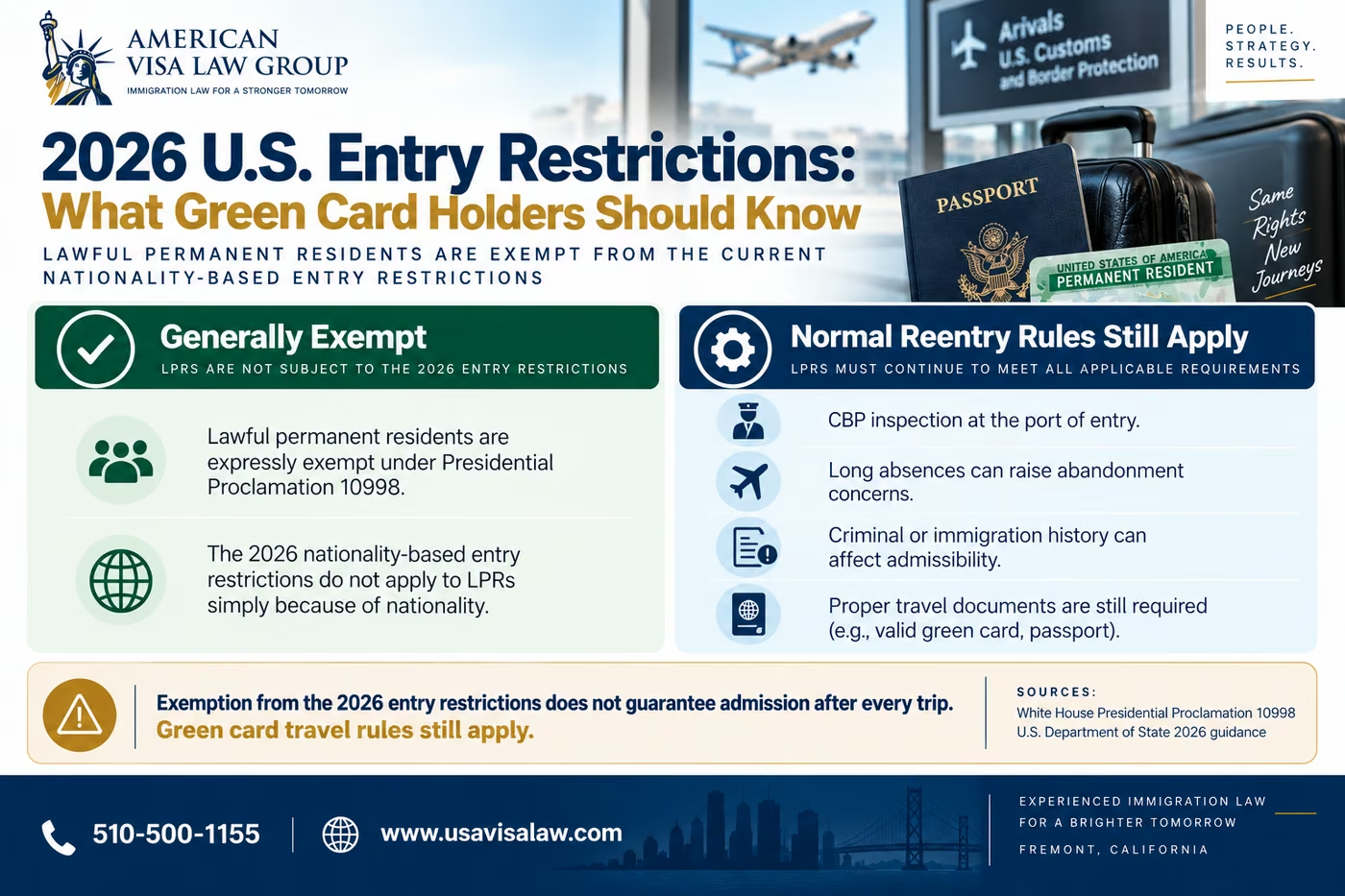
Generally, no. The current 2026 nationality-based U.S. entry restrictions expressly exempt lawful permanent residents.
Under Presidential Proclamation 10998, which took effect on January 1, 2026, the United States imposed full or partial entry and visa restrictions on nationals of multiple countries. However, the proclamation specifically states that the restrictions do not apply to lawful permanent residents of the United States. (The White House)
The U.S. Department of State’s 2026 travel restriction guidance likewise lists lawful permanent residents among the exceptions. (U.S. Department of State Travel)
That exemption does not mean a green card holder is automatically guaranteed admission after every international trip. Normal permanent resident travel rules still apply, including inspection at the port of entry, possible abandonment of residence after lengthy absences, and admissibility issues that may arise from certain criminal or immigration histories.
For most green card holders, the more important travel questions remain how long they have been outside the United States, whether they maintained U.S. residence, and whether they have the proper documents to return.
Yes. A green card holder can be questioned by U.S. Customs and Border Protection when returning to the United States, especially after a longer absence.
CBP officers may ask about the length and purpose of the trip, where the traveler lives, employment in the United States, family ties, and whether the United States remains the person’s permanent home.
USCIS notes that a lawful permanent resident who has been abroad for at least 181 days may be subject to a full immigration inspection as an applicant for admission. (USCIS)
Questions at the airport do not automatically mean the person has lost permanent resident status. However, a long absence or evidence that the traveler has established a permanent home abroad can raise concerns about abandonment.
Green card holders returning after an extended trip should be prepared to show continued U.S. ties, such as a home, employment, tax filings, family connections, or other evidence that the travel was temporary.
A valid reentry permit may also help support the argument that the person intended to maintain U.S. permanent residence, although it does not guarantee admission. (USCIS)
Yes. Certain criminal convictions or conduct can affect a green card holder when returning to the United States after international travel.
USCIS explains that some criminal convictions may trigger inadmissibility or removal consequences for permanent residents, which can become especially important when an LPR leaves the country and later seeks reentry.
Depending on the circumstances, issues may arise from certain drug offenses, crimes involving moral turpitude, aggravated felonies, fraud-related conduct, or other offenses covered by U.S. immigration law.
A criminal record does not automatically mean a green card holder will be denied entry. The immigration consequences depend on the exact offense, date of conviction, sentence, prior immigration history, and how the law applies to that case.
Green card holders with arrests, convictions, pending criminal charges, or prior immigration violations should consider reviewing the travel consequences before leaving the United States.
At the port of entry, U.S. Customs and Border Protection may ask additional questions or refer the traveler for further inspection if criminal or immigration issues appear in government records.
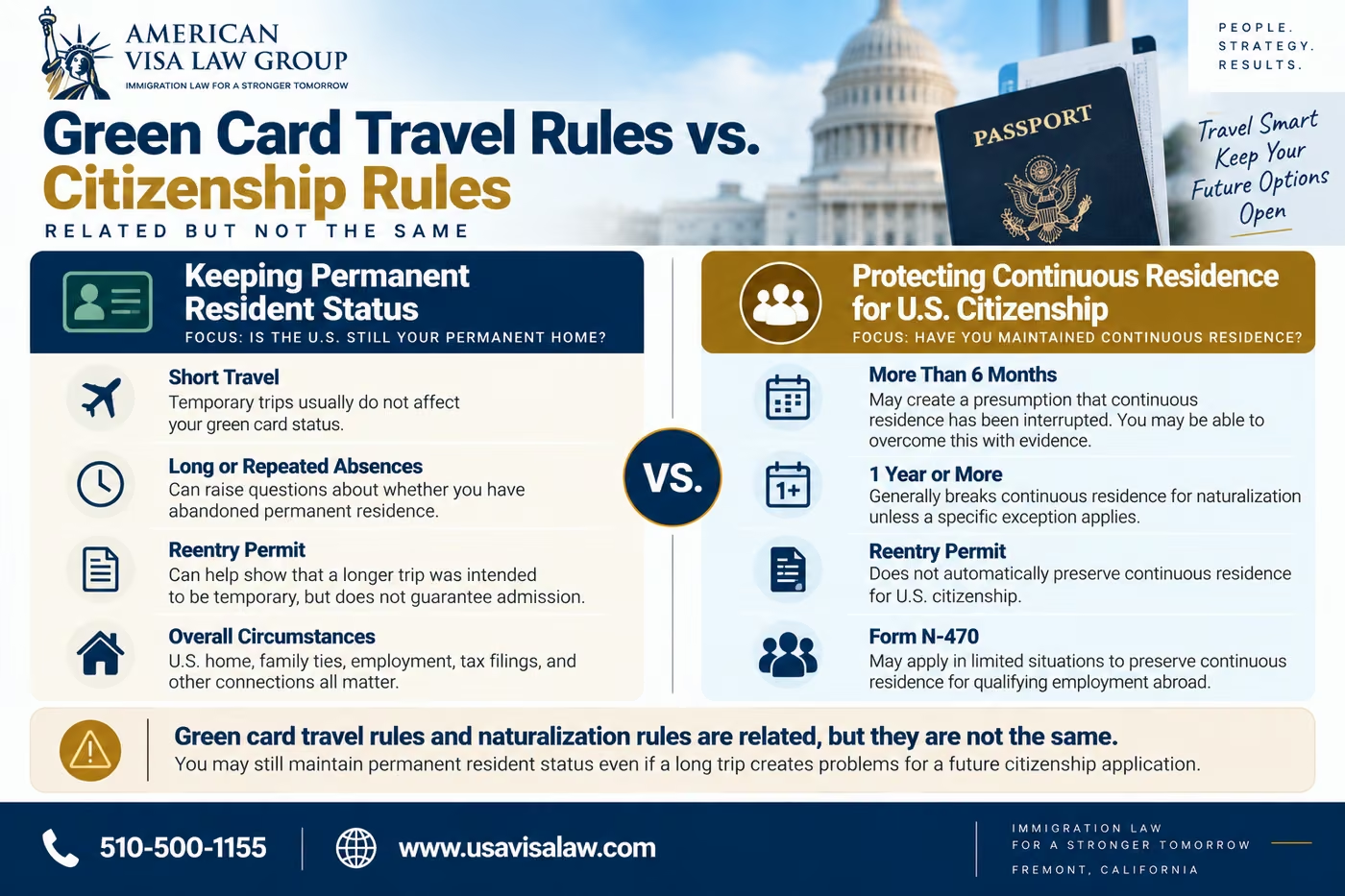
International travel can affect a green card holder’s eligibility for naturalization because USCIS looks at both continuous residence and physical presence in the United States.
USCIS explains in its naturalization continuous residence guidance that the length of an absence can be especially important.
A trip lasting more than six months but less than one year may create a presumption that continuous residence was interrupted. The applicant may be able to overcome that presumption with evidence showing continued ties to the United States.
An absence of one year or longer generally breaks continuous residence for naturalization purposes unless a specific exception applies.
A reentry permit does not automatically preserve continuous residence for citizenship. Certain qualifying permanent residents working abroad may instead be eligible to file Form N-470 to preserve residence for naturalization.
Green card holders planning extended travel should therefore consider both sets of rules separately. A trip may be acceptable for maintaining permanent resident status while still creating a problem for a future naturalization application.
Conditional permanent residents generally have the same international travel rights as other green card holders, but the expiration date on the conditional green card and the timing of the petition to remove conditions are especially important.
Marriage-based conditional residents usually file Form I-751 to remove conditions on residence, while qualifying EB-5 investors generally use Form I-829.
If the conditional green card expires while one of those petitions is pending, the USCIS receipt notice may extend evidence of permanent resident status for a specified period and can be used with the expired card for travel when the notice says so.
Conditional residents planning a long trip should also consider whether a reentry permit through Form I-131 is appropriate. However, USCIS may limit the validity of a reentry permit when the person’s conditional residence is scheduled to expire sooner.
Travel itself does not remove the conditions on residence. The resident still must meet the applicable I-751 or I-829 filing requirements and maintain evidence of lawful permanent resident status while traveling.
Green card holders who originally obtained permanent residence through asylum or refugee status should be especially careful when traveling internationally.
USCIS explains that lawful permanent residents who became residents through asylum or refugee status may use a Refugee Travel Document or, in some cases, a reentry permit for international travel. Long or frequent absences can still raise the same abandonment concerns that apply to other permanent residents.
Travel to the country where the person previously claimed persecution deserves additional caution. USCIS warns that returning to that country may raise questions about whether an asylee voluntarily reavailed themselves of that country’s protection or whether the original fear of persecution remains valid. (USCIS)
This does not mean every trip to a former country of persecution automatically causes the loss of permanent residence or asylum-based protections. The purpose, length, frequency, and circumstances of the travel can matter.
Green card holders with an asylum or refugee history should therefore review both the ordinary green card travel rules and the specific immigration consequences connected to their original humanitarian status before making sensitive international trips.
Before leaving the United States, green card holders should review both their immigration documents and the length of the planned trip.
A simple pre-travel checklist includes:
For U.S. reentry, CBP guidance for lawful permanent residents can help travelers understand inspection and document requirements at the border.
For destination-country rules, travelers should also check the relevant embassy or consulate before departure.
Planning becomes especially important when a trip may last more than six months, approach one year, or involve an already complicated immigration history.
If you have already been outside the United States longer than expected, do not assume that your green card was automatically lost. The next step depends on how long you have been abroad, whether you have a valid reentry permit, and whether you can show that the trip remained temporary.
For absences beyond one year, the U.S. Department of State explains that some lawful permanent residents may qualify for an SB-1 Returning Resident visa if the extended stay resulted from circumstances beyond their control and they did not intend to abandon U.S. residence. (U.S. Department of State Travel)
Useful evidence can include tax returns, proof of a U.S. home, family and employment ties, travel records, and documents showing why the return was delayed.
If you still have a valid reentry permit, that may help show that the absence was intended to be temporary, although it does not guarantee admission. (USCIS)
The key is to review the full travel history before attempting to return, especially where the absence has lasted more than one year or there are concerns about abandonment of permanent residence.
Green card holders generally may travel internationally, but the length and pattern of travel can affect reentry, permanent resident status, and future citizenship eligibility.
The most important points are:
The safest approach is to plan extended travel before leaving the United States.
Yes. Lawful permanent residents generally may travel internationally and return to the United States, as long as they continue to maintain permanent residence and have the proper travel documents.
There is no single automatic cutoff for abandonment, but important thresholds exist. Trips over six months can affect naturalization and may lead to closer review, while an absence of one year or more can create serious reentry-document issues.
Yes, but absences of more than six months can affect continuous residence for naturalization and may lead to additional questions when returning to the United States.
A green card generally is not sufficient by itself for return after an absence of one year or more. A valid reentry permit may help, while some travelers without one may need to consider an SB-1 Returning Resident visa.
Not for ordinary short trips. A reentry permit is usually considered when a lawful permanent resident expects to remain abroad for an extended period, especially when the absence may approach or exceed one year.
A green card holder is still subject to inspection by U.S. Customs and Border Protection. Long absences, certain criminal issues, immigration violations, or evidence of abandonment can create reentry concerns.
Current 2026 nationality-based U.S. entry restrictions generally exempt lawful permanent residents. Normal rules involving inspection, admissibility, travel documents, and abandonment of residence still apply.
It can. Trips lasting more than six months may affect continuous residence, while absences of one year or more generally create more serious naturalization problems unless a qualifying exception applies.
For official guidance on green card holder travel restrictions, reentry documents, long absences, and returning to the United States, these resources are especially useful.
USCIS guide to maintaining permanent resident status explains how international travel can affect lawful permanent residence, including abandonment concerns and the one-year travel-document threshold. (USCIS)
USCIS guidance on reentry permits for permanent residents explains when Form I-131 may be useful, how long reentry permits are generally valid, and why they do not guarantee admission. (USCIS)
U.S. Department of State guidance on SB-1 Returning Resident visas explains the process for certain green card holders who remain abroad for more than one year or beyond the validity of a reentry permit. (U.S. Department of State Travel)
USCIS Form I-131, Application for Travel Documents provides current filing information for reentry permits and other travel documents.
USCIS naturalization guidance on continuous residence explains how absences of more than six months or one year may affect future U.S. citizenship eligibility.
U.S. Customs and Border Protection travel guidance provides information about inspection and entry procedures when travelers return to the United States.
These official sources are useful because green card travel involves several different agencies. USCIS primarily addresses permanent resident status and naturalization, CBP handles inspection at the port of entry, and the Department of State becomes especially important when consular processing or an SB-1 Returning Resident visa is involved.

Hasan Abdullah, Esq. is the Founder and Managing Attorney of American Visa Law Group. His practice focuses on U.S. immigration law, including family-based immigration, employment-based immigration, adjustment of status, consular processing, waivers, PERM labor certification, NIW, EB-1, H-1B, O-1, and complex immigration strategy.
Through American Visa Law Group, Mr. Abdullah helps individuals, families, professionals, investors, and employers understand their immigration options and plan around changing government policies, USCIS procedures, and Visa Bulletin movement. His work emphasizes practical legal analysis, realistic expectations, and strategy tailored to each applicant’s immigration history and long-term goals.


