Contents
Not so fast! 😬 This is one of the
most common—and most dangerous—immigration myths out there. Every year, thousands of people unintentionally violate U.S. immigration law—not because they did something terrible, but simply because they didn’t know the difference between a visa and I-94 status.
It’s not just a technicality. This misunderstanding can lead to overstays, visa denials, and even bans from re-entering the country. And in 2025, immigration enforcement is more digitized and precise than ever.
Let’s get one thing straight:
Imagine you’re on a guest list for a party (that’s your visa). But once you’re inside, the host tells you when the party ends and what room you’re allowed in (that’s your I-94). If you ignore the host? Well, you’re crashing the party—and that’s a big deal.
Whether you’re here to study, work, visit family, or explore business opportunities, understanding the difference between your visa and I-94 is absolutely crucial. Let’s break down each one, explain how they work together, and help you avoid immigration headaches before they start.
Let’s start with the basics: a U.S. visa is your permission slip to knock on America’s door. It’s not a ticket to stay—it’s a document that allows you to request entry at a port of entry (like an airport or border crossing).
When you apply for a visa, you’re essentially saying, “Here’s why I want to come to the U.S.—can I have permission to try?” If the embassy says yes, you’ll get a shiny visa stamp in your passport. 🎟️
There are two main categories:
Some common nonimmigrant visas include:
Each visa comes with a purpose—and a limit. For example, an F-1 student visa lets you enter the U.S. to attend school, but not to work full-time off-campus.
Here’s where people get tripped up: the visa is only used for entry. Once you’re inside the U.S., it no longer controls how long you can stay. That’s what the I-94 record is for (we’ll get to that in a sec).
Also important: visas are issued at U.S. embassies or consulates abroad—you can’t get one while you’re already in the country. And just because your visa is valid for 10 years doesn’t mean you can stay for 10 years straight. It just means you can try to enter during that time.
Lastly, the visa doesn’t guarantee entry. It just allows you to show up and ask. A CBP officer at the border makes the final call.
So remember:
Confused? You’re not alone. That’s why we’re going to break down the I-94 next—it’s where the real power lies.
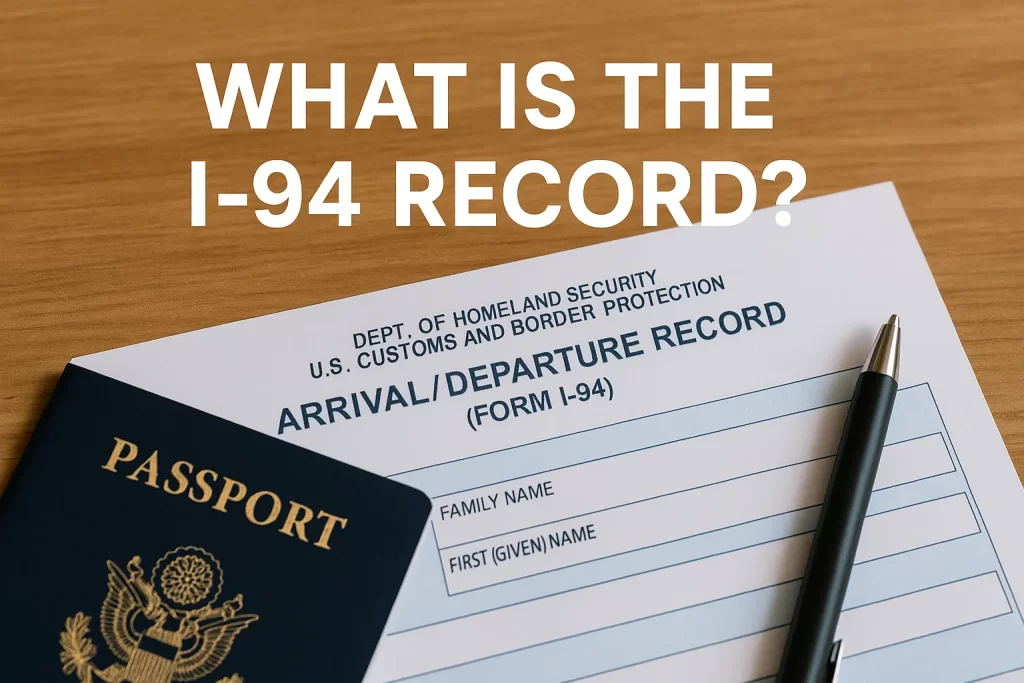
Ah, the mysterious I-94—probably the most overlooked (yet crucial) document in U.S. immigration. While your visa lets you enter the country, your I-94 determines how long you can stay. It’s like the timer that starts ticking the moment you step off the plane. ⏳
So what exactly is it?
The I-94 record, officially called the Arrival/Departure Record, is a digital document created by U.S. Customs and Border Protection (CBP) when you arrive. It logs:
Most travelers don’t even know their I-94 exists. But it does—and you can easily access it online at
cbp.gov/I94. Just enter your passport info and you’ll see your latest entry record. (Seriously, go check it after every trip.)
Before 2013, people used to get a little white card stapled into their passport. Now? It’s all electronic (unless you’re entering by land—then you might still get a paper form).
Your I-94 expiration date is what determines how long you’re legally allowed to remain in the U.S.—not the expiration on your visa.
For example, you might have a visa that expires in 2026, but your I-94 says you must leave by November 15, 2025. If you stay past that date? You’re out of status, even if your visa is still valid.
This small detail has caused major problems for thousands of people who unknowingly overstayed their welcome—triggering bars, fines, and sometimes even deportation proceedings.
Also worth noting:
✅ Always check your I-94 after entering the U.S.
✅ Set a reminder to track the expiration
✅ Don’t assume your visa and I-94 end on the same date—they often don’t
Ready to dive into how those two expiration dates can play a dangerous game of hide and seek? Let’s go!
Let’s clear this up once and for all: your visa and your I-94 are not interchangeable, and their expiration dates often don’t match. Confusing the two? That’s how people end up in serious immigration trouble.
Think of your visa like a movie ticket. It lets you enter the theater (the U.S.), but it doesn’t tell you how long you can sit and watch. That’s the I-94’s job.
Your visa has:
But once you’re inside the U.S., the visa just chills in your passport. It no longer controls your stay.
This is the real boss. The I-94 record tells you how long you’re legally allowed to stay. Overstay this? You’re in unlawful presence, which can lead to:
Let’s look at an example:
✈️ You enter the U.S. in January 2025.
🧾 CBP gives you an I-94 valid for 6 months, expiring in June 2025.
⚠️ If you stay past June—even though your visa is still “valid”—you’re out of status.
If you leave and re-enter the U.S., your I-94 is typically reset with a new expiration date. So if you don’t check it after each trip, you could be using the wrong info.
Students and exchange visitors (F and J visas) often get “D/S” on their I-94, meaning Duration of Status. That means your stay is valid as long as you’re doing what you’re supposed to (studying, training, etc.). But the second you violate that? Boom—you’re out of status.
Feature
Visa
I-94
Purpose
Permission to enter
Permission to stay
Issued by
U.S. Embassy or Consulate
CBP at U.S. port of entry
Valid Outside U.S.?
Yes
No
Controls Stay?
No
Yes
Must Be Monitored?
Yes, but especially I-94
Absolutely
Bottom line? The I-94 is your stay timer. Your visa is just the key to open the door.
Next up, we’ll talk about why the I-94 matters more than the visa once you’re inside the U.S. 👇
🔑
Once you’re in the U.S., your I-94 matters more than your visa.
This simple fact has saved people from getting banned—and caused others to panic when they realized they’d overstayed without even knowing it. 🙈
The I-94 is your official record of stay. It’s what U.S. immigration officers, employers, schools, and even DMV staff will look at when determining whether you’re still legally in the country.
If your I-94 expires, you are:
Even if your visa is valid for another 3 years, an expired I-94 puts you in hot water—fast.
A tourist entered on a B-2 visa, received a 6-month stay on her I-94, but thought she could stay until her visa expired two years later. She overstayed by 14 months—unknowingly. When she tried to visit again? Denied. Barred for 3 years. 💔
A student changes schools but forgets to update SEVIS and get a new I-20. Even though their F-1 visa and I-94 say “D/S,” they violated their status and the I-94 essentially becomes invalid.
Gone are the days when CBP relied on paper trails. Your entries, exits, and I-94 history are now digitally recorded and cross-checked with USCIS, SEVIS, and even IRS databases. That means:
You can’t just slip through the cracks anymore. So you’ve gotta play it smart.
Think of your I-94 as your “stay clock.” Once it runs out, no amount of visa time left in your passport can help you.
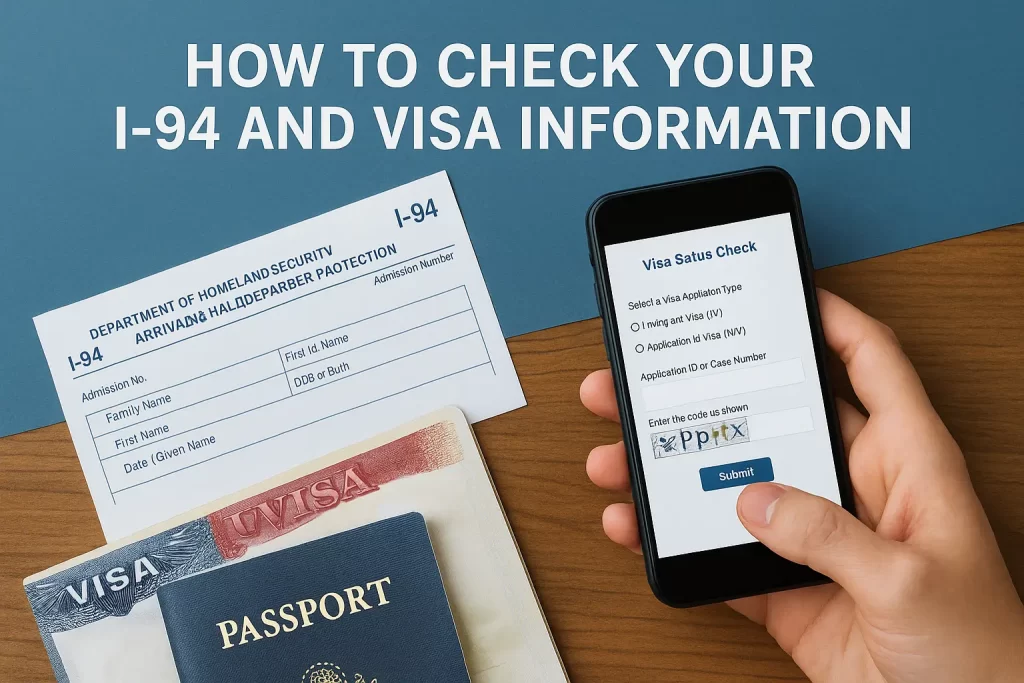
Checking your I-94 and visa info might sound intimidating, but trust me—it’s actually super simple. And doing it can save you from a ton of immigration headaches down the line. 💻✈️
Here’s the step-by-step guide:
You can also click “View Travel History” to see past entries and exits. That’s super useful if you’re applying for something like a green card or extension of stay, where timeline matters.
💡 Pro Tip: Screenshot or download your I-94 every time you enter the U.S. Sometimes, the system glitches—and having proof can be a lifesaver.
While your visa isn’t the stay controller, it’s still important for travel. Look for:
Keep in mind:
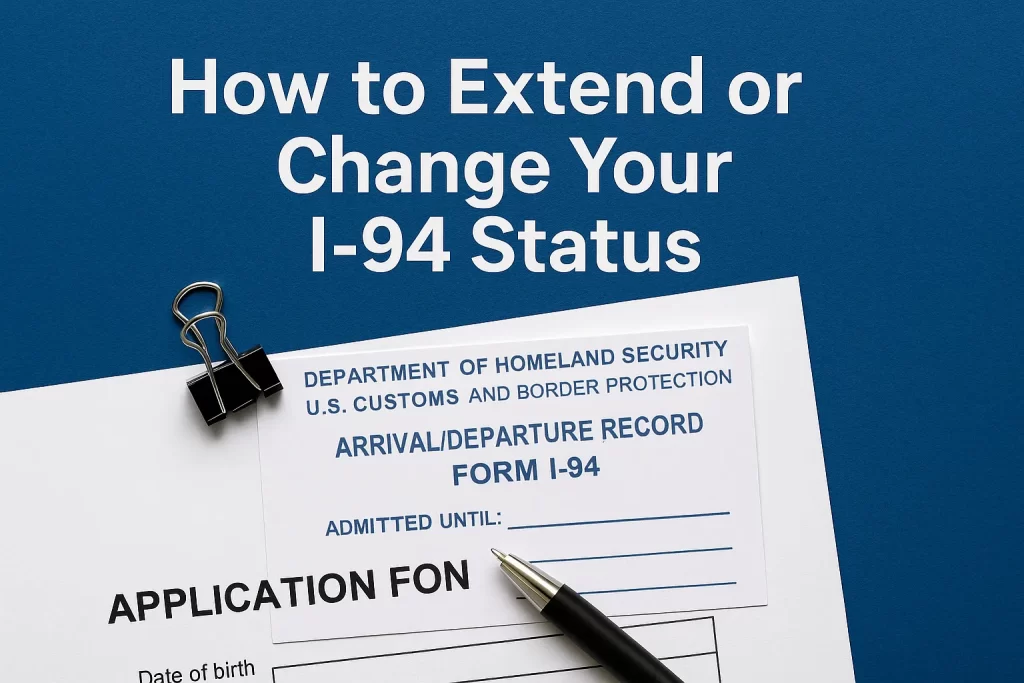
Sometimes, plans change. Maybe you need a few extra months to finish your studies. Maybe a job offer comes through and you want to switch from visitor to worker. That’s where extending or changing your I-94 status comes into play.
If you want to stay longer in your current visa category (say, as a tourist or student), you’ll need to request an extension of stay from USCIS.
Once USCIS receives your request, you’re allowed to remain in the U.S. while your application is pending, even if your I-94 expires during the wait. This is called “authorized stay.”
This is for when you want to switch visa types—for example:
You’ll usually need to file:
Not all visa types allow a change of status. Some, like the
Visa Waiver Program (VWP), don’t give you that option. If you came on ESTA, you’re out of luck—no extensions or COS allowed.
Think of the I-94 like a lease. If you want to stay longer or use the space differently, you’ve gotta talk to the landlord (USCIS) before the lease ends. Otherwise, you’re in legal limbo.
Up next: the ❌ Common Mistakes That Trigger Immigration Trouble—because knowing what not to do is just as important. Shall I continue?
You’d be shocked how many people get into immigration hot water because of small, honest mistakes. We’re talking about missed dates, wrong assumptions, or even just relying on bad advice from a friend or forum. 🧨
Let’s break down the most common landmines so you can avoid them like a pro.
This is the #1 mistake
They look at their visa, see it’s valid until 2026, and assume they’re good to stay. But if their I-94 says “leave by December 2025”? That’s the real deadline.
Always check the I-94 admit-until date—not just your visa stamp.
Many people forget to check it, assuming it’s the same as last time. But a CBP officer might give you
less time, especially if you’re a frequent traveler.
One user entered on a tourist visa and got just 30 days—not the 6 months she was expecting. She overstayed without realizing and got flagged at her next entry. Don’t let that happen to you.
USCIS is strict. If you file even one day late, you risk:
Set reminders. Talk to a lawyer. Don’t push the deadline.
You’re fine while your visa is expired—as long as your I-94 is valid
But once you leave, you
must get a new visa to return—even if your I-94 was longer.
This surprises a lot of people who travel for weddings, funerals, or emergencies. They think they can just come back with their old visa. Nope.
Maybe your old employer gave you a form saying you’re in status, but then you changed jobs or schools. If your I-94 was never updated, that paper isn’t protecting you. Always go by what’s in the official CBP or USCIS system.
Immigration law is unforgiving about “oops.”
Be proactive. Be meticulous. And if you’re not sure—ask a professional, not a Reddit thread.
Next up, let’s wrap it up with some ✅ Tips to Stay in Legal Status in 2025. Ready to keep going?
Staying in legal status in the U.S. isn’t rocket science—but it does require a bit of planning, awareness, and follow-through. In 2025, with all systems going digital and stricter immigration checks at every level, even a small slip can cause major problems down the line.
Here’s your cheat sheet to keeping everything squeaky clean. 📋✨
Go to
https://i94.cbp.dhs.gov after every re-entry and double-check your admit-until date. Don’t assume it’s 6 months or that it hasn’t changed from last time.
📸 Screenshot it and save a PDF copy in a secure folder. One minute now can save you hours of panic later.
Use your phone calendar or a tool like Google Calendar to:
Switching schools? Changing jobs? Wanting to start a business or move to a different visa type?
A 30-minute consult with a lawyer could save your entire immigration future. No joke.
Immigration is paperwork-heavy. Keep:
You never know when you’ll need to prove something from 18 months ago.
Things like CBP questions, background flags, or visa processing delays could leave you stuck outside or denied re-entry.
Even a single day of unlawful presence can cause issues. It can:
Leave early. Or apply for an extension early.
Follow updates from USCIS, CBP, and trusted immigration lawyers on social media or newsletters. Laws change. Policies change. Don’t get caught with outdated info.
If you’re not tech-savvy, have a trusted friend or relative help you check and track your I-94s and documents. Immigration issues don’t care about your phone’s dead battery or a lost piece of mail.
Let’s be real: the difference between a visa and I-94 status might seem like fine print, but it’s everything. One is your permission to enter. The other? Your permission to stay. Confuse them, and you could face denials, bans, and a whole lot of stress—even if your intentions were good.
Here’s the bottom line:
And in 2025, when every entry, exit, and overstay is tracked digitally in real-time, there’s little room for error. But you’ve got this.
By checking your I-94, setting reminders, understanding the rules, and staying alert to updates, you can protect your legal status, travel with peace of mind, and avoid the dreaded immigration surprises.
✨ Whether you’re a student chasing your dreams, a traveler exploring new paths, or a professional building a life in the U.S.—staying informed is your superpower.
Take charge of your stay. Know your documents. Stay legal.
✅ Want to keep learning? Bookmark this guide and share it with someone who needs it. You never know—one quick read could save a visa. 💼✈️
Let me know if you’d like me to generate:


