Author: Hasan Abdullah, Esq.
Updated: August , 2026
The new H-1B rules in 2026 have changed how employers and foreign professionals should approach cap registration, petition costs, and employment planning. The most significant shift is a new wage-weighted H-1B selection process, which gives registrations associated with higher qualifying wage levels greater weight while preserving a path to selection at every wage level.
At the same time, employers are facing changing fee requirements and heightened questions about specialty-occupation eligibility, job duties, work locations, extensions, and changes of employer. Anyone preparing or maintaining an H-1B case should therefore distinguish rules that are actually in effect from proposals, litigation, and headlines that do not yet reflect current filing requirements.
Employers and professionals can review AVLG’s H-1B visa requirements and petition process for broader guidance on H-1B eligibility and sponsorship.
This guide explains what changed in 2026, how the new lottery works, which fees currently apply, and what employers and H-1B workers should consider before filing, extending, or changing employment.
The new H-1B rules for 2026 include a wage-weighted cap selection process that gives higher OEWS wage levels more entries in the selection pool while retaining beneficiary-centric selection. Employers must also account for evolving filing fees and existing rules governing specialty occupations, extensions, amendments, and changes of employer.
What Are the New H-1B Rules in 2026?
The new H-1B rules in 2026 are not one single regulation. Several changes are affecting cap selection, government fees, petition strategy, and employer compliance at the same time, and some widely reported changes are not currently in effect.
The clearest way to understand the current landscape is to separate final rules from proposals and policies affected by litigation.
The most significant change for the cap season is the new wage-weighted H-1B selection process. Rather than giving every unique beneficiary the same weight in a random selection, DHS now assigns additional entries based generally on the applicable OEWS wage level. Wage Level IV receives four entries, Level III three, Level II two, and Level I one. The existing beneficiary-centric framework remains in place.
Fees are more complicated.
The $100,000 H-1B payment created by the September 2025 presidential proclamation is not currently being collected after federal court litigation. USCIS acknowledged the appellate ruling in July 2026 and agreed not to collect the fee while the order remains in effect, although the government continues to litigate the issue.
Separately, DHS has proposed a new $103,265 fee for cap-subject H-1B petitions, including advanced-degree-exemption cases. That proposal was published in August 2026, but it is only a proposed rule, not a fee employers currently owe.
Another final rule expands the existing $4,000 9-11 Response and Biometric Entry-Exit Fee to certain H-1B extension filings by covered employers beginning September 9, 2026. It does not apply to every H-1B employer or every extension.
The practical takeaway is that employers should first identify which rule actually applies to the filing in front of them. The next major question is how the new weighted H-1B lottery changes cap selection.
The H-1B cap selection process changed materially for the FY2027 cap season conducted in 2026. USCIS still uses a randomized selection when it receives more eligible registrations than needed to meet the annual cap, but beneficiaries are now weighted according to the wage level associated with the offered position.
The initial FY2027 registration period opened on March 4, 2026. Employers and their representatives were required to submit electronic registrations through a USCIS organizational account and pay the $215 registration fee for each beneficiary. USCIS announced the process through its FY2027 H-1B cap registration guidance.
The statutory cap itself did not change: H-1B numbers remain subject to the 65,000 regular cap, with up to an additional 20,000 selections for qualifying beneficiaries with advanced degrees from U.S. institutions.
Under DHS’s H-1B weighted selection final rule, USCIS assigns each unique beneficiary a number of entries in the selection pool based generally on the highest applicable Occupational Employment and Wage Statistics (OEWS) wage level that the offered wage equals or exceeds for the relevant occupation and area of intended employment.
This means a beneficiary associated with Wage Level IV receives more weighting in the random selection than someone assigned Wage Level I.
But the system is not simply a highest-salary-wins process. The wage level depends on the offered wage in relation to the appropriate occupational classification and geographic labor market. Employers also need to identify the relevant SOC code, work location, and wage information accurately when preparing the registration.
For positions involving multiple qualifying locations or, in certain circumstances, multiple positions, the rule can require use of the lowest corresponding applicable wage level. Employers should therefore resolve wage and worksite questions before submitting the registration rather than attempting to adjust them after selection.
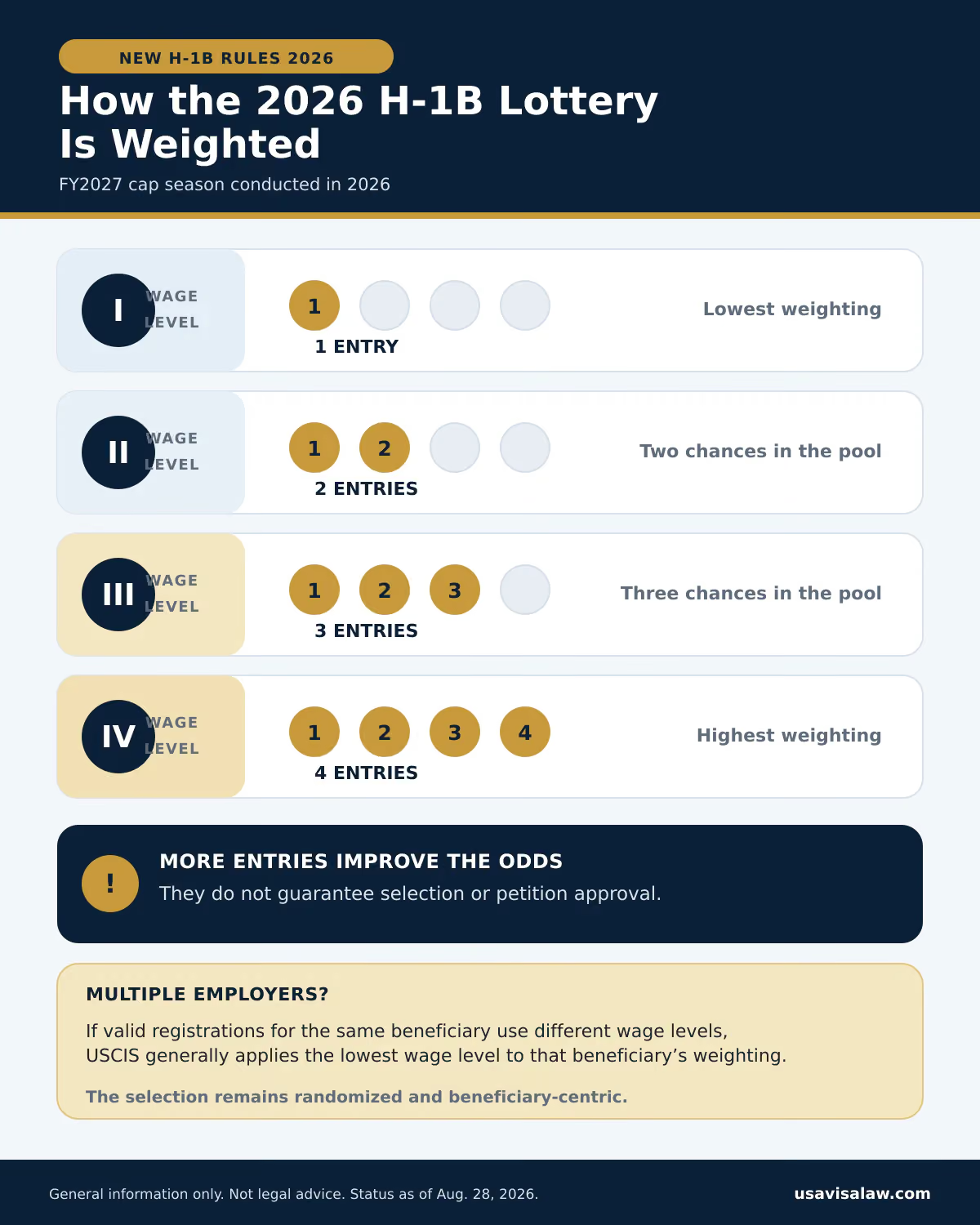
No. A higher wage level improves the beneficiary’s weighting in the selection pool, but it does not guarantee selection.
A Wage Level IV beneficiary receives four entries compared with one entry for Wage Level I, but USCIS still conducts a randomized selection among the weighted pool when demand exceeds the available H-1B numbers.
There is also a second distinction that matters: selection is not approval.
Being selected means the employer is permitted to file the cap-subject H-1B petition for that beneficiary. USCIS must still adjudicate the Form I-129 and determine whether the petition satisfies the requirements for H-1B classification, including specialty-occupation eligibility, the beneficiary’s qualifications, and the underlying employment arrangement.
Employers should therefore avoid raising a proposed wage simply to obtain a higher selection weight unless that wage and the surrounding petition facts are genuine and supportable.
The selection process remains beneficiary-centric.
USCIS groups registrations submitted for the same unique beneficiary together. Filing more registrations for that person does not independently multiply the beneficiary’s chances of being counted toward the cap.
The new rule adds an important consequence when those registrations contain different wage levels: USCIS uses the lowest wage level among the registrations submitted for that beneficiary to determine the beneficiary’s weighting.
For example, if:
the beneficiary is treated as Wage Level I for purposes of the weighted selection.
DHS adopted this approach to reduce incentives for registrations with artificially high wage levels designed primarily to increase selection odds.
That makes coordination and accuracy more important in 2026. A beneficiary with multiple legitimate job offers should understand that another employer’s lower-wage registration can affect the weighting applied across the beneficiary’s registrations.
The new system therefore changes the probability of selection, not the underlying legal standards for H-1B approval. Once a beneficiary is selected, the focus shifts from lottery weighting to whether the employer can file a complete, legally supportable H-1B petition, and what government fees apply to that filing.
There is no single H-1B filing fee in 2026. The amount an employer pays depends on the type of petition, employer size, whether statutory fees apply, and whether premium processing is requested.
USCIS’s current fee schedule lists the standard Form I-129 H-1B filing fee at $780 for a regular employer filing by paper or $730 when eligible to file online. Qualifying small employers and nonprofits generally pay $460. Additional H-1B fees may then apply depending on the filing.
The $2,965 premium-processing fee has applied to H-1B Form I-129 requests since March 1, 2026, following DHS’s inflation adjustment.
Employers wanting a complete cost breakdown can also review AVLG’s H-1B Visa Cost 2026 guide rather than treating any one number in the table above as the total cost of sponsorship.
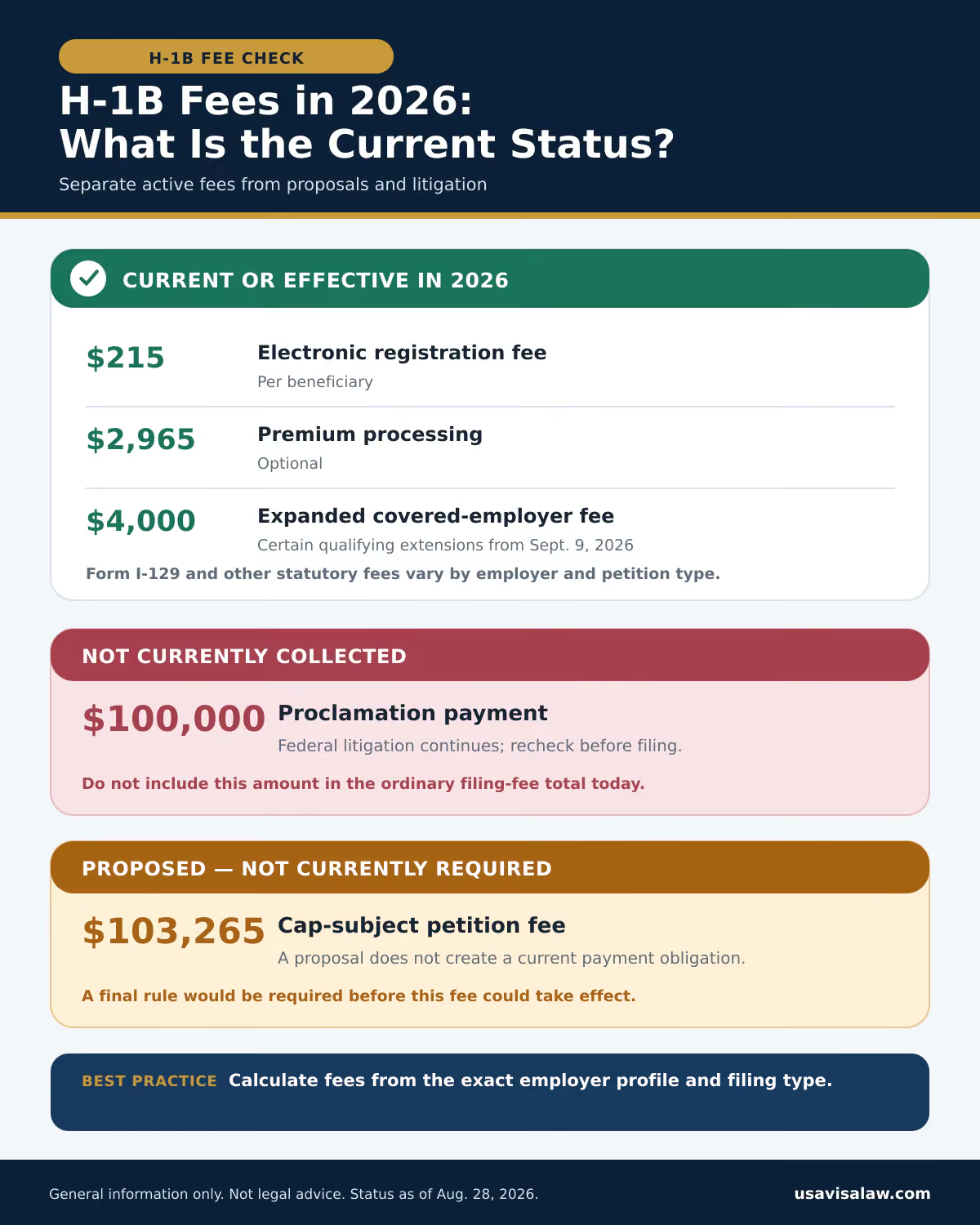
As of August 28, 2026, the $100,000 payment created under the September 2025 H-1B proclamation is not currently being collected.
A federal district court vacated the agency guidance implementing that payment on June 8, 2026. The government appealed, and DHS stated in its August 2026 rule making that the appeal remained pending. DHS also noted that if the court order is later lifted, collection could resume consistent with the proclamation and any extension or renewal of it.
That means employers should not treat the $100,000 amount as part of the ordinary USCIS H-1B filing-fee calculation today, but they also should not assume the issue is permanently resolved.
Because the litigation is ongoing, this part of the article should be rechecked immediately before publication and whenever the court posture changes.
A separate development in August 2026 has created additional confusion.
DHS has proposed an additional $103,265 fee for each cap-subject H-1B petition, including petitions associated with the U.S. advanced-degree exemption. DHS estimates that applying the proposed fee to approximately 85,000 annual cap-subject petitions could generate about $8.8 billion annually.
The critical distinction is:
The $103,265 fee is proposed. It is not currently an H-1B filing fee.
A Notice of Proposed Rule making begins the regulatory process; it does not by itself create a final payment obligation. DHS would need to complete the rule making process before employers would be required to pay a final fee adopted under that proposal.
Employers should therefore avoid budgeting or advising employees as though the $103,265 figure is already mandatory.
A different fee change is final, but it affects only certain employers.
Beginning September 9, 2026, DHS’s new rule expands the $4,000 9-11 Response and Biometric Entry-Exit Fee to all H-1B extension-of-status petitions filed by covered employers, including extensions that do not involve a change of employer.
A covered employer generally must:
The rule does not impose an additional $4,000 fee on every company filing an H-1B extension. The employer must first meet the statutory workforce test. The fee is currently scheduled to apply to qualifying petitions through September 30, 2027, unless Congress changes or extends the underlying authority.
For 2026 filings, the practical lesson is to identify the petition type and employer profile before calculating the fee. Registration, a new cap petition, change of employer, extension, and amendment can produce very different totals—and headlines about six-figure fees should not be substituted for the government’s actual fee schedule.
Not every H-1B rule governing 2026 petitions first took effect in 2026. Several important standards come from the H-1B modernization final rule, which became effective on January 17, 2025 and continues to shape how USCIS reviews petitions today. USCIS describes that rule as clarifying specialty-occupation requirements, strengthening program integrity, and formalizing several existing adjudication practices.
For employers, the practical effect is that the petition should clearly connect the actual job duties, qualifying degree fields, offered position, work location, and supporting evidence.
An H-1B specialty occupation generally must require the theoretical and practical application of highly specialized knowledge and at least a bachelor's degree or its equivalent in a specific specialty directly related to the position.
The modernization rule clarified that “directly related” means there must be a logical connection between the required degree field and the duties of the position. USCIS also clarified that a generalized degree requirement is not enough merely because the employer prefers college graduates.
That does not mean every H-1B job must accept only one narrowly defined major.
A position may legitimately accept more than one degree field when each field has a direct relationship to the work being performed. For example, the analysis should focus on whether each qualifying field provides the specialized knowledge necessary for the actual duties—not simply whether several degrees appear in the employer's job posting.
This makes the job description especially important. A title such as “analyst,” “manager,” or “consultant” does not establish specialty-occupation eligibility by itself. USCIS examines the duties and the nature of the employer's operations to determine whether the position actually requires specialized academic knowledge.
USCIS also requires the petitioner to demonstrate that there is a bona fide job offer for a bona fide specialty-occupation position when the petition is filed.
The supporting record should therefore make the proposed employment concrete rather than speculative.
Depending on the case, USCIS may examine matters such as:
The modernization rule specifically codified requirements involving bona fide specialty-occupation employment and LCA consistency.
For employers using third-party worksites or project-based arrangements, this can make the factual presentation particularly important. The petition should establish what the beneficiary will actually do, not rely solely on a generic occupational title.
The modernization rules also clarified that ownership of the petitioning company does not automatically disqualify an H-1B beneficiary.
A founder or entrepreneur who owns a controlling interest in the petitioning business may potentially qualify when the underlying H-1B requirements are satisfied. The beneficiary must still perform specialty-occupation duties for the majority of the time, although the rule recognizes that a beneficiary-owner may perform certain business-management activities related to owning and directing the company.
This can create opportunities for founders, but it does not eliminate the normal H-1B analysis. USCIS may still examine:
The broader lesson for 2026 is that H-1B eligibility depends increasingly on consistency across the entire filing. The degree requirement, job duties, wage, worksite, LCA, employer operations, and supporting evidence should tell the same factual story.
That becomes especially important when an H-1B worker changes employers, because the new employer must establish its own qualifying petition rather than simply taking over the prior employer's approval.
Yes. H-1B workers can still change employers in 2026, and the new wage-weighted cap selection system did not eliminate H-1B portability.
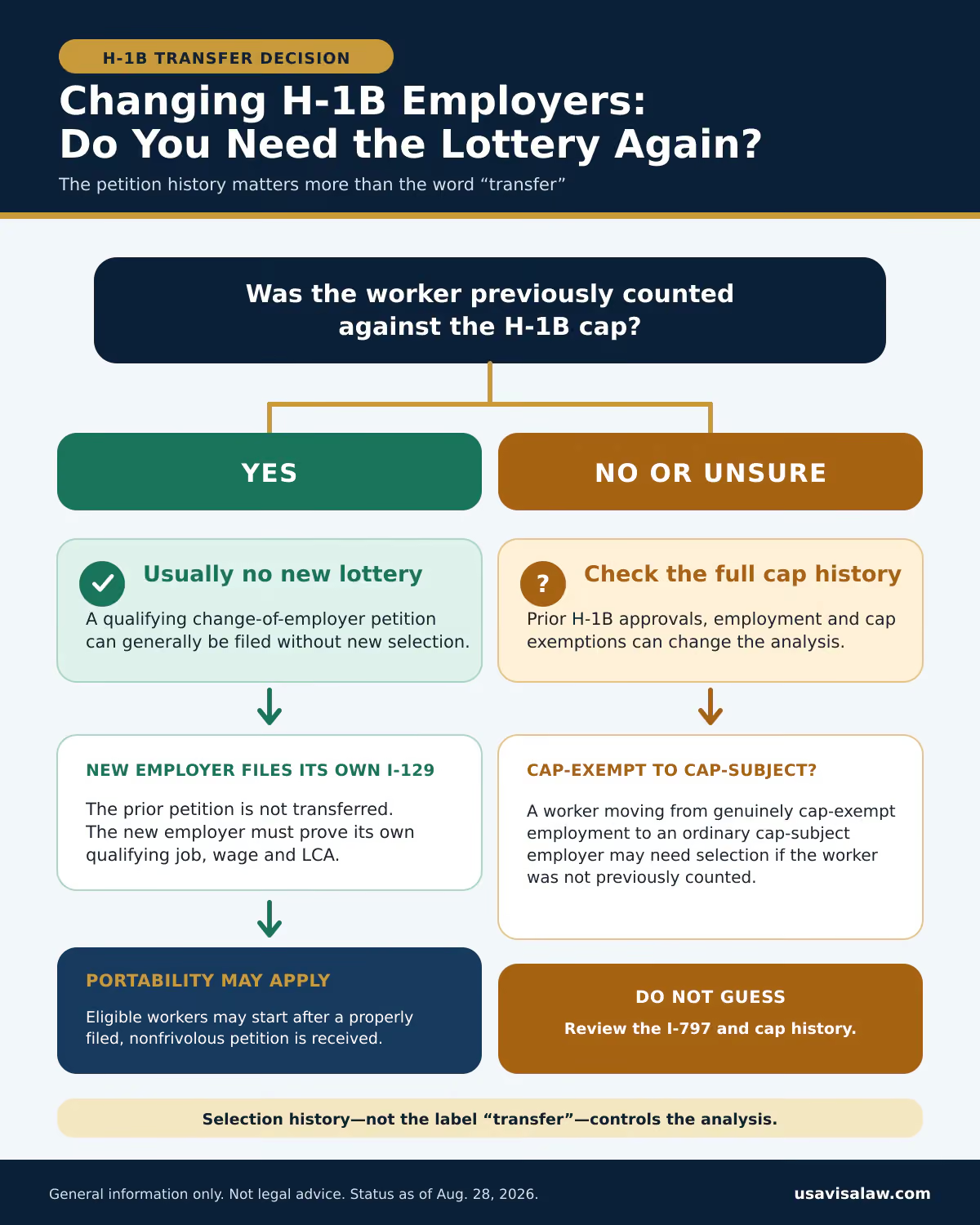
What is commonly called an “H-1B transfer” is not technically a transfer of the prior employer’s petition. The new employer generally obtains a certified Labor Condition Application and files its own Form I-129 requesting H-1B employment for the worker.
The critical questions are whether the worker qualifies for portability, has maintained the required immigration status, and whether the new employer’s petition independently satisfies H-1B requirements.
Under the H-1B portability provisions, certain eligible workers may begin working for a new H-1B employer after the new employer properly files a nonfrivolous H-1B petition with USCIS, rather than waiting for the petition to be approved.
USCIS identifies several important requirements. Among them, the worker must have been lawfully admitted to the United States, the new petition must be properly and timely filed before the end of the authorized stay, and the worker generally must not have engaged in unauthorized employment after admission and before the new filing.
Portability should therefore not be treated as an automatic right to start any new job simply because Form I-129 was submitted.
Timing can become especially complicated when the employee has an approved H-1B petition but has not yet begun working for the original employer. AVLG addresses that narrower issue in its dedicated guide, H-1B Transfer Before Employment Start, because the analysis may depend on prior H-1B history, whether H-1B status actually began, and how the new petition is structured.
Usually not if the worker has already been counted against the H-1B cap and remains eligible for cap-exempt subsequent H-1B employment.
A worker does not ordinarily enter another cap selection simply because a different employer files a change-of-employer petition. USCIS has long recognized that many petitions involving workers previously counted against the cap—including qualifying new employment and extensions, do not use a new cap number.
But there are important exceptions.
For example, a person moving from employment that was genuinely cap-exempt to an ordinary cap-subject employer may need cap selection if the worker has not previously been counted against the applicable H-1B cap.
The petition history matters more than the label “transfer.”
Yes. A new employer filing its own H-1B petition must calculate the government fees that apply to that filing.
USCIS requires the $500 Fraud Prevention and Detection Fee when an employer seeks to employ an H-1B worker who is currently working for another petitioner. Other filing fees—including the Form I-129 fee, ACWIA fee, Asylum Program Fee, and potentially the $4,000 fee for certain covered employers—depend on the petitioner and filing circumstances.
The new employer should therefore calculate the case as a new petition filing rather than assuming the prior employer’s fees carry over.
Most importantly, changing employers does not lower the substantive H-1B standard. The new petitioner must still establish a qualifying specialty-occupation position, a compliant wage and LCA, and the beneficiary’s qualifications.
For workers already in H-1B status, the 2026 changes therefore affect how some new cap cases are selected and how certain filings are priced, but they do not eliminate the long-standing ability of eligible H-1B professionals to move between employers.
The 2026 H-1B changes do not mean every extension, promotion, remote-work arrangement, or worksite change requires a new lottery or entirely new immigration strategy. What matters is whether the filing involves a routine extension or a material change to the terms of the approved H-1B employment.
An H-1B worker who has already been counted against the cap generally does not enter the H-1B lottery again simply because an employer files a qualifying extension.
For extensions involving the same petitioner and substantially the same underlying facts, USCIS's modernization rule also codified its deference policy. In general, adjudicators should give weight to a prior USCIS eligibility determination involving the same parties and material facts unless there was a material error, a material change in circumstances or eligibility, or new information that adversely affects eligibility. DHS explains the policy in its H-1B modernization compliance guidance.
Deference does not make an extension automatic. Employers requesting an extension or amendment of stay must still provide evidence that the beneficiary maintained the required immigration status and continues to qualify for H-1B classification.
There is also a new fee consideration. Beginning September 9, 2026, certain covered employers must pay the additional $4,000 9-11 Response and Biometric Entry-Exit Fee on H-1B extension-of-status petitions, including extensions that do not involve a change of employer. As discussed earlier, this applies only to employers meeting the statutory workforce test—not to every H-1B extension.
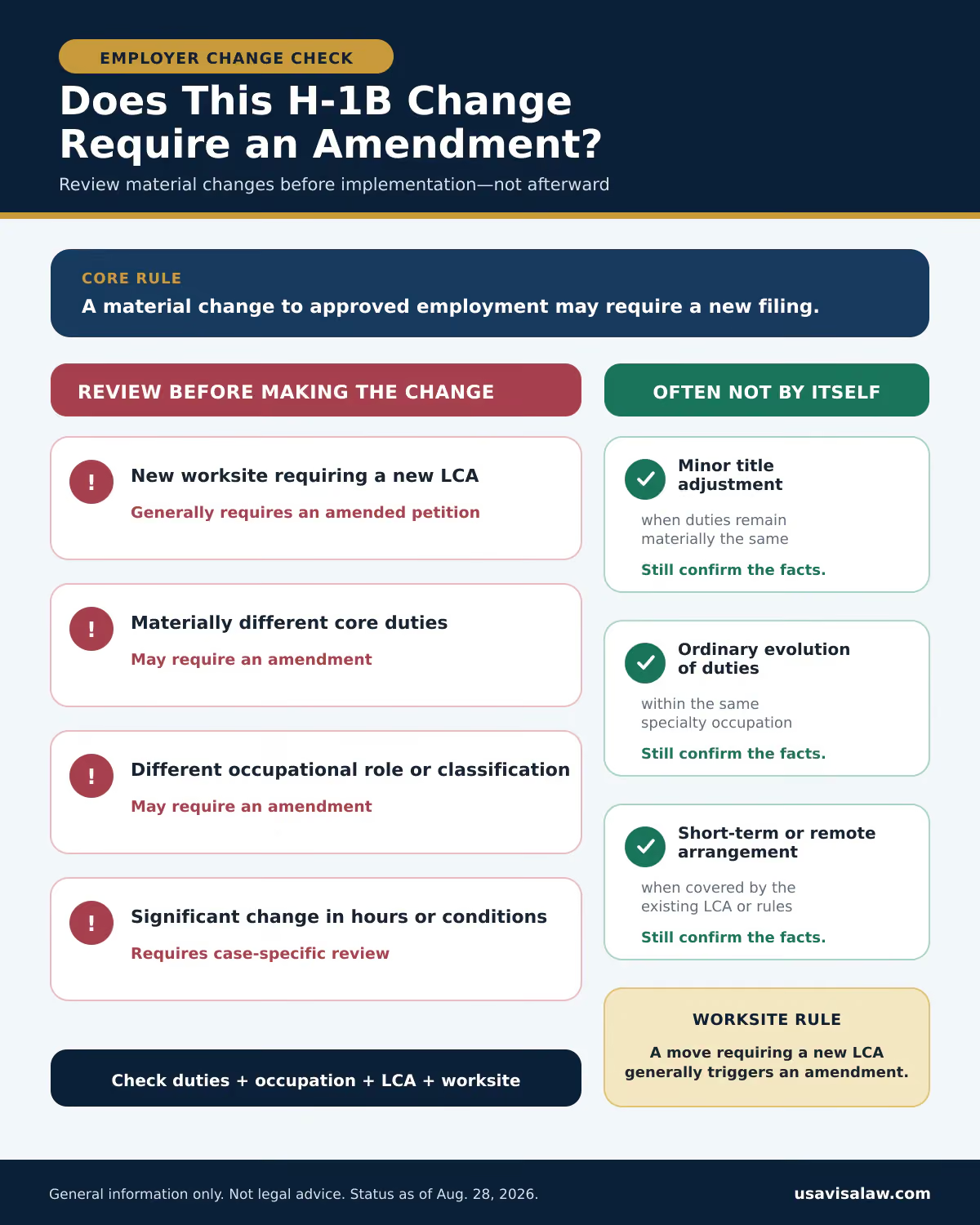
An employer may need to file an amended H-1B petition when there is a material change in the terms and conditions of employment compared with the petition USCIS previously approved.
Possible triggers can include:
Not every workplace adjustment is material. A minor title change, ordinary evolution of duties within the same specialty occupation, or another change that does not materially alter the approved employment may not require an amended petition.
AVLG's dedicated guide on when an H-1B amendment may be required after job duties change examines that issue in greater detail.
Worksite changes deserve particular attention because the H-1B petition is connected to the Labor Condition Application and its geographic area of intended employment.
Under Matter of Simeio Solutions, a move to a new worksite that requires a new LCA generally constitutes a material change requiring the employer to file an amended H-1B petition. USCIS continues to recognize that rule in its H-1B amendment guidance.
That does not mean every remote-work day, temporary assignment, or location change automatically requires an amendment. Whether a new filing is necessary can depend on the geographic area covered by the existing LCA, the duration and nature of the placement, and whether Department of Labor rules provide another permissible option.
The practical rule for employers is to review job duties and work location before implementing a significant change, not after the employee has already begun working under materially different conditions.
The 2026 changes make pre-filing planning more important for H-1B employers. Wage level, job duties, work location, occupational classification, petition type, and employer profile can now affect different parts of the process—from cap selection through final USCIS adjudication.
Employers should therefore resolve these issues before submitting a registration or petition, rather than trying to reconcile inconsistencies after a beneficiary has been selected.
Under the new weighted selection system, wage-level analysis can directly affect how a cap-subject beneficiary is weighted in the selection pool.
Before registration, employers should confirm:
The registration, Labor Condition Application, and eventual Form I-129 petition should tell a consistent factual story.
Employers should not artificially increase a wage level or use an occupational classification simply to obtain more favorable lottery weighting. If USCIS later reviews a petition that does not support the facts represented during registration, the selection itself does not cure the underlying problem.
Before calculating fees or preparing evidence, identify whether the case is:
This matters because government fees, cap requirements, portability rules, and supporting evidence can differ substantially between filing types.
Employers should also determine whether they fall within special statutory categories, including H-1B-dependent employers or employers subject to the additional $4,000 fee rules discussed earlier.
An approved H-1B petition does not end the employer's immigration obligations.
The Department of Labor requires H-1B employers to pay at least the required wage—generally the higher of the applicable actual or prevailing wage—and comply with the working conditions and notice representations made in the Labor Condition Application. Employers must also maintain required public-access documentation.
The public access file generally includes records such as:
Employers should also monitor changes that occur after approval. A new worksite, materially different job duties, reduced hours, changes in compensation, or another significant employment change can raise LCA or amended-petition questions.
AVLG’s H-1B Project Firewall: 2026 Employer Compliance Guide provides a deeper discussion of employer-side wage, LCA, public-access-file, worksite, and enforcement considerations.
The practical lesson is simple: H-1B compliance should be managed as an ongoing employment process, not as a one-time USCIS filing. In 2026, employers are better positioned when HR, immigration counsel, payroll, and business managers identify material changes early—before they create inconsistencies between the approved petition and the employee’s actual work.
The 2026 changes create several opportunities for employers to misread how the H-1B program now works. Some of the biggest risks come from confusing cap selection rules with petition eligibility, or treating proposed and litigated fee changes as current law.
Common mistakes include:
The safest approach is to identify what type of H-1B filing is actually being made before applying a lottery rule, government fee, portability provision, or amendment requirement. A cap registration, new petition, transfer, extension, and amendment may all involve different rules.
Not every H-1B filing requires unusual legal strategy. Many straightforward extensions, employer changes, and cap-selected petitions can proceed through the normal process when the facts clearly satisfy the requirements.
A closer review becomes more valuable when the case involves wage classification, changing employment terms, multiple employers, unusual ownership arrangements, or another issue that could affect eligibility under the 2026 rules.
Consider reviewing the case before filing if:
These issues often involve more than filling out Form I-129 correctly. The registration, Labor Condition Application, petition, wage evidence, job description, and employment history should remain consistent with one another.
The most useful review looks at the complete filing history, particularly when the worker has changed employers or previously held H-1B status.
When available, gather:
This record can help determine whether a new lottery is required, which fees apply, whether portability may permit an earlier employment start, whether an amendment is necessary, and whether the proposed position continues to qualify as a specialty occupation.
Readers comparing the cost of representation can review AVLG’s published immigration attorney fees for additional information about professional legal costs.
If you are preparing an H-1B registration, cap petition, employer change, extension, amendment, or response to a USCIS challenge, you can speak with an H-1B immigration attorney at American Visa Law Group to review how the current rules apply to the specific filing.
The objective is not to make every H-1B case more complicated than necessary. It is to identify material issues before filing, when they are usually easier to address than after USCIS raises them.
The new H-1B rules in 2026 materially affect cap selection, filing costs, and employer planning. The FY2027 cap uses a wage-weighted selection system, giving Wage Levels I through IV progressively greater weighting while retaining beneficiary-centric selection. A higher wage level improves selection probability but does not guarantee selection or petition approval.
Employers should also distinguish current fees from developing policies. The $100,000 proclamation payment is not currently being collected following federal court action, while DHS’s separate $103,265 cap-subject H-1B fee remains a proposed rule, not a current filing requirement.
Existing modernization rules continue to govern specialty occupations, extensions, amendments, beneficiary-owners, and employer changes. Eligible H-1B workers may still use portability when changing employers, while employers should review wages, worksites, job duties, filing type, and applicable fees before submitting a petition.
The biggest 2026 changes include a wage-weighted H-1B cap selection system, evolving government fee rules, and continued application of the H-1B modernization regulations governing specialty occupations, beneficiary-owners, extensions, amendments, and employer changes. Employers should distinguish rules already in effect from proposed fees and policies still affected by litigation.
Yes. For the FY2027 H-1B cap season, DHS implemented a weighted selection system based generally on the applicable OEWS wage level. Wage Level I receives one entry in the selection pool, Level II receives two, Level III receives three, and Level IV receives four. The selection itself remains randomized.
No. Wage Level IV receives greater weighting, but selection is not guaranteed. The new rule increases the number of selection entries associated with higher qualifying wage levels; it does not reserve H-1B numbers for those beneficiaries. Selection also does not guarantee USCIS approval of the later Form I-129 petition.
Yes, when each registration is based on a legitimate job opportunity. However, the selection system remains beneficiary-centric, so multiple registrations do not independently multiply the number of times the person is counted toward the cap. If registrations for the same beneficiary involve different wage levels, DHS generally uses the lowest applicable wage level to determine that beneficiary's selection weighting.
As of August 28, 2026, USCIS is not collecting the $100,000 proclamation payment. A federal court vacated the implementation guidance, and the First Circuit later declined to stay that ruling while the government's appeal continues. USCIS acknowledged the court order and agreed not to collect the fee while it remains in effect.
Because the litigation is ongoing, employers should confirm the current position before filing a case potentially affected by the proclamation.
No. DHS published a proposal in August 2026 that would impose an additional $103,265 fee on cap-subject H-1B petitions, including cases under the U.S. advanced-degree exemption. It is currently a proposed rule, not an existing filing requirement.
Employers should not include that amount in current USCIS filing fees unless DHS later issues and implements a final rule.
Often, yes. A worker who has already been counted against the H-1B cap generally does not need another lottery merely because a new employer files a qualifying change-of-employer petition. Eligible workers may also be able to begin employment under H-1B portability after the new employer properly files the petition.
Different rules can apply when moving from genuinely cap-exempt employment to a cap-subject employer or when the worker's prior H-1B history is unusual.
An amended petition may be required when there is a material change in the approved H-1B employment, such as significantly different job duties or a worksite move requiring a new Labor Condition Application.
Not every promotion, remote-work arrangement, or temporary location change automatically requires an amendment. Employers facing a significant employment change can review AVLG's guide on when an H-1B amendment may be required.
For readers who want to review the rules and government guidance behind the new H-1B rules in 2026, the following official resources provide additional detail on cap selection, specialty occupations, filing procedures, employer obligations, and recent regulatory changes.
Readers looking for practical guidance on specific H-1B filing issues may also find these AVLG resources useful:

Hasan Abdullah, Esq. is the Founder and Managing Attorney of American Visa Law Group. His practice focuses on U.S. immigration law, including family-based immigration, employment-based immigration, adjustment of status, consular processing, waivers, PERM labor certification, NIW, EB-1, H-1B, O-1, and complex immigration strategy.
Through American Visa Law Group, Mr. Abdullah helps individuals, families, professionals, investors, and employers understand their immigration options and plan around changing government policies, USCIS procedures, and Visa Bulletin movement. His work emphasizes practical legal analysis, realistic expectations, and strategy tailored to each applicant’s immigration history and long-term goals.


