Divorce is hard enough on its own — but if you’re still on a 2-year conditional green card, it can feel like your entire future in the U.S. is at risk. Many immigrants wonder: What happens if I divorce before getting my 10-year green card? Will I lose my status? Will I be deported?
The good news is that divorce does not automatically cancel your green card. In fact, U.S. immigration law allows you to apply for a waiver and still remove conditions on your residence, as long as you can prove that your marriage was entered into in good faith.
In this 2025 guide, we’ll explain exactly what happens if you divorce before getting your 10-year green card, how to file Form I-751 with a waiver, the red flags USCIS looks for, and what options you have if things don’t go as planned. By the end, you’ll have a clear roadmap of how to protect your status — even after divorce.
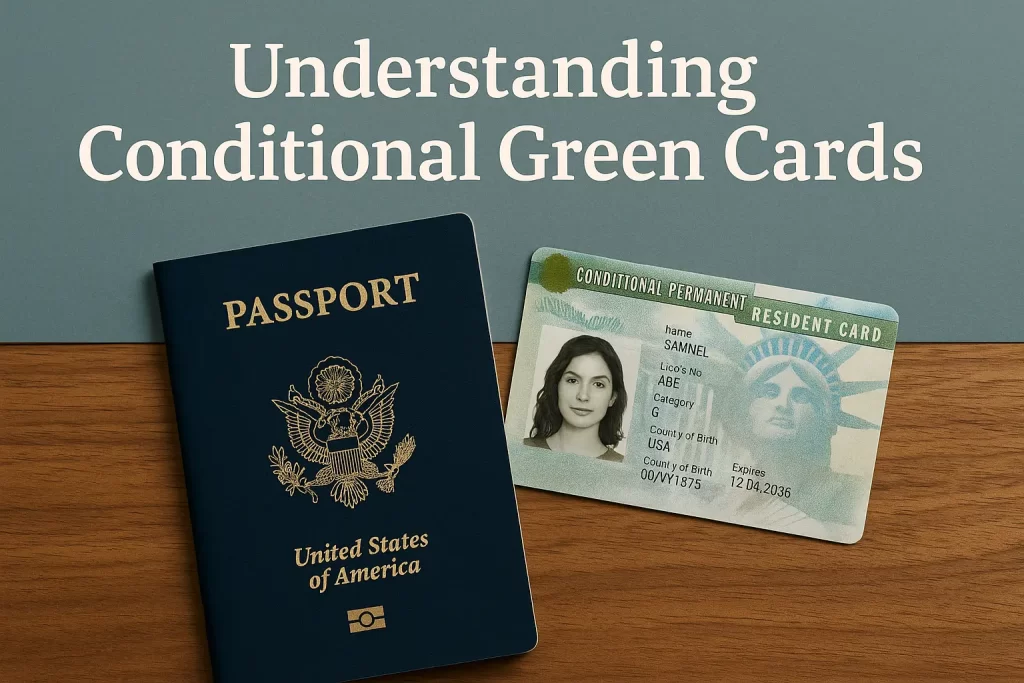
✅ Understanding Conditional Green Cards

When you first get a green card through marriage, it’s often conditional — meaning it’s only valid for 2 years instead of the standard 10. Why? Because USCIS wants to make sure your marriage is genuine and not just for immigration purposes.
Here’s how it works:
- Who gets a conditional green card?
If you’ve been married for less than 2 years at the time your green card is approved, you’ll receive a 2-year conditional card. - Why it’s conditional
The idea is that in those 2 years, couples can prove they are building a real life together — sharing a home, finances, and daily routines. - Next step after 2 years
To move from a conditional green card to a 10-year permanent green card, you must file Form I-751, Petition to Remove Conditions on Residence. Normally, this is filed jointly with your spouse. - What USCIS checks
Officers look for proof that your marriage is ongoing and authentic. This can include joint bank accounts, leases, bills, photos, and even affidavits from family or friends who know your relationship.
💡 Pro tip: Think of the 2-year green card as a “trial period” in the eyes of immigration. As long as the marriage is real, the transition to the 10-year card is usually smooth.
👉 But if divorce happens before the 10-year green card, things get more complicated — and that’s exactly what we’ll cover next.
💔 What Happens if You Divorce Before Getting a 10-Year Green Card?

Divorcing before you receive your 10-year green card can feel like the ground is shifting beneath you. Many people worry that divorce means automatic deportation — but that’s not true. Here’s what really happens in 2025:
- Your green card doesn’t vanish overnight
A divorce does not immediately cancel your conditional resident status. You’re still legally a conditional permanent resident until USCIS makes a decision on your case. - You can no longer file jointly
Normally, you and your spouse file Form I-751 together to remove conditions. After divorce, you must apply for a waiver of the joint filing requirement and file the petition on your own. - The key factor: bona fide marriage
USCIS will want proof that your marriage was entered in good faith, even if it didn’t last. That means documents like joint leases, financial records, photos, and affidavits are critical. - Possible outcomes
- ✅ If approved → You’ll get your 10-year green card and continue on the path to U.S. citizenship.
- ❌ If denied → You could face removal proceedings, but you may still have other legal options (appeals, new petitions, or different immigration categories).
- Myth buster
Divorce alone is not grounds for automatic denial. The real question is whether your marriage was real at the start.
💡 Pro tip: Don’t panic if your marriage didn’t last. USCIS knows relationships can end. What matters is whether your marriage was genuine when it began.
👉 Next, let’s go deeper into how you can file Form I-751 with a divorce waiver and what evidence makes the difference.
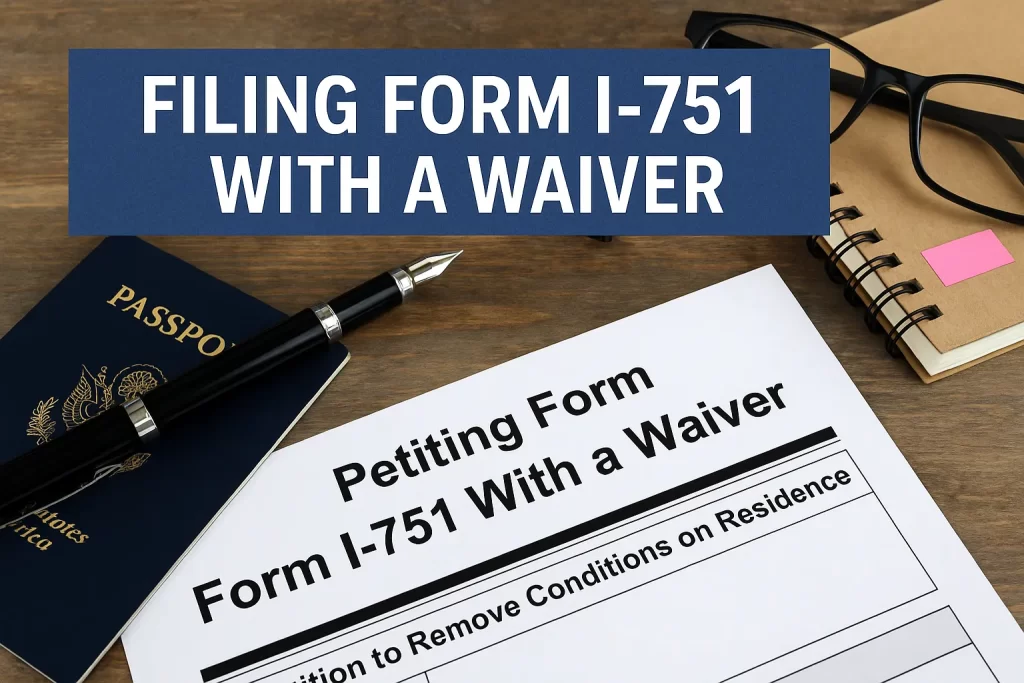
📄 Filing Form I-751 With a Waiver

When you divorce before the 10-year green card, you can’t file jointly with your spouse. Instead, you file Form I-751 with a waiver that allows you to apply on your own. In 2025, this is the most common path forward after divorce.
📝 Types of Waivers Available
- Divorce waiver → For marriages that ended in divorce but were entered in good faith.
- Abuse waiver → For marriages that involved battery or extreme cruelty.
- Extreme hardship waiver → If being removed from the U.S. would cause you extreme hardship.
You only need to qualify for one category to file, though some applicants qualify for more than one.
📑 Evidence You’ll Need
To prove your marriage was real, include as much evidence as possible, such as:
- Joint leases or mortgage documents 🏠
- Shared bank accounts, insurance policies, or tax returns
- Photos together over the years
- Travel itineraries, receipts, and messages
- Affidavits from friends, family, or community members confirming your relationship
⏳ Timeline and Processing
- You can file any time after your divorce is final, even if it’s before the usual 90-day filing window.
- Processing can take 12–24 months in 2025, depending on backlogs.
- While your petition is pending, your green card status is automatically extended.
💡 Pro tip: The more evidence you submit, the stronger your case. Even if you don’t have many financial documents, personal affidavits and photos can help prove your marriage was genuine.
👉 But be aware: after divorce, USCIS pays closer attention. Next, we’ll go over the red flags they look for and how to avoid trouble.
⚠️ Red Flags USCIS Looks For After Divorce
When you apply for a 10-year green card with a divorce waiver, USCIS will scrutinize your case more closely. Their job is to make sure your marriage was real when it began — not just for immigration benefits. 🚨
Here are the most common red flags in 2025:
* Short marriages → If your marriage lasted only a few months before divorce, officers may question whether it was entered in good faith.
* Little or no shared evidence → Lack of joint leases, finances, or photos together can make it harder to prove authenticity.
* Inconsistent answers → If your story doesn’t match past forms or interviews, it raises suspicion.
* History of immigration issues → Past visa overstays, denials, or petitions for multiple spouses may trigger extra scrutiny.
* Quick remarriage → Marrying someone else soon after divorce can look suspicious unless there’s a clear explanation.
* Family or community doubt → If affidavits from friends or family don’t support your relationship, it weakens your case.
💡 Pro tip: A red flag doesn’t mean denial — it just means USCIS will dig deeper. Be ready with clear, honest explanations and as much supporting evidence as possible.

🛡️ How to Strengthen Your Case After Divorce

If you’re applying for a 10-year green card after divorce, the burden is on you to prove your marriage was real. The good news? With the right preparation, many people succeed. Here’s how to build a rock-solid case in 2025:
📑 Gather Strong Evidence
- Joint housing documents → Lease agreements, mortgage papers, utility bills showing both names.
- Financial ties → Joint bank accounts, tax returns, insurance policies, or shared credit cards.
- Photos and travel records → Pictures from holidays, family events, and trips together. 📸
- Personal communication → Call logs, text messages, emails, or chat histories.
- Affidavits → Letters from friends, family, neighbors, or colleagues confirming your relationship.
🗣️ Be Ready to Tell Your Story
- USCIS may ask about your marriage history in detail.
- Stay calm, consistent, and honest. Don’t be afraid to share why the marriage ended — divorce itself is not a crime in immigration law.
🧾 Prepare for an Interview (If Scheduled)
- Not all waiver cases require interviews, but many do.
- Practice explaining your relationship timeline and why it was genuine.
- Bring organized copies of all evidence to the interview.
👩⚖️ Consider Legal Support
- A strong case can be built on your own, but an experienced immigration attorney can help organize evidence and anticipate USCIS concerns.
💡 Pro tip: Focus on quality, not just quantity. A few strong, clear documents that show daily life together can be more persuasive than hundreds of weak papers.
👉 But what if USCIS still denies your case? Next, we’ll cover your alternative options if the waiver is denied.

🌎 Alternative Options if the Waiver Is Denied

A denial isn’t the end of the road — though it can feel overwhelming, you still have options to stay in the U.S. and protect your future. Here’s what you need to know in 2025:
🔄 File an Appeal or Motion
- You can request the case be reopened or reconsidered if you believe USCIS made a mistake.
- This is done by filing Form I-290B, Notice of Appeal or Motion.
👨⚖️ Present Your Case in Immigration Court
- Many denials are referred to immigration court.
- There, you’ll have a chance to present your evidence directly to a judge, who can approve your waiver even if USCIS did not.
💍 New Marriage-Based Petition
- If you remarry a U.S. citizen or lawful permanent resident, your new spouse can file a fresh I-130 petition for you.
- However, USCIS will carefully review your history, so transparency is key.
🛠️ Explore Other Immigration Options
- Employment-based visas, asylum, or other family-based petitions may be available depending on your circumstances.
- Each case is unique, so legal advice is essential here.
💡 Pro tip: Never ignore a denial. The sooner you act, the more options you’ll have to fight for your status.
👉 Finally, let’s wrap this article up with a clear conclusion and encouragement for readers facing this situation.
✨ Conclusion
Divorcing before getting a 10-year green card can feel like your American dream is slipping away. But remember — a divorce does not automatically end your immigration journey. What USCIS truly cares about is whether your marriage began in good faith.
By filing Form I-751 with a waiver, gathering strong evidence, and telling your authentic story, many people successfully secure their 10-year green card even after divorce. And if challenges arise, options like appeals, immigration court, or even new petitions can keep your path forward alive.
💡 The key takeaway: honesty, preparation, and persistence are your best allies. You are not alone in this process, and with the right strategy, you can overcome the hurdles of divorce and continue building your life in the United States.
🔗 Further Reading & Resources
- USCIS: Remove Conditions on a Green Card – Official USCIS page on Form I-751 requirements.
- USCIS Policy Manual – Marriage-Based Cases – Details on good faith marriage and waiver options.
- AILA (American Immigration Lawyers Association) – Professional legal resources and updates.
- U.S. Department of Justice – Immigration Court Information – Guidance on presenting your case if referred to court.
- VisaJourney Community Forums – Real experiences and sample evidence from others who went through divorce and conditional green card issues.
💡 Pro tip: Bookmark these resources so you can double-check requirements and compare experiences while preparing your case.