Author: Hasan Abdullah, Esq.
Updated on the 18th of August 2026
Your green card priority date generally establishes your place in line for an immigrant visa in a numerically limited family- or employment-based category. The Department of State Visa Bulletin shows which priority dates may move forward each month, but understanding it requires more than finding a date that resembles the one on your immigration notice.
To determine whether your priority date is current, you must identify the correct preference category, country of chargeability and Visa Bulletin chart. You then compare your priority date with the published cut-off date. Adjustment-of-status applicants must also check the monthly USCIS adjustment-of-status filing charts to confirm whether USCIS permits use of the Dates for Filing chart or requires the Final Action Dates chart.
A current priority date does not mean that a green card will be approved immediately. It may mean that an applicant can take a particular step, such as filing Form I-485 or becoming eligible for final action, depending on the chart and processing method. The underlying petition, documentation, admissibility anad all other eligibility requirements still matter.
This guide explains where to find your priority date, how to read the Visa Bulletin step by step, the difference between Dates for Filing and Final Action Dates, what happens when a date becomes current and how visa retrogression may affect the process.
A green card priority date is the date that generally establishes an applicant’s place in line for an immigrant visa. It becomes especially important in family- and employment-based preference categories where annual visa limits can create waiting periods.
The priority date is not an estimate of when the green card will be approved. Instead, it is compared with the cut-off dates published in the monthly Visa Bulletin to determine when the applicant may be able to move forward.
A priority date represents the applicant’s position in the immigrant visa queue. Applicants with earlier priority dates generally move ahead of applicants in the same preference category and country grouping who have later dates.
However, a priority date has meaning only when viewed with the correct:
This is why two applicants with the same priority date may not become eligible to proceed at the same time. They may belong to different preference categories or be chargeable to countries with different levels of visa demand.
The USCIS guidance on visa availability and priority dates explains how priority dates and the Visa Bulletin work together.
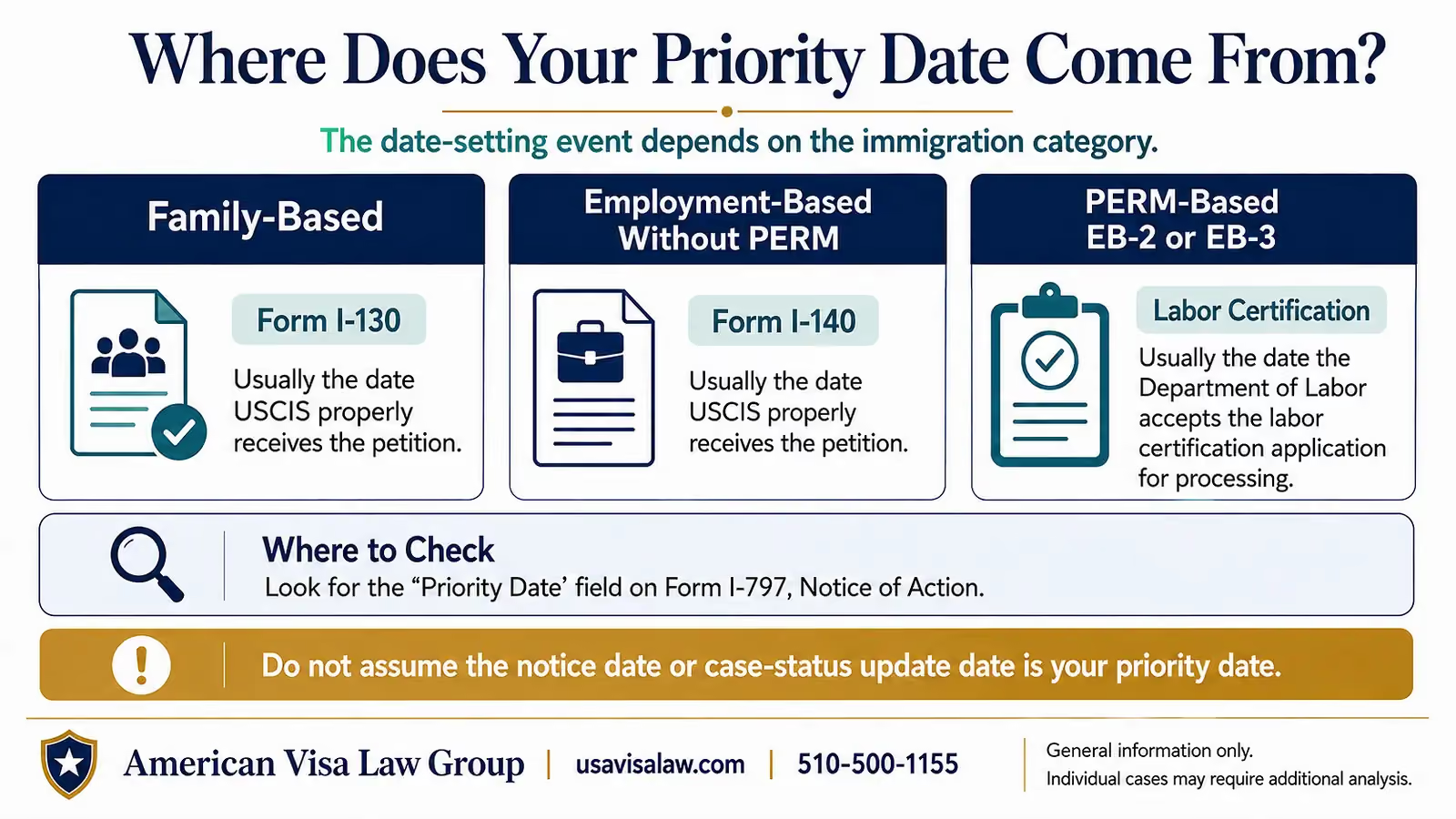
The event that establishes the priority date depends on the immigration category.
For many family-based cases, the priority date is generally the date USCIS properly receives Form I-130, Petition for Alien Relative.
For an employment-based case that does not require labor certification, the priority date is generally the date USCIS properly receives Form I-140, Immigrant Petition for Alien Workers.
When an approved permanent labor certification is required, as it usually is in many EB-2 and EB-3 cases, the priority date is generally the date the Department of Labor accepted the labor certification application for processing. The filing date of the later I-140 does not normally replace that earlier labor-certification date.
Applicants can usually find the assigned priority date on the relevant USCIS receipt or approval notice. The date should still be checked carefully because cases involving multiple petitions, prior approvals or priority-date retention can require additional analysis.
Not every green card applicant faces a Visa Bulletin waiting period.
Family- and employment-based preference categories are subject to annual numerical limits. Applicants in these categories may have to wait until their priority date becomes current under the applicable Visa Bulletin chart.
Immediate relatives of U.S. citizens, including qualifying spouses, unmarried children under 21 and parents of adult U.S. citizens, are not subject to the same annual numerical limits. An immigrant visa is generally immediately available to an immediate relative, although the applicant must still meet every other green card requirement.
A category showing “C” in the Visa Bulletin is also considered current for that month. This means there is no published cut-off date for that category at that time, but it does not eliminate the other filing and approval requirements.
The practical question is therefore not simply, “What is my priority date?” It is, “How does my priority date compare with the correct Visa Bulletin category, country and chart this month?”
Your green card priority date is usually listed on an official immigration notice, but the correct document depends on how the case began. Before comparing any date with the Visa Bulletin, confirm that you are using the assigned priority date—not simply the notice date, filing date shown elsewhere or case-status update date.
For many family- and employment-based petitions, the priority date appears on Form I-797, Notice of Action. Look for a field labeled “Priority Date” on the receipt or approval notice for the underlying immigrant petition.
Common examples include:
Do not confuse the priority date with the receipt number, notice date or approval date. These fields serve different purposes. Applicants unfamiliar with their notices can review our Form I-797 guide for an explanation of the main notice types.
In many EB-2 and EB-3 cases, the employer must first complete the PERM labor-certification process. The priority date is generally the date the Department of Labor accepted the labor certification application for processing—not the date the PERM application was approved or the later date USCIS received Form I-140.
After the I-140 is filed, the corresponding priority date should appear on the USCIS receipt or approval notice. Compare it with the PERM filing information and notify USCIS if the notice appears to contain an error.
The USCIS priority-date guidance explains how the date is established in cases with and without labor certification.
A person may have multiple priority dates after being sponsored by different relatives or employers, changing green card categories or receiving approval of more than one immigrant petition.
An earlier date cannot always be transferred automatically to a new case. Employment-based priority-date retention may be available in certain circumstances, but the result can depend on the prior petition, its approval history and the reason it was later revoked, if applicable. Family-based and employment-based dates also follow different rules.
Do not simply select the oldest date appearing in your records. Review each petition separately and determine which priority date legally applies to the green card category currently being pursued.
The Visa Bulletin is a monthly publication from the U.S. Department of State that shows immigrant visa availability in numerically limited family- and employment-based categories. Applicants use it to compare their priority date with the published cut-off date for their category and country of chargeability.
The bulletin does not estimate when every case will be approved. It shows whether visa numbers may be available for filing or final action during a specific month.
U.S. immigration law limits how many immigrant visas may be issued annually in many preference categories. It also places limits on the number available to applicants chargeable to a particular country.
Because demand can exceed the available supply, the Department of State uses the Visa Bulletin to manage visa-number allocation. The published dates can move forward, remain unchanged or move backward based on demand and annual limits.
Applicants should always use the official Department of State Visa Bulletin for the relevant month rather than relying on an old screenshot or an unofficial prediction.
The bulletin separates cases into two principal groups:
Each group generally contains a Final Action Dates chart and a Dates for Filing chart. These charts serve different purposes, so applicants should not assume that eligibility under one means eligibility under the other.
Immediate relatives of U.S. citizens are not listed in the family-preference tables because immigrant visas are generally immediately available to them.
To locate the correct cut-off date, identify both the preference category and the applicable country column.
Country of chargeability is generally based on the applicant’s country of birth—not current residence, passport or citizenship. Limited exceptions, including possible cross-chargeability through a spouse or parent, may apply in appropriate cases.
Applicants born in a country listed separately in the bulletin should normally use that country’s column. Other applicants generally use the column labeled “All Chargeability Areas Except Those Listed.”
The letter “C” means “Current.” It indicates that the category does not have a published cut-off date for that country during the relevant month.
Current status does not guarantee approval. The applicant must still meet the filing, documentation, admissibility and other eligibility requirements.
A specific date is the cut-off date for that category and country. An applicant’s priority date generally must be earlier than the published date to qualify under that chart.
For example, if the cut-off date is June 1, 2024, a priority date of May 15, 2024, is earlier. A priority date of June 15, 2024, is not.
The next question is which chart applies—a distinction that becomes especially important for applicants planning to file Form I-485.
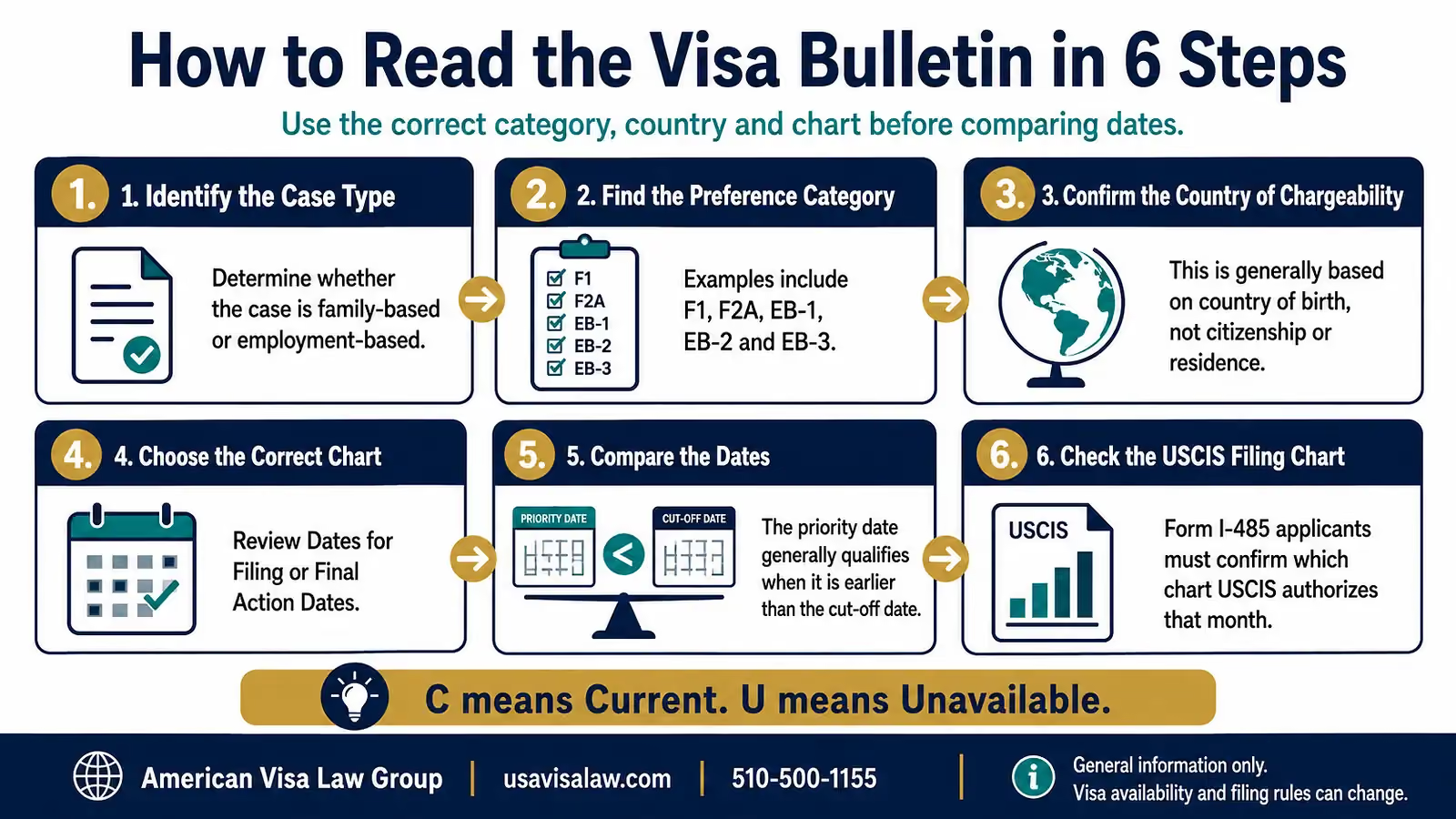
To read the Visa Bulletin correctly, you need four pieces of information: your priority date, preference category, country of chargeability and the chart that applies to your case. Use the bulletin for the month in which you plan to take action because the dates can change.
Begin with the immigrant petition supporting your green card case.
A family-based case is generally connected to Form I-130 and appears in the family-sponsored portion of the bulletin. An employment-based case is generally connected to Form I-140 and appears in the employment-based portion.
Do not compare an employment-based priority date with a family-sponsored chart, even if the dates appear more favorable.
Next, determine the exact preference category shown in your petition records.
Family-sponsored categories include F1, F2A, F2B, F3 and F4. Employment-based categories include EB-1, EB-2, EB-3, EB-4 and EB-5.
Small differences matter. For example, F2A and F2B are separate categories, just as EB-2 and EB-3 have separate cut-off dates. Use the category assigned to the underlying petition rather than the category you believe should apply.
Find the correct country column. Chargeability is generally based on country of birth, not citizenship, passport or current residence.
The bulletin typically lists countries with higher demand in separate columns. Applicants chargeable to countries not separately listed usually use “All Chargeability Areas Except Those Listed.”
Cross-chargeability through a spouse or parent may sometimes allow use of a different country, but the rules are case-specific and should not be assumed to apply automatically.
Open the current Department of State Visa Bulletin and locate the appropriate family- or employment-based section.
You will generally see two charts:
The charts can display different dates for the same category and country.
Locate the box where your preference-category row and country column meet. Then compare that cut-off date with your priority date.
Your priority date generally qualifies under the chart when it is earlier than the published cut-off date.
For example:
If the category shows “C,” it is current. If it shows “U,” immigrant visas are unavailable in that category for the month.
This comparison answers only whether the date qualifies under that particular chart. It does not establish complete green card eligibility.
Applicants filing Form I-485 must complete one additional step. USCIS announces each month whether family- and employment-based adjustment applicants may use the Dates for Filing chart or must use the Final Action Dates chart.
Check the official USCIS adjustment-of-status filing charts before filing. USCIS may select different charts for family- and employment-based cases during the same month.
Permission to use the Dates for Filing chart may allow submission of Form I-485, but it does not mean USCIS can approve the green card immediately. Final approval generally still depends on the priority date being current under the Final Action Dates chart and the applicant meeting all other requirements.
Your green card priority date is generally current when it is earlier than the cut-off date shown in the correct Visa Bulletin chart for your preference category and country of chargeability. A category marked “C” is also current.
However, a date may be current for filing but not yet current for final approval. Always identify which chart you are using.
Locate your preference category and country column in the relevant monthly Visa Bulletin. If your priority date is earlier than the published cut-off date, it qualifies under that chart.
For example:
If your priority date is May 1, 2023, or later in this example, it does not qualify because the priority date must generally be earlier than the cut-off date.
When the Visa Bulletin displays “C” instead of a date, the category is current for applicants chargeable to that country during the relevant month.
This means there is no published priority-date backlog for that category at that time. It does not mean an application will be approved automatically or immediately. The applicant must still satisfy the filing, documentation, admissibility and all other eligibility requirements.
A category can also change from current to having a cut-off date in a future bulletin if demand increases.
There is no universal current priority date for all green card applicants. The answer depends on:
For this reason, a statement such as “the current green card priority date is January 1, 2024” is incomplete unless it identifies the category, country and chart.
The most reliable approach is to check the official Visa Bulletin using the information assigned to your case.
Visa Bulletin dates can move forward, remain unchanged or retrogress from one month to the next. A comparison made several weeks earlier may no longer apply when the application is ready to be submitted.
Adjustment applicants must also confirm the chart selected by USCIS for that month. The USCIS filing-chart page should be checked immediately before filing Form I-485.
Becoming current is an important milestone, but it answers only the visa-availability question. It does not resolve every other requirement in the green card case.
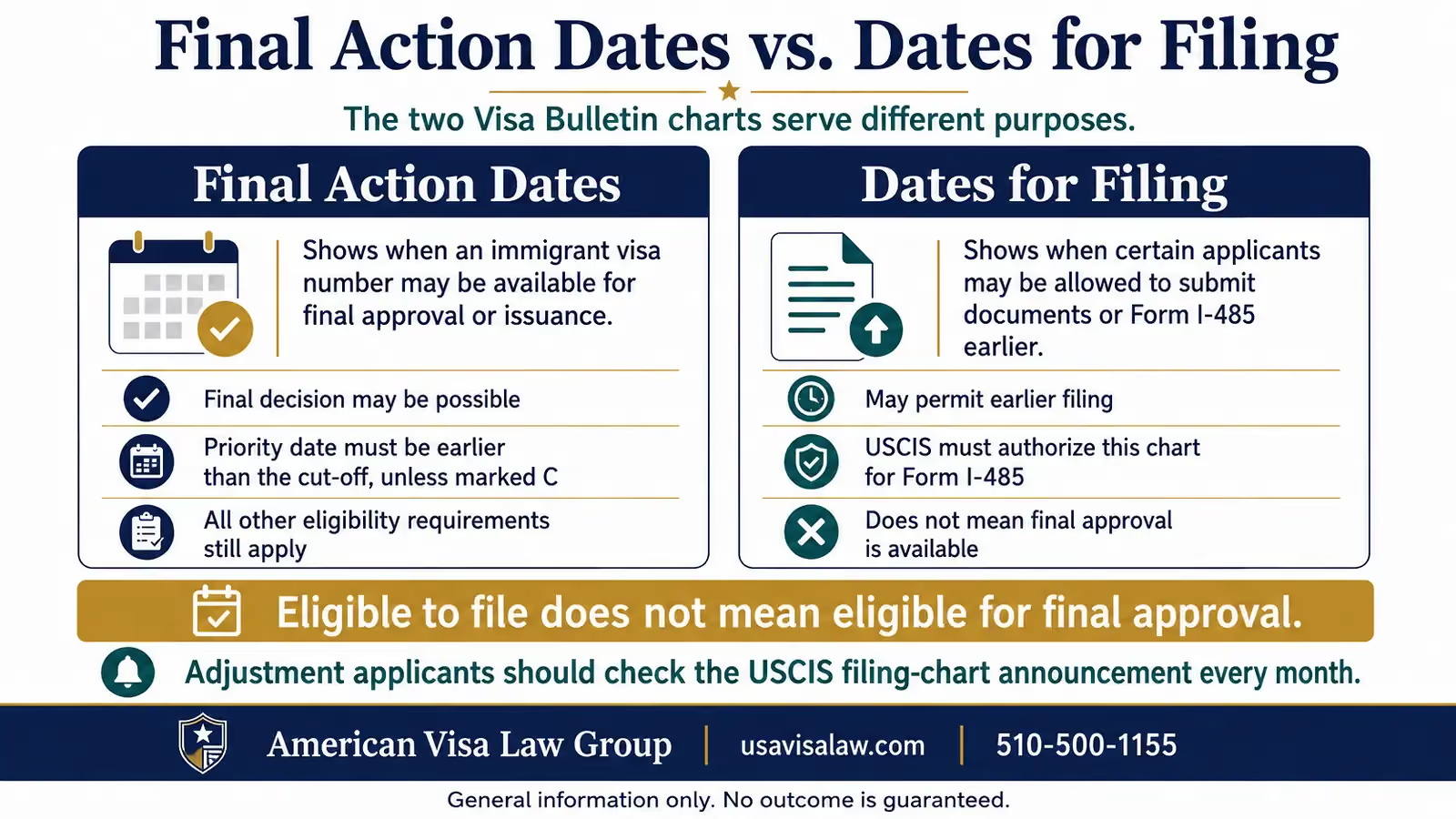
The Visa Bulletin contains two important charts: Final Action Dates and Dates for Filing. Although they may look similar, they serve different purposes. Understanding the distinction can help you determine whether you may submit your green card application or whether your case may receive final approval.
Final Action Dates indicate when an immigrant visa number may be available for final approval. If your priority date is earlier than the applicable cut-off date for your preference category and country of chargeability, your case may be eligible for a final decision.
However, having a current priority date does not guarantee approval. USCIS or the Department of State must still confirm that you meet all eligibility, documentation and admissibility requirements.
Dates for Filing indicate when certain applicants may begin submitting documents before an immigrant visa becomes available for final approval.
For applicants completing consular processing, this chart may determine when the National Visa Center can begin collecting the required forms and supporting documents. For adjustment-of-status applicants in the United States, the chart may allow an earlier filing of Form I-485—but only when USCIS authorizes its use for that month.
Each month, USCIS announces whether family-sponsored and employment-based adjustment applicants must use the Final Action Dates chart or may use the Dates for Filing chart.
The chart USCIS selects can differ between family-based and employment-based cases. It can also change from one month to the next. Before submitting Form I-485, check both the current Department of State Visa Bulletin and the corresponding USCIS Adjustment of Status Filing Charts page.
When USCIS permits use of the Dates for Filing chart, an applicant may be able to submit Form I-485 even though the priority date is not yet current under the Final Action Dates chart.
This can be valuable because a properly filed adjustment application may provide access to certain benefits, such as applying for employment authorization or advance parole, depending on individual eligibility. However, USCIS generally cannot approve the green card until a visa number is available under the applicable Final Action Dates chart.
In short, the Dates for Filing chart may open the door to submitting the application, while the Final Action Dates chart controls when the case may move toward final approval. Because chart selection and cut-off dates can change monthly, applicants should confirm the correct chart immediately before filing.
Employment-based green card applicants are divided into preference categories such as EB-1, EB-2 and EB-3. Each category has its own eligibility requirements, visa-number limits and Visa Bulletin cut-off dates.
The event that establishes an employment-based green card priority date depends largely on whether the case requires a permanent labor certification from the Department of Labor.
The EB-1 category covers certain individuals with extraordinary ability, outstanding professors and researchers, and qualifying multinational managers or executives.
Because EB-1 cases do not require PERM labor certification, the priority date is generally the date USCIS receives a properly filed Form I-140. This applies whether the petition is submitted by an employer or, when permitted, by the applicant as a self-petitioner.
The EB-2 category includes certain professionals with advanced degrees and individuals with exceptional ability. The priority date depends on how the case is filed.
In an employer-sponsored EB-2 case requiring PERM, the priority date is generally the date the Department of Labor accepts the labor certification application for processing. If the applicant qualifies for a National Interest Waiver and no labor certification is required, the priority date is generally established when USCIS receives the properly filed Form I-140.
EB-3 covers certain professionals, skilled workers and other workers. Most EB-3 cases require an employer to complete the PERM labor-certification process before filing Form I-140.
In these cases, the priority date is generally the date the Department of Labor accepts the labor certification application—not the date USCIS later approves the I-140 petition.
PERM is an important part of many EB-2 and EB-3 cases. The employer generally begins by requesting a prevailing wage, completing recruitment and then submitting the permanent labor certification application.
If the Department of Labor certifies the application and the employer timely files the related I-140 petition, the labor-certification filing date generally becomes the beneficiary’s priority date. USCIS provides a useful overview of these rules in its employment-based priority-date guidance.
An approved petition may sometimes allow a beneficiary to retain an earlier priority date for a later employment-based petition. However, priority-date retention is subject to specific rules and exceptions, so it should not be assumed automatically.
Employment-based visas are subject to annual category and country limits. When demand from applicants chargeable to a particular country is higher than the available supply, that country may develop a longer backlog.
As a result, two applicants in the same EB category may face different waiting periods because they have different countries of chargeability. Their priority dates do not move, but the relevant Visa Bulletin cut-off dates may advance, remain unchanged or move backward.
Applicants should therefore compare the correct employment-based category and country column each month rather than relying on general predictions about green card wait times.
In most family-based cases, the green card priority date is the date USCIS receives a properly filed Form I-130, Petition for Alien Relative. The priority date establishes the beneficiary’s place in line when the applicable family category is subject to annual visa limits.
Family preference categories cover certain relatives of U.S. citizens and lawful permanent residents. They include:
These categories appear in the family-sponsored section of the Visa Bulletin as F1, F2A, F2B, F3 and F4. Because the number of visas available each year is limited, applicants may wait until their priority date is earlier than the relevant cut-off date.
The waiting period can vary significantly depending on the family category and country of chargeability. USCIS provides additional details on its family preference green card page.
Immediate relatives of U.S. citizens are not subject to the same annual numerical limits as family preference applicants. This group generally includes:
Because immigrant visas are generally available immediately in these categories, immediate relatives ordinarily do not need to wait for their priority date to become current in the Visa Bulletin.
This does not mean the case is automatically approved or processed immediately. USCIS or the Department of State must still review the petition, application, supporting evidence and the applicant’s eligibility. The Department of State’s family immigration guidance explains the distinction between immediate-relative and family-preference visas.
Family preference applicants inside the United States may be eligible to file Form I-485 when a visa is available and all other adjustment-of-status requirements are satisfied. They must also verify which Visa Bulletin chart USCIS authorizes for family-sponsored filings that month.
Applicants completing consular processing generally work with the National Visa Center after USCIS approves the underlying petition. The Dates for Filing chart may determine when document collection can begin, while the Final Action Dates chart affects when an immigrant visa may be issued.
In either process, an approved I-130 does not by itself mean that a green card or immigrant visa is immediately available. Family preference applicants must continue monitoring the Visa Bulletin until their priority date reaches the appropriate stage.
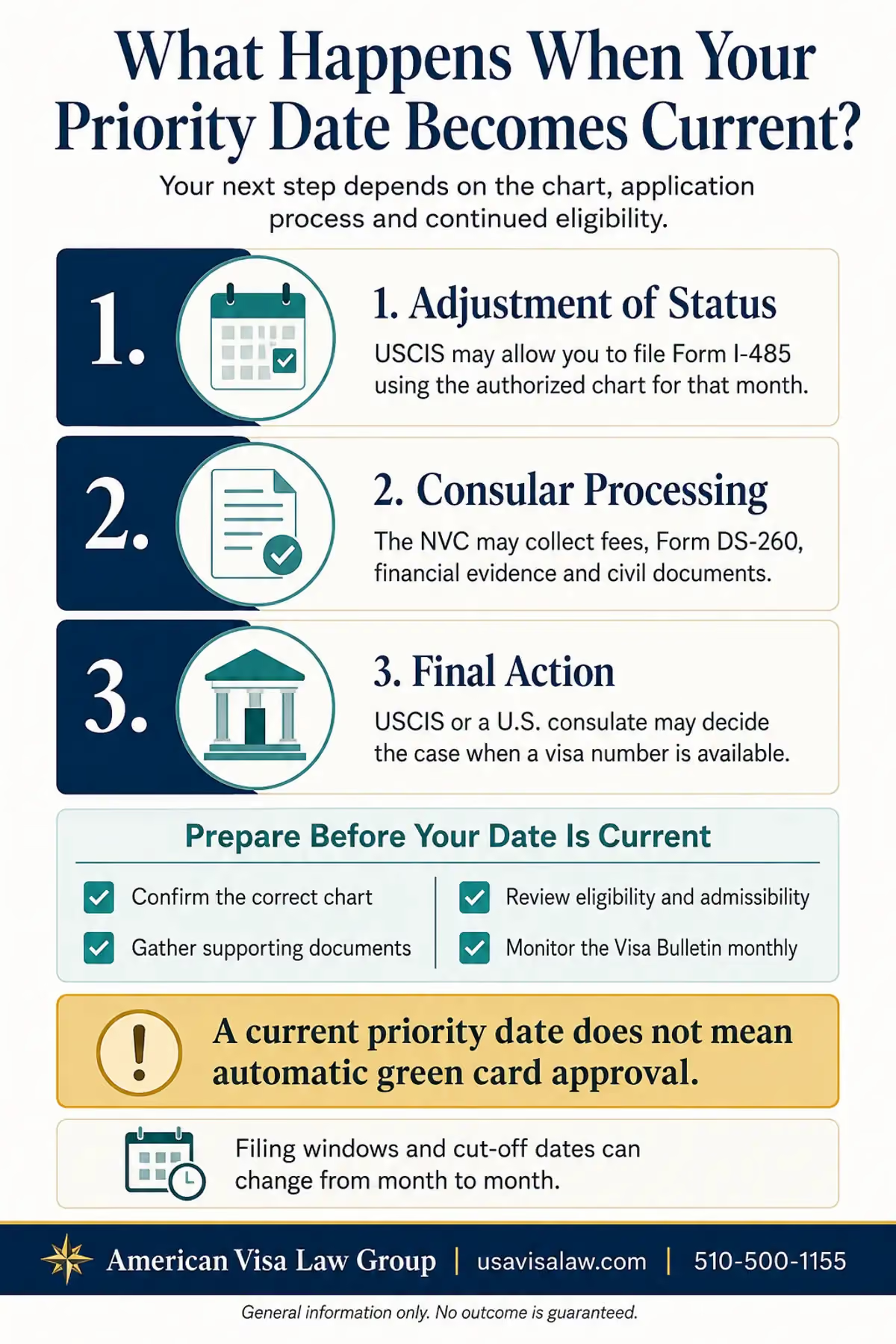
When your green card priority date becomes current, your case may move to the next stage. What you can do depends on which Visa Bulletin chart is current for you, whether you are applying through adjustment of status or consular processing, and whether all other eligibility requirements are satisfied.
If you are in the United States and eligible to adjust status, you may be able to file Form I-485 when your priority date is earlier than the applicable cut-off date.
Before filing, confirm which chart USCIS permits applicants in your category to use that month. A current date under the Dates for Filing chart may allow you to submit Form I-485, but it does not necessarily mean USCIS can approve the green card immediately.
If your I-485 is already pending and your priority date becomes current under the Final Action Dates chart, USCIS may take final action once the case is ready and a visa number remains available.
For consular processing, the National Visa Center may request fees, Form DS-260, financial evidence and civil documents as the case becomes eligible to move forward.
Once the case is documentarily complete and the priority date is current for final action, the NVC may work with the appropriate U.S. embassy or consulate to schedule an interview. Timing also depends on appointment availability at the consular post, so becoming current does not guarantee an immediate interview.
The Department of State provides further details about NVC processing and priority dates.
A current priority date means that a visa number may be available for the relevant stage of the process. It does not establish that the applicant qualifies for permanent residence.
USCIS or the consular officer must still review matters such as:
Requests for evidence, background checks, missing documents or legal eligibility issues can still affect processing and the final decision.
Applicants whose priority dates are approaching the Visa Bulletin cut-off should consider preparing for the next stage before the filing window opens.
Depending on the case, preparation may include gathering birth and marriage certificates, reviewing immigration records, coordinating financial or employment evidence, obtaining required translations and confirming which forms will be needed. Medical examinations should be timed carefully because document-validity rules may apply.
Filing readiness is especially important because Visa Bulletin dates can change from month to month. If you are unsure which chart applies or whether your history affects eligibility, you may request an immigration consultation before submitting the application.
Visa Bulletin retrogression occurs when a cut-off date moves backward or a category becomes unavailable after previously being current. As a result, some applicants who were eligible to move forward in one month may no longer be eligible for final approval in the next.
Suppose a category had a Final Action Date of January 1, 2023. If the following month’s Visa Bulletin changes that date to January 1, 2022, applicants with priority dates during 2022 may no longer be current.
Retrogression does not mean that an applicant has lost the underlying petition or place in line. It means that an immigrant visa number is temporarily unavailable for that applicant under the new cut-off date.
USCIS provides an official explanation on its Visa Retrogression page.
The Department of State manages a limited number of immigrant visas across preference categories and countries during each fiscal year. Cut-off dates may move backward when:
Retrogression helps the Department of State control visa-number use within the limits established by law. Future movement cannot be predicted with certainty because it depends on changing demand and actual visa issuance.
A properly filed Form I-485 generally remains pending if the relevant Final Action Date later retrogresses. USCIS may continue processing parts of the application, but it generally cannot approve the green card until a visa number becomes available again.
Applicants completing consular processing may also experience a delay. A case can remain documentarily complete while waiting for the priority date to become current again before an interview is scheduled or an immigrant visa is issued.
Applicants should continue responding to USCIS or NVC requests and keep required information current. They should not assume that retrogression cancels the application or that no further action is required.
Retrogression normally changes the Visa Bulletin cut-off date, not the applicant’s personal priority date.
For example, if your priority date is June 10, 2022, it generally remains June 10, 2022 even if the applicable cut-off date moves forward or backward. Your position in the queue remains tied to that priority date.
In some cases, a new petition, a change in immigration category or the rules governing priority-date retention may affect which date can be used. Those are separate legal issues. The monthly movement of the Visa Bulletin alone does not change the priority date assigned to the petition.
If your green card priority date is not current, an immigrant visa number is not yet available for the relevant stage of your case. This usually means waiting, but the waiting period can still be used to monitor developments and prepare for the next step.
The Department of State publishes a new Visa Bulletin each month. Cut-off dates may advance, remain unchanged or retrogress depending on visa demand and annual limits.
Check the correct preference category, country of chargeability and chart every month. Adjustment-of-status applicants should also review the USCIS filing charts page, because USCIS determines which chart may be used for filing.
Avoid relying on old bulletins, social-media predictions or the movement of a different category.
A pending or approved I-130 or I-140 petition does not, by itself, provide lawful immigration status or employment authorization in the United States.
Applicants who must maintain nonimmigrant status should carefully monitor expiration dates, employment conditions and extension requirements. The effect of a pending Form I-485 may differ, and individual circumstances can affect travel, employment and status strategy.
Waiting for a priority date does not automatically protect someone from the consequences of a status violation. Applicants with concerns about their immigration history should obtain case-specific guidance.
While waiting, applicants can begin organizing documents that may be required for adjustment of status or consular processing. Depending on the case, these may include:
Applicants should also keep their contact information current with USCIS or the National Visa Center and respond to official notices within the stated deadlines. Some documents have limited validity, so they should not necessarily be obtained too early.
Some applicants may have another potential path, but alternatives are highly case-specific. Possibilities can include:
None of these options is automatically available or necessarily faster. Changing strategies may also create new requirements or risks.
If the waiting period is lengthy or your circumstances have changed, an immigration attorney can review whether another lawful option exists while preserving the benefits of the current case. You may contact American Visa Law Group for an individualized assessment.
Priority-date errors often happen because the Visa Bulletin contains several categories, country columns and charts. Avoiding the following mistakes can help applicants interpret their place in the process more accurately.
The date shown in the Visa Bulletin is a cut-off date, not your individual priority date. Your green card priority date comes from the qualifying petition or labor-certification process and is generally listed on the relevant immigration notice.
You compare your personal priority date with the published cut-off date to determine whether your case is current.
Family-based and employment-based cases are divided into separate preference categories. Someone in EB-2, for example, should not rely on the date shown for EB-3.
Confirm the category listed on your petition or approval notice before reviewing the Visa Bulletin. Even closely related categories can have substantially different cut-off dates.
Country of chargeability is generally based on the applicant’s country of birth—not current residence, passport or citizenship.
Limited exceptions, including certain cross-chargeability rules, may allow another country to be used. Applicants should not assume an exception applies without confirming that they meet its requirements.
The Dates for Filing chart may allow an applicant to submit documents or file Form I-485 earlier when USCIS authorizes that chart. The Final Action Dates chart indicates when a visa number may be available for final approval.
Being eligible to file under one chart does not necessarily mean the green card can be approved at that time.
A current priority date addresses visa availability. It does not guarantee approval or remove the remaining requirements.
USCIS or a consular officer must still review the underlying petition, documentation, admissibility, financial sponsorship where required, and all other eligibility issues. Processing times and interview availability may also affect how quickly the case advances.
The Department of State updates the Visa Bulletin monthly, and dates can advance, remain unchanged or move backward. A filing decision based on an outdated bulletin can therefore be incorrect.
Always use the bulletin for the month in which the application will be filed and, for adjustment of status, confirm the chart selected by USCIS. The latest edition is available on the official Department of State Visa Bulletin page.
Past movement can provide context, but it cannot guarantee what will happen next. Cut-off dates depend on visa demand, annual limits, country limits and government estimates of future usage.
Forecasts should not be treated as confirmed filing dates. Applicants can prepare in advance, but they should verify the official Visa Bulletin and USCIS chart selection before taking action.
The following example is entirely hypothetical and does not use current Visa Bulletin dates.
Assume an applicant has the following case details:
Because this is an employment-based case, the applicant must use the employment-based section of the Visa Bulletin. For this example, the question is whether a visa is available for final approval, so the applicant reviews the Final Action Dates chart.
The applicant finds the EB-3 row and then moves across to the Philippines column. Looking at another EB category or the “All Chargeability Areas Except Those Listed” column could produce the wrong result.
The applicant’s priority date is July 10, 2022. The hypothetical cut-off date is September 1, 2022.
Because July 10, 2022 is earlier than September 1, 2022, the priority date is current for final-action purposes in this example.
A current Final Action Date means an immigrant visa number may be available. It does not mean the green card is automatically approved. The government must still determine that the applicant satisfies all other requirements.
If the hypothetical cut-off date were instead June 1, 2022, the applicant’s July 10, 2022 priority date would not be current because it falls after the published cut-off.
Applicants evaluating whether they may file Form I-485 must complete an additional step: confirming which chart USCIS permits adjustment applicants to use for that month.
The green card priority-date process can be summarized in seven practical steps:
The process can be viewed simply as:
Qualifying filing → Priority date established → Category and country identified → Visa Bulletin checked → Dates compared → Filing or final-action availability determined → Next immigration step prepared
A current priority date can allow a case to advance, but it does not guarantee approval. The applicant must still satisfy all legal, procedural and documentary requirements.
A green card priority date generally marks an applicant’s place in line for an immigrant visa within a preference category. It is especially important when the number of available visas is limited by category or country.
The priority date is often shown on the Form I-797 receipt or approval notice for the underlying immigrant petition. In a PERM-based employment case, it generally comes from the date the Department of Labor accepted the labor-certification application.
There is no single current priority date for every green card applicant. The relevant date depends on the preference category, country of chargeability, Visa Bulletin chart and month being reviewed.
Find the correct category and country column in the monthly Visa Bulletin. Your date is generally current if it is earlier than the published cut-off date or if the category shows “C.”
Adjustment applicants must also confirm which chart USCIS permits them to use that month.
“USCIS priority date” is commonly used to describe the priority date connected to an immigrant petition filed with USCIS. It is not a separate type of date from the green card priority date discussed throughout this article.
You may become eligible to file Form I-485, proceed with immigrant visa processing or receive final action, depending on which chart is current and how you are applying.
Becoming current opens a potential procedural step; it does not remove the remaining eligibility requirements.
No. A current priority date means that a visa number may be available for the relevant stage.
USCIS or the consular officer must still review the petition, supporting evidence, admissibility, immigration history and all other legal requirements.
Your priority date is the date assigned to your individual case. The cut-off date is published in the Visa Bulletin and indicates which applicants may move forward within a particular category and country column.
You compare the two dates to determine whether your case is current.
Dates for Filing may permit applicants to submit documents or file Form I-485 earlier when USCIS authorizes that chart. Final Action Dates indicate when a visa number may be available for final approval or immigrant visa issuance.
The priority date assigned to a particular petition generally remains the same. However, a new petition may receive a different date, and category conversions or priority-date retention rules may affect which date can be used.
Visa Bulletin movement does not change the applicant’s actual priority date.
Yes. This is known as visa retrogression. It can happen when demand is higher than expected or visa use approaches annual category or country limits.
A case that was current one month may therefore become unavailable for final action in a later month.
The Department of State publishes the Visa Bulletin every month. Because availability can change, applicants should review the latest Visa Bulletin before filing or making timing decisions.
Not necessarily. Country of chargeability is generally based on the applicant’s country of birth rather than citizenship or current residence.
Certain exceptions, including cross-chargeability in qualifying circumstances, may allow another country to be used.
Possibly. Certain employment-based applicants may retain an earlier priority date from a previously approved Form I-140, and some family-based category changes may also preserve the original date.
Retention is governed by specific rules and exceptions, so an earlier date should not be assumed to transfer automatically. USCIS provides additional information in its visa availability and priority-date guidance.
For additional guidance on green card priority dates, visa availability and the Visa Bulletin, review these authoritative resources.

Hasan Abdullah, Esq. is the Founder and Managing Attorney of American Visa Law Group. His practice focuses on U.S. immigration law, including family-based immigration, employment-based immigration, adjustment of status, consular processing, waivers, PERM labor certification, NIW, EB-1, H-1B, O-1, and complex immigration strategy.
Through American Visa Law Group, Mr. Abdullah helps individuals, families, professionals, investors, and employers understand their immigration options and plan around changing government policies, USCIS procedures, and Visa Bulletin movement. His work emphasizes practical legal analysis, realistic expectations, and strategy tailored to each applicant’s immigration history and long-term goals.


