Contents
It’s the moment that brings you one step closer to starting your new life together in the United States. But for many couples, it also comes with a mix of excitement and anxiety. And that’s completely normal. The marriage interview can feel intimidating, but it’s not a test you need to “pass.” It’s a conversation designed to confirm that your marriage is real and built on genuine love, not just immigration paperwork. ❤️
In 2025, the USCIS marriage-based Green Card process has become more transparent and efficient. From digital scheduling to improved case tracking, the system is now designed to help couples navigate the process with more clarity and less stress. Still, the in-person interview remains the heart of it all — the point where you and your spouse show that your relationship is authentic and your story aligns with the documents you’ve submitted.
This article will guide you through what to expect at your marriage Green Card interview — before, during, and after. You’ll learn how officers evaluate your case, how to stay calm and confident, and how to make a positive impression without overthinking every detail.
Because in the end, this interview isn’t about memorizing answers — it’s about telling your truth as a couple and showing that your marriage is as real as your journey together. 🌿
💬 Purpose of the Marriage Green Card Interview
The marriage Green Card interview is one of the final steps before USCIS grants lawful permanent residence based on marriage. It’s not just a formality — it’s the agency’s way of confirming that your relationship is authentic and ongoing, not one created only for immigration benefits.
When a couple applies for a marriage-based Green Card, USCIS reviews hundreds of details: your forms, your documents, your photos, and your shared life on paper. But paper can only tell part of the story. The interview allows an immigration officer to see how you interact in real life — how you communicate, respond, and naturally support each other. 💑
During the interview, the officer focuses on consistency, honesty, and connection. They’ll verify that the information on your application matches your answers and that your relationship timeline makes sense — from how you met to how you built your life together. The goal isn’t to catch you off guard, but to understand your journey as a couple.
The interview also helps USCIS confirm that both partners understand their responsibilities in a shared life. They may look at financial ties, shared housing, or emotional connection — all the things that define a genuine marriage.
If you filed your application while both of you are in the U.S., your interview will take place at a local USCIS field office. If your spouse is abroad, it will happen at a U.S. consulate through the National Visa Center (NVC). Though the setting may differ, the purpose remains the same: to ensure your marriage is real and your intention is to live together as husband and wife (or spouses) in the U.S.
Ultimately, the marriage interview isn’t about perfection — it’s about truth and trust. USCIS officers are trained to recognize authenticity. They don’t expect rehearsed answers — they expect your story. And when that story reflects real partnership, it speaks louder than any stack of paperwork ever could. 🌿
Once USCIS approves your marriage-based Green Card application for the next stage, you’ll receive a Notice of Interview Appointment — a letter that officially schedules the big day. This notice includes the date, time, and location of your interview, along with a list of documents you’ll need to bring.
It’s completely normal to feel anxious at this point, but preparation is your best tool. The more organized you are, the more confident you’ll feel walking in. Here’s what happens before the interview and how to get ready effectively.
Before anything else, review your application carefully. Go through your Form I-130 and Form I-485 (or DS-260 if your spouse is abroad) line by line. Make sure all details — addresses, dates, and employment history — are correct and consistent. If anything has changed, bring updated documents to the interview to show transparency.
You’ll also need to gather all original versions of the documents you previously submitted with your petition. That includes:
🗂️ Pro tip: Keep everything in a clearly labeled folder or binder. A clean, organized file tells the officer you take the process seriously — and makes it easier for them to verify your information quickly.
If your interview is at a U.S. consulate, make sure your spouse also brings their appointment letter, visa application confirmation (DS-260), and any requested civil documents.
Finally, spend some time preparing mentally. Talk openly as a couple about your timeline, daily life, and shared plans. You don’t need to memorize anything — just remind yourselves of your real story.
Because when the interview day comes, the goal isn’t to “sound perfect.” It’s to sound like yourselves — a real couple, ready to take the next step together. 💍

The day of your marriage Green Card interview has finally arrived — the moment where all your preparation comes together. It’s completely natural to feel nervous, but remember: this interview is not a courtroom. It’s a conversation meant to confirm the authenticity of your marriage and verify that your documents match your story.
When you arrive at the USCIS field office, you’ll first go through a brief security screening similar to an airport check. Bring your appointment notice and photo identification, as both will be required at the entrance. Once checked in, you’ll be directed to a waiting area until an immigration officer calls your name.
When your turn comes, the officer will invite you into a small interview room. Some interviews are conducted with both spouses together; others may involve speaking to each of you separately — depending on your case or if the officer needs clarification.
The tone of the interview is usually professional but conversational. The officer may begin with simple details such as your full names, addresses, and basic relationship facts. They’ll then move into questions about your shared life, verifying the information you already provided on your forms.
During this time, the officer will pay attention not just to your answers, but also to how you communicate — your comfort level, natural interaction, and the way you recall details. Authenticity matters far more than perfection. If you don’t remember something, it’s better to say so honestly rather than guess.
If your case is being processed through a U.S. consulate abroad, the experience is similar. You’ll go through security, wait for your turn, and meet a consular officer who will review your relationship evidence and confirm your eligibility.
The entire interview typically lasts 15 to 30 minutes. At the end, the officer may tell you the next step — sometimes an approval on the spot, or occasionally, notice that your case will be reviewed further.
💡 Pro tip: Stay calm, make eye contact, and be yourself. This interview isn’t about being perfect — it’s about being real. The way you communicate your shared story often speaks louder than the paperwork itself.
The next step after the interview is just as important — understanding how officers evaluate your case and what factors can influence their final decision.
During a marriage Green Card interview, USCIS officers aren’t looking for rehearsed answers — they’re looking for authenticity. Their goal is to determine that your relationship is genuine, consistent, and built on a shared life, not just a shared address.
They begin by reviewing everything you’ve submitted — your Form I-130, Form I-485 (or DS-260 for overseas cases), and your supporting documents. The officer compares what’s written with what’s said in the interview. If your answers align naturally with your documents, it builds credibility. If details contradict or timelines don’t make sense, it may raise questions.
The evaluation process focuses on three key areas:
They also review your relationship history — how you met, how the relationship developed, and what your daily life looks like now. None of this is meant to be invasive; it’s to understand that your marriage is built on real connection.
Sometimes, officers may notice small discrepancies or gaps in your answers. This is common — no couple remembers every detail perfectly. What matters most is how you respond. Honest, calm clarification shows sincerity and maturity.
💡 Pro tip: You don’t need to over-explain or prove perfection. Just speak openly about your life together. Officers can sense when a story is rehearsed — and they can also sense when it’s real.
The best preparation is truth and teamwork. When your documents are complete and your story is genuine, your relationship itself becomes the strongest evidence you could bring.
Next, let’s go through the documents you should have ready on interview day — the proof that supports your story and shows USCIS your marriage is built on real foundations.
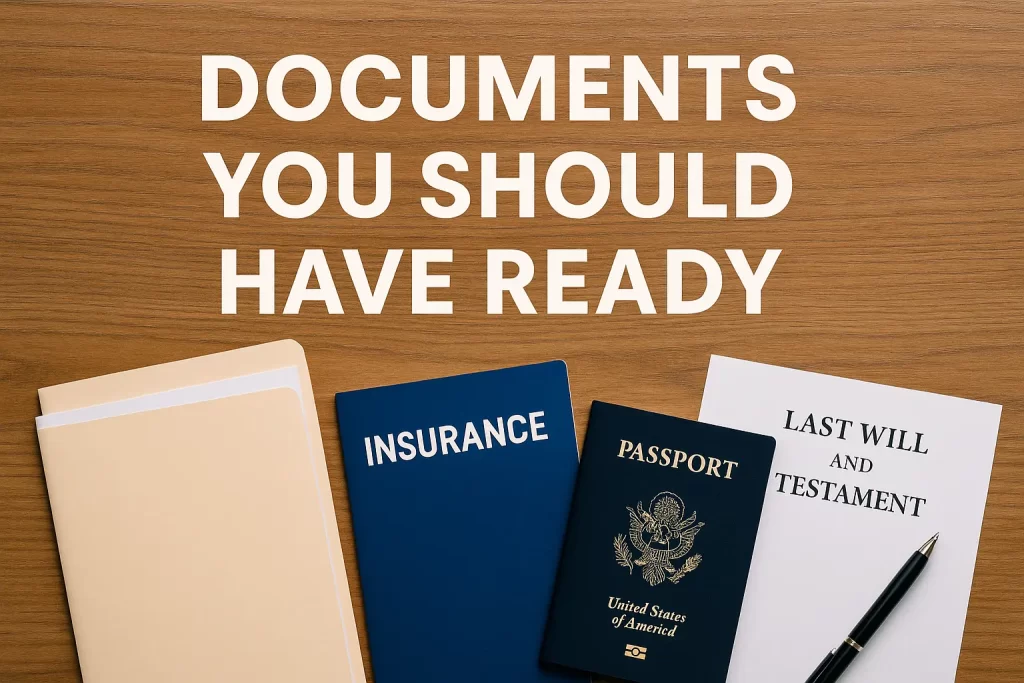
Having your documents well-prepared is one of the most important parts of your marriage Green Card interview. These papers tell the story of your relationship — proof that your life together is genuine, continuous, and supported by shared responsibilities. The officer will review them to verify your answers and ensure your file is complete.
Here’s what you should have on hand and how to organize it for a smooth experience.
First, bring original versions of all documents you submitted with your application. USCIS officers often ask to see originals even if they already have scanned copies in your file. These typically include:
Then, prepare updated relationship evidence — the kind that shows your marriage continues to grow since filing your application. Examples include:
If your interview is at a U.S. consulate, your spouse abroad should also bring civil documents like police certificates, translations, and their medical examination report.
🗂️ Organize your evidence clearly. Use a labeled binder or folder divided by sections: “Identity Documents,” “Financial Proof,” “Photos,” and “Communication.” Presenting your case neatly helps officers review your file efficiently and shows professionalism.
💡 Pro tip: Don’t overload your file with hundreds of pages. Quality matters more than quantity. Choose documents that clearly demonstrate shared life and responsibilities — the kind of evidence that reflects both emotional and practical connection.
Finally, ensure that all non-English documents are properly translated with a certification statement confirming the translator’s accuracy and language competency.
The goal isn’t to overwhelm the officer with paper — it’s to tell your story clearly and confidently through organized, credible documentation.
Once your paperwork is ready and your nerves are settled, you’ll move on to the moment you’ve been preparing for — the actual interview. But what happens next, after you leave the room? Let’s look at what to expect after the interview and how USCIS makes its decision.
When you walk out of your marriage Green Card interview, you’ll likely feel a mix of relief and curiosity — what happens now? The waiting period that follows is just as important as the interview itself. Here’s what to expect once your conversation with the USCIS officer is over.
In many cases, the officer will tell you the result right away. If your case is straightforward and your evidence is strong, you might hear the words every couple hopes for — “Your case is approved.” In that moment, you can breathe easy knowing your journey toward permanent residency is complete.
However, sometimes the officer won’t make an immediate decision. This doesn’t mean there’s a problem. It usually means they need to review additional details, verify information, or complete internal processing. In such cases, your case status will show as “held for review” on the USCIS website. Most couples receive their decision within a few weeks.
If the officer feels more evidence is needed, you might receive an RFE (Request for Evidence) or, in rare cases, be called back for a second interview, sometimes known as a Stokes interview. This typically happens if there are inconsistencies or missing documents. The best approach is to respond quickly and honestly, providing exactly what USCIS asks for.
When your case is approved:
If you’ve been married for less than two years at the time of approval, your spouse will receive a conditional Green Card valid for two years. After that, you’ll jointly file Form I-751 to remove the conditions and receive a permanent Green Card.
💡 Pro tip: Keep monitoring your case online using your receipt number. Once the approval notice (Form I-797) appears, check your mailbox frequently — USCIS often mails the physical Green Card soon after.
In rare situations, if the case is denied, USCIS will issue a letter explaining the reason and outlining your options for appeal or reapplication. Many denials stem from incomplete evidence or inconsistencies that can be corrected in a new filing.
Whether approved immediately or after further review, reaching this stage is an incredible milestone. You’ve proven the authenticity of your marriage and taken one of the most meaningful steps toward building a shared life in the U.S. 💍🇺🇸
Up next, let’s go over the most common mistakes couples make during this process — and how you can easily avoid them.

Even genuine couples can make simple mistakes that create unnecessary stress or slow down their Green Card approval. The good news is that most of these issues are completely avoidable with a little preparation and awareness. Here’s what to watch out for — and how to make sure your interview goes smoothly from start to finish.
The first and most common mistake is arriving unprepared. Some couples assume that because their relationship is real, they don’t need to review their application or bring documents. Unfortunately, forgetting key items like your marriage certificate, passports, or updated financial proof can lead to delays or even rescheduling. Always double-check the interview notice and bring both originals and copies of your supporting evidence.
Another mistake is over-rehearsing answers. While it’s important to review your information together, sounding too scripted can make your interaction seem unnatural. USCIS officers can sense when a couple is reciting memorized lines. Instead, talk openly about your story — how you met, your daily routine, and your plans as a couple. Authenticity speaks louder than perfection.
A third issue is inconsistency between your forms and your answers. Maybe your address changed, or you recently switched jobs. If your information has changed since filing, bring updated documents and explain the situation clearly. Officers value honesty — even small corrections show transparency.
Some couples also forget about non-verbal communication. Nervousness is normal, but avoid excessive fidgeting or looking away while your spouse is speaking. Simple signs of connection — eye contact, calm energy, and support for each other — create a positive impression.
Another common problem is ignoring requests for more evidence. If you receive a Request for Evidence (RFE) after your interview, respond promptly. Delays or incomplete responses can pause your case for months.
💡 Pro tip: Keep a personal copy of everything you submitted and bring an organized folder to your interview. If the officer asks for a specific item, you’ll be able to hand it over instantly — a small gesture that shows you’re responsible and ready.
Finally, the biggest mistake of all is letting fear take over. Many couples walk in assuming they’re being tested. In reality, USCIS officers are trained to evaluate genuine relationships, not perfect ones. They’re looking for real stories — not performances.
Avoid these pitfalls, and you’ll walk into your interview confident, calm, and ready to represent your life together.
Next, let’s look at some simple ways to stay calm and confident during the interview — so you can show up as yourselves and make the best impression possible.
The marriage Green Card interview is more than just the last step in an immigration process — it’s a moment that symbolizes love, trust, and commitment. After months of waiting, paperwork, and preparation, this interview gives you the chance to show what all those documents really mean: a real relationship, built on genuine connection. 💍
It’s normal to feel anxious, but remember — this day isn’t about perfection. It’s about authenticity. The USCIS officer isn’t looking for flawless answers or matching stories down to the minute. They’re looking for something far more meaningful — honesty, warmth, and evidence that your marriage is truly lived, not just written.
If you walk into the interview with the mindset of sharing your story rather than proving it, you’ll naturally come across as confident and sincere. The truth of your relationship will speak for itself.
In 2025, the USCIS process continues to evolve toward fairness and transparency, giving couples more tools, clearer guidance, and faster communication. Still, no update or policy change can replace what matters most — the genuine bond between two people ready to build a life together.
So take a deep breath, hold your partner’s hand, and walk into that room knowing that everything you’ve been through — every form, every wait, every signature — has led you here.
Because the marriage Green Card interview isn’t just about immigration. It’s about two people choosing to say: We belong together, and this is where our future begins. 🌿🇺🇸
Reaching your marriage Green Card interview means you’ve already come so far — through months of gathering documents, proving your relationship, and waiting for that final call. Now, this moment marks the closing chapter of your immigration process and the opening of your life together in the United States.
When you walk into that interview room, you’re not just presenting evidence — you’re sharing your story. Every photo, document, and memory represents the path you’ve walked together, from your first meeting to the day you decided to build a future side by side. The USCIS officer’s job is simply to confirm that your story is true, and that your partnership is real.
In 2025, with new digital tools, transparent updates, and smoother communication between USCIS and applicants, couples have more support than ever before. But technology can’t replace the heart of the process — the genuine human connection that defines a real marriage.
So approach the experience with calm confidence and gratitude. Smile, breathe, and trust that your truth is enough.
Because this interview isn’t the end — it’s a beginning. The start of your new life together as a couple in the United States, building memories, goals, and dreams on a foundation of love and perseverance. 💑🌿🇺🇸
And when you finally receive that approval notice, you’ll realize something beautiful: every form, every wait, and every anxious moment was worth it — because it brought you home, together.
Preparing for your marriage Green Card interview? Discover what really happens during the process — from how officers evaluate your case to what documents to bring and how to stay calm and confident. A clear 2025 guide to help genuine couples succeed and start their new life together in the U.S.
.


