Author: Hasan Abdullah, Esq.
Updated: The 12th of June 2026
A marriage-based green card interview can feel stressful, especially when a couple worries that USCIS may question whether the marriage is real. Many couples search for red flags because they want to know what could lead to closer questioning, a second interview, an RFE, or concerns about marriage fraud.
A red flag does not automatically mean the case will be denied. It usually means there is something USCIS may want to examine more carefully, such as inconsistent answers, limited shared documents, prior immigration history, financial sponsorship issues, or unusual relationship facts.
The chart below explains why a red flag should be treated as a reason for stronger preparation, not as an automatic denial.
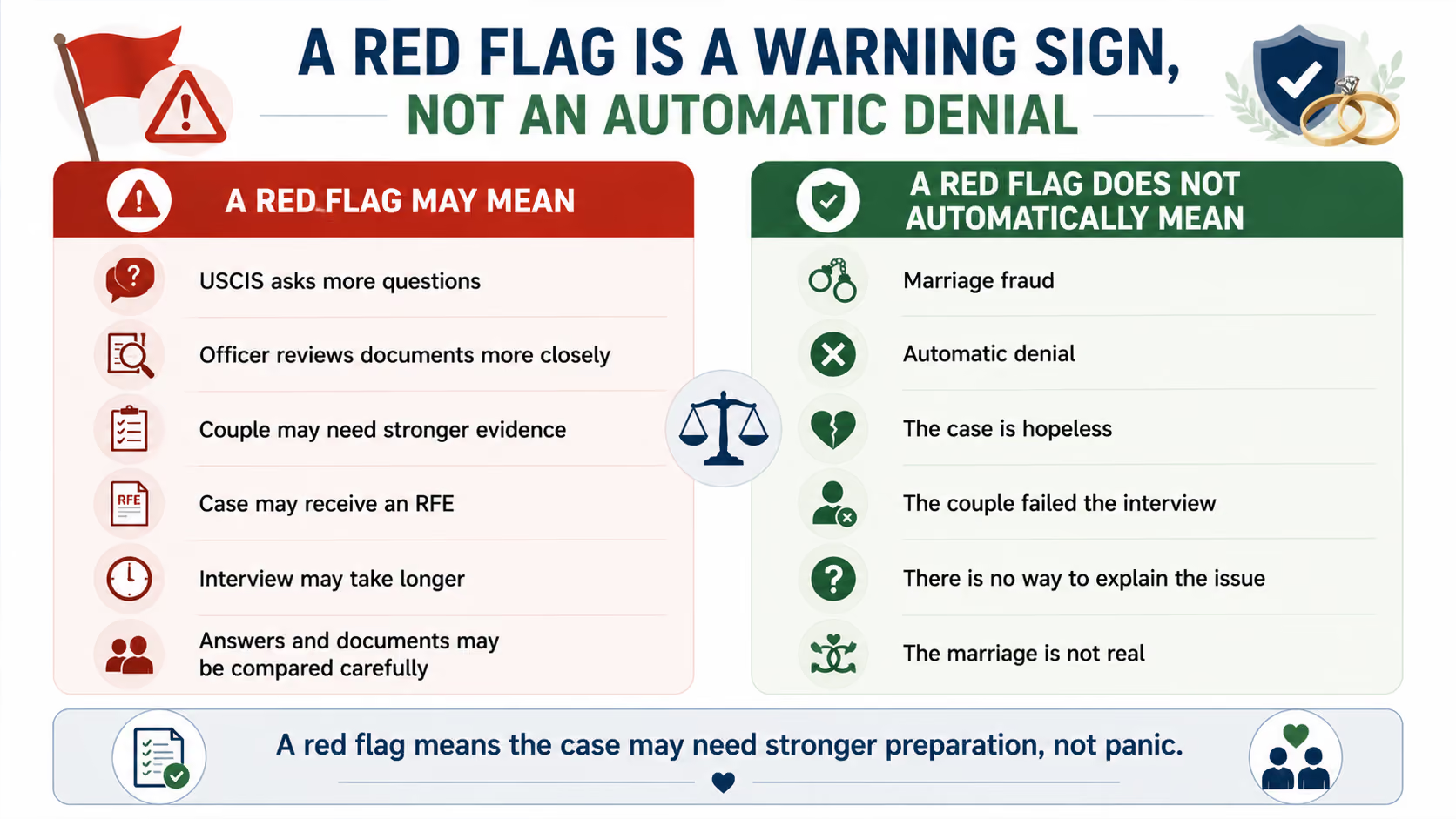
What mattered in 2025 may still matter in 2026 because USCIS continues to focus on the same core issues: bona fide marriage evidence, eligibility, consistency, credibility, and complete documentation. Couples should not rely on memorized interview scripts. They should understand their own case, organize updated evidence, and answer questions truthfully.
This guide explains 20 marriage-based green card interview red flags that USCIS may question, why they matter, and what couples can do to prepare. The goal is not to scare couples. The goal is to help them recognize potential issues early and understand when stronger evidence or attorney review may be helpful before the interview.
A marriage-based green card interview is a meeting with USCIS where an officer reviews the couple’s application, documents, and relationship history before deciding whether the foreign national spouse qualifies for permanent residence.
For many couples, the interview is used to confirm two main things: whether the applicant is eligible for a green card and whether the marriage is bona fide, meaning real and not entered into only for immigration benefits.
During the interview, USCIS may review identity documents, immigration history, prior marriages, shared residence, financial records, relationship timeline, Form I-864 affidavit of support, medical exam documents, and any updates since the case was filed.
The officer may also ask questions about how the couple met, when the relationship became serious, where they live, how they manage daily life, and whether their answers match the forms and evidence already submitted.
This mattered in 2025 and may still matter in 2026 because USCIS continues to focus on evidence, consistency, eligibility, and credibility in marriage-based cases.
A red flag does not automatically mean denial. It usually means USCIS may ask more questions, compare answers more closely, or request stronger evidence before making a decision.
Good preparation does not mean memorizing answers. It means knowing your own case, reviewing the forms that were filed, bringing updated evidence, and answering truthfully.
USCIS looks for marriage interview red flags because the officer must decide whether the marriage is real and whether the applicant qualifies for a green card.
In a marriage-based case, a marriage certificate is not always enough. USCIS may also review whether the couple shares a real life together, whether the documents are consistent, and whether the answers at the interview match the forms already filed.
This mattered in 2025 and may still matter in 2026 because USCIS continues to focus on bona fide marriage evidence, credibility, consistency, and eligibility.
A red flag can be anything that makes the officer ask closer questions. This may include inconsistent answers, weak shared-life evidence, separate addresses, limited financial documents, prior immigration issues, or unusual relationship facts.
But a red flag does not automatically mean marriage fraud.
Some genuine couples have complicated facts. They may live apart for work, keep separate bank accounts, marry quickly, have cultural differences, or have limited documents for practical reasons. What matters is whether the couple can explain the situation honestly and support the relationship with credible evidence.
USCIS usually looks at the whole case, not just one detail. One unusual fact may be explainable. Several unexplained issues together may create more concern.
The best preparation is not memorizing answers. It is reviewing the case, organizing updated evidence, and answering questions truthfully and consistently.
The following red flags are not automatic reasons for denial. They are issues USCIS may review more closely during a marriage-based green card interview.
Many of these red flags mattered in 2025 and may still matter in 2026 because USCIS continues to focus on whether the marriage is real, whether the applicant is eligible, and whether the couple’s answers and documents are consistent.
The checklist below gives a quick overview of the main marriage-based green card interview red flags USCIS may question before you read each issue in detail.
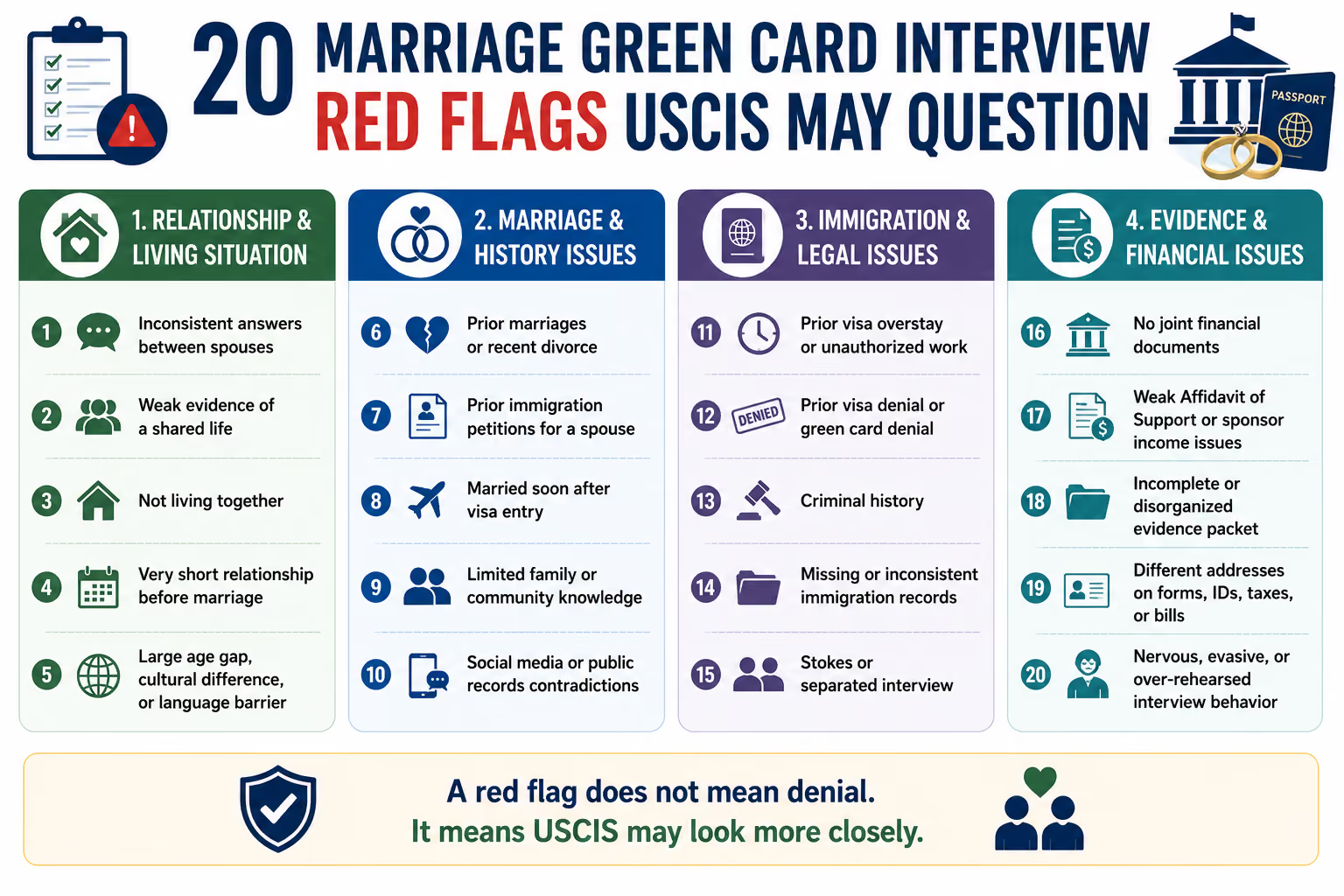
One of the most common marriage-based green card interview red flags is inconsistent answers between spouses.
USCIS may compare answers about how the couple met, when the relationship became serious, where they live, wedding details, daily routines, finances, family members, work schedules, and future plans.
Minor memory differences can happen. One spouse may remember a date slightly differently, or one person may forget a small detail. That does not automatically mean there is a problem.
But major contradictions may raise concern, especially if they involve important facts about the relationship, living arrangements, or marriage history.
Good preparation does not mean memorizing answers. It means reviewing real facts together, understanding the timeline, and answering honestly.
If a couple does not remember something, it is usually better to say so clearly than to guess. USCIS is often looking for credibility, consistency, and whether the relationship story makes sense when compared with the evidence.
Weak evidence of a shared life is another common marriage-based green card interview red flag.
USCIS wants to see that the marriage exists in real life, not only on paper. A marriage certificate proves that the couple is legally married, but it does not always show how the couple lives, shares responsibilities, or builds a life together.
This mattered in 2025 and may still matter in 2026 because USCIS continues to focus on bona fide marriage evidence, consistency, and credibility.
Weak evidence may include limited proof of shared residence, few financial documents, no updated evidence since filing, very few photos together, or little proof that family and friends know about the marriage.
That does not mean every couple needs the same documents. Some real couples live with family, recently married, keep separate finances, or have practical reasons for limited paperwork.
The key is whether the couple can explain the situation clearly and provide other credible evidence.
Helpful evidence may include joint lease records, shared bills, insurance documents, joint bank records, photos over time, travel records, family messages, affidavits, or proof of shared plans.
Strong evidence is not just more paper. It is evidence that tells a consistent story of a real marriage.
If the evidence is weak, couples should organize updated documents before the interview and be ready to explain what their daily life together actually looks like.
Having no joint financial documents can be a marriage-based green card interview red flag, especially if the couple claims to live together or share a household.
This mattered in 2025 and may still matter in 2026 because USCIS often reviews financial evidence when deciding whether a marriage is bona fide. Shared finances can help show that the couple has combined parts of their life and takes on responsibilities together.
Examples may include joint bank accounts, shared credit cards, joint tax returns, insurance policies, utility bills, lease payments, car insurance, phone plans, or beneficiary designations.
But not having joint finances does not automatically mean the marriage is not real.
Some genuine couples keep finances separate for cultural, personal, debt-related, banking, or practical reasons. Others may have recently married and simply have not had time to combine accounts yet.
The issue is whether the couple can explain the situation honestly and provide other evidence of a real shared life.
If there are no joint financial documents, couples may want to bring other proof, such as shared residence evidence, photos over time, travel records, family affidavits, messages, shared bills, or proof that they support each other in other ways.
USCIS usually looks at the full picture, not one missing document.
The concern becomes stronger when there are no joint finances along with separate addresses, weak relationship evidence, inconsistent answers, or little proof that the couple shares daily life.
Not living together can be a marriage-based green card interview red flag, especially if the couple does not have a clear explanation or supporting evidence.
This mattered in 2025 and may still matter in 2026 because USCIS often looks at shared residence as one sign of a bona fide marriage. When spouses live at different addresses, the officer may ask why they are separated and whether the marriage is part of a real shared life.
But living apart does not automatically mean the marriage is fake.
Many genuine couples live separately for valid reasons, such as work, school, military service, caregiving responsibilities, lease timing, financial limitations, or immigration-related travel issues. Some couples may also be separated because one spouse is outside the United States during consular processing.
What matters is whether the explanation is honest, consistent, and supported by evidence.
Helpful evidence may include travel records, messages, call history, photos from visits, shared expenses, future housing plans, affidavits from family or friends, and proof that the couple continues to maintain the relationship while living apart.
USCIS may be more concerned when separate addresses appear together with weak evidence, inconsistent answers, limited communication, or unclear future plans.
If the couple does not live together, they should be ready to explain why, show how they maintain the marriage, and provide evidence of their plan to build a shared life.
A very short relationship before marriage can be a marriage-based green card interview red flag, especially if the couple married quickly after meeting or filed soon after the marriage.
This mattered in 2025 and may still matter in 2026 because USCIS may ask closer questions about how the relationship developed, when the couple became serious, and whether the marriage was entered into for a genuine reason.
A short relationship does not automatically mean the marriage is not real. Some genuine couples marry quickly for cultural, religious, family, emotional, or practical reasons.
The issue is whether the timeline makes sense and is supported by evidence.
USCIS may ask how the couple met, when they started dating, when they decided to marry, how family members reacted, and what steps they took before and after the wedding.
Helpful evidence may include photos from different stages of the relationship, messages, travel records, engagement details, wedding planning records, family involvement, affidavits, and proof of shared life after marriage.
The concern is not only how fast the couple married. The concern is whether the relationship story is credible and supported by evidence.
If the relationship moved quickly, the couple should be prepared to explain the timeline honestly and show how the marriage became part of a real shared life.
A large age gap, cultural difference, or language barrier can sometimes be a marriage-based green card interview red flag, especially when it appears together with weak evidence or inconsistent answers.
This mattered in 2025 and may still matter in 2026 because USCIS may ask questions to understand how the couple communicates, how the relationship developed, and how they share daily life.
These facts do not mean the marriage is not real. Many genuine couples come from different cultures, speak different first languages, or have a significant age difference.
The issue is whether the relationship is credible and supported by evidence.
USCIS may ask how the couple met, what language they use, how they communicate with each other’s families, how they handle cultural or religious differences, and how they make decisions together.
Helpful evidence may include messages, photos, travel records, family involvement, proof of shared residence, shared financial documents, affidavits, and future plans.
The concern is not the age gap or cultural difference by itself. The concern is whether the couple can show a real shared life.
If this applies to your case, prepare to explain your relationship naturally and honestly. USCIS is not looking for a perfect couple. It is looking for credible answers and evidence that supports a bona fide marriage.
Prior marriages or a recent divorce can be a marriage-based green card interview red flag, especially if the timeline is unclear or the documents are incomplete.
This mattered in 2025 and may still matter in 2026 because USCIS may review whether all prior marriages were legally ended before the current marriage began. The officer may also ask questions about the relationship timeline if a divorce and new marriage happened close together.
A prior marriage does not mean the current marriage is suspicious. Many people have been married before. The issue is whether the current marriage is legally valid, genuine, and supported by consistent evidence.
Couples should bring divorce decrees, annulment records, or death certificates if either spouse was previously married. If there were prior immigration filings connected to a former spouse, those records may also become relevant.
USCIS may ask when the previous relationship ended, when the current relationship began, and whether there was any overlap or confusion in the timeline.
The concern is not simply having a prior marriage. The concern is whether the current marriage is legally valid and whether the timeline makes sense.
If either spouse had a recent divorce, the couple should prepare a clear and truthful explanation of the timeline and bring the proper legal documents to the interview.
Prior immigration petitions for a spouse can be a marriage-based green card interview red flag, especially if the U.S. citizen or lawful permanent resident spouse previously sponsored another spouse.
This mattered in 2025 and may still matter in 2026 because USCIS may review repeated spouse petitions more closely to understand whether the prior relationship and the current marriage were genuine.
A prior spouse petition does not automatically mean the current case will be denied. People divorce, remarry, and start new relationships. The issue is whether the current marriage is real, legally valid, and supported by credible evidence.
USCIS may ask about the prior marriage, when it ended, whether the previous spouse received immigration benefits, and how the current relationship developed.
If there were prior fraud concerns, inconsistent records, or multiple past marriage-based filings, legal review may be especially important before the interview.
Couples should be ready to provide divorce records, prior immigration documents if available, and a clear relationship timeline.
The concern is not simply that someone filed before. The concern is whether the current case raises questions about repeated filings, marriage fraud, or inconsistent history.
If either spouse has been involved in a prior marriage-based immigration petition, the couple should prepare carefully and make sure the current relationship evidence is strong and organized.
Getting married soon after entering the United States can be a marriage-based green card interview red flag, especially if the applicant entered on a temporary visa and filed for a green card shortly after.
This mattered in 2025 and may still matter in 2026 because USCIS may ask questions about the applicant’s intent at the time of entry, how the relationship developed, and when the couple decided to marry.
A quick marriage after entry does not automatically mean the case is fraudulent. Some couples already had a real relationship before entry, and others may have made marriage plans after circumstances changed.
The issue is whether the timeline is honest, consistent, and supported by evidence.
USCIS may ask when the couple met, when they became serious, why the applicant entered the United States, when marriage was discussed, and why the couple decided to file when they did.
Helpful evidence may include messages before and after entry, travel records, photos, engagement details, family involvement, wedding planning records, and proof of shared life after marriage.
The concern is not only the date of the marriage. The concern is whether the couple’s timeline makes sense and whether there are any issues involving visa intent or misrepresentation.
If the marriage happened soon after visa entry, the couple should prepare a truthful explanation. If there are concerns about prior statements, visa intent, or possible misrepresentation, legal review before the interview may be especially important.
A prior visa overstay or unauthorized work can be a serious marriage-based green card interview red flag, depending on the facts of the case.
This mattered in 2025 and may still matter in 2026 because USCIS may review the applicant’s immigration history closely during the interview. The officer may ask about past status, entries, exits, I-94 records, visa history, and whether the applicant ever worked without permission.
A prior overstay or unauthorized work does not always mean the case will be denied. The legal impact can depend on several factors, including whether the sponsoring spouse is a U.S. citizen or lawful permanent resident, whether the applicant entered the United States lawfully, and whether there are any fraud or misrepresentation concerns.
Still, these issues should not be ignored.
USCIS may ask when the applicant’s authorized stay ended, whether the applicant worked without employment authorization, what type of work was performed, and whether the information was disclosed correctly on the forms.
The concern is not only that an overstay or unauthorized work happened. The concern is whether it affects eligibility and whether the applicant answered truthfully.
If there was an overstay, unauthorized employment, or confusion about immigration status, the applicant should not try to hide it. Legal review before the interview may be helpful so the issue can be understood and addressed properly.
A prior visa denial or green card denial can be a marriage-based green card interview red flag, especially if the earlier denial involved inconsistent information, missing evidence, or possible eligibility concerns.
This mattered in 2025 and may still matter in 2026 because USCIS may review prior immigration records to see whether the applicant’s current answers match earlier filings, visa applications, or government decisions.
A prior denial does not automatically mean the current marriage green card case will be denied. Many applicants are denied for reasons that can later be corrected, such as missing documents, insufficient evidence, financial sponsorship problems, or failure to prove eligibility at that time.
The issue is whether the prior denial creates a continuing problem.
USCIS may ask what type of visa or green card application was denied, when it happened, what reason was given, and whether the facts have changed since then. If the prior denial involved fraud, misrepresentation, unlawful presence, or inconsistent statements, the case may need closer legal review.
Couples should bring any available denial notices, prior filings, and documents showing what changed or how the issue was resolved.
The concern is not simply that there was a denial before. The concern is whether the old denial creates a current immigration problem.
If either spouse has a prior visa denial, green card denial, or unclear immigration history, it is better to understand the issue before the interview rather than be surprised by USCIS questions.
Criminal history can be a serious marriage-based green card interview red flag, even if the case is old, dismissed, or seems minor.
This mattered in 2025 and may still matter in 2026 because USCIS may review whether a criminal record affects eligibility, admissibility, credibility, or required documentation. Officers may ask about arrests, charges, convictions, dismissed cases, probation, or court outcomes.
Applicants should not assume that a dismissed case or old arrest does not matter. USCIS may still expect the applicant to disclose the history correctly and provide certified court records where required.
A criminal history does not automatically mean the marriage green card case will be denied. The impact depends on the type of offense, the final court result, the date, the sentence, and whether the issue creates an inadmissibility concern.
The biggest mistake is hiding the record or answering inconsistently.
If there is any criminal history, the applicant should gather court dispositions, police records if needed, and any related documents before the interview. Legal review may be especially important if the record involves drugs, fraud, theft, violence, domestic issues, DUI, or any charge that may affect immigration eligibility.
The concern is not only the criminal history itself. The concern is whether it was disclosed properly and whether it creates a legal issue that should be addressed before USCIS raises it at the interview.
Missing or inconsistent immigration records can be a marriage-based green card interview red flag, especially if the forms do not match the applicant’s passport, I-94 record, visa history, or prior USCIS filings.
This mattered in 2025 and may still matter in 2026 because USCIS may compare the information in the application with government records.
Common issues include wrong entry dates, missing I-94 records, inconsistent travel history, different addresses, or missing approval or denial notices.
A missing record does not automatically mean denial. Sometimes documents are lost, old passports are unavailable, or records are hard to access. But the applicant should be ready to explain any gaps clearly.
Helpful documents may include passports, visas, I-94 records, USCIS receipt notices, approval notices, denial notices, EAD cards, and advance parole documents.
The concern is not only that a document is missing. The concern is whether the missing or inconsistent record creates confusion about eligibility, status, or credibility.
A weak Form I-864 Affidavit of Support may be a marriage-based green card interview red flag.
This mattered in 2025 and may still matter in 2026 because USCIS looks at whether the sponsoring spouse meets the financial requirements for the case.
Common issues include income below the required level, missing tax returns, unstable income, self-employment documentation problems, household size mistakes, or weak joint sponsor documents.
This does not automatically mean the case will be denied. Some couples can fix the issue with stronger financial evidence, updated income documents, or a qualified joint sponsor.
Helpful documents may include tax returns, W-2s, pay stubs, employment letters, proof of assets, and joint sponsor records if needed.
The concern is not only income. The concern is whether the financial sponsorship is complete, credible, and properly documented.
If the sponsor’s income is unclear or below the required level, couples should review the affidavit of support carefully before the interview.
An incomplete or disorganized evidence packet may be a marriage-based green card interview red flag.
This mattered in 2025 and may still matter in 2026 because USCIS may review not only what evidence the couple has, but also whether the evidence is clear, current, and easy to understand.
Common issues include missing documents, outdated evidence, unlabeled photos, missing translations, no updated proof since filing, or documents that do not clearly connect to the relationship.
This does not automatically mean the case will be denied. But even strong evidence can look weaker if it is scattered, confusing, or hard to follow.
Helpful organization may include labeled sections, updated documents, copies of official notices, proof of shared residence, proof of shared finances, photos with dates, and a simple relationship timeline if needed.
The concern is not only whether the couple has evidence. The concern is whether the evidence clearly supports the story of a real marriage.
Before the interview, couples should organize their documents so USCIS can easily understand the relationship, the timeline, and the shared life evidence.
Different addresses on forms, IDs, tax records, leases, or bills may be a marriage-based green card interview red flag.
This mattered in 2025 and may still matter in 2026 because USCIS may compare addresses across the application, supporting documents, and government records.
Address differences do not automatically mean there is a problem. Many couples have valid explanations, such as an old driver’s license, a mailing address, temporary housing, school, work relocation, or tax records from a prior year.
The issue is whether the couple can explain the address differences clearly and consistently.
Helpful documents may include lease records, utility bills, updated IDs, mail showing the current address, tax records, or proof explaining why one spouse used a different mailing address.
The concern is not only that addresses are different. The concern is whether the differences create confusion about where the couple actually lives and whether they share a real household.
Before the interview, couples should review their forms and documents so they are ready to explain any address differences honestly.
Limited family or community knowledge of the marriage may be a marriage-based green card interview red flag.
This mattered in 2025 and may still matter in 2026 because USCIS may look at whether the relationship is known and recognized by people close to the couple.
This does not mean every couple needs a large wedding, public social media posts, or full family involvement. Some genuine couples keep their relationship private because of family conflict, cultural reasons, religious issues, safety concerns, distance, or personal preference.
The issue is whether the couple can explain the situation honestly and provide other evidence of a real marriage.
Helpful evidence may include family photos, messages with relatives, affidavits from friends or family, travel to meet family, event invitations, shared community activities, or proof that people close to the couple know about the relationship.
The concern is not only privacy. The concern is whether there is enough evidence showing the marriage exists in real life.
If family or community involvement is limited, couples should be ready to explain why and bring other documents that support the relationship.
Social media or public records that contradict the relationship may be a marriage-based green card interview red flag.
This mattered in 2025 and may still matter in 2026 because USCIS may compare the couple’s documents, answers, and public information when reviewing credibility and consistency.
Common issues may include posts that suggest a different relationship timeline, old relationship status information, conflicting addresses, public records that do not match the forms, or photos that create confusion about the marriage.
This does not mean every couple needs to post their marriage online. Some genuine couples are private or do not use social media often.
The issue is whether anything public or submitted creates a contradiction that the couple should be ready to explain.
The concern is not social media itself. The concern is whether the records conflict with the story, timeline, or evidence provided to USCIS.
Before the interview, couples should review their documents and public information so they are prepared to explain any confusing or outdated details honestly.
Nervous, evasive, or over-rehearsed behavior may be a marriage-based green card interview red flag.
This mattered in 2025 and may still matter in 2026 because USCIS may look at credibility, consistency, and how naturally the couple answers questions about their own relationship.
Being nervous is normal. A USCIS interview can feel stressful, especially when the couple cares deeply about the outcome. Nervousness alone does not mean the marriage is suspicious.
The bigger concern is when answers seem scripted, exaggerated, evasive, or inconsistent. Guessing, avoiding direct questions, or trying too hard to sound perfect can create more concern than simply saying, “I do not remember,” when that is true.
Good preparation means reviewing the real facts of the relationship, not memorizing fake answers.
The concern is not nervousness. The concern is whether the answers appear truthful, natural, and consistent with the evidence.
Before the interview, couples should review their forms, timeline, and documents together. They should answer clearly, listen carefully, and avoid guessing when they are unsure.
Being scheduled for a Stokes interview or separated marriage interview may be a serious marriage-based green card interview red flag.
This mattered in 2025 and may still matter in 2026 because a separated interview usually means USCIS wants to take a closer look at whether the marriage is bona fide.
In this type of interview, spouses may be questioned separately and their answers may be compared. USCIS may ask about the relationship timeline, daily routines, shared residence, finances, family members, wedding details, and other parts of married life.
A Stokes-style interview does not automatically mean the case will be denied. But it does mean the couple should take the interview seriously and prepare carefully.
Helpful preparation may include organizing updated marriage evidence, reviewing filed forms, checking address and travel history, gathering financial and residence documents, and understanding any prior inconsistencies or weak points in the case.
The concern is not only the separated interview itself. The concern is whether the couple’s answers and evidence can clearly support a real marriage.
If USCIS schedules a Stokes interview or separated interview, attorney review may be especially helpful before attending.
Many marriage-based green card interview red flags from 2025 may still matter in 2026 because USCIS continues to focus on the same core issues: whether the marriage is real, whether the applicant is eligible, and whether the documents and answers are consistent.
There is no separate “2026 red flag list” that applies to every couple. The better way to think about 2026 preparation is to focus on the issues USCIS has long reviewed in marriage cases: bona fide marriage evidence, credibility, financial sponsorship, immigration history, and complete documentation.
Marriage evidence will still matter. Couples should be ready to show proof of a real shared life, such as shared residence, joint financial records, insurance, photos over time, travel records, family involvement, affidavits, or other documents that support the relationship.
Consistency may also remain important. USCIS may compare the couple’s answers with forms, tax records, IDs, lease documents, bank records, travel history, prior immigration applications, and other submitted evidence.
Financial sponsorship can still create interview concerns. If the sponsor’s income is unclear, the household size is wrong, tax returns are missing, or the joint sponsor documents are weak, USCIS may ask for more explanation or evidence.
Prior immigration history may also receive close review. Issues such as prior overstays, unauthorized work, visa denials, missing I-94 records, prior filings, or possible misrepresentation concerns should be understood before the interview.
The 2026 lesson is simple: do not prepare with generic scripts. Prepare with your real facts, updated documents, and honest answers.
If a case has multiple red flags, weak evidence, financial sponsorship problems, or prior immigration complications, it may be helpful to get attorney review before the interview rather than waiting for USCIS to raise the issue first.
If your marriage green card case has one or more red flags, do not panic. A red flag is not an automatic denial. It usually means USCIS may want a clearer explanation, stronger evidence, or more consistent documentation.
This was true in 2025 and may still matter in 2026 because USCIS continues to focus on bona fide marriage evidence, eligibility, credibility, and consistency.
The first step is to separate explainable facts from legal problems. For example, living apart for work or keeping separate bank accounts may be explainable with the right evidence. But prior misrepresentation, entry without inspection, criminal history, a prior removal order, or a previous fraud concern may require legal review.
Couples should also organize updated evidence before the interview. This may include lease records, financial documents, photos, travel records, tax records, insurance documents, family evidence, communication records, and affidavits where useful.
It is also important to review the forms already filed, including Form I-130, I-130A, I-485, I-864, I-765, and I-131 if applicable. USCIS may ask questions based on addresses, dates, travel history, employment history, prior immigration answers, and relationship details listed in those forms.
Good preparation does not mean memorizing answers. It means understanding your own case and answering truthfully.
If your case has multiple red flags, weak evidence, prior immigration problems, financial sponsorship issues, criminal history, or a Stokes interview notice, speaking with an immigration attorney before the interview may help you understand the risks and prepare more carefully.
Use this checklist to organize your forms, updated evidence, financial documents, immigration records, and honest explanations before the USCIS interview.
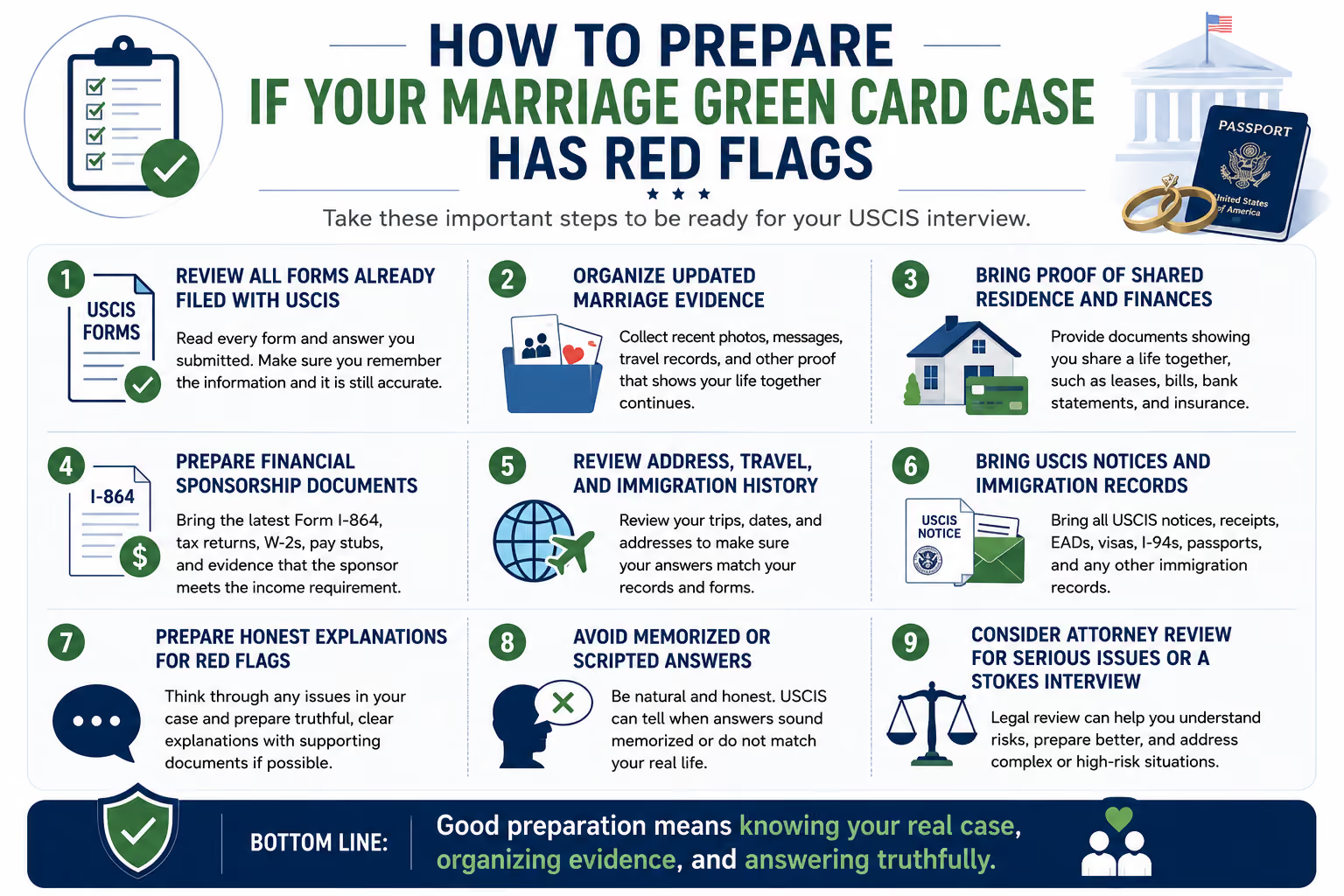
American Visa Law Group helps couples prepare for marriage-based green card interviews by reviewing the case facts, evidence, and possible red flags before the interview.
The goal is not to create memorized answers. Good interview preparation means helping the couple understand their own timeline, review the forms already filed, organize updated evidence, and answer USCIS questions truthfully and consistently.
AVLG may review issues such as relationship history, shared residence, joint financial evidence, prior marriages, immigration history, sponsor income, prior filings, and any concerns that may lead USCIS to ask closer questions.
Evidence strategy is also important. Some couples have real marriages but weak documentation. AVLG can help identify what evidence is missing, outdated, inconsistent, or unclear before the interview.
For cases involving RFEs, NOIDs, weak evidence, prior immigration issues, or possible Stokes interview concerns, attorney-led preparation may be especially useful.
No attorney can guarantee approval. USCIS makes the final decision based on the facts, evidence, eligibility, and credibility of the case.
The purpose of legal preparation is to help couples understand the risks, organize the strongest available evidence, and attend the interview with a clearer strategy.
Marriage-based green card interview red flags are warnings, not automatic denials. They usually mean USCIS may ask more questions, request stronger evidence, or review the case more carefully.
What mattered in 2025 may still matter in 2026 because USCIS continues to focus on the same core issues: bona fide marriage evidence, eligibility, credibility, consistency, and complete documentation.
The strongest preparation is simple: know your case, review your filed forms, organize updated records, and answer questions truthfully. Couples should avoid guessing, exaggerating, or memorizing scripted answers.
If the case has one minor red flag, it may be explainable with honest answers and better evidence. But if there are multiple red flags, prior denials, criminal history, overstay issues, unauthorized work, weak marriage evidence, financial sponsorship problems, or a Stokes interview notice, attorney review may be helpful before the interview.
A red flag does not mean the marriage is fake. It means the case may need stronger preparation.
American Visa Law Group helps couples prepare for marriage-based green card interviews with practical legal strategy and realistic expectations. If your case has red flags or you are worried about the interview, you can schedule a consultation before you attend.
Marriage-based green card interview red flags are facts, inconsistencies, document gaps, or case history issues that may cause USCIS to ask closer questions about the marriage or the applicant’s eligibility.
A red flag does not automatically mean denial. It usually means the officer may want a clearer explanation or stronger evidence.
Not completely. Many red flags from 2025 may still matter in 2026 because USCIS continues to focus on bona fide marriage evidence, eligibility, consistency, credibility, and financial sponsorship.
Couples should prepare with updated documents and truthful answers, not outdated scripts or memorized responses.
No. A red flag does not automatically mean your case will be denied.
Some red flags are explainable, such as separate finances, different addresses, or a short relationship timeline. The outcome depends on the full case, the evidence, the explanation, and the applicant’s eligibility.
There is no single biggest red flag for every case. Serious concerns may include inconsistent answers, weak evidence of a shared life, prior immigration fraud concerns, prior spouse petitions, criminal history, or being scheduled for a Stokes interview.
The more red flags a case has, the more careful the preparation should be.
Helpful evidence may include joint leases, joint bank accounts, insurance records, tax records, photos, travel records, shared bills, messages, children’s records, affidavits, and proof that family or friends know about the relationship.
The strongest evidence is not just more documents. It is evidence that tells a consistent story of a real shared life.
Yes. USCIS may question spouses separately if the officer has concerns about the marriage or wants to compare answers.
This is often called a Stokes-style interview or separated interview. It should be taken seriously because inconsistencies may become important.
A Stokes interview is a more detailed marriage interview where spouses are usually questioned separately and their answers are compared.
Being scheduled for this type of interview does not automatically mean denial, but it often means USCIS wants a closer look at whether the marriage is bona fide.
No. Couples should not memorize fake or scripted answers.
Good preparation means reviewing real facts, understanding the relationship timeline, organizing evidence, and answering questions truthfully. If you do not remember something, it is usually better to say so than to guess.
Not always. Some genuine couples keep finances separate for personal, cultural, banking, debt-related, or practical reasons.
However, if there are no joint financial documents, couples should be ready to explain why and provide other evidence of a shared life.
Yes. Couples preparing in 2026 should bring updated evidence, review current documents, and make sure their answers match the forms and records already submitted.
The core issues remain the same: truthfulness, consistency, eligibility, and strong bona fide marriage evidence.
It can, depending on the facts. The impact may depend on the applicant’s entry history, sponsor status, immigration record, and whether there are other issues such as misrepresentation.
Applicants should not hide prior overstays or unauthorized work. If the issue is unclear, legal review may be helpful before the interview.
Consider speaking with an immigration attorney if your case has multiple red flags, weak evidence, prior denials, criminal history, overstay or unauthorized work issues, financial sponsorship problems, prior fraud concerns, or a Stokes interview notice.
An attorney cannot guarantee approval, but legal review may help identify risks, organize evidence, and prepare for case-specific questions.
Hasan Abdullah is the Founder and Managing Attorney of American Visa Law Group, a U.S. immigration law firm focused on helping individuals, families, professionals, entrepreneurs, and employers navigate complex immigration matters. He has extensive experience in employment-based and family-based immigration, including H-1B, PERM, NIW, EB1, O-1, adjustment of status, waivers, consular processing, and complex USCIS strategy matters.
Through AVLG, Hasan focuses on practical immigration strategy, nuanced legal analysis, and realistic guidance grounded in real immigration practice. His writing combines operational insight, legal sophistication, and practical understanding of USCIS adjudication trends to help readers make more informed immigration decisions.


