Author: Hasan Abdullah, Esq.
The cost of applying for asylum in 2026 can include far more than the price of hiring a lawyer. Depending on the case, an applicant may need to budget for the Form I-589 filing fee, recurring annual asylum fees, employment-authorization expenses, certified translations, supporting evidence, expert evaluations, and legal representation.
There is no single asylum price because the process and required work vary significantly. One of the most important distinctions is whether the case is affirmative, meaning it is handled initially by U.S. Citizenship and Immigration Services, or defensive, meaning the applicant is seeking asylum while in removal proceedings before an immigration judge. Defensive cases often involve additional hearings, written submissions, witness preparation, and litigation work, which may increase the attorney fees.
The final cost can also be affected by a one-year filing-deadline issue, prior immigration applications, the number of family members included, the amount of evidence requiring translation, and whether the case later requires an appeal or motion. Applicants comparing lawyers should therefore review the scope of representation—not only the quoted price. American Visa Law Group’s immigration attorney fee schedule provides published pricing for certain affirmative and defensive asylum services.
This guide explains the government fees, asylum lawyer costs, work-permit expenses, evidence-related charges, family costs, and possible later expenses that may apply in 2026. It also explains how to compare attorney-fee agreements and prepare a more realistic asylum budget.
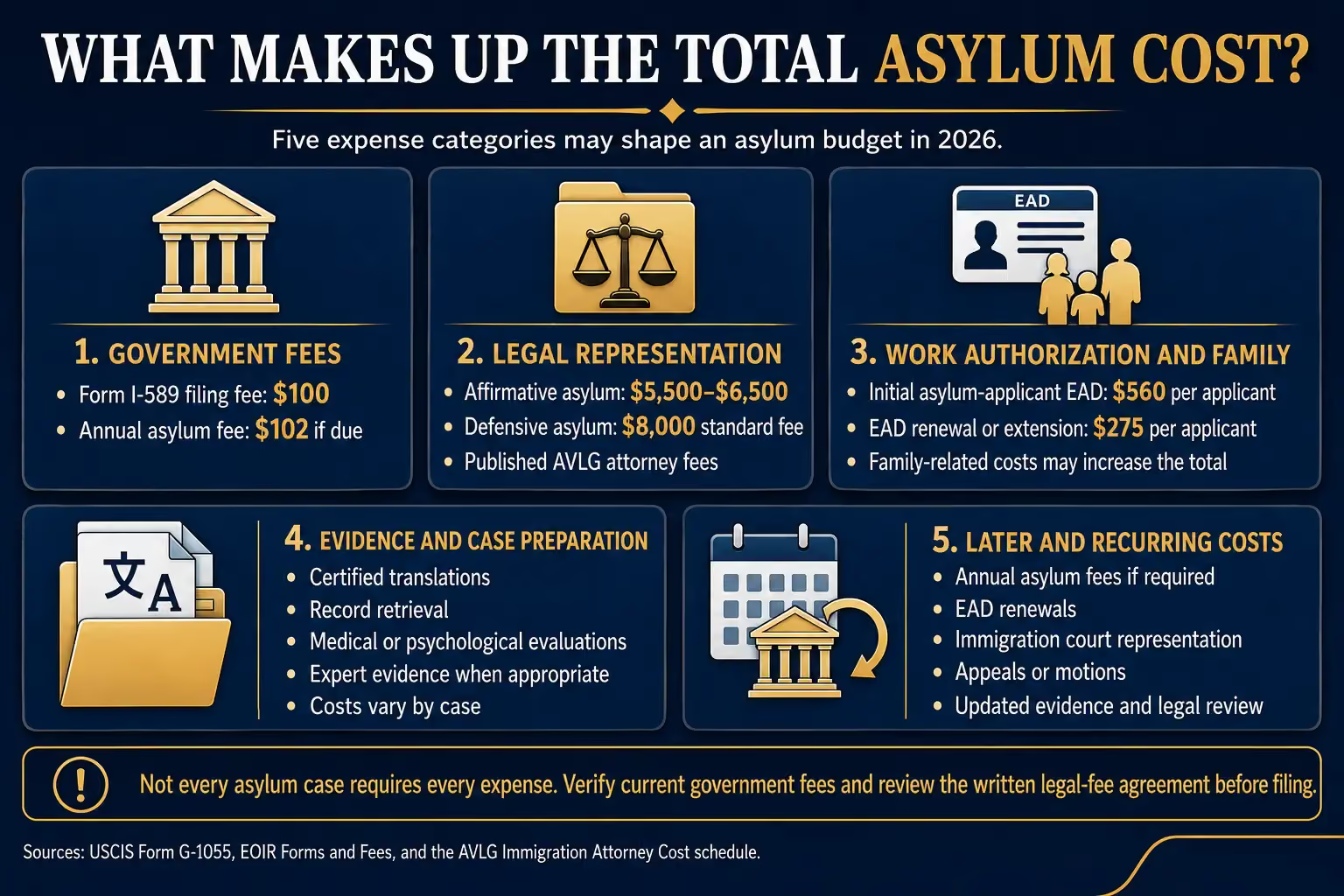
There is no single price for an asylum case. Under the currently published fee schedules, the initial Form I-589 filing fee is $100. An application that remains pending long enough may also become subject to an annual asylum fee, currently $100 for qualifying USCIS cases and $102 for qualifying cases before EOIR.
Attorney fees can represent the largest part of the budget. American Visa Law Group currently publishes fees of $5,500 to $6,500 for affirmative asylum representation, depending on complexity, and a standard fee of $8,000 for defensive asylum representation in immigration court. Applicants may also need to budget for employment authorization, translations, record retrieval, expert evaluations, interview or hearing services, and possible appeals or motions.
Applicants should verify the current USCIS Form I-589 information or EOIR Forms and Fees, depending on which agency has jurisdiction. American Visa Law Group’s published asylum lawyer fees provide firm-specific pricing for affirmative and defensive representation.
The final asylum cost depends on both the procedural stage and the amount of legal and evidentiary work required. An affirmative application filed with USCIS usually involves preparing Form I-589, developing the applicant’s declaration, reviewing supporting evidence, researching relevant country conditions, and preparing for an asylum interview. A defensive case in immigration court may also require pleadings, court appearances, written submissions, witness preparation, legal briefing, and representation at an individual merits hearing.
Costs may increase when a case involves:
For this reason, applicants should compare written fee agreements based on what each quote includes. A lower headline price may cover only form preparation, while another agreement may include declaration development, evidence strategy, interview preparation, hearings, or post-filing assistance.
Asylum applicants must distinguish government filing fees from attorney fees and other case-related expenses. The amount, payment method, and payment portal depend on whether the application is being handled by U.S. Citizenship and Immigration Services or the Executive Office for Immigration Review.
Form I-589 is used to apply for asylum and withholding of removal. Under the current 2026 fee schedules, the initial filing fee is $100.
The correct payment procedure depends on where the application must be filed:
The filing location is important. USCIS generally handles affirmative asylum applications, while EOIR handles applications filed in immigration court. Applicants should not assume that a payment submitted through one agency’s system will satisfy the requirements of the other agency.
Older copies of Form I-589 and outdated online resources may still state that there is no filing fee. Applicants should use the current form edition and verify the fee immediately before submitting the application.
A separate annual asylum fee may apply when an asylum application remains pending for at least one year. For fiscal year 2026, the annual asylum fee is $102, following an inflation adjustment from the original $100 amount.
The annual fee is separate from the initial Form I-589 filing fee. A case that remains pending for additional years may become subject to additional annual payments.
The payment procedure depends on which agency has the case:
Because the fee may be adjusted for inflation, applicants should rely on the amount displayed in the current agency notice or official payment system rather than an older article or notice.
Current litigation note: A July 2026 federal court order temporarily stayed certain USCIS policies involving the consequences of failing to pay the annual fee. This does not mean applicants should disregard a payment notice. The status of the policy may continue to change, so applicants should review the latest USCIS court-order alert and obtain case-specific advice where necessary.
USCIS and EOIR are different agencies with separate jurisdiction, notices, filing instructions, and payment systems.
An affirmative asylum applicant generally files with USCIS and attends an interview before an asylum officer. A defensive asylum applicant is in removal proceedings and presents the application before an immigration judge. A case may also move from USCIS to immigration court if USCIS refers the matter.
Applicants should confirm:
Receipts should be saved because they may be needed to demonstrate timely payment, particularly if a case moves from one agency to another.
.avif)
Under the current fee framework, the $100 initial Form I-589 filing fee and the $102 annual asylum fee cannot be waived or reduced.
This rule should not be confused with the fee-waiver provisions that may apply to certain other immigration forms, appeals, or motions. Each filing has its own eligibility requirements and instructions. For example, an applicant should separately review the applicable rules for employment authorization, an appeal, or a motion rather than assuming that the asylum-fee rule applies to every related filing.
Government fees and payment procedures can change. Applicants should verify the current requirements with the agency that has jurisdiction immediately before filing or making a payment.
The cost of an affirmative asylum case generally includes the Form I-589 filing fee, possible annual asylum fees, attorney fees, and expenses related to evidence, translations, employment authorization, travel documents, and interview preparation. The final amount depends on the complexity of the claim and the services included in the representation agreement.
An affirmative asylum case is generally filed with USCIS by a person who is physically present in the United States and is not currently defending against removal in immigration court. The applicant submits Form I-589 and, if the application moves forward through the affirmative process, attends an interview with a USCIS asylum officer.
USCIS generally requires an asylum application to be filed within one year of the applicant’s most recent arrival in the United States unless a recognized exception applies. A filing-deadline issue can require additional factual development, documentation, and legal analysis.
The official USCIS affirmative asylum process explains the basic filing and interview stages. If USCIS does not approve an application and the applicant lacks lawful immigration status, the case may be referred to immigration court, where it becomes a defensive asylum matter.
The principal government and filing-related expenses may include:
The annual asylum fee was adjusted for inflation for fiscal year 2026. Applicants should verify all amounts through the current USCIS fee schedule immediately before filing or paying a notice.
Translations, evaluations, expert reports, document retrieval, and attorney services are not government filing fees and generally must be budgeted separately.
American Visa Law Group currently publishes an affirmative asylum attorney fee of $5,500 to $6,500, depending on the complexity of the case.
The firm’s published asylum lawyer fees also identify several possible additional charges:
These are firm-specific published amounts rather than universal asylum-lawyer prices. The final fee and included services should be confirmed through a written engagement agreement. Fees may also change, and unusual facts can require a different scope of representation.
Applicants should determine whether the quoted base fee includes:
A fee for affirmative representation should not automatically be assumed to include defensive asylum representation after a court referral.
Two affirmative asylum cases can require substantially different amounts of legal and evidentiary work. Factors that may increase the cost include:
The least complicated affirmative cases may remain closer to the lower end of a published fee range. Cases requiring extensive deadline analysis, evidence development, or review of prior records may fall at the higher end or involve additional charges.
Applicants should compare the complete scope of each legal-fee quote rather than focusing only on the advertised base price. The written agreement should identify which services are included, which expenses are separate, and what happens if the case later moves to immigration court.
Defensive asylum representation generally costs more than affirmative asylum representation because the applicant is defending against removal before an immigration judge. The case may require court pleadings, multiple hearings, written legal arguments, witness preparation, extensive exhibits, and representation at an individual merits hearing.
A person seeks defensive asylum when Form I-589 is presented as a defense against removal from the United States. Instead of an asylum officer deciding the application, an immigration judge evaluates the claim during removal proceedings.
A case may become defensive because:
During the proceedings, the immigration judge considers whether the person is removable and whether the person qualifies for asylum or another form of protection. The Department of Homeland Security may oppose the application through its government attorney.
The EOIR immigration court overview explains the principal stages of removal proceedings and the roles of the immigration judge, the respondent, and DHS.
American Visa Law Group currently publishes a standard legal fee of $8,000 for defensive asylum representation in immigration court.
The firm’s published defensive asylum fees also identify different pricing structures for:
The published schedule currently identifie
These figures are firm-specific and subject to the facts, procedural stage, existing record, and final written agreement. Applicants should confirm exactly what each fee includes, especially when a case is divided into separate preparation and hearing stages.
Government fees, annual asylum fees, translations, expert evaluations, document retrieval, travel, appeals, and other third-party expenses may be separate from the attorney fee.
A defensive asylum lawyer may need to complete substantially more procedural and litigation work than is ordinarily required in an affirmative case. Depending on the matter, representation may involve:
The amount of work can increase when the case involves a one-year filing-deadline issue, prior inconsistent statements, criminal history, previous removal proceedings, weak corroborating evidence, or an approaching court deadline.
Immigration court proceedings may involve different types of hearings, and an attorney-fee agreement should state which hearings are included.
A master calendar hearing generally addresses preliminary matters such as pleadings, representation, filing deadlines, applications for relief, scheduling, and procedural requests. Some cases involve more than one master calendar hearing.
An individual calendar hearing, also known as a merits hearing, is the evidentiary hearing at which the applicant and DHS may present testimony, documents, witnesses, objections, and legal arguments. The immigration judge then determines whether the applicant qualifies for asylum or another requested form of relief.
Before hiring an attorney, the applicant should ask whether the quoted fee covers:
An agreement that covers only the initial court stage may require an additional payment before preparation for the individual hearing begins.
Taking over a defensive asylum case can require significant review before new counsel can provide advice or enter an appearance. The attorney may need to examine:
A case close to an individual hearing may require concentrated preparation within a limited period. The attorney must understand the existing record before deciding whether documents should be corrected, supplemented, or explained.
Applicants changing lawyers should request a complete copy of the prior attorney’s file and provide all court notices, receipts, applications, evidence, and correspondence. The final fee should reflect the stage of proceedings, the quality and completeness of the existing work, and the amount of preparation still required.
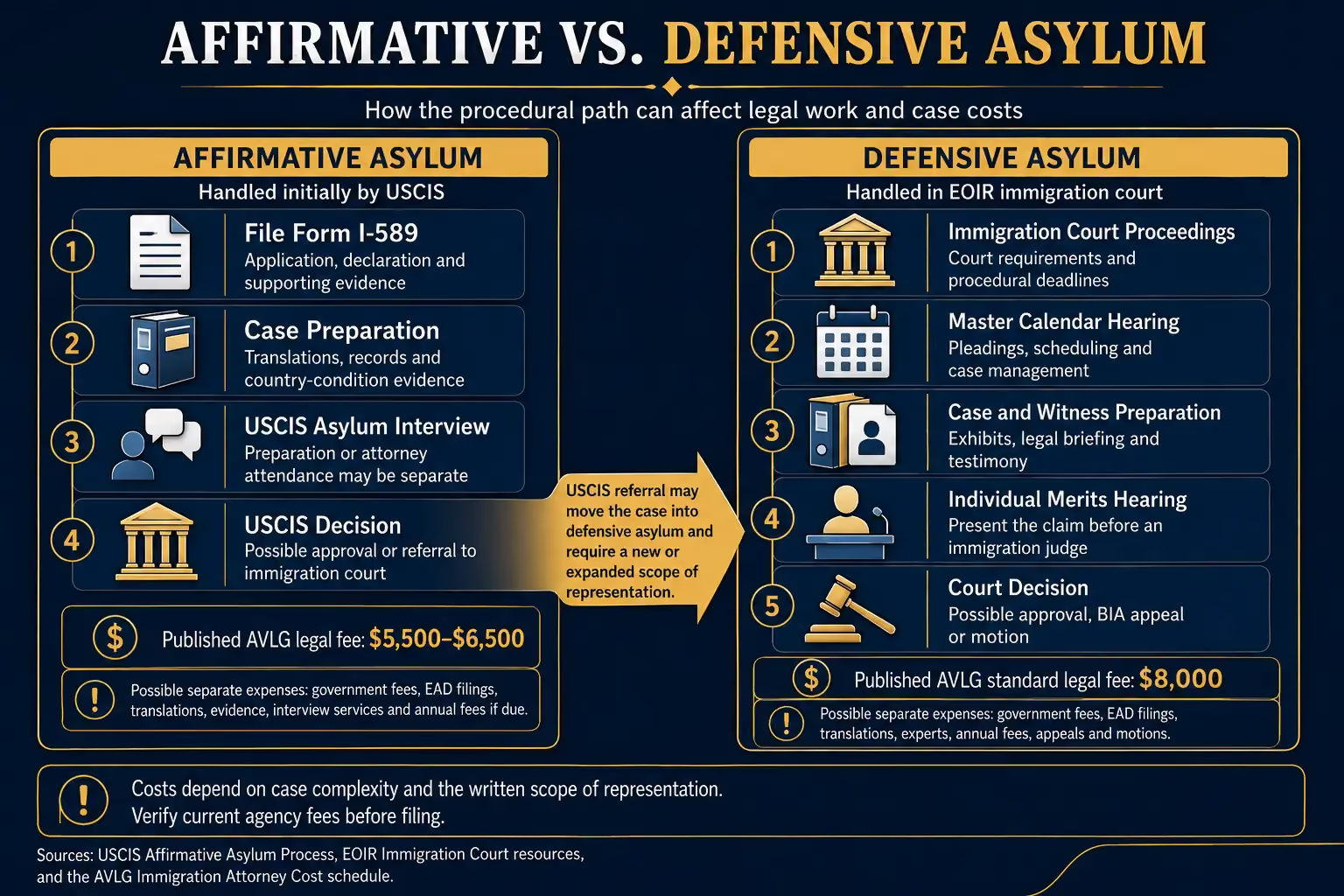
The primary cost difference between affirmative and defensive asylum comes from the procedure involved. An affirmative case is generally prepared for review and an interview with USCIS, while a defensive case requires representation in removal proceedings before an immigration judge.
Defensive cases often cost more because they may involve multiple court appearances, formal pleadings, motions, written briefs, witness preparation, evidentiary submissions, and an individual merits hearing.
The comparison above reflects American Visa Law Group’s current published asylum attorney fees. These figures do not include every possible government, translation, expert, travel, family, appeal, or post-filing expense.
An affirmative asylum case generally centers on preparing Form I-589, developing a detailed declaration, organizing supporting evidence, researching country conditions, and preparing the applicant for a USCIS interview.
Defensive asylum adds the requirements of immigration court procedure. Counsel may need to address the charges in the Notice to Appear, submit formal pleadings, comply with court-specific deadlines, prepare witnesses, respond to DHS arguments, file legal briefs, and present the case during an evidentiary hearing.
The difference in price does not mean that every defensive case is stronger, weaker, or more complicated than every affirmative case. It reflects the additional procedural and litigation work that immigration court frequently requires.
Applicants can review the official USCIS affirmative asylum process and the EOIR immigration court process to understand how the two systems differ.
An application that begins with USCIS may later move to immigration court. If USCIS does not grant asylum and refers the matter, the applicant may renew the asylum request defensively before an immigration judge.
At that point, the cost structure may change because court representation usually requires a new or expanded scope of work. The attorney may need to:
Applicants hiring counsel for an affirmative case should ask whether the agreement includes any work after a USCIS referral. Most affirmative representation agreements should not be assumed to include complete immigration court representation.
A realistic affirmative asylum budget may include the attorney’s base fee, government charges, translations, evidence expenses, employment authorization, interview preparation, and attorney attendance.
A defensive asylum budget may include those same categories plus court appearances, litigation preparation, witness work, legal briefing, and a possible appeal.
Before signing an agreement, applicants should confirm:
Comparing the scope of representation provides a more accurate picture than comparing the two headline prices alone.
Asylum lawyer fees vary significantly because attorneys may be quoting different services, procedural stages, and levels of preparation. A quote covering only Form I-589 preparation should not be compared directly with a quote that includes declaration development, evidence strategy, interview preparation, court appearances, or an individual merits hearing.
American Visa Law Group’s 2026 immigration attorney fee schedule describes a broad U.S. market range of approximately $3,000 to $7,000 or more for an asylum application. Removal-defense representation may range from approximately $5,000 to $15,000 or more, particularly when the case requires substantial litigation or multiple court appearances.
These are general comparison ranges, not fixed national prices or guarantees of what a particular case will cost.
AVLG currently publishes the following firm-specific base fees:
Additional fees may apply for family members, a one-year filing-deadline issue, interview preparation, interview attendance, appeals, motions, expert evidence, or other work outside the original agreement.
The final attorney fee may be affected by:
Many asylum lawyers use a flat fee for clearly defined services. A flat fee can make budgeting easier because the client knows the base legal cost before representation begins.
A flat-fee agreement should still identify what is included. For example, an affirmative asylum flat fee may cover Form I-589, the declaration, evidence preparation, and routine communication but exclude interview attendance, employment authorization, or later immigration court representation.
Hourly billing may be used when the amount of work is difficult to predict. It is more common for:
Under an hourly arrangement, the client should confirm the attorney and legal-assistant rates, billing increments, required retainer, frequency of invoices, and whether there is an estimated budget or spending limit.
Some firms use a hybrid arrangement. The standard case may have a flat fee, while unexpected litigation, extensive supplemental evidence, or later proceedings are billed separately.
An asylum case can continue through several procedural stages. Instead of requiring the entire legal fee at once, a firm may divide the fee according to specific milestones.
Possible stages include:
Staged billing can make payments more manageable and connect each payment to a defined part of the representation. However, applicants should confirm whether the stated amounts are installments toward one total fee or separate charges that become due only if the case reaches a later stage.
A payment plan does not necessarily reduce the overall cost. It changes when the fee is paid.
Before comparing asylum attorney fees, applicants should ask:
The most useful comparison is not simply which lawyer quotes the lowest amount. Applicants should compare the legal work, procedural stages, exclusions, and continuing services described in each written agreement.
An asylum attorney fee may cover legal analysis, application preparation, declaration development, evidence strategy, and preparation for an interview or hearing. However, there is no universal scope of representation. The written agreement determines which services are included and which require an additional payment.
Applicants should review the agreement carefully instead of assuming that one quoted price covers every stage of the asylum process.
Representation often begins with an assessment of the applicant’s eligibility, immigration history, and potential legal risks. The attorney may review:
This review helps determine how the case should be presented and whether additional records or legal analysis may be required. It does not guarantee that USCIS or an immigration judge will approve the application.
A standard legal fee commonly includes preparing or reviewing Form I-589, Application for Asylum and for Withholding of Removal.
Form preparation may involve reviewing:
The attorney may also determine whether the application should be filed with USCIS or immigration court and review the applicable filing instructions, fee requirements, signatures, and supporting documents.
Even minor-looking errors can create inconsistencies with other immigration records. Applicants should therefore disclose earlier filings and provide complete information rather than relying on memory when official records are available.
The personal declaration is often a central part of an asylum application. It gives the applicant an opportunity to explain the relevant events and legal basis of the claim in greater detail than Form I-589 permits.
Attorney assistance may include:
The goal is not to make the account sound more dramatic. The declaration should accurately reflect the applicant’s own experiences and knowledge. Applicants should never be advised to invent, omit, or alter facts to make a claim appear stronger.
The agreement should clarify whether the attorney will substantially develop the declaration, edit a client-prepared draft, or provide only general guidance.
An attorney may help identify which evidence can support the application and how it should be organized. Depending on the facts, the evidence may include:
Legal representation may include reviewing the relevance and consistency of client-provided evidence, preparing an exhibit list, and organizing the filing package.
It does not necessarily include the cost of obtaining records, certified translations, professional evaluations, or expert reports. Those expenses are often paid separately.
Preparation for an asylum interview or immigration court hearing may include:
Defensive asylum preparation may also involve direct-examination planning, preparation for government questioning, exhibit review, and coordination with witnesses.
Applicants should confirm whether interview or hearing preparation is included in the base fee. Attorney attendance may be priced separately even when a preparation session is included.
The work required after filing can vary considerably. Depending on the agreement, the attorney’s fee may include:
More extensive supplemental evidence, an amended declaration, a new legal issue, referral to immigration court, an appeal, or a motion may require a separate agreement and fee.
American Visa Law Group’s immigration attorney fee schedule distinguishes base legal fees from separately priced services such as interview preparation, interview attendance, appeals, motions, and certain forms of additional work.
Before hiring counsel, applicants should request a written explanation of:
The complete scope of representation is more important than the headline price alone.
An asylum attorney’s quoted fee usually covers the legal services described in the representation agreement. It may not include government fees, translations, professional evaluations, expert witnesses, record-retrieval expenses, travel, or other third-party services.
These expenses vary from case to case. Applicants should not assume that every asylum application requires each service listed below.
Documents submitted in a language other than English generally require a complete English translation with the appropriate translator certification.
Documents that may require translation include:
Translation costs depend on the language, number of pages, complexity, urgency, and whether the material is handwritten or difficult to read.
An attorney may identify which documents require translation and review their relevance, but the translator’s fee is usually separate. Applicants should also confirm whether the legal fee includes reviewing translated documents or whether an unusually large volume of material can create an additional document-review charge.
A psychological or medical evaluation may provide relevant supporting evidence in some asylum cases. For example, a qualified professional may assess the applicant’s condition, explain relevant symptoms, or document the continuing effects of past experiences.
These evaluations are not legally required in every asylum case. They should be considered only when they are relevant to a factual or legal issue and likely to add meaningful value.
The professional conducting the evaluation generally charges separately from the attorney. Additional costs may apply for:
Applicants should ask why an evaluation is being recommended and how the resulting report may support the case before paying for it.
Some cases may benefit from an expert who can address country conditions, political or social circumstances, a particular organization, or another specialized subject.
An expert may charge for:
Expert evidence is not automatically necessary. Publicly available government, academic, nonprofit, and reputable news sources may adequately document country conditions in some cases.
Before retaining an expert, the applicant should understand the specific issue the expert will address, the expected fee, and whether the attorney believes the evidence is strategically useful.
An attorney may recommend obtaining records to confirm immigration history, prior statements, court activity, or other relevant facts.
Potential record-retrieval expenses may involve:
Some Freedom of Information Act requests may not require a substantial government fee, but the law firm may charge for preparing, tracking, or reviewing the request. Other agencies, courts, medical providers, or document services may impose copying, certification, retrieval, or mailing charges.
The applicant should confirm whether record retrieval and review are included in the base legal fee.
Written translation and oral interpretation are different services.
A translator converts a written document into English. An interpreter assists with spoken communication during meetings, preparation sessions, interviews, or hearings.
Private interpretation may be required for:
Any interpretation provided by the government during a formal proceeding does not necessarily cover private attorney meetings or preparation sessions. The applicable rules may also differ between USCIS and immigration court, so applicants should review the current appointment or hearing notice.
Applicants should ask whether they are responsible for arranging and paying for private interpretation.
Practical case expenses can become significant when the application contains a large volume of evidence or requires travel.
Possible charges include:
Routine electronic filing, ordinary printing, or standard mailing may be included in some legal fees. Large filings, urgent delivery, or substantial attorney travel may be billed separately.
Before signing the agreement, applicants should ask for a written explanation of:
A realistic asylum budget should include both the lawyer’s fee and a separate allowance for necessary government, evidence, translation, and practical expenses.
A person with a pending asylum application does not receive employment authorization automatically. An eligible applicant generally must submit Form I-765 under category (c)(8) and pay the applicable filing fee unless a specific exemption applies.
The cost depends on whether the filing is an initial application or a renewal. Applicants should also consider possible attorney fees, biometrics requirements, and the effect of the asylum EAD clock.
Form I-765 is the application used to request an Employment Authorization Document. Pending asylum applicants generally file under eligibility category (c)(8).
The principal applicant and each eligible derivative family member seeking employment authorization must submit a separate Form I-765. One work-permit application does not provide employment authorization to every person included on Form I-589.
Applicants should review the current USCIS Form I-765 page for the correct form edition, filing method, eligibility category, supporting documents, and filing address.
Older online resources may state that the first asylum-based work permit is free. That information may no longer reflect the current statutory fee framework.
For fiscal year 2026, USCIS publishes the following asylum-applicant EAD fees:
The initial asylum-applicant EAD fee increased from $550 to $560 for fiscal year 2026, while the $275 renewal or extension fee remained unchanged. These amounts are listed in the official USCIS FY2026 fee-adjustment announcement.
A biometrics appointment may be required, but applicants should not assume that every appointment creates a separate biometric fee. The applicable total depends on the filing category and current fee schedule. USCIS may also identify limited exemptions or special rules for certain applicants or settlement classes.
Before filing, applicants should confirm the exact amount through:
Submitting an incorrect fee can result in rejection of Form I-765.
Attorney fees for preparing an asylum-based work-permit application are separate from the government filing fee.
Some asylum representation agreements include the initial Form I-765 as part of the legal services. Others treat it as a separately priced filing. Even when the initial application is included, later renewals may require an additional attorney fee.
Applicants should ask whether the agreement includes:
The agreement should also identify who is responsible for monitoring the expiration date and beginning the renewal process.
The asylum EAD clock measures the period during which a qualifying asylum application has been pending for employment-authorization purposes.
Under the current USCIS instructions, an asylum applicant generally may file Form I-765 after Form I-589 has been pending for at least 150 days. USCIS generally cannot grant the asylum-based EAD until at least 180 days have accrued.
This does not mean USCIS must approve or issue the card on day 180. The 180-day period is an eligibility threshold, and ordinary processing time may continue after that point.
Certain delays requested or caused by the applicant can stop the clock. Examples may include:
The effect of a particular event depends on the procedural history and which agency has the asylum case. Applicants should review the official USCIS Asylum EAD Clock notice before requesting a delay.
A complete EAD budget may include:
Because each applicant files a separate Form I-765, work-permit costs can become significant for a family. Applicants should also plan for possible renewals if the asylum application remains pending beyond the EAD’s validity period.
Government fees and EAD rules can change. The amount and instructions published by USCIS on the filing date should control.
An asylum case that remains pending for several years may create recurring expenses beyond the original filing and attorney fees. Applicants may need to pay annual asylum fees, renew employment authorization, update evidence, replace documents, and obtain additional legal review as circumstances change.
The exact payment dates should not be estimated from the original filing date alone. USCIS, an immigration judge, or the Board of Immigration Appeals may provide the applicable notice, order, amount, and deadline.
For fiscal year 2026, the annual asylum fee is $102. A qualifying application that continues to remain pending may become subject to additional annual fees in later years.
A long-pending case may involve the following expenses:
This table is a budgeting illustration, not a payment schedule. The agency notice or court order determines when a particular fee is due.
For example, a pending family case may generate separate EAD renewal fees for each eligible family member, even if the family owes only one annual fee for a single jointly filed Form I-589. Separate asylum applications may create separate annual-fee obligations.
Applicants should also plan for possible inflation adjustments because the annual asylum fee and certain other immigration charges may change by fiscal year.
For an affirmative asylum application pending with USCIS, the agency generally issues a notice when the annual fee becomes payable. The notice should identify the case, required amount, payment deadline, and applicable online process.
Applicants should:
Payment should not be sent through the EOIR portal when the application remains with USCIS. Applicants should use the current USCIS annual asylum fee payment page and follow the instructions in the personal notice.
A person should not assume that no payment is required simply because a notice has not arrived. However, the system may not permit payment until USCIS marks the fee as due. Applicants with uncertainty about the status of a payment should check the official portal and obtain case-specific guidance.
A case pending before an immigration judge or the Board of Immigration Appeals follows a different process.
EOIR currently states that an application pending for at least one year may become subject to the $102 annual fee. An application that remains pending for another 365 days after the initial annual fee became due may become subject to another annual payment.
The immigration judge or BIA provides a written order concerning the payment. The applicant must use the EOIR Payment Portal and select the applicable annual-asylum-fee filing type.
Applicants should:
EOIR’s Forms and Fees page states that immigration fees must be paid electronically through its portal. EOIR no longer accepts checks or money orders for the listed immigration fees.
If a case moves from USCIS to immigration court, the applicant should preserve prior payment receipts and confirm the correct procedure for the new forum.
The annual asylum fee is not the only expense that may repeat. A long-pending application may also require:
The representation agreement should explain whether routine case monitoring and updates are included or billed separately.
Missing an annual-fee deadline should not be treated as an ordinary billing problem. The consequences depend on whether the case is with USCIS or EOIR and on current court orders and agency policies.
For USCIS cases, a federal court issued an administrative stay in July 2026 affecting certain USCIS policies involving rejection of asylum applications and termination of employment authorization for nonpayment. The USCIS court-order alert should be reviewed for the current status.
The stay does not mean that applicants should ignore annual-fee notices. The litigation and agency procedures may continue to change.
For immigration court and BIA cases, the Board of Immigration Appeals held in Matter of L-F-R- that failure to pay the annual asylum fee by the prescribed deadline can result in the asylum application being pretermitted or treated as abandoned. The decision also states that the fee and nonpayment consequences do not extend to separate requests for statutory withholding of removal or protection under the Convention Against Torture.
Anyone who missed a deadline, paid through the wrong system, did not receive a notice, or cannot locate proof of payment should obtain prompt case-specific guidance. The correct response depends on the agency, procedural history, applicable order, and current status of the law.
Adding a spouse or children to an asylum case can increase attorney fees, document-preparation expenses, translation costs, and employment-authorization fees. The total depends on whether each family member qualifies as a derivative, is physically present in the United States, and needs separate applications or legal analysis.
A principal asylum applicant may generally include a spouse and unmarried children under 21 who are physically present in the United States as derivatives on Form I-589.
USCIS explains the basic family requirements on its asylum information page. Each derivative should be properly identified on the application, and the required relationship and identity documents should be provided.
Family documentation may include:
Even when family members do not have independent asylum claims, their biographical information and immigration histories must be reviewed for accuracy and consistency.
American Visa Law Group currently publishes an additional attorney fee of $250 for each family member added to an affirmative asylum matter. The current immigration attorney fee schedule should be reviewed to confirm the amount and included services.
This family-member add-on is a legal fee. It does not necessarily include government charges, translations, separate work permits, travel documents, professional evaluations, or independent applications.
Every family member who wants an asylum-based Employment Authorization Document generally must submit a separate Form I-765. The principal applicant’s work permit does not authorize a spouse or child to work.
For fiscal year 2026, the government fees are:
For example, a principal applicant and spouse who both request initial employment authorization may face $1,120 in Form I-765 filing fees, before any legal-preparation or document expenses.
If both later renew their EADs, the government renewal fees would total $550, assuming the current $275 amount remains in effect.
Eligible children who seek employment authorization also require separate applications and fees. Families should review the current Form I-765 instructions and fees before each filing because amounts and exemptions can change.
A representation agreement should clarify whether the attorney fee includes:
When a spouse and children are included as derivatives on one principal Form I-589, the annual asylum fee is generally associated with the principal application rather than charged separately for every derivative.
A family member who files a separate Form I-589 may have an independent filing and annual-fee obligation. The applicable amount and payment procedure should be confirmed through the current USCIS or EOIR notice.
This is different from employment authorization, for which each person generally files a separate Form I-765 and pays the applicable individual fee.
Including a family member as a derivative may not be the appropriate strategy in every case. Separate legal analysis may be required when:
A separate Form I-589 can create additional attorney fees, government filing fees, annual asylum fees, evidence requirements, and work-permit expenses.
Separate claims should not be filed merely to create stronger-looking paperwork. The strategy should reflect each person’s actual facts, eligibility, and procedural situation.
A spouse or child outside the United States generally cannot be included as a physically present derivative on the principal applicant’s Form I-589. If the principal later receives asylum, Form I-730 may be available to request qualifying derivative status for certain relatives.
A later Form I-730 refugee/asylee relative petition is a separate process and may involve:
AVLG currently publishes a legal fee of $850 for certain asylee-relative applications. The final amount and scope should be confirmed through a written agreement.
Families should budget separately for the asylum application, individual employment authorization, derivative documentation, and any future process required for relatives outside the United States.
An immigration judge’s denial may create the possibility of an appeal, motion, or later federal-court review. These proceedings are separate from the original asylum representation and usually involve new government filing fees, attorney fees, record review, and written legal arguments.
Applicants should not assume that the lawyer who handled the original hearing will automatically handle an appeal or motion under the same agreement.
A person seeking review of an immigration judge’s decision generally files Form EOIR-26 with the Board of Immigration Appeals.
EOIR currently charges $1,030 for an appeal from an immigration judge’s decision. The payment must be made electronically through the EOIR Payment Portal, and the payment receipt must be submitted with the appeal.
A BIA appeal may involve costs for:
The $1,030 payment is only the government filing fee. Attorney fees for evaluating and preparing the appeal are separate.
Applicants who cannot afford the filing fee may be able to request a waiver using Form EOIR-26A. Approval is not automatic. The request must establish the required financial hardship and comply with the applicable filing instructions.
Current amounts and procedures appear on EOIR’s appeal and motion fee schedule.
A motion is different from an appeal.
A motion to reopen generally asks the immigration judge or BIA to reopen proceedings based on new facts or evidence that were not previously considered.
A motion to reconsider generally argues that the prior decision contained a legal or factual error based on the existing record.
Current EOIR government fees include:
Attorney fees are separate and may depend on:
EOIR instructions indicate that certain motions to reopen based exclusively on asylum, as well as some motions involving specific statutory circumstances, may be treated differently for filing-fee purposes. Applicants should not assume that an exemption applies without reviewing the current EOIR forms instructions and procedural history.
A fee waiver may be available for some appeals and motions, but it must be properly requested and approved. This differs from the initial and annual asylum fees, which currently do not permit a waiver.
A motion may also require expenses beyond the government and attorney fees, including:
A motion based on new evidence may require significantly more preparation than a motion addressing a narrow legal error. The written fee agreement should identify whether supporting evidence, reply briefing, and later representation are included.
After the BIA issues a final decision, a person may be able to seek review in the appropriate federal court of appeals. This process is separate from the immigration court and BIA proceedings.
Federal-court review may involve:
Not every asylum denial qualifies for the same form of federal review, and filing a petition does not automatically provide every form of requested protection or stay. The available arguments and procedures depend on the final order, preserved issues, jurisdiction, and applicable deadlines.
Federal appellate representation may be handled by a different lawyer or under a new agreement. Applicants should confirm whether prior counsel will evaluate federal review, preserve the file, and provide the administrative record.
Before hiring counsel for post-decision work, applicants should ask:
Appeals and motions are not automatic continuations of the original asylum case. A realistic budget should treat each post-decision stage as a separate legal proceeding unless the written agreement clearly states otherwise.
An additional evidence request may create a separate attorney fee, but the answer depends on the representation agreement, the reason for the request, and the amount of new work required.
Some agreements include routine post-filing assistance. Others charge separately when the response requires extensive evidence, new legal research, a revised declaration, expert involvement, or work outside the original scope.
“Request for Evidence,” or RFE, is a USCIS term used in many immigration matters. Asylum cases may involve different types of notices, requests, and filing orders depending on whether the matter is with USCIS or immigration court.
Additional work may arise from:
The cost should therefore be evaluated according to the actual work required rather than the label placed on the notice.
Routine post-filing services may be included when the attorney only needs to:
The agreement should identify whether ordinary follow-up with USCIS or immigration court is included in the base fee.
A separate fee is more likely when the response requires:
Third-party expenses—such as translations, evaluations, experts, record retrieval, printing, or mailing—may also remain separate even when the attorney’s response work is included.
An affirmative asylum agreement should not automatically be assumed to include immigration court representation.
If USCIS refers the case to immigration court, the attorney may need to complete a new scope of work involving:
This later stage commonly requires a new agreement or additional fee.
Before hiring an asylum attorney, applicants should ask:
A fair comparison should examine both the base legal fee and the circumstances that may create later charges. The written agreement—not a general assumption—should determine whether a particular evidence response costs extra.
The examples below are illustrative budgeting models, not legal-fee quotes or guarantees. Actual costs depend on eligibility, evidence, procedural stage, family members, attorney scope, and whether the case remains pending or moves into immigration court.
The calculations use current FY2026 government charges and American Visa Law Group’s published asylum attorney fees. Applicants should verify all amounts before filing.
A person who prepares an affirmative asylum application without an attorney may avoid legal fees but remains responsible for selecting the correct filing process, completing Form I-589, developing the declaration, organizing evidence, and meeting all deadlines.
The known government total would be:
These totals exclude translations, evidence, professional evaluations, mailing, and later renewals.
A self-prepared application should not be described as legally simple merely because no lawyer is involved.
AVLG currently publishes an affirmative asylum attorney fee of $5,500 to $6,500, depending on complexity.
The initial legal fee, Form I-589 fee, and one initial EAD would total approximately $6,160 to $7,160.
If interview preparation and attorney attendance are added, the known total would become approximately $7,460 to $8,460, before translations, family-member fees, annual fees, or other third-party expenses.
Not every applicant requests or requires every optional service.
An applicant who files more than one year after the most recent U.S. arrival may require additional legal analysis and evidence concerning changed or extraordinary circumstances.
AVLG currently publishes an additional $550 legal fee when a one-year filing-rule issue applies.
The base legal fee, deadline add-on, and Form I-589 fee would total approximately $6,150 to $7,150.
Adding one initial EAD would increase the known total to approximately $6,710 to $7,710, before evidence, translations, interview services, or annual fees.
A one-year issue may require records showing dates, circumstances, medical or other relevant events, and a detailed explanation of why the application was not filed earlier.
AVLG publishes a standard attorney fee of $8,000 for defensive asylum representation. Alternative structures may apply to referred cases, prior AVLG affirmative cases, or matters taken over at a later stage.
If the $100 Form I-589 fee and a $560 initial EAD apply, the known total would be approximately $8,660.
If a $102 annual asylum fee later becomes due, the known total would increase to approximately $8,762, before translations, experts, travel, or appeal expenses.
The actual fee should reflect whether the agreement includes all master calendar hearings, court filings, witness preparation, and the individual merits hearing.
A long-pending family application may create recurring costs for annual asylum fees, separate work permits, EAD renewals, updated evidence, and family-member legal work.
Consider an illustrative affirmative case involving a principal applicant and one derivative spouse:
The base legal fee, family-member add-on, Form I-589 fee, and two initial EADs would total approximately $6,970 to $7,970.
If a $102 annual fee later becomes due, the known total would become approximately $7,072 to $8,072. A later EAD-renewal cycle for both family members would add another $550, assuming the current renewal fee remains unchanged.
This example assumes the spouse qualifies as a derivative and both people request employment authorization. Separate Form I-589 applications, additional children, independent claims, professional evaluations, or immigration court proceedings would change the budget.
These figures do not include every possible translation, evaluation, expert, travel, mailing, annual, renewal, interview, appeal, or motion expense. A case-specific written agreement remains the best source for understanding the expected scope and total legal cost.
Yes. U.S. immigration law does not require an asylum applicant to hire an attorney. A person who is eligible to file may prepare and submit Form I-589 without legal representation.
Self-filing can reduce upfront attorney fees, but it does not eliminate government charges, translation expenses, evidence costs, employment-authorization fees, or the applicant’s responsibility for meeting all procedural and legal requirements.
A person filing affirmatively with USCIS is responsible for:
The official USCIS Form I-589 page provides the current form, instructions, filing information, and fee guidance.
Submitting an application without an attorney does not mean the case is simple. The applicant remains responsible for understanding the legal requirements and ensuring consistency with prior immigration, visa, border, and government records.
A person in removal proceedings may also appear without a lawyer. However, immigration court is an adversarial proceeding involving an immigration judge and a government attorney representing DHS.
The respondent may need to:
Individuals in immigration proceedings have the right to obtain representation, but the government does not ordinarily appoint and pay for an attorney. EOIR explains this process in its immigration court information.
Potential problems include:
These risks should be explained without suggesting that every self-prepared case will fail. Some applicants successfully represent themselves, and hiring an attorney does not guarantee approval.
Applicants may want to obtain legal advice when the case involves:
A person who cannot afford full representation may consider paying for a consultation, case review, or limited-scope assistance if available. The agreement should clearly identify what the lawyer will and will not do.
EOIR maintains a current List of Pro Bono Legal Service Providers for people in immigration proceedings. The list includes nonprofit organizations, referral services, and participating attorneys by immigration court location.
Low-income applicants may also seek assistance from a DOJ-recognized nonprofit organization. Certain non-attorney employees or volunteers may provide authorized immigration legal services as accredited representatives through EOIR’s Recognition and Accreditation Program.
Availability may be limited, and an organization may use its own eligibility, location, income, or case-type requirements. Applicants should contact providers as early as possible rather than waiting until an interview or court deadline is near.
Only authorized individuals should provide immigration legal representation. Before paying for help, applicants should verify that the person is:
A notary, document preparer, translator, or immigration consultant is not automatically authorized to provide legal advice or represent someone before USCIS or immigration court.
Self-filing may reduce legal fees, but the decision should consider the complexity, procedural setting, available evidence, deadlines, and consequences of an incomplete or inconsistent application.
Applicants can often control asylum expenses by organizing information early, preserving records, understanding the attorney’s fee agreement, and avoiding unnecessary last-minute work.
Cost reduction should focus on efficiency—not on removing important facts, evidence, or legal analysis.
Waiting until a filing or hearing deadline approaches can increase translation, courier, and attorney-preparation costs.
Applicants can begin collecting:
Early collection gives the attorney time to determine which materials are useful and which do not need to be translated or submitted.
A clear timeline can reduce repeated meetings and help identify missing dates, inconsistencies, and evidence.
The timeline may include:
The timeline should be accurate and based on the applicant’s memory and records. It should not be treated as a substitute for the declaration or changed to make the case appear stronger.
Applicants should preserve original messages, emails, photographs, documents, and electronic files whenever possible.
Useful practices include:
Organized originals can reduce later authentication, explanation, or retrieval work.
Not every collected document must necessarily be submitted or translated. Applicants can ask the attorney to identify the most relevant evidence before paying to translate a large volume of material.
A cost-conscious process may involve:
Applicants should not rely solely on unreviewed machine translations for evidence submitted to USCIS or immigration court.
Hiding a prior filing, visa answer, arrest, or inconsistent statement can create greater legal work and risk later.
Early disclosure allows the attorney to:
It is generally less expensive to evaluate a problem during initial preparation than to respond to it under a short government or court deadline.
Psychological evaluations, medical reports, and country-condition experts may be valuable in certain cases, but they are not required in every asylum application.
Before paying for an expert, applicants should ask:
The goal is to use expert evidence strategically rather than automatically.
Applicants can avoid unexpected expenses by confirming:
A clear agreement makes it easier to budget and decide which optional services are appropriate.
Missed notices can create urgent and expensive problems.
Applicants should:
Good recordkeeping can reduce duplicate filings, replacement costs, and emergency legal work.
Reducing costs should make the process more organized and efficient. It should never involve concealing information, manufacturing evidence, copying another person’s declaration, or ignoring a filing requirement.
An asylum lawyer may be worth the cost when the case involves legal, evidentiary, or procedural issues that would be difficult for the applicant to identify and address alone. However, representation is not legally required, and hiring an attorney does not guarantee approval.
The decision should consider the case’s complexity, procedural stage, available evidence, budget, and access to nonprofit or limited-scope assistance.
Depending on the representation agreement, an attorney may help:
An attorney cannot change the facts, guarantee a favorable decision, or require the government to process the case faster. The potential value comes from legal analysis, preparation, organization, and representation.
Legal assistance may be especially important when the case involves:
These issues can affect eligibility, evidence strategy, and the appropriate procedural response.
Some applicants prepare their own affirmative asylum applications, particularly when they:
Even in a self-prepared case, a paid consultation or limited case review may help identify issues before filing. The lawyer’s responsibility should be clearly defined if the service is limited in scope.
Applicants can ask the following questions:
The answer will differ for each person. A straightforward affirmative filing and a defensive case approaching an individual hearing do not present the same level of procedural risk.
Applicants may explore:
Applicants should verify that anyone providing legal advice is an authorized attorney or accredited representative.
A meaningful cost-benefit assessment requires information about the applicant’s arrival date, immigration history, filing status, evidence, family members, and any upcoming interview or hearing.
Applicants may discuss their asylum case with American Visa Law Group to receive information about the proposed scope of representation and expected legal fees.
Hiring a lawyer should be an informed decision based on the case’s actual needs—not fear, pressure, or a promise of success.
In most situations, asylum-related fees are not refunded simply because the application is denied. Government agencies generally charge these fees to receive and process a filing—not to guarantee approval.
USCIS states that filing and biometric-service fees are final and nonrefundable regardless of the action taken on a request or whether the applicant withdraws it. This generally applies to the Form I-589 filing fee, employment authorization fees, and other USCIS charges associated with an asylum case. USCIS may issue a refund in limited circumstances involving an agency error, but an unfavorable decision by itself normally does not qualify.
EOIR follows a similar approach for immigration court filings. Its filing-fee guidance explains that an appeal or motion fee is not reimbursed merely because the appeal succeeds, the motion is granted, or the filing is withdrawn.
Attorney fees require a separate analysis. An asylum lawyer is paid for professional services such as preparing the application, developing evidence, conducting legal research, preparing the applicant for testimony, and appearing at interviews or hearings. Payment does not guarantee a particular outcome.
Whether any portion of the attorney fee may be returned depends on the representation agreement, the billing structure, the amount of work completed, and applicable professional-conduct rules. Applicants should review cancellation and refund terms when they compare asylum attorney-fee quotes.
A denial may also create additional expenses. Depending on the case, the applicant may need representation in immigration court, a motion to reopen or reconsider, an appeal to the Board of Immigration Appeals, or federal-court review. These services and government charges are usually separate from the cost of the original application. Our discussion of asylum appeal and motion costs explains these possible post-decision expenses in more detail.
Before hiring an attorney, ask which services are included, what happens if the case is referred or denied, and whether later proceedings require a new agreement. Understanding these terms in advance can prevent an unexpected denial from becoming an equally unexpected financial burden.
The total asylum cost in 2026 cannot be reduced to a single filing fee. The final amount depends on whether the case is affirmative or defensive, whether legal representation is needed, how much evidence must be prepared, whether family members are included, and whether the case continues into court or an appeal.
A realistic budget may need to account for:
Applicants should confirm current government fees before filing and carefully review what an attorney’s quote includes. The lowest fee is not always the best value, but applicants should also avoid paying for services their case does not require.
Because asylum cases can involve strict deadlines and serious consequences, cost should be evaluated alongside the attorney’s experience, proposed strategy, and scope of representation. Obtaining a case-specific asylum cost estimate can help applicants plan more accurately and avoid unexpected expenses as the case progresses.
Because asylum fees and procedures can change, applicants should confirm current requirements with the agency handling their case.

Hasan Abdullah, Esq. is the Founder and Managing Attorney of American Visa Law Group. His practice focuses on U.S. immigration law, including family-based immigration, employment-based immigration, adjustment of status, consular processing, waivers, PERM labor certification, NIW, EB-1, H-1B, O-1, and complex immigration strategy.
Through American Visa Law Group, Mr. Abdullah helps individuals, families, professionals, investors, and employers understand their immigration options and plan around changing government policies, USCIS procedures, and Visa Bulletin movement. His work emphasizes practical legal analysis, realistic expectations, and strategy tailored to each applicant’s immigration history and long-term goals.


