Hasan Abdullah, Esq.
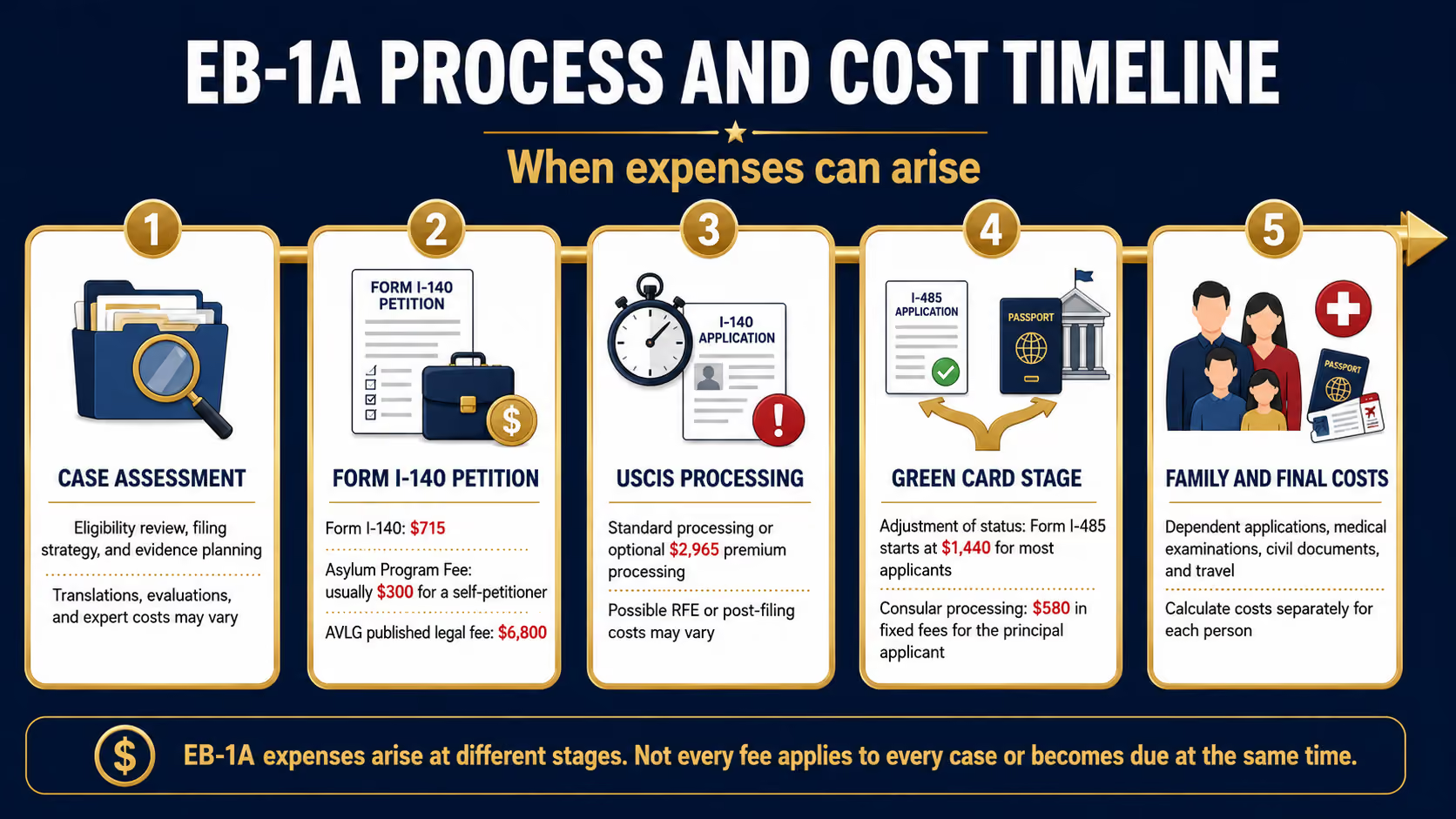
The EB-1A cost in 2026 begins at $1,015 in mandatory government fees for a typical individual self-petitioner. This amount includes the $715 Form I-140 filing fee and the $300 Asylum Program Fee. Applicants who request premium processing must pay an additional $2,965, while attorney fees, evidence preparation, adjustment of status, consular processing, and dependent applications are separate.
American Visa Law Group currently publishes an EB-1A attorney fee of $6,800. Based on that fee, the initial petition-stage cost is approximately $7,815 without premium processing or $10,780 with premium processing. These totals cover preparation and filing of the extraordinary-ability petition. They do not include the later cost of obtaining permanent residence through Form I-485 or an immigrant visa.
EB-1A applicants may self-petition without a permanent job offer or PERM labor certification. However, filing the forms is only one part of the process. The petition must present evidence showing extraordinary ability, sustained national or international acclaim, and recognition placing the applicant among the small percentage who have risen to the top of their field. The cost of preparing a case can therefore depend on the quality, complexity, and organization of the evidence—not simply the number of documents submitted.
Applicants who are still evaluating eligibility can explore AVLG’s employment-based immigration services before committing to the full cost of a petition. This guide explains the principal government filing fees, premium processing, EB-1A lawyer fees, evidence-related expenses, adjustment of status, consular processing, and the additional costs that may apply to a spouse or children. Because filing fees can change, applicants should also verify the current amount through the official USCIS Form I-140 guidance before submitting a case.
For a typical individual self-petitioner, the mandatory government cost of filing an EB-1A petition is $1,015. This combines the $715 Form I-140 filing fee with the $300 Asylum Program Fee. Adding the optional $2,965 premium processing fee increases the petition-stage government total to $3,980.
Applicants who retain American Visa Law Group should also account for the firm’s currently published $6,800 EB-1A attorney fee. Based on that fee, preparing and filing the initial petition would cost approximately $7,815 without premium processing or $10,780 with premium processing.
These figures do not represent the complete cost of becoming a permanent resident. Approval of Form I-140 establishes the applicant’s eligibility for EB-1A classification, but the applicant must still complete adjustment of status or immigrant visa processing.
The initial budget should include the required USCIS fees, attorney representation if used, and any expense needed to organize or strengthen the supporting evidence.
The $300 Asylum Program Fee is not universal. A regular employer filing Form I-140 generally pays $600, a qualifying small employer pays $300, and a qualifying nonprofit organization may be exempt. The correct amount therefore depends on who is filing the petition.
Applicants can review AVLG’s current immigration attorney fee schedule. The representation agreement should also be checked carefully because government fees, premium processing, adjustment of status, dependent applications, expert evidence, and responses to certain USCIS notices may be priced separately.
The next group of expenses depends on whether the applicant completes the permanent-residence process in the United States or abroad.
An applicant adjusting status may need to budget for Form I-485, a medical examination, employment authorization, advance parole, certified translations, and separate legal representation. An applicant using consular processing may instead pay an immigrant visa application fee, medical costs, civil-document expenses, travel costs, and the USCIS Immigrant Fee.
A spouse and qualifying children can also increase the total substantially because most Green Card-stage fees apply separately to each person. For that reason, a family should not calculate its budget by looking only at the principal applicant’s Form I-140 expenses.
Not every applicant will pay every fee. Someone filing only Form I-140 may initially face the petition-stage expenses alone, while a person eligible for concurrent filing may pay both petition and adjustment costs at the same time. The most useful way to calculate the total EB-1A cost is to separate the budget into the petition stage, the permanent-residence stage, and any dependent or evidence-related expenses.
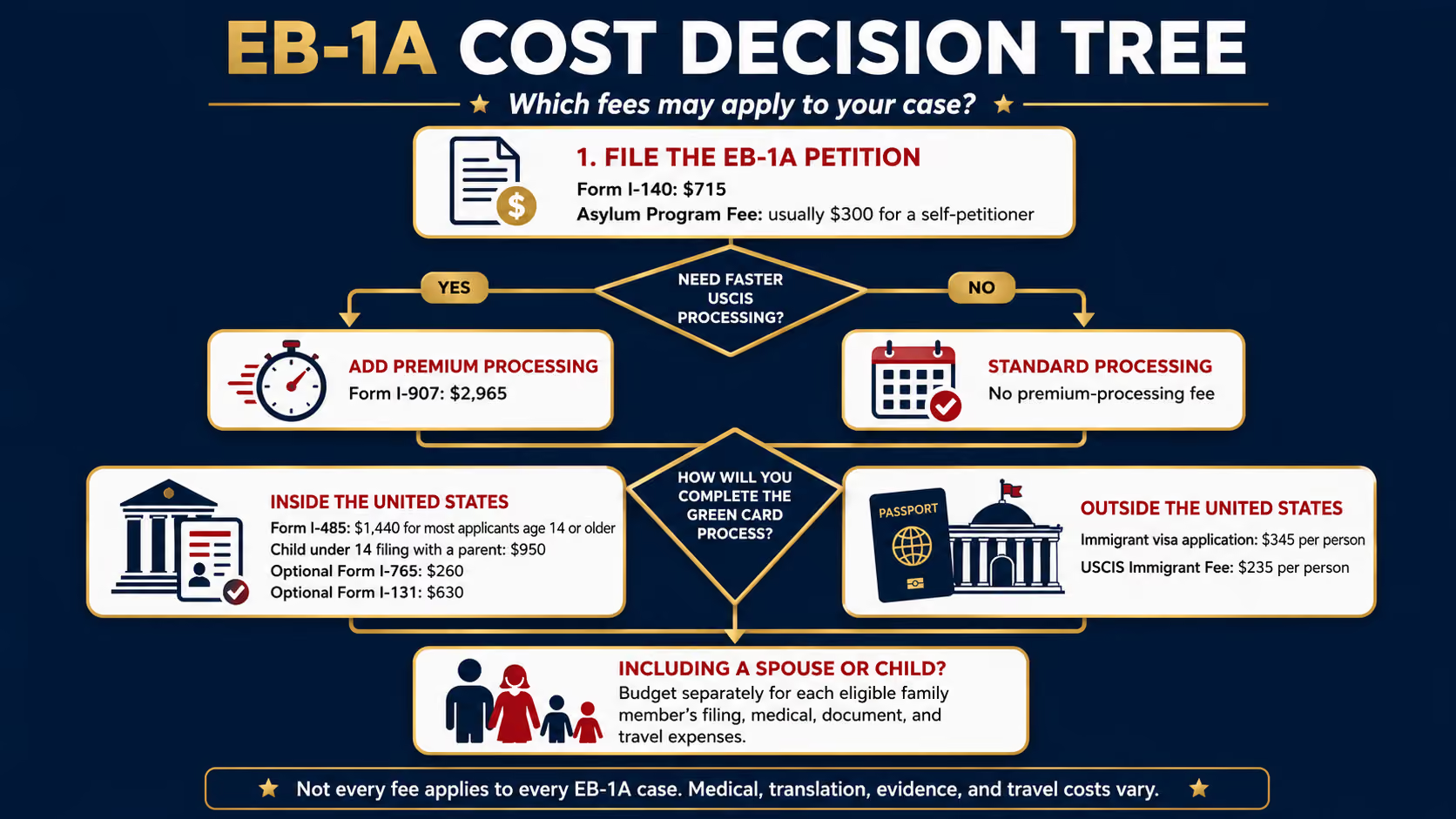
An EB-1A applicant begins the process by filing Form I-140, Immigrant Petition for Alien Workers, with USCIS. For a typical individual self-petitioner, the required government fees at this stage total $1,015. The payment consists of the $715 Form I-140 filing fee and the applicable $300 Asylum Program Fee.
These fees cover USCIS review of the immigrant petition. They do not cover adjustment of status, consular processing, a medical examination, a work permit, a travel document, or the production of a Green Card.
The 2026 filing fee for Form I-140 is $715. This fee applies whether the applicant files independently or an employer files the petition.
Form I-140 is used to establish eligibility for EB-1A classification. USCIS reviews whether the applicant has extraordinary ability in the sciences, arts, education, business, or athletics and whether the submitted evidence satisfies the applicable legal standard.
Approval of Form I-140 does not by itself grant permanent residence, employment authorization, or permission to travel. It confirms eligibility for the immigrant classification. The applicant must then complete the Green Card process through Form I-485 or an immigrant visa.
Applicants should confirm the current form edition, filing address, payment method, and fee through the official USCIS Form I-140 page. Filing with the wrong fee or using an outdated form edition can result in rejection before USCIS evaluates the substance of the case.
The Asylum Program Fee is charged in addition to the Form I-140 filing fee. The amount depends on the type of petitioner:
Most EB-1A applicants filing for themselves generally pay the reduced $300 Asylum Program Fee. An applicant should not automatically submit the same amount when an employer or nonprofit organization is filing, because the correct fee depends on the petitioner’s classification.
This distinction is especially important in EB-1A cases because the category permits self-petitioning but does not require it. Some applicants file independently, while others receive support from a U.S. employer that agrees to act as the petitioner.
Yes. An EB-1A applicant may file Form I-140 without a permanent job offer, employer sponsorship, or PERM labor certification. This can make the category attractive to accomplished professionals who want greater independence from a particular employer.
Self-petitioning does not reduce the EB-1A evidentiary standard. The applicant must still demonstrate extraordinary ability, sustained national or international acclaim, and an intention to continue working in the area of expertise in the United States.
It also does not mean the applicant must personally pay every expense. An employer, business partner, or other organization may choose to pay or reimburse filing and legal fees, depending on the parties’ arrangements and applicable policies.
USCIS filing fees are generally nonrefundable once the agency accepts the filing, even if the petition is later denied or the applicant decides not to continue. Paying the fee covers USCIS processing and adjudication; it does not purchase an approval.
There can be limited exceptions when a payment was collected incorrectly or USCIS determines that a refund is otherwise appropriate. Applicants should therefore avoid describing the fees as absolutely nonrefundable in every possible circumstance.
Before submission, the filing package should be checked for the correct fee, form edition, signatures, supporting documentation, and mailing address. A careful prefiling review can reduce the risk of rejection and the disruption of having to prepare and send the package again.
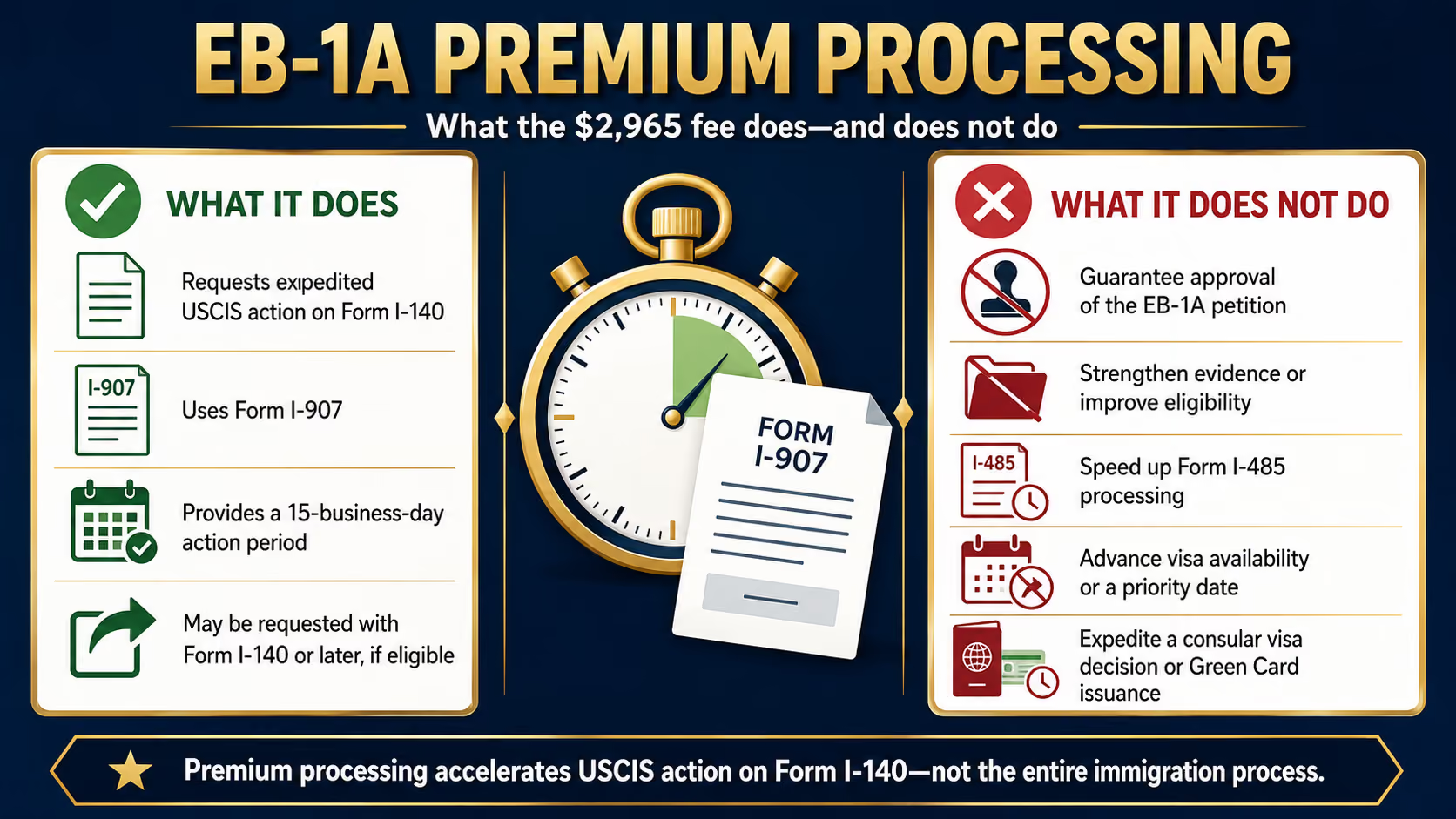
Premium processing is an optional service that allows an EB-1A applicant to request faster USCIS action on Form I-140. For requests postmarked on or after March 1, 2026, the premium processing fee is $2,965.
This fee is paid in addition to the $715 Form I-140 filing fee and the applicable Asylum Program Fee. A typical individual self-petitioner therefore pays $3,980 in government petition fees when premium processing is included.
An applicant requests premium processing by filing Form I-907, Request for Premium Processing Service. It may be submitted with the initial Form I-140 petition or filed later while the petition remains pending.
For an EB-1A petition, USCIS generally agrees to take qualifying adjudicative action within 15 business days after receiving a properly filed premium processing request. That action is not necessarily an approval. USCIS may:
If USCIS issues a Request for Evidence or Notice of Intent to Deny, the premium processing period stops. A new premium processing period generally begins after USCIS receives a complete response.
Applicants should review the current USCIS premium processing guidance before submitting Form I-907 because fees, eligible classifications, filing addresses, and service terms can change.
Premium processing applies to the Form I-140 petition, not the entire immigration process. It does not automatically accelerate:
This distinction matters when an applicant’s priority date is not current. A faster Form I-140 decision may provide useful certainty, but it does not create an immediately available immigrant visa number or allow USCIS to approve Form I-485 before the applicable priority date becomes current.
No. Premium processing changes the timeframe for USCIS action; it does not lower the EB-1A legal standard or increase the applicant’s likelihood of approval.
USCIS must still determine whether the applicant satisfies the extraordinary-ability requirements and whether the evidence, viewed as a whole, demonstrates sustained national or international acclaim. A petition should therefore be prepared with the same care regardless of whether premium processing is requested.
Paying for faster review cannot correct weak evidence, unsupported claims, inconsistent records, or an incomplete final-merits argument.
Premium processing may be useful when the applicant needs an earlier I-140 decision for immigration, professional, or personal planning. It may also help when an applicant wants to know the outcome before making decisions about employment, travel, relocation, or the next stage of the Green Card process.
However, the practical value depends on more than speed. Applicants should consider:
Some applicants file Form I-140 through regular processing and add premium processing later. This can preserve flexibility, although the applicant must still pay the full premium processing fee when Form I-907 is submitted.
The decision should be based on the applicant’s timing needs and broader immigration strategy—not on the assumption that faster processing produces a more favorable result.
EB-1A attorney fees vary by law firm and by the complexity of the applicant’s evidence. Some firms charge a flat fee for preparing the Form I-140 petition, while others use hourly billing or divide the legal fee into stages.
American Visa Law Group currently publishes an EB-1A attorney fee of $6,800. This is separate from USCIS filing fees, premium processing, adjustment of status, consular processing, and third-party expenses.
An EB-1A petition involves more than completing immigration forms. The attorney must assess the applicant’s accomplishments, identify the strongest evidentiary criteria, and explain why the evidence demonstrates extraordinary ability.
Depending on the representation agreement, the legal fee may include:
The exact scope depends on the written agreement. Applicants should confirm who will draft recommendation letters, organize exhibits, communicate with experts, and respond to USCIS after filing.
Government fees are generally not included in the attorney fee. Additional legal or third-party expenses may also arise from:
Applicants should ask whether an RFE response is included, discounted, or billed separately. This can materially affect the final cost if USCIS requests additional evidence.
AVLG’s current pricing is available through its immigration attorney fee schedule. The published amount provides a useful starting point, but the engagement agreement controls the services included in a particular case.
The central challenge in an EB-1A case is not simply collecting a large number of documents. The evidence must be selected and presented in a way that connects the applicant’s achievements to the legal standard.
For example, evidence may show that an applicant published research, judged the work of others, received media coverage, earned a high salary, or made an original contribution. The attorney must still explain the significance of those accomplishments, whether the evidence satisfies the claimed criteria, and how the record as a whole demonstrates sustained national or international acclaim.
This is especially important during the final-merits analysis. Satisfying at least three evidentiary criteria does not automatically result in approval. USCIS also evaluates the quality and significance of the evidence in its totality.
A well-prepared petition therefore prioritizes relevance and credibility over volume. Hundreds of pages of repetitive or weak documentation may be less persuasive than a smaller, carefully organized record supported by objective evidence.
Price is important, but it should not be the only consideration. Applicants comparing EB-1A lawyer costs should also examine:
A lower fee may cover only form preparation, while a higher fee may include extensive evidence analysis and petition drafting. The most useful comparison is therefore between the scope and quality of the services—not the headline price alone.
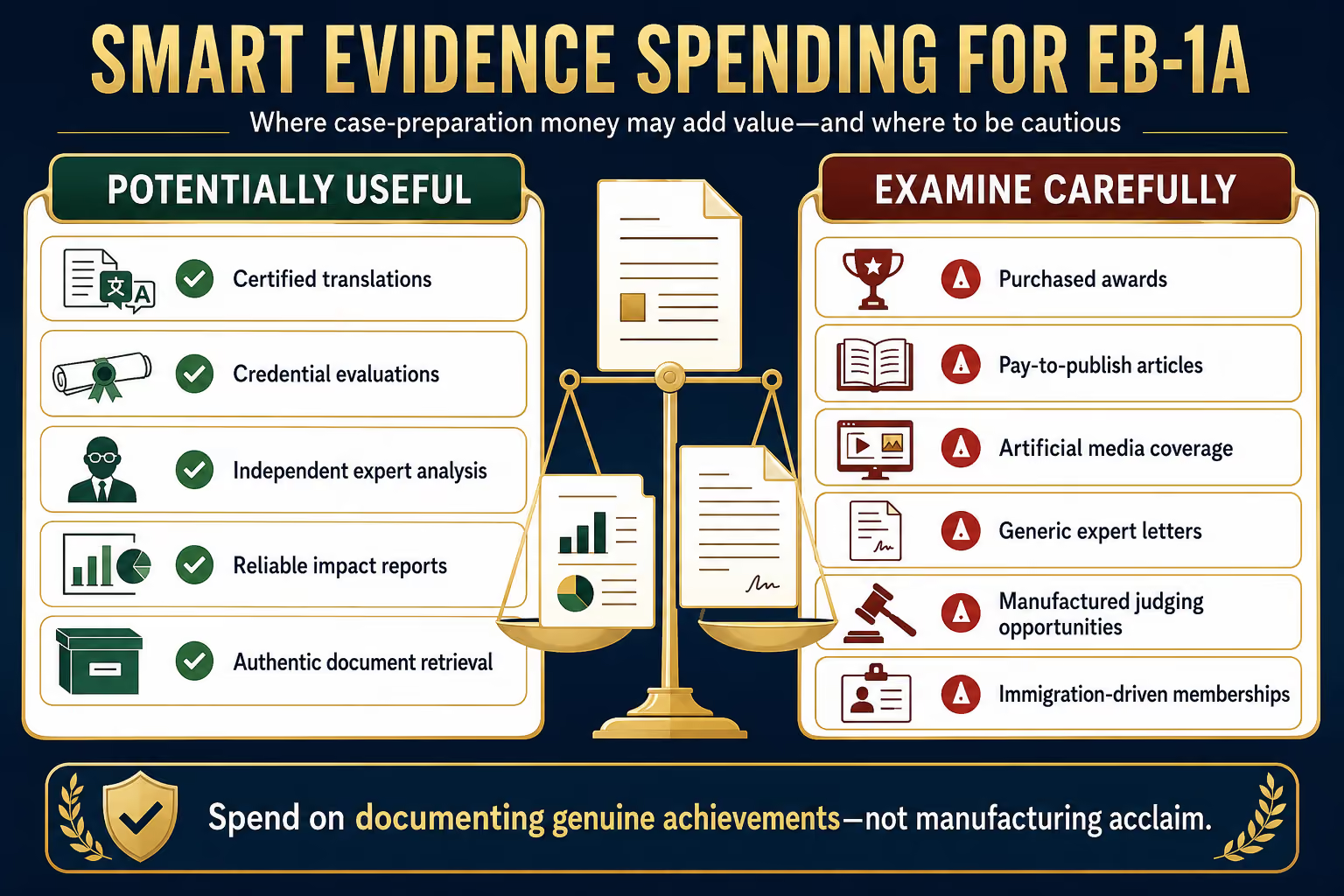
Government and attorney fees are not always the only expenses involved in an EB-1A petition. Some applicants also pay for translations, credential evaluations, expert opinions, document retrieval, or specialized reports.
These costs vary significantly. A researcher with well-organized English-language records may have few additional expenses, while an entrepreneur, artist, or professional relying on foreign documents may need more extensive supporting work.
An expert opinion letter may help explain technical work, industry influence, or the importance of an applicant’s contributions. Fees vary according to the expert’s qualifications, the complexity of the subject, and the amount of research required.
An expert letter should not merely repeat the applicant’s résumé or describe the person as talented. It should provide credible, well-supported analysis that helps USCIS understand evidence that may otherwise be difficult to evaluate.
Not every EB-1A case needs a paid expert opinion. Objective records, independent media coverage, citation evidence, contracts, commercial results, awards, or proof that others have used the applicant’s work may be more persuasive. Applicants should avoid paying for multiple generic letters that add volume without meaningful evidence.
A credential evaluation may be useful when the applicant relies on a foreign degree, professional qualification, or academic position that USCIS may not readily understand. The price depends on the type of evaluation and how quickly it is needed.
Documents written in another language generally require a complete English translation accompanied by the translator’s certification. This may apply to:
USCIS generally does not require the translator to be a particular licensed professional, but the translation must be complete and properly certified. Costs usually depend on the language, document length, technical complexity, and deadline.
Researchers and academics may pay for citation reports, archived publications, or access to professional databases. However, USCIS does not impose a minimum citation count for EB-1A classification. The value of citation evidence depends on what it demonstrates about the applicant’s influence within the field.
Applicants can review AVLG’s discussion of how many citations may be needed for EB-1A for additional context.
Professionals outside academia may instead rely on business, artistic, athletic, or industry records. Possible expenses include obtaining:
These records should be collected because they help prove a relevant fact—not because they make the petition look larger.
Applicants should be cautious about services that sell awards, memberships, media coverage, judging opportunities, or publications primarily for immigration purposes. Paying for an opportunity does not automatically make the resulting evidence invalid, but USCIS may examine its independence, selectivity, reputation, and actual significance.
Evidence created shortly before filing may also receive limited weight if it appears manufactured or lacks objective value. An applicant can spend substantial amounts on promotional material that does little to strengthen the legal case.
The better approach is to begin with authentic professional accomplishments and determine how to document them credibly. Third-party services should support a legitimate record, not attempt to create acclaim that did not previously exist.
Before paying for an expert, evaluator, translator, or evidence service, applicants should ask how the expense supports a specific EB-1A criterion or the final-merits analysis. If the connection is unclear, the service may not be necessary.
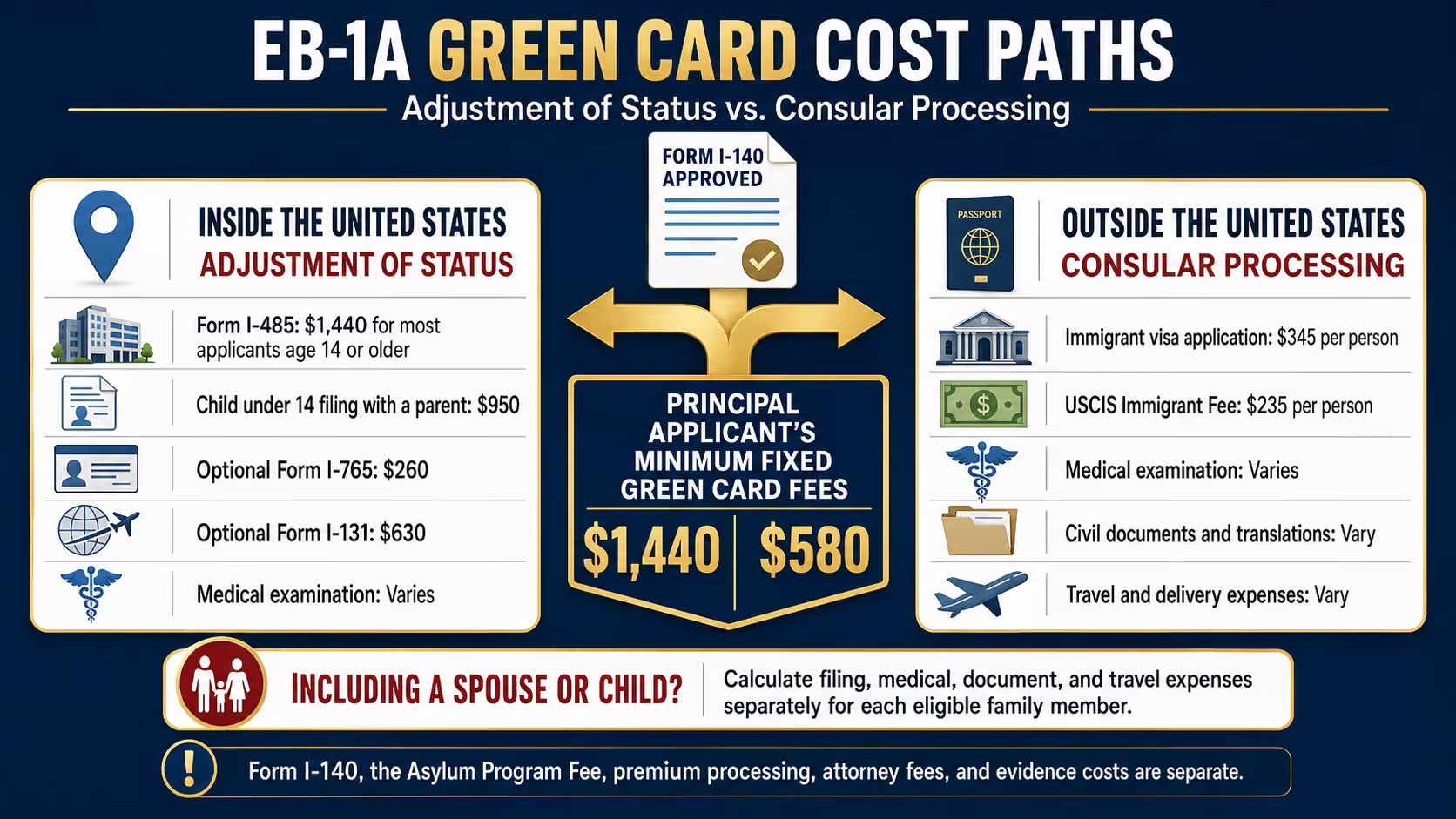
An EB-1A applicant who is physically present in the United States may be able to apply for permanent residence through adjustment of status. This stage is separate from Form I-140 and has its own government, medical, and legal expenses.
For most applicants age 14 or older, the Form I-485 filing fee is $1,440. A child under 14 filing with a parent generally pays $950. Each family member files a separate Form I-485 and pays the applicable fee.
Form I-485 is the application that requests lawful permanent resident status. An approved EB-1A petition alone does not grant a Green Card, so applicants should budget for both stages.
The standard adjustment expenses may include:
Biometric services are generally included in the Form I-485 filing fee rather than charged as a separate standard fee. Applicants should still confirm all amounts through the current USCIS filing-fee guidance before submitting the application.
An EB-1A applicant may be able to file Form I-140 and Form I-485 together when an immigrant visa number is immediately available and USCIS permits use of the applicable Visa Bulletin chart.
Concurrent filing can save time, but it creates a larger upfront cost. The applicant must pay the I-140 fees and the I-485 fee at the same time, along with any premium processing, work authorization, travel-document, medical, or legal expenses.
Concurrent filing does not guarantee that both applications will be approved together. USCIS may approve the I-140 first and continue holding the I-485, particularly when visa availability changes or additional review is required.
Applicants should confirm the current filing chart before assuming they are eligible to submit Form I-485. This is especially important for applicants born in countries with EB-1 backlogs.
An adjustment applicant may file Form I-765 to request employment authorization based on the pending Form I-485. The reduced filing fee for this category is generally $260.
Employment authorization is not automatically issued when Form I-485 is filed. An applicant who already has valid work-authorized status should consider whether a separate employment authorization document is necessary for the person’s strategy.
Form I-131 may be filed to request advance parole for travel while adjustment of status is pending. The filing fee is generally $630. However, receiving a travel document does not guarantee admission to the United States, and departing without the appropriate authorization can create serious consequences for certain applicants.
Travel decisions should also account for the applicant’s current nonimmigrant status, any history of unlawful presence, and possible grounds of inadmissibility. This is one area where a seemingly routine filing decision can have broader immigration consequences.
Most adjustment applicants must submit Form I-693, Report of Immigration Medical Examination and Vaccination Record, completed by a USCIS-designated civil surgeon.
USCIS does not set the physician’s price. The cost can vary based on:
Applicants should ask what the quoted price includes before scheduling. A low initial fee may not include laboratory work, vaccines, or follow-up services.
The full adjustment budget may therefore include Form I-485, employment and travel applications, the medical examination, civil documents, translations, and separate attorney fees. Applicants filing with a spouse or children should calculate these expenses for each person rather than estimating the family’s cost from the principal applicant’s fee alone.
An EB-1A applicant living outside the United States generally completes the permanent-residence process through a U.S. embassy or consulate. After USCIS approves Form I-140 and an immigrant visa number is available, the case normally proceeds through the National Visa Center and then to the appropriate consular post.
Consular processing has its own fees, which are separate from the Form I-140 petition, premium processing, and attorney fees.
The Department of State charges an employment-based immigrant visa application fee of $345 per person. The principal EB-1A applicant, spouse, and each qualifying child generally pay separate fees.
For example, a principal applicant traveling with a spouse and one child would generally pay $1,035 in immigrant visa application fees before medical examinations, document expenses, travel, or the USCIS Immigrant Fee.
The fee covers immigrant visa processing. It does not guarantee visa issuance and is separate from the earlier fees paid to USCIS for Form I-140.
Applicants can review the general process through the Department of State’s employment-based immigrant visa guidance.
Every immigrant visa applicant must generally complete a medical examination with a physician authorized by the U.S. embassy or consulate. A regular personal physician cannot normally perform the required immigration examination.
The price varies by country and may include:
Each family member normally needs a separate examination. Applicants should review the instructions issued by the consular post because prices, payment methods, approved physicians, and required documents differ by location.
Consular applicants may need to obtain police certificates, birth certificates, marriage records, divorce documents, military records, or court records. Costs vary depending on the issuing authority and whether documents must be replaced, authenticated, or translated.
A document written in a language not accepted under the applicable consular instructions may require a certified English translation. Applicants should follow the National Visa Center and consular-post requirements rather than translating every foreign-language document automatically.
Travel can also become a significant expense if the approved physician or U.S. consulate is located in another city or country. Transportation, lodging, meals, courier service, and time away from work should be included in the budget.
After an immigrant visa is issued, the applicant generally pays a separate $235 USCIS Immigrant Fee. USCIS uses this payment to process the immigrant visa packet and produce the physical Green Card after the person enters the United States.
The fee should generally be paid after receiving the immigrant visa and before traveling to the United States. A family member, employer, attorney, or other person may pay it on the applicant’s behalf using the applicant’s A-Number and Department of State case ID.
The USCIS Immigrant Fee does not replace the $345 immigrant visa application fee. Both may apply to the principal applicant and each derivative family member.
For budgeting purposes, consular applicants should calculate expenses per person. A family’s total can rise quickly once immigrant visa fees, medical examinations, vaccinations, civil documents, travel, and USCIS Immigrant Fees are combined.
A spouse and qualifying unmarried children under 21 may generally apply as derivative beneficiaries of the principal EB-1A applicant. They do not need to satisfy the extraordinary-ability criteria or file separate EB-1A petitions.
However, each dependent normally has separate expenses at the Green Card stage. The total depends on whether the family completes adjustment of status in the United States or consular processing abroad.
Each family member applying inside the United States generally files a separate Form I-485 and completes an individual medical examination.
A principal applicant, spouse, and child under 14 would generally pay $3,830 in Form I-485 fees alone. If the child is 14 or older, the combined I-485 fees would generally be $4,320.
Employment authorization and advance parole are optional separate applications. A family should consider whether every person needs these documents rather than automatically adding both fees for each dependent.
Each family member completing the process abroad generally pays a separate immigrant visa application fee and USCIS Immigrant Fee.
The $1,740 total covers only the immigrant visa and USCIS Immigrant Fees for three people. Medical examinations, vaccinations, police certificates, translations, travel, passport delivery, and legal representation remain separate.
The table below shows how dependent expenses can change the overall budget:
Only the principal applicant files the EB-1A Form I-140 petition. The spouse and child are added during adjustment of status or immigrant visa processing, which is why the petition-stage cost does not automatically multiply by the number of family members.
Families should also pay attention to timing. A child must generally remain unmarried and qualify as a child for immigration purposes. The Child Status Protection Act may preserve eligibility in some cases, but its calculation can be technical and depends on the case history.
For accurate budgeting, list every family member separately and calculate that person’s filing fee, medical examination, travel needs, and document expenses. This produces a more reliable estimate than treating dependents as one combined family charge.
The total EB-1A cost depends on when the applicant requests premium processing, how permanent residence is completed, and whether a spouse or children are included. The examples below use AVLG’s published $6,800 attorney fee and the government fees discussed above.
They are budgeting examples, not universal quotes. Medical examinations, translations, expert evidence, dependent legal fees, and responses to USCIS notices are not included unless stated.
This is the basic initial budget for a typical individual self-petitioner using AVLG’s published legal fee. It does not include the later Green Card application.
Premium processing raises the initial budget by $2,965. It expedites USCIS action on Form I-140 but does not accelerate the later permanent-residence stage.
A principal applicant filing Form I-485 after or with the EB-1A petition would generally face the following minimum expenses:
The applicant may also pay $260 for Form I-765, $630 for Form I-131, and a variable medical-examination fee. Separate attorney fees may apply to the adjustment application.
A principal applicant completing immigrant visa processing abroad would generally add the $345 immigrant visa fee and $235 USCIS Immigrant Fee.
Medical examinations, vaccinations, police certificates, translations, travel, lodging, and passport delivery would increase the total.
For a principal applicant, spouse, and one child, the Green Card stage creates separate costs for all three family members.
These totals combine the $7,815 petition-stage estimate with the principal government fees for the selected Green Card route. They do not include medical examinations, optional Forms I-765 and I-131, translations, travel, evidence expenses, or separate legal fees for dependents.
Adding premium processing would increase any scenario by $2,965.
The most reliable budget should therefore include both a minimum filing total and a reserve for variable expenses. An applicant with organized English-language evidence and no dependents may remain close to the minimum. A family requiring translations, medical vaccinations, expert evidence, or international travel may spend substantially more.
Yes. An immigration attorney is not legally required to file an EB-1A petition. Because the category permits self-petitioning, an eligible applicant may prepare and submit Form I-140 without an employer or lawyer.
Filing independently eliminates attorney fees, but it does not eliminate government or evidence-related expenses. A typical individual self-petitioner still pays the $715 Form I-140 fee and the $300 Asylum Program Fee. Premium processing, adjustment of status, consular processing, medical examinations, translations, and dependent applications remain separate.
The challenge is usually not completing Form I-140. It is deciding which evidence supports the regulatory criteria and explaining why the record, considered as a whole, demonstrates extraordinary ability.
USCIS uses a two-step analysis. First, the agency considers whether the applicant has a qualifying major internationally recognized award or satisfies at least three of the listed evidentiary criteria. USCIS then reviews the total record to determine whether it shows sustained national or international acclaim and that the applicant is among the small percentage who have risen to the top of the field.
A self-prepared petition may encounter problems when the applicant:
These problems do not necessarily mean the applicant lacks strong credentials. They often arise because accomplished professionals are too close to their own work to identify which achievements require context and which records will be most persuasive to someone outside the field.
Self-filing may be more manageable when the applicant:
Even then, applicants should distinguish between confidence in their accomplishments and understanding how USCIS evaluates those accomplishments. Professional success alone does not automatically establish eligibility under the EB-1A legal framework.
Attorney assistance may be particularly valuable when:
A lawyer cannot guarantee approval. The practical value of representation is the ability to assess risk, select the strongest evidence, structure the legal argument, and identify problems before the petition is filed.
Applicants comparing self-filing with legal representation should therefore consider more than the attorney fee. The relevant question is whether the applicant can prepare a clear, accurate, and strategically organized petition—and how much time and risk the person is prepared to manage independently.
An EB-1A budget should include some room for expenses that may arise after USCIS accepts the petition. Not every case receives a Request for Evidence or adverse decision, but applicants should understand how these developments can affect the final cost.
USCIS does not charge a separate government fee to respond to a Request for Evidence, commonly called an RFE. However, preparing the response can create legal and evidence-related expenses.
An RFE may ask for:
The applicant may need updated expert letters, translations, citation reports, business records, or other documents. Attorney fees may also apply if the original representation agreement does not include RFE work.
An RFE should not be treated as a request to resend the same materials in a larger package. The response must identify the concern behind the request and address it with focused legal analysis and credible evidence.
A Notice of Intent to Deny, or NOID, generally indicates that USCIS has identified a potentially serious basis for denying the petition but is providing an opportunity to respond.
There is no separate USCIS response fee, but the legal work may be more substantial than an ordinary RFE. The response may require:
The deadline is usually strict, so expedited document collection, translation, or attorney work may increase the cost.
Depending on the decision and strategy, an applicant may consider an administrative appeal or a motion to reopen or reconsider using Form I-290B. The government filing fee is generally $800, in addition to attorney fees and any supporting-evidence costs.
An appeal argues that the decision was legally or factually incorrect based on the record. A motion to reopen generally relies on new facts or evidence, while a motion to reconsider argues that USCIS incorrectly applied the law or policy.
Not every denial should be appealed. In some cases, filing a new and better-supported Form I-140 petition may be more efficient. The decision should consider the reason for denial, the available evidence, timing, immigration status, and the cost of each option.
A new EB-1A petition generally requires a new Form I-140 filing fee and applicable Asylum Program Fee. If premium processing is requested again, that fee must also be paid again.
Refiled cases may involve additional legal expenses because the new petition should address the weaknesses identified in the earlier decision. Simply resubmitting the same evidence and argument may produce the same result.
Applicants should also consider whether circumstances have improved. New publications, awards, judging activity, media coverage, commercial results, leadership roles, or independent recognition may materially change the strength of the record.
Costs can also rise even when Form I-140 is approved. Additional expenses may arise if the applicant:
The best budget is not based solely on the minimum filing total. It should also include a reasonable reserve for evidence requests, document updates, and possible changes in the applicant’s immigration strategy.
EB-1A and the EB-2 National Interest Waiver both permit qualified applicants to self-petition through Form I-140. As a result, their basic government filing costs are often similar.
For a typical individual self-petitioner, both categories generally require the $715 Form I-140 fee and the $300 Asylum Program Fee, for a combined petition-stage government cost of $1,015.
Based on AVLG’s published fees, either petition would begin at approximately $7,815 without premium processing or $10,780 with premium processing. Adjustment of status, consular processing, medical examinations, translations, dependents, and other expenses remain separate in both categories.
Although the initial costs may be similar, EB-1A and NIW use different legal standards.
EB-1A focuses on whether the applicant has extraordinary ability, sustained national or international acclaim, and recognition placing the person among the small percentage at the top of the field. The applicant must satisfy the applicable evidentiary criteria and pass USCIS’s final-merits analysis.
NIW generally requires the applicant to qualify for the EB-2 category and demonstrate that the proposed endeavor has substantial merit and national importance, that the applicant is well positioned to advance it, and that waiving the job-offer and labor-certification requirements would benefit the United States.
These differences affect the type of evidence required and the amount of preparation involved. An applicant may have a strong NIW case without meeting the higher recognition-focused EB-1A standard. Another applicant may have substantial acclaim but a proposed endeavor that is not framed effectively for NIW purposes.
Both categories offer premium processing for the same current fee, but the service timeframes are different. USCIS generally provides a 15-business-day premium processing period for EB-1A petitions, while NIW premium processing generally uses a 45-business-day period.
In both categories, premium processing expedites action on Form I-140 only. It does not speed up Form I-485, consular processing, or visa-number availability.
The later Green Card expenses are broadly similar because applicants in either category may complete adjustment of status or consular processing. However, EB-1A falls under the employment-based first preference, while NIW falls under the second preference.
Visa Bulletin availability can therefore differ by category and country of birth. A lower-cost or faster petition decision may have limited practical value if an immigrant visa number is not available for the applicant’s category.
Applicants can review the complete NIW cost and filing-fee guide for a more detailed comparison.
Cost alone should not determine which petition to file. The better option depends on the applicant’s evidence, professional history, proposed work in the United States, current immigration status, visa availability, and long-term strategy. Some applicants may also consider filing both categories when each has an independent factual and legal basis, although doing so requires separate petitions and separate filing fees.
The most reliable way to budget for an EB-1A case is to separate the expenses by stage. Looking only at the Form I-140 fee can create an unrealistic estimate because attorney fees, permanent-residence processing, dependents, and evidence-related costs may arise at different points.
A practical EB-1A budget should include four categories:
.avif)
Before signing a representation agreement, applicants should understand which services are included in the quoted legal fee. A useful review should address:
Two firms may quote different prices because they offer different scopes of representation. Comparing only the headline amount may therefore be misleading.
Not every fee is due when Form I-140 is filed. An applicant may pay the petition and attorney fees first, then incur Green Card expenses later when eligible to file Form I-485 or begin consular processing.
Someone eligible for concurrent filing may face a larger upfront payment because the I-140 and I-485 stages occur together. A family may also need to pay several application and medical fees at the same time.
Creating a simple payment timeline can make the total easier to manage:
Good organization can reduce unnecessary work and help the legal team evaluate the evidence efficiently. Applicants can prepare by creating folders for awards, publications, citations, judging, media coverage, memberships, compensation, leadership roles, and original contributions.
A detailed professional timeline can also prevent inconsistencies. It should identify employers, job titles, projects, publications, awards, major achievements, and important dates.
Applicants should prioritize primary and independent evidence. A verified award record, contract, publication, citation report, or business document is often more useful than several general recommendation letters.
Cost control should not mean cutting essential evidence. It means avoiding expenses that do not materially support the legal argument, such as unnecessary expert letters, repetitive translations, or promotional services that create artificial evidence.
Even a well-prepared petition may generate costs that were not part of the original filing estimate. These may include:
There is no single reserve amount that fits every applicant. A straightforward case with organized English-language records may require little beyond the planned budget, while a complex case involving foreign documents, dependents, or extensive expert evidence may require more.
Before filing, applicants should prepare both a minimum budget and a contingency budget. This provides a more realistic picture of the complete EB-1A cost and reduces the risk of being financially unprepared during a time-sensitive stage of the case.
A typical individual self-petitioner generally pays $1,015 in mandatory government fees: $715 for Form I-140 and $300 for the Asylum Program Fee. With AVLG’s published $6,800 attorney fee, the estimated petition-stage total is $7,815 without premium processing or $10,780 with premium processing.
These totals do not include adjustment of status, consular processing, medical examinations, dependents, or evidence-related expenses.
Premium processing costs $2,965 for eligible requests postmarked on or after March 1, 2026. It is requested through Form I-907 and is paid in addition to the Form I-140 and Asylum Program fees.
For EB-1A, USCIS generally provides qualifying action within 15 business days. This does not guarantee approval or accelerate the later Green Card process.
Yes. A typical individual EB-1A self-petitioner generally pays the reduced $300 Asylum Program Fee with Form I-140.
The amount may differ when an employer or nonprofit organization files the petition. A regular employer generally pays $600, a qualifying small employer pays $300, and a qualifying nonprofit may pay $0.
Attorney fees vary by firm, case complexity, evidence volume, and scope of representation. American Visa Law Group currently publishes an EB-1A attorney fee of $6,800.
Applicants should confirm whether the quoted fee includes recommendation-letter assistance, exhibit organization, premium processing submission, RFE responses, adjustment of status, consular processing, and dependent applications.
Yes. An attorney is not legally required, and an EB-1A applicant may self-petition.
However, the applicant must still prepare the forms, organize the evidence, address the applicable criteria, and explain why the record as a whole demonstrates sustained national or international acclaim. Filing independently removes attorney fees but not government or third-party expenses.
No. Form I-140 establishes eligibility for EB-1A classification, but it does not by itself grant permanent residence.
The applicant must separately complete adjustment of status through Form I-485 or immigrant visa processing abroad. Each route has additional government, medical, document, and potentially legal expenses.
A spouse and qualifying unmarried children do not file separate EB-1A petitions or prove extraordinary ability. However, each dependent generally submits a separate Form I-485 or immigrant visa application and pays the applicable fees.
Each person may also need a separate medical examination, civil documents, translations, and USCIS Immigrant Fee.
No. Premium processing changes the timeframe for USCIS action, not the legal standard.
USCIS may approve the petition, deny it, or issue an RFE or NOID within the premium period. Applicants should not use premium processing as a substitute for careful evidence preparation.
USCIS filing fees are generally not refunded because a petition is denied or the applicant changes plans. The fees pay for the agency’s processing and adjudication, not for a favorable result.
Limited exceptions may exist when USCIS collects a payment incorrectly or determines that a refund is otherwise appropriate.
Government filing fees generally must be paid in the required amount when the relevant form is submitted. Attorney payment plans depend on the law firm and the representation agreement.
Applicants who need an installment arrangement should ask about it before beginning the case rather than assuming one is available.
The basic government petition fees are generally the same for an individual self-petitioner. Both commonly require a $715 Form I-140 fee and a $300 Asylum Program Fee.
The total legal and evidence costs may differ because EB-1A and NIW use different legal standards. The better category should be selected based on eligibility, evidence, visa availability, and strategy—not filing cost alone.
The EB-1A cost in 2026 begins at $1,015 in government fees for a typical individual self-petitioner. When AVLG’s published $6,800 legal fee is included, the estimated petition-stage total is $7,815 without premium processing or $10,780 with premium processing.
The complete cost can be higher because the Form I-140 petition is only the first stage. Applicants may also need to budget for adjustment of status or consular processing, medical examinations, translations, expert evidence, travel documents, and applications for a spouse or children.
A realistic budget should therefore account for:
Cost is only one part of the filing decision. The applicant should also consider whether the evidence supports the EB-1A criteria, whether the record demonstrates sustained national or international acclaim, and whether the filing strategy fits the person’s immigration status and long-term plans.
Government and law-firm fees can change. Applicants should confirm the current amounts, payment methods, and scope of legal services immediately before filing.
An EB-1A case should be evaluated based on both the strength of the evidence and the complete cost of carrying the case through permanent residence.
Applicants who would like guidance on eligibility, evidence, filing strategy, and expected expenses can request an EB-1A case evaluation from American Visa Law Group or call 510-500-1155.

Hasan Abdullah, Esq. is the Founder and Managing Attorney of American Visa Law Group. His practice focuses on U.S. immigration law, including family-based immigration, employment-based immigration, adjustment of status, consular processing, waivers, PERM labor certification, NIW, EB-1, H-1B, O-1, and complex immigration strategy.
Through American Visa Law Group, Mr. Abdullah helps individuals, families, professionals, investors, and employers understand their immigration options and plan around changing government policies, USCIS procedures, and Visa Bulletin movement. His work emphasizes practical legal analysis, realistic expectations, and strategy tailored to each applicant’s immigration history and long-term goals.


