Author: Hasan Abdullah, Esq.
The NIW cost in 2026 is not limited to the Form I-140 filing fee. Depending on the case, the total expense may include USCIS fees, premium processing if requested, NIW attorney fees, and costs related to supporting documents or professional evidence.
There is also an important difference between the NIW petition stage and the full green card process. An approved EB-2 National Interest Waiver petition does not automatically complete permanent residence processing. An applicant may later need to pursue adjustment of status through Form I-485 or complete immigrant visa processing abroad.
For that reason, comparing NIW costs based only on the I-140 fee can give an incomplete picture. A realistic budget should consider the petition itself, the scope of legal representation, optional premium processing, and the immigration expenses that may arise after the NIW stage.
This guide explains the main NIW costs in 2026, including USCIS fees, NIW lawyer fees, premium processing, adjustment of status or consular processing expenses, and the factors that can make one case cost more than another.
The total NIW cost is usually made up of three main categories: government filing fees, attorney fees, and supporting evidence or document expenses.
The exact amount varies because not every applicant uses premium processing, hires a lawyer, or needs the same type of supporting documentation.
The NIW petition is filed with USCIS using Form I-140. Depending on the filing strategy, additional government fees may also apply, including premium processing when requested.
These government fees are separate from legal fees. Applicants should verify the current USCIS fee schedule before filing rather than relying on an older NIW cost estimate.
NIW attorney fees pay for legal analysis, case strategy, and petition preparation—not USCIS processing.
The legal work may include reviewing the applicant's EB-2 eligibility, developing the proposed endeavor, analyzing the evidence, preparing the petition, and presenting the case under the National Interest Waiver framework.
The scope of representation matters. One lawyer's fee may cover only the I-140 petition, while another agreement may include additional services or later case work.
Some NIW cases may also involve expenses for credential evaluations, translations, certified records, or document retrieval.
The supporting materials depend on the applicant's background and proposed endeavor. A researcher, entrepreneur, engineer, or physician may rely on very different evidence.
Applicants should not assume that every NIW case requires paid expert letters, a business plan, or a fixed number of recommendation letters. The better approach is to identify what evidence is actually relevant to the case before adding unnecessary expenses.
A realistic NIW budget should separate USCIS fees, lawyer fees, and supporting evidence costs before calculating the total.
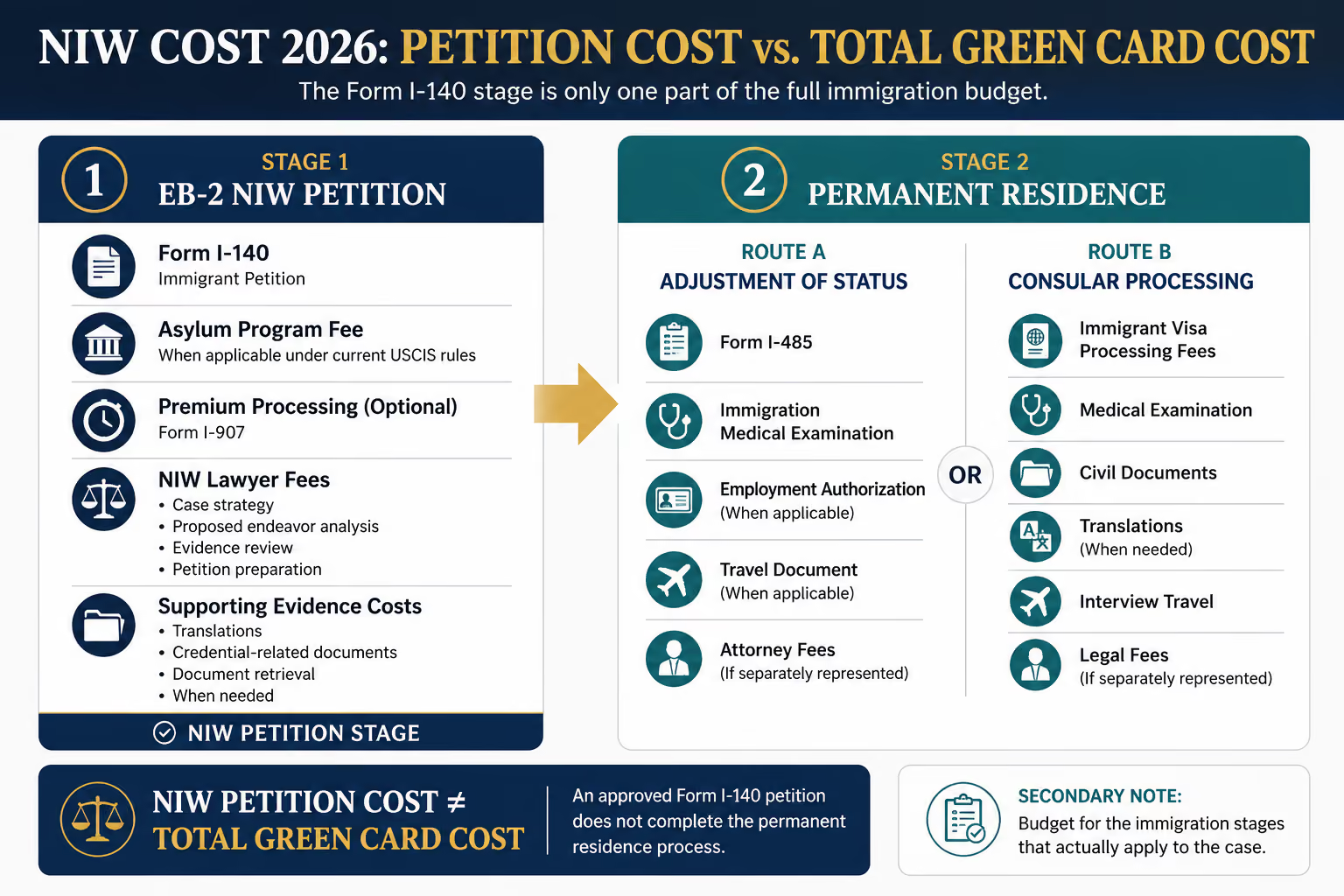
For most NIW applicants, the main government cost at the petition stage is the Form I-140 filing fee plus the applicable Asylum Program Fee. Premium processing is optional and requires a separate fee.
Under the current USCIS fee schedule, an individual NIW self-petitioner generally faces the following fees:
An EB-2 NIW petition is filed using Form I-140, Immigrant Petition for Alien Workers. The current filing fee is $715. USCIS permits NIW applicants to self-petition and does not require a labor certification for the National Interest Waiver request.
Individual self-petitioners generally pay the reduced $300 Asylum Program Fee in addition to the I-140 filing fee. This means the basic USCIS petition-stage cost for a typical individual NIW self-petitioner is $1,015 before premium processing.
NIW applicants may request premium processing by filing Form I-907. For requests postmarked on or after March 1, 2026, the premium processing fee for applicable Form I-140 employment-based classifications, including E21 NIW petitions, is $2,965. (USCIS)
USCIS provides a 45-business-day premium processing timeframe for E21 National Interest Waiver petitions. Premium processing is optional and the fee is paid in addition to the other applicable USCIS filing fees. (USCIS)
No. Premium processing applies to the NIW Form I-140 petition, not the entire green card process.
Paying the premium processing fee does not cover Form I-485, consular processing, the immigration medical examination, or later green card expenses. It also does not change the legal eligibility standard for an NIW case.
For cost planning, applicants should treat premium processing as an optional I-140 expense—not as a fee for faster green card approval.
The NIW lawyer cost can vary widely depending on the complexity of the case and the work included in the representation. NIW petitions often require more than form preparation because the attorney may need to evaluate EB-2 eligibility, define the proposed endeavor, organize evidence, and develop the legal argument supporting the National Interest Waiver request.
Attorney fees are separate from USCIS filing fees and premium processing costs. When comparing NIW attorney fees, applicants should focus on the scope of representation rather than the quoted price alone.
Legal representation may include reviewing the applicant's professional background, analyzing EB-2 eligibility, developing the proposed endeavor, and creating an evidence strategy.
The attorney may also prepare the Form I-140 filing, organize supporting materials, and draft the legal petition or brief explaining how the case fits the NIW framework.
The exact services should be confirmed in the representation agreement. Some attorney quotes cover only the initial NIW petition, while later green card processing may be handled separately.
It depends on the law firm and the scope of representation.
Some attorneys may help select potential recommenders, review letters, or provide drafting guidance. However, recommendation letters are not a fixed requirement that every NIW applicant must approach in exactly the same way.
The evidence strategy should reflect the applicant's field, professional record, and proposed endeavor rather than follow a generic document checklist.
Not always. A Request for Evidence, or RFE, may require additional legal analysis and a detailed response to the issues raised by USCIS.
Before hiring an NIW lawyer, applicants should ask whether the quoted fee includes RFE responses, NOID work, refiling, or other additional legal services.
Two NIW attorney quotes may look similar while covering very different amounts of legal work. Understanding what is included is essential before comparing the final price.
Not every NIW petition requires the same level of legal analysis. The NIW lawyer cost often depends on how clearly the applicant's background, proposed endeavor, and evidence fit the EB-2 National Interest Waiver framework.
A case with a well-defined professional record may require different strategic work from one involving an unusual career path, limited documentation, or a proposed endeavor that needs careful development.
The proposed endeavor is central to an NIW case. Some applicants can clearly explain the work they plan to continue in the United States, while others may need more detailed analysis to define the endeavor and its broader importance.
The legal work is not simply choosing impressive language. The petition should connect the applicant's actual plans, experience, and evidence in a credible and consistent way.
Before the National Interest Waiver is analyzed, the applicant must qualify for the underlying EB-2 classification.
Questions involving an advanced degree, foreign degree equivalency, progressive experience, or exceptional ability can require additional review and documentation.
NIW evidence varies significantly by profession. A researcher may rely on publications and citations, while an entrepreneur may use business activity, partnerships, funding, or market evidence.
There is no single evidence package that fits every applicant. Reviewing the professional record and identifying the strongest evidence can affect the amount of legal work involved.
Entrepreneur NIW cases may require a different strategy from academic or research-based petitions.
The attorney may need to review the business activity, implementation plans, market relevance, customers, partnerships, or other evidence showing how the proposed endeavor may develop in the United States.
Simply forming a company does not, by itself, resolve the NIW analysis.
A previous NIW filing, RFE, or denial may require the attorney to review earlier submissions and understand the concerns already raised by USCIS.
Prior immigration issues can also require additional analysis before a new petition is prepared.
The practical point is that NIW attorney fees often reflect the strategic and evidentiary work required for the specific case—not simply the number of forms being filed.
Not every NIW petition requires the same level of legal analysis. The NIW lawyer cost often depends on how clearly the applicant's background, proposed endeavor, and evidence fit the EB-2 National Interest Waiver framework.
A case with a well-defined professional record may require different strategic work from one involving an unusual career path, limited documentation, or a proposed endeavor that needs careful development.
The proposed endeavor is central to an NIW case. Some applicants can clearly explain the work they plan to continue in the United States, while others may need more detailed analysis to define the endeavor and its broader importance.
The legal work is not simply choosing impressive language. The petition should connect the applicant's actual plans, experience, and evidence in a credible and consistent way.
Before the National Interest Waiver is analyzed, the applicant must qualify for the underlying EB-2 classification.
Questions involving an advanced degree, foreign degree equivalency, progressive experience, or exceptional ability can require additional review and documentation.
NIW evidence varies significantly by profession. A researcher may rely on publications and citations, while an entrepreneur may use business activity, partnerships, funding, or market evidence.
There is no single evidence package that fits every applicant. Reviewing the professional record and identifying the strongest evidence can affect the amount of legal work involved.
Entrepreneur NIW cases may require a different strategy from academic or research-based petitions.
The attorney may need to review the business activity, implementation plans, market relevance, customers, partnerships, or other evidence showing how the proposed endeavor may develop in the United States.
Simply forming a company does not, by itself, resolve the NIW analysis.
A previous NIW filing, RFE, or denial may require the attorney to review earlier submissions and understand the concerns already raised by USCIS.
Prior immigration issues can also require additional analysis before a new petition is prepared.
The practical point is that NIW attorney fees often reflect the strategic and evidentiary work required for the specific case—not simply the number of forms being filed.
NIW applicants completing the permanent residence process outside the United States generally use employment-based immigrant visa processing. After USCIS approves the petition and the case is ready for consular processing, the National Visa Center may handle pre-processing before the immigrant visa interview. (Travel.gov)
These costs are separate from the original I-140 NIW petition.
The Department of State currently lists a $345 immigrant visa application processing fee per person for employment-based cases based on an approved I-140 or I-526 petition. (Travel.gov)
Applicants should still verify the current fee before payment, particularly when budgeting for a spouse or children who will also complete immigrant visa processing.
Immigrant visa applicants may also need to budget for the required medical examination and supporting civil documents.
Depending on the case and country, additional expenses may include translations, police certificates, birth certificates, passport-related costs, and document retrieval. The Department of State notes that these expenses vary by country and case.
Travel to the U.S. embassy or consulate can add to the total NIW cost, particularly when the applicant lives far from the interview location.
Transportation, accommodation, and other interview-related expenses are not included in the NIW petition fee or immigrant visa application fee. The Department of State specifically identifies interview travel as a possible additional cost.
An NIW attorney fee may cover only preparation of the I-140 petition. NVC document processing, immigrant visa preparation, and consular interview guidance may be separate legal services.
Applicants should confirm whether their original legal fee includes the consular stage or ends after the NIW petition.
The practical point is simple: I-140 approval does not end the immigration cost process. Applicants using consular processing should separately budget for immigrant visa fees, medical and document expenses, travel, and any additional legal representation.
Adding premium processing increases the NIW cost because the applicant pays a separate Form I-907 fee in addition to the required I-140 and applicable filing fees. As of 2026, the premium processing fee for eligible Form I-140 classifications is $2,965. (USCIS)
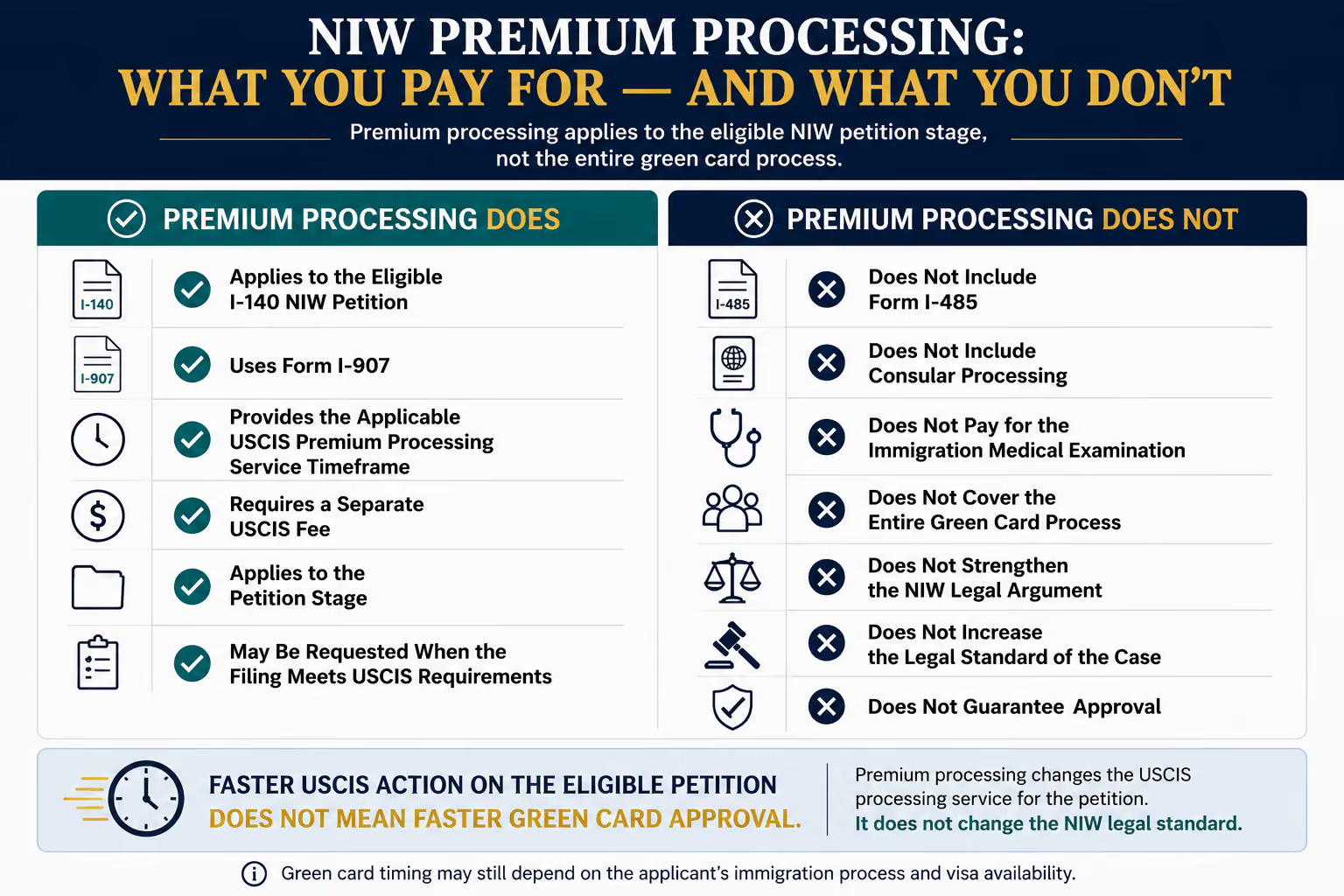
Premium processing is optional. For an E21 National Interest Waiver petition, USCIS provides a 45-business-day premium processing timeframe after a properly filed request, subject to the premium processing rules. (USCIS)
This service applies to the NIW petition stage. It does not include Form I-485, consular processing, or other permanent residence expenses.
The answer depends on the applicant's circumstances. Someone who needs a faster action on the I-140 petition for immigration planning or professional reasons may value the shorter premium processing timeframe.
However, premium processing does not improve the legal strength of an NIW petition or increase the chance of approval. It changes the USCIS processing service for the eligible petition, not the NIW eligibility standard.
For budgeting purposes, applicants should treat premium processing as an optional petition-stage expense and decide whether the faster USCIS action justifies the additional cost.
Applicants planning an NIW case with family members should budget beyond the principal applicant's petition costs. In employment-based immigration, certain spouses and unmarried children under 21 may qualify as derivative applicants and may accompany or follow the principal applicant through the permanent residence process.
The principal applicant's NIW petition does not mean every later immigration expense for a spouse or child is covered.
Derivative family members may benefit from the principal applicant's employment-based case, but they still have their own processing requirements at the green card or immigrant visa stage.
When eligible family members apply for adjustment of status in the United States, each applicant generally completes the required adjustment process and should budget for applicable USCIS filing, medical, and document expenses.
Attorney fees may also vary depending on whether representation for a spouse or child is included in the original legal agreement.
For immigrant visa processing abroad, derivative applicants must complete required applications, provide civil documents, pay applicable fees, and undergo medical examinations.
Travel and interview expenses may also increase the overall family budget.
The practical takeaway is simple: applicants should calculate the NIW cost for the entire family, not only the principal applicant's I-140 petition. A spouse or child's later immigration processing can create separate government, medical, document, and legal expenses.
USCIS and attorney fees are usually the most visible parts of an NIW cost estimate, but supporting documents can also create additional expenses. The amount varies significantly because NIW evidence should reflect the applicant's qualifications and proposed endeavor.
Applicants relying on foreign education may need to carefully document how their academic credentials support the underlying EB-2 classification. USCIS recognizes qualifying foreign equivalent degrees under the EB-2 advanced degree framework.
A paid credential evaluation may be useful in some cases, but it should not automatically be treated as a required NIW expense for every applicant.
Foreign-language documents submitted to USCIS generally need complete English translations with the required translator certification.
Applicants may also spend money obtaining university records, employment documentation, certified records, or other professional evidence needed for the petition.
Entrepreneurs and other professionals may need supporting materials related to their proposed endeavor, such as business activity, projects, partnerships, or implementation plans.
The cost depends on the evidence that already exists and what is relevant to the case. A paid business plan or third-party report should not be presented as mandatory for every NIW petition.
If USCIS issues a Request for Evidence or Notice of Intent to Deny, responding may require additional documents and legal analysis. USCIS requires requested materials in an RFE or NOID response to be submitted together according to the notice instructions.
Whether this work creates an additional attorney fee depends on the representation agreement.
The best NIW budget should include room for case-specific document and legal expenses without assuming that every possible service or supporting material is required.
Yes. An NIW applicant may self-petition and file without an immigration lawyer. This can reduce attorney costs, but self-petitioning does not mean the case is automatically simple.
The applicant is still responsible for showing eligibility for the underlying EB-2 classification and explaining how the proposed endeavor fits the National Interest Waiver framework.
The main financial advantage of filing without a lawyer is avoiding NIW attorney fees.
Applicants still need to budget for USCIS filing fees, premium processing if requested, translations, credential-related documents, and later green card expenses.
An NIW petition generally requires more than collecting degrees, recommendation letters, and a resume.
The applicant must develop a clear proposed endeavor, organize relevant evidence, and explain how the case satisfies the applicable NIW requirements. The strongest evidence will vary depending on the applicant's profession, achievements, and future plans in the United States.
Legal review may be more useful when the proposed endeavor is difficult to define, the applicant is relying on exceptional ability, or the case involves an entrepreneur or founder with a less traditional professional record.
Prior RFEs, NIW denials, complicated degree-equivalency questions, or uncertainty about the evidence strategy may also require closer analysis.
Filing without a lawyer can reduce the initial NIW cost, but the decision should be based on the applicant's ability to analyze and present the case—not attorney fees alone.
NIW lawyer quotes can vary significantly, but the final price does not always reflect the same scope of legal work. Before comparing NIW attorney fees, applicants should first understand exactly which immigration stage and services are included.
This should be one of the first questions.
Some NIW legal fees cover only preparation and filing of the Form I-140 petition. Adjustment of status or consular processing may be priced separately later.
Applicants budgeting for the full green card process should not assume that an NIW petition fee includes every future immigration filing.
NIW representation may involve more than completing forms. Ask whether the attorney will analyze EB-2 eligibility, help define the proposed endeavor, review the evidence, and prepare the legal argument supporting the petition.
The scope of this work can affect the attorney fee.
Applicants should clarify whether the representation includes guidance on recommendation letters and how the firm handles a Request for Evidence.
RFE responses, NOID work, appeals, motions, or refiling may be separate legal services depending on the agreement.
Yes, the USCIS premium processing fee is separate from attorney fees. Applicants should also ask whether the law firm charges an additional legal fee to prepare and file Form I-907.
Confirm whether the attorney quote includes Form I-485 adjustment of status or later consular processing.
Two NIW lawyer quotes are difficult to compare until the applicant understands which stages and services each fee actually covers.
The better approach is to compare the scope of representation, legal work included, and potential additional charges—not only the final price.
Before filing, applicants should review the full NIW cost rather than budgeting only for Form I-140.
A practical checklist includes:
Reviewing these questions early can make the total NIW cost easier to estimate and reduce unexpected expenses later.
The goal is not to predict every possible cost. It is to understand which immigration stages apply, what the attorney fee covers, and which additional expenses may arise before the permanent residence process is complete.
The total NIW cost depends on more than USCIS filing fees. The applicant's EB-2 eligibility, proposed endeavor, evidence, premium processing choice, and later green card process can all affect the overall expense.
Applicants who are unsure how their professional background or proposed U.S. endeavor fits the National Interest Waiver framework may benefit from having the case reviewed before investing in full petition preparation.
American Visa Law Group assists with EB-2 NIW and employment-based immigration matters. Applicants can review the firm's immigration attorney fee information or submit an NIW assessment to discuss their background, proposed endeavor, and potential filing strategy.
The goal is to understand the likely scope of the case, expected costs, and immigration stages before moving forward with the petition.
The total NIW cost in 2026 depends on whether the applicant is budgeting only for the Form I-140 petition or the full green card process. USCIS fees, attorney fees, premium processing, supporting documents, and later adjustment of status or consular processing costs may all apply.
NIW lawyer fees vary based on the complexity of the case and the scope of representation. A case requiring substantial proposed endeavor development, evidence analysis, or prior RFE review may involve more legal work than a straightforward petition.
No. Premium processing requires a separate Form I-907 fee and is optional. It applies to the eligible I-140 petition stage, not the entire green card process.
No. Premium processing changes the USCIS processing timeframe for the eligible petition. It does not change the NIW legal standard or improve the strength of the case.
Not necessarily. An NIW petition generally refers to the I-140 stage. Adjustment of status or immigrant visa processing may create separate government, medical, document, and attorney expenses.
Yes. NIW applicants may self-petition and file without an attorney. However, the applicant is still responsible for establishing EB-2 eligibility and presenting the proposed endeavor and supporting evidence under the applicable NIW framework.
No single evidence strategy applies to every NIW petition. Recommendation letters may be useful in some cases, but the evidence should reflect the applicant's field, professional background, and proposed endeavor.
It depends on the representation agreement. Some attorney fees include certain RFE services, while others treat RFE, NOID, appeal, or refiling work as additional legal services.
Eligible family members may have separate costs at the adjustment of status or immigrant visa stage. These can include government fees, medical examinations, documents, travel, and additional legal representation.
The most accurate NIW cost estimate is based on the immigration stages involved, the scope of legal representation, and the applicant's specific case requirements.

Hasan Abdullah, Esq. is the Founder and Managing Attorney of American Visa Law Group. His practice focuses on U.S. immigration law, including family-based immigration, employment-based immigration, adjustment of status, consular processing, waivers, PERM labor certification, NIW, EB-1, H-1B, O-1, and complex immigration strategy.
Through American Visa Law Group, Mr. Abdullah helps individuals, families, professionals, investors, and employers understand their immigration options and plan around changing government policies, USCIS procedures, and Visa Bulletin movement. His work emphasizes practical legal analysis, realistic expectations, and strategy tailored to each applicant’s immigration history and long-term goals.


