Author: Hasan Abdullah, Esq.
Updated: The 20th of August 2026
For Indian professionals pursuing an employment-based green card, the EB-2 India priority date is a critical part of determining when the case can move toward adjustment of status or final permanent residence.
In 2026, EB-2 India has seen substantial movement followed by retrogression and eventual unavailability. As of the August 2026 Visa Bulletin, the Department of State lists EB-2 India as Unavailable (U) for Final Action, while the Dates for Filing chart remains at January 15, 2015.
Those two entries do not mean the same thing, and neither should be read in isolation. Applicants also need to consider their individual priority date, whether USCIS permits use of the Dates for Filing chart for that month, and whether an immigrant visa number is actually available for final approval.
This guide explains the latest dates, what caused the 2026 backlog changes, what may happen when FY2027 begins, and the practical options EB-2 India applicants should evaluate while waiting.
As of August 2026, EB-2 India is unavailable for Final Action, while the Department of State's Date for Filing is January 15, 2015. India's available FY2026 EB-2 visa numbers have been used, and new annual allocations become available when FY2027 begins on October 1, 2026.
The latest Department of State Visa Bulletin for August 2026 shows a sharp divide between the two charts EB-2 India applicants commonly follow.
For Final Action Dates, the State Department lists EB-2 India as “U.” In practical terms, immigrant visa numbers are not currently authorized for final issuance in this category. An applicant therefore cannot receive final permanent-residence approval based on EB-2 India visa availability during this period, even if the case has otherwise progressed significantly. The August bulletin defines “U” as a category in which numbers are not authorized for issuance.
The Dates for Filing chart, however, continues to show January 15, 2015 for India in the EB-2 category. That date serves a different purpose from the Final Action chart, so the two should not be treated as interchangeable. We explain that distinction, and which chart adjustment-of-status applicants must actually use, later in this guide.
“Unavailable” does not mean an approved Form I-140 has been canceled or that the underlying EB-2 classification has disappeared. It refers to the availability of immigrant visa numbers for final action during the applicable period.
This distinction is important because an employment-based green card case has several separate stages. Approval of the underlying petition establishes one part of the case; availability of an immigrant visa number determines when permanent residence can ultimately be granted.
The State Department also cautions that employment-based categories can become unavailable when annual, category, or applicable per-country numerical limits are reached.
For EB-2 India applicants, the next question is therefore not simply why the bulletin shows a “U,” but what happened during FY2026 to exhaust the available numbers. That is the development behind the current backlog position.
EB-2 India became unavailable because the number of immigrant visas that could be allocated to applicants chargeable to India in this category for fiscal year 2026 was exhausted.
On May 22, 2026, the Department of State announced that, working with USCIS, it had issued all available FY2026 EB-2 immigrant visas for applicants chargeable to India. The State Department later confirmed in the July Visa Bulletin that India's pro-rated EB-2 limit had been reached and that the category would remain unavailable for the rest of FY2026. (travel.state.gov)
This is fundamentally a visa-supply issue. U.S. immigration law places annual numerical limits on employment-based immigrant visas. EB-2 receives a statutory share of the worldwide employment-based allocation, while separate country-based limits also affect how those numbers can be distributed. Demand from Indian applicants has substantially exceeded the number of visas available under that system.
The result is the backlog reflected in the Visa Bulletin: there are more qualified applicants waiting for EB-2 India immigrant visas than can receive them within a single fiscal year.
Importantly, this does not mean USCIS stopped approving EB-2 petitions or that previously approved Forms I-140 became invalid. Petition approval and immigrant visa availability are separate stages of the green card process.
Once the available visa numbers for a category or applicable country allocation have been used, the government cannot continue issuing immigrant visas or granting final adjustment of status based on numbers that are no longer available for that fiscal year.
That is why EB-2 India moved from having an actual Final Action cutoff date earlier in 2026 to being listed as Unavailable.
The limitation is tied to the federal fiscal year, however. The Department of State confirmed that the annual limits reset when FY2027 begins on October 1, 2026. At that point, new immigrant visa numbers become available for allocation.
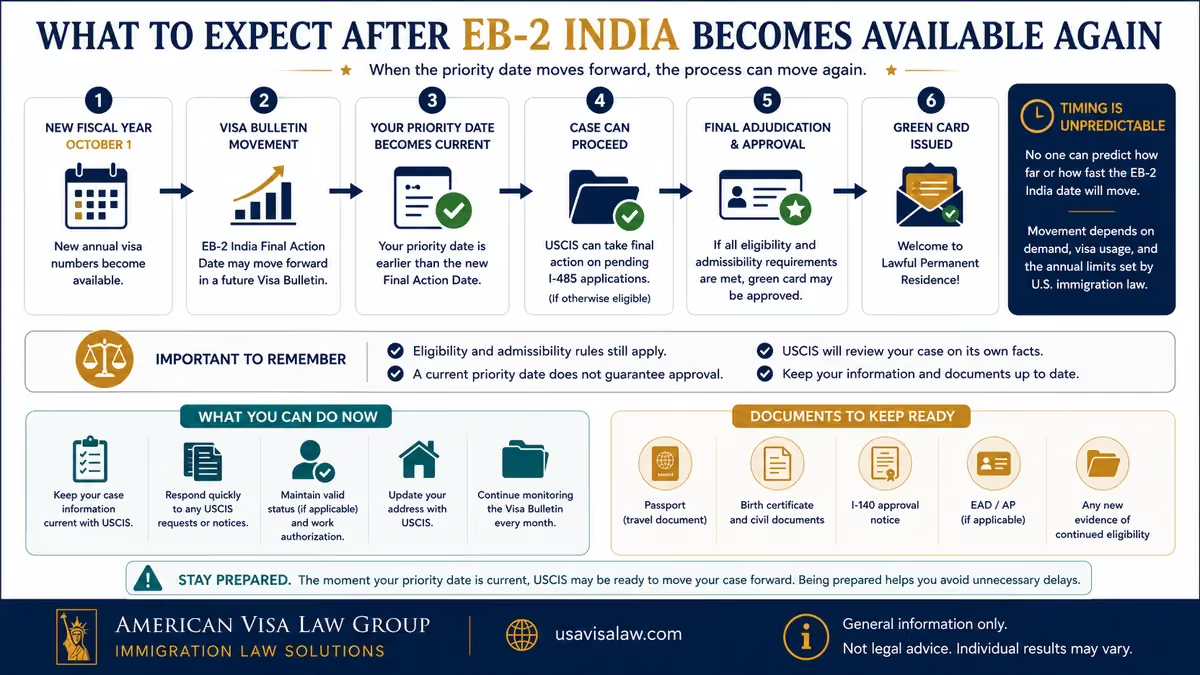
A reset does not mean every waiting EB-2 India applicant suddenly becomes current. The State Department must again manage the available supply against existing demand, which is why Final Action Dates may advance, remain relatively stable, or retrogress as visa usage develops.
The important question for applicants is therefore how EB-2 India reached this point during 2026. Looking at the movement from early-year advancement to later retrogression and unavailability helps explain why monthly Visa Bulletin dates should never be treated as a predictable straight line.
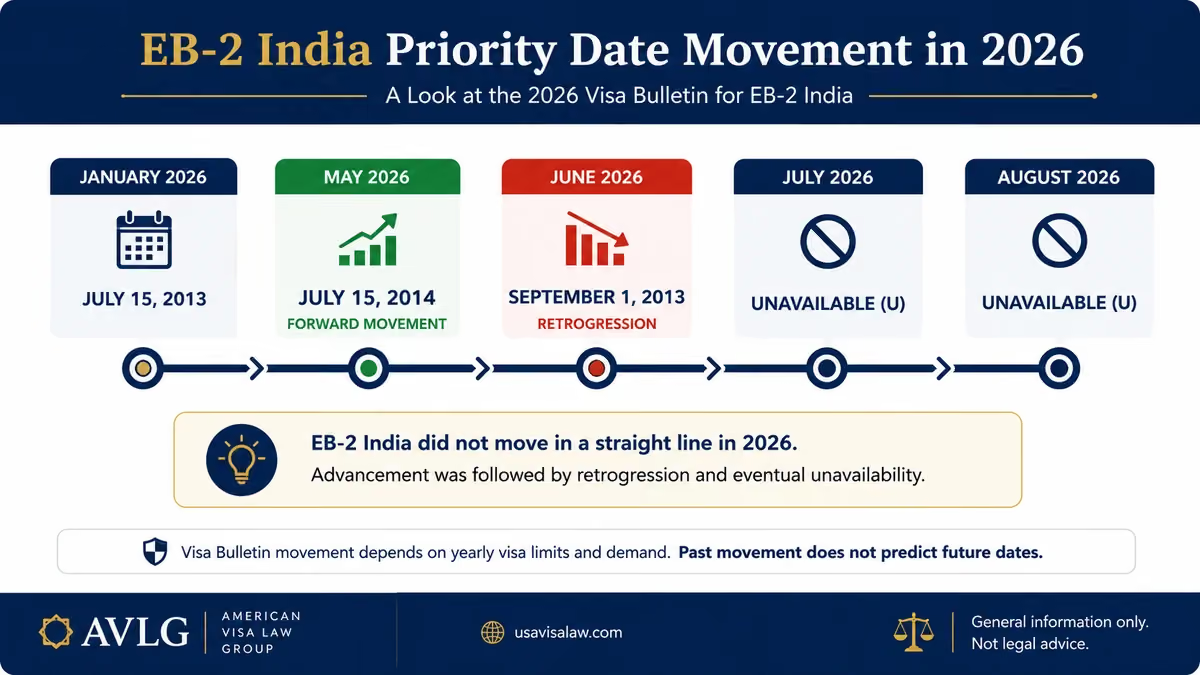
The EB-2 India Final Action Date did not move steadily forward in 2026. It advanced significantly during the first part of the year, then retrogressed sharply before becoming unavailable once the FY2026 India EB-2 allocation was exhausted.
The following milestones show how quickly the picture changed:
In the January 2026 Visa Bulletin, EB-2 India began the year with a Final Action Date of July 15, 2013. By May, the cutoff had advanced to July 15, 2014—a full year of movement compared with January.
That advancement did not last. The June 2026 Visa Bulletin moved EB-2 India backward to September 1, 2013. By July, the category was listed as Unavailable, where it remained in August.
When a Visa Bulletin cutoff moves to an earlier date, this is known as retrogression.
Retrogression can occur when actual visa demand turns out to be higher than the government can accommodate within the applicable annual numerical limits. The Department of State continually monitors visa usage and may move a cutoff backward—or make a category unavailable—to keep issuance within those limits.
For EB-2 India in 2026, the sequence illustrates why Visa Bulletin movement should not be treated as a straight-line forecast. A year of apparent advancement between January and May was followed immediately by substantial retrogression and then complete unavailability for Final Action.
This matters particularly for applicants trying to estimate when their own priority date might become current. One month of strong forward movement does not establish a reliable pace for future months. Demand, visa usage, annual limits, and the number of applicants with earlier priority dates can all change how quickly the cutoff moves.
The same caution applies when the new fiscal year begins. Fresh visa numbers may allow movement, but the extent of that movement depends on the supply available and the demand the State Department must manage.
The Visa Bulletin contains two employment-based charts, and they answer different questions. For EB-2 India applicants, understanding the distinction is essential because a date that permits filing does not necessarily mean a green card can be approved.
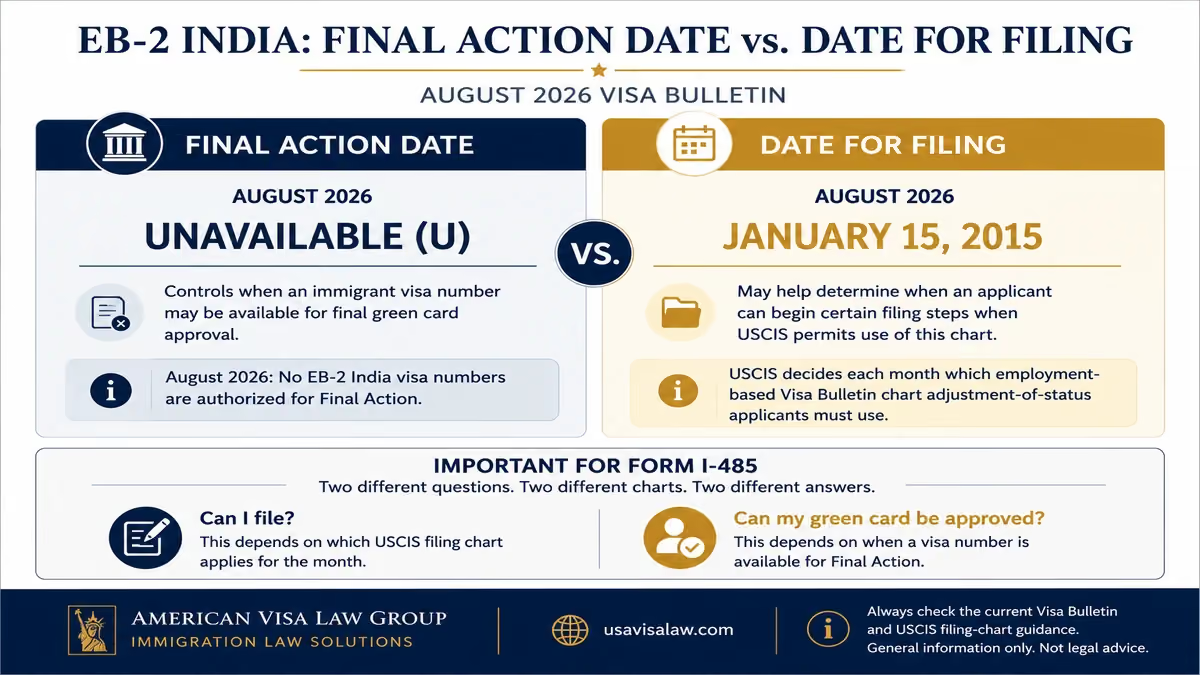
The Final Action Dates chart controls when an immigrant visa number may be available for final approval of permanent residence.
For August 2026, EB-2 India is listed as Unavailable (U) on the Final Action chart. This means that no EB-2 immigrant visa numbers are currently authorized for final action for applicants chargeable to India during this period.
A case can therefore be otherwise well advanced—including having an approved Form I-140 or, in some circumstances, a pending Form I-485—without being eligible for final green card approval until a visa number again becomes available.
The Dates for Filing chart serves a different purpose. It identifies priority dates that may be far enough along in the queue for applicants to begin certain parts of the immigrant visa or adjustment process when the government permits it.
For August 2026, the EB-2 India Date for Filing is January 15, 2015.
That does not mean an applicant with a priority date before January 15, 2015 can automatically file Form I-485.
For adjustment-of-status cases filed with USCIS, another step is required.
Each month, USCIS determines which Visa Bulletin chart employment-based adjustment applicants must use to determine whether they can file Form I-485.
Applicants should therefore check the USCIS Visa Bulletin filing guidance for the specific month rather than relying only on the Department of State's Dates for Filing chart.
USCIS explains that applicants must first identify their priority date and then use the chart USCIS has designated for that month. If USCIS authorizes use of the Dates for Filing chart, an otherwise eligible applicant generally compares the priority date with that chart. Otherwise, the Final Action Dates chart controls when Form I-485 may be filed.
The practical rule is:
Before filing Form I-485, confirm your EB-2 category, country of chargeability, priority date, and the USCIS-designated employment-based chart for that particular month.
Also pay attention to the wording of the cutoff. The Department of State states that when a specific date appears, the applicant's priority date must generally be earlier than the listed date.
This distinction helps separate two questions that are often confused: When may I be able to file? and When may my green card actually receive final approval? The answer to both begins with knowing your own EB-2 priority date.
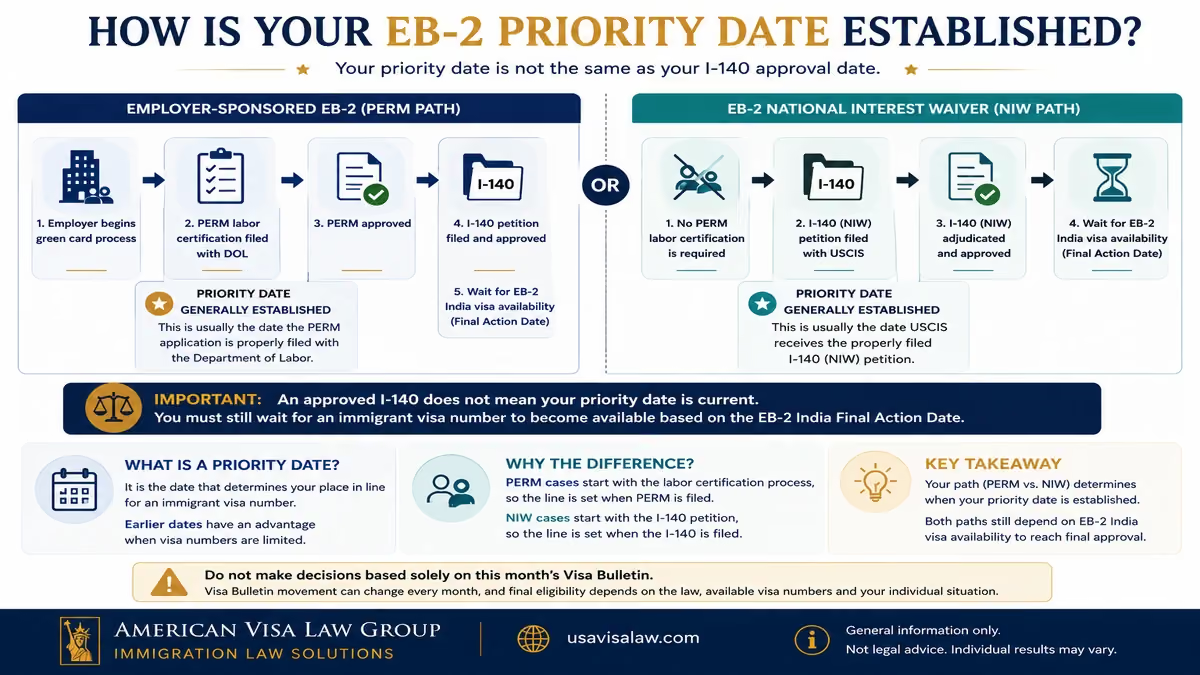
Your EB-2 priority date is the date that establishes your place in the employment-based immigrant visa queue. For applicants born in India, that date is then compared with the EB-2 India cutoff published in the Visa Bulletin.
How the priority date is established depends on whether the case requires PERM labor certification or is filed without PERM, as in many EB-2 National Interest Waiver cases.
For most employer-sponsored EB-2 cases that require labor certification, the priority date is generally the date the Department of Labor accepts the PERM labor certification application for processing.
USCIS regulations provide that when an employment-based petition requires labor certification, the priority date is the date the labor certification was accepted for processing by the Department of Labor.
The basic sequence is:
PERM filing → PERM certification → Form I-140 → wait for visa availability → Form I-485 or consular processing when eligible
For applicants who want a deeper explanation of the employer-sponsored process, AVLG’s guide to PERM labor certification explains how that stage fits into an employment-based green card case.
Importantly, the priority date is usually tied to the PERM filing date, not the later date when USCIS approves Form I-140.
An EB-2 National Interest Waiver (NIW) generally does not require a PERM labor certification or a permanent job offer. For a petition that does not require labor certification, the priority date is generally established when the properly completed Form I-140 is filed with USCIS.
That makes the starting point different from a traditional PERM-sponsored EB-2 case.
Readers considering this route can review AVLG’s detailed guide to EB-2 NIW requirements.
One distinction is especially important for Indian applicants: a fast I-140 approval does not make the EB-2 India priority date current. Petition approval confirms the underlying immigrant classification; the Visa Bulletin still determines when an immigrant visa number becomes available.
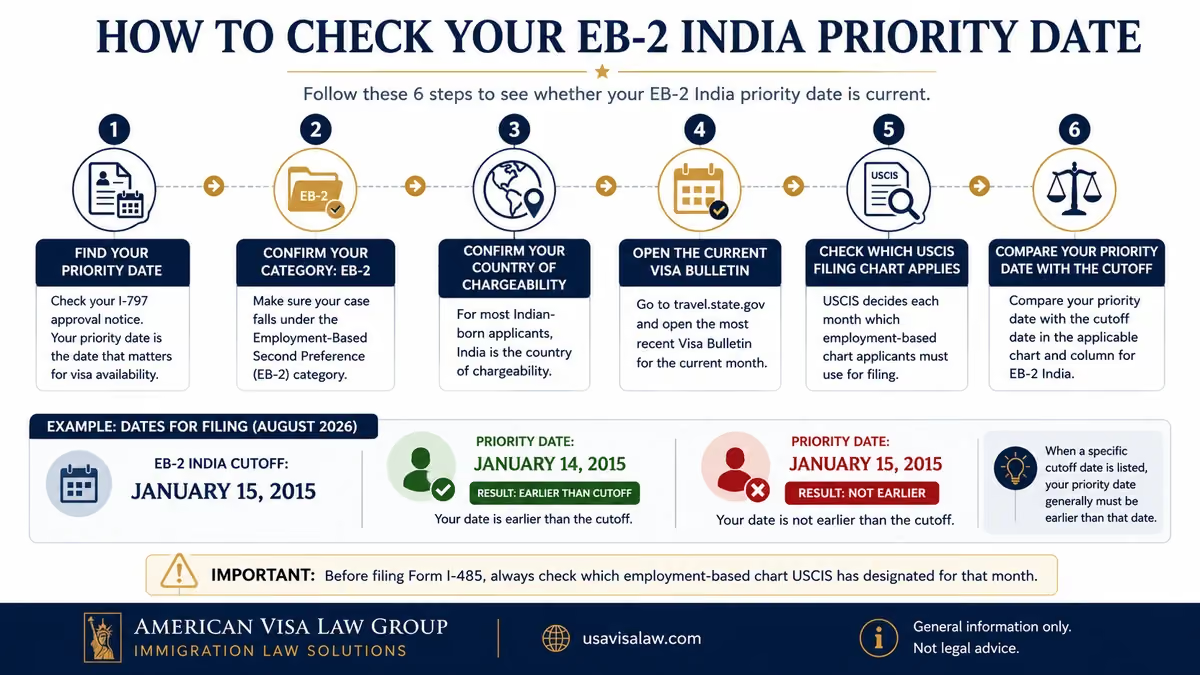
Once you know your priority date, the next step is to compare it correctly with the applicable EB-2 India Visa Bulletin cutoff.
Once you know your priority date, determining whether it is current requires comparing it with the correct Visa Bulletin category, country, and chart.
A practical way to check is:
The wording matters. When the Visa Bulletin lists a specific cutoff date, the Department of State states that the applicant's priority date must generally be earlier than the listed date, not equal to it.
For example, if a future applicable EB-2 India cutoff were listed as January 15, 2015, a priority date of January 14, 2015 would fall before the cutoff, while January 15, 2015 would not.
The Visa Bulletin also uses two important abbreviations:
As of August 2026, EB-2 India is Unavailable for Final Action, so there is no Final Action cutoff date against which an applicant can currently become eligible for final approval.
For adjustment-of-status applicants, checking the Visa Bulletin alone is still not enough. USCIS determines whether applicants may use the Final Action Dates chart or the Dates for Filing chart for filing Form I-485 in a particular month. The State Department expressly directs adjustment applicants to USCIS for that monthly determination.
The safest way to read your place in the queue is therefore to compare the right priority date against the right chart for the right month. Once that is clear, the next question is why the EB-2 India line is so long in the first place.
The EB-2 India backlog is substantial, but there is no single official number that can reliably tell an individual applicant exactly how many years remain before a particular priority date becomes current.
The underlying problem is straightforward: demand for EB-2 immigrant visas from applicants chargeable to India is much greater than the number of visas that can be allocated each fiscal year. For FY2026, the Department of State estimated a worldwide EB-2 limit of 53,196 visas, with numerical country limits applying across the employment-based system. India ultimately reached its available FY2026 EB-2 allocation before the fiscal year ended.
That imbalance creates a queue extending across many years of priority dates.
Several factors contribute to the backlog.
First, employment-based immigrant visas are numerically limited by statute. EB-2 receives a defined share of the annual employment-based allocation, while the immigration laws also impose country-based limits. High demand from Indian professionals therefore competes for a restricted number of visas each fiscal year.
Second, the visa supply is not used only by principal workers. A qualifying spouse or child accompanying or following to join an employment-based principal can receive the same immigrant classification under INA § 203(d). Those derivative family members also form part of the overall immigrant visa demand associated with employment-based cases.
Finally, the number of approved Forms I-140 should not be treated as a simple count of people waiting for green cards. The queue can include derivative family members, applicants with multiple petitions, retained priority dates, cases moving between employment-based classifications, and individuals whose circumstances change before final visa issuance.
For that reason, a raw petition count does not translate cleanly into a waiting time.
It is tempting to estimate the wait by observing how much the cutoff moved during one year. For example, if the Final Action Date advances by twelve months, an applicant might assume that twelve years of priority-date difference means roughly twelve more years of waiting.
That calculation is not reliable.
The State Department adjusts cutoff dates based on actual and expected visa demand, number usage, annual limits, and demand that becomes visible as cases progress. In June 2026, DOS specifically cited high demand and number use when it retrogressed EB-2 India to keep issuance within the FY2026 limit.
The 2026 movement itself demonstrates the problem: EB-2 India advanced significantly, then retrogressed, and ultimately became unavailable.
Applicants with later priority dates should therefore be cautious about online calculators or predictions that convert monthly Visa Bulletin movement into a precise green card year. The more defensible approach is to track the official bulletin while making immigration and career decisions based on the person's broader strategy, not on an assumed rate of future movement.
October 2026 is particularly important for EB-2 India because FY2027 begins on October 1, bringing a new annual allocation of employment-based immigrant visa numbers.
That should allow EB-2 India to move away from its current unavailable status. But the exact Final Action Date for October cannot be treated as certain until the Department of State publishes the October 2026 Visa Bulletin.
There is, however, an unusually specific official indication of what may happen.
In the July 2026 Visa Bulletin, the Department of State stated that it is likely the EB-2 India Final Action Date will advance in October to at least the Final Action Date announced in the May 2026 Visa Bulletin.
The May 2026 cutoff for EB-2 India was July 15, 2014.
That makes July 15, 2014 an important reference point for applicants monitoring the start of FY2027. But it is not yet an announced October cutoff date.
DOS specifically qualified its outlook by explaining that the actual date will depend on:
That distinction matters because the Visa Bulletin is managed according to actual visa demand and number availability—not according to a predetermined monthly schedule.
No. The State Department has indicated that movement to at least the May 2026 level is likely, but it has not guaranteed an October 2026 Final Action Date of July 15, 2014.
Visa Bulletin projections can change when the government receives updated information about demand, pending cases, and available visa numbers.
For EB-2 India applicants, the most useful approach is therefore to separate official guidance from online predictions. DOS’s statement provides a meaningful indication that forward movement is expected when FY2027 begins, but applicants should wait for the actual October Visa Bulletin before making filing, employment, or travel decisions based on a specific cutoff date.
Applicants whose priority dates are near the 2014 range should monitor the October bulletin particularly closely. Those with later priority dates should also watch the movement, but should avoid assuming that an initial October advancement establishes the pace for the rest of FY2027.
Update note: This section should be reviewed as soon as the October 2026 Visa Bulletin is released. The actual published Final Action Date should then replace the current FY2027 projection.
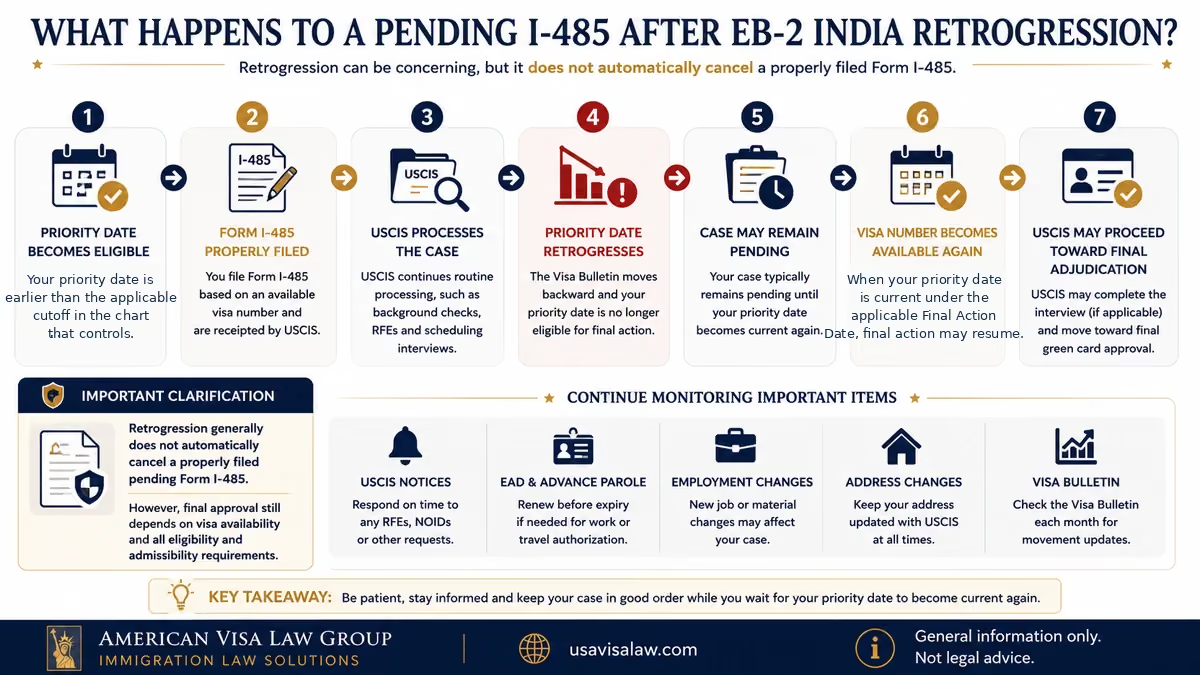
Some EB-2 India applicants were able to file Form I-485 when their priority dates were current or when USCIS permitted use of the applicable filing chart, only to see the Visa Bulletin retrogress later.
If that happens, the pending adjustment application is not automatically denied simply because the priority date is no longer current.
USCIS has procedures for holding otherwise approvable employment-based adjustment cases when a visa number becomes unavailable because of retrogression. The case may remain pending until the applicant's priority date again becomes current and a visa number is available for final adjudication.
Generally, no.
If Form I-485 was properly filed when the applicant was eligible to file, later Visa Bulletin retrogression does not by itself erase the application. Instead, USCIS may continue processing parts of the case but cannot grant final permanent residence until an immigrant visa number is available.
USCIS has explained that when an employment-based case is otherwise approvable but the priority date is no longer current, the case may be returned to the National Benefits Center and monitored for future visa availability. Once the priority date becomes current again, USCIS can proceed toward final adjudication if the applicant remains admissible and otherwise eligible.
That distinction is especially relevant for EB-2 India applicants who may already have:
Progress on those steps does not create a visa number, however. Final approval still depends on visa availability under the applicable Final Action Date.
Applicants affected by retrogression should continue monitoring both the Visa Bulletin and their USCIS case.
They should also remain attentive to:
A pending I-485 can create additional strategic considerations, particularly when an applicant is considering changing employers or relying on employment-based portability rules after the application has been pending for the required period.
The key point is that a priority date becoming unavailable after filing is different from never having been eligible to file in the first place. Retrogression can delay final approval, sometimes significantly, but it does not automatically mean the adjustment application has failed.
For many EB-2 India applicants, the backlog is measured in years rather than months. That makes long-term planning just as important as monitoring each new Visa Bulletin.
The most useful approach is to protect the immigration options already in place while remaining alert to changes that could affect the case.
Preserve copies of important employment-based immigration documents, including:
Older I-140 approvals can become particularly important when evaluating whether an earlier priority date may be retained for a later qualifying employment-based petition. USCIS regulations permit priority-date retention in certain EB-1, EB-2, and EB-3 situations, subject to specific exceptions and petition history.
The monthly Visa Bulletin is important, but it should not be the only thing an applicant watches.
Applicants with pending adjustment cases should also monitor:
Someone who has not yet filed Form I-485 may also need to maintain an appropriate nonimmigrant strategy while waiting, depending on the person's circumstances.
Families with derivative children should not assume that a long EB-2 India wait has no effect on their children's immigration eligibility.
The Child Status Protection Act (CSPA) can protect some children from “aging out,” but the calculation is technical and timing matters. USCIS updated its policy in 2025 to provide that, for CSPA age calculations in adjustment cases, visa availability is determined using the Final Action Dates chart.
For families with children nearing age 21, this is an issue worth reviewing well before the birthday rather than waiting for the priority date to become current.
Some employment-based adjustment applicants may have flexibility to change jobs or employers after Form I-485 has been pending for at least 180 days, provided the applicable portability requirements are satisfied and the new position is in the same or a similar occupational classification.
USCIS explains these rules under the AC21 job-portability provisions. (uscis.gov)
But a job change should not be evaluated from the 180-day rule alone. The underlying I-140, job duties, petition history, and adjustment posture can all matter.
Most importantly, applicants should avoid making career or immigration decisions based solely on predictions about when EB-2 India will advance. Visa Bulletin movement can influence strategy, but it should not replace strategy.
The next question is whether a different employment-based category, such as EB-1 or EB-3, may provide a legitimate alternative in some cases.
In some cases, an EB-2 India applicant may later qualify for a different employment-based green card category. That can be worth evaluating when the EB-2 backlog is long, but changing categories is not simply a matter of choosing whichever Visa Bulletin line currently looks better.
A different classification generally requires its own legal basis and, where applicable, a new Form I-140 petition. The applicant must independently satisfy the requirements of that category.
Some EB-2 professionals may eventually develop credentials that support an EB-1 petition.
Depending on the individual's background, possible classifications include:
The eligibility standards are substantially different from EB-2. For example, EB-1A requires evidence of sustained national or international acclaim and a level of achievement that places the applicant among the small percentage at the top of the field.
Simply having an advanced degree, an approved NIW, publications, or many years of professional experience does not automatically establish EB-1 eligibility.
Professionals considering this route can review AVLG’s detailed guide to EB-1A extraordinary ability requirements.
EB-1 should also not be viewed as a guaranteed solution to the India backlog. EB-1 India is itself subject to Visa Bulletin movement, so both eligibility and visa availability need to be evaluated.
EB-3 can sometimes become strategically relevant when its Visa Bulletin cutoff is more favorable than EB-2 India.
But an applicant cannot simply relabel an EB-2 petition as EB-3 because the monthly cutoff happens to look better.
EB-3 has its own statutory requirements, and employer-sponsored cases generally depend on the permanent position, labor certification, beneficiary qualifications, and a properly filed Form I-140. Depending on the existing PERM and case history, an employer may be able to pursue an EB-3 petition, but the specific record has to support the classification.
There is also no guarantee that EB-3 will remain ahead of EB-2. The relative movement of the two categories can change as visa demand changes.
For that reason, filing an additional petition solely to chase a temporary Visa Bulletin advantage can create expense and complexity without necessarily shortening the ultimate wait.
Potentially, and this can be one of the most important strategic considerations.
Under 8 C.F.R. § 204.5(e), the beneficiary of an approved EB-1, EB-2, or EB-3 petition may generally retain that petition’s priority date for a subsequently filed petition in another qualifying EB-1, EB-2, or EB-3 classification. If there are multiple qualifying approved petitions, the beneficiary may generally use the earliest priority date. (law.cornell.edu)
There are exceptions. Priority-date retention may be unavailable if the earlier petition was revoked for reasons such as fraud or material misrepresentation, invalidation or revocation of the underlying labor certification, or a USCIS determination that the approval resulted from material error. (law.cornell.edu)
For applicants who already have a pending Form I-485, USCIS also recognizes circumstances in which an applicant may request a transfer of the underlying basis of the adjustment application to another qualifying immigrant petition. Whether that is available or advisable depends on the individual case. (uscis.gov)
The strategic question is therefore not simply, “Which category is faster this month?” It is whether the applicant genuinely qualifies for another category, can preserve an advantageous priority date, and would actually improve the long-term green card strategy by pursuing it.
For some Indian-born EB-2 applicants, cross-chargeability can materially change which Visa Bulletin column applies.
Immigrant visa chargeability is generally based on country of birth, not citizenship. The Department of State uses chargeability to determine which country's numerical limit applies to an immigrant visa case.
In certain circumstances, however, an applicant may be able to use a spouse's country of chargeability instead of India.
Under INA § 202(b), when spouses are chargeable to different countries, one spouse may in qualifying circumstances be charged to the country of the other spouse in order to avoid separating the couple. The statutory rules require that the spouse whose country is being used has received or would qualify for an immigrant visa and that the applicable numerical requirements are satisfied.
The Department of State gives a straightforward example: a person born in India whose spouse was born in another country may, when the legal requirements are met, be able to use the spouse's country for chargeability purposes.
For an EB-2 India applicant, that can be significant if the spouse's country is Current or has a substantially more favorable cutoff in the employment-based second-preference category.
For example, an Indian-born principal applicant married to a spouse born in France would not automatically have to assume that the India EB-2 cutoff controls the case. The couple's eligibility for cross-chargeability should be evaluated against the applicable rules and Visa Bulletin.
.avif)
Applicants cannot simply select a more favorable Visa Bulletin country based on:
Country of chargeability is normally determined by place of birth, with specific statutory exceptions.
The law also contains limited rules involving a parent's country of birth in certain circumstances—for example, where a person was born in a country in which neither parent was born or residing at the time.
Because cross-chargeability can potentially make a major difference for an Indian-born applicant facing a long EB-2 backlog, a spouse born outside India is a fact worth identifying early in the green card analysis. But eligibility should be confirmed from the complete family and immigration record rather than assumed solely from the spouse's passport or nationality.
The Visa Bulletin looks simple, but several details can lead EB-2 India applicants to misread where their case actually stands. These are some of the most common mistakes to avoid.
The safest approach is to read the Visa Bulletin as one part of the case, together with the priority date, petition history, country of chargeability, USCIS filing guidance, and the applicant's broader immigration strategy.
Not every EB-2 India applicant needs to change strategy simply because the backlog is long. In many cases, continuing to maintain the existing petition and monitoring visa availability may be appropriate.
Legal review becomes more useful when something in the applicant’s employment, family situation, petition history, or adjustment case is changing.
Consider reviewing your strategy if:
These situations often involve more than checking which category has the most favorable Visa Bulletin date that month.
For example, changing the basis of a pending adjustment application can involve separate USCIS eligibility requirements, visa availability, and petition-history considerations. USCIS permits a transfer of underlying basis in certain circumstances, but the applicant must remain eligible and satisfy the requirements associated with the new basis. USCIS explains those rules in its Policy Manual.
Similarly, an employer change may require analysis of the approved I-140, how long Form I-485 has been pending, the proposed new position, and whether employment-based portability provisions apply.
A useful review should look at the full immigration history, not simply the latest Visa Bulletin.
When available, gather:
These records can help determine which priority date applies, whether an earlier date may be retained, whether another employment-based classification is realistically available, and whether an employment or family change could affect the existing case.
The goal is not necessarily to find a way to “beat” the EB-2 India backlog. In many cases, the better strategy is to protect the strongest existing immigration position while identifying legitimate alternatives that may become useful over time.
Applicants who want to understand the potential cost of professional representation can review AVLG’s published immigration attorney fees.
If you are waiting in the EB-2 India backlog and want to review how your priority date, I-140 history, employment plans, or alternative employment-based categories affect your case, you can speak with an immigration attorney at American Visa Law Group.
For August 2026, EB-2 India is Unavailable (U) for Final Action. The Dates for Filing chart remains at January 15, 2015. These two charts serve different purposes, so applicants should not treat the January 15, 2015 filing date as a final green card approval date.
India reached its available FY2026 EB-2 allocation because of high demand and visa-number usage. The Department of State confirmed that all available FY2026 EB-2 immigrant visas for applicants chargeable to India had been used, making the category unavailable for the remainder of the fiscal year.
U means Unavailable. It indicates that immigrant visa numbers are not authorized for issuance in that category during the applicable period. It does not mean that an approved I-140 has been canceled or denied.
Potentially, but not based on the Department of State filing chart alone. USCIS determines which employment-based Visa Bulletin chart adjustment applicants may use each month. Your priority date must also be earlier than the applicable cutoff, and you must otherwise qualify to file Form I-485.
New annual employment-based visa numbers become available when FY2027 begins on October 1, 2026. That should permit EB-2 India visa issuance to resume, but the actual Final Action cutoff will depend on FY2027 visa availability and demand from Indian EB-2 applicants.
The Department of State has said it is likely that the October Final Action Date will advance to at least the level announced in the May 2026 Visa Bulletin, which was July 15, 2014. However, DOS expressly conditioned that expectation on India EB-2 demand and the FY2027 annual employment-based limit, so it is not a guaranteed cutoff date.
No. An approved Form I-140 establishes the underlying immigrant petition, but visa-number availability is a separate requirement. An Indian EB-2 applicant may have an approved petition for years before the priority date becomes eligible for final action under the Visa Bulletin.
Generally, retrogression does not automatically cancel a properly filed pending adjustment application. USCIS may be unable to grant final permanent residence until a visa number becomes available again, but the case may remain pending if the applicant continues to satisfy the applicable requirements.
There is no reliable way to convert the current cutoff into an exact individual wait time. Visa Bulletin movement depends on annual visa limits, demand, visa usage, derivative family members, and other allocation factors. The 2026 bulletin itself demonstrates why linear predictions can be misleading: EB-2 India advanced, retrogressed, and then became unavailable within the same fiscal year.

Hasan Abdullah, Esq. is the Founder and Managing Attorney of American Visa Law Group. His practice focuses on U.S. immigration law, including family-based immigration, employment-based immigration, adjustment of status, consular processing, waivers, PERM labor certification, NIW, EB-1, H-1B, O-1, and complex immigration strategy.
Through American Visa Law Group, Mr. Abdullah helps individuals, families, professionals, investors, and employers understand their immigration options and plan around changing government policies, USCIS procedures, and Visa Bulletin movement. His work emphasizes practical legal analysis, realistic expectations, and strategy tailored to each applicant’s immigration history and long-term goals.


