Author: Hasan Abdullah, Esq.
Most H-1B workers assume that once their H-1B petition is approved and their visa is stamped, they should be able to enter the United States without a problem. Usually, that is true. But admission is not automatic.
When an H-1B worker arrives at a U.S. airport, Customs and Border Protection still has the authority to inspect the traveler and decide whether to admit them in H-1B status. That means CBP can ask questions about the job, employer, work location, salary, immigration history, and travel documents.
Sometimes the issue is simple, such as missing paperwork or confusion about the job. Other times, CBP may question whether the H-1B job still exists, whether the worker is actually employed by the petitioning company, or whether something in the person’s immigration history creates a problem.
If CBP refuses admission, the consequences can vary. The worker may be sent to secondary inspection, allowed to withdraw their request to enter, sent back abroad, or in more serious cases, face visa cancellation or other immigration consequences.
This article explains why an H-1B worker may be denied entry at the airport, what can happen during CBP inspection, and what employees and employers should consider before trying to return to the United States.
Yes. An H-1B visa holder can be denied entry at the airport, even with an approved H-1B petition and a valid visa stamp.
In most routine cases, H-1B workers are admitted without a problem. But a visa stamp does not guarantee entry. It allows the worker to travel to a U.S. port of entry and request admission. The final decision is made by Customs and Border Protection.
The U.S. Department of State explains that a visa allows a traveler to reach a U.S. port of entry, but it does not guarantee admission into the United States. This is why an H-1B worker can still face questions from CBP at the airport, even after receiving a valid visa stamp.
At the airport, CBP may ask about the worker’s employer, job title, work location, salary, job duties, recent pay, and immigration history. The officer may also look at whether the current job still matches the approved H-1B petition.
For workers planning international travel, the visa stamp is only one part of the reentry process. Before leaving the United States, H-1B employees should also review the broader H-1B visa stamping process, including whether the visa stamp, passport, approval notice, and job details are still consistent with the worker’s current employment situation.
This can become an issue if something has changed, such as a new work location, different job duties, a recent layoff, missing pay records, or confusion about who the worker actually works for.
CBP is not redoing the entire H-1B petition process, but it can refuse admission if the officer believes the worker is not eligible to enter in H-1B status at that time.
For that reason, H-1B workers should make sure their documents, job details, and answers are consistent before traveling internationally.
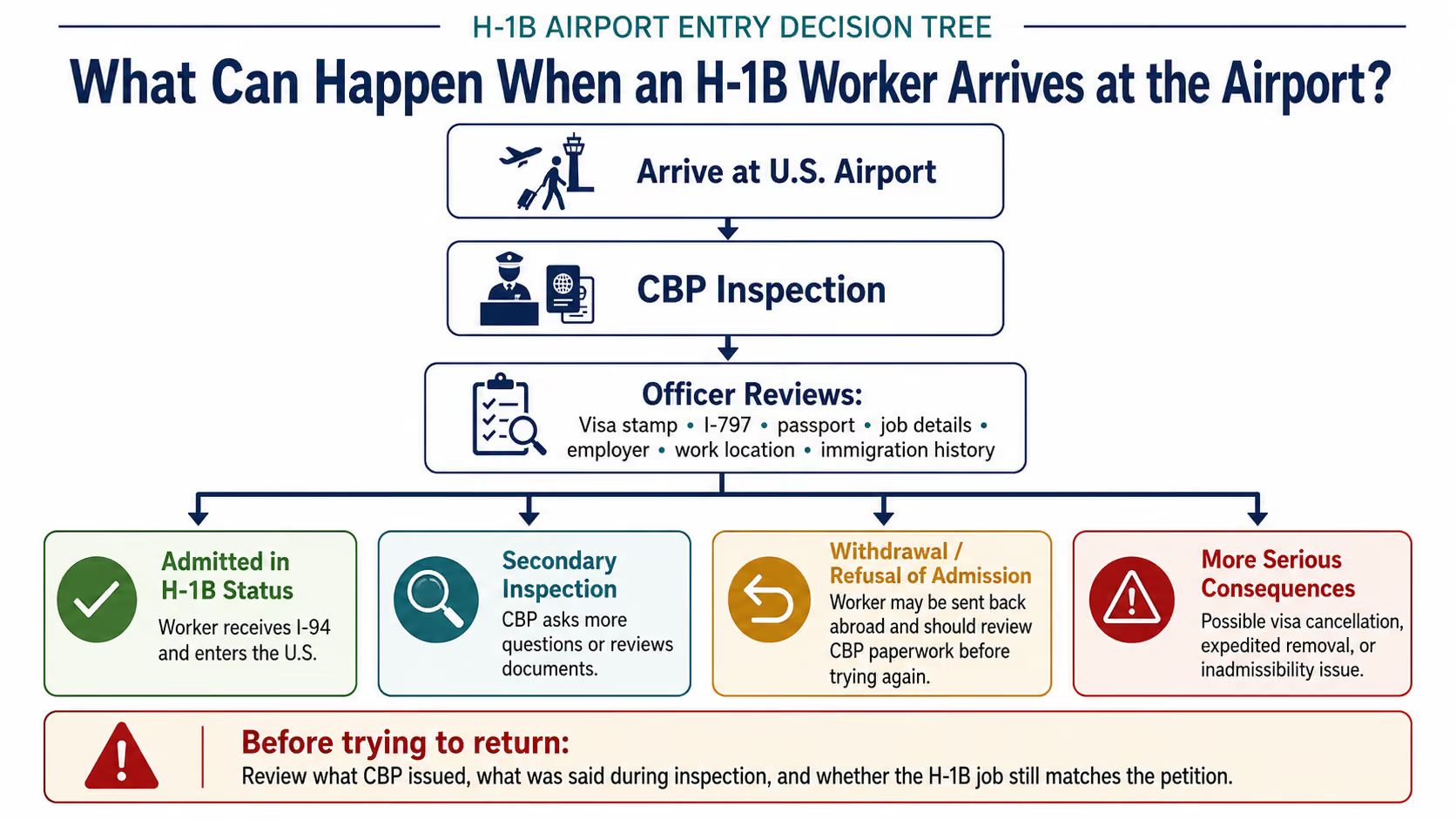
An H-1B worker may be denied entry if CBP believes the worker is not eligible to enter in H-1B status at the time of arrival.
Recent H-1B policy updates also show why petition accuracy and employer information matter. USCIS announced changes to the H-1B selection process designed to strengthen the program and better protect U.S. workers. While this update is not specifically about airport entry, it reinforces the importance of keeping H-1B filings, job details, employer records, and supporting documents accurate and consistent.
Common issues include:
CBP may question entry if the worker was recently laid off, has been outside the U.S. for a long time, has no recent pay records, or cannot confirm that the employer still expects them to return to work.
Problems can arise when the worker’s answers about the job title, duties, salary, employer, or work location do not match the approved H-1B petition.
When job details do not match the approved petition, the issue may also overlap with the kinds of employer, specialty occupation, worksite, or documentation questions that can appear in an H-1B RFE. While an airport inspection is different from a USCIS petition review, inconsistent job information can create problems in both settings.
If the petition lists one location, but the worker says they now work somewhere else, CBP may ask whether an amended H-1B petition was required.
This can also come up with remote work, hybrid work, or client-site work.
Travel after an H-1B transfer, extension, or amendment can create confusion if the documents are not clear. CBP may ask which employer the worker is returning to and whether the correct approval notice is being used.
CBP may ask for proof of current employment, such as recent pay stubs or an employment verification letter. Lack of clear proof can lead to more questioning.
Past overstays, unauthorized work, prior visa problems, removal history, arrests, or convictions may also trigger secondary inspection or refusal of admission.
Expired passports, expired visa stamps, missing I-797 approval notices, or documents showing different job information can all create problems at the airport.
The main question is simple: does the worker’s current job still match the approved H-1B petition? If the answer is unclear, it is better to review the issue before international travel.
Secondary inspection means CBP wants to review the H-1B worker more closely before deciding whether to admit them into the United States.
CBP explains that travelers seeking admission must establish that they are admissible to the satisfaction of the inspecting officer. For H-1B workers, this helps explain why CBP may ask about the employer, job duties, salary, work location, immigration history, and supporting documents before making a final decision.
This does not automatically mean the worker will be denied entry. Many people go through secondary inspection and are eventually admitted. But it does mean CBP has questions that need to be answered before a final decision is made.
During secondary inspection, CBP may ask about the worker’s employer, job title, job duties, salary, work location, travel history, and immigration history. The officer may also ask whether anything has changed since the H-1B petition was approved.
CBP may also review documents such as:
The main goal is to confirm that the worker’s current situation matches the approved H-1B petition.
For example, if the petition says the worker is employed by one company at one location, but the worker gives different information at the airport, CBP may ask more questions. The same can happen if the worker cannot explain their job clearly or does not have proof that the job is still active.
If CBP is satisfied, the worker may be admitted in H-1B status and receive an I-94. If CBP still has concerns, the worker may face refusal of admission, withdrawal of the request to enter, or other consequences depending on the facts.
After CBP reviews an H-1B worker at the airport, a few things can happen.
In most routine cases, CBP admits the worker in H-1B status. The worker then receives an I-94, which shows their status and how long they are allowed to stay in the United States.
CBP may send the worker to secondary inspection for more questions or document review. This does not automatically mean denial. The worker may still be admitted after CBP confirms the job, employer, visa, or travel history.
If CBP is not satisfied, the worker may be allowed to withdraw the request to enter or may be refused admission. In either case, the worker should review the CBP paperwork before trying to return.
In serious cases, CBP may cancel the visa, issue expedited removal, or create a record that affects future visa applications or reentry.
The key point is simple: before trying to return, the worker should understand exactly what CBP issued and what problem needs to be fixed.
No. An H-1B airport denial is not the same as an H-1B petition denial.
An H-1B petition denial usually happens when USCIS decides not to approve the employer’s H-1B filing. This may involve questions about the job, employer, specialty occupation, wage, or supporting evidence.
An airport denial is different. It happens when CBP decides whether the worker can enter the United States at the port of entry.
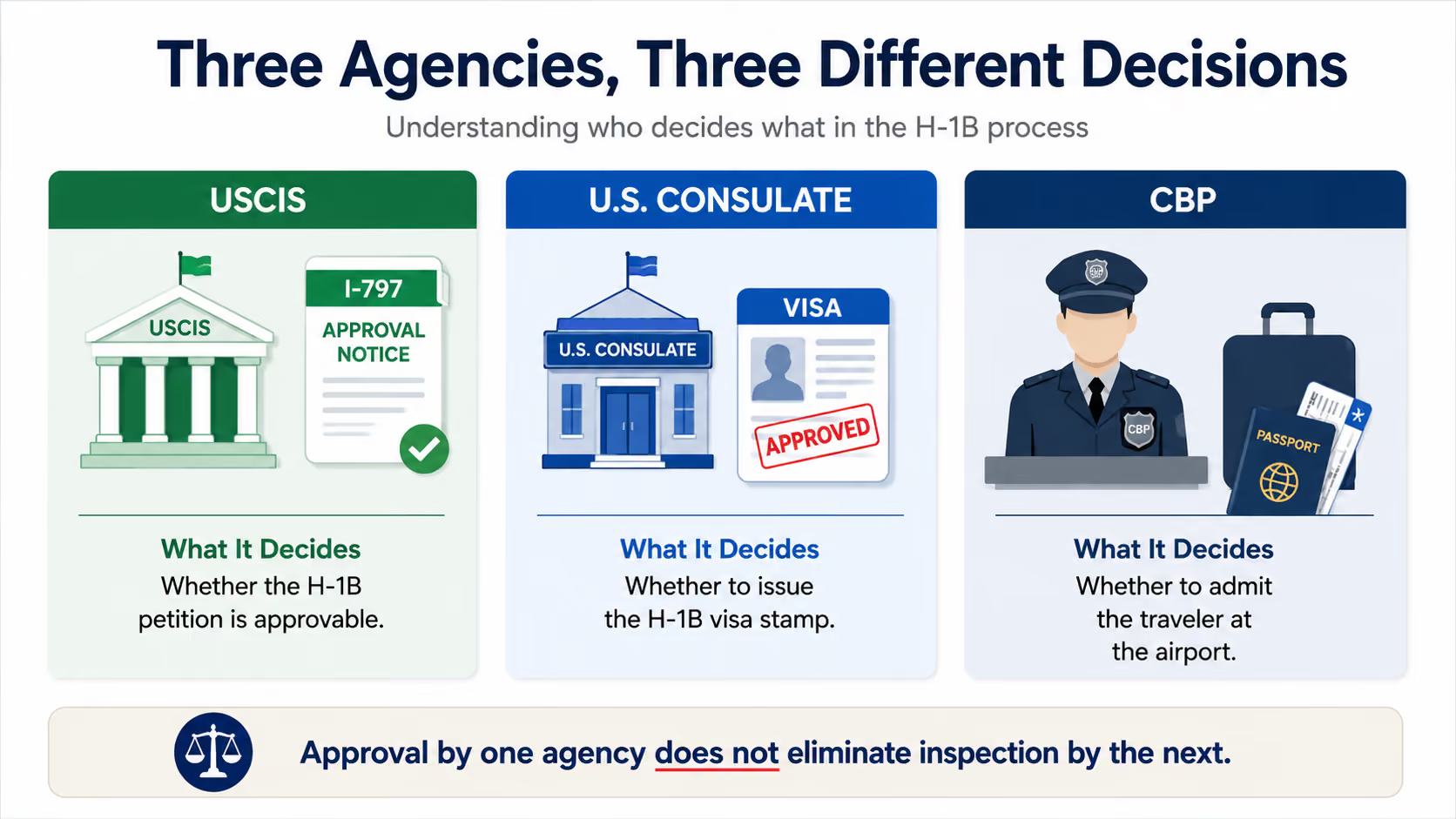
In simple terms:
USCIS decides whether the H-1B petition can be approved.
A U.S. consulate decides whether to issue the H-1B visa stamp.
CBP decides whether the worker can be admitted into the United States when they arrive.
This means a worker may have an approved H-1B petition and a valid visa stamp, but still face questions at the airport. CBP may refuse admission if the officer believes the worker is not eligible to enter in H-1B status at that time.
The H-1B petition may still be valid after an airport denial, depending on the reason for refusal. But if CBP raised concerns about fraud, job mismatch, employer problems, or immigration history, the petition or future visa applications may face additional scrutiny.
The important point is to understand what CBP actually decided. Was it a document issue? A job issue? A visa issue? An admissibility issue? The answer will determine the next step.
If you were denied entry on H-1B, do not immediately try to return to the United States without understanding what happened.
The first step is to review the CBP record. What CBP wrote or issued at the airport can affect your next visa application, reentry attempt, or H-1B strategy.
Try to collect and save any paperwork you received, including refusal documents, withdrawal paperwork, visa cancellation notes, sworn statements, or any written explanation from CBP.
You should also write down what happened while it is still fresh. Include the airport, date, questions asked, answers given, documents reviewed, and whether CBP contacted your employer.
Next, notify your employer. They may need to confirm that the job is still available, provide an employment verification letter, or review whether the H-1B petition still matches your current job, work location, and duties.
Before trying to travel again, it is important to understand the real reason for the denial. The problem may be a missing document, a job mismatch, a visa issue, or a more serious admissibility concern.
The safest next step is to review the case carefully before reapplying for a visa or attempting to reenter the United States.
If an H-1B employee is refused entry, the employer should not assume the issue will fix itself with another travel attempt.
The first step is to understand what CBP said and what paperwork was issued. The employee should share any refusal documents, withdrawal paperwork, visa cancellation notes, or written explanation from CBP.
Next, the employer should review whether the H-1B job still matches the approved petition. This includes checking the employee’s job title, duties, salary, work location, remote work arrangement, and reporting structure.
If the job has changed, the employer may need to consider whether an amended H-1B petition is required before the employee tries to return.
The employer may also need to prepare updated support documents, such as an employment verification letter, recent pay records, worksite confirmation, client letter if applicable, and a copy of the H-1B approval notice.
Most importantly, the employer should avoid giving quick travel advice without reviewing the full facts. A second failed entry attempt can create bigger problems.
The safest approach is to review the CBP record, confirm that the H-1B petition still matches the actual job, and prepare a clear strategy before the employee travels again.
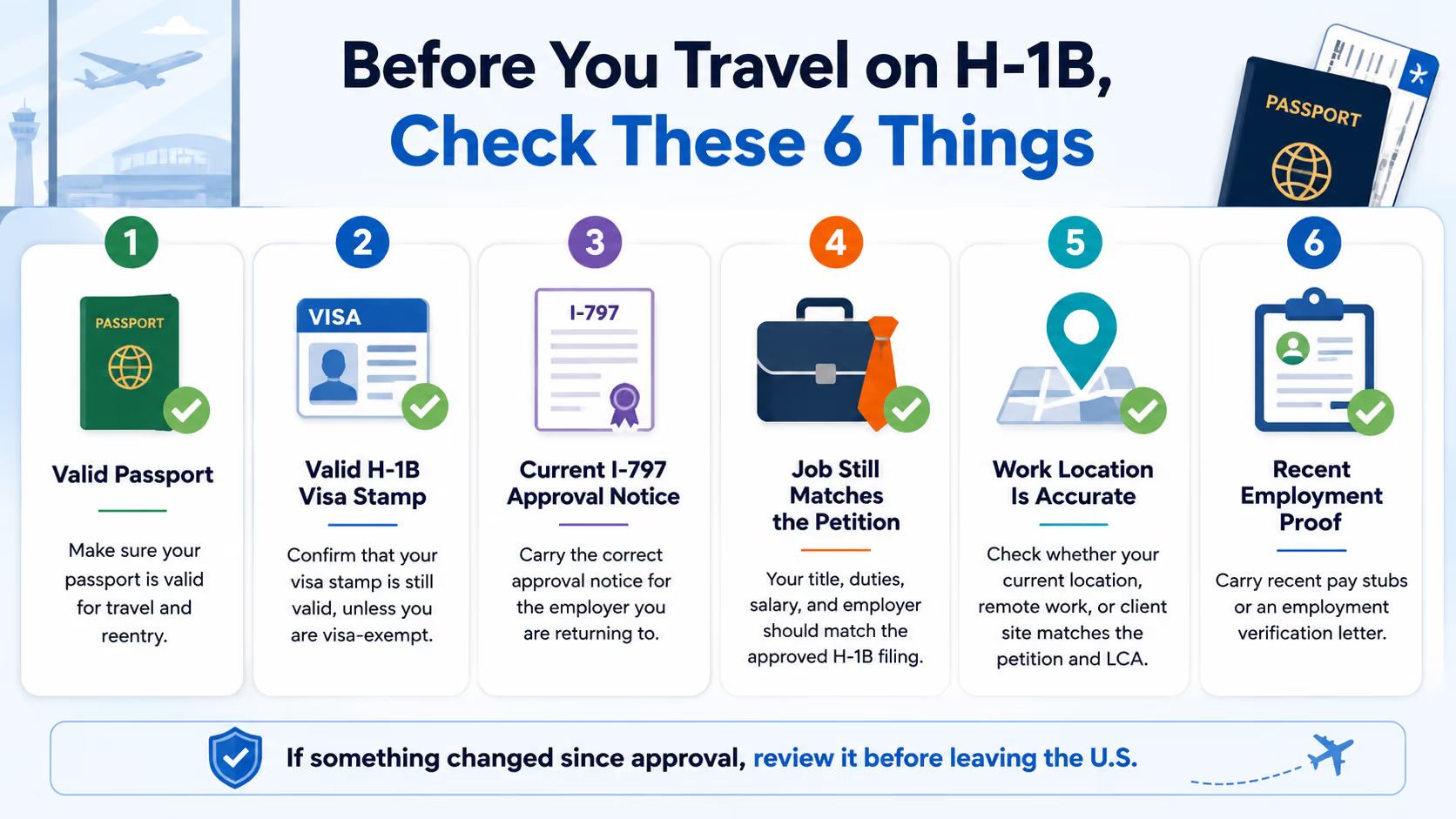
H-1B airport problems cannot always be predicted, but workers can reduce risk by preparing before international travel.
The most important step is making sure the current job still matches the approved H-1B petition. The employer, job title, job duties, salary, and work location should be consistent with what was filed with USCIS.
H-1B workers should also carry the right documents when returning to the United States, including:
Travel can be more complicated if there was a recent job change, H-1B transfer, extension, amendment, layoff, remote work change, or client-site change. These situations should be reviewed before leaving the United States.
At the airport, workers should answer CBP questions clearly and truthfully. Guessing, giving inconsistent answers, or trying to explain around a problem can make the situation worse.
The goal is simple: the documents, answers, and real job situation should all tell the same story.
Maybe. Whether you can come back to the United States after an H-1B airport denial depends on why CBP refused admission.
Some cases are fixable. For example, if the problem was missing paperwork, unclear employment proof, or confusion about the job, the worker may be able to return after the issue is corrected.
Other cases are more serious. If CBP canceled the visa, issued expedited removal, or raised concerns about fraud, misrepresentation, criminal history, or inadmissibility, the worker may need a new visa, a new H-1B petition, a waiver analysis, or another legal strategy before trying again.
The most important thing is not to rush into another travel attempt. A second refusal can make the case harder.
Before returning, the worker should review:
The answer depends on the CBP record. Once the reason for denial is clear, the worker and employer can decide the safest next step.
You should contact an immigration lawyer if the H-1B entry issue is more than a simple document mistake.
This is especially important if CBP refused admission, canceled the visa, issued expedited removal paperwork, or raised concerns about fraud, misrepresentation, criminal history, prior immigration violations, or whether the H-1B job is real.
It is also wise to speak with an attorney before traveling if your case has complications, such as a recent H-1B transfer, pending extension, job change, new work location, remote work arrangement, layoff, lack of recent pay stubs, or prior visa problems.
After an airport denial, the main question is not only “Can I try again?” The better question is “What did CBP put in the record, and what needs to be fixed before I return?”
An immigration lawyer can review the CBP paperwork, H-1B petition, visa history, employment documents, and travel facts to help identify the safest next step.
Before reapplying for a visa or attempting to reenter the United States, it is important to understand whether the issue is a document problem, job mismatch, petition issue, visa issue, or admissibility concern.
An H-1B denial at airport entry can be stressful, especially when the worker already has an approved petition and a valid visa stamp. But not every airport problem has the same meaning or the same solution.
The most important question is why CBP refused admission. Was it a missing document? A job or worksite mismatch? A question about the employer? A prior immigration issue? Or something more serious, such as visa cancellation or expedited removal?
The answer depends on the CBP record, the documents issued at the airport, what the worker said during inspection, and whether the H-1B job still matches the approved petition.
For workers, the safest step is to avoid rushing into another travel attempt before understanding what happened. For employers, the key is to confirm that the job, salary, duties, and work location still match the H-1B filing.
A valid H-1B visa is important, but airport admission is still a separate decision. The stronger the documents and the clearer the facts, the better prepared the worker will be for future travel.
Yes. An approved H-1B petition does not guarantee entry. CBP still decides whether to admit the worker at the airport.
Yes. A visa stamp allows you to travel to the United States and request entry, but CBP can still refuse admission if there is a problem.
Carry your passport, valid H-1B visa stamp, I-797 approval notice, employment verification letter, recent pay stubs, and any documents showing your job is still active.
Secondary inspection means CBP wants to ask more questions or review your documents more closely. It does not always mean denial.
In some cases, yes. If CBP believes there is a serious issue, your visa may be canceled or affected.
Possibly. It depends on why you were denied entry and what paperwork CBP issued. Do not try to return before understanding the issue.
Not always. Some travelers are allowed to withdraw their request to enter. Others may face refusal of admission or expedited removal.
It can. Remote work is not automatically a problem, but issues may arise if the work location does not match the H-1B petition or LCA.
Yes. The employer may need to confirm the job, provide support documents, or review whether the H-1B petition still matches the actual job.
It depends on your case. Travel during a pending transfer, extension, or amendment can be risky, so it is best to review the situation before leaving the U.S.
For readers who want to better understand H-1B travel, CBP inspection, and admission at the airport, the following official resources may be useful:
Hasan Abdullah is the Founder and Managing Attorney of American Visa Law Group, a U.S. immigration law firm focused on helping individuals, families, professionals, entrepreneurs, and employers navigate complex immigration matters. He has extensive experience in employment-based and family-based immigration, including H-1B, PERM, NIW, EB1, O-1, adjustment of status, waivers, consular processing, and complex USCIS strategy matters.
Through AVLG, Hasan focuses on practical immigration strategy, nuanced legal analysis, and realistic guidance grounded in real immigration practice. His writing combines operational insight, legal sophistication, and practical understanding of USCIS adjudication trends to help readers make more informed immigration decisions.


