Author: Hasan Abdullah, Esq.
The I-601 waiver cost in 2026 begins with a $1,050 USCIS filing fee. For applicants using Form I-601A to request a provisional unlawful presence waiver, the current filing fee is $795. These government fees are separate from immigration lawyer fees and from the other expenses that may arise while preparing the waiver or completing the underlying immigration process.
American Visa Law Group’s published immigration attorney fee schedule currently lists a $5,500 legal fee for an I-601 hardship waiver or I-601A case. Using that figure, an applicant might begin with a combined budget of approximately $6,550 for an I-601 hardship-waiver case or $6,295 for an I-601A case before adding translations, medical or psychological evaluations, document-retrieval expenses, consular fees, travel, or other case-specific costs. These are budgeting examples rather than universal quotes.
The distinction between I-601 and I-601A is critical. Form I-601 may be used to request a waiver of certain grounds of inadmissibility, depending on the applicant’s immigration category and the legal waiver available. Form I-601A is narrower and provisionally addresses only the unlawful presence ground for certain immigrant-visa applicants before they depart the United States for consular processing. Choosing the wrong form or misunderstanding the applicable ground of inadmissibility can lead to unnecessary expenses and serious complications.
A realistic waiver budget should therefore account for more than the filing fee. The total may depend on the inadmissibility issue, the qualifying-relative requirements, the strength of the hardship evidence, the applicant’s immigration and criminal history, and whether the case later requires additional evidence, refiling, or a separate form of relief. This guide explains each major component of the cost so applicants can understand what they may be paying for before moving forward.
The I-601 waiver cost in 2026 generally includes three categories: the USCIS filing fee, immigration lawyer fees, and case-specific expenses. The standard Form I-601 filing fee is $1,050, while Form I-601A has a separate $795 filing fee. Applicants may also need to budget for evidence preparation, certified translations, professional evaluations, record retrieval, consular processing, travel, or additional immigration applications.
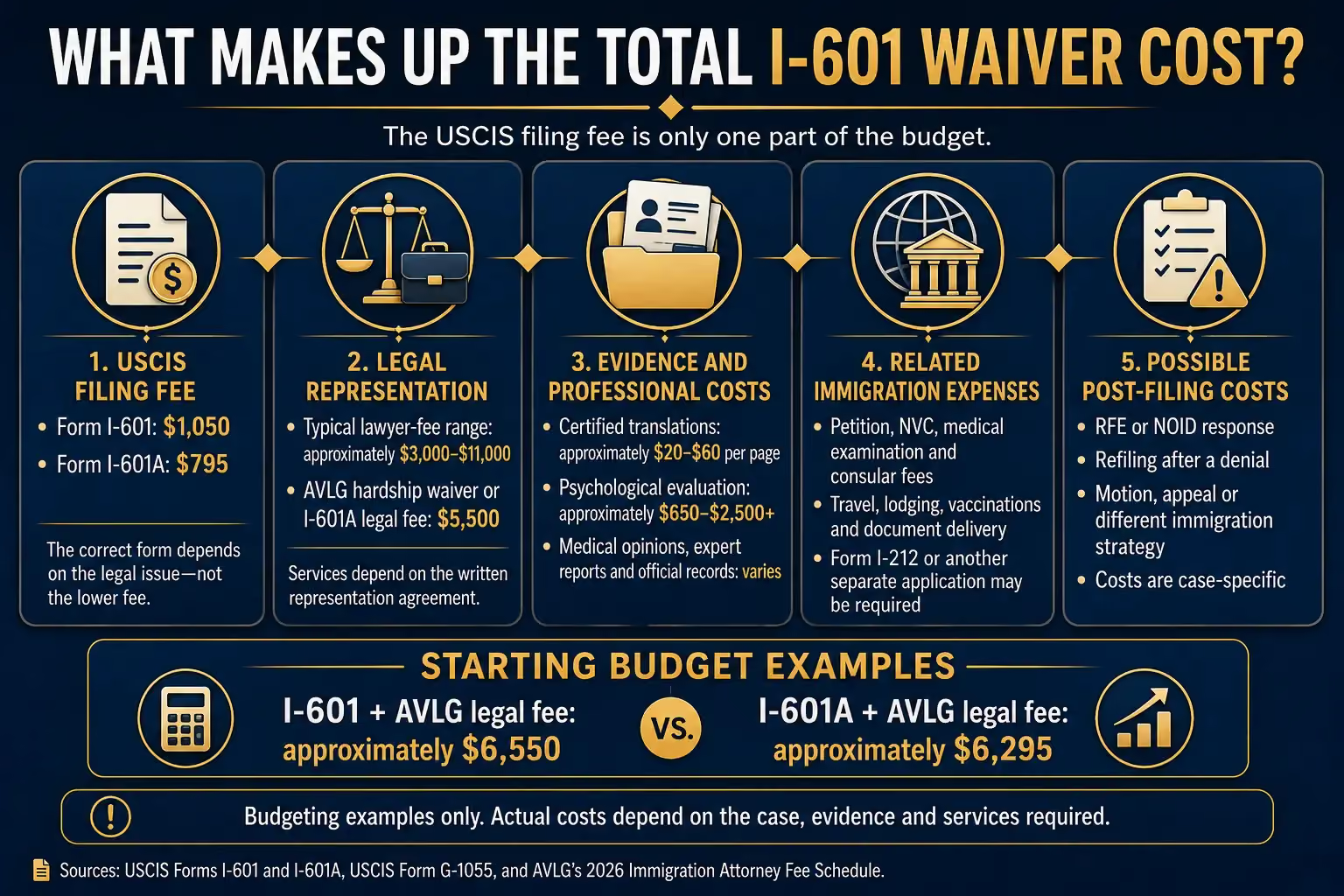
The government filing fee is paid for USCIS to receive and adjudicate the application. It does not guarantee approval and does not include legal representation. Government fees are also separate from the costs of the immigrant petition, adjustment-of-status application, or consular process connected to the applicant’s broader immigration case.
Lawyer fees pay for a different type of work. A waiver case may require an attorney to identify the precise inadmissibility ground, determine whether a waiver is legally available, identify the correct qualifying-relative standard, analyze the applicant’s prior immigration history, develop the evidentiary strategy, prepare the application and legal brief, and organize the supporting record. American Visa Law Group’s current immigration attorney fee schedule lists a $5,500 legal fee for an I-601 hardship waiver or I-601A case.
There is no universal total because Form I-601 is used in several legally distinct situations. A waiver involving unlawful presence may require a different analysis and evidentiary record than one involving fraud or misrepresentation, certain criminal conduct, a vaccination requirement, or another waivable ground of inadmissibility. The qualifying-relative requirements and legal standards may also differ depending on the waiver being requested.
The cost can increase when a case involves multiple inadmissibility grounds, prior removal proceedings, disputed immigration records, criminal history, inconsistent past applications, extensive hardship documentation, or professional evaluations. The scope of the attorney agreement also matters. Some quotes may cover only the waiver, while services such as the underlying immigrant petition, consular processing, translations, expert reports, RFE responses, motions, or refiling may be charged separately.
For this reason, applicants should compare more than the headline attorney fee. A useful cost estimate should identify the correct waiver, explain what services are included, separate government payments from legal fees, and account for the expenses that may arise throughout the broader immigration process.
The general USCIS filing fee for Form I-601, Application for Waiver of Grounds of Inadmissibility, is $1,050 in 2026. This payment covers USCIS’s processing and adjudication of the waiver application. It does not include immigration lawyer fees, supporting-document expenses, professional evaluations, translations, or fees connected to the applicant’s underlying immigration case.
Applicants should confirm the amount through the current USCIS Form G-1055 Fee Schedule immediately before filing. Government fees, accepted payment methods, form editions, and filing instructions can change. The correct fee must match the application and filing category in effect when USCIS receives the submission.
USCIS filing fees are generally final and nonrefundable after a filing has been accepted. This remains true if USCIS denies the waiver, the applicant withdraws it, or the case does not produce the immigration result the applicant hoped to obtain. The filing fee pays for adjudication rather than approval.
A denial can therefore create additional costs. An applicant who files a new Form I-601 may need to pay the government fee again, along with any new legal, evidentiary, translation, or professional expenses. If the appropriate response is a motion, appeal, or different immigration application, that process may carry its own filing fee and attorney costs.
A rejected application is procedurally different from a denial. A rejection generally means USCIS did not accept the filing for adjudication, often because of an incorrect fee, missing signature, outdated form edition, or another intake problem. It does not create a valid filing date, which can be particularly important when the applicant is working with a deadline or coordinating the waiver with another immigration process.
A fee waiver may be available to certain Form I-601 applicants, but it is not available merely because paying the fee would be inconvenient. The applicant must fall within a category for which USCIS accepts an I-601 fee-waiver request and must provide sufficient documentation showing an inability to pay.
USCIS currently states that it will accept an I-601 fee-waiver request from certain applicants, including:
Eligibility to request a fee waiver does not mean that USCIS will automatically approve it. The request must be properly prepared and supported under the applicable USCIS standards. Applicants should review the current fee-waiver instructions and the Form I-601 filing page before submitting the application.
USCIS may reject Form I-601 if the payment is missing, incomplete, or for the wrong amount. Both underpayment and an incorrect total payment can prevent the application from being accepted.
A rejected filing can create more than an administrative inconvenience. The applicant may need to correct the payment, prepare a new filing package, and send the application again. This can affect filing dates, consular coordination, case strategy, and the amount of time a family remains separated.
Before filing, applicants should verify the current fee, confirm whether they qualify for a fee waiver, use the correct form edition, follow the applicable filing instructions, and make sure the payment information is complete. That final review can prevent a straightforward payment error from delaying an otherwise carefully prepared waiver application.
The USCIS filing fee for Form I-601A, Application for Provisional Unlawful Presence Waiver, is $795 in 2026. This fee is paid directly to USCIS and is separate from immigration lawyer fees and the expenses associated with the applicant’s broader immigrant-visa process.
Form I-601A allows certain immigrant-visa applicants who are physically present in the United States to request a provisional waiver of the three- or ten-year unlawful presence bar before departing for their consular interview. It does not provide lawful immigration status, produce a green card, or eliminate the requirement to leave the United States for consular processing.
The current $795 fee covers USCIS’s receipt, processing, and adjudication of the provisional waiver application. As with other USCIS filing fees, payment does not guarantee approval. The fee is generally nonrefundable after USCIS accepts the application, even if the waiver is denied, withdrawn, or later becomes unusable because another inadmissibility issue is identified.
Applicants should verify the amount through the current USCIS fee schedule before filing. Submitting an incorrect or incomplete payment can result in rejection, which means USCIS will not establish a valid filing date or begin adjudicating the waiver.
The filing fee covers only the Form I-601A application. USCIS reviews whether the applicant satisfies the procedural requirements and has demonstrated that refusing admission would cause extreme hardship to a qualifying U.S. citizen or lawful permanent resident spouse or parent.
The fee does not pay for legal advice, case preparation, or development of the hardship evidence. It also does not cover the immigrant petition or visa process that makes the applicant eligible to pursue consular processing. An approved I-601A provisionally waives only the unlawful presence ground described in the application. It does not waive fraud or misrepresentation, criminal inadmissibility, prior removal issues, unlawful reentry, health-related grounds, or other possible barriers.
This distinction can have significant financial consequences. If a consular officer identifies another ground of inadmissibility, the applicant may need a different waiver or additional legal strategy, if relief is legally available. The original $795 payment does not transfer to another application.
The complete cost of an I-601A case may extend well beyond the USCIS filing fee. Depending on the applicant’s circumstances and stage of the immigration process, separate expenses may include:
A realistic I-601A budget should therefore follow the entire consular-processing timeline rather than treating the $795 filing fee as the total cost. Before filing, the applicant should understand which ground is being waived, what expenses are included in the lawyer’s agreement, and what costs may arise after the provisional waiver is decided.
The financial difference between Form I-601 and Form I-601A is more than the $255 difference in their filing fees. The two applications serve different legal purposes, apply at different stages of the immigration process, and do not waive the same grounds of inadmissibility. Filing the less expensive form is not an alternative if that form does not cover the applicant’s actual immigration problem.
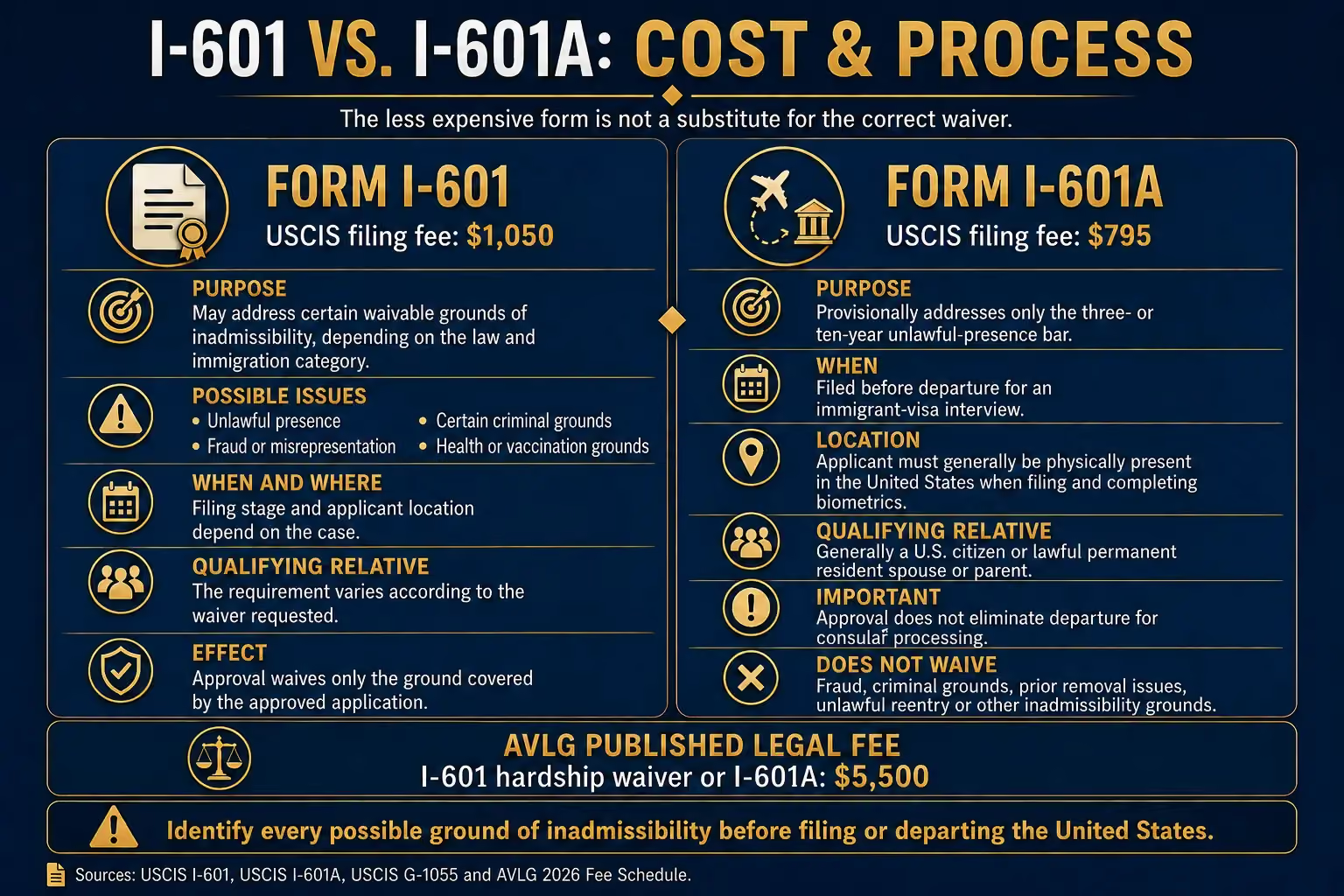
Form I-601A is deliberately narrow. It allows certain immigrant-visa applicants to request a provisional waiver of the three- or ten-year bar that may be triggered when they leave the United States after accumulating more than 180 days of unlawful presence.
It does not waive fraud or willful misrepresentation, criminal inadmissibility, health-related grounds, a prior removal order, unlawful reentry after removal or extended unlawful presence, or other possible barriers to admission. Some of those issues may be waivable through Form I-601, Form I-212, or another legal mechanism, while others may have no readily available waiver. The correct analysis depends on the precise statutory ground and the applicant’s complete record.
An approved I-601A also does not convert the applicant into lawful status or permit adjustment of status inside the United States. The applicant must still depart, attend the immigrant-visa interview, and be found otherwise eligible for the visa. If the consular officer identifies another ground of inadmissibility, the provisional unlawful presence waiver may not be sufficient to complete the case.
Form I-601 has a broader potential scope, but it is not a universal solution. Each inadmissibility ground has its own eligibility rules, qualifying-relative requirements, legal standard, and discretionary considerations. A person who qualifies for a waiver of unlawful presence does not automatically qualify for a waiver of misrepresentation or a criminal ground.
The first strategic question is not which form costs less. It is which inadmissibility ground applies, whether the law provides a waiver for that ground, and which application fits the applicant’s procedural position.
This analysis may require reviewing prior visa applications, border encounters, removal records, immigration-court documents, criminal dispositions, statements made to government officers, and the applicant’s periods of presence and departure. A problem that initially appears to involve only unlawful presence may become more complicated if the record also contains a removal order, an unauthorized return, a false statement, or a criminal issue.
Choosing the wrong form can create several layers of avoidable expense. The applicant may lose a nonrefundable filing fee, pay for an application that cannot resolve the case, need additional legal analysis, or have to prepare a second waiver. In a consular case, an incorrect assessment may also lead to longer family separation, additional travel, new medical examinations, or extended processing abroad.
Before paying either filing fee, the applicant should understand the exact ground of inadmissibility, the waiver provision being requested, the qualifying-relative standard, and what will happen after approval. That legal diagnosis is what determines whether the appropriate budget begins with Form I-601, Form I-601A, both Form I-601 and Form I-212, or a different immigration strategy entirely.
I-601 lawyer fees in 2026 commonly range from approximately $3,000 to $11,000, although the amount can be lower or higher depending on the waiver, the law firm, and the complexity of the case. A straightforward vaccination waiver, for example, may require substantially less legal work than an extreme-hardship waiver involving misrepresentation, criminal history, or multiple inadmissibility grounds.
There is no government-set price for legal representation. Published estimates and attorney fee schedules vary because firms may include different services in their quotes. One fee may cover only Form I-601 and a basic document review, while another may include detailed eligibility analysis, hardship strategy, declarations, legal briefing, evidence organization, and ongoing USCIS correspondence.
The hardship waiver lawyer cost is often influenced by the amount of legal analysis and evidence development required. Cases at the lower end of the range may involve one clearly identified ground of inadmissibility, a straightforward qualifying-relative relationship, and organized supporting records. Cases at the higher end may require analysis of prior immigration filings, criminal dispositions, removal history, disputed misrepresentation findings, multiple hardship factors, or extensive medical and country-conditions evidence.
The fee may also depend on the stage at which the attorney becomes involved. Preparing a waiver from the beginning is different from taking over after a consular finding, responding to an RFE or Notice of Intent to Deny, or attempting to correct a previously denied application. Each situation requires a different review of the record and may involve additional legal work.
Applicants should therefore treat broad market ranges as a budgeting reference, not as a guaranteed quote. The more useful question is what work the quoted fee actually covers.
American Visa Law Group publishes its legal fees so applicants can review expected pricing before deciding how to proceed. The firm’s current immigration attorney fee schedule lists the following amounts:
These are attorney fees rather than government filing fees. They do not automatically include the $1,050 Form I-601 fee, the $795 Form I-601A fee, expert evaluations, translations, medical examinations, consular expenses, or separate immigration applications.
The difference among these prices reflects the fact that not every I-601 filing requires the same legal standard or evidentiary record. A hardship waiver may require extensive factual development and a detailed legal presentation. A vaccination waiver may focus on a narrower issue and a more limited set of supporting documents.
AVLG’s published $5,500 fee for an I-601 hardship waiver or I-601A case falls within commonly reported market ranges while giving applicants a clear starting point for budgeting. The final scope and fee should still be confirmed in the representation agreement, particularly when the case contains unusual complications or requires additional services.
Many immigration firms use a flat fee for I-601 and I-601A representation. A flat fee gives the applicant a defined price for a stated scope of work. It may cover the eligibility review, preparation of the form, hardship strategy, supporting declarations, legal brief, evidence organization, and filing. The advantage is predictability, but only if the agreement clearly identifies what is included.
Other firms use hourly billing or a combination of flat and hourly fees. An attorney may charge a flat amount for preparing the initial waiver, then bill separately for unexpected work such as an RFE response, additional inadmissibility analysis, a motion, an appeal, or coordination with another lawyer or professional.
Before comparing waiver attorney fees, applicants should ask:
Two quotes that appear different may cover very different amounts of work. A clear written scope is therefore just as important as the headline fee when estimating the real cost of an I-601 or I-601A waiver.
An I-601 lawyer fee does not necessarily cover every expense connected to the waiver or the applicant’s broader immigration process. Government fees, professional evaluations, translations, consular expenses, and additional legal proceedings are often billed separately.
The representation agreement controls. Before hiring an attorney, applicants should confirm where the quoted service begins and ends, particularly when the waiver is only one stage of a family-based, employment-based, adjustment-of-status, or consular-processing case.
The attorney fee generally does not include the $1,050 Form I-601 filing fee or the $795 Form I-601A filing fee. These payments are made for government processing rather than legal services.
The waiver fee may also exclude the costs of the underlying immigration process, including:
A person pursuing an I-601A provisional waiver, for example, may still need to pay for the underlying immigrant petition, National Visa Center processing, medical examination, consular interview, and other steps required to obtain the immigrant visa. Those expenses do not become part of the I-601A filing merely because the waiver is connected to the same immigration journey.
The attorney may help determine what evidence would be useful, but the cost of obtaining that evidence is usually paid separately. Common outside expenses include certified translations, civil documents, court records, police records, medical records, immigration files, and international mailing or courier services.
Some hardship cases may benefit from a psychological evaluation, medical opinion, financial analysis, or country-conditions expert. These services are provided by independent professionals who set their own fees. An evaluation should be used because it meaningfully supports a relevant hardship issue, not simply because applicants assume every waiver requires one.
Record retrieval can also add to the budget. A case involving an old removal order, criminal charge, border encounter, or disputed statement may require certified dispositions, agency records, or Freedom of Information Act requests. The lawyer may assist with identifying the necessary records, but the retrieval work and government or third-party charges may fall outside the original waiver fee.
An I-601 waiver does not automatically resolve every immigration barrier. Applicants with a prior removal order or certain reentry issues may also need Form I-212, Application for Permission to Reapply for Admission. Form I-212 involves a separate legal standard, filing fee, evidentiary presentation, and attorney service.
Other legal work that may require an additional fee includes:
Whether an RFE response is included varies among firms. Some agreements include routine USCIS follow-up, while others treat a substantial evidence request or new legal issue as separate work. The agreement should explain this before the case is filed.
Applicants completing consular processing may need to travel outside the United States for their medical examination and immigrant-visa interview. Airfare, lodging, transportation, passport delivery, document replacement, and time away from work can become meaningful parts of the total budget.
An approved I-601A waiver does not eliminate these expenses because the applicant must still complete the consular process. For an I-601 applicant already outside the United States, delays or additional document requests may extend the period of separation and create further travel, housing, or family-support costs.
Attorney attendance at an interview, when available or appropriate, may also involve a separate legal fee, travel reimbursement, or both. Consular interviews generally take place abroad, and U.S. immigration counsel may have a more limited role at the interview than in a USCIS proceeding.
The practical lesson is simple: the quoted waiver attorney fee should not be treated as the complete immigration budget. Applicants should identify the government payments, outside evidence expenses, related immigration applications, and possible additional legal services before comparing one fee proposal with another.
The USCIS filing fee for Form I-601 is generally the same regardless of the inadmissibility issue being waived, but the legal work can differ substantially. A narrow vaccination waiver may require a limited set of records and arguments, while a case involving fraud, criminal history, or several overlapping immigration violations may require extensive legal research and evidence.
Not every I-601 waiver follows the same eligibility rules. The required qualifying relative, hardship standard, supporting evidence, and discretionary analysis depend on the specific ground of inadmissibility and the waiver provision available under the Immigration and Nationality Act. This is why two applicants filing the same form may receive very different attorney-fee quotes.
An unlawful presence waiver may be needed when an applicant has accumulated more than 180 days of unlawful presence and departure would trigger a three- or ten-year bar. Before preparing the waiver, the attorney may need to reconstruct the applicant’s immigration timeline, calculate relevant periods of presence, review prior departures, and determine whether any statutory exceptions apply.
The waiver generally requires evidence that refusing admission would cause extreme hardship to a qualifying U.S. citizen or lawful permanent resident spouse or parent. The cost may depend on how much factual development is required to document the qualifying relative’s medical, financial, psychological, caregiving, educational, or relocation-related circumstances.
A case involving only unlawful presence may qualify for the I-601A provisional process. If the record also contains a prior removal, unlawful reentry, misrepresentation, or criminal issue, the legal analysis becomes broader and additional applications may be required.
A fraud or misrepresentation finding often requires a detailed review of what the applicant said, what documents were submitted, and what immigration benefit was being requested. The attorney may need to obtain and compare visa applications, USCIS forms, interview notes, border records, consular findings, and earlier statements.
The legal analysis may address whether a statement was false, whether it was willful and material, whether the applicant made it to obtain an immigration benefit, and whether a waiver is available. Even when the applicant is eligible to apply, the case may require both an extreme-hardship presentation and a persuasive showing that favorable discretion is warranted.
These cases can cost more because the attorney is not only documenting hardship. The lawyer may also need to analyze or challenge the underlying inadmissibility finding, reconcile inconsistencies, and present the applicant’s complete immigration history accurately. A poorly framed explanation can create additional credibility concerns, so the factual record must be handled carefully.
Criminal inadmissibility cases can involve substantial legal and documentary work. The name of an offense on a background check does not always answer the immigration question. The attorney may need to review the statute, charging documents, plea agreement, sentencing record, and certified court disposition to determine the precise immigration consequences.
Depending on the applicable waiver provision, the evidence may need to address rehabilitation, the age of the offense, family hardship, public-safety considerations, or other favorable discretionary factors. The applicant’s conduct after the offense, compliance with the sentence, employment, family responsibilities, and community ties may also become relevant.
Not every criminal ground is waivable. Determining whether relief exists must come before developing the waiver package. Cases involving incomplete records, multiple arrests, controlled-substance issues, or convictions from different jurisdictions may require more research and therefore higher legal and document-retrieval costs.
Health-related waivers may involve communicable-disease findings, certain physical or mental disorders associated with harmful behavior, or vaccination requirements. The legal and evidentiary needs depend on the particular medical ground identified by the civil surgeon or panel physician.
A vaccination waiver may be narrower and less expensive than a full hardship waiver, but it still requires the correct legal basis and supporting documentation. Applicants seeking a waiver based on religious beliefs or moral convictions must address the applicable standard consistently and credibly. Medical records, physician statements, or updated examination results may create separate expenses.
Other health-related waivers can require more coordination with medical professionals and more detailed evidence about treatment, risk, family relationships, and the proposed arrangements in the United States. The cost reflects the actual medical and legal issues rather than the fact that Form I-601 is being used.
The cost usually increases when more than one ground of inadmissibility applies. Each ground must be analyzed separately to determine whether it is waivable, which legal standard applies, and what evidence is required. Approval of a waiver for one ground does not eliminate an unrelated ground.
For example, an applicant may face unlawful presence together with a prior removal order, possible misrepresentation, or a criminal issue. The case may require both Form I-601 and Form I-212, additional court or government records, and separate legal arguments addressing hardship, rehabilitation, credibility, and discretion.
A complete assessment should identify all potential grounds before the applicant departs the United States or pays a nonrefundable filing fee. If one ground has no available waiver, preparing an expensive application for another ground may not resolve the immigration case.
USCIS addresses these different waiver standards throughout Volume 9 of its Policy Manual. For budgeting purposes, applicants should expect the lawyer’s quote to reflect the legal basis of the waiver, the number of issues involved, and the evidence required—not simply the number of pages in the final filing.
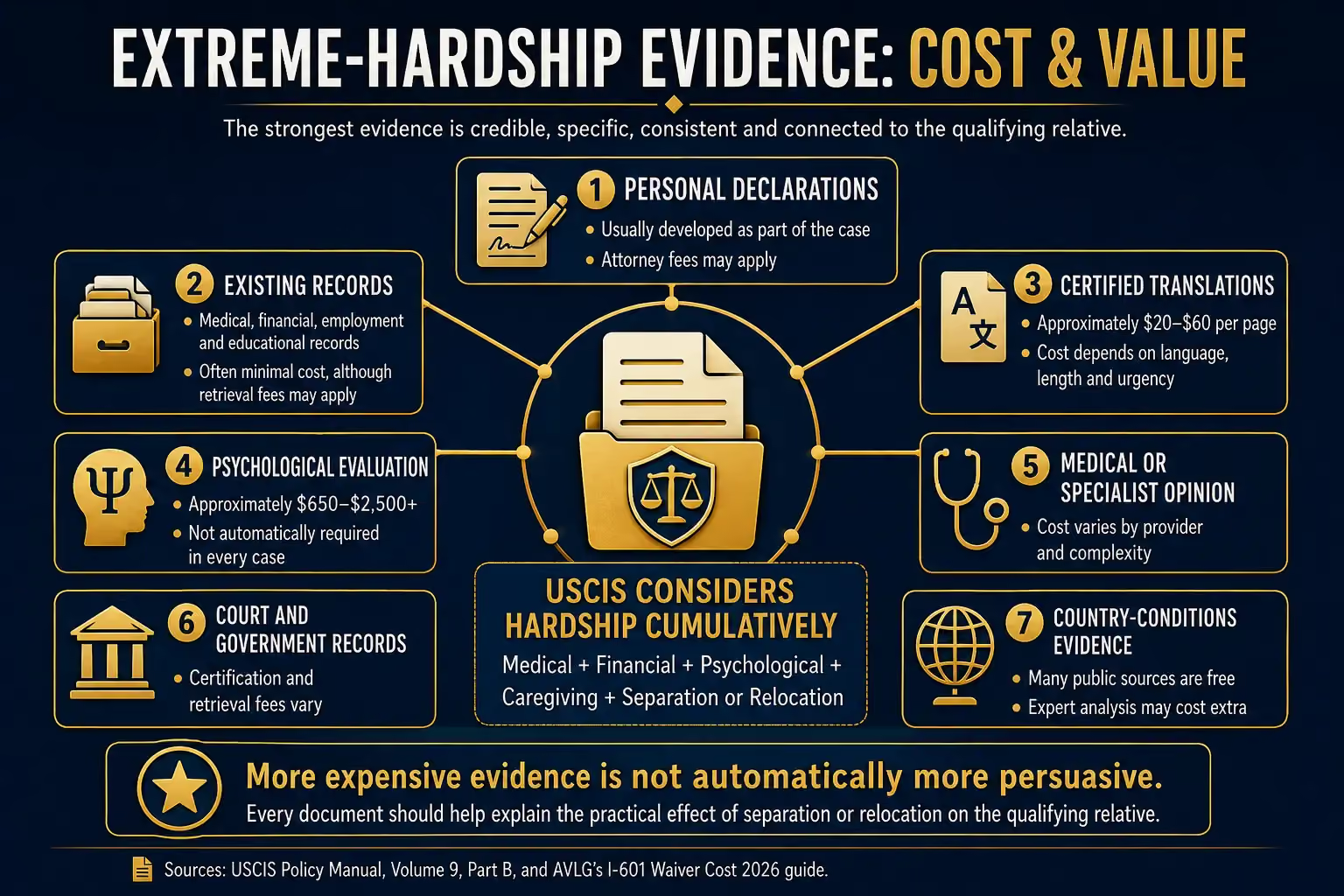
There is no fixed price for preparing extreme-hardship evidence. Some applicants can document the qualifying relative’s circumstances mainly through records they already possess, while others need certified translations, medical reports, psychological evaluations, or specialized evidence. Depending on the case, these additional expenses may range from a few hundred dollars to several thousand dollars beyond the USCIS filing fee and lawyer fee.
A psychological evaluation is one of the more significant potential expenses. Published provider prices in 2026 commonly range from approximately $650 to $2,500, with complex or expedited evaluations sometimes costing more. Certified translations often cost approximately $20 to $60 per page, depending on the language, document type, word count, and turnaround time. These are general planning ranges rather than standardized prices.
Extreme hardship is evaluated in relation to the qualifying relative rather than the applicant alone. Depending on the waiver provision, the qualifying relative may be a U.S. citizen or lawful permanent resident spouse or parent. The evidence should show how that person would be affected if the applicant were denied admission.
Relevant evidence may address:
Not every category must appear in every case. The evidence should reflect the family’s actual circumstances rather than trying to manufacture hardship factors that do not exist. A smaller, coherent record can be more persuasive than an expensive collection of documents that does not connect clearly to the legal standard.
A psychological evaluation may help when the qualifying relative has a documented mental health condition or when separation or relocation could seriously affect their psychological functioning. The evaluator may review the person’s history, conduct clinical interviews, use appropriate assessment methods, and prepare a report explaining the findings.
The cost can depend on the professional’s qualifications, the number of sessions, the volume of records reviewed, the length of the report, and whether expedited service is requested. Interpreter services, supplemental reports, or testimony may be charged separately.
A psychological evaluation is not automatically required for an I-601 or I-601A waiver. USCIS does not approve a case merely because an evaluation is included, and the absence of one does not automatically make the evidence insufficient. The evaluation should clarify a genuine hardship issue and fit logically with the medical records, declarations, and other evidence.
Medical evidence may include treatment records, diagnostic reports, prescription information, insurance documentation, and statements from treating professionals. A detailed specialist opinion may create an additional expense, but existing records may sometimes provide the necessary support. The decision should be based on what the case needs rather than an assumption that every hardship claim requires a paid expert.
Any foreign-language document submitted to USCIS must generally include a complete English translation with a certification from the translator confirming that the translation is complete and accurate and that the translator is competent to translate.
Translation expenses can grow quickly when the record includes lengthy medical files, financial documents, court records, messages, or country-specific materials. Common civil documents such as birth and marriage certificates may cost relatively little, while handwritten, technical, legal, or rare-language documents may be more expensive.
Applicants should translate documents strategically. Submitting hundreds of pages without explaining their relevance can make the record harder to review and increase costs without materially strengthening the waiver. The attorney should help identify which documents need complete translation and how they support the hardship analysis.
Other potential document expenses include certified court dispositions, police records, immigration files, foreign civil records, tax transcripts, school records, and international delivery. The issuing agency may charge its own retrieval or certification fee.
USCIS evaluates extreme hardship under the totality of the circumstances. This means the officer considers the relevant factors together rather than requiring one particular document or one dramatic event. USCIS extreme-hardship guidance explains that hardship factors should be assessed collectively.
For example, a qualifying relative’s manageable medical condition may become more significant when combined with financial dependence, loss of insurance, caregiving responsibilities, limited treatment abroad, and separation from a support network. Each fact helps explain the practical effect of denying the applicant’s admission.
The strongest evidence is not necessarily the most expensive. It is the evidence that is credible, specific, consistent, and connected to the qualifying relative. Before paying for an evaluation or expert report, applicants should determine what factual question the evidence will answer and how it fits into the broader waiver strategy.
The complete cost of an I-601 or I-601A case may include several government and personal expenses beyond the waiver itself. The additional amount depends on whether the applicant is pursuing adjustment of status inside the United States or completing an immigrant-visa case through a U.S. embassy or consulate.
A waiver is usually one component of a larger immigration process. Applicants should build their budget around that complete process rather than adding only the USCIS waiver fee and lawyer fee.
These amounts are general planning figures. Different filing categories, exemptions, fee waivers, or procedural settings may produce a different total. All government fees should be verified immediately before payment.
Many hardship-waiver cases begin with an approved family-based immigrant petition. If Form I-130 has not already been filed, the current fee is generally $625 for an eligible online filing or $675 for a paper filing. Attorney fees for preparing the petition are separate from the government payment.
An applicant seeking permanent residence inside the United States may also need Form I-485. The general filing fee is currently $1,440, although different amounts or exemptions may apply to certain applicants. Work authorization and advance parole may require additional forms and separate fees.
Not every I-601 applicant will pay both the I-130 and I-485 fees. The correct expenses depend on the applicant’s immigration category and procedural position. Someone applying through an employment petition, humanitarian classification, or another immigration benefit may have a different set of underlying forms.
For family-based applicants who want a broader breakdown, AVLG’s marriage green card cost guide explains the government and case-related expenses associated with adjustment of status and consular processing.
Applicants completing consular processing may need to pay fees to the Department of State after the underlying immigrant petition is approved. The National Visa Center generally collects a $120 Affidavit of Support review fee when required.
The immigrant-visa application fee depends on the category. The current fee is generally:
Each immigrating family member may require a separate immigrant-visa application fee. The Affidavit of Support review fee, by contrast, is generally charged by case when it applies. Current amounts are available through the Department of State’s visa fee schedule.
After an immigrant visa is issued, the applicant generally pays the $235 USCIS immigrant fee before traveling to the United States. This fee supports the processing and production of the applicant’s permanent resident card.
Every immigrant-visa applicant must generally complete a medical examination with an authorized panel physician. The price is set locally and can vary substantially by country, clinic, age, required testing, and vaccination history.
The medical examination fee may not include every vaccination, laboratory test, follow-up visit, or treatment. Applicants who do not have complete vaccination records may face additional expenses. A new examination may also be required if an earlier medical report expires before visa issuance.
Travel is another significant variable. Applicants may need to budget for:
These costs can be especially important in countries where the authorized physician or consular post is far from the applicant’s home.
Consular and waiver cases may require birth certificates, marriage certificates, divorce records, police certificates, court dispositions, military records, and other civil documents. Foreign agencies may charge for certified copies, legalization, apostilles, or expedited delivery.
Documents that are not in English may need complete certified translations for USCIS. Consular document rules can depend on the specific embassy and country. Applicants should follow both USCIS requirements and the Department of State’s country-specific civil-document guidance.
A case involving prior removal, arrest, border encounters, or inconsistent immigration records may also require Freedom of Information Act requests, certified criminal records, or archived court files. Retrieval costs vary, and older records may take time to locate.
Some applicants with a prior removal or deportation-related bar may need Form I-212, Application for Permission to Reapply for Admission, in addition to Form I-601. The current general USCIS filing fee for Form I-212 is $1,175.
Form I-212 is not simply an attachment to the hardship waiver. It involves a separate discretionary analysis, supporting evidence, government fee, and usually a separate attorney fee. An applicant who needs both applications should budget for two legal presentations rather than assuming one waiver fee covers everything.
Cases proceeding in immigration court may also be subject to different or additional statutory filing fees. Because court-related fee rules and filing procedures can change, the applicant should confirm the amount and payment process that apply to the specific proceeding.
The practical approach is to map the entire immigration path before filing. The budget should identify every required form, government payment, professional service, document expense, and consular step from the initial petition through final visa or adjustment processing.
Yes. A Request for Evidence (RFE), Notice of Intent to Deny (NOID), denial, or refiling can significantly increase the total I-601 waiver cost. Additional expenses may include attorney time, updated supporting evidence, professional evaluations, translations, and another government filing fee.
An RFE is not a denial. It means USCIS needs more information before deciding the case. A NOID is more serious because it identifies reasons USCIS expects to deny the application unless the applicant successfully addresses its concerns.
The cost of responding to an RFE depends on what USCIS requests and whether the response is included in the original attorney agreement. A straightforward request for a missing document may require relatively little work. A complex RFE involving inadmissibility, extreme hardship, credibility, or discretionary concerns may require extensive evidence and legal analysis.
Responding properly may involve:
AVLG’s published fee schedule states that an RFE response is included at no additional charge for existing clients under most circumstances. Separate fees may apply when the RFE results from circumstances outside the firm’s control or requires substantial additional work. The published amounts include $650 for certain forced RFEs, $800 for a simple issue, $1,050 for an issue requiring research or extensive document review, and $1,350 for an issue requiring a substantial legal argument.
A NOID response is generally more demanding because the attorney must directly rebut USCIS’s anticipated reasons for denial. AVLG’s published schedule lists a starting legal fee of $2,200 for a NOID involving one complex issue, with additional charges possible when the notice raises multiple issues. These figures are subject to the facts of the case and the terms of the representation agreement. Current amounts are available on AVLG’s immigration attorney fee schedule.
USCIS filing fees are generally nonrefundable, even when a waiver is denied. If refiling is permitted and appropriate, the applicant normally must pay a new filing fee. Based on the current fee schedule, that could mean paying another $1,050 for Form I-601 or another $795 for Form I-601A, unless a fee waiver is available for an eligible Form I-601 applicant.
The new government fee may be only part of the added expense. Refiling can also require:
Submitting essentially the same waiver package again is rarely an effective strategy. Before refiling, an attorney should identify why the application was denied and whether the weakness can be corrected. In some cases, the denial may reveal an additional ground of inadmissibility, a problem with the qualifying relative, or a procedural issue that requires a different solution.
Refiling is not always legally available or strategically advisable. The correct response could instead be a motion, an appeal, a different waiver, or another form of immigration relief.
The denial notice should state whether a motion or appeal is available and identify the applicable deadline. Not every I-601 or I-601A denial can be appealed, so applicants should not assume that an appeal is automatically an option.
A motion to reopen generally relies on new facts or evidence that were not adequately considered in the original decision. A motion to reconsider argues that USCIS incorrectly applied the law or immigration policy based on the existing record. An administrative appeal may be available for certain decisions, often through the Administrative Appeals Office.
These procedures are separate legal services and may involve both a government filing fee and additional waiver attorney fees. Form I-290B is commonly used for eligible appeals and motions, but the correct procedure depends on the decision. USCIS provides the current filing requirements and fee information on its Form I-290B page.
AVLG’s published legal fee for an AAO appeal or motion starts at $2,650 for one complex issue or up to two non-complex issues. Additional charges may apply when the case contains more issues or requires substantially more legal research.
In some cases, a motion or appeal may not be the best response. The applicant may need a different waiver, Form I-212 permission to reapply for admission, a new consular strategy, or another form of relief. Reviewing the denial before spending money on the next filing helps prevent additional fees from being invested in the wrong procedure.
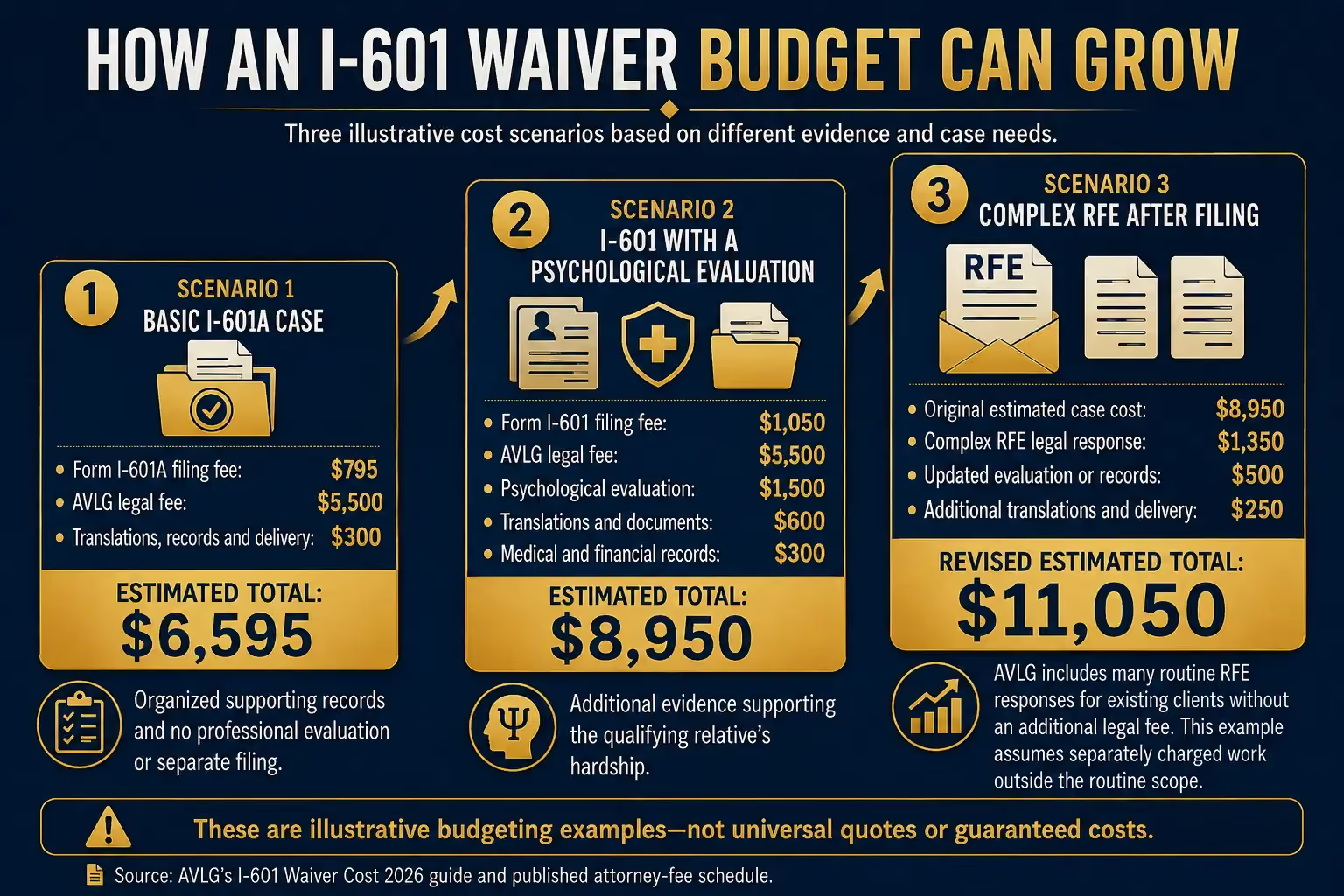
The total I-601 waiver cost depends on the government filing fee, attorney fee, evidence needed, and whether complications arise. Using AVLG’s published $5,500 legal fee, many professionally prepared cases may cost approximately $6,500 to $10,500 or more from preparation through filing.
The following examples are for budgeting purposes only. They assume one waiver application, no fee waiver, and no appeal or immigration court representation.
Consider an applicant seeking a provisional unlawful presence waiver who already has organized financial, medical, and family records. Only limited translations and routine filing expenses are needed.
This example represents a relatively organized case that does not require a psychological evaluation, expert report, RFE response, or separate immigration filing. The $795 government fee can be confirmed on the official USCIS Form I-601A page.
The I-601A waiver does not cover every ground of inadmissibility. Before using this estimate, the applicant should confirm that unlawful presence is the only ground requiring a waiver.
An I-601 waiver filed after a consular inadmissibility finding may require more extensive evidence. Suppose the case includes a psychological evaluation of the qualifying relative, several translated documents, medical records, and additional evidence concerning the family’s financial and emotional circumstances.
The government filing fee shown in this example is based on the current USCIS Form I-601 information. A particular case could cost less if fewer supporting services are needed or more if it requires multiple expert evaluations, extensive translations, or complicated legal research.
A psychological evaluation does not automatically prove extreme hardship. Its value depends on the evaluator’s qualifications, the accuracy of the report, and how well the findings connect with the remaining evidence.
Now consider the second example after USCIS issues an RFE requiring additional documentation and a substantial attorney-drafted legal argument.
AVLG includes many routine RFE responses for existing clients without an additional legal fee. This example assumes the response falls outside that routine scope and requires a separate legal argument. The applicable cost would be determined only after the attorney reviews the complete request.
If the waiver is denied and the applicant must refile, the total could increase further. A new government filing fee, revised attorney work, and updated evidence may all be required. A motion or appeal would also have separate costs.
The USCIS fee is only one part of the total I-601 or I-601A waiver cost. For many applicants, the largest expense is the legal and evidentiary work needed to demonstrate extreme hardship and address the relevant ground of inadmissibility.
When comparing estimates, applicants should ask for a written breakdown showing:
AVLG currently publishes a $5,500 attorney fee for an I-601 hardship waiver or I-601A waiver. The final quote and scope depend on the facts of the case and should be confirmed in the written representation agreement. Current legal fees are available in AVLG’s 2026 immigration attorney fee schedule.
Yes. USCIS does not require applicants to hire an attorney to file Form I-601 or Form I-601A. Applicants may prepare and submit their own forms, supporting evidence, and legal arguments. USCIS confirms that individuals may file immigration forms without a representative.
However, being permitted to file without a lawyer does not mean every waiver is suitable for self-filing. Waiver cases can involve complicated questions about inadmissibility, eligibility, qualifying relatives, extreme hardship, and discretionary approval.
Self-filing eliminates the attorney fee, but it does not eliminate the other expenses involved in preparing the case.
An applicant filing without legal representation may still need to pay:
An applicant who prepares a basic I-601A case without a lawyer might spend approximately $1,000 to $3,000 after including the government fee and supporting evidence. A document-heavy I-601 case involving evaluations, extensive translations, or expert evidence could cost considerably more.
These are planning estimates, not fixed prices. Self-filing is only less expensive when the applicant selects the correct waiver, understands the applicable legal standard, and submits a complete and persuasive package.
Form I-601 is not simply a request for forgiveness. The applicant must identify the correct ground of inadmissibility, establish that a waiver is legally available, and satisfy the requirements attached to that particular ground.
Different waiver provisions may require different qualifying relatives and different types of evidence. A person who qualifies for a waiver of unlawful presence may not necessarily qualify for a waiver involving fraud, misrepresentation, certain criminal conduct, or another ground of inadmissibility.
Common self-filing risks include:
A well-organized collection of personal documents may still be insufficient if it does not address the legal requirements governing the waiver.
Applicants should seriously consider speaking with an experienced waiver attorney when the case involves:
An attorney cannot guarantee approval. Legal representation can, however, help identify problems before filing, determine the correct waiver provision, develop an evidence plan, and present the facts within the appropriate legal framework.
Applicants who cannot afford full representation may explore limited-scope legal assistance, nonprofit immigration organizations, or Department of Justice-accredited representatives. Depending on the provider, limited assistance may include an eligibility consultation, review of a self-prepared application, identification of missing evidence, or preparation of a specific legal argument.
Only a licensed attorney or properly accredited representative should provide immigration legal advice. Notarios, document preparers, consultants, friends, and unaccredited businesses may help with clerical tasks but are not authorized to evaluate waiver eligibility or recommend a legal strategy.
Filing without a lawyer can reduce the initial I-601 waiver cost, but the decision should be based on the legal and factual complexity of the case—not only the attorney fee. A denial, refiling, or missed ground of inadmissibility can ultimately cost more than obtaining qualified guidance before submission.
The lowest attorney quote is not always the least expensive option. When comparing I-601 waiver lawyer fees, applicants should evaluate the work included, the lawyer’s experience with inadmissibility waivers, and the circumstances that may trigger additional charges.
One law firm may quote a flat fee covering legal analysis, declarations, evidence development, and filing. Another may advertise a lower starting price but charge separately for services needed to complete a persuasive waiver package.
Ask each lawyer to provide a written agreement describing exactly what the quoted fee covers. A meaningful comparison should address the following services:
Applicants should also understand who will perform the substantive work. Paralegals and legal assistants commonly help collect documents, prepare forms, and organize evidence. The key question is how actively the attorney will evaluate the facts, develop the waiver strategy, review declarations, and draft the legal argument.
Useful questions include:
A waiver may involve consequences extending beyond the form being submitted. The attorney should understand how the waiver interacts with consular processing, adjustment of status, removal history, criminal records, and other potential grounds of inadmissibility.
Government fees and third-party expenses are usually separate from the attorney fee. Before hiring a lawyer, request an estimate of likely additional costs for:
The engagement agreement should also explain whether the legal fee is fixed, hourly, or divided into installments—and whether any portion becomes nonrefundable after work begins.
Applicants should be cautious when a quote does not explain the services included, uses vague language such as “starting at” without identifying likely add-ons, or promises approval. No immigration lawyer can guarantee that USCIS will approve a waiver.
An unusually low quote may cover little more than completing the form. An unusually high quote is not automatically evidence of better representation. The most useful quote is one that clearly connects the price to the complexity of the case and the work the firm will perform.
American Visa Law Group currently publishes a $5,500 legal fee for an I-601 hardship waiver or I-601A waiver. The final fee and scope are confirmed after reviewing the individual case. Applicants can compare that amount with other quotes using AVLG’s published immigration attorney fee schedule.
The best comparison is therefore not simply “Which lawyer charges less?” It is “Which quote covers the legal analysis, evidence development, and representation this particular waiver is likely to require?”
A realistic I-601 waiver budget should account for more than the USCIS filing fee. Before filing, applicants should calculate the government fee, legal representation, supporting evidence, related immigration expenses, and potential costs if the case becomes more complicated.
A useful starting formula is:
Estimated waiver budget = government fee + attorney fee + evidence costs + related processing costs + contingency expenses
Begin by confirming whether the case requires Form I-601, Form I-601A, or another type of waiver. Filing the wrong application can result in lost time and a nonrefundable government fee.
For 2026 budgeting purposes:
USCIS fees can change, so applicants should verify the amount immediately before filing through the official USCIS Fee Schedule.
If hiring a lawyer, request a written quote that identifies the services included in the legal fee. AVLG currently publishes a $5,500 legal fee for an I-601 hardship waiver or I-601A waiver, but the final amount depends on the case and agreed scope of representation.
The written agreement should explain whether the fee includes:
An installment plan can make the expense easier to manage, but it does not reduce the total legal fee. Applicants should understand when each payment becomes due and what happens if the case changes before filing.
The evidence budget should be based on what the case is likely to require—not on every possible service. Some applicants already possess strong English-language medical, employment, financial, and family records. Others may need extensive translations, evaluations, or expert reports.
Create a separate estimate for:
Applicants should ask the attorney which evidence is necessary before paying for expensive evaluations. More evidence does not automatically create a stronger waiver; the evidence must support the legal hardship and discretionary arguments.
The waiver may be only one stage of a longer immigration case. Depending on the applicant’s circumstances, the broader budget could also include:
These expenses should be listed separately from the waiver itself. Doing so prevents the I-601 waiver cost from being confused with the total cost of obtaining an immigrant visa or green card.
Not every case will receive an RFE, NOID, or denial. Still, applicants should understand the potential financial impact before filing.
A contingency budget may be needed for:
The appropriate reserve depends on the case. Applicants with prior denials, criminal records, removal history, inconsistent immigration filings, or multiple inadmissibility issues may face a greater risk of additional work.
A simple planning worksheet can make the total easier to understand:
Before submitting the application, compare this budget with the written attorney agreement and current government fees. A clear plan cannot eliminate unexpected expenses, but it can reduce financial surprises and help ensure that necessary evidence is not omitted simply because its cost was not anticipated.
American Visa Law Group regularly represents applicants in I-601 and I-601A waiver cases, including matters involving unlawful presence, fraud or misrepresentation, certain criminal grounds, prior immigration violations, and complex extreme-hardship claims.
The firm’s role extends beyond completing the application form. Waiver representation begins with identifying the legal problem that must be overcome and determining whether the applicant qualifies for the requested waiver.
Before preparing the application, AVLG reviews the applicant’s immigration and personal history to identify the relevant ground—or grounds—of inadmissibility. This review may include prior visa applications, entries and departures, unlawful presence, removal history, criminal records, statements made to immigration officials, and previous USCIS or consular decisions.
The legal team then evaluates:
This early analysis is particularly important for I-601A applicants because that waiver addresses unlawful presence only. Approval does not protect an applicant against a different ground later identified during the consular process.
When extreme hardship must be established, AVLG works with the applicant and qualifying relative to identify the strongest facts and supporting documentation. Rather than relying on general statements about separation, the case is developed around the family’s actual circumstances.
Potential areas of hardship may include:
The firm helps determine which records, declarations, evaluations, and objective sources can document those claims. It also examines both major scenarios USCIS may consider: the hardship caused by family separation and the hardship that could result if the qualifying relative relocates abroad.
Once the strategy and evidence are developed, AVLG prepares the applicable forms and organizes the filing into a coherent waiver package. Representation may include:
The objective is to connect the family’s evidence to the legal requirements governing the waiver—not simply submit a large collection of documents.
Some waiver cases become more complex after filing. USCIS may issue an RFE or NOID, or a consular officer may identify an additional inadmissibility concern. AVLG can review the notice, determine what additional evidence or legal analysis is required, and advise the applicant about the available response.
If a waiver is denied, the firm can evaluate whether refiling, a motion, an administrative appeal, or a different form of relief is legally available. These services may fall outside the original representation agreement and should be confirmed separately.
AVLG currently publishes a legal fee of $5,500 for an I-601 hardship waiver or I-601A waiver. Government filing fees, professional evaluations, translations, expert reports, and other third-party expenses are generally separate. The final amount and included services are confirmed in a written agreement after the case is reviewed.
Applicants can learn more through AVLG’s I-601 waiver guide and review the firm’s current immigration attorney fee schedule.
Hiring an attorney does not guarantee approval. Legal representation can provide a structured eligibility review, an evidence strategy tailored to the family’s circumstances, and a waiver package designed to address the applicable legal standard.
The I-601 waiver cost in 2026 is not limited to one government filing fee. Applicants may need to budget for the USCIS fee, attorney representation, hardship evidence, professional evaluations, translations, official records, and expenses connected to the larger immigration or consular process.
The current filing fees are $1,050 for Form I-601 and $795 for Form I-601A. American Visa Law Group publishes a legal fee of $5,500 for an I-601 hardship waiver or I-601A waiver. After supporting evidence and related expenses are included, a professionally prepared case may cost approximately $6,500 to $10,500 or more, depending on its complexity.
A higher total may apply when the case involves:
The cheapest filing approach is not always the most economical over the life of the case. Submitting the wrong waiver, overlooking another ground of inadmissibility, or filing weak hardship evidence can lead to additional fees and delays. At the same time, paying a higher attorney fee does not guarantee approval. Applicants should compare experience, strategy, included services, and possible additional charges—not price alone.
Before filing, confirm the correct waiver, review the latest USCIS fee schedule, obtain a written attorney agreement, and prepare a budget that includes both expected and conditional expenses. The legal strategy should be determined before costly evaluations or evidence are ordered.
Every waiver depends on its own immigration history, qualifying relative, inadmissibility ground, and hardship evidence. A case-specific review is therefore the most reliable way to estimate the actual I-601 or I-601A waiver fees and determine the appropriate filing strategy.
The Form I-601 filing fee is $1,050. When attorney representation, translations, professional evaluations, records, and delivery expenses are included, a professionally prepared waiver may cost approximately $6,500 to $10,500 or more. The actual total depends on the ground of inadmissibility, hardship evidence, legal complexity, and whether complications arise.
The Form I-601A filing fee is $795. This government fee is separate from attorney fees and expenses for translations, evaluations, records, and consular processing. Applicants should verify the current amount on the official USCIS Form I-601A page immediately before filing.
Attorney fees vary by the lawyer, location, case complexity, and services included. American Visa Law Group currently publishes a $5,500 legal fee for an I-601 hardship waiver or I-601A waiver. Government fees and third-party costs are generally separate. Applicants should obtain a written agreement explaining the full scope of representation.
Some Form I-601 applicants may qualify for a USCIS fee waiver under specific humanitarian or financial eligibility categories. Eligibility is not automatic and depends on the applicant’s immigration classification and circumstances. Form I-601A applicants generally cannot request a fee waiver. Review the current USCIS fee-waiver guidance before filing.
No. USCIS does not require every applicant to submit a psychological evaluation. An evaluation may be valuable when mental-health or emotional hardship is an important part of the case, but it should support—not replace—medical, financial, family, and other objective evidence. The attorney should assess whether the likely evidentiary value justifies the additional cost.
No. The waiver filing fee does not include immigrant-visa fees, the required medical examination, civil documents, travel to the interview, or other consular expenses. Applicants pursuing an immigrant visa abroad should prepare separate budgets for the waiver and the remaining visa process.
It can. Some attorney agreements include routine RFE responses, while others charge separately. The additional cost depends on whether USCIS requests a missing document, extensive new evidence, professional evaluations, legal research, or a detailed attorney-drafted argument. Applicants should ask about potential RFE and NOID fees before hiring counsel.
USCIS filing fees are generally nonrefundable, even if the application is denied. Attorney fees are governed by the representation agreement and are not normally contingent on approval. If the applicant refiles, files a motion, or pursues an available appeal, new government and attorney fees may apply.
Yes. USCIS allows applicants to prepare and file immigration forms without legal representation. Self-filing removes the attorney fee but not the government fee or evidence expenses. Legal assistance may be particularly valuable when the case involves multiple inadmissibility grounds, fraud, criminal history, removal orders, prior denials, or complicated hardship evidence.
The I-601A government filing fee is lower: $795 compared with $1,050 for Form I-601. However, the total cost may be similar because both applications can require substantial legal analysis and extreme-hardship evidence. The correct form must be selected based on eligibility and the ground of inadmissibility—not price.
American Visa Law Group publishes its current immigration legal fees online. The listed attorney fee for an I-601 hardship waiver or I-601A waiver is $5,500, subject to the facts and scope of the case. Applicants can review the firm’s 2026 immigration attorney fee schedule for current information.

Hasan Abdullah, Esq. is the Founder and Managing Attorney of American Visa Law Group. His practice focuses on U.S. immigration law, including family-based immigration, employment-based immigration, adjustment of status, consular processing, waivers, PERM labor certification, NIW, EB-1, H-1B, O-1, and complex immigration strategy.
Through American Visa Law Group, Mr. Abdullah helps individuals, families, professionals, investors, and employers understand their immigration options and plan around changing government policies, USCIS procedures, and Visa Bulletin movement. His work emphasizes practical legal analysis, realistic expectations, and strategy tailored to each applicant’s immigration history and long-term goals.


