Author: Hasan Abdullah, Esq.
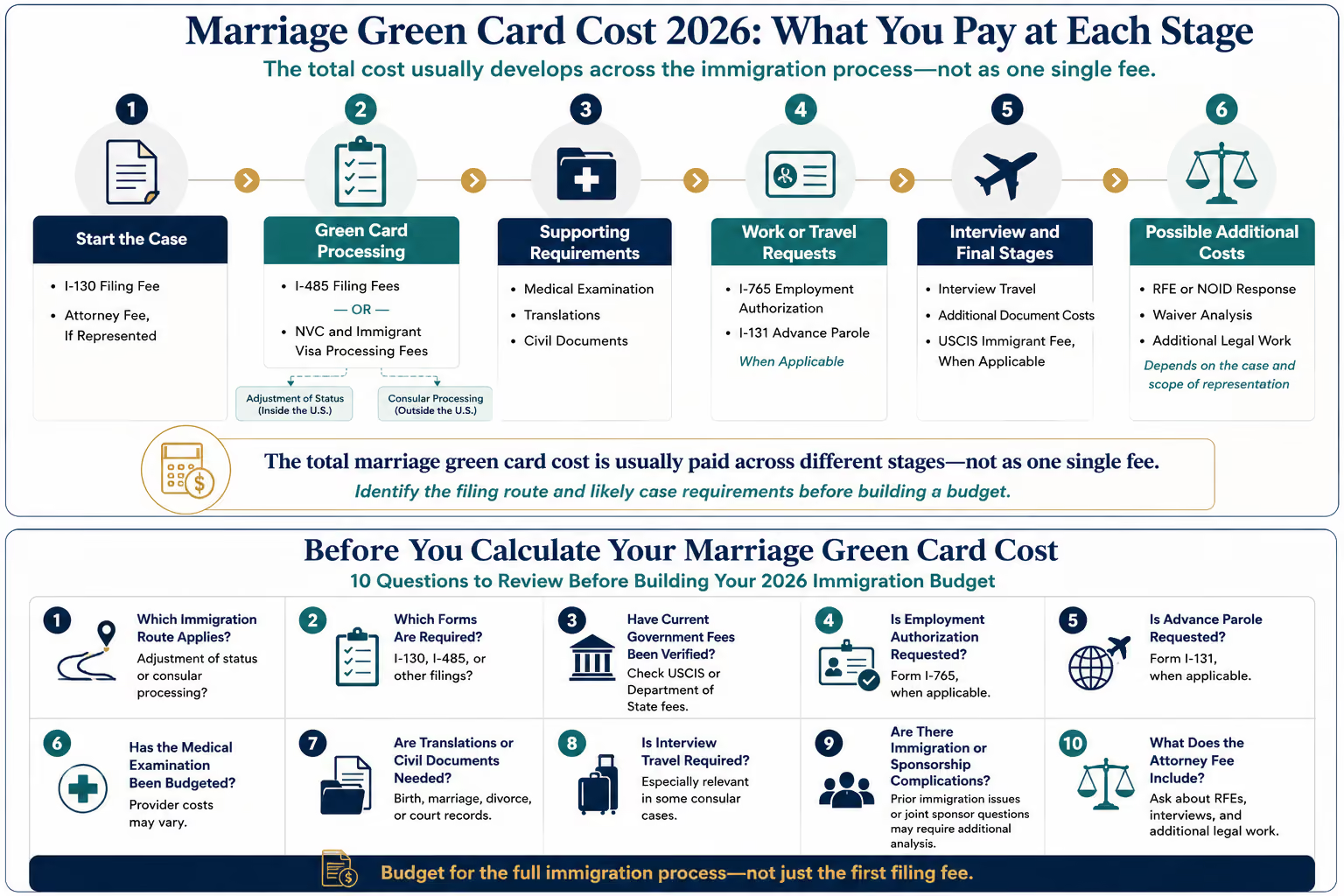
The marriage green card cost in 2026 is not a single filing fee. For most couples, the total expense is a combination of government filing or visa-processing fees, immigration lawyer fees if legal representation is used, the required medical examination, and other case-specific expenses such as translations or civil documents.
The filing route also matters. A spouse applying for adjustment of status from inside the United States may have a different cost structure from a spouse completing immigrant visa processing through the National Visa Center and a U.S. embassy or consulate abroad. The forms, government agencies involved, and additional expenses are not identical.
For that reason, estimating the total cost based only on the Form I-130 fee can be misleading. A practical budget should separate USCIS or Department of State fees, marriage green card lawyer costs, and additional expenses that may arise based on the couple's filing strategy and immigration history.
This guide explains the main marriage green card costs in 2026, including USCIS fees, I-130 and I-485 attorney fees, adjustment of status and consular processing expenses, and the factors that can make one case cost more than another.
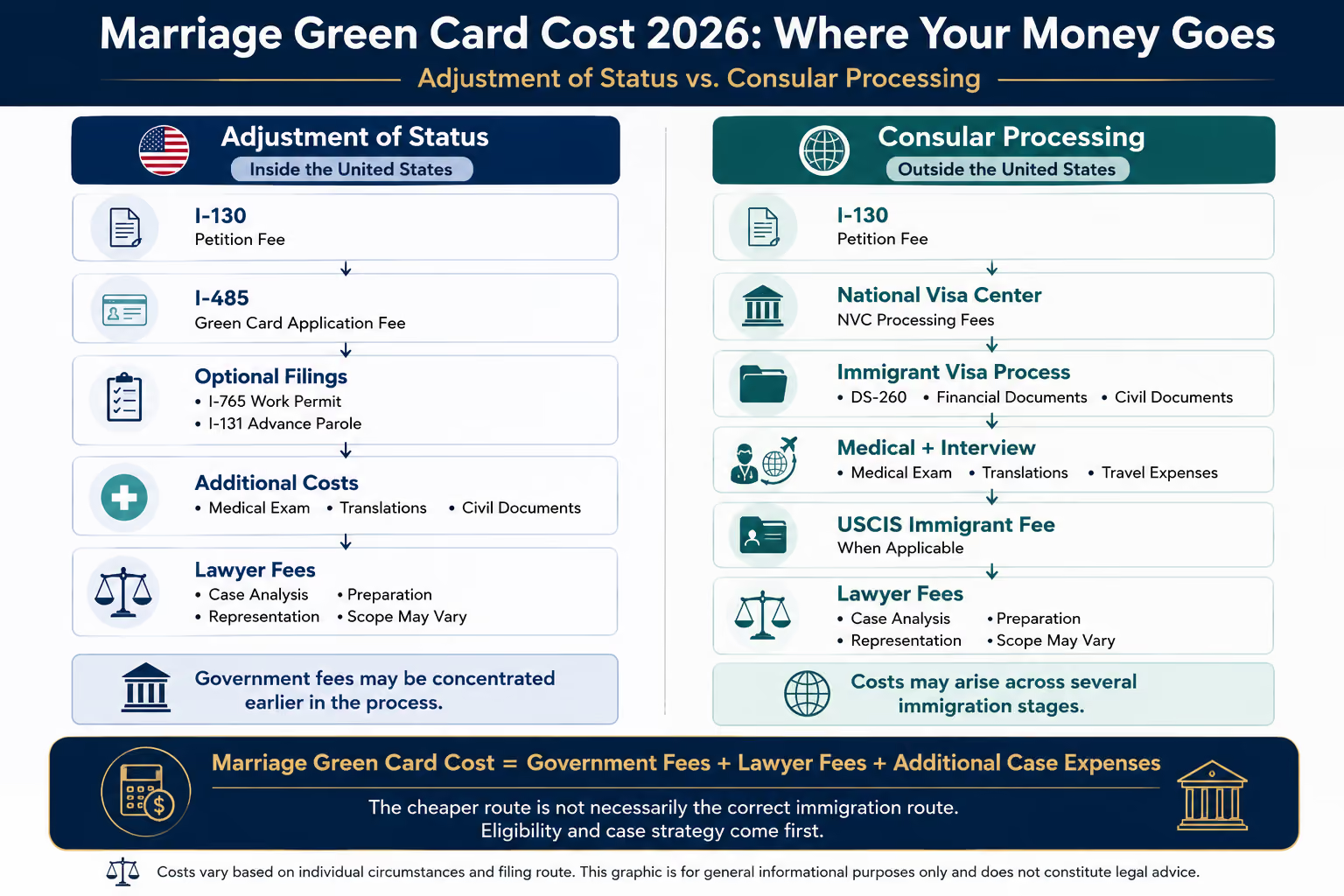
The total marriage green card cost in 2026 depends largely on where the foreign spouse is applying and which immigration process applies. Couples using adjustment of status inside the United States generally pay a different combination of fees from couples completing consular processing through the National Visa Center and a U.S. embassy or consulate.
A useful way to compare the two routes is to separate the expected expenses by category:
For budgeting purposes, most marriage green card expenses fall into three categories: government fees, immigration attorney fees, and additional case expenses.
Government fees are paid to agencies such as U.S. Citizenship and Immigration Services or, in consular cases, the Department of State. Lawyer fees are separate and depend on the legal work included in the representation. Additional expenses may include the immigration medical examination, translations, document retrieval, and travel related to an interview.
The distinction matters when comparing cost estimates. Two attorney quotes may appear very different because the scope of representation is not always the same. One fee agreement may cover preparation of the initial filing and ongoing USCIS correspondence, while another may charge separately for interview preparation, a Request for Evidence, or other additional legal work.
For a realistic estimate, couples should look beyond the initial I-130 filing cost and identify the entire immigration process their case is expected to follow.
The total cost of a marriage green card is easier to understand when the expenses are separated into three categories: government fees, immigration lawyer fees, and additional case expenses. Looking only at the Form I-130 filing fee rarely provides a complete picture of what a couple may spend from the beginning of the case through the green card process.
The exact combination of costs depends on the filing route. An adjustment of status case handled through U.S. Citizenship and Immigration Services has a different fee structure from an immigrant visa case processed through the National Visa Center and a U.S. embassy or consulate. USCIS maintains its current G-1055 Fee Schedule and Fee Calculator for form-specific filing fees, while the Department of State separately lists visa service and National Visa Center fees. (USCIS)
Government fees are the amounts paid directly to USCIS or, in a consular processing case, to the agencies involved in immigrant visa processing. These fees are separate from what an immigration attorney charges for legal representation.
For an adjustment of status case, the filing package may involve Form I-130, Petition for Alien Relative, and Form I-485, Application to Register Permanent Residence or Adjust Status. Depending on the applicant's circumstances and filing strategy, additional forms may also be relevant. USCIS directs applicants to the current fee schedule to determine the applicable fee for each filing. (USCIS)
Consular processing follows a different payment path. After an approved petition reaches the National Visa Center, the case may involve an Affidavit of Support fee and an immigrant visa fee before document review and interview processing. The Department of State treats these as separate NVC payments. (Travel.state.gov)
This is why couples should verify the actual immigration process before calculating the total cost. Simply adding two USCIS form fees may produce an incomplete estimate, particularly when the foreign spouse is applying from outside the United States.
Marriage green card lawyer fees are separate from USCIS and Department of State fees. They pay for the attorney's legal analysis, case strategy, preparation, and representation rather than for the government's processing of the application.
The scope of legal work can vary significantly. A straightforward filing with a clear immigration history may require a different level of analysis from a case involving prior visa issues, previous immigration filings, financial sponsorship complications, or a potential inadmissibility concern.
The quoted fee also does not always cover the same services from one law firm to another. Couples comparing I-130 and I-485 attorney fees should determine whether the representation includes document and evidence review, preparation of the filing package, ongoing case communication, USCIS correspondence, interview preparation, and additional work if the government issues a Request for Evidence or Notice of Intent to Deny.
For current pricing information, prospective clients can review American Visa Law Group's immigration attorney fee schedule. The more useful comparison is not simply which lawyer quotes the lowest number, but what legal work and continuing representation are actually included in that number.
Some marriage green card expenses are paid neither to the government nor to the immigration lawyer. These additional costs are easy to overlook when creating an initial budget.
For adjustment of status, immigration medical requirements may involve Form I-693 and an examination by a designated civil surgeon. In immigrant visa processing abroad, the applicant generally follows the medical examination procedures connected to the embassy or consulate process. Medical costs are typically separate expenses and can vary based on the provider and other required medical documentation. USCIS describes the immigration medical examination as part of the adjustment of status admissibility process. (USCIS)
Couples may also need to budget for translations, certified or official civil records, passport photographs, and document retrieval. A foreign-language birth certificate, divorce record, court document, or other evidence may require additional preparation before it can be properly submitted in an immigration case.
These expenses may seem small compared with attorney or government fees, but together they affect the real marriage green card cost. A useful budget should therefore account for the full filing process—not just the first government payment.
For couples using adjustment of status, USCIS filing fees can make up a substantial part of the total marriage green card cost. The amount depends on the forms being filed, the applicant's age or filing category in some situations, and whether certain optional benefits—such as employment authorization or advance parole—are requested.
Under the current USCIS fee schedule, a typical adult marriage-based adjustment of status case may involve the following government fees. USCIS identifies Form G-1055 and its Fee Calculator as the official resources for verifying the correct fee before filing. (USCIS)
For a typical adult applicant requesting adjustment of status, employment authorization, and advance parole, these fees can total $2,955 when the I-130 is filed online or $3,005 when the I-130 is filed by paper. That calculation does not include attorney fees, the immigration medical examination, translations, or other case expenses. The applicable fee should still be confirmed for the specific filing because USCIS fee treatment can differ by form, request type, age, and category. (USCIS)
Form I-130, Petition for Alien Relative, is used to establish the qualifying family relationship between the petitioner and the foreign national relative. In a marriage-based case, the U.S. citizen or lawful permanent resident spouse generally files the petition for the foreign spouse. (USCIS)
The current Form I-130 filing fee is $625 when filed online and $675 when filed on paper. USCIS's current G-1055 Fee Schedule distinguishes between the two filing methods. (USCIS)
The I-130 fee is only one part of the total marriage green card cost. Approval of the petition does not by itself eliminate the additional fees associated with adjustment of status or immigrant visa processing. This is one reason a cost estimate based solely on the I-130 filing fee can significantly understate the full immigration expense.
Form I-485, Application to Register Permanent Residence or Adjust Status, is the principal green card application for eligible applicants seeking permanent residence from inside the United States. The standard USCIS filing fee for most adult Form I-485 applicants is currently $1,440. (USCIS)
Not every spouse can use adjustment of status simply because they are married to a U.S. citizen or green card holder. The correct filing route depends on the applicant's immigration circumstances and eligibility. Cost should therefore follow the legal strategy—not the other way around.
The I-485 fee also should not be treated as an all-inclusive adjustment of status fee. Under the current fee structure, applications for employment authorization and advance parole may require separate filing fees. USCIS changed the prior bundled-fee approach beginning with filings subject to the fee schedule effective April 1, 2024. (USCIS)
A spouse with a pending adjustment of status application may file Form I-765, Application for Employment Authorization, under the applicable adjustment-based eligibility category to request an Employment Authorization Document.
For an I-765 filed based on a pending or concurrently filed Form I-485, the current USCIS fee schedule provides a $260 filing fee. USCIS specifically describes this as the reduced fee available in connection with the adjustment application. (USCIS)
This fee is important for couples budgeting based on older immigration information. Under the current structure, the work permit application is not automatically included in the standard I-485 filing fee for newer adjustment filings. (USCIS)
Whether Form I-765 should be filed is a separate practical question. The answer may depend on the foreign spouse's existing employment authorization, immigration status, and expected needs while the green card application remains pending.
Adjustment applicants who need to travel internationally while their case is pending may also consider Form I-131, Application for Travel Documents, Parole Documents, and Arrival/Departure Records. The form is used for several different immigration purposes, including requests for advance parole. USCIS directs applicants to Form G-1055 to determine the fee applicable to the specific I-131 request. (USCIS)
The current filing fee for the standard advance parole request commonly associated with a pending adjustment application is $630. (USCIS)
Form I-131 should not be added to a marriage green card filing simply because it appears on a standard checklist. Travel plans, existing immigration documents, and the consequences of departing the United States while an adjustment application is pending can require individualized analysis.
The broader budgeting point is straightforward: the I-130 and I-485 fees may not represent the full USCIS cost of a marriage-based adjustment filing. Couples requesting work and travel benefits may face separate government fees, making it essential to identify the forms actually needed and verify the current USCIS fee schedule before the package is submitted. (USCIS)
The immigration process a couple uses has a major impact on the total marriage green card cost. A spouse applying from inside the United States through adjustment of status generally pays a different combination of fees from a spouse completing immigrant visa processing abroad.
Adjustment of status primarily involves USCIS filings. Consular processing begins with USCIS but later moves through the National Visa Center and a U.S. embassy or consulate. Because the forms and government agencies involved are different, the costs are also different.
The correct immigration route should be identified before comparing fees. Cost alone should not determine whether a couple uses adjustment of status or consular processing.
Adjustment of status is generally used by eligible applicants seeking permanent residence from inside the United States.
A marriage-based adjustment case may involve:
The couple may also need to pay for the immigration medical examination, translations, and supporting documents.
Because several USCIS forms may be filed together, adjustment of status can involve substantial government fees at the beginning of the process. Attorney fees, when legal representation is used, are separate and may cover eligibility analysis, form preparation, document review, financial sponsorship issues, and interview preparation.
However, being physically present in the United States does not automatically mean a spouse is eligible to adjust status. Immigration history and the circumstances of entry may affect the correct filing strategy.
Consular processing generally applies when the foreign spouse completes the immigrant visa process outside the United States.
The process typically begins with Form I-130. After the petition reaches the immigrant visa stage, the case may proceed through the National Visa Center before the applicant attends an interview at a U.S. embassy or consulate.
Costs may include:
Legal representation may also include NVC document preparation, Affidavit of Support review, civil document analysis, and preparation for the immigrant visa interview.
Consular processing is therefore not simply an I-130 filing followed by an interview. It is a multi-stage process, and each stage can affect the total cost.
There is no universal rule that one process is always cheaper.
Adjustment of status may involve several separate USCIS filing fees. Consular processing has a different government fee structure but may add NVC fees, interview travel, and other practical expenses.
The cheaper route is not necessarily the correct immigration route. Eligibility, immigration history, and case strategy should generally be evaluated first. Once the appropriate process is identified, couples can calculate the government fees, attorney fees, and additional expenses for that specific case.
The marriage green card lawyer cost can vary from a few thousand dollars upward, depending on the case and the scope of legal representation. American Visa Law Group's published immigration fee guide notes that green card legal services commonly fall in the $1,500 to $4,000 range, although more complex matters may require additional legal work. (USA Visa Law)
Attorney fees are separate from USCIS and Department of State fees. When comparing quotes, couples should look beyond the total price and ask what services are actually included.
In a typical case, legal representation may include reviewing the couple's immigration circumstances, preparing the required forms, analyzing supporting documents, and organizing evidence of a bona fide marriage.
Depending on the representation agreement, the attorney may also assist with financial sponsorship documents, USCIS correspondence, and interview preparation.
The exact scope matters. Two law firms may quote different I-130 and I-485 attorney fees because one fee covers more stages of the case than the other. AVLG's own pricing guidance emphasizes that immigration fees vary based on case type and complexity. (USA Visa Law)
Many immigration matters are handled using a flat legal fee, particularly when the expected scope of work can be defined in advance. Other services or additional case complications may be billed separately.
Neither fee structure is automatically better. The more practical question is whether the client understands what the quoted fee covers and what may create an additional charge.
Not always.
Before hiring an immigration lawyer, couples should ask whether the quoted fee includes:
These services can require substantial legal analysis and may fall outside the original representation agreement.
For that reason, comparing marriage green card attorney fees should be based on the scope of representation—not price alone. Couples can also review American Visa Law Group's published immigration attorney cost information when evaluating potential legal fees. (USA Visa Law)
Not every marriage green card case requires the same amount of legal work. A straightforward filing may involve standard form preparation and document review, while another case may require deeper analysis of immigration history, financial sponsorship, or possible inadmissibility issues.
That difference in legal work is one reason marriage green card lawyer fees can vary significantly.
Previous overstays, unauthorized employment, prior visa problems, removal proceedings, or earlier immigration filings can affect how a case is reviewed and prepared.
These issues do not automatically mean a marriage green card case will be denied. However, they may require additional legal analysis before filing.
Cases involving previous marriages may require careful review of divorce records, earlier immigration petitions, and the timeline of the current relationship.
The same is true when the couple has limited joint documentation or unusual living arrangements. The focus should be on presenting accurate, consistent evidence of a bona fide marriage rather than simply submitting a large volume of documents.
Financial sponsorship can also affect the amount of legal work involved. Form I-864 requirements may become more complicated when income is insufficient, a joint sponsor is needed, or the sponsor's financial documents require additional review.
In these situations, the attorney may need to analyze which sponsorship documents and supporting evidence are appropriate.
USCIS may request additional evidence or raise concerns during case review. Responding to a Request for Evidence (RFE) or a Notice of Intent to Deny (NOID) can require work beyond preparing the original filing.
Whether this additional work is included in the initial attorney fee depends on the representation agreement.
A case involving possible fraud or misrepresentation, certain criminal issues, unlawful presence, or another inadmissibility concern should not be compared with a routine marriage green card filing.
These matters may require separate legal analysis or waiver strategy, which can increase the overall cost of representation.
The practical takeaway is simple: attorney fees usually reflect the amount of legal analysis and work the case requires. A quote should be evaluated based on the facts of the case and the services included, not just the final number.
Government and attorney fees are usually the biggest expenses, but they are not the only costs involved in a marriage green card case. Smaller expenses can add up, especially when medical records, translations, or travel are required.
Marriage green card applicants generally need an immigration medical examination completed by an authorized civil surgeon or panel physician, depending on the filing process.
The cost is paid directly to the medical provider and can vary by location. Additional medical or vaccination-related expenses may also apply based on the applicant's records and the examination requirements.
Documents submitted in a foreign language may require a complete English translation that meets immigration filing requirements.
Common examples include birth certificates, marriage records, divorce documents, and court records. Couples may also need to pay for certified copies or replacement civil documents if originals are unavailable.
Travel costs can be particularly relevant in consular processing cases. An applicant may need to travel to a U.S. embassy or consulate for the immigrant visa interview and, in some countries, travel separately for the medical examination.
Hotel stays, transportation, and document delivery costs can increase the overall marriage green card cost even though they are not government filing fees.
An RFE, a complex financial sponsorship issue, or a potential waiver question may require additional documents or legal work.
These expenses cannot always be predicted at the beginning of a case. For budgeting purposes, couples should consider keeping some flexibility rather than planning only for the initial USCIS fees and attorney cost.
The real cost of a marriage green card includes more than filing forms. Medical examinations, translations, documents, travel, and case-specific issues should all be considered when estimating the total budget.
Government and attorney fees are usually the biggest expenses, but they are not the only costs involved in a marriage green card case. Smaller expenses can add up, especially when medical records, translations, or travel are required.
Marriage green card applicants generally need an immigration medical examination completed by an authorized civil surgeon or panel physician, depending on the filing process.
The cost is paid directly to the medical provider and can vary by location. Additional medical or vaccination-related expenses may also apply based on the applicant's records and the examination requirements.
Documents submitted in a foreign language may require a complete English translation that meets immigration filing requirements.
Common examples include birth certificates, marriage records, divorce documents, and court records. Couples may also need to pay for certified copies or replacement civil documents if originals are unavailable.
Travel costs can be particularly relevant in consular processing cases. An applicant may need to travel to a U.S. embassy or consulate for the immigrant visa interview and, in some countries, travel separately for the medical examination.
Hotel stays, transportation, and document delivery costs can increase the overall marriage green card cost even though they are not government filing fees.
An RFE, a complex financial sponsorship issue, or a potential waiver question may require additional documents or legal work.
These expenses cannot always be predicted at the beginning of a case. For budgeting purposes, couples should consider keeping some flexibility rather than planning only for the initial USCIS fees and attorney cost.
The real cost of a marriage green card includes more than filing forms. Medical examinations, translations, documents, travel, and case-specific issues should all be considered when estimating the total budget.
There is no general rule requiring one spouse to personally pay every marriage green card fee. Couples often decide between themselves how to divide USCIS fees, attorney fees, medical costs, and other case expenses.
For USCIS filings paid by credit card, USCIS specifically states that another person may pay as long as the cardholder is authorized to use the card and completes the required payment authorization. (USCIS)
Yes. The petitioning spouse may pay the government filing fees and other expenses associated with the case.
In many marriages, couples simply treat immigration expenses as a shared household cost. The practical issue is making sure the correct fee and payment method are submitted with each filing. USCIS requires the correct filing fee and directs applicants to its current Fee Schedule and Fee Calculator. (USCIS)
The foreign spouse may also contribute to filing, medical, document, or attorney expenses. Who pays a particular bill is generally a separate question from who serves as the petitioner or financial sponsor in the immigration case.
This distinction matters because paying the filing fee does not change the legal roles shown on the immigration forms.
Attorney fees and Form I-864 financial sponsorship obligations are not the same thing.
Form I-864 is a legally binding sponsorship obligation under immigration law. USCIS explains that the sponsor generally agrees to maintain the sponsored immigrant at the required income level under the Affidavit of Support rules. (USCIS)
So, even when a foreign spouse pays some or all of the lawyer or filing costs, that payment does not replace the petitioner's separate responsibilities as an I-864 sponsor.
The practical takeaway: couples can decide how to handle immigration expenses, but payment arrangements should not be confused with the legal sponsorship requirements of a marriage green card case.
Some USCIS fees may qualify for a fee waiver, but fee waivers are not automatically available for every marriage green card form. USCIS limits fee waivers to certain immigration forms and services and generally requires the applicant to show an inability to pay. (USCIS)
Applicants who qualify may request a fee waiver using Form I-912, Request for Fee Waiver, or another permitted written request. However, eligibility depends on both the applicant's financial circumstances and whether the specific immigration benefit is eligible for a waiver. (USCIS)
Couples should therefore avoid assuming that all I-130, I-485, work permit, or travel document fees can simply be waived because the household has limited income. Each filing should be checked separately under the current USCIS rules.
USCIS maintains the G-1055 Fee Schedule and directs applicants to review Form I-912 when determining fee-waiver eligibility. The current fee schedule should be checked immediately before filing because submitting the wrong fee can create problems with the application package. (USCIS)
The practical takeaway is simple: fee-waiver eligibility is specific to the form and the applicant's circumstances. Couples should verify the current USCIS requirements rather than relying on an old fee chart or assuming every marriage green card expense can be reduced.
Not every couple needs the same level of legal help. Some straightforward marriage green card cases may be prepared without an attorney, particularly when the immigration history is simple and the couple is comfortable managing the forms, evidence, and filing requirements.
The value of legal representation becomes more significant when the case involves uncertainty or legal risk.
A couple may consider preparing the case themselves when the facts are relatively straightforward, the immigration history is clear, and they understand the filing process.
Even then, the responsibility for submitting accurate forms, correct fees, and consistent supporting evidence remains with the applicants. A simple filing can still become delayed if important information is missing or inconsistent.
An immigration lawyer may be more valuable when the case involves:
In these situations, the legal work often goes beyond completing forms. The attorney may need to evaluate eligibility, identify risks, and determine the appropriate filing strategy before the case is submitted.
An immigration attorney cannot guarantee that a marriage green card case will be approved. The final decision remains with USCIS or the Department of State.
The purpose of legal representation is to provide legal analysis, case strategy, careful preparation, and guidance when problems arise. For couples comparing the cost of an attorney, the better question is often not simply, "Can we file this ourselves?" but "Are there issues in our case that we may not recognize before filing?"
That distinction can help determine whether the cost of legal representation is worthwhile for the specific case.
Marriage green card attorney fees can look very different from one law firm to another. The quoted price, however, does not always reflect the same scope of work.
A lower fee may cover only the initial filing, while another quote may include ongoing case communication, USCIS correspondence, or interview preparation. The most useful comparison is therefore what the attorney agrees to handle throughout the case.
Confirm which immigration forms are covered by the attorney fee. For a marriage-based adjustment case, this may include Form I-130 and Form I-485, while employment authorization or travel document applications may be treated separately.
USCIS and Department of State fees are generally separate from legal fees. Couples should make sure a quote clearly distinguishes attorney fees from government filing fees and other expenses.
Before signing a representation agreement, ask whether the fee includes help with a Request for Evidence, interview preparation, or attorney attendance at the interview.
These services may be included, limited, or billed separately depending on the law firm and the case.
The cheapest quote is not automatically the best value, and the highest fee does not automatically mean better representation.
Compare the attorney's role, the services included, and any situations that may create additional charges. American Visa Law Group also publishes information about immigration attorney costs and legal fees for applicants who want to better understand potential representation expenses.
A clear fee agreement should help the couple understand what they are paying for before the case begins. This keeps the section practical and reader-focused, consistent with the approved writing framework.
A realistic marriage green card budget should cover more than the initial filing fee. Couples should estimate the full cost of the process based on the immigration route they expect to use and the expenses that may arise along the way.
Start by listing USCIS or Department of State fees separately from legal fees.
This makes it easier to understand which costs are paid directly to the government and which cover attorney services. It also helps when comparing legal fee quotes.
Medical examinations, translations, civil documents, and certified records are often paid separately.
These expenses can vary by location, so couples should leave room in the budget rather than focusing only on the I-130 or I-485 filing fees.
A prior immigration problem, financial sponsorship concern, or possible inadmissibility issue may require additional legal analysis.
Identifying these issues early can provide a more realistic estimate of the legal work and potential costs involved.
Not every case follows the exact same path. Additional document requests, interview travel, or other case developments may create expenses that were not included in the original estimate.
The best marriage green card budget is based on the full immigration process, not just the first form being filed. Couples who understand the likely route and scope of the case are generally in a better position to plan for the total cost.
Before filing, couples should review the full cost of the case rather than focusing only on one USCIS form fee.
A practical checklist includes:
Reviewing these questions early can make the total marriage green card cost easier to estimate and reduce unexpected expenses later in the process.
The goal is not to predict every possible cost. It is to understand the likely filing route, identify the major expenses, and know which services are included before the case begins.

Marriage green card costs can vary depending on the filing route, immigration history, financial sponsorship, and the legal work required.
For couples with questions about adjustment of status, consular processing, prior immigration issues, or the scope of attorney representation, speaking with an immigration lawyer can help clarify the process before filing.
American Visa Law Group assists with family-based immigration and marriage green card matters. Couples can review the firm's immigration attorney fees, read client reviews, or contact American Visa Law Group to discuss the appropriate next steps for their case.
The goal is to understand the correct immigration strategy, expected costs, and scope of representation before the application is submitted.
The total marriage green card cost in 2026 depends on whether the spouse applies through adjustment of status or consular processing. Government fees, attorney fees, the immigration medical examination, translations, and other case expenses should all be included in the budget.
Marriage green card lawyer fees vary based on the complexity of the case and the scope of representation. A straightforward filing may cost less than a case involving prior immigration issues, an RFE, financial sponsorship problems, or possible inadmissibility concerns.
No. USCIS filing fees and immigration attorney fees are separate costs. Government fees pay for processing immigration forms, while attorney fees cover legal analysis, preparation, strategy, and representation.
Not always. Adjustment of status may involve several USCIS filing fees, while consular processing has NVC and immigrant visa expenses and may include additional travel costs. The appropriate immigration route should be determined based on eligibility and case circumstances, not cost alone.
Under the current USCIS fee structure, employment authorization and advance parole applications may require separate filing fees. Applicants should verify the fees for Form I-765 and Form I-131 before submitting the case.
There is no single nationwide price. Medical examination fees can vary by civil surgeon, panel physician, location, and whether additional vaccination-related costs apply.
Fee waivers are available only for certain USCIS forms and qualifying applicants. Couples should check whether the specific form is eligible rather than assuming all marriage green card fees can be waived.
Some law firms include certain RFE services in the original representation agreement, while others charge separately. Before hiring an attorney, couples should ask how Requests for Evidence, interview preparation, and other additional legal work are handled.
The most accurate marriage green card cost estimate is based on the specific filing route, forms required, and legal issues involved in the case.

Hasan Abdullah, Esq. is the Founder and Managing Attorney of American Visa Law Group. His practice focuses on U.S. immigration law, including family-based immigration, employment-based immigration, adjustment of status, consular processing, waivers, PERM labor certification, NIW, EB-1, H-1B, O-1, and complex immigration strategy.
Through American Visa Law Group, Mr. Abdullah helps individuals, families, professionals, investors, and employers understand their immigration options and plan around changing government policies, USCIS procedures, and Visa Bulletin movement. His work emphasizes practical legal analysis, realistic expectations, and strategy tailored to each applicant’s immigration history and long-term goals.


