Author: Hasan Abdullah, Esq.
The USCIS Visa Bulletin for July 2026 brings important updates for green card applicants in both family-sponsored and employment-based categories. Some priority dates moved forward, while other categories saw setbacks that may affect filing, approval timing, and long-term immigration planning.
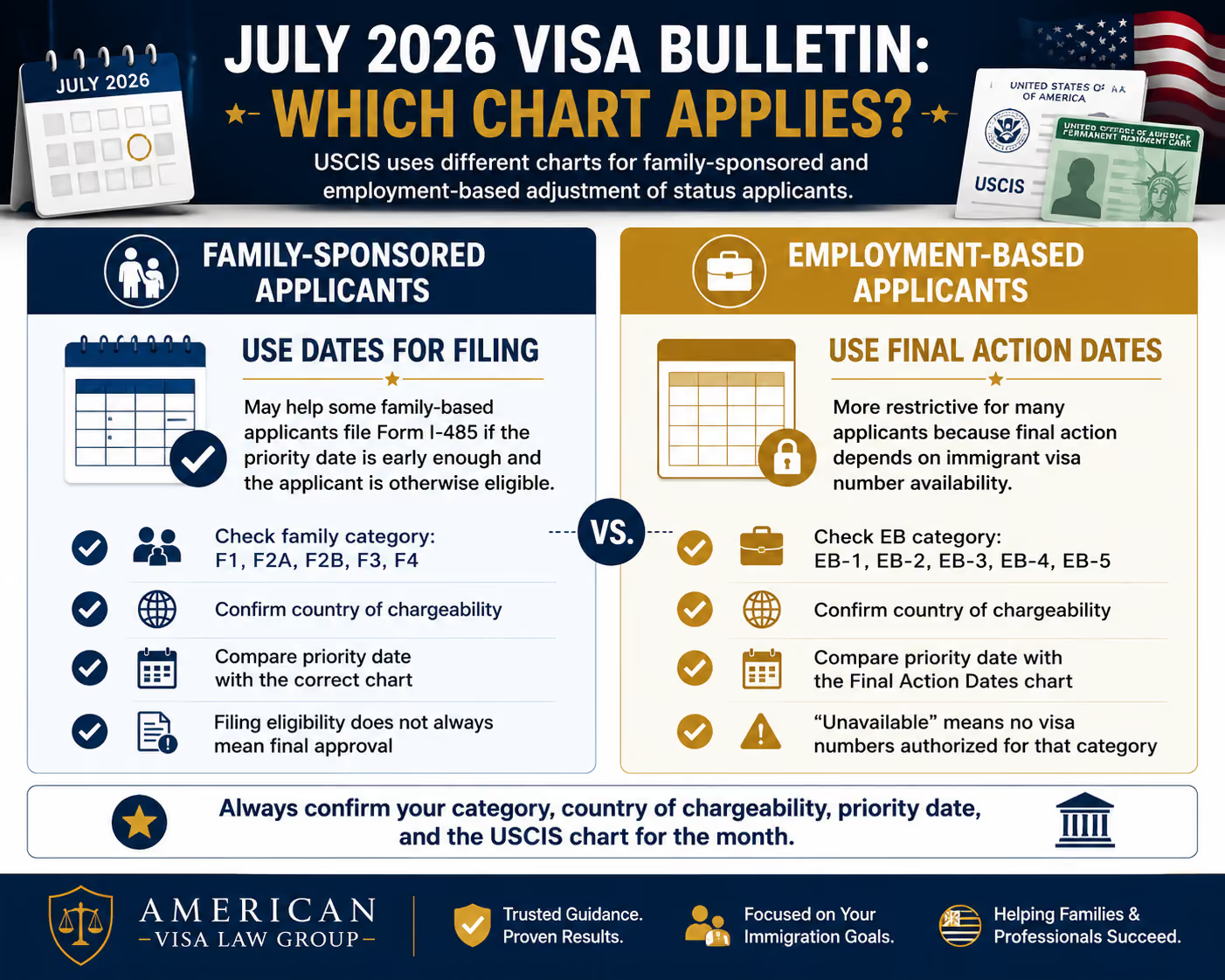
For July 2026, one of the most important points is which chart USCIS allows applicants to use. Family-sponsored adjustment of status applicants may use the Dates for Filing chart, while employment-based adjustment of status applicants must use the Final Action Dates chart. This distinction matters because it can affect whether someone may file Form I-485 or whether a pending green card application can move toward approval.
The July 2026 Visa Bulletin is especially significant for Indian employment-based applicants. EB-2 India is unavailable, EB-5 Unreserved India is unavailable, and EB-1 India retrogressed. At the same time, EB-3 India moved slightly forward, China saw movement in several employment-based categories, and some family-sponsored categories advanced.
This article explains the key July 2026 Visa Bulletin updates, including what changed from June 2026, how the bulletin compares with July 2025, and what applicants should review before filing, traveling, changing jobs, relying on EAD or Advance Parole, or making green card strategy decisions.
The July 2026 Visa Bulletin is mixed. Some applicants saw helpful forward movement, while others faced delays, retrogression, or unavailable categories.
For family-sponsored applicants, several categories moved forward compared with June 2026. USCIS is also allowing family-sponsored adjustment of status applicants to use the Dates for Filing chart in July 2026, which may help some applicants file Form I-485 if their priority date is early enough and they are otherwise eligible.
For employment-based applicants, the picture is more complicated. USCIS is using the Final Action Dates chart for employment-based adjustment of status cases in July 2026. This matters because Final Action Dates are generally more restrictive and are tied more closely to whether an immigrant visa number is actually available.
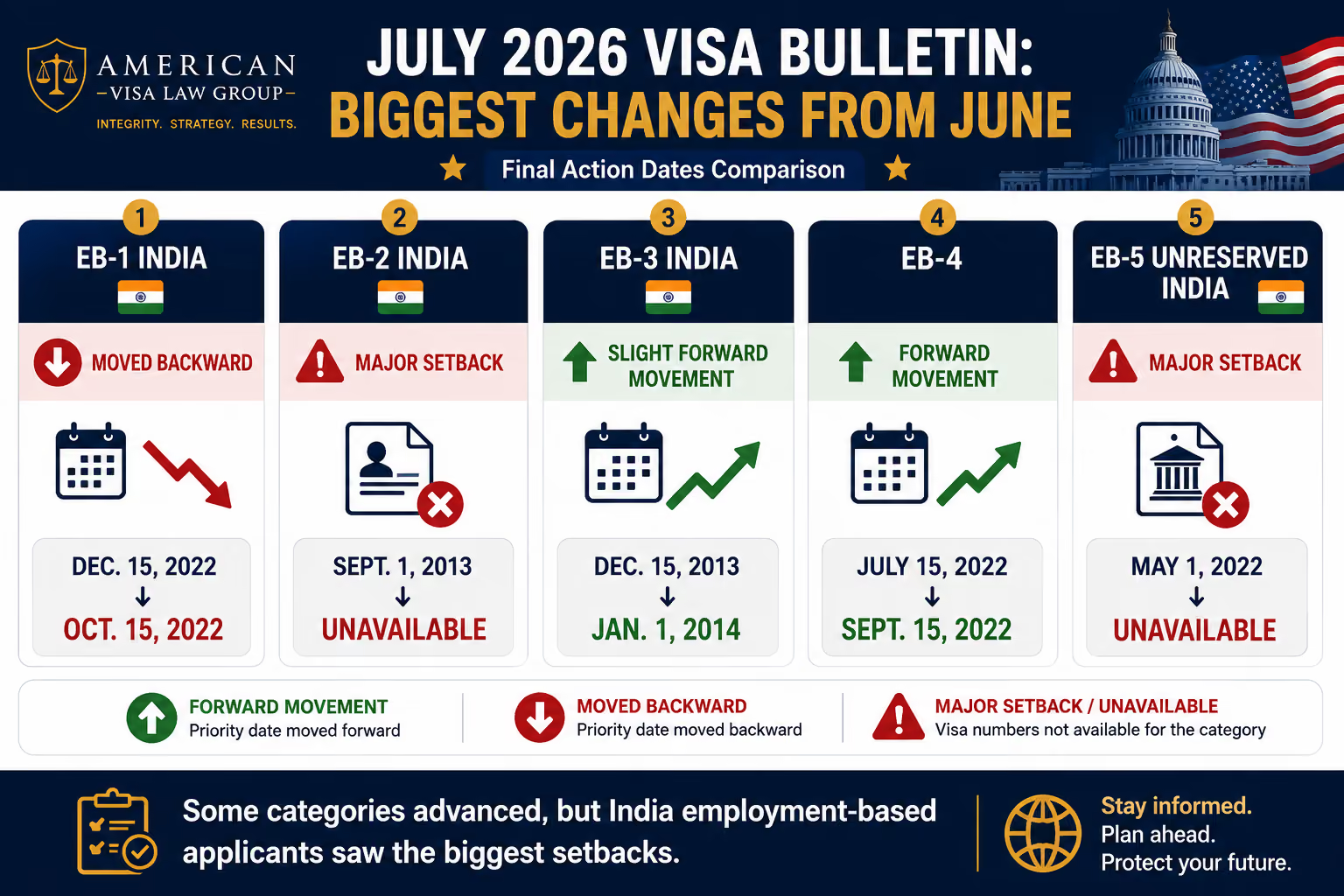
The most significant employment-based updates involve India. EB-2 India is unavailable in July 2026, meaning visa numbers are not authorized in that category for the month. EB-5 Unreserved India is also unavailable, and EB-1 India retrogressed. EB-3 India moved slightly forward, but the movement is limited.
There were also positive updates. China advanced in some employment-based categories, EB-4 and Certain Religious Workers moved forward, and several family-sponsored categories showed progress. Still, applicants should be careful not to rely on a general summary alone. The result depends on the exact category, country of chargeability, priority date, and USCIS chart being used for July 2026.
The Visa Bulletin is a monthly update that shows when immigrant visa numbers are available for different family-sponsored and employment-based green card categories. It matters because many green card applicants cannot move forward simply because they have an approved petition. They also need a visa number to be available in their category.
For applicants waiting in backlogged categories, the Visa Bulletin is where they check whether their priority date is close enough to allow the next step. That next step may be filing Form I-485, submitting documents through the National Visa Center, or waiting for final green card approval.
The most important part is understanding which chart applies. The Visa Bulletin includes Final Action Dates and Dates for Filing, and they do not always mean the same thing.
Final Action Dates generally show when a green card may be approved because an immigrant visa number is available. If the Final Action Date is not current for an applicant’s category and country, a pending Form I-485 may have to wait before final approval.
Dates for Filing are different. They may allow applicants to file earlier, but only if USCIS permits that chart for adjustment of status filings that month. This is why applicants should not look at the Visa Bulletin alone. They also need to check the USCIS monthly filing chart guidance.
Priority date is another key part of the analysis. A priority date is usually the date the immigrant petition was properly filed. In many employment-based cases involving PERM labor certification, the priority date is tied to when the labor certification was filed with the Department of Labor.
Country of chargeability also matters. The Visa Bulletin is usually based on the applicant’s country of birth, not necessarily citizenship or current residence. That is why the same category can have different results for India, China, Mexico, the Philippines, and the Rest of the World.
In practice, the Visa Bulletin is not just a chart of dates. It affects filing strategy, approval timing, travel planning, EAD and Advance Parole renewals, job-change decisions, and long-term green card expectations. A small date movement can matter a lot when an applicant is close to filing or approval.
For July 2026, adjustment of status applicants should be careful about which chart they use. The Department of State Visa Bulletin includes both Final Action Dates and Dates for Filing, but USCIS decides each month which chart applicants may use when filing Form I-485 inside the United States.
For family-sponsored adjustment of status applicants, USCIS is using the Dates for Filing chart in July 2026. This may help some family-based applicants file Form I-485 earlier if their priority date is before the listed filing date and they are otherwise eligible.
For employment-based adjustment of status applicants, USCIS is using the Final Action Dates chart in July 2026. This is more restrictive for many applicants because Final Action Dates are tied to actual immigrant visa number availability.
This distinction is especially important for employment-based applicants from India. Even if a category has a more favorable Dates for Filing chart, that does not control Form I-485 filing for July 2026 if USCIS requires employment-based applicants to use Final Action Dates. That is why EB-2 India and EB-5 Unreserved India being unavailable in the Final Action Dates chart is so significant.
A simple way to read the July 2026 guidance is this: family-sponsored applicants should check the family Dates for Filing chart, while employment-based applicants should check the employment Final Action Dates chart. Then they must compare the correct chart against their exact preference category, country of chargeability, and priority date.
Applicants should not assume that a date in the Visa Bulletin automatically means they can file or receive approval. The correct answer depends on the USCIS chart for that month and the facts of the individual case.
The chart USCIS allows applicants to use can change the answer. For July 2026, family-sponsored and employment-based applicants must look at different charts before deciding whether they may file or move toward final green card approval.
The July 2026 Visa Bulletin brings some forward movement in several family-sponsored categories. For family-based applicants, this matters because even small date changes can affect when a person may file Form I-485, submit documents through the National Visa Center, or move closer to final green card approval.
For July 2026, USCIS is allowing family-sponsored adjustment of status applicants to use the Dates for Filing chart. That is helpful for some applicants because the Dates for Filing chart is often more favorable than the Final Action Dates chart. However, applicants should still remember that filing eligibility and final green card approval are not the same thing.
In the F1 category for unmarried sons and daughters of U.S. citizens, the July 2026 filing chart lists January 1, 2019 for All Chargeability Areas, China, and India. Mexico remains much further back at October 1, 2008, while the Philippines is listed at April 22, 2015.
F2A, which covers spouses and children of permanent residents, is current on the July 2026 USCIS filing chart for all listed countries. This is one of the more favorable family-sponsored updates this month. Still, applicants should be careful because the Final Action Dates chart may be different when it comes to final approval.
F2B, for unmarried adult sons and daughters of permanent residents, shows June 8, 2018 for All Chargeability Areas, China, and India on the filing chart. Mexico is listed at May 15, 2010, and the Philippines remains at October 1, 2013.
F3, for married sons and daughters of U.S. citizens, is listed at December 8, 2012 for All Chargeability Areas, China, and India. Mexico is July 15, 2001, and the Philippines is August 8, 2006.
F4, for brothers and sisters of adult U.S. citizens, remains heavily backlogged. The July 2026 filing chart lists March 1, 2010 for All Chargeability Areas and China, December 15, 2006 for India, April 30, 2001 for Mexico, and March 22, 2008 for the Philippines.
Overall, the family-sponsored side of the July 2026 Visa Bulletin is relatively steady, with some useful filing opportunities. But the practical answer still depends on the applicant’s exact family category, priority date, country of chargeability, and whether the case is being handled through adjustment of status or consular processing.
The employment-based side of the July 2026 Visa Bulletin is where some of the most important changes appear. Because USCIS is using the Final Action Dates chart for employment-based adjustment of status filings in July 2026, these dates are especially important for applicants hoping to file Form I-485 or move a pending case toward approval.
EB-1 remains current for All Chargeability Areas, Mexico, and the Philippines. China moved forward to June 1, 2023, which is a positive update for Chinese EB-1 applicants. India, however, moved backward from December 15, 2022 to October 15, 2022. That retrogression may affect Indian EB-1 applicants whose priority dates are no longer current under the July chart.
EB-2 is more difficult this month, especially for India. EB-2 remains current for All Chargeability Areas, Mexico, and the Philippines, while China stays at September 1, 2021. But EB-2 India is listed as unavailable. This is one of the most significant developments in the July 2026 Visa Bulletin because “unavailable” means immigrant visa numbers are not authorized for that category during the month.
EB-3 shows more forward movement. All Chargeability Areas and Mexico moved to August 1, 2024. China advanced to December 22, 2021. India moved slightly forward to January 1, 2014, while the Philippines remains at August 1, 2023. For Indian applicants, EB-3 movement is helpful, but still limited given the long backlog.
The Other Workers category also moved modestly in July 2026. All Chargeability Areas and Mexico advanced to March 1, 2022. India moved to January 1, 2014. The Philippines advanced to December 1, 2021, while China remains at April 1, 2019.
EB-4 and Certain Religious Workers both advanced to September 15, 2022 for all listed countries. This is a positive movement compared with June 2026, when these categories were listed at July 15, 2022.
EB-5 is mixed. EB-5 Unreserved remains current for All Chargeability Areas, Mexico, and the Philippines. China moved forward to December 1, 2016. But EB-5 Unreserved India became unavailable, which is another major setback for Indian applicants. The EB-5 set-aside categories for rural, high unemployment, and infrastructure remain current for all listed countries.
Overall, July 2026 is favorable for some employment-based applicants, but difficult for India in key categories. EB-2 India and EB-5 Unreserved India becoming unavailable, combined with EB-1 India retrogression, make this a month where Indian applicants should review their filing, travel, EAD/AP, and long-term green card strategy carefully.
The July 2026 Visa Bulletin affects applicants differently depending on their country of chargeability. For many applicants, the category alone is not enough. The same EB-2, EB-3, F4, or EB-5 case can have a very different result depending on whether the applicant is chargeable to India, China, Mexico, the Philippines, or the Rest of the World.
India has the most significant employment-based concerns in the July 2026 Visa Bulletin. EB-2 India is unavailable, which means immigrant visa numbers are not authorized in that category for the month. EB-5 Unreserved India is also unavailable. EB-1 India retrogressed to October 15, 2022.
EB-3 India moved slightly forward to January 1, 2014, and Other Workers India also moved to January 1, 2014. That movement may help some applicants, but it does not remove the broader backlog pressure for Indian employment-based cases.
For Indian applicants, this is a month to be careful. Pending Form I-485 cases, EAD and Advance Parole renewals, travel plans, and job-change decisions should be reviewed in light of the correct Final Action Date.
China saw a more mixed but generally better employment-based picture than India. EB-1 China advanced to June 1, 2023. EB-2 China remains at September 1, 2021, while EB-3 China moved to December 22, 2021. EB-5 Unreserved China advanced to December 1, 2016.
The Department of State also warns that EB-2 China demand may require future retrogression or even unavailability if number use reaches the annual limit. That does not mean a change is guaranteed, but Chinese EB-2 applicants should keep watching the next bulletins closely.
Mexico remains heavily backlogged in several family-sponsored categories. F1, F2B, F3, and F4 family cases continue to show long waits, especially when compared with All Chargeability Areas.
On the employment-based side, Mexico is in a better position. EB-1 and EB-2 are current. EB-3 is at August 1, 2024, and Other Workers is at March 1, 2022. EB-4 and Certain Religious Workers are at September 15, 2022, while EB-5 Unreserved remains current.
The Philippines has important family-sponsored backlogs, but there is some movement in certain family categories. On the employment-based side, EB-1 and EB-2 remain current. EB-3 is at August 1, 2023, and Other Workers advanced to December 1, 2021.
The Department of State also notes that increased EB-3 demand for the Philippines may require retrogression or unavailability in the coming months. Filipino EB-3 applicants with close priority dates should pay attention to future Visa Bulletin updates.
For applicants in All Chargeability Areas Except Those Listed, July 2026 remains relatively favorable in several employment-based categories. EB-1 and EB-2 are current. EB-3 is at August 1, 2024, and Other Workers is at March 1, 2022. EB-4 and Certain Religious Workers are at September 15, 2022. EB-5 Unreserved and EB-5 set-aside categories remain current.
Even when a category is current, applicants should still confirm eligibility before filing. A current Visa Bulletin category does not automatically mean every case is ready to file or ready for approval. The applicant still needs the correct petition, priority date, lawful filing basis, and supporting documentation.
Compared with June 2026, the July 2026 Visa Bulletin shows modest family-sponsored movement and more serious employment-based changes. The biggest developments are on the employment-based side, especially for India.
For family-sponsored applicants, several categories moved forward, including F1, F2B, F3, and parts of F4. F2A remained largely steady. These movements may help some applicants move closer to filing or final action, but the effect depends on the applicant’s country and priority date.
For employment-based applicants, July 2026 is more uneven. Some categories advanced, including EB-3 for several countries and EB-4 for all listed countries. But India saw major setbacks in EB-1, EB-2, and EB-5 Unreserved.
The most important practical takeaway is that not all forward movement has the same value. A two-month movement in a family category may help some applicants, but an unavailable employment-based category can stop final action for the month, even if the applicant already has a pending case.
For Indian employment-based applicants, July 2026 is a difficult month. EB-2 India becoming unavailable, EB-5 Unreserved India becoming unavailable, and EB-1 India retrogressing all point to heavy demand and limited visa number availability. EB-3 India did move forward slightly, but the movement is limited compared with the overall backlog.
For other applicants, the July 2026 update may be more favorable. China saw movement in EB-1, EB-3, and EB-5 Unreserved. EB-4 and Certain Religious Workers advanced for all listed countries. Rest of World employment-based applicants also saw EB-3 and Other Workers movement.
Applicants should use the June-to-July comparison as a starting point, not a final answer. The real question is whether the applicant’s own priority date is earlier than the applicable July 2026 date for their category and country.
The June-to-July comparison shows why the July 2026 Visa Bulletin is mixed. Some categories moved forward, but several India employment-based categories faced serious setbacks.
Compared with July 2025, the July 2026 USCIS filing chart shows meaningful changes for both family-sponsored and employment-based applicants. Some categories improved, while others became more difficult, especially for Indian employment-based applicants.
On the family-sponsored side, one of the clearest changes is F2A. In July 2025, F2A had a listed filing date of March 1, 2025 for all listed countries. In July 2026, F2A is current on the USCIS filing chart. That is a positive development for spouses and children of permanent residents who may be eligible to file adjustment of status, assuming they meet all other requirements.
Other family categories also show forward movement over the year. F1, F2B, F3, and F4 moved forward for many countries, although Mexico and the Philippines remain heavily backlogged in several categories. Family-sponsored applicants should still review the exact category and country because year-over-year movement does not affect everyone equally.
The employment-based picture is more mixed. Some categories improved compared with July 2025. For example, EB-4 and Certain Religious Workers were unavailable in the July 2025 USCIS chart, but they are listed with dates in July 2026. EB-3 also moved forward for several countries, including All Chargeability Areas and Mexico.
However, India saw major setbacks. In July 2025, EB-2 India had a listed filing date. In July 2026, EB-2 India is unavailable under the applicable employment-based chart. EB-5 Unreserved India also moved from having a listed date in July 2025 to being unavailable in July 2026.
This year-over-year comparison shows why applicants should not assume that time always brings steady progress. Some categories move forward, some stay slow, and some can retrogress or become unavailable when demand is high. For applicants close to a filing or approval window, even one monthly Visa Bulletin can change the strategy.
If your Form I-485 is already pending, a retrogression or unavailable category in the July 2026 Visa Bulletin does not automatically mean your case will be denied. In many situations, the case may simply remain pending until an immigrant visa number becomes available again.
This is an important distinction. Filing Form I-485 and receiving final green card approval are not the same step. A person may have properly filed an adjustment of status application in the past, but USCIS generally still needs an available immigrant visa number before approving the green card.
That is why Final Action Dates matter. If your priority date is no longer current under the applicable Final Action Dates chart, USCIS may not be able to approve the case that month, even if the application is otherwise moving through the system.
For July 2026, this is especially important for Indian employment-based applicants. EB-2 India and EB-5 Unreserved India are unavailable, and EB-1 India retrogressed. Applicants in these categories should avoid assuming that a pending I-485 will continue toward approval at the same pace.
Pending applicants should also review related immigration planning issues, including EAD renewal, Advance Parole renewal, international travel, job changes, and whether they need to maintain an underlying nonimmigrant status. These details can matter more when a case is expected to remain pending for longer.
The safest approach is to review the pending case in context: the applicant’s category, country of chargeability, priority date, USCIS chart for the month, and any upcoming travel or employment decisions. A Visa Bulletin change may not end the case, but it can change the timing and strategy.
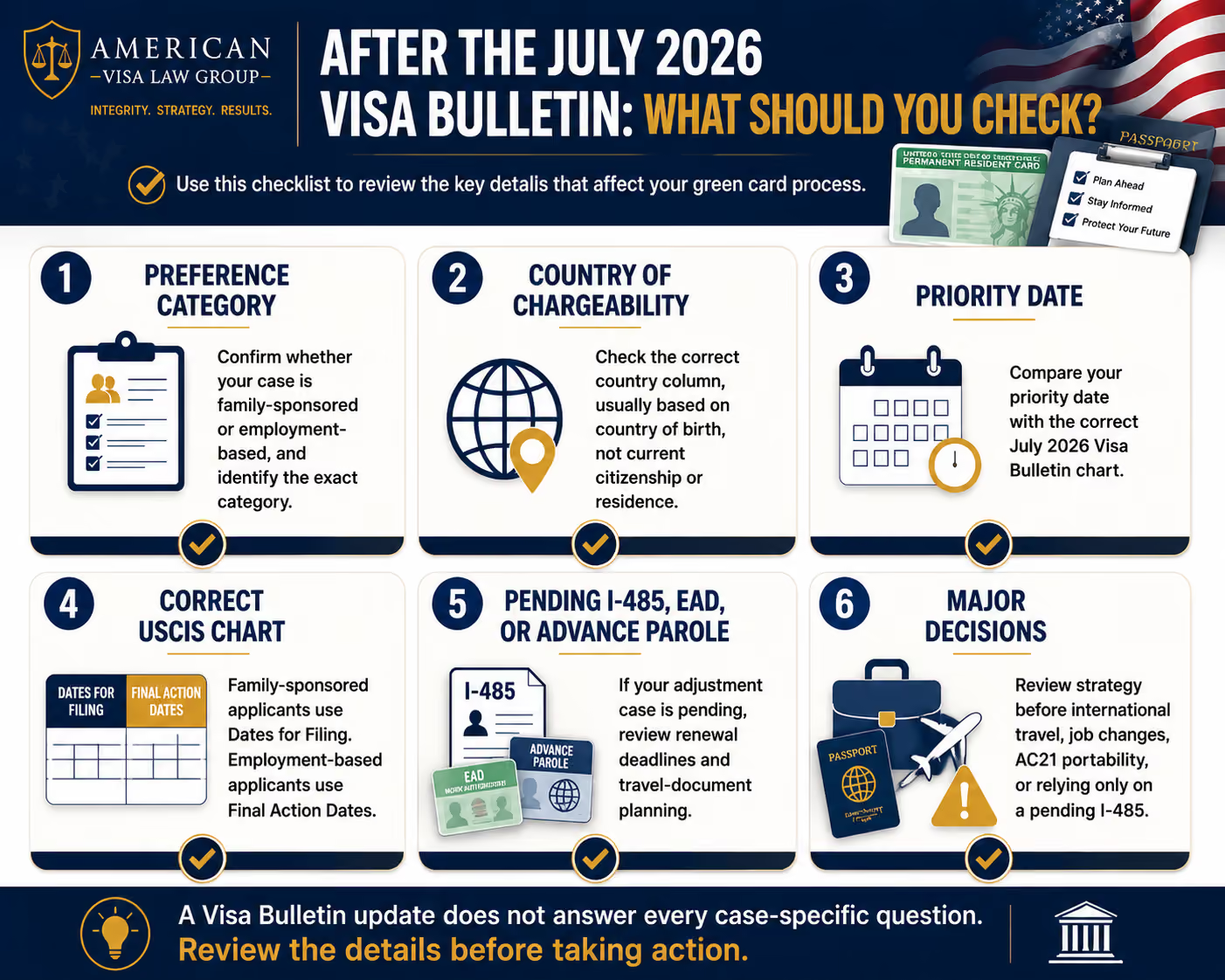
After reviewing the July 2026 Visa Bulletin, applicants should avoid jumping to conclusions based on one date alone. The Visa Bulletin is useful, but it only helps if it is read in the right order.
The first step is to confirm the exact preference category. A family-sponsored case may fall under F1, F2A, F2B, F3, or F4. An employment-based case may fall under EB-1, EB-2, EB-3, Other Workers, EB-4, Certain Religious Workers, or EB-5. A small difference in category can completely change the result.
The second step is to confirm the country of chargeability. For most applicants, this is based on country of birth, not current citizenship or current residence. This is why an applicant from India, China, Mexico, or the Philippines may face a different wait time than an applicant in the Rest of the World column.
The third step is to compare the priority date with the correct July 2026 chart. For family-sponsored adjustment of status cases, USCIS is using the Dates for Filing chart. For employment-based adjustment of status cases, USCIS is using the Final Action Dates chart. Using the wrong chart can lead to the wrong conclusion about whether someone may file Form I-485.
Applicants should also think beyond filing. A Visa Bulletin update can affect travel plans, EAD and Advance Parole renewals, job changes, consular processing timing, and expectations for final green card approval. This is especially true when a category retrogresses or becomes unavailable.
The practical takeaway is simple: check the category, country, priority date, and USCIS chart before taking action. If the case is close to a cut-off date, already pending, or affected by retrogression, it may be worth reviewing the strategy before making any major immigration decision.
After reviewing the July 2026 Visa Bulletin, applicants should slow down and check the details that actually control filing, approval timing, travel planning, and work authorization strategy.
Visa Bulletin predictions should always be treated carefully. Monthly movement depends on demand, visa number usage, annual limits, country limits, and USCIS filing chart decisions. A category that moves forward one month can slow down, retrogress, or become unavailable later in the fiscal year.
For the rest of FY 2026, Indian employment-based applicants should watch the bulletin especially closely. The Department of State has already listed EB-2 India as unavailable for the remainder of FY 2026. EB-5 Unreserved India is also unavailable for the remainder of FY 2026. EB-1 India may also face additional retrogression or become unavailable if India’s limit is reached before the fiscal year ends.
China EB-2 applicants should also monitor future bulletins. The Department of State has warned that increased demand in EB-2 China may require retrogression or unavailability in the coming months. Filipino EB-3 applicants should also be cautious, as increased demand may affect future availability in that category.
Because July is late in the fiscal year, applicants should not assume steady forward movement. The end of the fiscal year can bring tighter visa number control, especially in high-demand categories. For some applicants, the more realistic goal may be planning for October, when the new fiscal year begins and annual visa limits reset.
The practical takeaway is to monitor the next Visa Bulletin before making major decisions. Applicants who are close to a cut-off date, affected by retrogression, or relying on EAD or Advance Parole should review their timing carefully before filing, traveling, changing jobs, or making long-term immigration plans.
Not every Visa Bulletin update requires legal help. Many applicants can compare their category, country of chargeability, and priority date on their own. But legal guidance can become important when the Visa Bulletin change affects a real decision, not just general planning.
For example, if your priority date is close to the July 2026 cut-off date, it may be worth confirming whether you are using the correct USCIS chart before filing Form I-485. A filing mistake can create delays, rejection risk, or confusion about eligibility.
Legal review can also be helpful if your Form I-485 is already pending and your category has retrogressed or become unavailable. In that situation, the question is not only whether the case stays pending. Applicants may also need to think about EAD renewal, Advance Parole, international travel, job changes, or whether maintaining underlying nonimmigrant status still makes sense.
Indian employment-based applicants should be especially careful after the July 2026 Visa Bulletin. EB-2 India and EB-5 Unreserved India being unavailable, combined with EB-1 India retrogression, can affect timing expectations and long-term strategy. Even when a case is not immediately harmed, planning around delays can matter.
Applicants may also want legal guidance if they are considering a job change while an employment-based green card case is pending, if they are relying on AC21 portability, or if they are unsure whether consular processing or adjustment of status is the better path.
The main point is simple: the Visa Bulletin tells you where the dates are, but it does not always tell you what to do next. If the July 2026 Visa Bulletin affects your filing window, pending green card case, travel plans, or employment strategy, speaking with an immigration attorney can help you understand the risks before making a decision.
American Visa Law Group helps individuals, families, professionals, investors, and employers review green card timing, priority date issues, and adjustment of status strategy. If you are unsure how the July 2026 Visa Bulletin affects your case, you can schedule a consultation to review your options.
The July 2026 Visa Bulletin brings both progress and concern. Some family-sponsored categories moved forward, and several employment-based categories saw useful movement. But the bulletin also brings serious challenges, especially for Indian employment-based applicants.
The most important updates are clear: EB-2 India is unavailable, EB-5 Unreserved India is unavailable, and EB-1 India retrogressed. At the same time, EB-3 India moved only slightly forward. For many applicants, this means timing, filing strategy, and expectations for final green card approval need to be reviewed carefully.
The USCIS filing chart also matters. For July 2026, family-sponsored adjustment of status applicants may use the Dates for Filing chart, while employment-based applicants must use the Final Action Dates chart. Using the wrong chart can lead to the wrong conclusion about whether someone may file Form I-485 or move toward approval.
Before taking action, applicants should confirm their preference category, country of chargeability, priority date, and the correct USCIS chart for July 2026. This is especially important for applicants with pending Form I-485 applications, upcoming travel plans, EAD or Advance Parole renewals, or possible job changes.
The Visa Bulletin does not answer every case-specific question. It shows where the dates stand, but the right strategy depends on the full immigration picture. If you are unsure how the July 2026 Visa Bulletin affects your green card case, American Visa Law Group can help review your priority date, filing options, and next steps.
The July 2026 Visa Bulletin is the monthly update from the Department of State showing immigrant visa availability for family-sponsored and employment-based green card categories. It helps applicants understand whether their priority date may allow filing, document submission, or final green card approval.
For July 2026, USCIS is using the Dates for Filing chart for family-sponsored adjustment of status applicants. For employment-based adjustment of status applicants, USCIS is using the Final Action Dates chart. This distinction is important because using the wrong chart can lead to the wrong conclusion about Form I-485 filing eligibility.
“U” means unavailable. When a category is marked unavailable, immigrant visa numbers are not authorized for that category during that month. This can affect both new filings and pending cases, depending on the applicant’s category, priority date, and the chart USCIS is using.
No. EB-2 India is unavailable in the July 2026 Visa Bulletin. This is one of the most important employment-based updates for Indian applicants because it means visa numbers are not authorized for EB-2 India during the month.
Indian employment-based applicants saw several difficult updates. EB-2 India became unavailable, EB-5 Unreserved India became unavailable, and EB-1 India retrogressed. EB-3 India moved slightly forward, but the movement remains limited compared with the overall backlog.
Generally, USCIS needs an available immigrant visa number before approving Form I-485. If the priority date is not current under the applicable Final Action Dates chart, the case may remain pending until a visa number becomes available again.
Not necessarily. Retrogression does not automatically mean a pending Form I-485 will be denied. In many cases, the application remains pending until the applicant’s priority date becomes current again. However, applicants should still review EAD renewal, Advance Parole, travel, job changes, and long-term status planning.
It may be helpful if your priority date is close to a cut-off date, your category retrogressed, your case became unavailable, or you have a pending Form I-485. Legal review can also be useful before international travel, job changes, EAD/AP renewal, or major green card strategy decisions.
Hasan Abdullah, Esq. is the Founder and Managing Attorney of American Visa Law Group. His practice focuses on U.S. immigration law, including family-based immigration, employment-based immigration, adjustment of status, consular processing, waivers, PERM labor certification, NIW, EB-1, H-1B, O-1, and complex immigration strategy.
Through American Visa Law Group, Mr. Abdullah helps individuals, families, professionals, investors, and employers understand their immigration options and plan around changing government policies, USCIS procedures, and Visa Bulletin movement. His work emphasizes practical legal analysis, realistic expectations, and strategy tailored to each applicant’s immigration history and long-term goals.


