Author: Hasan Abdullah, Esq.
The July 2026 Visa Bulletin brings a serious setback for many Indian nationals waiting in the employment-based green card backlog. For applicants in certain categories, the update is more than a routine monthly movement. EB-2 India is now unavailable, EB-1 India has retrogressed, and EB-5 Unreserved India is also unavailable for the remainder of the fiscal year.
That is why many applicants are describing the July 2026 Visa Bulletin as a green card freeze for Indian applicants. But the word “freeze” needs to be understood carefully. This is not a pause on every Indian green card case, and it does not mean every pending application is denied or cancelled. It means that, for specific employment-based categories, immigrant visa numbers are no longer available for final green card approval during this period.
For Indian professionals, employers, investors, and families who have been waiting years for priority date movement, this update can create real uncertainty. A case may still be pending. USCIS may still continue parts of its review. But if the visa number is not available, final approval may have to wait.
The practical question is no longer just, “What does the July 2026 Visa Bulletin say?” The more important question is: “How does this affect my specific category, priority date, pending I-485, work authorization, travel plans, and long-term immigration strategy?”
The July 2026 Visa Bulletin shows several important changes for Indian nationals in employment-based green card categories. The most significant development is that EB-2 India is now listed as unavailable. EB-5 Unreserved India is also unavailable. EB-1 India moved backward, while EB-3 India advanced only slightly.
For many applicants, this creates a difficult but familiar problem: the case may be legally strong, the employer may still be sponsoring the worker, and the applicant may have already waited for years, but final green card approval still depends on whether an immigrant visa number is available.
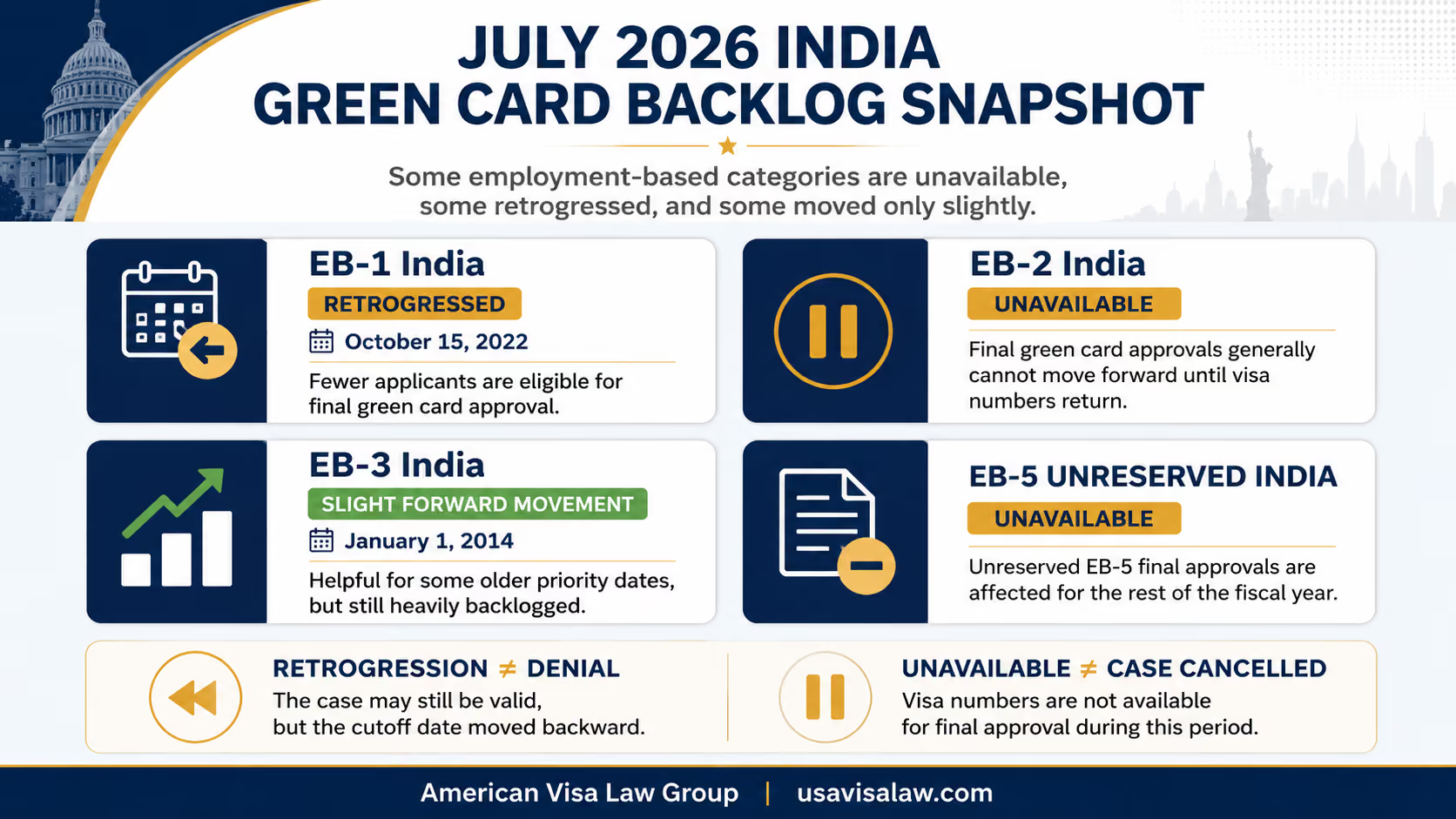
EB-1 India retrogressed to October 15, 2022. This means the cutoff date moved backward, making fewer Indian EB-1 applicants eligible for final green card approval in July 2026.
That matters because EB-1 has often been viewed as a faster employment-based path for highly accomplished professionals, multinational executives and managers, outstanding researchers, and individuals with extraordinary ability. But for Indian nationals, EB-1 is no longer immune from the same visa number pressure affecting other employment-based categories.
A retrogression does not mean the underlying petition is defective. It also does not mean the applicant did anything wrong. It simply means demand has exceeded the available visa supply for that category and country of chargeability. For applicants with pending adjustment of status cases, the practical effect is usually delay rather than automatic denial.
The most serious change is in EB-2 India. In the July 2026 Visa Bulletin, EB-2 India is listed as unavailable for final action.
In practical terms, “unavailable” means immigrant visa numbers are not available for that category during that period. For Indian EB-2 applicants, this can affect professionals with advanced degree positions, individuals with exceptional ability, and many applicants pursuing National Interest Waiver strategies.
This is more severe than a normal backward movement in the cutoff date. With retrogression, some applicants may still remain current if their priority date is earlier than the new cutoff date. With unavailability, final green card approval generally cannot move forward for that category until visa numbers become available again.
For applicants with pending I-485 applications, this does not usually erase the case. But it can place the final approval on hold, even if other parts of the case continue to be reviewed.
EB-3 India moved forward to January 1, 2014. That is technically positive movement, but it is still very limited when viewed against the size of the Indian employment-based backlog.
This small advancement may help some applicants with older priority dates, especially those whose dates fall close to the new cutoff. But for many Indian professionals, EB-3 remains heavily backlogged. A two-week or short-term movement should not be treated as a broad reopening of the category.
Applicants considering EB-2 to EB-3 downgrade strategies should be careful. A downgrade can make sense in some situations, but it is not automatically the right move just because EB-3 shows movement in one bulletin. The decision depends on the applicant’s priority date, employer support, I-140 history, pending I-485 status, and the likelihood of future movement in both categories.
The July 2026 Visa Bulletin also lists EB-5 Unreserved India as unavailable. This affects Indian investors in the unreserved EB-5 categories, where demand has reached the available limit for the fiscal year.
This does not mean every EB-5 option is closed. The EB-5 set-aside categories remain separate from the unreserved category, and applicants should carefully distinguish between rural, high-unemployment, infrastructure, and unreserved classifications.
For EB-5 investors, the visa bulletin is only one part of the strategy. Source of funds, project selection, petition timing, family age-out concerns, and long-term immigration goals can all become important when visa number availability changes.
No. The July 2026 Visa Bulletin does not freeze every Indian green card case. The impact is mainly on certain employment-based categories, especially EB-2 India and EB-5 Unreserved India, where visa numbers are listed as unavailable for final action.
That distinction matters. A family-based case, a humanitarian case, or another immigration matter may not be affected in the same way. Even within employment-based immigration, the impact depends on the applicant’s category, priority date, country of chargeability, and whether the case is pending with USCIS or moving through consular processing.
The word “freeze” is useful because it captures the frustration many Indian applicants feel. But legally, it should not be understood as a blanket stop on all Indian immigration cases.
For Indian nationals in the employment-based backlog, the July 2026 bulletin is especially important because several major categories are either unavailable or moving very slowly.
EB-2 India is the clearest example. When a category is unavailable, USCIS generally cannot approve final green card applications in that category until immigrant visa numbers become available again. This can affect applicants who have already waited years and may have pending I-485 applications.
EB-1 India is different because it retrogressed rather than becoming fully unavailable. That still creates delay for many applicants, but it is not the same as a category being marked unavailable. EB-3 India moved slightly forward, although the movement remains limited compared to the size of the backlog.
Retrogression means the cutoff date moves backward. Some applicants may lose current-date eligibility, while others with older priority dates may still remain eligible for final action.
Unavailable means something stronger. It means the government is not making immigrant visa numbers available for that category during that period. Even if the case is otherwise approvable, final green card approval may have to wait.
For applicants, this can be confusing because the case may still appear active. USCIS may still issue notices, review documents, or process certain parts of the file. But the final approval depends on visa number availability.
The Final Action Date is the key chart for final green card approval. If an applicant’s priority date is earlier than the listed cutoff date, the case may be eligible for final action, assuming all other requirements are met. If the priority date is not current, or if the category is unavailable, final approval generally cannot happen yet.
This is why applicants should not look only at the headline. The real question is specific: What is your category? What is your priority date? Which chart applies? And is your case pending adjustment of status or consular processing?
For many Indian applicants, the July 2026 Visa Bulletin does not end the case. But it may change the timeline, the strategy, and the level of caution needed before making decisions about work, travel, or future filings.
One of the most confusing parts of the Visa Bulletin is that it has two different charts: Final Action Dates and Dates for Filing. For Indian applicants watching the July 2026 Visa Bulletin, this distinction is extremely important.
The Final Action Dates chart controls when a green card can generally be approved. If your category is current, or if your priority date is earlier than the listed cutoff date, a visa number may be available for final approval, assuming the rest of the case is approvable.
The Dates for Filing chart is different. It is mainly used to determine when applicants may be able to begin the next step of the process, such as submitting documents to the National Visa Center or, in some months, filing an adjustment of status application with USCIS.
For employment-based applicants in July 2026, the Final Action Dates chart is the key chart to watch. This is why EB-2 India being listed as unavailable is so significant. Even if an applicant already filed an I-485 or has a strong underlying petition, final approval generally depends on whether a visa number is available under the Final Action Dates chart.
This is also why applicants should avoid relying only on the Dates for Filing chart. A filing date may show movement, but that does not automatically mean the green card can be approved. Filing eligibility and final approval are related, but they are not the same thing.
For Indian applicants, the practical step is simple: check your preference category, your priority date, and the correct chart for the month. A small misunderstanding between these two charts can lead to wrong assumptions about whether a case is ready for filing, still pending, or eligible for final approval.
If your Form I-485 is already pending, the July 2026 Visa Bulletin does not usually mean that your case is denied, cancelled, or thrown away. In many cases, the application simply remains pending until an immigrant visa number becomes available again.
This is an important point for Indian applicants affected by EB-2 unavailability or EB-1 retrogression. A pending adjustment of status case can still exist even when the priority date is no longer current. The problem is that USCIS generally cannot take final action on the green card unless the visa number is available.
That can feel frustrating because the case may look close to the finish line. The applicant may have completed biometrics, responded to RFEs, attended an interview, or received employment authorization. But if the category is unavailable, final approval may have to wait.
USCIS may still continue reviewing parts of the case. It may review eligibility, background checks, medical exam issues, employment documentation, or other required evidence. A pending case does not always sit completely untouched. But final approval is tied to visa availability.
Applicants should also pay close attention to their related benefits. If the I-485 is pending, the applicant may be eligible for employment authorization and advance parole, depending on the case. Those documents should be renewed on time when needed, especially if the backlog may continue for months.
At the same time, relying only on a pending I-485 can be risky in some situations. Many applicants still choose to maintain valid nonimmigrant status, such as H-1B or L-1, where possible. This can provide an additional layer of protection if there are complications with the adjustment case.
The practical takeaway is simple: a pending I-485 is still valuable, but it does not remove the need for strategy. If your priority date is no longer current, you should review your work authorization, travel plans, job-change plans, dependent family members, and underlying immigration status before making major decisions.
For many Indian applicants, the biggest development in the July 2026 Visa Bulletin is EB-2 India becoming unavailable. This affects a large group of employment-based applicants, including many professionals with advanced degree positions and some applicants pursuing National Interest Waiver strategies.
In simple terms, EB-2 India being unavailable means that immigrant visa numbers are not available for final green card approval in that category for the remainder of the fiscal year. This does not mean the underlying I-140 is invalid. It also does not mean a pending I-485 is automatically denied. But it does mean final approval may have to wait until visa numbers become available again.
For applicants who were hoping their priority date would become current soon, this can be deeply frustrating. Many EB-2 India applicants have already waited for years, maintained H-1B status, changed employers carefully, renewed EADs, and planned major life decisions around small movements in the Visa Bulletin.
The practical response should not be panic. It should be review.
Applicants should confirm their priority date, their exact employment-based category, whether their adjustment of status is already pending, and whether they still have a valid nonimmigrant status option. For many Indian professionals, H-1B extensions beyond the six-year limit may remain an important part of long-term planning when the green card backlog becomes unstable.
This is also a time to be careful with major decisions. A job change, international travel, missed EAD renewal, or misunderstanding about AC21 portability can create unnecessary complications. Some applicants may have flexibility. Others may need a more cautious strategy.
EB-2 India may move again when new fiscal year visa numbers become available, but future movement is not guaranteed. Demand, annual limits, and government visa number usage all matter. For now, EB-2 India applicants should treat the July 2026 Visa Bulletin as a signal to reassess timing, status, work authorization, and long-term green card strategy.
EB-1 India also took a step backward in the July 2026 Visa Bulletin. The Final Action Date for EB-1 India moved to October 15, 2022, which means fewer Indian applicants are eligible for final green card approval in this category during July.
This is important because EB-1 is often viewed as one of the stronger employment-based green card categories. It covers priority workers, including certain extraordinary ability applicants, outstanding professors or researchers, and multinational executives or managers. But for Indian nationals, even EB-1 is now facing serious visa number pressure.
A retrogression does not mean the EB-1 petition was weak. It does not mean USCIS is questioning every EB-1 India case. It simply means demand has become high enough that the government had to move the cutoff date backward to stay within annual limits.
For applicants with pending I-485 cases, the practical effect may be delay. USCIS may still continue reviewing parts of the case, but final approval generally depends on whether the priority date is current under the Final Action Dates chart.
EB-1 applicants should also be careful about assuming that this category will quickly recover. The July 2026 Visa Bulletin warns that further retrogression, or even unavailability, may become necessary if India’s EB-1 limit is reached before the end of the fiscal year.
For Indian professionals considering EB-1 as a strategy, this does not mean EB-1 is no longer useful. It means the case should be evaluated realistically. A strong EB-1 filing still depends on the quality of the evidence, the correct category selection, the applicant’s professional record, and the timing of visa number availability.
The key takeaway is simple: EB-1 India remains valuable, but it should not be treated as a guaranteed fast track. Applicants should review both the strength of the petition and the visa bulletin timeline before making major immigration plans.
EB-3 India moved slightly forward in the July 2026 Visa Bulletin, with the Final Action Date advancing to January 1, 2014. Compared to EB-2 India becoming unavailable, this may look like positive news. But the movement is still very limited.
For Indian applicants, EB-3 remains heavily backlogged. A small forward movement may help some applicants with older priority dates, especially those who are close to the new cutoff date. But for many others, the wait is still long, and one month of movement should not be treated as a major shift in the overall backlog.
This is especially important for applicants thinking about an EB-2 to EB-3 downgrade. In some cases, a downgrade may help create filing or approval opportunities. In other cases, it may add cost, delay, or complexity without a clear benefit.
The right strategy depends on the full case history. Applicants should look at the priority date, approved I-140, employer support, job offer, pending I-485 status, and whether EB-2 or EB-3 is more likely to move in the coming months. A strategy that worked for another applicant may not make sense for your case.
For now, EB-3 India applicants should view the July 2026 movement as modest but still worth tracking. It may create an opportunity for a narrow group of applicants, but it does not remove the need for careful planning.
Indian EB-5 investors should pay close attention to the July 2026 Visa Bulletin because EB-5 Unreserved India is now unavailable. This means immigrant visa numbers are not available in that category for final green card approval for the remainder of the fiscal year.
This is important for investors who filed under the traditional unreserved EB-5 category. Even if the I-526 or I-526E petition is moving forward, the final green card step may still depend on visa number availability. A strong petition and an available visa number are separate issues.
EB-5 applicants should also understand the difference between Unreserved and set-aside categories. The Unreserved category is the general EB-5 pool. Set-aside categories are separate visa groups created for certain types of projects, including rural area, high-unemployment area, and infrastructure investments.
Because these categories are treated differently in the Visa Bulletin, investors should not assume that one EB-5 update applies to every EB-5 case. The correct analysis depends on the filing category, project type, priority date, and whether the case is being handled through adjustment of status or consular processing.
For Indian EB-5 families, timing can also affect planning beyond the principal investor. Spouses and children may be included as derivatives, so visa delays can raise practical questions about age-out concerns, school planning, travel, and long-term residence strategy.
The key point is that EB-5 is not only about investment eligibility. It is also about timing, category selection, documentation, and visa number availability. Indian investors affected by the July 2026 update should review their case carefully before assuming when the final green card step can happen.
The July 2026 Visa Bulletin changes are mainly the result of high demand, annual green card limits, and the way visa numbers are allocated by country and category.
Employment-based green cards are not unlimited. Each fiscal year, only a certain number of immigrant visas are available. Those numbers are divided across preference categories such as EB-1, EB-2, EB-3, and EB-5. They are also affected by country-based limits, which is why applicants from high-demand countries like India often face much longer waits.
When demand is higher than the number of visas available, the government has to control visa use. That is when cutoff dates can move slowly, move backward, or, in some cases, become unavailable.
This is what happened with EB-2 India and EB-5 Unreserved India in July 2026. The available visa numbers for those categories were used up for the fiscal year, so the categories were listed as unavailable. For EB-1 India, the government did not make the category unavailable, but it did move the Final Action Date backward to control demand.
The timing also matters. The U.S. government’s fiscal year ends on September 30. By July, the government usually has a clearer picture of how many visa numbers have already been used and how much demand remains. If a category is close to reaching its limit, the Visa Bulletin may become more restrictive before the new fiscal year begins.
For applicants, this can feel sudden. But from the government’s perspective, retrogression and unavailability are tools used to prevent more green cards from being approved than the law allows in a given year.
The frustrating part is that none of this necessarily reflects the strength of an individual case. A person may have an approved I-140, a pending I-485, a stable job, and years of waiting behind them. But if the visa number is not available, final green card approval may still have to wait.
After the July 2026 Visa Bulletin, Indian applicants should avoid making quick decisions based only on the headline. The bulletin is serious, especially for EB-2 India and EB-5 Unreserved India, but the right next step depends on the details of each case.
The first step is to confirm your exact priority date and employment-based category. Many applicants know they are “in the backlog,” but they may not know whether their case is EB-1, EB-2, EB-3, or EB-5, or which priority date controls their green card timeline. That information matters before you can understand how the July 2026 bulletin affects you.
Applicants should also confirm whether their case is being handled through adjustment of status in the United States or consular processing abroad. A pending I-485, an approved I-140, and a case at the National Visa Center can all be affected differently by visa number availability.
For many Indian professionals, maintaining valid nonimmigrant status remains important. H-1B, L-1, O-1, F-1, or another valid status may provide additional stability while the green card case remains delayed. A pending I-485 can be valuable, but it should not always be treated as the only layer of protection.
This is also a time to be careful with major decisions. Before changing jobs, traveling internationally, missing an EAD renewal, relying on advance parole, or assuming AC21 portability applies, applicants should understand how those decisions interact with their pending green card case.
The main goal is not to panic. The goal is to get organized. Indian applicants affected by the July 2026 Visa Bulletin should review their category, priority date, pending filings, work authorization, travel plans, and long-term status strategy before taking the next step.
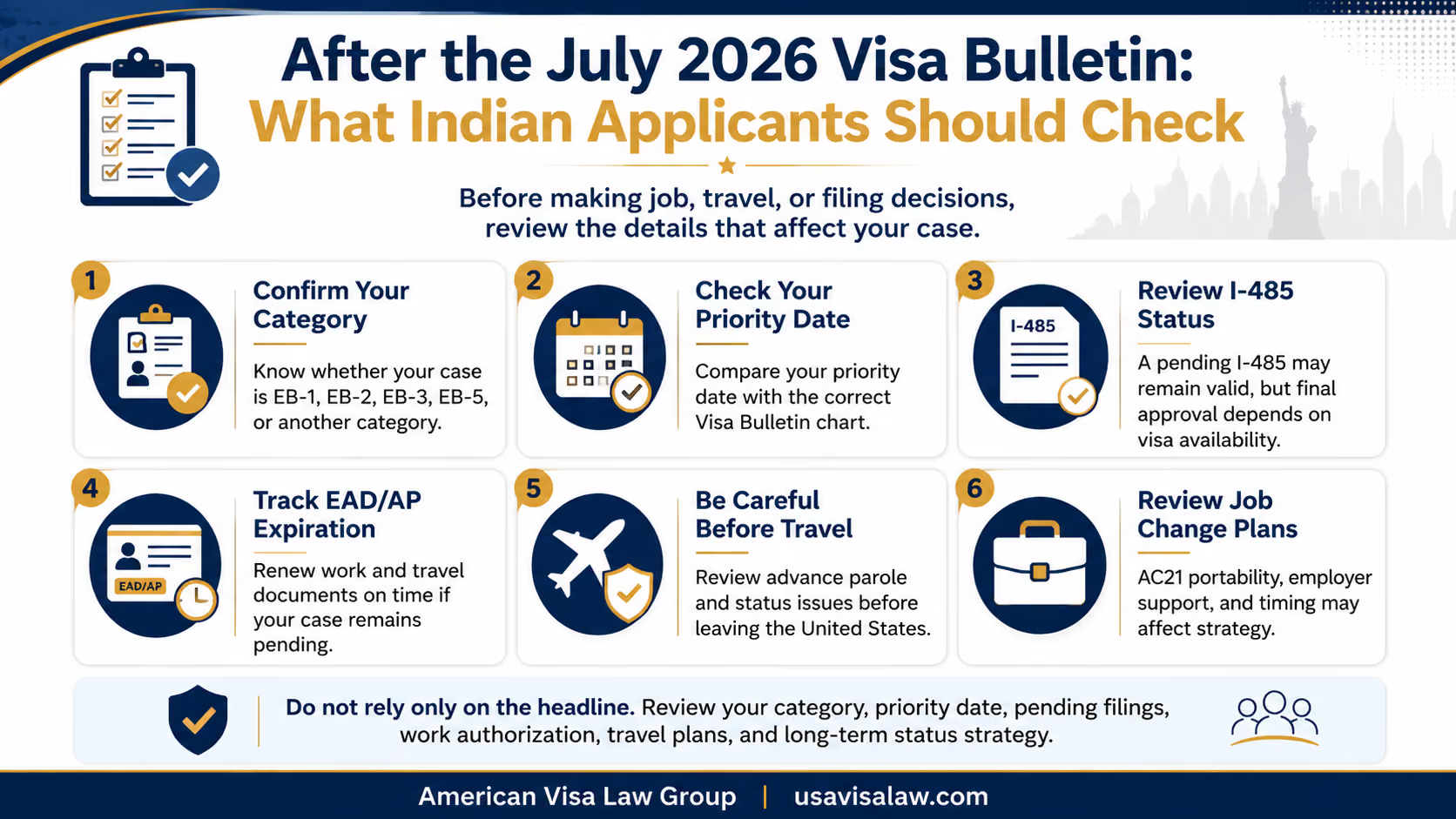
Not every Visa Bulletin change requires legal action. Some applicants simply need to track the monthly bulletin and keep their documents updated. But for many Indian applicants affected by the July 2026 changes, a legal review can be useful before making major decisions.
This is especially true if your priority date was close to becoming current, your I-485 is already pending, or your category became unavailable. In those situations, timing matters. A small misunderstanding about visa availability, work authorization, or travel can create unnecessary risk.
You should consider speaking with an immigration attorney if you are planning to change jobs, rely on AC21 portability, travel internationally, renew your EAD or advance parole, or decide whether to maintain H-1B or another nonimmigrant status. These decisions may seem separate, but they often connect directly to the pending green card case.
Legal review may also be important for families. If a child is close to aging out, or if a spouse’s work authorization depends on the pending adjustment case, the Visa Bulletin delay may affect more than just the principal applicant.
For employers, the July 2026 Visa Bulletin can also affect workforce planning. Indian employees in long green card backlogs may need continued H-1B extensions, I-140 support, or careful planning before job changes and promotions.
The purpose of speaking with an attorney is not to create panic. It is to understand the actual options available based on the applicant’s category, priority date, current status, and pending filings. With a backlog this unstable, strategy matters.
October 2026 will be important because it marks the start of the new government fiscal year. When a new fiscal year begins, new immigrant visa numbers become available. For Indian applicants affected by EB-2 India or EB-5 Unreserved India becoming unavailable, October may bring some relief.
But applicants should be careful with expectations. A new fiscal year does not automatically mean dramatic forward movement. The Visa Bulletin still depends on demand, annual limits, per-country limits, and how many applicants are already waiting with earlier priority dates.
For EB-2 India, visa numbers may become available again in October 2026. That would allow the category to reopen after being unavailable for the remainder of the prior fiscal year. However, the cutoff date may still remain far behind because the Indian EB-2 backlog is large.
EB-1 India may also need to be watched closely. If demand remains high, the category may not return quickly to the dates applicants hoped for. EB-3 India could continue moving slowly, but applicants should avoid assuming that one month of movement means a long-term trend.
The best approach is to treat October as a reset point, not a guaranteed solution. Indian applicants should continue tracking each monthly Visa Bulletin, confirm which USCIS chart applies, and review their strategy before making decisions about work, travel, or future filings.
For many applicants, the October 2026 Visa Bulletin may answer one question: whether visa numbers are available again. But it may not answer the bigger question: how much longer the wait will be.
The July 2026 Visa Bulletin is a serious update for many Indian employment-based green card applicants, especially those waiting in EB-2, EB-1, EB-3, and EB-5 categories. It does not mean every Indian green card case is frozen, but it does show how quickly visa number availability can change when demand is high.
For EB-2 India applicants, the biggest takeaway is that the category is unavailable for final action. This can delay final green card approval even if the applicant has an approved I-140 or a pending I-485.
For EB-1 India applicants, the retrogression shows that even stronger employment-based categories are not protected from backlog pressure. EB-1 may still be a valuable option, but applicants should not assume it will always move quickly.
For EB-3 India applicants, the slight forward movement may help some people with older priority dates. But the category remains heavily backlogged, and any downgrade or category-change strategy should be reviewed carefully.
For EB-5 India investors, the unavailability of EB-5 Unreserved India makes timing and category selection especially important. Investors should understand whether their case falls under the unreserved category or a set-aside category before making assumptions about the timeline.
The most practical step now is to review the case carefully. Applicants should confirm their category, priority date, pending filings, work authorization, travel plans, and long-term status strategy. A Visa Bulletin delay does not necessarily end the case, but it can change the timing and the level of caution needed before making major decisions.
When a category is listed as unavailable, immigrant visa numbers are not available for that category during that month. For applicants, this usually means final green card approval cannot move forward until visa numbers become available again.
This does not mean the case is automatically denied. It means the government cannot issue or approve more green cards in that category during that period because the visa number limit has been reached.
For final action purposes, yes. EB-2 India is listed as unavailable in the July 2026 Visa Bulletin. This means Indian EB-2 applicants generally cannot receive final green card approval in that category during July 2026.
However, this does not erase an approved I-140 or automatically cancel a pending I-485. Many cases may remain pending until visa numbers become available again.
Yes, USCIS may still continue reviewing parts of a pending I-485. The agency may review background checks, medical exam issues, employment evidence, or other eligibility questions.
But final approval is different. Even if the case is otherwise ready, USCIS generally needs an available immigrant visa number before it can approve the green card.
EB-1 India did not become fully unavailable in the July 2026 Visa Bulletin, but it did retrogress. That means the cutoff date moved backward, and fewer EB-1 India applicants are eligible for final green card approval.
This is still significant. EB-1 is often seen as a stronger or faster employment-based category, but Indian applicants in EB-1 are also facing visa number pressure.
Not automatically. EB-3 India moved slightly forward in July 2026, while EB-2 India became unavailable. That may make EB-3 look more attractive in the short term.
But EB-3 India remains heavily backlogged. Whether EB-3 is better depends on the applicant’s priority date, I-140 history, employer support, and whether a downgrade strategy would actually help the case.
A downgrade may help in some cases, but it is not the right strategy for everyone. It can add cost, processing time, and legal complexity.
Before considering a downgrade, applicants should review their priority date, current job offer, employer support, pending I-485 status, and the likely movement of both EB-2 and EB-3. A downgrade should be based on case-specific strategy, not only one month of Visa Bulletin movement.
In many pending adjustment cases, applicants may still be able to renew employment authorization while the I-485 remains pending. This can be especially important when retrogression or unavailability delays final approval.
Applicants should track expiration dates carefully. Missing an EAD renewal deadline can create avoidable work authorization problems, especially if the green card case remains delayed.
Many applicants choose to maintain H-1B status when possible, even after filing an I-485. A pending adjustment application can provide important benefits, but maintaining valid nonimmigrant status may provide an additional layer of protection.
This is especially important if there are concerns about travel, employment changes, case delays, or possible I-485 complications. The right approach depends on the applicant’s full immigration history and current case posture.
Indian applicants should closely watch the monthly Visa Bulletin, especially the October 2026 bulletin when the new fiscal year begins. New visa numbers may become available, but future movement is not guaranteed.
The most important step is to stay organized. Applicants should know their category, priority date, pending filings, work authorization status, travel plans, and whether any family members may be affected by delays.
Hasan Abdullah, Esq. is the Founder and Managing Attorney of American Visa Law Group. He represents individuals, families, professionals, entrepreneurs, and employers in a wide range of U.S. immigration matters, including family-based immigration, employment-based immigration, adjustment of status, consular processing, waivers, RFEs, and complex immigration strategy.
His work includes helping clients understand immigration issues involving USCIS, CBP, consulates, and immigration court. In cases involving airport questioning, secondary inspection, deferred inspection, or reentry problems, his approach focuses on practical legal analysis, careful review of the facts, and realistic guidance about possible next steps.


