Author: Hasan Abdullah, Esq.
The K-3 visa is a nonimmigrant visa for the foreign spouse of a U.S. citizen. It was designed to allow certain married couples to reunite in the United States while the spouse’s immigrant visa case is still being processed. To pursue K-3 classification, the U.S. citizen spouse must first file Form I-130, Petition for Alien Relative, and then file Form I-129F, Petition for Alien Fiancé(e) for the foreign spouse. USCIS continues to recognize Form I-129F as the petition used to request K-3 classification. USCIS
For couples researching what a K-3 visa is, however, the more important question is often whether it provides a meaningful timing advantage today. The K-3 was created as a way for a foreign spouse to enter the United States while waiting for the immigrant process, but the underlying I-130 continues moving at the same time. As a result, the immigrant spouse case may progress before the K-3 process provides a practical benefit.
If you are still at the beginning of the spouse petition process, our guide to Understanding the I-130 Petition for Family Sponsorship explains how the underlying family petition works.
This guide focuses specifically on the K-3 visa in 2026: who qualifies, how the process works, K-3 visa processing time, what happens after filing Form I-129F, and, most importantly, whether the K-3 visa is actually faster than waiting for the I-130 and CR-1 or IR-1 spouse visa process.
That last question is where the K-3 strategy becomes much more practical than simply asking whether the category still exists.
A K-3 visa is a nonimmigrant visa for the foreign-citizen spouse of a U.S. citizen. It was created to reduce the time married couples spend separated while the foreign spouse’s immigrant petition is still pending. A K-3 visa can allow the foreign spouse to enter the United States and continue the permanent residence process from inside the country rather than remain abroad throughout the entire immigrant visa process. The U.S. Department of State’s K-3 visa guidance describes the category as a way for spouses to await completion of the immigrant process in the United States. Travel State
The K-3 is different from the CR-1 or IR-1 spouse visa. A CR-1 or IR-1 is an immigrant visa through which the spouse enters the United States as a permanent resident. The K-3, by contrast, is a nonimmigrant classification tied to an underlying immigrant petition. The spouse does not become a permanent resident simply by entering with a K-3 visa.
The K-3 category is specifically for the spouse of a U.S. citizen. The U.S. citizen spouse must first file Form I-130, Petition for Alien Relative, and then file Form I-129F, Petition for Alien Fiancé(e) for the foreign spouse. If eligible children will accompany or follow the K-3 applicant, they may potentially qualify for K-4 visas. Travel State
A lawful permanent resident sponsoring a spouse does not use the K-3 category. The K-3 is tied specifically to marriage to a U.S. citizen.
No. Although both classifications use Form I-129F, they serve different purposes.
A K-1 visa is for the foreign fiancé(e) of a U.S. citizen who intends to enter the United States and marry that citizen. A K-3 visa is for a couple that is already legally married. The Department of State separately identifies K-1 for fiancé(e)s and K-3 for spouses of U.S. citizens. Travel State
That distinction matters because the K-3 process begins only after the marriage has already occurred and the U.S. citizen has started the spouse's immigrant petition.
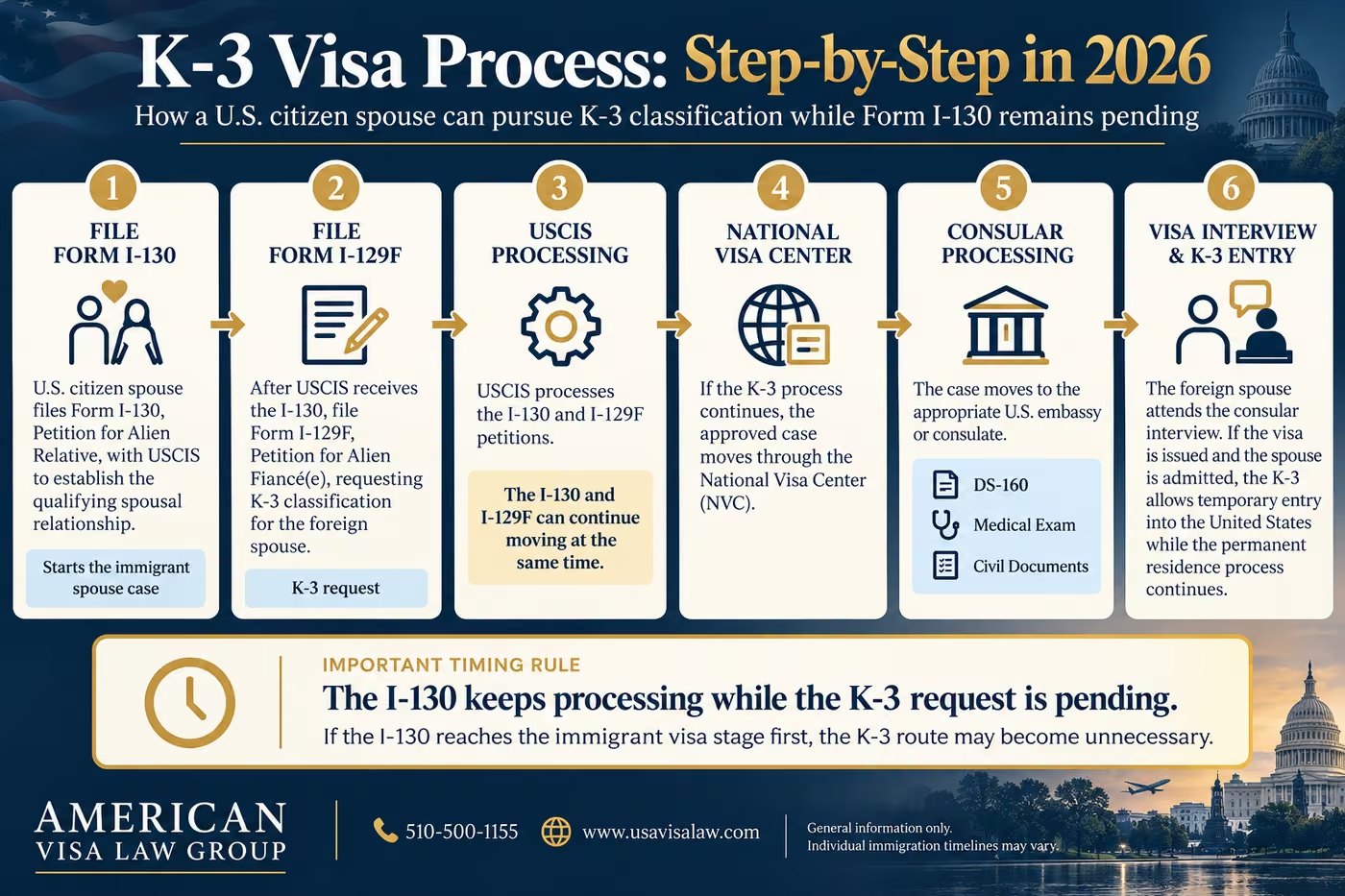
The K-3 visa process begins with the same family petition used for a marriage-based immigrant visa, but it adds a second filing intended to request K-3 classification while the immigrant case is still pending.
The U.S. citizen spouse first files Form I-130, Petition for Alien Relative with USCIS to establish the qualifying spousal relationship.
The I-130 is the underlying immigrant petition. Filing for a K-3 does not replace it. Couples who want a broader explanation of the spouse petition process can review AVLG’s guide to understanding the I-130 petition for family sponsorship.
After USCIS receives the I-130, the U.S. citizen spouse can file Form I-129F, Petition for Alien Fiancé(e) to request K-3 classification for the foreign spouse.
Although Form I-129F is commonly associated with the K-1 fiancé(e) visa, USCIS also uses it for K-3 spouses. The filing should be supported by evidence showing the marriage and the previously filed I-130.
The important point is that the I-130 and I-129F can continue moving at the same time. That timing becomes critical later because the K-3 may become unnecessary if the immigrant petition reaches the next stage first.
If USCIS approves the I-129F, the case can move to the Department of State through the National Visa Center (NVC) and then toward the appropriate U.S. embassy or consulate.
The Department of State’s K-3 visa guidance explains the consular portion of the process and the relationship between the approved I-129F and the underlying I-130.
This is also where timing can change the strategy. If the I-130 is approved and reaches NVC before, or at the same time as, the K-3 petition, the case may proceed through the immigrant spouse visa process instead.
If the K-3 case continues, the foreign spouse generally completes Form DS-160, undergoes the required medical examination, gathers civil and relationship documents, and attends a consular interview.
The consular officer may review documents such as the applicant’s passport, marriage certificate, police records where required, medical results, financial support evidence, and proof that the marriage is genuine.
Approval of Form I-129F does not itself guarantee issuance of the K-3 visa. The applicant must still complete the consular process and remain otherwise eligible for admission to the United States.
The K-3 visa still exists, but it is much less useful in practice than its original purpose might suggest. The main reason is timing: the K-3 process depends on Form I-129F moving ahead while the underlying Form I-130 remains pending.
If USCIS approves the I-130 first, or if the National Visa Center receives the approved I-130 and I-129F at the same time, the need for a K-3 visa ends. According to the Department of State’s K-3 visa guidance, NVC will administratively close the K-3 case and provide instructions for proceeding with the IR-1 or CR-1 immigrant visa instead.
That procedural rule explains why filing for a K-3 does not necessarily mean the foreign spouse will ultimately receive a K-3 visa. The I-130 continues moving while the I-129F is pending, so the immigrant spouse process can effectively catch up with, or overtake, the K-3 route.
USCIS has also cautioned that there is no guarantee the K-3 process will be faster. Its guidance recommends comparing current processing conditions for the I-130 and K-3-related petition before deciding whether the additional filing is worthwhile.
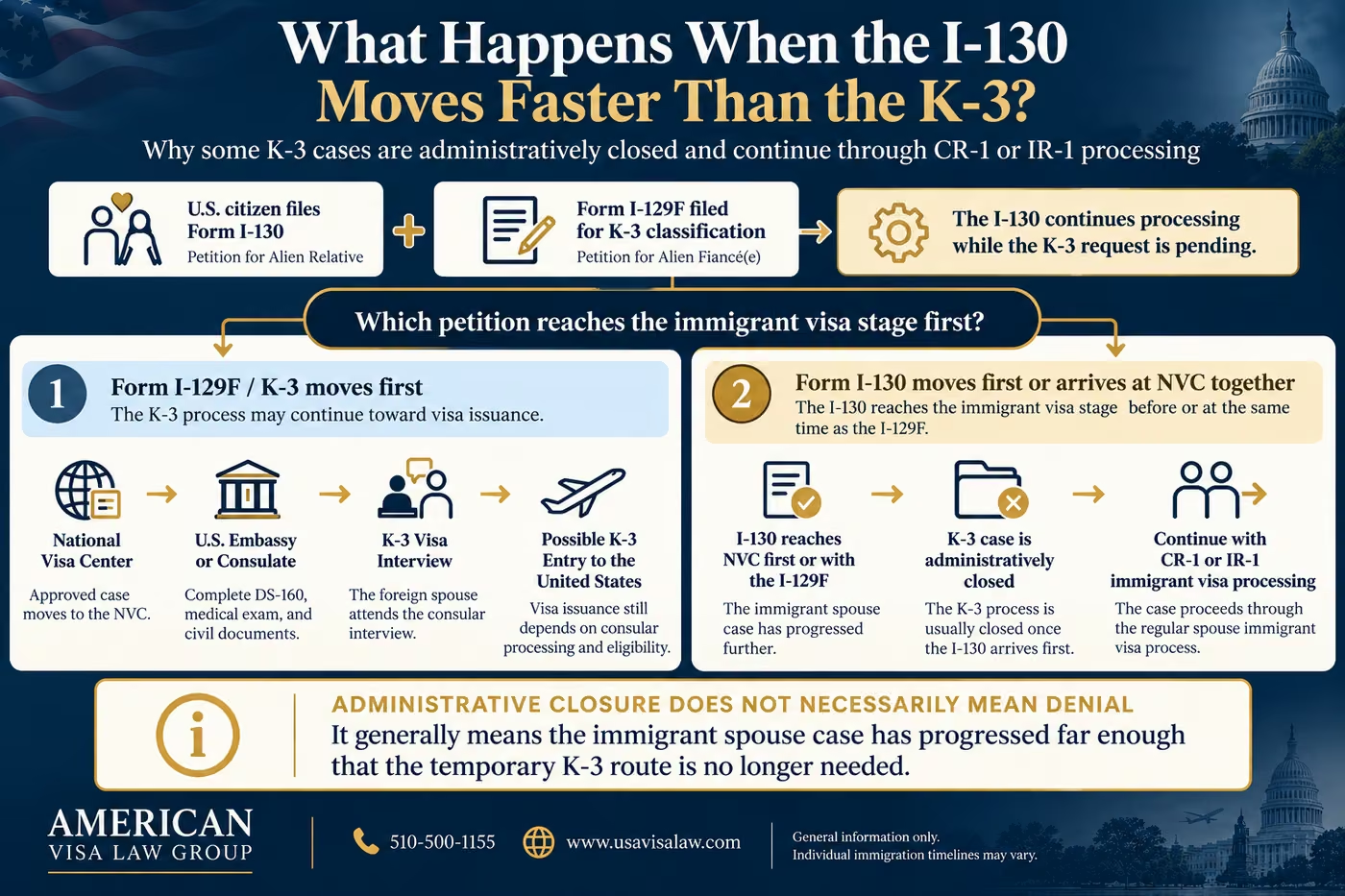
Administrative closure in this context generally does not mean the marriage petition was denied or that USCIS found a problem with the case.
Instead, it means the immigrant visa process has progressed far enough that the temporary K-3 route is no longer needed. The spouse normally continues through the CR-1 or IR-1 immigrant visa process based on the approved I-130.
This is why couples should be cautious about assuming that a K-3 filing automatically creates a faster route to reunification. The more useful question is whether the K-3 process is likely to provide a meaningful timing advantage before the I-130 reaches the immigrant visa stage.
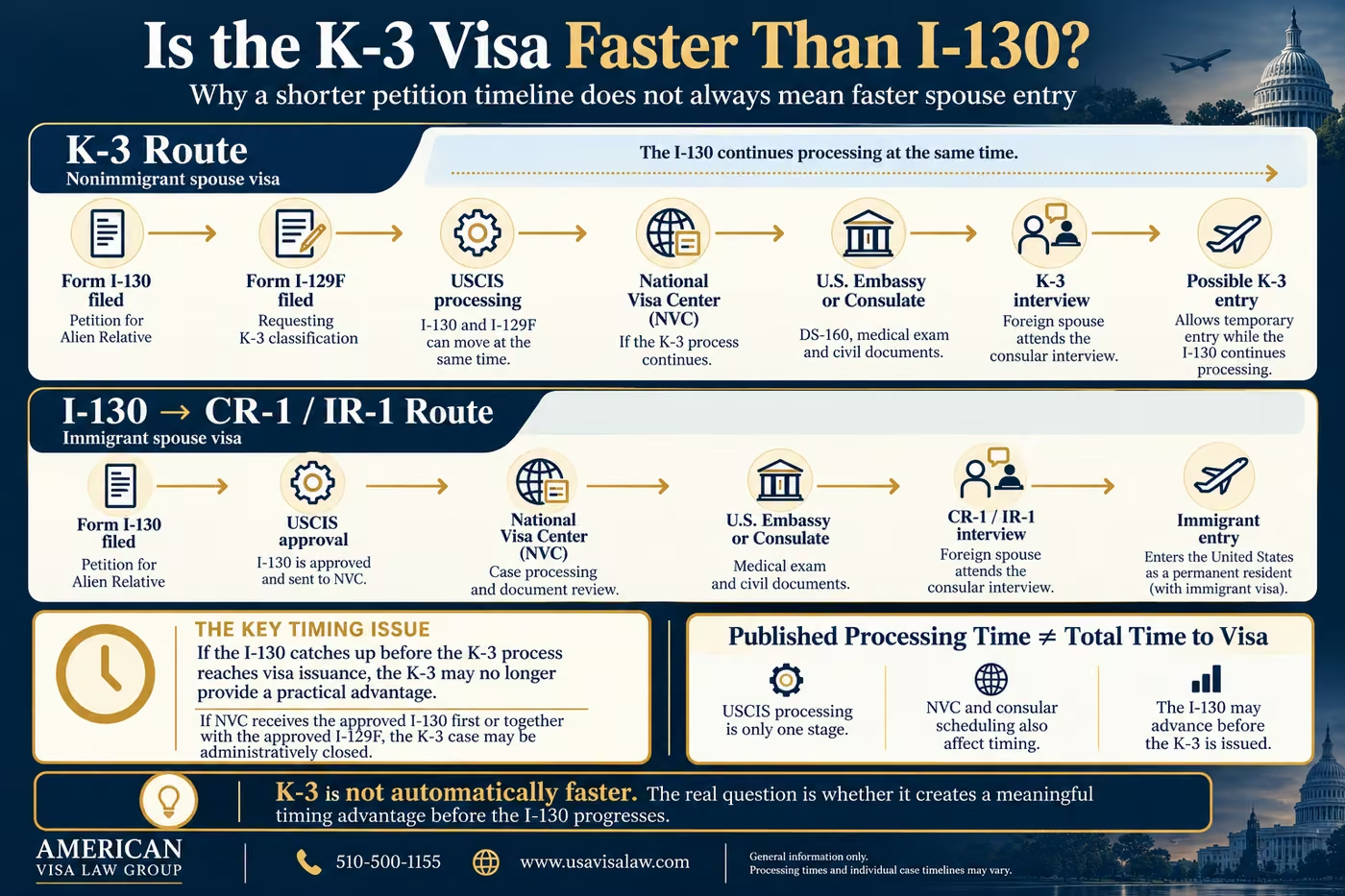
There is no single fixed K-3 visa processing time. The total timeline depends on how quickly USCIS processes Form I-129F, whether the underlying Form I-130 is approved first, how the case moves through the National Visa Center, and interview availability at the appropriate U.S. embassy or consulate.
As of fiscal year 2026 data reported through July 31, USCIS shows a national median processing time of approximately 8 months for Form I-129F across all classifications. By comparison, the national median for immediate-relative Form I-130 petitions was approximately 12.9 months. These figures are historical medians, not promises for an individual case, and the I-129F figure is not limited specifically to K-3 petitions.
Applicants should therefore check the current USCIS Case Processing Times tool rather than relying on older K-3 timelines published online. USCIS processing can vary by form category and workload, and the agency's estimates can change over time.
The USCIS stage is also only part of the overall timeline. If the I-129F advances first, the K-3 case may move through the National Visa Center and then to the appropriate U.S. embassy or consulate for the visa application, medical examination, and interview. Some cases may also require additional administrative processing after the interview. Travel State
A shorter I-129F processing estimate does not necessarily mean the spouse will receive a K-3 visa sooner.
The underlying I-130 continues processing while the K-3 request is pending. If USCIS approves the I-130 before the I-129F, or if NVC receives both approved petitions, the K-3 process generally ends and the spouse is directed toward CR-1 or IR-1 immigrant visa processing instead.
That is why couples asking “How long does a K-3 visa take?” should look beyond one published processing number. The practical question is whether the I-129F can progress far enough to create a genuine timing advantage before the I-130 reaches the immigrant visa stage.
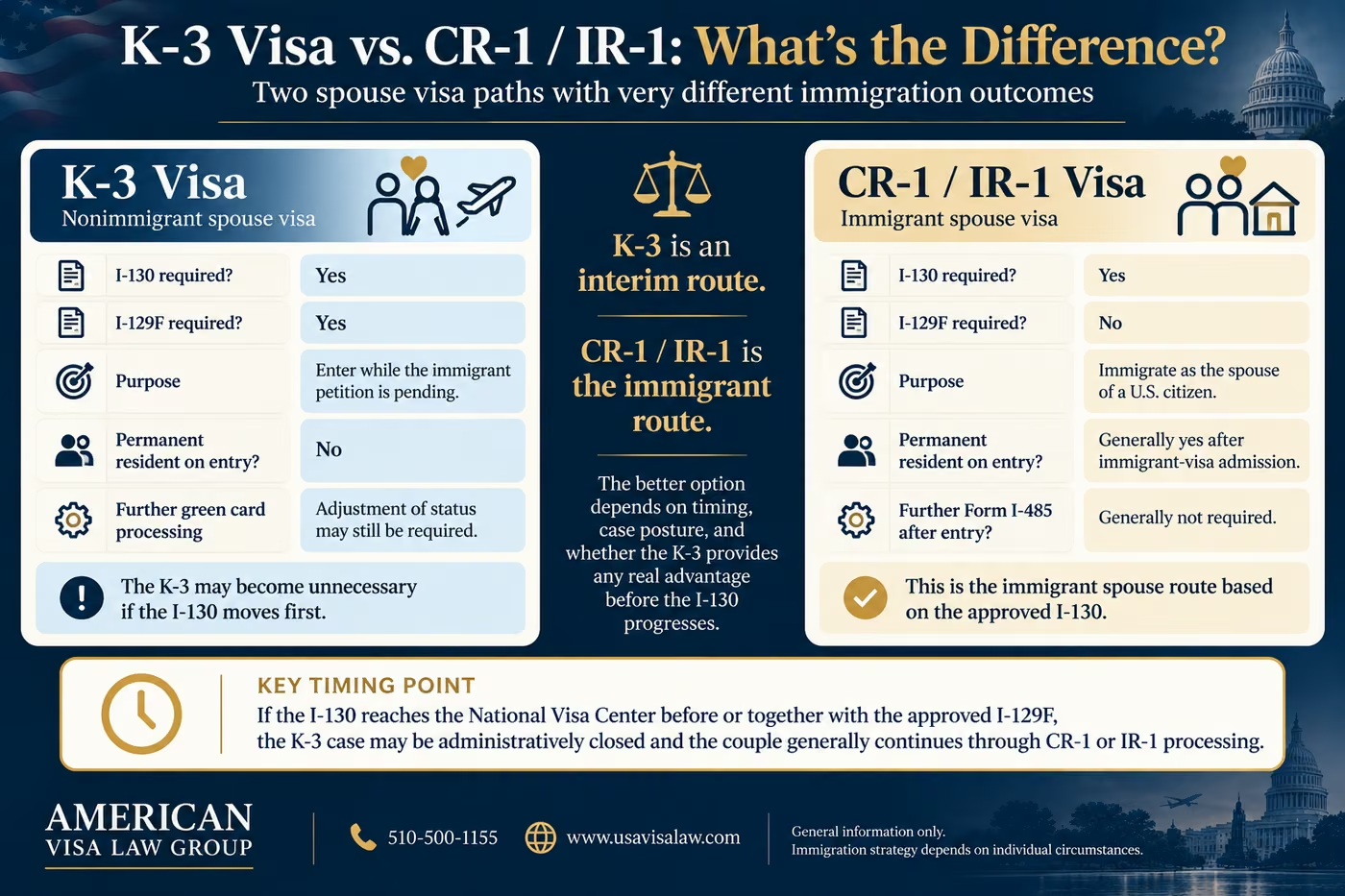
The K-3 visa and CR-1/IR-1 spouse visas are both used by foreign spouses of U.S. citizens, but they lead to the United States in different ways. The K-3 is a nonimmigrant visa intended to let a spouse enter the United States while the immigrant case is still pending. By contrast, CR-1 and IR-1 are immigrant visas, meaning the spouse enters the United States through the permanent residence process.
The practical difference is significant. A spouse who enters with a CR-1 or IR-1 immigrant visa has already completed the immigrant visa process before traveling to the United States. The K-3 route, on the other hand, was designed as an interim solution. The Department of State explains that a K-3 recipient later applies with USCIS to adjust status to lawful permanent residence after the underlying immigrant petition is approved.
There is also an important timing issue. If USCIS approves the I-130 before the I-129F, or if the National Visa Center receives both approved petitions, the K-3 case is administratively closed and the couple proceeds with IR-1 or CR-1 immigrant visa processing instead.
For that reason, couples comparing K-3 vs. CR-1 should look beyond which process appears faster on paper. They should consider whether the K-3 is likely to provide a meaningful advantage before the I-130 reaches the immigrant visa stage.
You can also review the Department of State’s spouse visa overview for the official distinction between K-3 and CR-1/IR-1 processing.
If USCIS approves the Form I-130 before the Form I-129F, the K-3 route generally stops being available. The reason is simple: once the immigrant petition has advanced far enough, the temporary K-3 process is no longer needed.
The Department of State’s K-3 visa guidance explains that when USCIS approves the I-130 before the I-129F, or when the National Visa Center receives both approved petitions, the K-3 case is administratively closed. NVC then provides instructions for continuing through the IR-1 or CR-1 immigrant visa process instead.
This does not mean the marriage case was denied. It usually means the case has moved beyond the stage where a K-3 visa would serve its original purpose.
The couple then continues through the immigrant visa path based on the approved I-130. For a U.S. citizen spouse, that generally means proceeding toward an IR-1 or CR-1 spouse visa, depending on the circumstances of the marriage. The Department of State separately identifies those immigrant visas as the standard immigrant route for spouses of U.S. citizens.
From a strategy standpoint, this is one of the most important facts to understand before filing for a K-3. The I-129F can be filed while the I-130 is pending, but if the I-130 moves first, the couple may never reach K-3 visa issuance.
That is why the real value of a K-3 filing depends heavily on timing, not simply on whether the category exists.
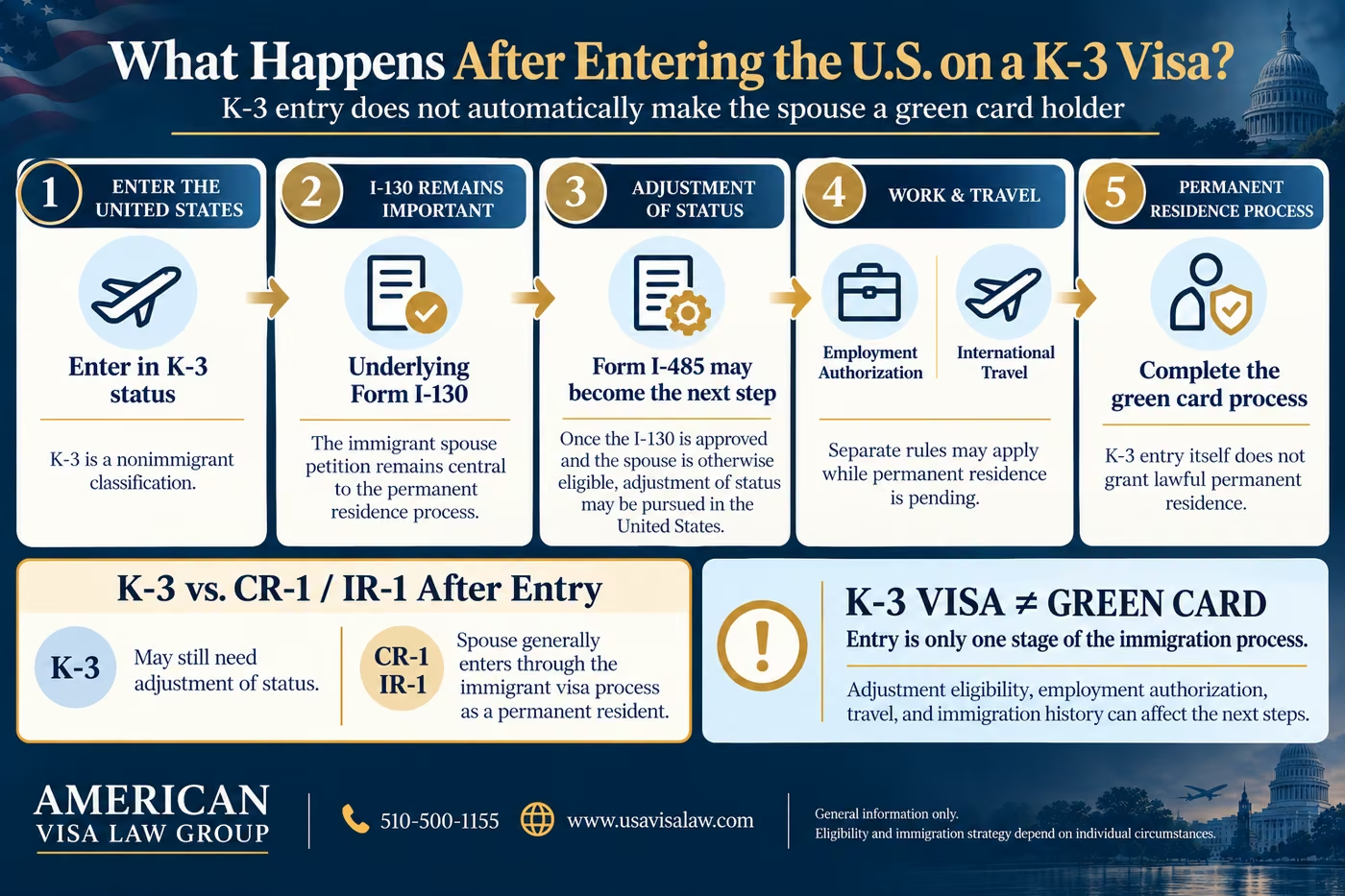
Entering the United States with a K-3 visa does not make the foreign spouse a lawful permanent resident. The K-3 is a temporary nonimmigrant status designed to allow the spouse to remain in the United States while the immigrant process continues. The Department of State explains that K-3 visa holders generally proceed toward permanent residence through USCIS after the underlying immigrant petition is approved.
After admission, the next major step is usually adjustment of status. Once the underlying Form I-130 has been approved and the applicant is otherwise eligible, the K-3 spouse may file Form I-485, Application to Register Permanent Residence or Adjust Status with USCIS.
This is an important distinction between a K-3 and a CR-1 or IR-1 immigrant visa. A spouse who enters with a CR-1 or IR-1 has already completed the immigrant visa process abroad. A K-3 holder, by contrast, may still need to complete the permanent residence process inside the United States.
K-3 holders should also pay attention to employment authorization and international travel. USCIS provides separate guidance for K-3 and K-4 nonimmigrants on adjustment of status, work authorization, and travel outside the United States. The Department of State’s K-3 guidance directs K-3 holders to USCIS for those post-entry rules.
Couples should also remember that a visa does not itself guarantee admission. At the U.S. port of entry, Customs and Border Protection makes the final decision on whether the traveler may enter the United States.
For K-3 spouses, the practical takeaway is that entry is only one stage of the process. The underlying I-130, adjustment of status eligibility, work authorization, travel plans, and any immigration-history issues can all affect what happens next.
Yes. Eligible children of a K-3 applicant may be able to receive K-4 visas and accompany the parent to the United States or follow later.
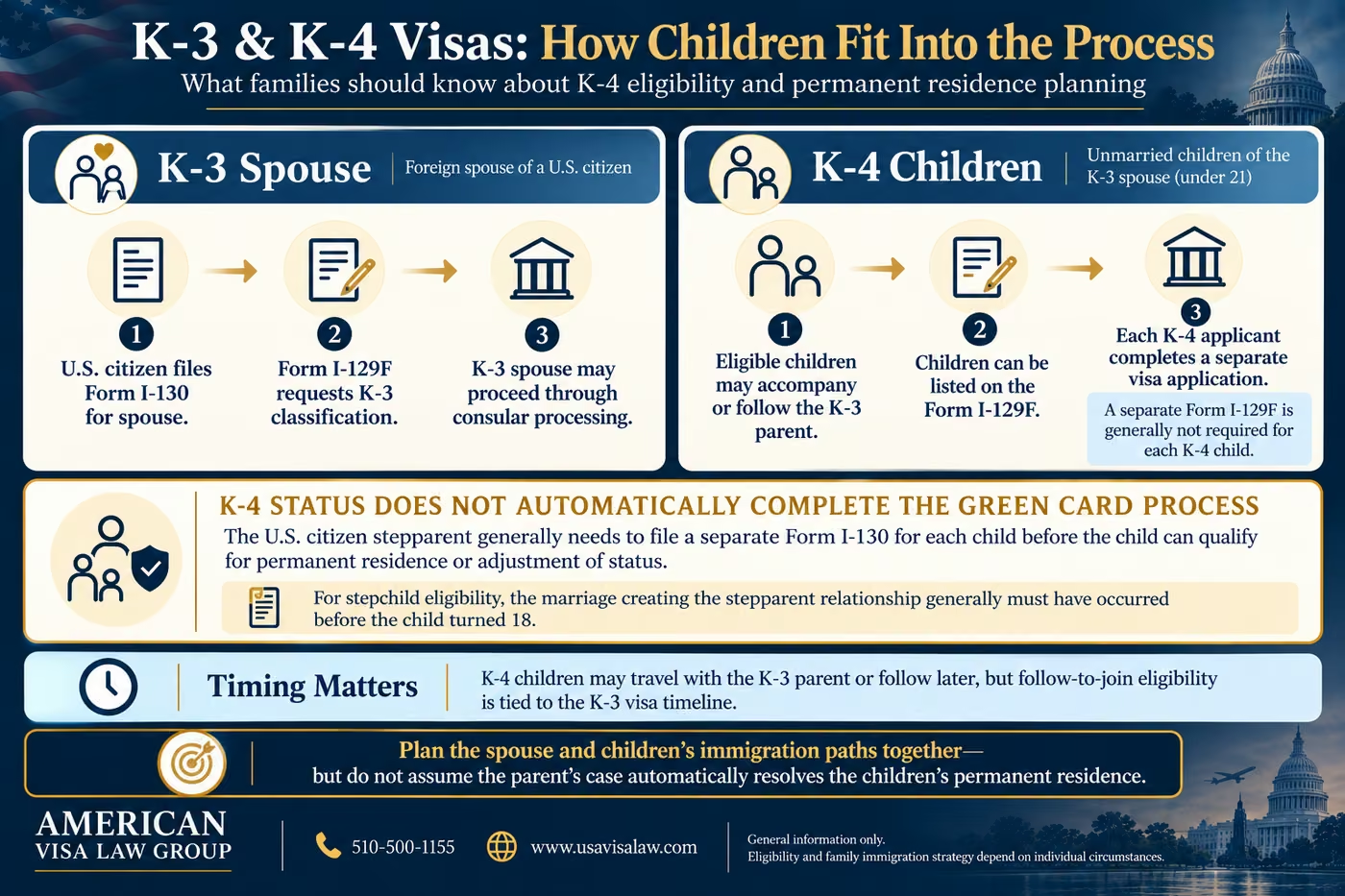
Under the Department of State’s K-3/K-4 guidance, children can be listed on the Form I-129F filed for the K-3 spouse. A separate I-129F is not required for each child, although each K-4 applicant must submit a separate visa application and pay the applicable visa fee. Travel State
The rules become more important when the child later seeks permanent residence. The U.S. citizen stepparent generally must file a separate Form I-130 for each child before that child can qualify for permanent residence or adjustment of status. The Department of State also notes that, for stepchild eligibility, the marriage creating the stepparent relationship must generally have occurred before the child turned 18.
K-4 children may travel with the K-3 parent or follow later, but timing matters. DOS explains that follow-to-join K-4 eligibility is generally tied to the K-3 visa issuance timeline, so families should review the children's immigration path early rather than assuming the parent's case automatically resolves everything for them.
For families with children, the key point is that the K-3 and K-4 processes are connected, but the permanent residence requirements for the spouse and children are not identical.
A K-3 visa filing may still be worth considering in some cases, particularly when a U.S. citizen has already filed Form I-130 for a spouse abroad and the couple is facing a long period of separation. The key question is not whether the K-3 category exists, but whether filing Form I-129F could create a meaningful timing advantage before the immigrant visa process catches up.
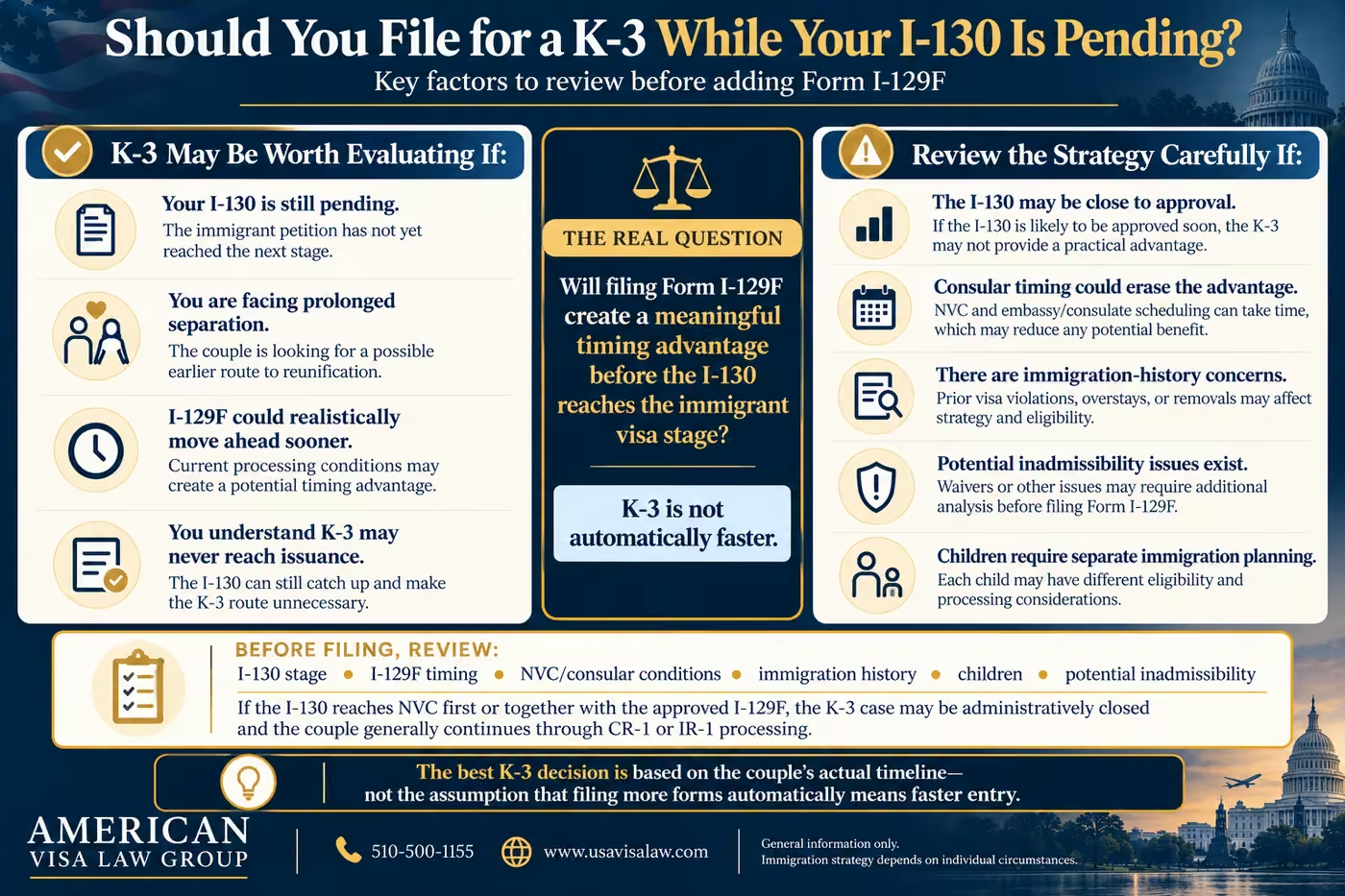
Before filing, couples should compare the current USCIS processing times for Form I-130 and Form I-129F and consider where the I-130 is already positioned in the process. A K-3 filing may be more relevant when the I-130 is still pending and the I-129F could realistically move ahead soon enough to reach consular processing first.
However, the potential benefit should be weighed against an important limitation: if the I-130 is approved and reaches the National Visa Center before, or at the same time as, the approved I-129F, the K-3 case generally becomes unnecessary and the couple proceeds through the CR-1 or IR-1 immigrant visa process instead.
For that reason, filing for a K-3 should not be viewed as an automatic shortcut. Timing, consular conditions, the applicant’s immigration history, and any potential inadmissibility or documentation issues can all affect whether the additional filing makes practical sense.
Couples who are unsure whether a K-3 filing could provide a meaningful benefit can review American Visa Law Group’s family immigration services or request an individualized case review through the AVLG contact page.
The strongest K-3 strategy is usually based on the couple’s actual case timeline, not on the assumption that K-3 is always faster.
The K-3 visa process is often misunderstood because it overlaps with the underlying I-130 spouse petition and the CR-1/IR-1 immigrant visa process. That overlap can lead couples to make assumptions about timing or eligibility that are not always correct.
Some of the most common misunderstandings include:
The central mistake is treating the K-3 as a guaranteed shortcut. In practice, its usefulness depends heavily on timing, the stage of the I-130, and whether the K-3 process can provide a real advantage before the immigrant visa case catches up.
There is no universal answer. Filing Form I-129F for K-3 classification can still be considered while a spouse’s Form I-130 is pending, but whether it makes sense depends heavily on timing and the couple’s specific circumstances.
The first question is where the I-130 already stands. If the petition is still early in processing, filing Form I-129F may give the couple another possible path forward. But if the I-130 is already close to approval, the practical value of a K-3 filing may be limited because the immigrant visa case could reach the National Visa Center before the K-3 process progresses far enough to help.
Couples should also compare current USCIS processing times for Form I-130 and Form I-129F rather than relying on older assumptions that the K-3 route is automatically faster.
Other factors can matter as well, including:
The Department of State’s K-3 guidance also makes clear that if the approved I-130 reaches the National Visa Center before, or together with, the approved I-129F, the K-3 case is generally administratively closed and the couple proceeds with CR-1 or IR-1 immigrant visa processing instead.
For that reason, the better question is not simply “Should I file for a K-3?” It is whether filing Form I-129F is likely to provide a meaningful advantage in the couple’s actual timeline.
Couples who already have an I-130 pending and want to evaluate whether adding a K-3 filing makes sense can review American Visa Law Group’s family immigration services or contact AVLG for a case-specific review.
A K-3 visa is a nonimmigrant visa for the foreign spouse of a U.S. citizen. It was created to allow certain spouses to enter the United States while the underlying immigrant visa process is still pending.
The U.S. citizen spouse must first file Form I-130 and then may file Form I-129F to request K-3 classification. The Department of State’s K-3 visa guidance explains the official process.
There is no fixed K-3 visa processing time. Timing depends on USCIS processing of Form I-129F, the progress of the underlying I-130, National Visa Center handling, and interview availability at the U.S. embassy or consulate.
Applicants should check current USCIS processing times rather than relying on older estimates published online.
Not necessarily. Filing Form I-129F creates an additional route while the I-130 remains pending, but it does not guarantee faster entry into the United States.
If the I-130 is approved first—or reaches the National Visa Center together with the approved I-129F—the K-3 case may be administratively closed and the spouse will generally continue through the CR-1 or IR-1 immigrant visa process instead.
Yes. The K-3 process is based on an already-filed I-130 petition. After USCIS receives Form I-130, the U.S. citizen spouse may file Form I-129F requesting K-3 classification for the foreign spouse.
For more background on the underlying petition, see our guide to understanding Form I-130 for family sponsorship.
If the I-130 advances before the K-3 process, the couple may no longer need the K-3 route. If the National Visa Center receives the approved I-130 before or together with the approved I-129F, the K-3 case is generally administratively closed and the immigrant spouse case continues instead.
This does not normally mean that the marriage petition has been denied. It generally means the case has progressed to the immigrant visa stage.
No. The K-3 category is specifically for the foreign spouse of a U.S. citizen.
A lawful permanent resident sponsoring a spouse follows a different family-based immigration process and does not use K-3 classification.
Potentially, yes. A spouse admitted in K-3 status may later pursue adjustment of status once the underlying immigrant petition has been approved and the applicant is otherwise eligible.
However, K-3 admission itself does not grant permanent residence. Couples should evaluate the adjustment process, work authorization, travel, and any other immigration issues separately.
If your I-130 is already pending and you are considering whether to add a K-3 filing, the right strategy depends on more than the existence of the K-3 category itself. Timing, current USCIS processing, consular conditions, prior immigration history, and the stage of the spouse petition can all affect whether filing Form I-129F is likely to provide any real practical benefit.
For some couples, the K-3 may be worth evaluating. For others, continuing directly through the CR-1 or IR-1 immigrant visa process may be more efficient.
American Visa Law Group can review the current posture of the case and help determine whether a K-3 filing fits the couple’s overall immigration strategy. You can learn more about our family immigration services or contact American Visa Law Group to discuss the next step.
The goal is not simply to file more forms. It is to choose the route that makes the most sense for the couple’s actual timeline and immigration circumstances.
For readers who want to review the official rules and forms behind the K-3 visa process, these government resources are the most useful starting points:

Hasan Abdullah, Esq. is the Founder and Managing Attorney of American Visa Law Group. His practice focuses on U.S. immigration law, including family-based immigration, employment-based immigration, adjustment of status, consular processing, waivers, PERM labor certification, NIW, EB-1, H-1B, O-1, and complex immigration strategy.
Through American Visa Law Group, Mr. Abdullah helps individuals, families, professionals, investors, and employers understand their immigration options and plan around changing government policies, USCIS procedures, and Visa Bulletin movement. His work emphasizes practical legal analysis, realistic expectations, and strategy tailored to each applicant’s immigration history and long-term goals.


