Author: Hasan Abdullah, Esq.
Updated: The 11th of June 2026
Couples applying for a marriage-based green card often face the same question: should they hire an immigration attorney, use an online service like Boundless Immigration, or prepare the application themselves?
The right answer depends on the case.
Some marriage green card cases are clean and straightforward. The couple may have strong evidence of a real marriage, clear financial sponsorship, lawful entry, and no prior immigration or criminal issues. In those situations, DIY filing or an online platform may feel more manageable.
Other cases need more careful legal review. Prior visa overstays, unauthorized work, weak relationship evidence, income problems, prior divorces, criminal history, previous denials, or consular processing complications can make the case more sensitive.
A marriage green card application is not only about filling out forms. It also requires understanding eligibility, evidence, timing, government filing rules, and possible risks before submitting anything to USCIS or the Department of State.
This guide compares the three main options: hiring a marriage green card attorney, using Boundless Immigration or a similar online platform, and filing a DIY marriage green card case. The goal is to help couples understand which path may fit their situation before they make a decision.
Most couples preparing a marriage-based green card case usually choose one of three paths: hiring an immigration attorney, using an online immigration platform like Boundless Immigration, or filing the case themselves through DIY preparation.
Each option can make sense in the right situation. The best choice depends on the couple’s budget, confidence with immigration paperwork, case complexity, and risk level.
A marriage green card attorney may be the better option when the case involves legal concerns, such as a prior visa overstay, unauthorized work, criminal history, previous denial, weak financial sponsorship, complicated entry history, or concerns about proving a real marriage.
An online immigration platform may help couples who want more structure than DIY filing. These services may provide guided forms, document checklists, and online support. This can be useful for couples with a fairly straightforward case who still want help organizing the application.
DIY filing may work for couples who have a clean, well-documented case and feel comfortable following USCIS instructions carefully. However, the couple is responsible for understanding the forms, filing fees, evidence, signatures, deadlines, and possible risks.
The key difference is form preparation vs. legal strategy.
Form preparation focuses on completing the application correctly. Legal strategy focuses on understanding what the facts mean, whether the couple is eligible, what evidence is strong or weak, and what could create problems with USCIS or the Department of State.
For simple cases, the process may feel mostly administrative. For more complicated cases, a marriage green card filing can involve serious legal judgment. That is why couples should choose the option that matches the risk level of their case, not only the cheapest or fastest option.
A marriage-based green card allows the foreign national spouse of a U.S. citizen or lawful permanent resident to apply for permanent residence in the United States.
In simple terms, the U.S. spouse starts the process by showing that the marriage is real and legally valid. The foreign national spouse must also show that they are eligible for a green card under U.S. immigration rules.
For many couples, the process involves Form I-130, which is the family petition, and other forms depending on whether the spouse is applying from inside or outside the United States. If the spouse is already in the United States and qualifies, they may apply through adjustment of status using Form I-485. If the spouse is outside the United States, the case usually goes through consular processing with the National Visa Center and a U.S. consulate.
A marriage green card case is also about evidence. USCIS does not only want to see a marriage certificate. The couple must usually show proof of a bona fide marriage, meaning the marriage was entered into genuinely and not only for immigration benefits.
This evidence may include shared finances, joint residence, photos, travel records, insurance, messages, affidavits, and other documents showing a real shared life.
The process can also involve financial sponsorship. The U.S. citizen or green card holder spouse usually must submit Form I-864, Affidavit of Support, to show they meet the income requirement or have a qualifying joint sponsor.
If the marriage is less than two years old when the green card is approved, the foreign national spouse may receive a conditional green card valid for two years. Later, the couple may need to file Form I-751 to remove conditions and receive a longer-term green card.
For clean cases, the process may be manageable. But when there are prior immigration issues, weak evidence, income problems, criminal history, or consular complications, the case may require more careful legal review before filing.
Hiring a marriage green card attorney means the couple is getting legal guidance, not just help filling out forms. An attorney can review the facts, identify possible risks, prepare the application strategy, organize evidence, and explain what may happen if USCIS or the Department of State raises questions.
This can be especially helpful when the case is not completely straightforward.
A marriage green card attorney may be worth considering if there is a prior visa overstay, unauthorized work, previous immigration denial, criminal history, prior marriage, divorce issue, weak financial sponsorship, need for a joint sponsor, or concern about proving a real marriage.
Attorney-led representation can also help when the applicant is outside the United States and the case must go through consular processing, or when the couple is worried about the marriage green card interview.
The value of an attorney is not only completing forms. The bigger value is legal strategy. An attorney can help the couple understand whether they are eligible, what evidence is strong or weak, what issues USCIS may question, and how to prepare before filing.
This matters because some prbona fide marriag poblems are easier to address before the application is submitted. Once USCIS issues an RFE, NOID, or denial, the case can become more stressful and more expensive to fix.
At the same time, hiring an attorney does not guarantee approval. No attorney can promise how USCIS, the Department of State, or a U.S. consulate will decide a case. The result depends on the facts, evidence, eligibility, and government review.
For many couples, hiring an attorney makes the most sense when the case has legal risk, unclear facts, or important consequences if something goes wrong.
Some couples choose Boundless Immigration or another online immigration platform because they want more structure than DIY filing, but may not want full attorney representation.
An online platform may help organize the marriage green card process by providing guided forms, document checklists, online workflows, and support resources. For couples who feel overwhelmed by USCIS instructions, this type of service can make the process feel more manageable.
This option may work well when the case is fairly straightforward. For example, the couple may have strong marriage evidence, clear financial sponsorship, lawful entry, no criminal history, no prior immigration violations, and no previous denial.
However, couples should understand what is actually included before choosing any online service.
An online platform is not always the same as full attorney representation. Some services may include legal review or attorney support depending on the package, while others may focus more on form preparation and document organization.
That difference matters. A platform can help with forms and checklists, but a complicated marriage green card case may require legal judgment. Prior overstays, unauthorized work, weak evidence, income problems, prior denials, criminal history, or consular processing issues may need case-specific legal advice before filing.
Before using Boundless Immigration or any online immigration service, couples should ask:
For clean cases, an online platform may be a practical middle option between hiring an attorney and filing fully DIY. But if the case has legal risk, couples should be careful not to treat form guidance as a substitute for immigration legal strategy.
This follows the outline’s balanced angle: Boundless/online platforms can be useful for structured preparation, but couples should understand the service scope and limits.
Some couples choose DIY marriage green card filing because they want to reduce costs and handle the application themselves. This can be reasonable when the case is clean, well-documented, and the couple feels comfortable following USCIS instructions carefully.
DIY filing may work better when the applicant entered the United States lawfully, has no criminal history, no prior immigration violations, no previous denials, and the couple has strong evidence of a real marriage. It also helps when the financial sponsorship is clear and the U.S. spouse meets the income requirements or has a strong joint sponsor.
The benefit of DIY filing is control. The couple can prepare the forms directly, organize their own evidence, and avoid paying attorney or platform fees. But the responsibility is also fully on the couple.
Common DIY mistakes include using outdated forms, missing signatures, paying the wrong filing fee, sending the package to the wrong address, submitting weak marriage evidence, or misunderstanding the affidavit of support requirements.
The bigger risk is not always a simple typo. DIY becomes risky when the couple does not recognize a legal issue before filing.
For example, prior overstays, unauthorized work, entry without inspection, criminal history, prior fraud or misrepresentation concerns, previous marriage petitions, or consular processing complications can change the legal analysis. These are not just paperwork issues.
Couples should pause and consider legal advice if there is anything in the case that feels unclear, unusual, or sensitive. A limited attorney consultation before filing may help identify risks before the application is submitted.
DIY may be the lowest-cost option, but it is not automatically the best option for every couple. The safer question is: is the case simple enough to handle without case-specific legal guidance?
When comparing a marriage green card attorney, Boundless Immigration, and DIY filing, the best option usually depends on the risk level of the case.
A marriage green card attorney usually offers the highest level of legal strategy. This can include eligibility review, evidence planning, affidavit of support analysis, interview preparation, and help responding to an RFE or other USCIS concern. This option is often the most expensive, but it may be the better fit when the case has legal complications.
Boundless Immigration or another online platform may offer a middle option. It can help couples organize forms, follow checklists, and move through a guided process. This may be useful for couples who want more structure than DIY filing but may not need full attorney representation.
DIY filing is usually the lowest-cost option, but it also places the most responsibility on the couple. The couple must understand the forms, evidence, filing fees, USCIS instructions, deadlines, and possible risks without relying on professional case-specific guidance.
The main difference is support level.
An attorney may help with legal analysis and strategy. An online platform may help with organization and form preparation. DIY filing depends almost entirely on the couple’s own understanding and attention to detail.
For a clean and simple case, DIY or an online platform may be enough. For a moderate-risk case, a platform plus attorney review or a limited consultation may help. For a high-risk case, attorney-led representation may be the safer option.
The right choice is not always the cheapest option or the most expensive option. The better question is: which option matches the complexity of your marriage green card case?
The comparison below summarizes how attorney representation, Boundless or another online platform, and DIY filing differ by support level, cost, and case risk.
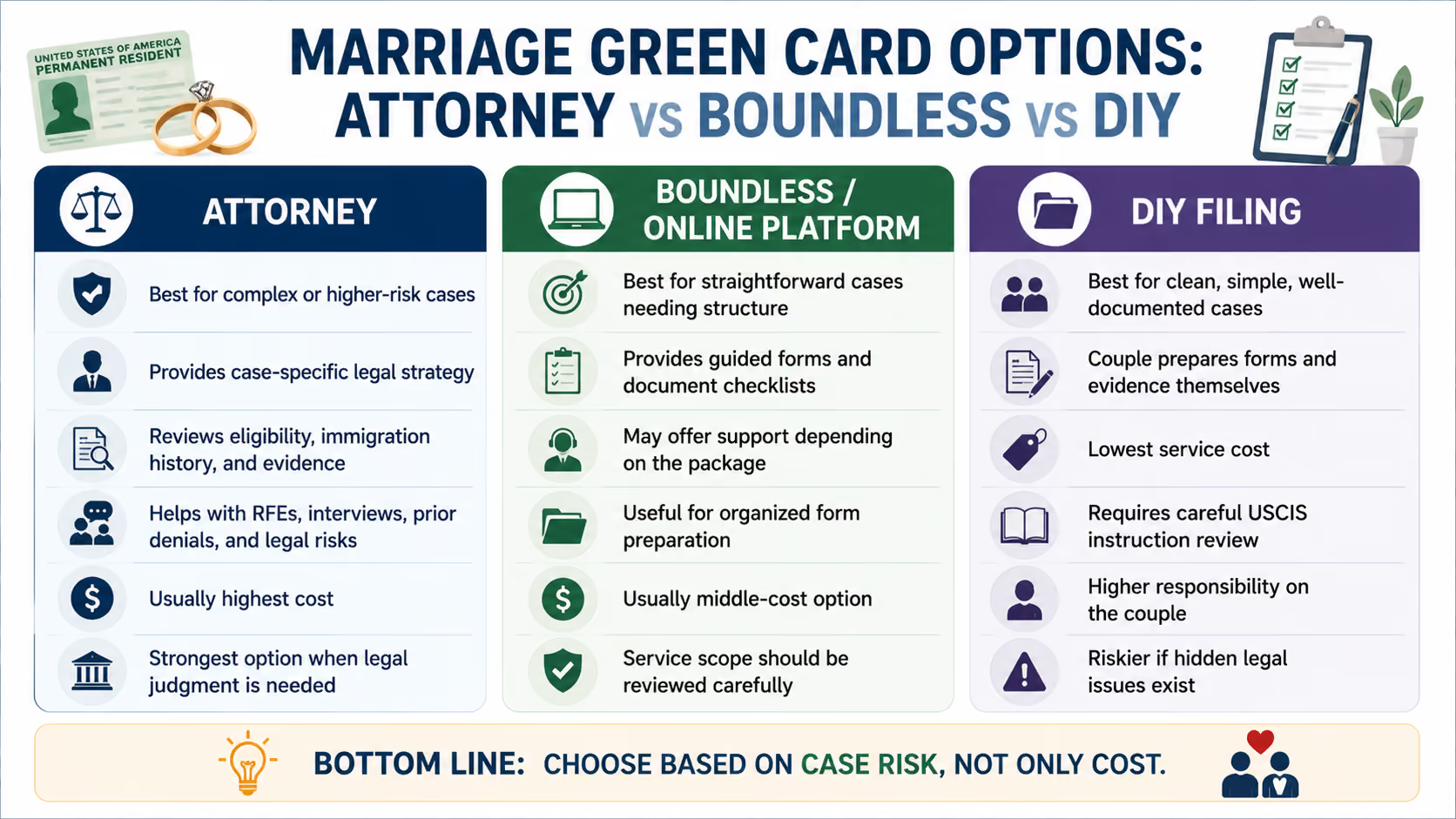
A marriage green card attorney may be the better choice when the case involves legal risk, unclear facts, or anything that could make USCIS look more closely at the application.
Some couples have a clean case and mainly need help organizing forms and evidence. Others have issues that require more than form preparation. In those situations, attorney-led guidance can help identify problems before the case is filed.
An attorney may be especially important if there is a prior visa overstay, unauthorized work, entry without inspection, criminal history, previous immigration denial, prior removal issue, or possible misrepresentation concern.
Legal help may also be useful when the couple has weak or limited evidence of a real marriage. For example, this can happen when the marriage is recent, the couple lives apart, there are limited shared finances, there is a large age gap, or the relationship history may need more explanation.
Financial sponsorship can also create problems. If the U.S. citizen or lawful permanent resident spouse does not clearly meet the income requirement, the couple may need a joint sponsor or stronger financial evidence. Mistakes with Form I-864, Affidavit of Support, can lead to delays or requests for evidence.
A marriage green card attorney may also help with consular processing complications, especially when the applicant is outside the United States, has prior unlawful presence, or may face admissibility concerns at a U.S. consulate.
The point is not that every couple needs an attorney. The point is that some cases are not just paperwork. When eligibility, evidence, immigration history, income, or interview risk is unclear, legal strategy can matter before the application is submitted.
Boundless Immigration or a similar online platform may be a practical option for couples who want more guidance than DIY filing but may not need full attorney representation.
This option can make sense when the marriage green card case appears straightforward. For example, the applicant entered the United States lawfully, there are no criminal or serious immigration issues, the couple has strong evidence of a real marriage, and the financial sponsorship is clear.
Many couples choose an online platform because they want structure. A guided service may help organize forms, document checklists, filing steps, and supporting evidence. For couples who feel overwhelmed by USCIS instructions, that structure can be helpful.
But couples should understand the scope of the service before relying on it.
Software-guided filing is not always the same as case-specific legal strategy. Some online services may include attorney review or legal support depending on the package, while others may focus more on form preparation and document organization.
Before choosing Boundless Immigration or another platform, couples should ask what happens if the case becomes more complicated. Will there be attorney review? Is RFE support included? Is interview preparation included? Who answers legal questions? What happens if USCIS raises a concern?
Boundless or a similar platform may fit couples with clean facts who want a more organized process. But if the case involves prior immigration problems, weak evidence, income issues, criminal history, prior denials, or consular complications, an attorney consultation may be safer before filing.
DIY marriage green card filing may work when the case is simple, clean, and well-documented. Some couples feel comfortable reading USCIS instructions, preparing forms, collecting evidence, and tracking deadlines on their own.
DIY may be reasonable when the applicant entered the United States lawfully, has no criminal history, no prior immigration violations, no previous denials, and no complicated entry or visa history. It also helps when the couple has strong evidence of a real marriage and the financial sponsorship is clear.
For example, a straightforward case may involve a U.S. citizen spouse, a lawful entry, strong joint documents, clear income, and no major legal concerns. In that type of situation, the process may feel more administrative than strategic.
Still, DIY filing requires careful attention. Couples must use current USCIS forms, pay the correct filing fees, sign every required form, include proper supporting evidence, and send the application to the correct filing address.
DIY means the couple is responsible for the full filing. That includes understanding the forms, checking consistency across answers, preparing evidence, and responding if USCIS asks for more information.
DIY may still benefit from a limited attorney consultation before filing. A couple may prepare the application themselves but speak with an immigration attorney to check whether there are any hidden risks before submitting the case.
The main question is not only whether the couple can complete the forms. The better question is: is the case simple enough to file without case-specific legal advice?
No matter which option a couple chooses attorney, Boundless Immigration, or DIY the marriage-based green card process still requires the right forms, evidence, and supporting documents.
For many marriage green card cases, common forms may include Form I-130, Form I-130A, Form I-485, Form I-864, Form I-765, Form I-131, and Form I-693, depending on whether the applicant is applying from inside or outside the United States.
The couple must also provide evidence that the marriage is real. USCIS usually wants to see more than a marriage certificate. Stronger evidence may include joint bank accounts, joint lease or mortgage records, insurance, photos, travel records, shared bills, messages, affidavits, and proof that family or community members know about the relationship.
Financial sponsorship is also important. The U.S. citizen or lawful permanent resident spouse usually needs to submit Form I-864, Affidavit of Support, with tax returns, W-2s, pay stubs, employment letters, or joint sponsor documents if needed.
The foreign national spouse may also need to provide immigration history documents, such as a passport, visa, I-94 record, prior approval notices, prior denial notices, or records from any previous immigration filings.
Every option must handle the same basic requirement: the forms, facts, and evidence must support eligibility.
This is why marriage green card filing is not only about completing paperwork. USCIS must be satisfied that the marriage is genuine, the sponsor qualifies financially, and the applicant is eligible for permanent residence.
Cost is one of the biggest reasons couples compare a marriage green card attorney, Boundless Immigration, and DIY filing. That is understandable. A marriage-based green card case can involve government filing fees, service fees, document costs, translations, medical exam fees, passport photos, and mailing costs.
Government filing fees apply no matter which option you choose. Hiring an attorney, using an online platform, or filing DIY does not remove the USCIS or government fees required for the case.
Attorney representation is usually the highest-cost option because it may include legal strategy, form preparation, evidence review, communication, risk analysis, RFE planning, and case-specific guidance. For couples with legal complications, that added cost may be worth considering.
Boundless Immigration or another online platform may be a middle-cost option. It may help with guided preparation, checklists, and document organization. Couples should carefully review what is included, especially whether attorney review, RFE support, or interview preparation is part of the service.
DIY filing usually has the lowest service cost because the couple prepares the application themselves. However, DIY still requires careful work, current forms, correct fees, strong evidence, and attention to detail.
The cheapest option is not always wrong, and the most expensive option is not always necessary. The better question is whether the option matches the risk level of the case.
For a clean case, DIY or an online platform may be enough. For a case with immigration history issues, weak evidence, income concerns, prior denials, or consular complications, paying for attorney-led review may help reduce avoidable risk before filing.
One of the biggest differences between hiring an attorney, using Boundless Immigration, or filing DIY is the difference between form preparation and legal strategy.
Form preparation answers basic questions like: what name goes here, what address should be listed, what dates should be included, and what documents should be uploaded or mailed.
Legal strategy asks a different question: what do these facts mean for the case?
For example, a form may ask about prior immigration history, work history, criminal history, prior marriages, or previous visa issues. A couple may answer truthfully but still not understand whether that answer creates a risk, requires more evidence, or should be reviewed before filing.
This is where attorney review can matter. An immigration attorney can look at the full picture: eligibility, immigration history, financial sponsorship, bona fide marriage evidence, prior filings, possible inadmissibility issues, and interview concerns.
An online platform or DIY filing may help organize the application, but legal issues are not always obvious from the forms. A prior overstay, unauthorized work, weak joint sponsor evidence, old arrest, prior denial, or consular processing concern may need more than a checklist.
Form preparation helps complete the application. Legal strategy helps decide whether the application is ready to file.
For simple cases, form preparation may be enough. But when the case has legal risk, attorney review can help identify problems before USCIS does.
Some marriage-based green card cases are straightforward. Others have red flags that may cause USCIS or a consular officer to review the case more carefully.
A red flag does not automatically mean the case will be denied. It means the couple should prepare the case carefully and understand the issue before filing.
Common immigration history red flags may include a prior visa overstay, unauthorized work, entry without inspection, a previous visa denial, a prior green card denial, removal history, or possible misrepresentation concerns.
Relationship evidence can also raise questions. USCIS may look more closely at cases involving limited shared finances, a very recent marriage, long-distance living, little proof of shared residence, a large age gap, prior marriage petitions, or inconsistent answers about the relationship.
Financial sponsorship is another common problem area. If the U.S. citizen or lawful permanent resident spouse does not clearly meet the income requirement, the couple may need a joint sponsor or stronger financial evidence. Missing tax returns, unstable income, self-employment income, or household size confusion can also create issues.
The marriage green card interview can also become more stressful when the evidence is weak or the couple’s answers are inconsistent. Officers may ask about the relationship timeline, daily life, shared responsibilities, family knowledge, and future plans.
Red flags do not always mean the case is bad. They mean the case needs stronger preparation.
For couples with one or more red flags, attorney review may help identify what evidence is needed, what risks should be addressed, and whether the case should be filed as-is or prepared more carefully first.
This chart shows why completing marriage green card forms is not the same as reviewing eligibility, evidence, financial sponsorship, and possible immigration risks.
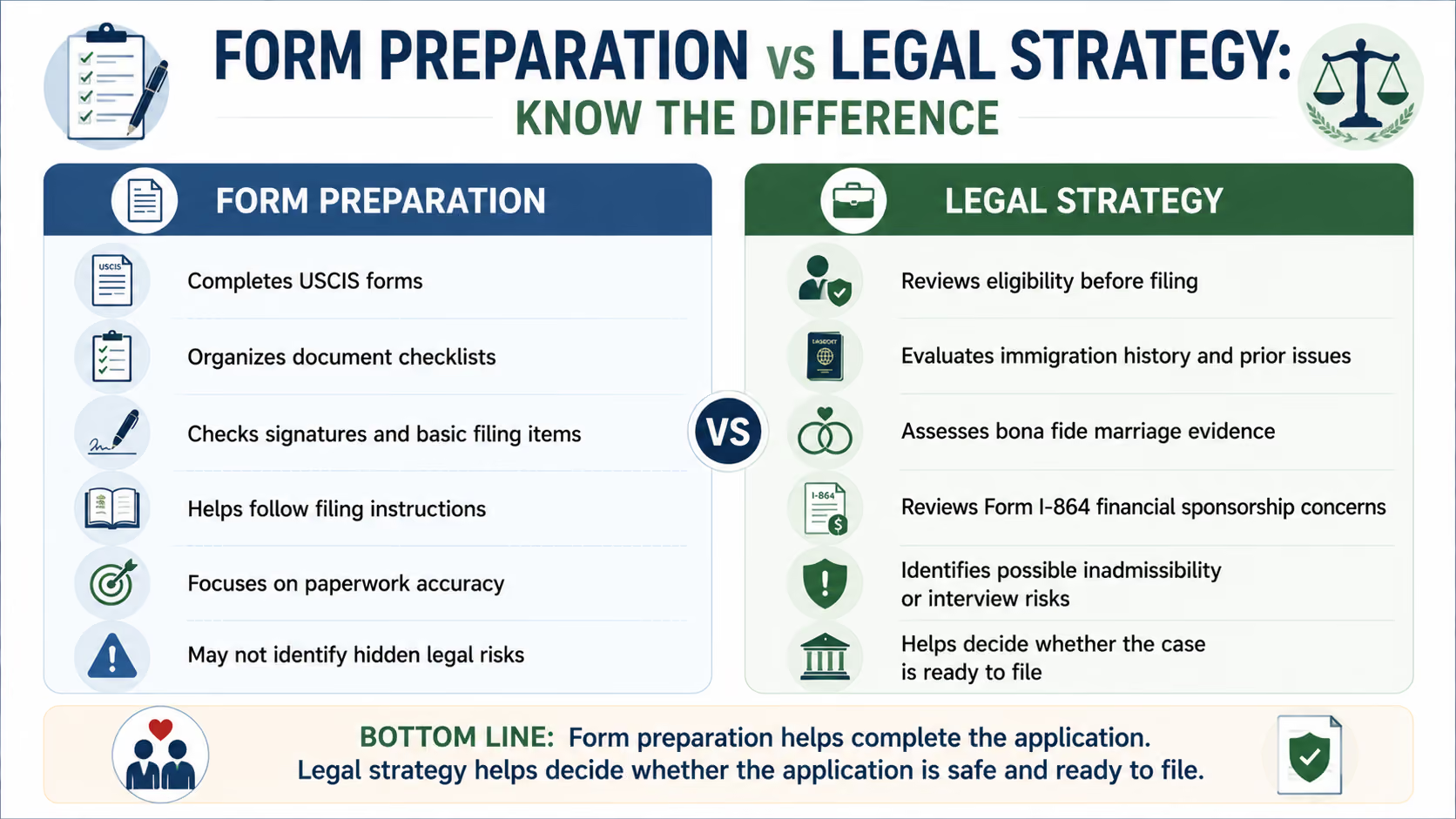
American Visa Law Group approaches marriage-based green card cases by looking at the full case, not just the forms.
A marriage green card application usually involves several layers: the relationship evidence, the sponsor’s financial ability, the applicant’s immigration history, eligibility for adjustment of status or consular processing, and any possible red flags that may need to be addressed before filing.
The first step is usually a case-specific eligibility review. This means looking at whether the sponsor is a U.S. citizen or lawful permanent resident, whether the applicant entered the United States lawfully, whether there are prior immigration issues, and whether the case should move through USCIS adjustment of status or consular processing abroad.
AVLG also focuses on evidence strategy. A marriage certificate alone is usually not enough. The case should include evidence that helps show a real marriage, such as shared residence, joint financial records, photos, travel history, insurance, messages, affidavits, or other proof of a shared life.
Financial sponsorship is another important part of the review. If the sponsor’s income is unclear, below the required level, or based on self-employment, the case may need stronger documentation or a joint sponsor.
The goal is to identify problems before USCIS does. If there is a prior overstay, unauthorized work, criminal history, prior denial, weak evidence, or possible inadmissibility concern, those issues should be reviewed before the application is submitted.
Attorney-led review does not guarantee approval. USCIS or the relevant government agency makes the final decision. But a careful legal review can help couples understand their risks, prepare stronger evidence, and choose a filing strategy that fits their facts.
AVLG may also help couples who already started a DIY application but now want legal review, RFE support, interview preparation, or guidance before taking the next step.
The checklist below highlights common issues that may require stronger preparation before filing a marriage-based green card case.
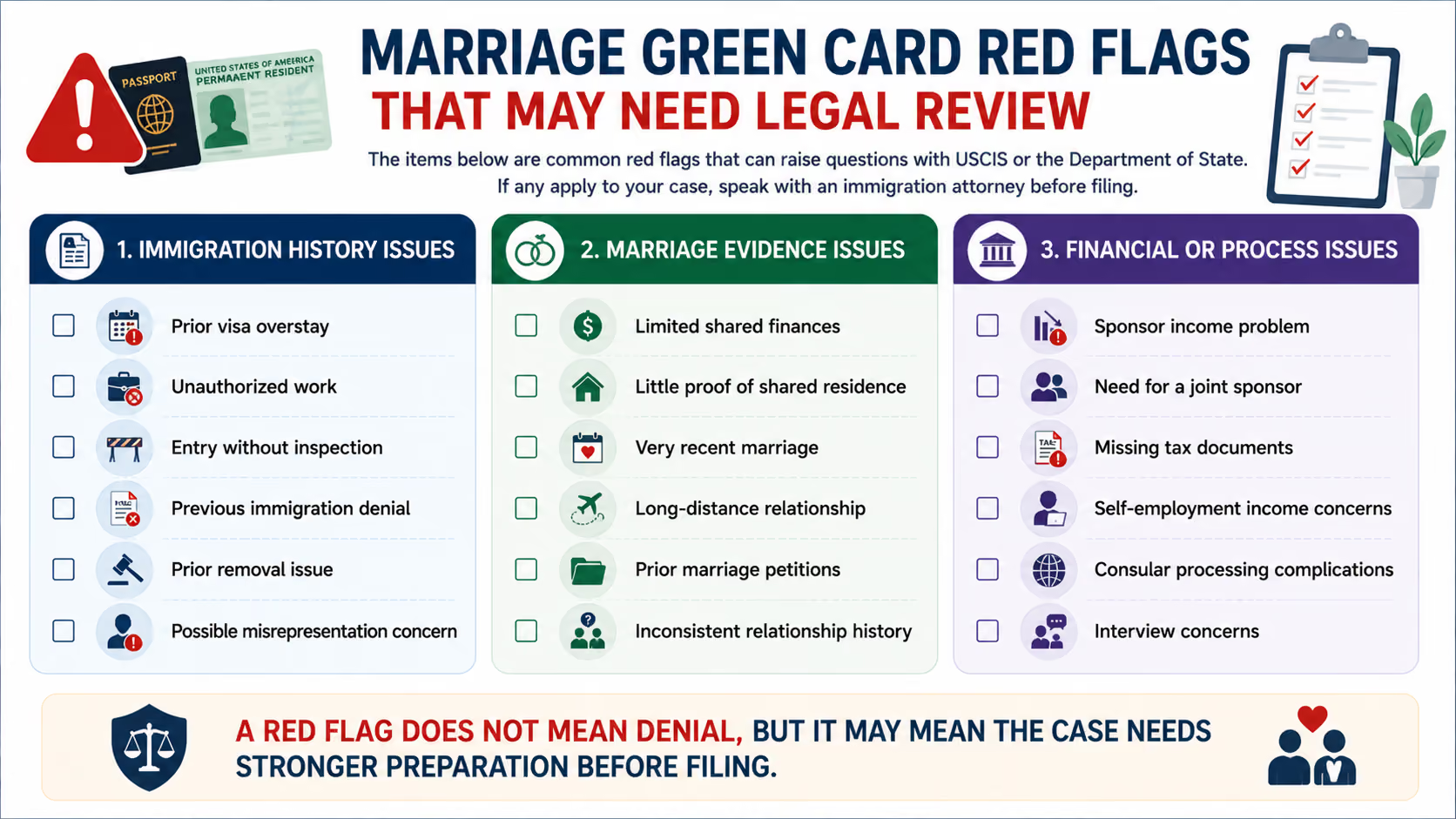
The best option for a marriage-based green card depends on the facts of the case. Some couples may be comfortable filing on their own. Others may want the structure of Boundless Immigration or another online platform. Some cases may need attorney-led legal review before anything is submitted.
DIY filing may fit if the case is clean and straightforward. This usually means the applicant entered the United States lawfully, has no criminal history, no prior immigration violations, no previous denials, strong marriage evidence, and clear financial sponsorship.
Boundless Immigration or another online platform may fit if the couple wants more structure than DIY. This can be useful when the case appears simple, but the couple wants guided forms, document checklists, and help organizing the application.
An immigration attorney may fit if the case involves legal risk. This may include a prior overstay, unauthorized work, weak marriage evidence, income problems, need for a joint sponsor, criminal history, previous immigration denial, consular processing concern, or uncertainty about eligibility.
The choice should not be based only on price. The real question is risk.
A simple case may not need full attorney representation. A moderate case may benefit from a platform plus attorney review or a limited consultation. A high-risk case may be safer with attorney-led representation from the beginning.
For couples deciding between an attorney, Boundless Immigration, or DIY filing, the goal is not to choose the most expensive or cheapest option. The goal is to choose the option that matches the complexity of the case and the consequences of getting it wrong.
Choosing between a marriage green card attorney, Boundless Immigration, or DIY filing depends on how simple or risky the case is.
If the case is clean, well-documented, and the couple is comfortable following USCIS instructions, DIY filing may be possible. This may work when there is lawful entry, strong marriage evidence, clear financial sponsorship, no criminal history, and no prior immigration problems.
If the couple wants more structure but may not need full attorney representation, Boundless Immigration or another online platform may be a practical option. A guided platform can help organize forms, document checklists, and filing steps, especially for straightforward cases.
If the case involves legal risk, attorney-led representation may be the safer choice. This can matter when there is a prior overstay, unauthorized work, weak relationship evidence, income problems, prior denials, criminal history, consular processing complications, or uncertainty about eligibility.
The cheapest option is not always wrong, and the most expensive option is not always necessary. The best choice depends on the risk level of the case.
A marriage-based green card case is not only about completing forms. It is about showing eligibility, proving a real marriage, meeting financial sponsorship requirements, and preparing for possible USCIS or consular questions.
American Visa Law Group helps couples evaluate marriage-based green card options with practical legal strategy and realistic expectations. If you are deciding between an attorney, Boundless Immigration, or DIY filing, you can schedule a consultation to understand which path may fit your case.
Not every couple needs a lawyer for a marriage-based green card. If the case is simple, well-documented, and the couple understands USCIS instructions, DIY filing may be possible.
However, a lawyer may be important if there are prior immigration issues, criminal history, weak marriage evidence, income problems, previous denials, or consular processing complications.
Not always. Boundless Immigration and similar online platforms may offer guided forms, document checklists, and support depending on the service package.
Couples should carefully understand whether they are receiving full attorney representation, limited legal review, or platform-based preparation. The scope of service matters.
DIY filing may be safe for clean and straightforward cases. It becomes riskier when the couple does not recognize legal issues before filing.
The risk is not only making a typo. The bigger risk is misunderstanding eligibility, submitting weak evidence, missing financial sponsorship issues, or failing to disclose important immigration history.
The biggest risk is missing a legal issue that is not obvious from the forms.
For example, prior overstays, unauthorized work, entry problems, criminal history, prior denials, or possible misrepresentation concerns may affect the case. These issues may require legal review before filing.
Common forms may include Form I-130, Form I-130A, Form I-485, Form I-864, Form I-765, Form I-131, and Form I-693, depending on the case.
If the green card is conditional, the couple may later need to file Form I-751 to remove conditions on residence.
You should consider hiring a marriage green card attorney if your case has legal risk. This may include a prior overstay, unauthorized work, criminal history, previous denial, prior removal issue, weak evidence, income problem, need for a joint sponsor, or consular processing concern.
An attorney may also help if you are unsure whether adjustment of status or consular processing is the right path.
Yes. Some couples start the process themselves and later speak with an attorney for review, RFE support, interview preparation, or strategy concerns.
However, it is often better to identify serious issues before filing rather than after USCIS has already raised a concern.
Usually, yes. Attorney representation often costs more than DIY filing or an online platform.
The question is whether the case needs legal strategy. For simple cases, lower-cost options may be enough. For complex or risky cases, attorney review may help avoid mistakes that could become more expensive later.
No. No attorney, online platform, or DIY method can guarantee approval.
USCIS or the relevant government agency decides the case based on eligibility, evidence, facts, and legal requirements.
The best option depends on your facts.
DIY may fit a clean case. Boundless Immigration or another online platform may fit a straightforward case where the couple wants more structure. An attorney may be the better choice when the case involves legal risk, weak evidence, prior immigration history, financial sponsorship problems, or uncertainty about the correct filing strategy.
Hasan Abdullah is the Founder and Managing Attorney of American Visa Law Group, a U.S. immigration law firm focused on helping individuals, families, professionals, entrepreneurs, and employers navigate complex immigration matters. He has extensive experience in employment-based and family-based immigration, including H-1B, PERM, NIW, EB1, O-1, adjustment of status, waivers, consular processing, and complex USCIS strategy matters.
Through AVLG, Hasan focuses on practical immigration strategy, nuanced legal analysis, and realistic guidance grounded in real immigration practice. His writing combines operational insight, legal sophistication, and practical understanding of USCIS adjudication trends to help readers make more informed immigration decisions.


