Author: Hasan Abdullah, Esq.
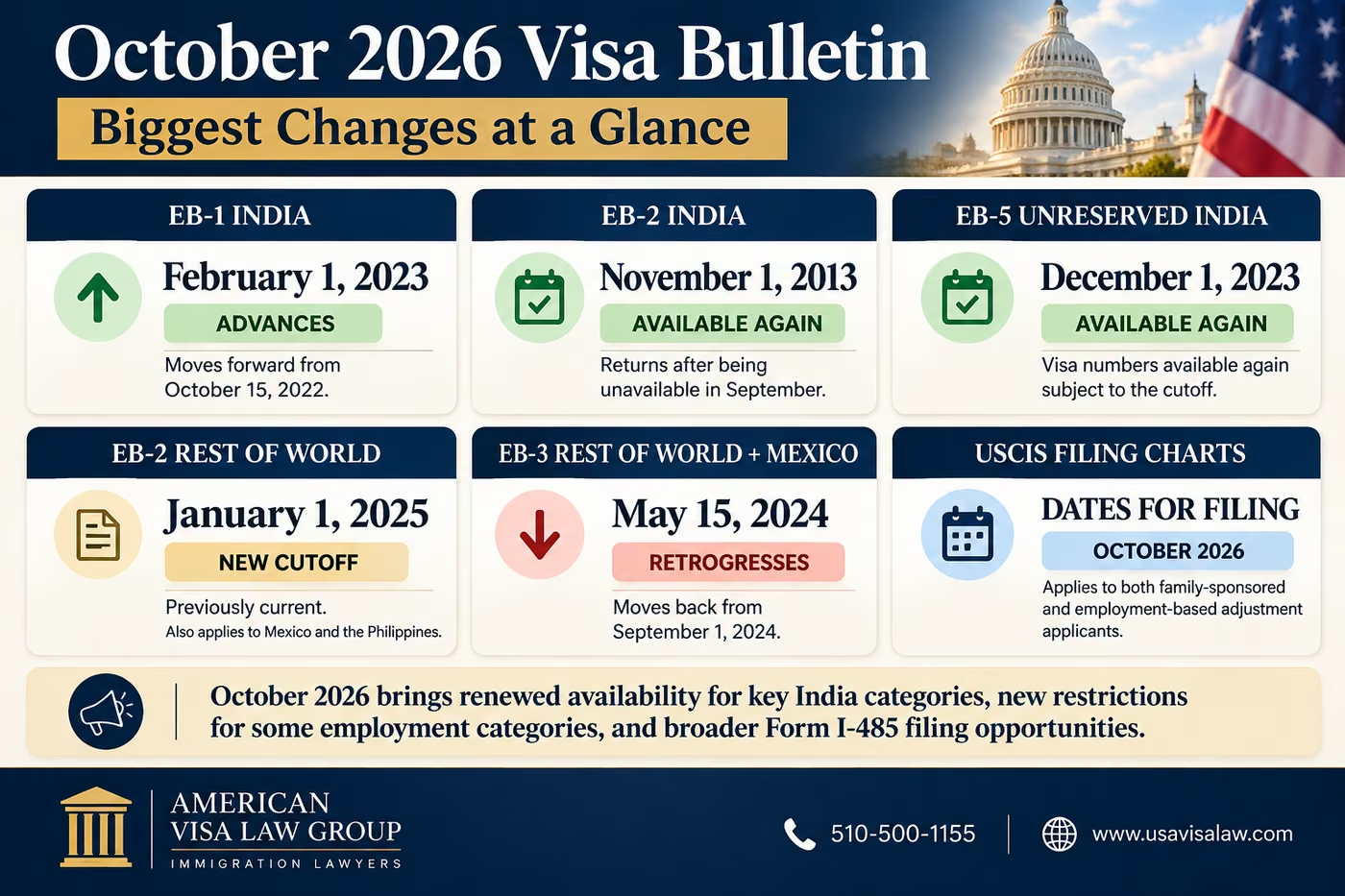
The October 2026 Visa Bulletin opens fiscal year 2027 with significant changes for both family-sponsored and employment-based applicants. India’s EB-2 and EB-5 Unreserved categories become available again, EB-1 India advances, and several Chinese employment categories move forward. At the same time, EB-2 and EB-3 become more restrictive for many applicants outside India and China, while Mexico and the Philippines receive notable family-sponsored movement.
USCIS has also confirmed that family- and employment-based adjustment applicants may use the Dates for Filing charts in October. This may allow certain applicants to submit Form I-485 before their priority dates become current for final approval. However, applicants considering employment-based green card options must still confirm their classification, country of chargeability, priority date and complete adjustment-of-status eligibility.
This guide explains the official October 2026 Visa Bulletin, identifies the applicable USCIS adjustment-of-status filing charts, and compares the new priority dates with September 2026 and October 2025. Visa availability is only one part of eligibility and does not guarantee that Form I-485 may be filed or approved.
The October bulletin produces mixed results at the start of fiscal year 2027. New visa allocations restore availability in several Indian employment-based categories, but some categories for applicants from most other countries become more restrictive. Family-sponsored movement is strongest for Mexico and the Philippines.
“Current” means no priority-date cutoff is published for the category. A listed date generally means the applicant’s priority date must be earlier than that cutoff. Filing and final approval remain subject to all other eligibility requirements.
The Visa Bulletin contains two different sets of cutoff dates. Applicants must identify their preference category, country of chargeability and priority date before comparing their case with the correct chart. AVLG’s guide to how priority dates work provides additional background.
Final Action Dates determine when an immigrant visa number may generally be issued or a pending Form I-485 may receive final approval. An applicant’s priority date normally must be earlier than the published cutoff.
For example, if the Final Action Date is January 1, 2025, a priority date of December 31, 2024, is earlier and may be current. A priority date of January 1, 2025, is not yet current.
Dates for Filing determine when qualifying applicants may begin submitting immigrant-visa documents or, when USCIS authorizes the chart, file Form I-485.
Filing under this chart does not mean the green card can be approved immediately. Final approval normally must wait until the priority date is current under the Final Action Dates chart and a visa number is available.
A favorable cutoff date addresses visa availability only. Applicants must still satisfy all other adjustment-of-status or immigrant-visa requirements.
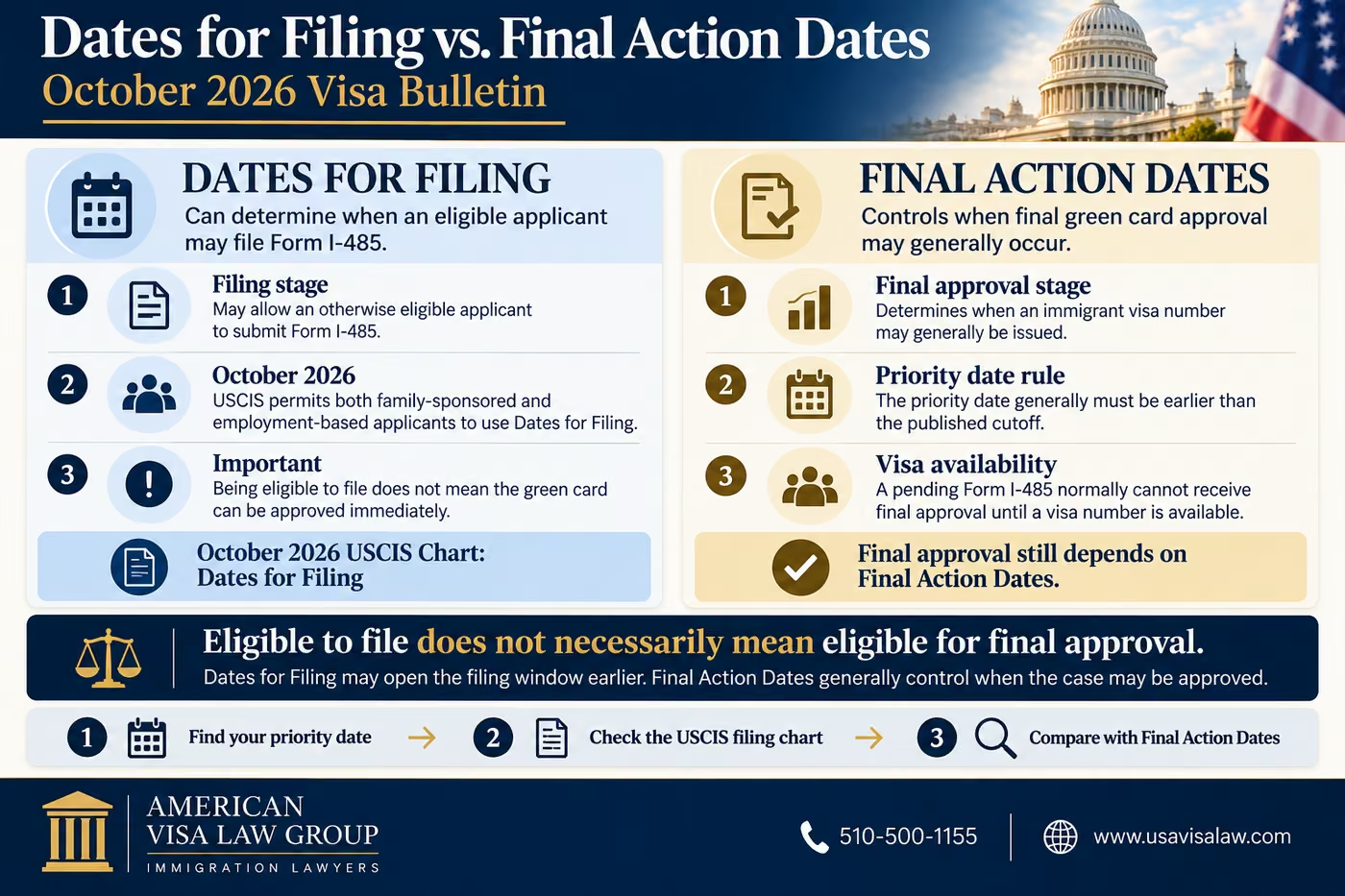
USCIS selects which Visa Bulletin chart adjustment-of-status applicants may use each month. According to the October 2026 adjustment-of-status filing charts, both family-sponsored and employment-based applicants may use Dates for Filing.
This is an important change for employment-based applicants. In September 2026, they were required to use Final Action Dates for adjustment filings. The October selection may allow additional applicants to file Form I-485, although filing eligibility still depends on lawful status, admissibility, an approved or concurrently filed petition when permitted, and other case-specific requirements.
Applicants completing consular processing should follow Department of State and National Visa Center instructions rather than relying exclusively on the USCIS chart selection.
The October 2026 family-sponsored Visa Bulletin brings limited movement for most countries but substantial advancement for several Mexican and Philippine categories. Applicants reviewing family-based immigration options should compare their priority dates with the cutoff for both their preference category and country of chargeability.
For All Chargeability Areas, China and India, F1, F2B and F3 remain unchanged. F2A advances by one month, while India’s F4 cutoff moves forward by approximately six weeks.
F1 applies to unmarried adult sons and daughters of U.S. citizens. F2A covers spouses and unmarried children under 21 of permanent residents, while F2B covers their unmarried adult sons and daughters. F3 applies to married sons and daughters of U.S. citizens, and F4 covers siblings of adult U.S. citizens.
These advances may allow additional cases to receive final action, but only when the applicant’s priority date is earlier than the applicable cutoff and all other requirements are satisfied.
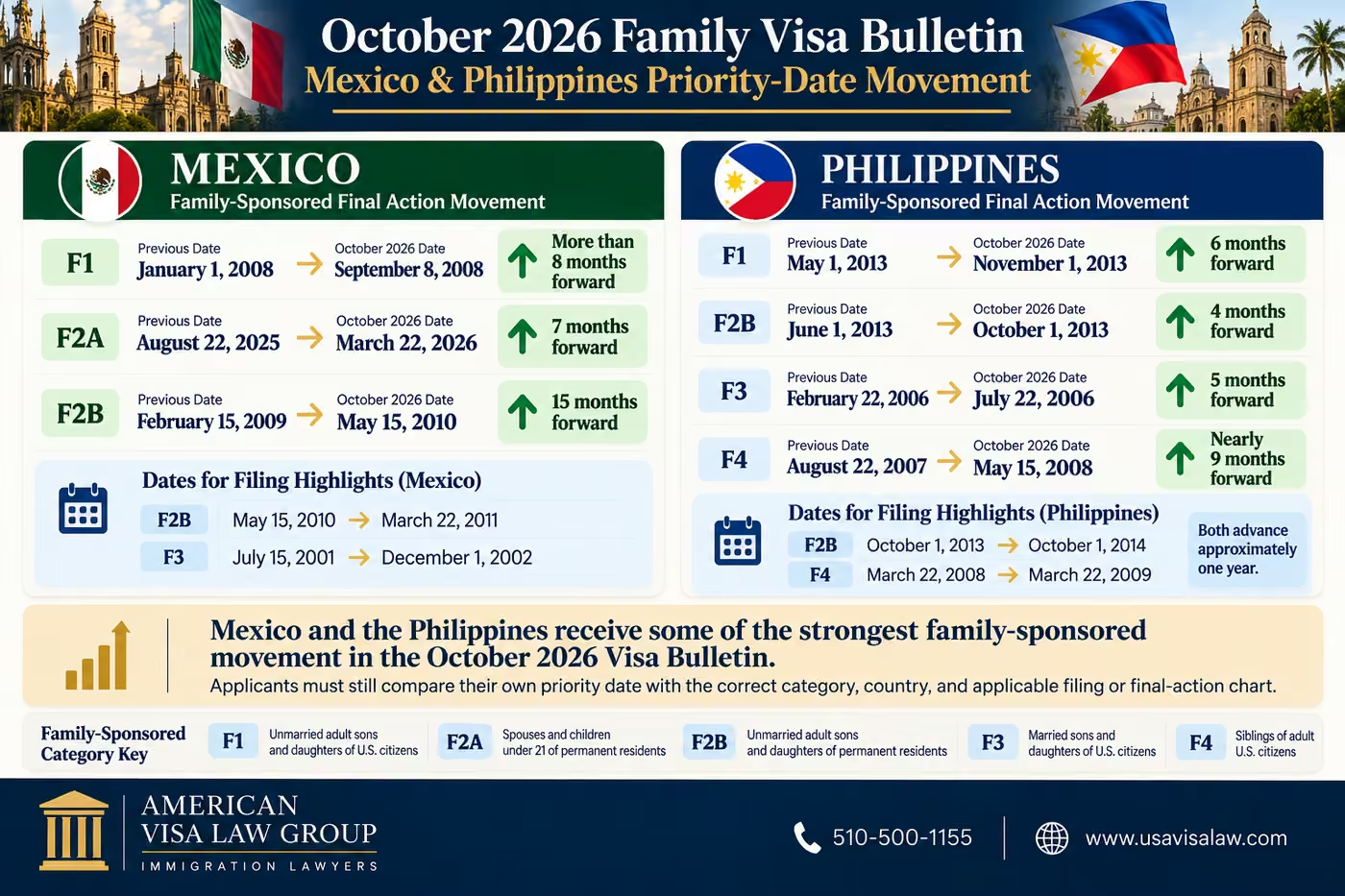
Because USCIS permits family-sponsored applicants to use Dates for Filing in October 2026, this chart determines when an otherwise eligible applicant may submit Form I-485.
F2A remains current for every country, meaning no priority-date cutoff applies for filing purposes. Most filing dates for All Chargeability Areas and China remain unchanged. India’s F1, F2A, F2B and F3 dates also remain unchanged, while F4 advances from December 15, 2006, to February 1, 2007.
The most significant filing-date movement occurs in Mexico and the Philippines:
An applicant generally needs a priority date earlier than the applicable filing cutoff. Filing under this chart does not make the priority date current for final approval; USCIS normally must wait until the case is also current under the Final Action Dates chart.
Employment-based results are mixed as fiscal year 2027 begins. India’s EB-2 and EB-5 Unreserved categories become available again, and EB-1 India advances. However, EB-2 and EB-3 become more restrictive for Rest of World applicants.
“Rest of World” refers to All Chargeability Areas Except Those Listed. Applicants from Mexico and the Philippines share the Rest of World cutoff in several employment categories, but not in every category.
The Certain Religious Workers category uses the same December 15, 2022, Final Action Date as the broader EB-4 category. The October bulletin also confirms that the program has been extended through December 11, 2026.
The return of visa availability does not make every pending Indian EB-2 or EB-5 case immediately approvable. The priority date must be earlier than the applicable Final Action Date, and the applicant must satisfy all remaining eligibility requirements.
Because USCIS permits employment-based applicants to use Dates for Filing in October 2026, this chart is the starting point for determining whether an otherwise eligible applicant may submit Form I-485.
Several categories advance substantially, particularly for China. Other categories receive new filing cutoffs after being current in September.
Applicants should use the October Dates for Filing chart to assess filing eligibility, but the Final Action Dates chart still controls when final approval may generally occur. A priority date that qualifies for filing may therefore remain unavailable for final adjudication.
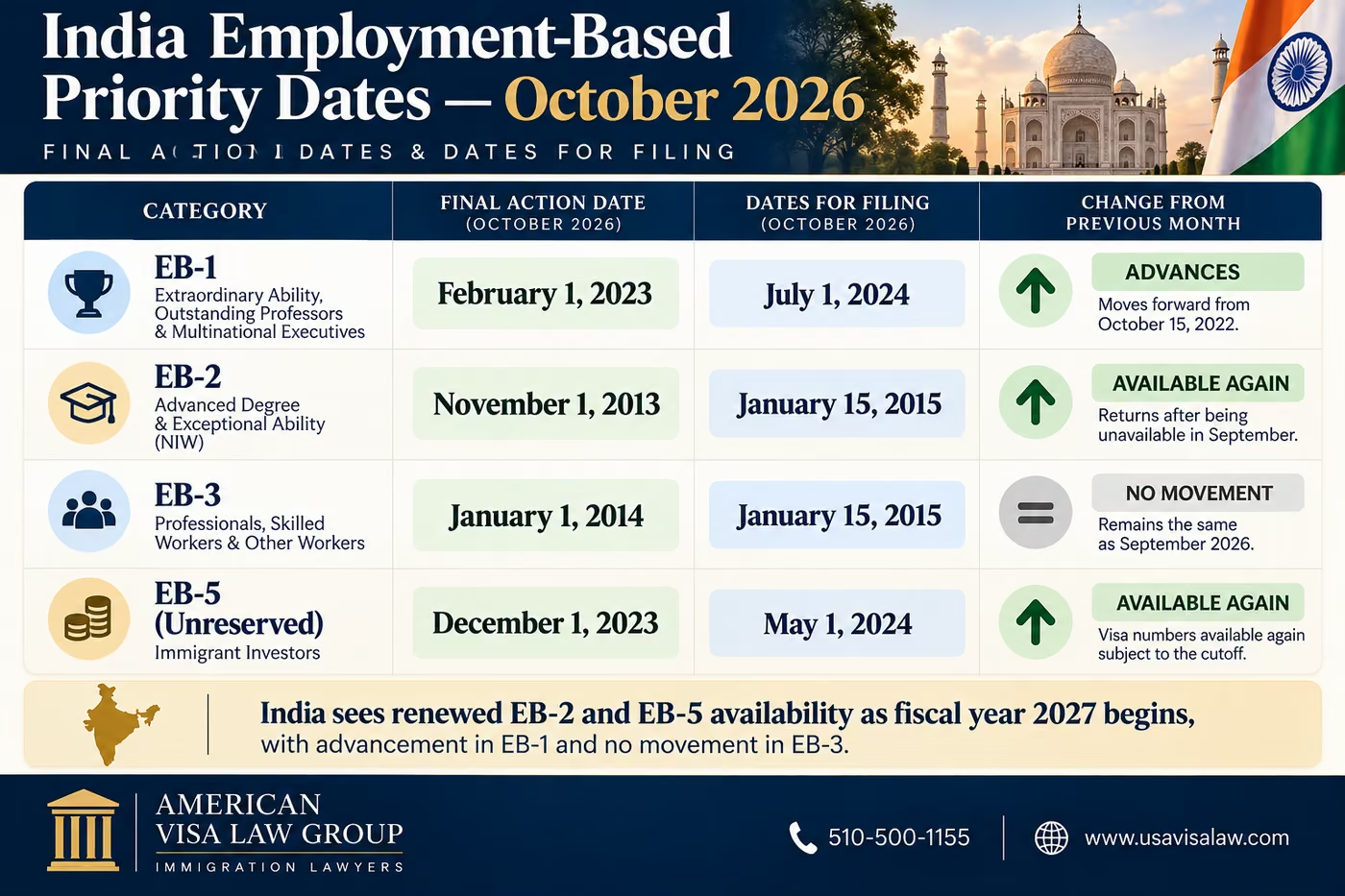
India receives some of the most significant employment-based changes. EB-1 advances to February 1, 2023, while EB-2 returns from unavailable status with a November 1, 2013, Final Action Date. EB-3 and Other Workers remain at January 1, 2014.
EB-5 Unreserved India also becomes available again at December 1, 2023. For adjustment filings, the Dates for Filing are July 1, 2024, for EB-1; January 15, 2015, for EB-2 and EB-3; and May 1, 2024, for EB-5 Unreserved. In the family-sponsored categories, F4 India advances to December 15, 2006.
China’s EB-1 Final Action Date remains July 1, 2023. EB-2 advances one month to October 1, 2021, while EB-3 moves forward seven days to January 8, 2022. EB-5 Unreserved remains at December 1, 2016.
The filing chart is more favorable. EB-1 advances to July 1, 2024, EB-2 to January 1, 2023, EB-3 to April 1, 2024, and EB-5 Unreserved to March 1, 2021.
Mexico receives substantial family-sponsored advancement, particularly in F1, F2A and F2B. However, its employment-based results are more restrictive. EB-2 changes from current to January 1, 2025, while EB-3 retrogresses to May 15, 2024.
EB-1 and EB-5 Unreserved remain current for Mexico. Applicants should carefully distinguish the family-sponsored advances from the employment-based retrogressions.
The Philippines receives broad family-sponsored movement across F1, F2A, F2B, F3 and F4. Employment-based results are mixed: EB-2 receives a January 1, 2025, Final Action Date, EB-3 advances to August 15, 2023, and Other Workers advances to January 1, 2022.
EB-1 and EB-5 Unreserved remain current for applicants chargeable to the Philippines.
The start of fiscal year 2027 produces a mixed Visa Bulletin. New annual visa allocations allow India’s EB-2 and EB-5 Unreserved categories to become available again after both were unavailable in September. EB-1 India also advances by approximately three and a half months.
The October bulletin is not favorable across every employment category. EB-2 changes from current to January 1, 2025, for Rest of World, Mexico and the Philippines. EB-3 also retrogresses for Rest of World and Mexico, moving from September 1, 2024, to May 15, 2024. China receives modest Final Action Date movement but substantially stronger movement under several Dates for Filing categories.
Family-sponsored results are more positive. F2A advances for most countries, while Mexico and the Philippines receive movement across several preference categories. Most family dates for All Chargeability Areas, China and India remain unchanged, apart from F2A and India F4.
Another important difference is USCIS chart selection. Employment-based applicants were required to use Final Action Dates in September, but they may use Dates for Filing in October. This may expand filing opportunities even when final approval remains unavailable.
A comparison with the official October 2025 Visa Bulletin shows substantial year-over-year advancement across many family- and employment-based categories.
The year-over-year picture is broadly positive, even though some categories retrogress from September to October 2026. Applicants should therefore distinguish short-term monthly movement from the longer-term trend and rely on the current cutoff, not the amount of historical advancement, when evaluating their cases.
Applicants should take the following steps before relying on the October 2026 priority dates:
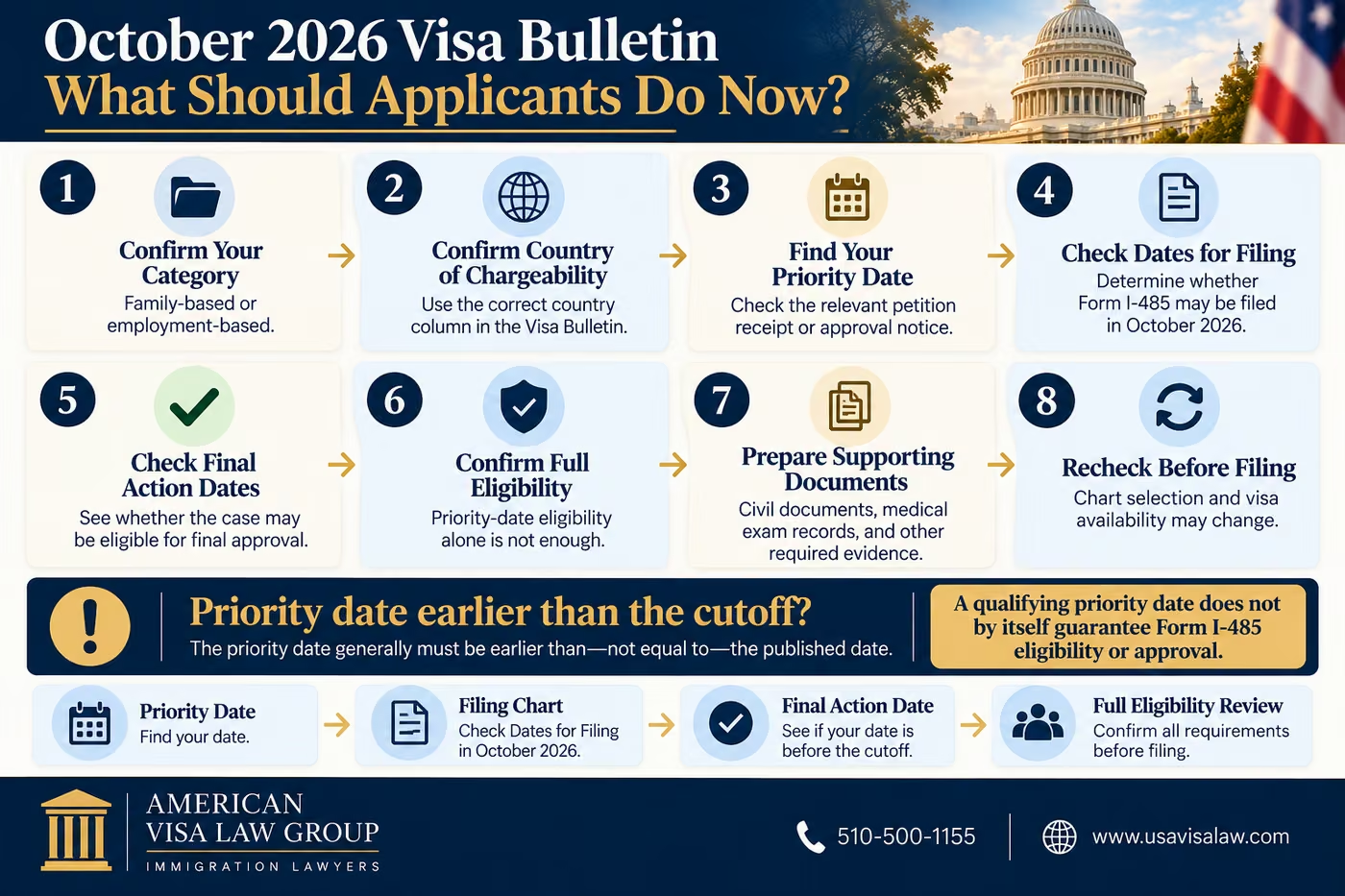
Applicants with a pending Form I-485 generally do not need to submit a new application merely because a category retrogresses or becomes unavailable. USCIS may continue processing the case, but final approval normally must wait until a visa number is available.
A qualifying priority date does not independently establish eligibility for adjustment of status or guarantee approval. Individual circumstances should be reviewed before filing or making employment and travel decisions.
Both family-sponsored and employment-based adjustment applicants may use Dates for Filing. Final approval generally remains controlled by the Final Action Dates chart.
Yes. EB-2 India returns from unavailable status with a Final Action Date of November 1, 2013. Its Date for Filing remains January 15, 2015.
Yes. The EB-5 Unreserved India Final Action Date is December 1, 2023, and its Date for Filing is May 1, 2024. The rural, high-unemployment-area and infrastructure set-aside categories remain current.
Yes. EB-2 changes from current to January 1, 2025, while EB-3 retrogresses from September 1, 2024, to May 15, 2024. These Final Action Date changes also apply to Mexico, with the EB-2 date applying to the Philippines as well.
No. The priority date generally must be earlier than the listed cutoff. A priority date that falls exactly on the published date is not yet current.
No. Dates for Filing may permit an eligible applicant to submit Form I-485, but final approval normally requires the priority date to become current under Final Action Dates. The applicant must also satisfy all other adjustment-of-status requirements.
For readers who want to verify the October 2026 cutoff dates or better understand how priority dates and adjustment-of-status filing work, the following official resources provide additional guidance:

Hasan Abdullah, Esq. is the Founder and Managing Attorney of American Visa Law Group. His practice focuses on U.S. immigration law, including family-based immigration, employment-based immigration, adjustment of status, consular processing, waivers, PERM labor certification, NIW, EB-1, H-1B, O-1, and complex immigration strategy.
Through American Visa Law Group, Mr. Abdullah helps individuals, families, professionals, investors, and employers understand their immigration options and plan around changing government policies, USCIS procedures, and Visa Bulletin movement. His work emphasizes practical legal analysis, realistic expectations, and strategy tailored to each applicant’s immigration history and long-term goals.


