Author: Hasan Abdullah, Esq.
Changing jobs during the green card process is one of those questions that sounds simple until timing enters the picture.
For many employment-based applicant
s, the answer depends less on the job change itself and more on when the job change happens. A move before PERM is filed is very different from a move after an I-140 approval. A job change while the I-485 is pending can raise different issues depending on whether the adjustment application has been pending long enough for AC21 portability. And after green card approval, the question often shifts from “Am I allowed to leave?” to “Can I show that the original job offer and employment intent were genuine?”
The direct answer is this: you may be able to change jobs during or after the green card process, but the legal risk depends on the stage of the case, the type of green card category, the role you are moving into, and the facts behind the change.
This issue is especially important in employer-sponsored EB-2 and EB-3 cases, where the green card process is often built around a specific permanent job offer from a specific employer. In those cases, PERM labor certification, Form I-140, Form I-485, AC21 portability, and Form I-485 Supplement J may all become relevant at different points.
For someone searching, “Can I change job after I get my green card?” the practical answer is usually that a green card holder is not permanently tied to one employer forever. But leaving immediately after approval, without a clear explanation, can create questions about whether the sponsored job was ever truly intended. That does not mean every quick departure is a problem. Layoffs, restructuring, workplace changes, relocation, better-documented career opportunities, or other legitimate reasons may matter. The key is understanding the facts before making the move.
This article explains what happens at each major stage of the green card process, from before PERM through I-140 approval, I-485 filing, AC21 portability, and after green card approval. The goal is not to give a one-size-fits-all rule, because there is no reliable universal rule for every applicant. The goal is to help you understand where the risk usually comes from, what USCIS may focus on, and why timing, documentation, and strategy matter before you resign, accept a new offer, or assume your case is safe.
In many cases, yes. After you receive your green card, you are generally not permanently tied to the employer that sponsored you. A lawful permanent resident has the right to work for a different employer, change careers, start a business, or stop working in certain circumstances.
But in an employment-based green card case, the timing and facts behind the job change can still matter.
If your green card was approved based on a permanent job offer from a sponsoring employer, USCIS expects that the job offer was real and that both the employer and employee intended for the employment to continue when the green card was approved. The issue is usually not whether a green card holder can ever leave the employer. The issue is whether the original green card process was based on a genuine job offer and good-faith intent.
A person who works for the sponsoring employer for a reasonable period and later changes jobs for a normal career reason is usually in a different position from someone who leaves immediately after approval with no clear explanation. There is no simple rule that says every applicant must stay for six months, one year, or any fixed period after green card approval. Immigration law does not work that mechanically.
The better question is: if USCIS later asked why you left, would the facts make sense?
For example, a job change may be easier to explain if it happened because of a layoff, company restructuring, relocation, a major change in job duties, a better long-term career opportunity, family needs, or another legitimate reason. On the other hand, if the applicant never intended to work for the sponsoring employer after approval, or had already planned to leave before the green card was granted, that can create a more sensitive issue.
This is why applicants should be careful with online advice that gives a universal answer like “you can leave immediately” or “you must stay exactly six months.” Both answers are too simple. The real analysis depends on the full timeline: when the green card was approved, when the job change happened, whether the person actually worked for the sponsoring employer, what documents exist, and whether the original job offer was genuine.
For someone searching “can I change job after I get my green card,” the practical answer is this: yes, a green card holder usually has job flexibility, but leaving very soon after approval should be reviewed carefully if the green card was employer-sponsored. Timing, intent, and documentation can become important, especially if the case is later reviewed in connection with naturalization, a future immigration filing, or questions about the original employment-based petition.
Before making a quick move after approval, it is usually wise to pause and review the facts. A clean explanation today can prevent confusion later.
A job change does not have the same impact at every point in the green card process. This is where many applicants get confused. They may hear that someone changed jobs after an I-140 approval, or that another person used AC21 portability while the I-485 was pending, and assume the same rule applies to them.
It may not.
In an employment-based green card case, timing is critical because each stage serves a different legal purpose. PERM labor certification is usually tied to a specific employer, job opportunity, location, and set of duties. The I-140 petition is the employer’s request to classify the worker for an immigrant visa category. The I-485 adjustment of status application is the worker’s request to become a lawful permanent resident. These steps are connected, but they are not the same.
That is why changing jobs before PERM is filed is very different from changing jobs after an I-485 has been pending for 180 days or more. Early in the process, the case is often built around the sponsoring employer’s specific job offer. If that job offer disappears, changes significantly, or no longer exists, the case may need to be restarted or re-evaluated. Later in the process, especially if AC21 portability applies, the applicant may have more flexibility to move to a new role if the new job is in the same or similar occupational classification.
The practical question is not simply, “Can I change jobs?” A better question is: What part of my green card case depends on this specific employer and this specific job offer right now?
For example, if the PERM is still pending, a move to a new employer will usually create a serious problem because the PERM does not simply transfer to the new company. If the I-140 is approved but the I-485 has not been filed, the applicant may have gained something valuable, such as a priority date, but that does not automatically mean the green card case can continue with a different employer. If the I-485 has been pending long enough and the new position is same or similar, AC21 may provide a path to continue the case without starting everything over.
After green card approval, the analysis changes again. At that point, the person is already a lawful permanent resident. However, if the green card was based on an employer-sponsored permanent job offer, the original intent behind that job offer can still matter. Leaving the employer later for a normal career reason is different from having no real intention to work for the employer at all.
This is why stage-by-stage analysis is so important. A job change that is low risk at one stage may be highly sensitive at another. Before resigning, accepting a new offer, or assuming the case is protected, the applicant should first identify exactly where they are in the green card process.
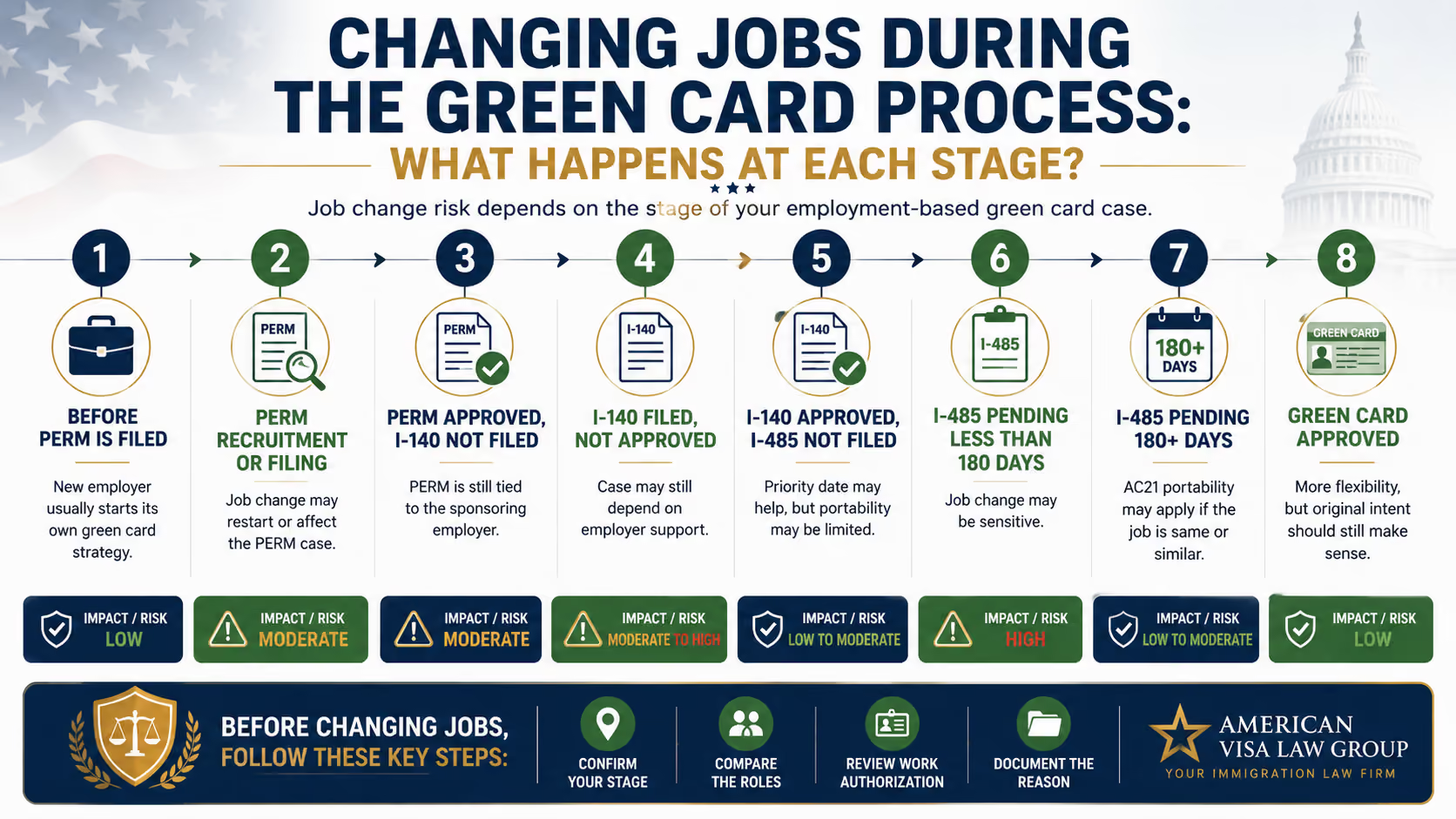
If PERM has not been filed yet, changing jobs usually creates fewer immigration consequences than changing jobs later in the green card process. At this stage, the employer may be discussing sponsorship, preparing documents, or starting early strategy, but the formal PERM labor certification case may not yet exist.
That does not mean the timing is irrelevant. It simply means the green card case is usually not far enough along to be preserved with that employer if the worker leaves.
In most PERM-based EB-2 and EB-3 cases, the green card process is built around a specific employer and a specific future permanent job. Before PERM is filed, the employer is still in the early stages of proving that job opportunity. If the employee moves to a new company, the new employer generally cannot take over the old employer’s planned PERM process. The new employer would usually need to evaluate its own green card strategy, job description, minimum requirements, wage level, recruitment process, and filing timeline.
For the employee, the biggest issue at this stage is often not the green card case itself. It is maintaining lawful work authorization. If the person is in H-1B status, for example, the new employer may need to file an H-1B transfer before employment begins. If the person is working under another status or employment authorization category, that should also be reviewed before making the move.
This stage is also a good time to ask practical questions before accepting a new job offer. Will the new employer sponsor a green card? How soon will they start? Do they have experience with PERM? Is the role likely to qualify for EB-2 or EB-3? Will the job duties, wage, location, and minimum requirements support a viable case?
A job change before PERM is filed may be manageable, but it can reset the green card timeline. For applicants from countries with long Visa Bulletin backlogs, that delay can matter. A few months of delay in starting PERM may later become much more significant if priority dates move slowly.
The key takeaway is simple: before PERM is filed, changing jobs usually does not “port” anything to the new employer. The applicant may have flexibility to move, but the new green card strategy typically has to be built from the new employer’s job offer.
Once PERM recruitment has started or the PERM application has been filed, a job change becomes more sensitive.
At this stage, the green card process is no longer just a general sponsorship discussion. The employer is moving forward with a specific permanent job opportunity, with specific duties, minimum requirements, work location, and wage considerations. That is why PERM is usually not something the employee can simply take to a new employer.
If the employee changes employers while PERM is in progress, the new employer generally needs to start its own green card process. The old employer’s PERM case is tied to the old employer’s job opportunity. It does not automatically transfer just because the employee is doing similar work somewhere else.
Even changes within the same company can require careful review. A promotion, transfer to a different location, major change in job duties, or shift into a substantially different role may affect whether the PERM still matches the job being offered. The question is not only whether the employee still works for the same employer. The question is whether the sponsored permanent position is still the same job opportunity that was tested through the PERM process.
This is why applicants should be cautious before making internal moves while PERM is pending. A title change alone may not always be a problem, but a major change in duties, requirements, wage level, or location can create issues. The employer and immigration counsel may need to decide whether the existing PERM can continue or whether a new PERM strategy is needed.
For employees, the practical risk is delay. If the PERM cannot continue, the green card timeline may reset. For applicants from countries with long Visa Bulletin backlogs, losing time at this stage can be especially frustrating because the priority date has usually not been secured yet.
For employers, the issue is also important. A PERM case should be based on a real, good-faith permanent job offer. If the employee is no longer expected to work in that role, or the role has changed significantly, continuing the case without review can create avoidable risk.
The key takeaway is this: during PERM recruitment or after PERM filing, job changes should be reviewed before action is taken. At this stage, the case is still closely tied to the sponsoring employer and the specific job opportunity.
After PERM is approved, the green card case has moved forward, but it is still not portable in the way many applicants assume.
A certified PERM labor certification is an important step, but it is not a green card approval. It also does not give the employee independent immigration status, work authorization, or the automatic right to continue the case with a different employer. The PERM approval is still tied to the sponsoring employer’s specific permanent job opportunity.
At this stage, the next major step is usually for the employer to file Form I-140, Immigrant Petition for Alien Worker, with USCIS. This is where the employer asks USCIS to classify the worker under the appropriate employment-based immigrant category, such as EB-2 or EB-3. The employer may also need to show that it has the ability to pay the offered wage and that the employee meets the requirements listed in the PERM.
This timing matters because an approved PERM is not valid forever. In general, the employer must file the I-140 within the PERM validity period. If the employee changes employers before the I-140 is filed, the new employer usually cannot use the old employer’s PERM approval. The new employer would typically need to start its own PERM process based on its own job offer.
That can be frustrating for employees who waited months for PERM approval and then receive a better job offer before the I-140 is filed. But from an immigration perspective, the issue is straightforward: the PERM was approved for one employer’s permanent position, not for the employee personally across all future jobs.
This is also a sensitive stage for employers. If the employer no longer intends to offer the permanent role, or if the employee has already decided to leave, the employer and immigration counsel should review whether it is still appropriate to move forward with the I-140. A green card case should be based on a real, good-faith permanent job offer.
The key takeaway is this: after PERM approval but before I-140 filing, the case has made progress, but it is still fragile. The employee may have reached an important milestone, but the case is still closely connected to the sponsoring employer and the approved PERM job. Before changing jobs at this stage, the applicant should understand that the green card timeline may restart with the new employer.
After PERM is approved, the green card case has moved forward, but it is still not portable in the way many applicants assume.
A certified PERM labor certification is an important step, but it is not a green card approval. It also does not give the employee independent immigration status, work authorization, or the automatic right to continue the case with a different employer. The PERM approval is still tied to the sponsoring employer’s specific permanent job opportunity.
At this stage, the next major step is usually for the employer to file Form I-140, Immigrant Petition for Alien Worker, with USCIS. This is where the employer asks USCIS to classify the worker under the appropriate employment-based immigrant category, such as EB-2 or EB-3. The employer may also need to show that it has the ability to pay the offered wage and that the employee meets the requirements listed in the PERM.
This timing matters because an approved PERM is not valid forever. In general, the employer must file the I-140 within the PERM validity period. If the employee changes employers before the I-140 is filed, the new employer usually cannot use the old employer’s PERM approval. The new employer would typically need to start its own PERM process based on its own job offer.
That can be frustrating for employees who waited months for PERM approval and then receive a better job offer before the I-140 is filed. But from an immigration perspective, the issue is straightforward: the PERM was approved for one employer’s permanent position, not for the employee personally across all future jobs.
This is also a sensitive stage for employers. If the employer no longer intends to offer the permanent role, or if the employee has already decided to leave, the employer and immigration counsel should review whether it is still appropriate to move forward with the I-140. A green card case should be based on a real, good-faith permanent job offer.
The key takeaway is this: after PERM approval but before I-140 filing, the case has made progress, but it is still fragile. The employee may have reached an important milestone, but the case is still closely connected to the sponsoring employer and the approved PERM job. Before changing jobs at this stage, the applicant should understand that the green card timeline may restart with the new employer.
For legal accuracy: DOL states that after labor certification is certified, it should be submitted to USCIS with Form I-140, and the certification has a 180-day validity period if not submitted within that period. USCIS also confirms that individual permanent labor certifications approved on or after July 16, 2007, are generally valid for 180 days.
After the I-140 has been filed, the case has moved beyond PERM, but it is still not fully secure.
This is a common point of confusion. Some applicants assume that once the I-140 is filed, they can safely change jobs because the employer has already submitted the immigrant petition. In reality, a pending I-140 is still vulnerable. USCIS has not yet approved the petition, and the employer is still the petitioner in most PERM-based EB-2 and EB-3 cases.
At this stage, the I-140 is asking USCIS to confirm that the worker qualifies for the requested employment-based immigrant category and that the employer can support the offered position. If the employee leaves before the I-140 is approved, the employer may decide not to continue with the petition. If the employer withdraws support, the case may not move forward.
The priority date is also an important issue. For many applicants, especially those from countries with long Visa Bulletin backlogs, securing a priority date can be one of the most valuable parts of the green card process. But while the I-140 is still pending, the applicant should be careful about assuming that the priority date is already protected for future use.
This does not mean a person can never change jobs while the I-140 is pending. Sometimes a job change is unavoidable because of layoffs, employer instability, restructuring, or a major career opportunity. But the applicant should understand the tradeoff: leaving before I-140 approval may affect whether the petition is approved, whether the priority date can be kept, and whether the new employer must begin a new PERM and I-140 process.
Before changing jobs at this stage, the applicant should ask a few practical questions. Has the employer confirmed that it will continue supporting the I-140? Is premium processing available or appropriate? Is the I-485 already filed, or is the applicant still waiting for the priority date to become current? Will the new employer sponsor a green card, and if so, how soon?
The key takeaway is this: after I-140 filing but before approval, the case has made meaningful progress, but it is not yet a safe portability point for most applicants. A job change at this stage should be reviewed carefully because the case may still depend heavily on the sponsoring employer’s continued support.
An approved I-140 is a meaningful milestone in the employment-based green card process. It can help establish the worker’s immigrant classification, preserve a priority date in many situations, and support certain long-term immigration strategies, especially for applicants facing Visa Bulletin backlogs.
But an approved I-140 does not always mean the employee can freely change jobs without consequences.
In most PERM-based EB-2 and EB-3 cases, the approved I-140 is still connected to the sponsoring employer’s permanent job offer. If the employee has not yet filed Form I-485, the case has not reached the adjustment of status stage. That means AC21 portability is usually not available yet, because AC21 job portability is generally tied to a pending I-485 application.
This is especially important for applicants from countries with long green card backlogs. A worker may have an approved I-140 but still be waiting months or years for the priority date to become current. During that waiting period, the approved I-140 may be valuable, but the green card case may still depend on a future job offer from the sponsoring employer.
If the applicant changes employers before filing the I-485, the new employer usually needs to start its own green card process. In many cases, that means a new PERM labor certification and a new I-140 petition. The previously approved I-140 may still help with priority date retention, depending on the facts, but it does not automatically transfer the old employer’s green card case to the new employer.
Employer withdrawal can also matter at this stage. If the sponsoring employer withdraws the I-140 after approval, the effect may depend on how long the petition has been approved and whether there are other issues, such as fraud, misrepresentation, or a material error. This is one reason applicants should not assume that “I-140 approved” always means “fully protected.”
The key takeaway is this: after I-140 approval but before I-485 filing, the applicant may have gained an important immigration benefit, but job-change flexibility is still limited. Before moving to a new employer, it is important to review whether the priority date can be retained, whether the old employer will withdraw the petition, whether the new employer will sponsor, and how the change may affect the overall green card timeline.
Filing Form I-485 is a major step in the green card process. At this point, the applicant is no longer only waiting on the employer’s immigrant petition. The applicant has filed for adjustment of status and is asking USCIS to approve lawful permanent residence.
But filing the I-485 does not automatically mean the applicant can safely change jobs right away.
This is one of the most important timing issues in employment-based green card cases. AC21 portability may allow certain applicants to change jobs or employers while the I-485 is pending, but the adjustment application generally must be pending for at least 180 days before that portability protection becomes available. USCIS explains that for job portability, the new job offer must generally be in the same or similar occupational classification, and the Form I-485 must have been pending for 180 days or more.
Before that 180-day point, the case can still be sensitive. If the applicant leaves the sponsoring employer too early, USCIS may question whether the original permanent job offer still exists or whether the applicant still intends to work in the sponsored role after green card approval. In a PERM-based EB-2 or EB-3 case, that job offer is often the foundation of the green card case.
This does not mean every job change before 180 days automatically causes a denial. Real life can be complicated. Layoffs happen. Companies restructure. Projects end. Employers change business plans. But if the applicant changes jobs before AC21 portability is clearly available, the facts should be reviewed carefully before assuming the case can continue without risk.
This is also why maintaining underlying nonimmigrant status can still matter. Some applicants keep H-1B, L-1, or another valid status while the I-485 is pending because it may provide a backup if something goes wrong with the adjustment case. Using an EAD can be convenient, but it may also change the applicant’s immigration posture if the I-485 later runs into problems.
The key takeaway is this: after I-485 filing but before 180 days, the applicant has reached an important stage, but job portability may not yet be available. A job change during this window should be handled carefully, especially if the green card case still depends on the original employer’s permanent job offer.
Once the I-485 has been pending for 180 days or more, the job-change analysis may become more flexible.
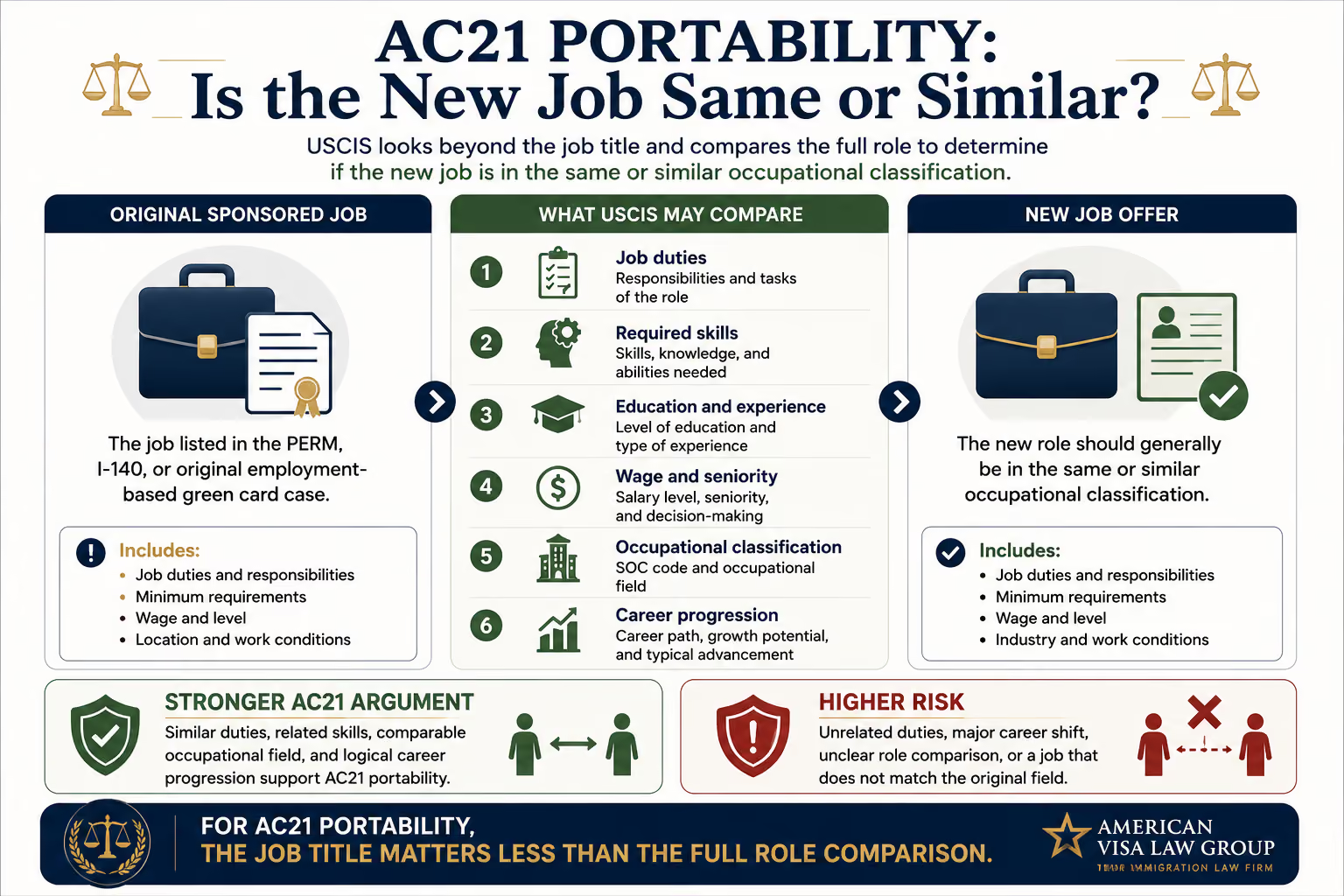
This is the stage where AC21 portability can become important. In many employment-based green card cases, AC21 allows an eligible applicant to change jobs or employers without starting the entire green card process over, as long as the new job is in the same or a similar occupational classification as the job listed in the original I-140 petition.
That does not mean every job change is automatically safe after 180 days. The new position still needs to be reviewed carefully. USCIS may compare the original sponsored job with the new job to determine whether they are close enough in duties, skills, education, experience, responsibility, and occupational classification.
For example, moving from a software engineer role to another software engineer role may be easier to explain than moving from software engineering into an unrelated sales or marketing position. A promotion may also be possible in some cases if the new role represents normal career progression. But the stronger the difference between the old job and the new job, the more important the legal analysis becomes.
Form I-485 Supplement J may also become relevant at this stage. USCIS uses Supplement J to confirm that a valid job offer still exists or to request job portability under INA section 204(j). If the applicant is changing employers or moving into a new role while the I-485 is pending, Supplement J is often the form used to document that change.
The applicant should not focus only on job title. Titles can be misleading. USCIS may look beyond the title and review the actual job duties, required skills, wage level, seniority, occupational code, and whether the new position makes sense as a continuation of the original career path.
This is why documentation matters. A clear offer letter, detailed job description, explanation of duties, wage information, and comparison between the old and new positions can help show why the new job is same or similar. If the applicant receives an RFE asking about the job change, those documents may become important.
The key takeaway is this: after the I-485 has been pending for 180 days or more, changing jobs may be possible under AC21 portability, but it is not automatic. The safest approach is to review whether the new role is genuinely same or similar before resigning, accepting the offer, or submitting Supplement J.
After the green card is approved, the applicant becomes a lawful permanent resident. At that point, the person generally has much more freedom to work for a different employer, accept a new position, change careers, or make normal professional decisions.
But in an employment-based case, the story does not always end the moment the green card arrives.
If the green card was based on a sponsoring employer’s permanent job offer, that job offer should have been genuine when the case was approved. The employer should have intended to offer the position, and the employee should have intended to work in that role. USCIS guidance on employment-based portability also recognizes the importance of a valid job offer and the employer’s intent at the relevant time. (USCIS)
This is why leaving the sponsoring employer immediately after green card approval can be sensitive. The issue is not that a permanent resident can never leave. The issue is whether the facts suggest that the applicant never truly intended to work for the sponsoring employer after approval.
There is no universal rule that requires every employment-based green card holder to stay with the sponsoring employer for six months, one year, or any fixed period. Online advice often treats this as a simple timing rule, but the real analysis is more fact-specific. USCIS may care about the full picture: when the person left, why they left, whether they actually worked for the employer, whether the job still existed, and whether the original process was based on a real employment offer.
A quick departure may be easier to explain if it happened because of a layoff, business closure, restructuring, relocation, health issue, family need, hostile work environment, or a legitimate opportunity that arose after approval. It may be more sensitive if the person had already planned to leave before the green card was approved or never intended to work in the sponsored position.
This can also matter later. For example, if the person applies for naturalization, USCIS may review the applicant’s immigration history. A job change after green card approval does not automatically create a naturalization problem. But if the timing raises questions about whether the employment-based green card was obtained through a genuine job offer, the applicant should be ready to explain the facts clearly.
The key takeaway is this: after green card approval, you usually have more job flexibility, but the original employment-based case should still make sense. If you leave soon after approval, keep documentation showing why the change happened and why the original job offer was genuine when the green card was granted.
One of the biggest mistakes applicants make is assuming that every job change is treated the same. It is not. A job change before PERM, after I-140 approval, while the I-485 is pending, and after green card approval can all raise different legal issues.
Another common mistake is relying too heavily on the phrase “I-140 approved.” An approved I-140 can be valuable, especially for priority date retention and long-term planning, but it does not always mean the applicant can freely move to a new employer without affecting the green card process. If the I-485 has not been filed, or if the I-485 has not been pending long enough for AC21 portability, the case may still depend heavily on the original employer’s permanent job offer.
Applicants also sometimes leave too early after filing the I-485. Filing Form I-485 is an important milestone, but it does not automatically make the case portable. In many employment-based cases, AC21 portability generally becomes available only after the I-485 has been pending for 180 days or more, and the new job must be in the same or similar occupational classification. Changing jobs before that point can create avoidable risk.
A related mistake is assuming that a similar job title is enough. USCIS may look beyond the title and compare the actual job duties, required skills, experience, education, wage level, seniority, and career path. Two jobs can have similar titles but very different responsibilities. On the other hand, a promotion may still be defensible if it represents normal career progression from the original sponsored role.
Some applicants also treat Form I-485 Supplement J as a simple paperwork step. It is more than that. Supplement J is often the document that confirms the continuing job offer or requests job portability. If the new role is not clearly explained, or if the old and new jobs are not properly compared, the filing can create questions instead of resolving them.
Another mistake is forgetting about underlying immigration status. Some applicants use an adjustment-based EAD and assume that work authorization alone solves everything. An EAD may allow employment, but it does not answer every green card strategy question. If the I-485 is later denied, delayed, or challenged, maintaining H-1B or another valid nonimmigrant status may be important in some cases.
Applicants should also avoid resigning first and asking legal questions later. By the time someone has already left the sponsoring employer, the options may be narrower. It is usually better to review the case before accepting the new job, resigning, filing Supplement J, or notifying USCIS.
The final mistake is believing in rigid online rules, such as “you must stay exactly six months after green card approval” or “you can leave immediately with no issue.” Employment-based green card cases are fact-specific. Timing matters, but so do intent, documentation, the reason for the move, the type of case, and the applicant’s full immigration history.
The safest approach is to treat a job change as both a career decision and an immigration decision. Before making the move, the applicant should understand what part of the green card case depends on the original employer, whether portability is available, and whether the new job can be clearly explained if USCIS later reviews the file.
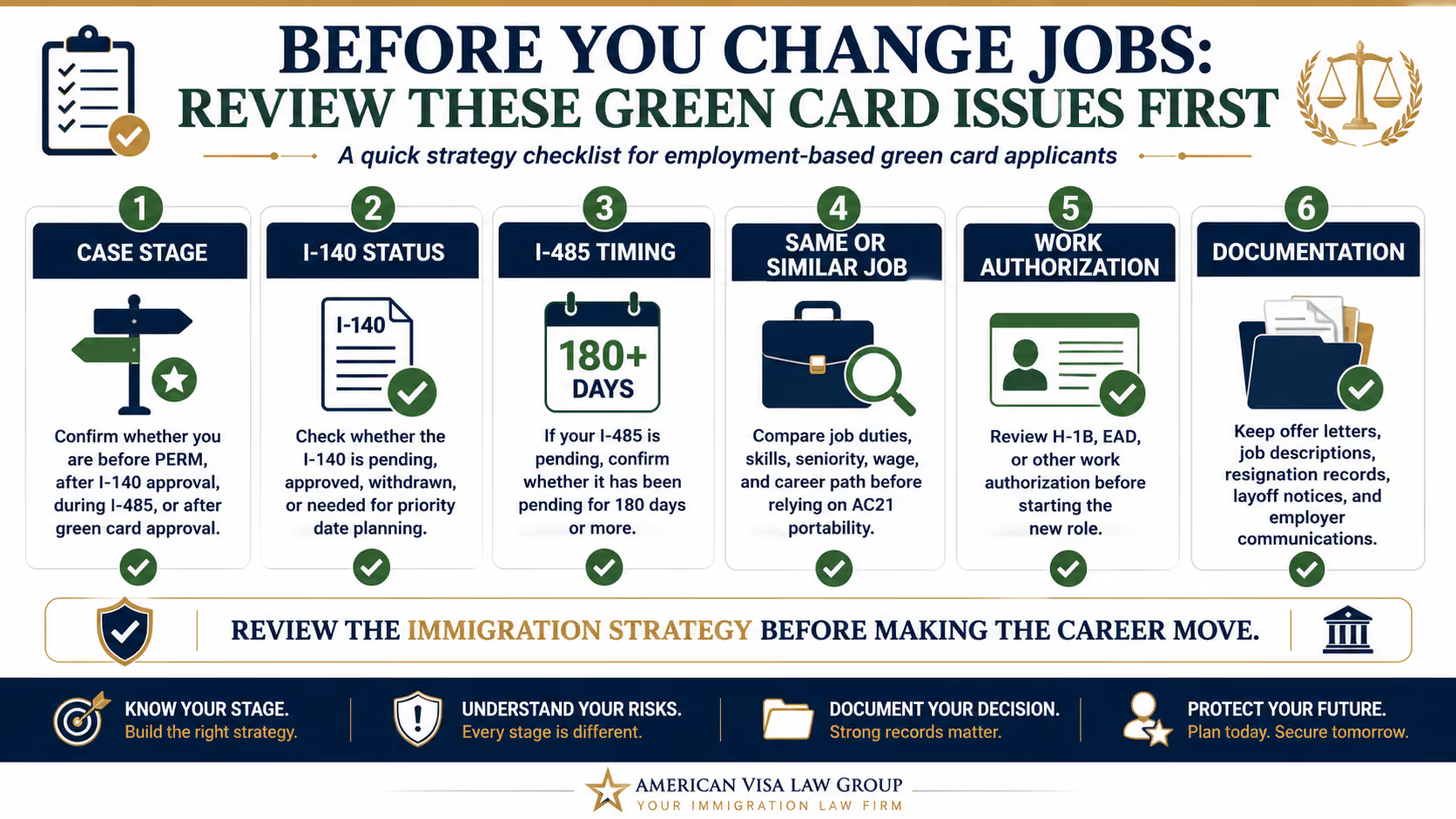
A job change during the green card process is not always a problem, but it is rarely something applicants should treat casually. The safest time to ask legal questions is before resigning, before accepting a new offer, and before assuming that the case will continue without issue.
An immigration attorney can help identify the exact stage of the case and explain what part of the green card process still depends on the sponsoring employer. This matters because the analysis may be very different for someone with a pending PERM, an approved I-140, a recently filed I-485, or a green card that has already been approved.
Legal review is especially important if the I-485 has not yet been pending for 180 days. At that stage, AC21 portability may not yet be available, and a job change can raise questions about whether the original permanent job offer still exists. It is also important if the new job is not clearly similar to the original sponsored position. A change in title, duties, salary, seniority, work location, or career direction may need a careful comparison before the applicant moves forward.
Applicants should also speak with an attorney if the employer is withdrawing the I-140, the company is restructuring, the employee has been laid off, or the applicant is unsure whether to use an adjustment-based EAD instead of maintaining H-1B or another underlying status. These decisions can affect not only the current job change, but also the overall immigration strategy if the green card case is delayed or challenged.
Attorney review can also be helpful after green card approval if the applicant plans to leave the sponsoring employer very soon. A permanent resident is generally not tied to one employer forever, but if the green card was based on an employer-sponsored permanent job offer, the original intent should still make sense. If the timing is sensitive, documentation and a clear explanation can matter.
In many cases, the attorney’s role is not to tell the applicant that changing jobs is impossible. The role is to identify the risk, compare the old and new positions, review the timeline, and help the applicant avoid unnecessary problems. Sometimes the answer may be that the job change is reasonable. Other times, the better strategy may be to wait, document the transition more carefully, file Supplement J properly, or coordinate with the employer before taking action.
The key takeaway is simple: speak with an immigration attorney before the job change creates a problem, not after. A short review before resigning or filing new paperwork can help the applicant understand whether the case is portable, whether the new job is same or similar, and whether the green card strategy still holds together.
Changing jobs during the green card process is not automatically allowed or automatically dangerous. The answer depends on timing, case posture, job similarity, employer support, and documentation.
Early in the process, the case is usually more closely tied to the sponsoring employer and the specific permanent job offer. If PERM is pending, PERM has just been approved, or the I-140 has not yet been approved, a job change may cause delay or require the new employer to restart the green card process.
After I-140 approval, the applicant may have gained an important immigration benefit, especially if a priority date can be retained. But that does not always mean the green card case can continue with a new employer. If Form I-485 has not been filed, or if the I-485 has not been pending long enough, portability may still be limited.
Once the I-485 has been pending for 180 days or more, AC21 portability may provide more flexibility if the new job is in the same or similar occupational classification. Even then, the details matter. USCIS may look at the actual job duties, required skills, seniority, wage, and whether the move makes sense as part of the applicant’s career path.
After green card approval, the applicant usually has more freedom to change employers. But if the green card was based on an employer-sponsored job offer, the original job offer and employment intent should still have been genuine. Leaving immediately after approval is not always a problem, but the facts should be explainable.
The safest approach is to avoid treating a job change as only a career decision. For employment-based green card applicants, it is also an immigration strategy decision. Before resigning, accepting a new role, using an EAD, or filing Form I-485 Supplement J, it is worth reviewing how the move fits into the larger green card timeline.
If you are considering a job change during PERM, after I-140 approval, while your I-485 is pending, or soon after receiving your green card, American Visa Law Group can help you evaluate the timing, risks, and available options before you take the next step.
In many cases, a green card holder can change jobs after approval. However, if the green card was based on an employer-sponsored permanent job offer, leaving immediately after approval may raise questions about whether the original job offer was genuine.
The issue is usually not whether you can ever leave the sponsoring employer. The issue is whether you and the employer had a real, good-faith intent for you to work in the sponsored position when the green card was approved.
There is no universal six-month rule that applies to every employment-based green card holder. Some people stay longer, some leave sooner, and some leave because of circumstances outside their control.
What matters is the full picture: when you left, why you left, whether you actually worked for the sponsoring employer, and whether the original job offer was real when the case was approved.
An approved I-140 can be valuable, but it does not always mean you can freely change jobs without affecting the green card process. If your I-485 has not been filed yet, the case may still depend on the original sponsoring employer’s permanent job offer.
In many PERM-based cases, a new employer may need to start a new PERM and I-140 process. The approved I-140 may still help with priority date retention in some situations, but it does not automatically transfer the old employer’s case to the new employer.
You may be able to change jobs under AC21 portability if your I-485 has been pending for 180 days or more and the new job is in the same or similar occupational classification as the original sponsored position.
This analysis should not be based only on job title. USCIS may look at the actual duties, skills, seniority, wage, required experience, and whether the new role makes sense as a continuation of the original career path.
“Same or similar” generally means the new job should be close enough to the original sponsored role in occupation, duties, skills, and career direction. A move from one software engineering role to another software engineering role may be easier to explain than a move from engineering into an unrelated sales position.
A promotion may also be acceptable in some cases if it reflects normal career progression. The stronger the connection between the old and new roles, the easier the portability argument may be.
Form I-485 Supplement J is used in many employment-based adjustment cases to confirm that a valid job offer exists or to request job portability under AC21. If you are changing employers while your I-485 is pending, Supplement J may become an important part of documenting the new role.
It should not be treated as a simple formality. The information in Supplement J should be consistent with the job offer, job duties, employer details, and same-or-similar analysis.
Yes, an employer may request withdrawal of an I-140 petition. The immigration effect of that withdrawal depends on timing and the facts of the case.
For example, whether the I-140 was already approved, how long it had been approved, whether the I-485 was filed, and whether AC21 portability applies can all matter. This is one reason applicants should review the case before resigning or assuming the approved I-140 is fully protected.
A normal job change after green card approval does not automatically create a naturalization problem. Many permanent residents change jobs, careers, or employers before applying for citizenship.
However, if the green card was employment-based and the applicant left the sponsoring employer very soon after approval, USCIS may look more closely at whether the original job offer was genuine. Clear documentation and a reasonable explanation can be important if the timing is ever questioned.
For readers who want to review the official rules and procedures behind employment-based green card job changes, the following resources provide useful background on PERM, Form I-140, adjustment of status, AC21 portability, and Visa Bulletin timing.
USCIS Policy Manual — Job Portability After Adjustment Filing
URL: https://www.uscis.gov/policy-manual/volume-7-part-e-chapter-5
This USCIS Policy Manual chapter explains the core AC21 portability framework for certain employment-based adjustment applicants whose Form I-485 has been pending for 180 days or more.
USCIS — Same or Similar Occupational Classifications for AC21 Job Portability
URL: https://www.uscis.gov/working-in-the-united-states/how-uscis-determines-same-or-similar-occupational-classifications-for-job-portability-under-ac21
This USCIS resource is especially useful for understanding how USCIS may compare the original sponsored job with a new position when evaluating whether the roles are “same or similar.”
USCIS — Form I-485 Supplement J, Confirmation of Valid Job Offer or Request for Job Portability
URL: https://www.uscis.gov/i-485supj
This page explains Form I-485 Supplement J, which is commonly used to confirm a valid job offer or request job portability under INA section 204(j).
USCIS — Petition Filing and Processing Procedures for Form I-140
URL: https://www.uscis.gov/forms/all-forms/petition-filing-and-processing-procedures-for-form-i-140-immigrant-petition-for-alien-workers
This USCIS page provides helpful background on Form I-140, including filing procedures, petition withdrawal issues, and priority-date considerations.
U.S. Department of Labor — Permanent Labor Certification Program
URL: https://www.dol.gov/agencies/eta/foreign-labor/programs/permanent
This Department of Labor page explains the PERM labor certification process and why PERM is tied to a specific employer’s permanent job opportunity.
U.S. Department of Labor FLAG — PERM Processing Times
URL: https://flag.dol.gov/processingtimes
This page provides current Department of Labor processing-time information, which can help readers understand why restarting PERM after a job change may create significant delay.
USCIS — Green Card for Employment-Based Immigrants
URL: https://www.uscis.gov/green-card/green-card-eligibility/green-card-for-employment-based-immigrants
This USCIS guide gives a broader overview of employment-based adjustment of status and is useful for readers who want to understand the larger green card process.
U.S. Department of State — Visa Bulletin
URL: https://travel.state.gov/content/travel/en/legal/visa-law0/visa-bulletin.html
The Visa Bulletin is important for applicants waiting to file or complete adjustment of status, especially when priority dates and country backlogs affect green card timing.
Hasan Abdullah, Esq. is the Founder and Managing Attorney of American Visa Law Group. His practice focuses on U.S. immigration law, including family-based immigration, employment-based immigration, adjustment of status, consular processing, waivers, PERM labor certification, NIW, EB-1, H-1B, O-1, and complex immigration strategy.
Through American Visa Law Group, Mr. Abdullah helps individuals, families, professionals, investors, and employers understand their immigration options and plan around changing government policies, USCIS procedures, and Visa Bulletin movement. His work emphasizes practical legal analysis, realistic expectations, and strategy tailored to each applicant’s immigration history and long-term goals.


