Author: Hasan Abdullah, Esq.
Updated: September, 2026
Trackitt is widely used by immigration applicants to compare I-485 and H-1B timelines with cases reported by other users. Seeing someone with a similar receipt date receive an approval sooner can be useful context, but it can also create a misleading impression that your own case is delayed.
The key distinction is the source of the data. Trackitt is a community-based immigration tracker built from information users choose to report, while USCIS processing times are based on cases the agency has actually adjudicated. Because the two systems measure different populations using different methods, their timelines should not be expected to match exactly.
That does not make Trackitt useless. When filtered carefully, it can reveal patterns among similar I-485 or H-1B cases. But it should supplement, not replace, official USCIS information.
American Visa Law Group assists individuals, professionals, families, and employers with a range of U.S. immigration matters.
This guide explains how Trackitt works, how accurate its I-485 and H-1B trackers are, why Trackitt and USCIS processing times differ, and how to compare your case without drawing conclusions from the wrong data.
Trackitt can be useful for identifying timelines and patterns reported by other immigration applicants, but it is not an official USCIS processing-time database. Its information depends on voluntary user reporting, while USCIS processing times are calculated from agency adjudication data. Neither Trackitt nor USCIS processing-time estimates can predict the exact decision date of an individual I-485 or H-1B case.
Trackitt is a community-based immigration tracking platform where users can share timelines and compare their cases with other applicants and petitioners. Its U.S. immigration trackers include categories for I-485 adjustment of status, H-1B petitions, I-140 petitions, employment authorization, advance parole, PERM, naturalization, and other immigration processes.
Users can visit Trackitt and enter details about their own cases, such as filing and receipt dates, immigration category, processing type, USCIS office or service center, RFE history, and approval or denial date.
For example, an I-485 Trackitt entry may include:
An H-1B Trackitt case may similarly show whether the petition involves an extension or another filing type, whether regular or premium processing was used, whether an RFE was issued, and how long the reported case took to reach a decision.
This level of detail is what makes Trackitt useful: instead of seeing only one broad processing-time number, users can look for other cases that appear similar to their own.
No. Trackitt is not operated by or affiliated with U.S. Citizenship and Immigration Services.
The information displayed on Trackitt comes from its community rather than directly from USCIS adjudication systems. A Trackitt entry therefore reflects what a user has reported about a case; it does not give Trackitt access to an applicant’s internal USCIS file or reveal what an immigration officer is currently doing.
For an official individual case update, applicants should use USCIS Case Status Online with their receipt number.
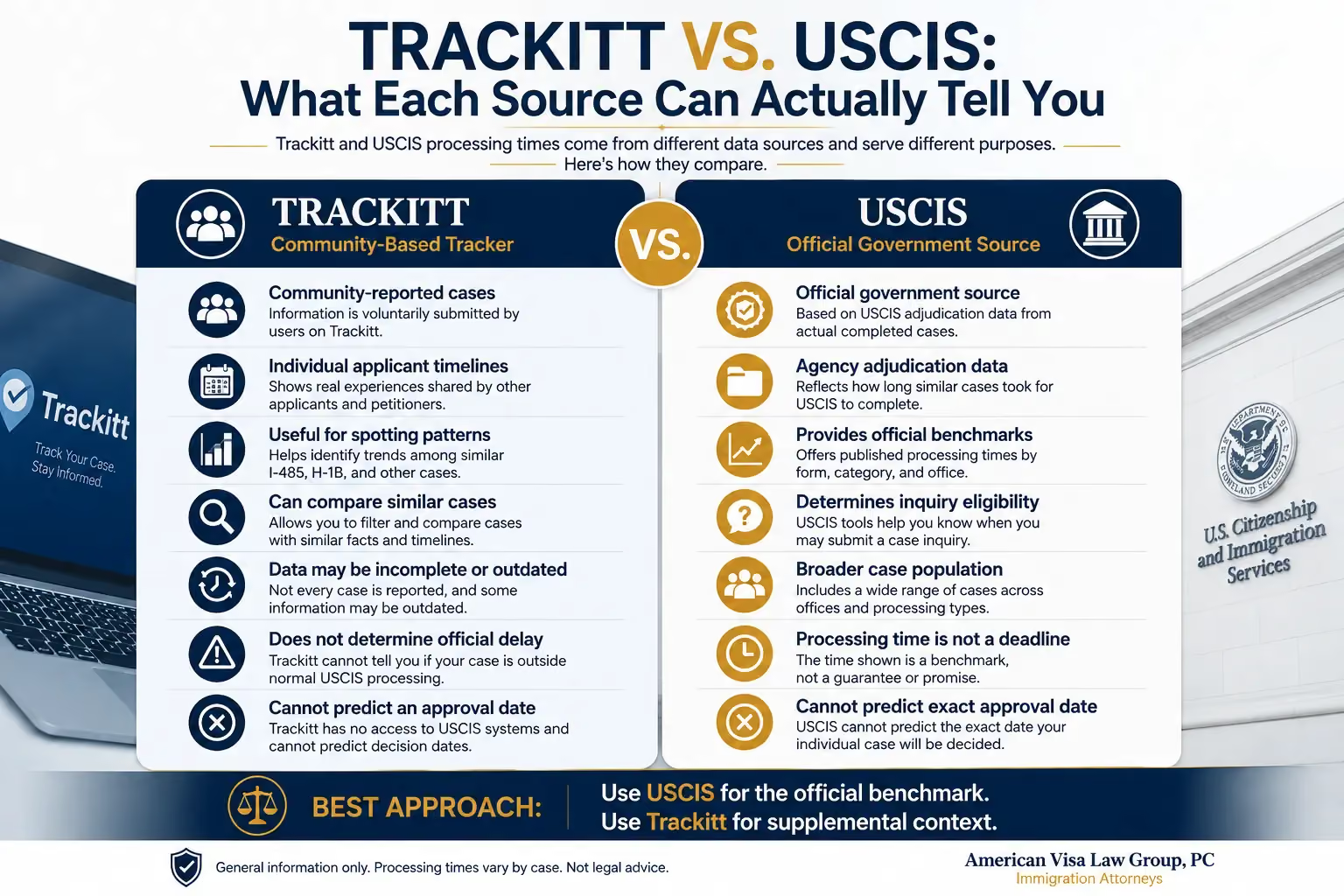
That distinction matters because Trackitt and USCIS are not two competing versions of the same database. They collect different information for different purposes, which is why their processing-time numbers can look very different.
When deciding whether an I-485 or H-1B case is actually taking longer than expected, USCIS processing times are the more authoritative benchmark. Trackitt can provide useful community context, but the two tools should not be treated as equivalent sources of processing data.
The difference comes down to where the information originates and what each tool is designed to measure.
A Trackitt immigration tracker can be helpful because individual entries may contain details that a broad USCIS processing-time figure does not show. For example, users can compare filing dates, immigration categories, RFEs, service-center information, transfers, and reported approval dates.
That level of detail can help answer a practical question:
Are other people with genuinely similar cases seeing a similar pattern?
But the answer should be treated as context, not as an official processing deadline.
Trackitt's dataset depends on which users choose to submit cases, how accurately they enter information, and whether they return to update their records when something changes. That means a group of Trackitt cases may not represent the complete population of I-485 or H-1B cases USCIS is handling.
USCIS, by contrast, publishes official case processing times using agency adjudication data. Those figures are therefore the better starting point when determining whether a case may be taking longer than expected.
USCIS also provides a separate case-processing inquiry tool that applicants and petitioners can use to determine whether a pending case has reached the point when an inquiry may be appropriate.
However, official does not mean predictive. A USCIS processing-time figure is not a promise that an individual case will receive a decision on a particular date.
The most useful approach is therefore:
Use USCIS to understand the official processing benchmark and Trackitt to understand reported experiences among carefully selected, similar cases.
Understanding why even those two sets of numbers can differ requires looking at how USCIS actually calculates its published processing times.
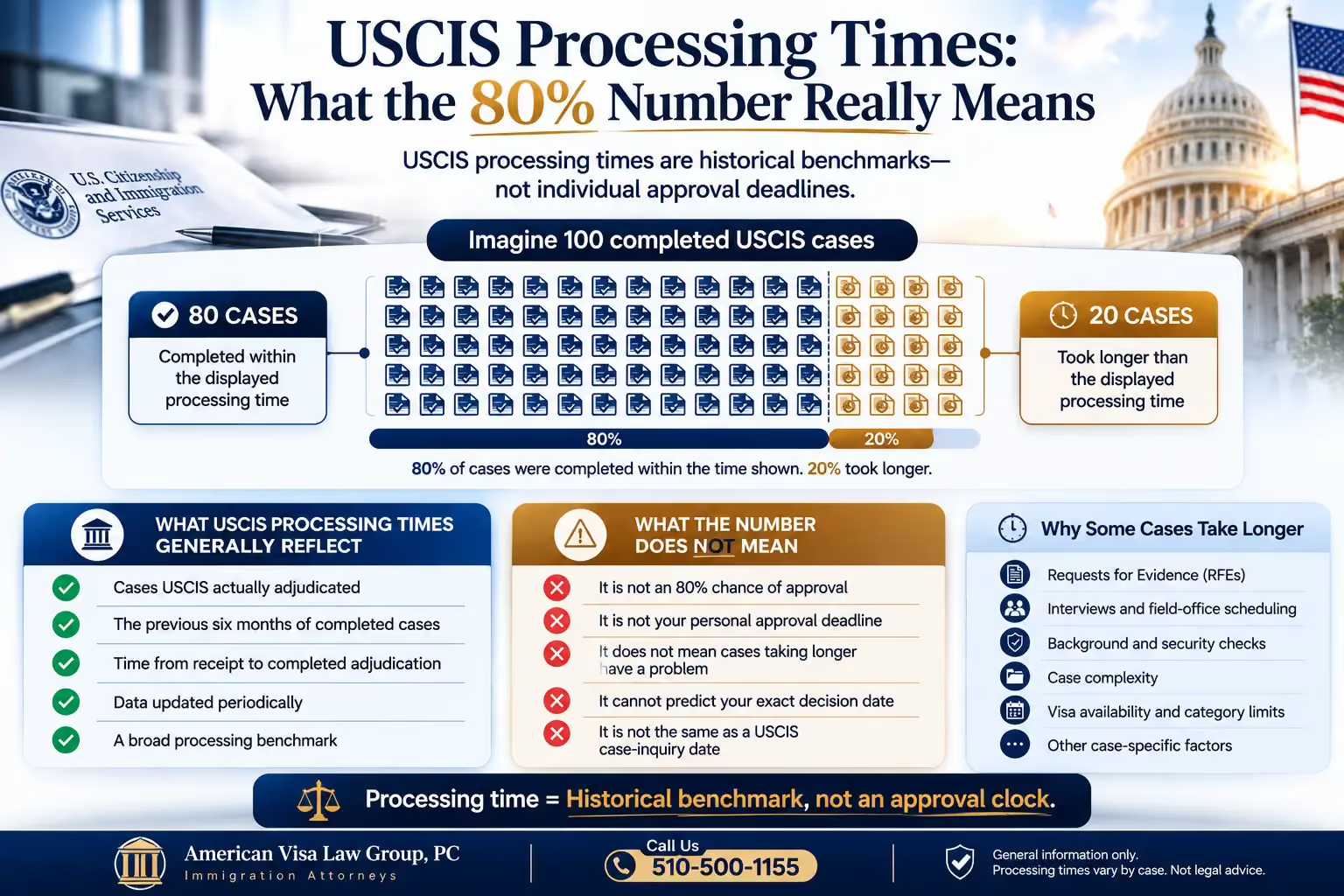
USCIS processing times are not simple averages and should not be interpreted as deadlines for individual cases.
Under USCIS’s current case processing time methodology, the processing time displayed for a form generally represents the amount of time it took USCIS to complete 80% of adjudicated cases during the previous six months.
USCIS measures the period from the date it received an application or petition until the agency completed adjudication by approving or denying it.
For example, if a USCIS page displays a processing time of 12 months, that does not mean every applicant should expect a decision exactly 12 months after filing. It means that 80% of the relevant cases USCIS completed during the measurement period were decided within that amount of time. Some cases were completed sooner, while the remaining 20% took longer.
USCIS also states that its processing-time data is generally updated monthly and based on data approximately one month old. Processing times can therefore change as new cases are completed and workloads, staffing, filing volumes, or operational priorities shift.
Time spent waiting for certain case events can also be included. According to the USCIS Processing Times FAQs, the calculation generally includes time spent waiting for biometrics, responses to Requests for Evidence, and rescheduled interviews.
This is another reason why two otherwise similar cases may produce different timelines.
USCIS also publishes historical national processing times, but those figures should not automatically be compared with the current processing-time number.
Historical tables commonly report a median, meaning the time in which 50% of cases were completed during the specified period. USCIS specifically warns that some historical figures are not directly comparable with current processing times because different methodologies may apply.
For someone comparing USCIS data with Trackitt, the takeaway is important:
A Trackitt timeline, a current USCIS 80% processing time, and a historical USCIS median are three different measurements.
Treating them as interchangeable can make a perfectly normal case appear unusually fast, or unnecessarily delayed.
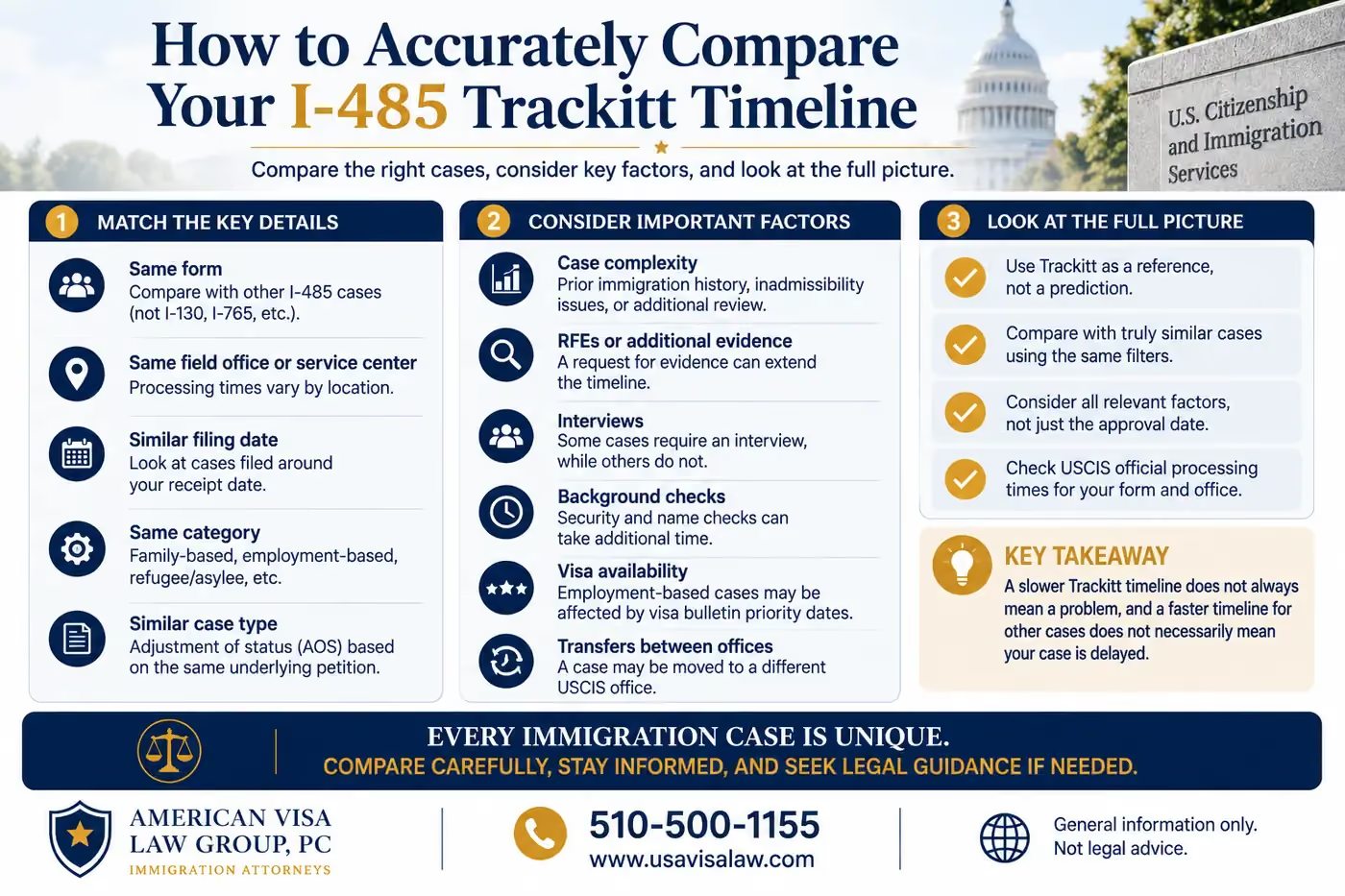
I-485 Trackitt can be useful for comparing adjustment-of-status timelines, but its accuracy depends heavily on whether you are comparing genuinely similar cases. Two applicants who filed Form I-485 on the same day may still have very different paths to approval.
The biggest mistake is comparing cases only by receipt date.
A meaningful I-485 comparison should account for factors such as:
For employment-based applicants, visa availability can be especially important. A case may be otherwise ready for adjudication but still unable to receive final approval if an immigrant visa number is not available under the applicable Department of State Visa Bulletin.
USCIS also treats visa availability differently in its own data. Its published historical processing-time methodology excludes visa-regressed I-485 cases from processing-time calculations. This is another reason a Trackitt sample containing pending retrogressed cases may not line up neatly with USCIS statistics.
Readers following monthly cutoff dates can also review AVLG’s September 2026 Visa Bulletin analysis for additional context on how priority dates and visa availability can affect adjustment cases.
If you use Trackitt, narrow the comparison group as much as reasonably possible.
For example, comparing:
“I-485 cases filed in May”
is usually too broad.
A more meaningful comparison might be:
“employment-based EB-2 adjustment cases with similar priority-date availability, a similar receipt period, comparable USCIS processing history, and no RFE or interview complications.”
The same principle applies to family-based cases. An immediate-relative I-485 should not automatically be compared with an employment-based preference case simply because both applicants received receipt notices in the same month.
USCIS also instructs applicants whose I-485 receipt identifies the National Benefits Center to check the processing time associated with the relevant local field office for certain adjustment cases, rather than assuming that “NBC” alone identifies the final processing benchmark.
The practical takeaway is that Trackitt becomes more useful as the comparison group becomes more specific. It can show whether similarly situated users are reporting a pattern, but it cannot tell you whether your own I-485 is approvable, whether a visa number is available, or exactly when USCIS will make a decision.
H-1B Trackitt can be useful for comparing reported petition timelines, but the results are only meaningful when the cases involve similar filing circumstances. An H-1B extension filed under regular processing should not be compared directly with a premium-processing case, and a change-of-employer petition may follow a different timeline from an amendment or initial cap-subject filing.
Trackitt users may report H-1B details such as:
Those details can make Trackitt useful for identifying patterns. But they do not make the platform an official measure of how long USCIS should take to decide a particular Form I-129.
When reviewing H-1B Trackitt data, try to compare cases with the same:
The distinction between regular and premium processing is especially important.
USCIS offers Premium Processing Service for eligible Form I-129 petitions, including H-1B cases. Premium processing requires USCIS to take one of several specified adjudicative actions within the applicable premium-processing timeframe; it does not guarantee approval.
USCIS historical data also separates premium and non-premium Form I-129 cases. For FY2026 through May 31, 2026, USCIS reported a national historical median of 0.5 months for premium-filed I-129 petitions compared with 5.3 months for non-premium I-129 petitions. Those figures are historical medians, not promises for a particular H-1B filing.
That difference illustrates why mixing the two groups in a Trackitt comparison can produce a distorted picture.
An RFE can also materially change the timeline. Under premium processing, USCIS explains that the premium clock stops when it issues an RFE or NOID and begins again under the applicable timeframe after USCIS receives the response.
Employers and workers who need broader guidance on eligibility, extensions, amendments, and employer changes can review AVLG’s H-1B visa requirements and petition process.
The practical rule is the same as with I-485 Trackitt: the more precisely you match the underlying case facts, the more useful the comparison becomes. Trackitt may show what happened to similar H-1B users, but USCIS case status and official processing information remain the better sources for evaluating the actual petition.
.avif)
Trackitt can be useful for spotting patterns, but its reported timelines can become misleading when users treat them as if they represent the full population of USCIS cases.
The main limitation is that Trackitt relies on voluntary, user-submitted data. That means the dataset is shaped by who chooses to enter a case, what information they provide, and whether they return later to update the result.
Several issues can affect the reliability of a Trackitt comparison:
This does not mean Trackitt data has no value. Its strength is providing visibility into individual immigration experiences that broad government statistics do not show.
The safest use is to look for patterns across a reasonably sized group of genuinely comparable cases, rather than treating one reported approval, or even a simple Trackitt average, as a deadline for your own filing.
The same caution applies in the opposite direction: even official USCIS processing times can be misunderstood if readers assume the published number predicts exactly when their individual case will be decided.
USCIS processing times are the official benchmark, but they can still be misunderstood. The most common mistake is treating the number displayed on the USCIS Processing Times page as a deadline or prediction for an individual case.
It is neither.
As explained earlier, the published processing time generally represents how long USCIS took to complete 80% of relevant adjudicated cases during the previous six months. That means some cases were decided considerably faster, and roughly 20% of completed cases took longer than the displayed time.
Several other factors matter:
USCIS itself emphasizes that case-specific circumstances can cause an adjudication to take longer than the published figure. The agency provides a separate case inquiry tool to help determine when a pending filing may actually be outside the range in which USCIS expects the case to remain under normal processing.
This is why neither extreme is useful:
Trackitt should not replace USCIS data, but USCIS processing times should not be treated as an exact approval clock either.
The strongest approach is to use both sources for what they do best, and compare them systematically rather than relying on one number.
The best way to use Trackitt and USCIS processing times together is to give each source a different job.
Use USCIS to establish the official case status, processing benchmark, and inquiry eligibility. Use Trackitt to compare your experience with a carefully selected group of similar, self-reported cases.
Start with USCIS Case Status Online using the receipt number from your Form I-797 or other USCIS notice.
This tells you the latest public status USCIS has posted for the application or petition. Trackitt should never replace this step because it does not receive direct access to USCIS case records.
Next, use the USCIS Processing Times tool.
Make sure you select the correct:
Using the wrong category can make a normal case appear delayed.
Do not compare your case simply with everyone who filed the same form in the same month.
For an I-485, narrow the comparison by factors such as immigration category, priority-date availability, filing period, field-office history, RFE activity, and interview history.
For an H-1B, compare the same petition type and distinguish regular processing from premium processing, as well as cases with and without RFEs.
One Trackitt user receiving approval in 30 days does not establish a 30-day expected processing time.
A more useful question is:
Do a reasonably sized group of genuinely comparable cases show a consistent pattern?
Even then, use the result as context rather than as a prediction.
If your case appears slower than the comparison group, do not assume that it is officially delayed.
Use USCIS’s Check Case Processing tool to determine whether you may submit a case inquiry. USCIS asks for the receipt number and uses case-specific information to determine whether follow-up is available.
The practical hierarchy is:
USCIS case status → USCIS processing time → carefully filtered Trackitt comparison → USCIS case-inquiry eligibility.
That approach gives Trackitt its proper value without allowing a crowdsourced timeline to override the government information that actually governs your case.
Seeing other I-485 or H-1B cases on Trackitt move faster than yours can be frustrating, but a faster reported case does not automatically mean your USCIS case is delayed or has a problem.
Before drawing conclusions, check whether the cases are actually comparable.
Ask:
Even one of these differences can materially change the timeline.
For example, an employment-based I-485 case with a current priority date should not automatically be compared with a case affected by visa retrogression. Likewise, an H-1B petition using premium processing should not be used as a benchmark for a regular-processing petition.
If comparable Trackitt cases appear to be moving faster, the next step is still to check your official information.
Review:
A Trackitt comparison can help identify a pattern worth investigating, but it does not establish that USCIS has mishandled or forgotten a case.
The more important question is whether your own filing is outside the applicable USCIS processing range or has a case-specific issue that requires attention.
For I-485 applicants, that analysis often begins with visa availability, priority dates, processing location, and case history.
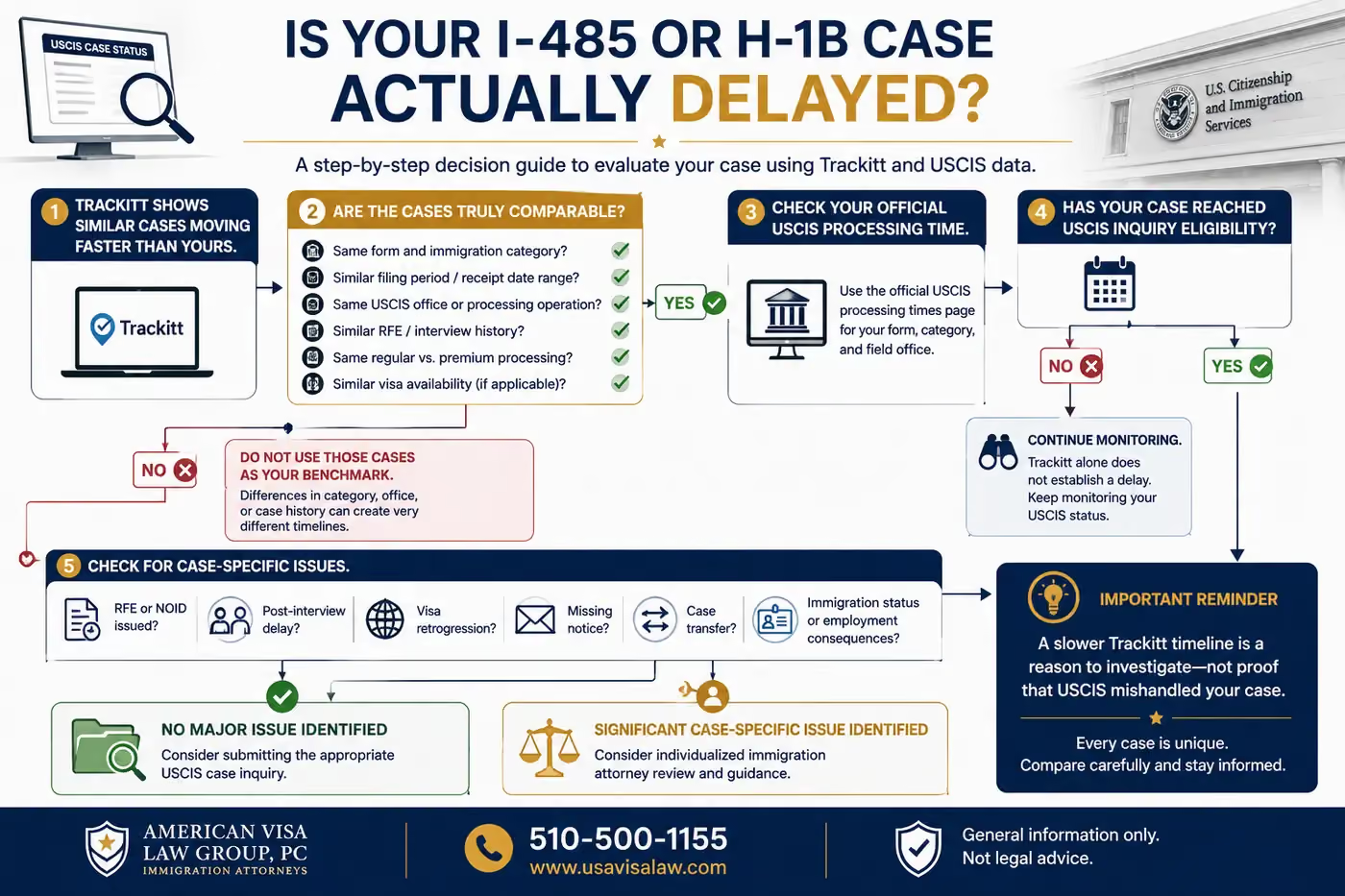
An I-485 case moving slower than similar Trackitt entries does not automatically mean something is wrong. The more important question is whether the delay makes sense in light of the case category, visa availability, USCIS processing information, and the applicant’s individual history.
An I-485 delay may deserve closer attention when:
For employment-based adjustment cases, priority-date and visa availability issues must be checked before concluding that USCIS is simply processing the case too slowly.
The Department of State’s Visa Bulletin controls immigrant visa availability in numerically limited categories. A case can remain pending even when other adjudication work is complete if a visa number is not currently available.
USCIS also excludes visa-regressed I-485 cases from its historical processing-time calculations, which is another reason Trackitt and USCIS numbers may not line up neatly.
If the case appears outside ordinary processing, use the USCIS Case Inquiry tool before assuming that a community tracker proves a delay. USCIS specifically limits inquiries to cases that meet its processing criteria.
The key distinction is between a case that is slow but explainable and one that is slow because a legal, evidentiary, procedural, or visa-availability issue may be affecting adjudication.
An H-1B petition moving more slowly than cases reported on Trackitt does not by itself establish a USCIS delay. Timing should first be evaluated against the petition type, processing method, RFE history, and official USCIS information.
Closer review may be appropriate when:
Premium-processing cases require a different analysis. USCIS's Premium Processing Service requires the agency to take a qualifying adjudicative action within the applicable premium-processing period; it does not guarantee approval. If USCIS issues an RFE or NOID, the premium-processing timeframe stops and a new applicable period begins when USCIS receives the response.
For regular-processing cases, employers and beneficiaries should first review the official USCIS case status and applicable processing information before treating Trackitt timelines as evidence that something is wrong. USCIS also provides a case inquiry tool for cases that meet its inquiry criteria.
The important distinction is between an H-1B petition that is simply slower than selected Trackitt cases and one where the delay creates an actual immigration-status, employment, evidentiary, or procedural concern.
Trackitt becomes less useful when applicants treat community-reported timelines as if they were official USCIS benchmarks. The biggest mistakes usually come from comparing cases that only appear similar.
Common errors include:
The best Trackitt comparison is therefore not the case with the closest receipt date. It is the case, or preferably group of cases, with the closest underlying immigration circumstances.
Trackitt can help identify patterns. It cannot replace the official USCIS record, establish that a case is delayed, or predict the exact date of an I-485 or H-1B decision.
Trackitt is useful for comparing community-reported I-485 and H-1B timelines, but it should not be treated as an official USCIS processing-time source.
Trackitt data depends on voluntary user reporting, so incomplete records, different case facts, and small comparison groups can affect the picture it creates.
USCIS processing times remain the official benchmark, but they also do not predict the exact decision date of an individual case.
For the most useful comparison:
The best approach is to use USCIS for the official benchmark and Trackitt for supplemental context.
Trackitt can be useful for identifying patterns among cases reported by users, but it is not an official USCIS processing-time database. Its accuracy depends on how complete, current, and comparable the user-submitted records are. It should be used as supplemental context rather than as a prediction tool.
No. Trackitt is not operated by or affiliated with USCIS. It is a community-based immigration tracking platform built from information users voluntarily submit. Official case status and processing information should come from USCIS.
Trackitt timelines are based on case information entered by users, including filing dates, receipt dates, RFEs, service-center information, interview activity, and reported approval or denial dates. Because participation is voluntary, the dataset does not represent every USCIS case.
I-485 Trackitt can be useful when cases are filtered carefully. A meaningful comparison should consider the adjustment category, priority date, visa availability, field office, RFE history, interview history, and other case-specific factors. Comparing only receipt dates can be misleading.
H-1B Trackitt can provide useful community context, but the comparison should involve similar petition types and processing methods. Regular processing, premium processing, extensions, amendments, and change-of-employer petitions should not automatically be grouped together.
Cases with similar receipt dates may still differ because of USCIS office workload, immigration category, RFEs, interviews, transfers, visa availability, background processing, petition type, or other case-specific issues. A faster Trackitt case does not by itself establish that your case is delayed.
Use USCIS processing times as the official benchmark for evaluating case processing. Trackitt can then be used as an additional source of community-reported experience.
Neither source can tell you the exact date when USCIS will decide an individual case.
No. Trackitt can show what users with similar cases have reported, but it cannot access USCIS’s internal adjudication system or determine when an officer will act on your filing.
If you are concerned about timing, check your USCIS Case Status Online, review the applicable USCIS processing time, and determine whether your case qualifies for a USCIS case inquiry.
For readers who want to verify processing times, track an individual case, understand USCIS data methodology, or evaluate visa availability, the following official resources provide additional guidance.
Readers comparing Trackitt timelines with their own I-485 or H-1B case may also find these AVLG resources useful:
Hasan Abdullah is the Founder and Managing Attorney of American Visa Law Group, a U.S.immigration law firm focused on helping individuals, families, professionals, entrepreneurs, andemployers navigate complex immigration matters. He has extensive experience in employment-based and family-based immigration, including H-1B, PERM, NIW, EB1, O-1, adjustment ofstatus, waivers, consular processing, and complex USCIS strategy matters.
Through AVLG, Hasan focuses on practical immigration strategy, nuanced legal analysis, andrealistic guidance grounded in real immigration practice. His writing combines operationalinsight, legal sophistication, and practical understanding of USCIS adjudication trends to helpreaders make more informed immigration decisions

Hasan Abdullah, Esq. is the Founder and Managing Attorney of American Visa Law Group. His practice focuses on U.S. immigration law, including family-based immigration, employment-based immigration, adjustment of status, consular processing, waivers, PERM labor certification, NIW, EB-1, H-1B, O-1, and complex immigration strategy.
Through American Visa Law Group, Mr. Abdullah helps individuals, families, professionals, investors, and employers understand their immigration options and plan around changing government policies, USCIS procedures, and Visa Bulletin movement. His work emphasizes practical legal analysis, realistic expectations, and strategy tailored to each applicant’s immigration history and long-term goals.


