Author: Hasan Abdullah, Esq.
The PERM I-140 cost in 2026 is not one filing fee or one attorney charge. For most employer-sponsored EB-2 and EB-3 green card cases that require labor certification, the financial picture develops across several distinct stages: the PERM labor certification process, the Form I-140 immigrant petition, and, later, adjustment of status or consular processing.
The total cost may include PERM recruitment and advertising expenses, immigration attorney fees, the Form I-140 filing fee, the applicable Asylum Program Fee, and optional premium processing. Additional expenses can arise if the case involves a PERM audit, supervised recruitment, a Request for Evidence, or legal work outside the scope of the original representation agreement.
The total PERM I-140 cost may include PERM recruitment and legal expenses, USCIS filing fees for Form I-140, the applicable Asylum Program Fee, optional premium processing, and separate green card processing costs. Who is responsible for each expense depends in part on the immigration stage and the type of cost involved.
That last distinction matters. PERM is an employer-driven labor certification process, and employer and foreign worker payment responsibilities should not automatically be treated as interchangeable. Understanding who pays PERM costs can be just as important as understanding how much the process costs.
This guide separates the PERM stage, the I-140 petition, and the later permanent residence process so employers and sponsored professionals can understand where the costs arise, which fees may be separate, and what to review before comparing PERM and I-140 attorney fee quotes.
The easiest way to understand PERM I-140 cost in 2026 is to separate the process into stages. PERM is generally the Department of Labor labor certification stage, while Form I-140 is the immigrant petition filed with U.S. Citizenship and Immigration Services. For employment-based cases requiring labor certification, the employer generally completes the PERM process before submitting the related Form I-140 petition.
That distinction matters for budgeting. A quote described simply as a “green card cost” may not tell an employer or sponsored worker whether it includes PERM recruitment, attorney fees, USCIS petition fees, premium processing, or the later permanent residence stage.
In practical terms, this means there may be several separate payments during an employer-sponsored immigration case. Recruitment vendors may charge for advertising. Legal fees may be structured by immigration stage. USCIS requires the correct filing fees for Form I-140, including applicable fee requirements, and premium processing is a separate optional USCIS service when available for the petition.
The exact total will therefore depend on more than the government filing fee. The structure of the legal engagement, recruitment expenses, employer classification for USCIS fee purposes, and whether additional case work becomes necessary can all affect the overall budget.
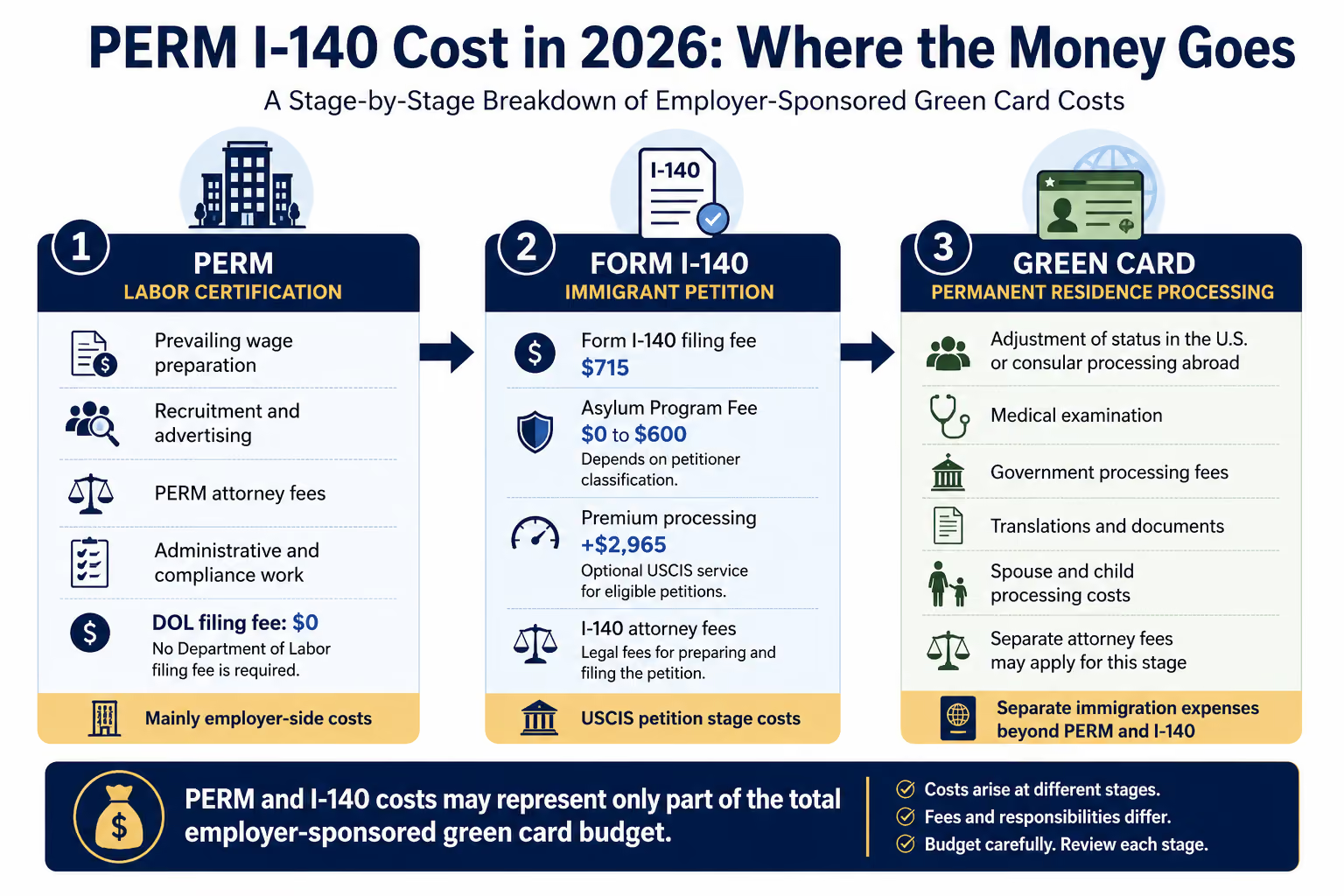
PERM cost and I-140 cost refer to different parts of the employment-based green card process.
The PERM stage is connected to the employer's permanent job opportunity and the Department of Labor labor certification process. The work may involve a prevailing wage determination, analysis of the position and minimum requirements, recruitment, advertising, and preparation of the permanent labor certification application. The Department of Labor describes permanent labor certification as the employer-side process used to obtain labor certification for permanent employment before the USCIS immigrant petition in cases where labor certification is required.
The I-140 stage begins with a different agency and a different legal filing. Form I-140 is submitted to USCIS as an immigrant petition for the foreign worker. This stage has its own government fee structure and may involve separate attorney fees for preparing the petition and supporting evidence. USCIS also directs I-140 petitioners to its current fee schedule because the correct filing fee must be submitted with the petition.
Employers and sponsored professionals should therefore be careful when comparing legal fee quotes. A PERM attorney fee does not necessarily include preparation of Form I-140, and an I-140 quote should not automatically be assumed to cover the recruitment and labor certification work that came before it.
PERM certification and I-140 approval are also not the same as completing the green card process.
After the petition stage, the foreign worker may still need to complete adjustment of status in the United States or immigrant visa processing abroad, depending on the case. Timing may also depend on priority date and immigrant visa availability.
Those later stages can create separate government fees, medical examination costs, document or translation expenses, travel costs in some consular cases, and additional attorney fees. A spouse or child seeking permanent residence as a derivative beneficiary may also have separate processing expenses.
For that reason, a realistic immigration budget should distinguish between the cost of PERM, the cost of Form I-140, and the cost of actually completing permanent residence processing.
A lower quote for one stage is not necessarily a lower total cost. Before comparing prices, the employer and sponsored worker should first identify exactly which immigration stages, legal services, and potential additional work are included.
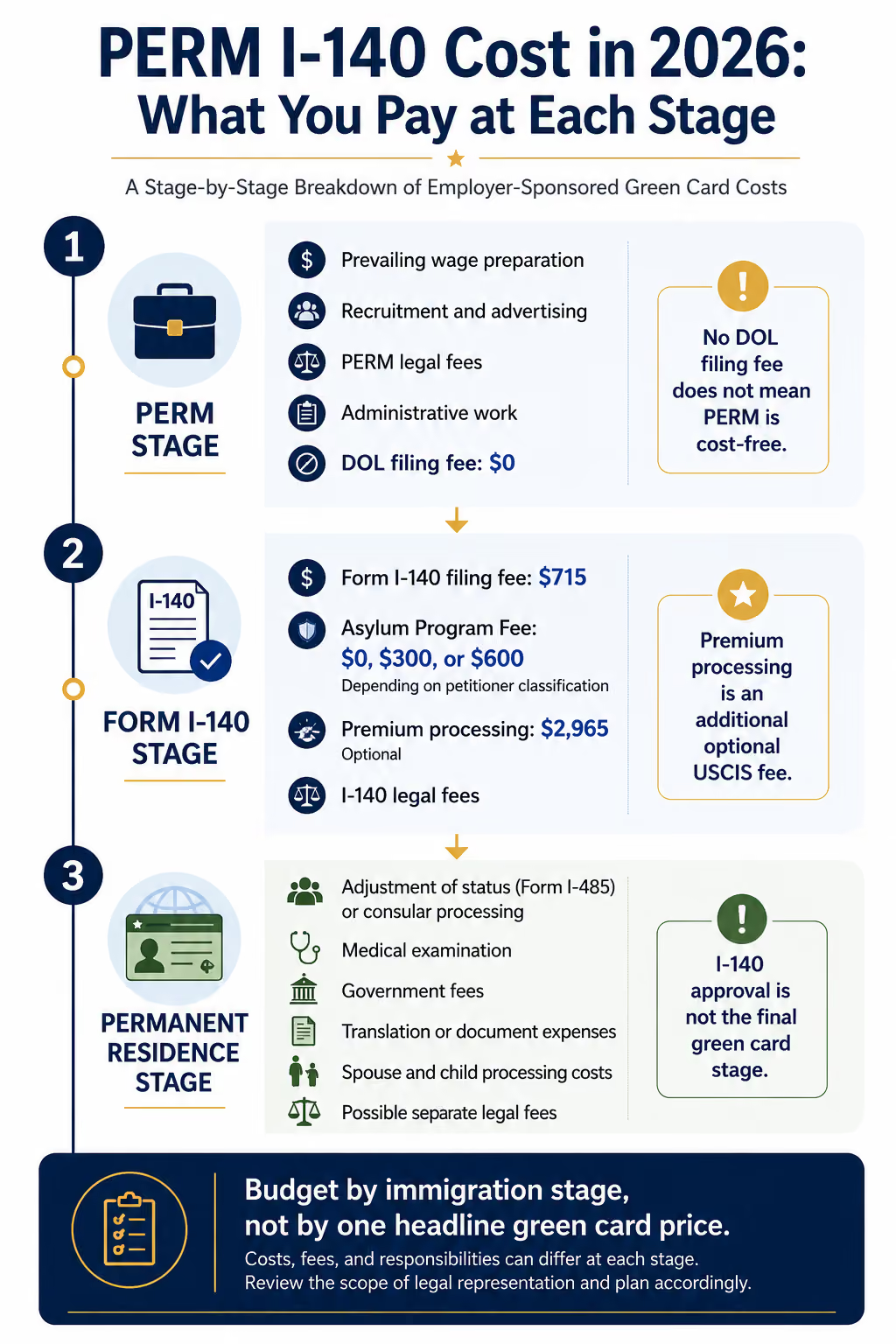
The PERM stage can create significant expenses even though the Department of Labor does not charge a filing fee for Form ETA-9089. The actual cost usually comes from the work required before the application is filed: analyzing the permanent job opportunity, obtaining a prevailing wage determination, completing required recruitment, paying advertising expenses, and preparing the labor certification case.
This is why asking, “How much is the PERM filing fee?” gives only part of the answer.
There is no Department of Labor filing fee for Form ETA-9089, but PERM is not a cost-free process. Employers may still incur recruitment, advertising, administrative, and immigration attorney expenses before the labor certification application is filed. The Department of Labor has specifically recognized that Form ETA-9089 does not require a filing fee while separately accounting for advertising and recruitment costs associated with the process.
PERM is also an employer-driven process. The Department of Labor's current PERM framework begins with identifying a permanent, full-time job opportunity, determining the actual minimum requirements and job duties, obtaining a valid prevailing wage determination, completing applicable recruitment and notice requirements, and then submitting the PERM application.
No. The Department of Labor does not currently charge a filing fee to submit Form ETA-9089 for permanent employment certification.
This should not be confused with the later Form I-140 filing fee paid to U.S. Citizenship and Immigration Services. PERM and Form I-140 involve different agencies and different stages of the employment-based green card process.
An employer can therefore reach the PERM filing stage without paying a government filing fee to DOL and still have already incurred meaningful costs. Recruitment advertisements may need to be placed, legal work may have been performed over an extended period, and the employer may have invested administrative time in gathering information and reviewing the sponsored position.
For budgeting purposes, it is more useful to think of PERM as a compliance and recruitment expense rather than simply a government filing fee.
Before filing a standard PERM application, the employer generally must request and receive a valid Prevailing Wage Determination from the Department of Labor's National Prevailing Wage Center. DOL states that employers requesting a prevailing wage determination for PERM use Form ETA-9141, and the current FLAG process requires a valid prevailing wage determination to support the PERM filing.
The prevailing wage stage is not simply a matter of purchasing a wage report.
The employer and legal team may need to review the position's duties, minimum education and experience requirements, work location, and other details affecting how the job opportunity is described. Those details can become important throughout the PERM process because the job requirements used in recruitment must remain consistent with the labor certification strategy and the Form ETA-9089 filing.
In practice, careful preparation at this stage may require substantial legal and administrative work before an advertisement is ever placed. An employer may need to clarify whether particular experience is actually required, how alternative requirements are structured, or whether the proposed job description accurately reflects the permanent position.
These are not merely drafting preferences. The PERM regulations require the employer to identify the actual minimum requirements for the job opportunity, and DOL's PERM process specifically begins with determining the job duties and minimum requirements.
Recruitment is one of the most visible PERM expenses because it may involve payments to newspapers, recruitment platforms, or other advertising vendors.
The exact recruitment requirements depend in part on the type of occupation. Under the current PERM regulations, professional occupations generally require a State Workforce Agency job order, two print advertisements, and additional recruitment steps, subject to specific regulatory requirements and exceptions.
As a result, there is no single universal PERM advertising cost that applies to every employer or every case.
A newspaper advertisement in one geographic market may cost differently from an advertisement in another. The recruitment methods required for a professional occupation can also create a different expense structure from the recruitment process for a nonprofessional position.
Employers should also distinguish between the cost of placing an advertisement and the legal work involved in coordinating PERM recruitment. Recruitment timing, content, and documentation matter. A less expensive advertisement does not necessarily solve a problem if the recruitment was conducted in a way that does not satisfy the applicable PERM requirements.
This is one reason employers should be cautious about budgeting only for the advertisements themselves. The real PERM recruitment cost can involve both vendor expenses and the work required to plan, review, and document the recruitment process.
PERM attorney fees generally reflect the legal work involved across the labor certification process rather than the preparation of a single immigration form.
Depending on the scope of representation, legal work may include reviewing the employer and sponsored position, analyzing job duties and minimum requirements, coordinating the prevailing wage stage, advising on recruitment requirements, reviewing recruitment documentation, and preparing Form ETA-9089.
The amount of work can vary significantly from one case to another. A relatively straightforward position with clearly defined requirements may present different legal issues from a case involving alternative experience requirements, specialized skills, prior employment with the sponsoring employer, multiple work locations, or a complicated company structure.
This is also why two PERM attorney fee quotes may not be directly comparable based on price alone. One agreement may include prevailing wage work and recruitment coordination, while another may separate certain services or expenses.
Before comparing legal fees, employers should understand what stage of the PERM process the fee covers, whether recruitment coordination is included, and how additional work such as an audit would be handled.
The cost of PERM is therefore best understood as the total cost of preparing and completing a regulated employer recruitment and labor certification process—not simply the cost of submitting Form ETA-9089.
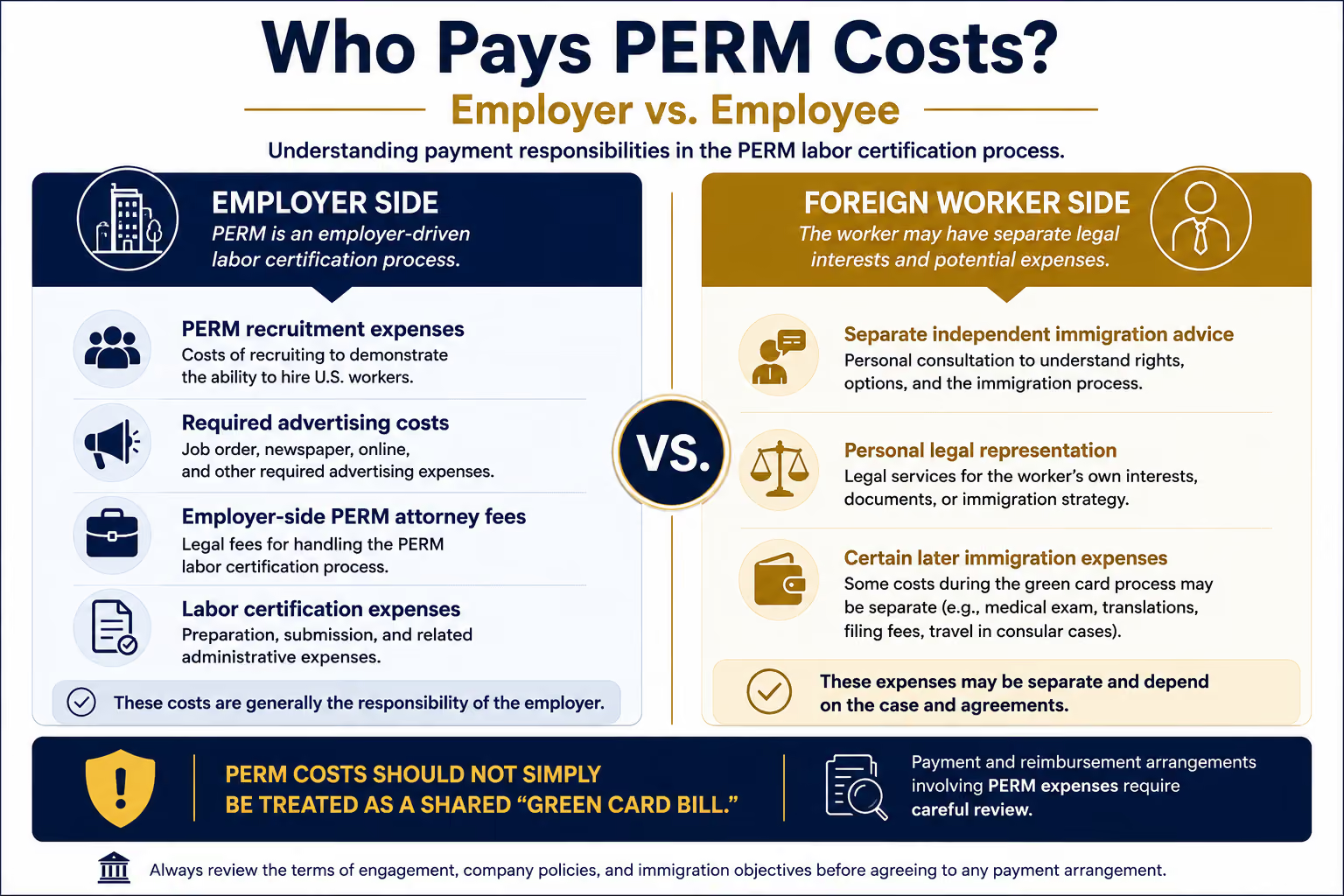
Who pays PERM costs is not simply a matter of how the employer and sponsored worker choose to divide expenses.
Department of Labor rules restrict an employer from seeking or receiving payment from the foreign worker for activities related to obtaining permanent labor certification. This includes costs connected to the employer's PERM recruitment and the employer's attorney fees for the labor certification process.
In general, the employer cannot shift PERM recruitment costs or the employer's PERM attorney fees to the sponsored worker. A foreign worker may, however, pay for separate legal representation obtained for the worker's own interests.
That distinction matters because PERM is based on the employer's permanent job opportunity and the employer's labor certification application. It is not simply an immigration petition filed by the foreign worker for personal immigration benefits.
PERM recruitment expenses are generally employer-side costs.
These may include required advertising, job-order expenses where applicable, and other recruitment costs associated with completing the labor certification process. DOL payment rules specifically address payments related to obtaining permanent labor certification and restrict employers from receiving reimbursement from the foreign worker for covered PERM activity.
Employers should therefore be careful about informal arrangements in which a sponsored employee is asked to pay advertising expenses directly or reimburse the company after recruitment is completed.
Even where both sides agree to the arrangement, the payment structure should still be reviewed under the applicable PERM rules.
The same concern applies to legal fees incurred by the employer for the PERM labor certification process.
When an immigration attorney represents the employer in obtaining permanent labor certification, those employer-side PERM legal fees generally should not simply be transferred to the foreign worker.
This is different from later immigration expenses that may arise during Form I-140, adjustment of status, or consular processing. Payment responsibility can depend on the stage of the case and the specific expense involved.
For that reason, employers should avoid treating every immigration cost as part of one shared “green card bill.”
Yes. A sponsored worker may choose to obtain independent immigration advice or separate legal representation.
For example, the foreign worker may want independent advice about immigration status, long-term green card strategy, priority dates, travel, or how an employer-sponsored process could affect future immigration options.
DOL's PERM payment framework distinguishes this type of legitimate separate representation from payment of the employer's expenses for obtaining permanent labor certification.
The practical distinction is important: the employee's own lawyer is not the same as the employer asking the employee to pay the employer's PERM attorney fee.
Employers sometimes use repayment or reimbursement agreements when they sponsor foreign workers. These agreements may address immigration expenses if an employee leaves the company within a certain period.
PERM costs require particular care.
An agreement should not assume that recruitment expenses or employer-side PERM attorney fees can automatically be recovered from the sponsored worker simply because the worker later resigns or changes employers.
Employers and sponsored professionals should review the payment structure before PERM begins, not after a disagreement arises.
The safest budgeting approach is to separate PERM employer expenses, I-140 costs, and the foreign worker's later immigration expenses. That makes it easier to understand who is paying each cost and reduces the risk of treating legally different immigration stages as one interchangeable expense.
Once the PERM labor certification stage is complete, the sponsoring employer may move to the Form I-140 petition with U.S. Citizenship and Immigration Services. This creates a separate set of government costs from the recruitment and legal expenses incurred during PERM.
For many employers, the I-140 cost is also more straightforward to calculate because USCIS publishes specific filing fees. However, the total depends on the petitioner's classification and whether premium processing is requested.
The current USCIS fee schedule lists the Form I-140 paper filing fee as $715, plus additional fees when applicable. USCIS separately requires an Asylum Program Fee for many employment-based petitioners, with reduced or exempt treatment for certain employers.
The Form I-140 filing fee is $715 in 2026 under the current USCIS fee schedule.
This is the base government fee for the immigrant petition. It is separate from PERM recruitment expenses, PERM attorney fees, and any legal fee charged for preparing the I-140 petition.
That separation is important when comparing a PERM and I-140 cost quote. An employer may have already paid legal and recruitment expenses during labor certification and then face a new USCIS fee structure when the case reaches the I-140 stage.
Employers should verify the current Form G-1055, Fee Schedule, before filing. USCIS warns that submitting an incorrect filing fee can result in rejection, and the agency updated its G-1055 fee schedule in 2026.
The Asylum Program Fee is an additional USCIS fee that applies to Form I-140 petitioners, but the amount is not the same for every employer.
Under current USCIS guidance:
USCIS specifically instructs I-140 petitioners to submit the full $600 Asylum Program Fee unless they qualify for the reduced small-employer fee or nonprofit exemption.
This means the basic government cost of an I-140 filing may differ depending on the sponsoring organization.
For example, a standard employer paying the $715 Form I-140 filing fee and the $600 Asylum Program Fee would have $1,315 in these USCIS fees before premium processing. A qualifying small employer may instead have $1,015 in those fees, while a qualifying nonprofit may pay the $715 base I-140 filing fee without an additional Asylum Program Fee.
The employer should confirm the correct classification rather than assuming the reduced fee applies simply because the business considers itself a small company.
Premium processing is optional and requires Form I-907, Request for Premium Processing Service, for an eligible petition. USCIS uses Form I-907 to request expedited processing for qualifying petitions and applications.
For eligible Form I-140 classifications, the premium processing fee increased from $2,805 to $2,965 for requests postmarked on or after March 1, 2026.
That fee is paid in addition to, not instead of, the Form I-140 filing fee and applicable Asylum Program Fee.
For a standard employer, this can bring the government fees associated with an I-140 petition and premium processing to $4,280:
$715 Form I-140 fee + $600 Asylum Program Fee + $2,965 premium processing fee.
The calculation is useful for budgeting, but premium processing should not be confused with expediting the entire employer-sponsored green card process. It applies to the eligible USCIS petition. It does not speed up the Department of Labor's PERM process, and it does not eliminate priority-date or immigrant-visa availability issues.
Employers and sponsored professionals should therefore view premium processing as a strategic case expense rather than an automatic requirement. The relevant question is not only whether the employer can pay the additional fee, but whether faster USCIS action on the I-140 petition provides a practical benefit in the particular case.

There is no single attorney fee that applies to every PERM and Form I-140 case.
Immigration law firms may price PERM and I-140 representation separately, combine certain stages into a broader legal engagement, or charge additional fees when a case requires work outside the original scope. The total legal cost can therefore depend as much on what the representation agreement includes as on the complexity of the immigration case itself.
This is why employers should be cautious about comparing two lawyer quotes based only on the final number.
A PERM and I-140 attorney fee may cover one immigration stage or several stages. Before comparing quotes, confirm whether the fee includes prevailing wage work, PERM recruitment coordination, Form ETA-9089 preparation, Form I-140 preparation, and responses to additional agency requests.
PERM representation usually involves substantially more work than completing Form ETA-9089.
The legal process may begin with reviewing the sponsoring employer, the permanent position, job duties, minimum education and experience requirements, and the foreign worker's employment history. The attorney may also assist with the prevailing wage process and review how the job opportunity should be structured before recruitment begins.
Once recruitment starts, legal work may include reviewing advertisements, advising on applicable recruitment requirements, coordinating filing timelines, and evaluating the documentation needed to support the labor certification process.
The exact scope varies by law firm. Some legal fees may include prevailing wage and recruitment coordination as part of the PERM engagement. Other agreements may treat certain administrative, advertising, or vendor expenses separately.
Employers should understand this distinction before assuming that a quoted PERM attorney fee represents the entire PERM budget.
The I-140 stage requires a separate legal and evidentiary review.
In a PERM-based EB-2 or EB-3 case, the legal team may review the certified labor certification, the beneficiary's education and experience, and the employer documentation supporting the immigrant petition.
Depending on the case, the attorney may also evaluate evidence relating to the employer's ability to pay the offered wage and whether the beneficiary meets the requirements listed in the labor certification.
The legal fee may cover preparation of Form I-140, organization of supporting exhibits, employer and beneficiary document review, and coordination of the final USCIS filing.
This work is distinct from the recruitment and Department of Labor process completed during PERM. As a result, an employer should not automatically assume that paying a PERM legal fee also covers the I-140 petition.
Sometimes.
A law firm may offer a broader employment-based immigration engagement that includes both the PERM labor certification and Form I-140 stages. Another firm may issue separate representation agreements or invoices for each stage.
Neither pricing structure is automatically better.
The practical question is whether the employer understands exactly what is included. A combined fee may still exclude recruitment vendor costs, premium processing, government filing fees, audits, or later green card processing. A separate-stage fee structure may make those costs easier to identify but could appear higher or lower depending on how the quote is presented.
For a useful comparison, employers should review the services listed in the engagement agreement rather than comparing only the headline legal fee.
Not always.
A PERM audit can require additional document collection, legal review, and preparation of a response to the Department of Labor. Supervised recruitment may involve another level of recruitment activity and attorney involvement.
Similarly, an I-140 Request for Evidence or Notice of Intent to Deny can require legal analysis and additional supporting documentation.
Some immigration attorney fees include certain agency responses. Others treat audits, RFEs, NOIDs, motions, or refiling as additional legal work.
Employers should ask about these potential costs before starting the process.
The goal is not to assume that an audit or RFE will occur. It is simply to understand the financial scope of the representation agreement in advance.
When comparing immigration attorney fees, the better question is often not, “Which lawyer has the lowest PERM fee?” It is, “Which immigration stages and legal services does this fee actually cover?”
That distinction can provide a much more realistic picture of the total PERM and I-140 cost.
PERM and I-140 lawyer fees can vary because the amount of legal review, case planning, and documentation is not identical in every employer-sponsored green card case.
A case involving a clearly defined position, straightforward job requirements, and well-organized employer records may require a different level of legal work from a case involving unusual experience requirements, multiple work locations, prior immigration filings, or questions about whether the beneficiary clearly satisfies the sponsored position.
PERM I-140 attorney fees often vary based on the complexity of the job requirements, the employer's structure and documentation, the beneficiary's qualifications, recruitment planning, and issues that may require additional legal analysis.
The requirements for the sponsored position can have a major impact on PERM preparation.
Education, years of experience, alternative requirements, and special skills must be reviewed carefully before recruitment begins. If the employer requires a specific combination of education and experience, the legal team may need to analyze how those requirements should be stated and whether they accurately reflect the employer's actual minimum requirements.
This can become more complicated when a position includes highly specialized skills or when the employer wants to list alternative ways of qualifying for the role.
The goal is not to make the job requirements more complicated. It is to ensure that the PERM strategy accurately reflects the permanent position and remains consistent throughout the labor certification process.
The sponsoring employer's structure can also affect the amount of legal review required.
An established company with centralized records and a clearly identified sponsoring entity may present different documentation issues from a growing business, a company with related entities, or an employer that has recently undergone organizational changes.
The legal team may need to confirm which entity is sponsoring the worker, review relevant business information, and make sure the immigration filing is based on the correct employer.
This does not mean that a more complicated corporate structure automatically creates an immigration problem. It may simply require more careful review.
The foreign worker must be evaluated against the requirements of the sponsored position.
Attorneys may need to review degrees, employment history, experience letters, and other evidence showing that the beneficiary meets the education and experience requirements stated in the labor certification.
When the worker's qualifications clearly match the position, the review may be relatively straightforward. Questions can require additional analysis when a degree is from outside the United States, prior employment documentation is limited, or the required experience was gained in circumstances that need closer review.
These issues can also become important during the later Form I-140 stage.
PERM recruitment requirements are regulated, but the practical process can still vary based on the occupation and work location.
Advertising costs, recruitment methods, and coordination may differ depending on whether the position is professional or nonprofessional and where the permanent job opportunity is located.
The attorney's role may also involve reviewing recruitment content, tracking the applicable timeline, and ensuring that the recruitment process remains consistent with the position described in the PERM case.
A case that requires more recruitment planning or coordination may involve more legal and administrative work.
Previous immigration filings can sometimes create additional review.
For example, the legal team may need to examine a prior PERM case, an earlier immigration petition, or inconsistencies in previous descriptions of the beneficiary's employment or qualifications.
A prior audit or other agency issue may also require additional context before a new filing is prepared.
Past immigration history does not automatically prevent a new PERM or I-140 filing. However, it should generally be reviewed rather than ignored.
The Form I-140 stage can create its own legal complexity.
The petition may require careful review of the beneficiary's qualifications, the certified labor certification, and employer documentation. Questions involving ability-to-pay evidence or whether the worker meets the exact requirements listed in the PERM filing may require additional analysis.
If USCIS later issues a Request for Evidence or Notice of Intent to Deny, the amount of legal work may increase further.
For employers comparing PERM I-140 lawyer fees, the practical takeaway is simple: the lowest quote may reflect a different scope of work, a different case assessment, or different treatment of additional legal services.
A useful fee comparison should consider both the price and the amount of legal work the engagement is expected to cover.
PERM recruitment and advertising costs can be one of the less predictable parts of the labor certification budget.
Unlike the Form I-140 filing fee, there is no single government-set price for PERM advertising. The employer may need to pay outside vendors, publications, or recruitment platforms, and the actual expense can vary based on the job, the required recruitment steps, and the geographic area where the permanent position is located.
PERM recruitment costs vary because advertising prices are set by publications and recruitment vendors, not by the Department of Labor. The total expense may also depend on whether the sponsored position is considered professional and which recruitment steps are required.
One employer's PERM advertising costs may look very different from another's.
Publication prices can vary significantly by location. Recruiting for a position in a major metropolitan area may involve different advertising expenses than recruiting in a smaller market. The selected recruitment methods and the vendors used can also affect the overall cost.
The occupation itself matters as well. Professional occupations generally involve additional recruitment steps beyond the basic recruitment requirements, which can create more vendor expenses and coordination.
For this reason, employers should be cautious about relying on a universal online estimate for “PERM advertising costs.” A general estimate may not reflect the actual recruitment plan required for the sponsored position.
The more useful approach is to identify the required recruitment steps first and then budget based on the actual advertising vendors and market involved.
PERM recruitment is designed to test the U.S. labor market for the permanent job opportunity.
The employer must complete the recruitment required under the applicable Department of Labor rules. Depending on the position, this may include a State Workforce Agency job order, newspaper advertising, and additional recruitment methods.
Employers should distinguish these regulatory recruitment steps from their normal business hiring activity.
A company may already advertise jobs on its own website or use a preferred recruiting platform when hiring employees. Those efforts do not automatically replace the recruitment required for a PERM case.
At the same time, employers should not assume that adding unnecessary advertisements always makes a PERM case stronger. Recruitment should be planned around the applicable requirements and the facts of the position.
The goal is a compliant recruitment process, not simply the highest advertising spend.
Not necessarily.
Attorney fees generally pay for legal services, while advertising and recruitment expenses may be paid directly to outside vendors. An employer could therefore receive a legal fee quote for PERM representation and still need to budget separately for publication or recruitment costs.
Some law firms may coordinate advertising vendors as part of the representation. Others may provide recruitment instructions while the employer pays the vendors directly.
Employers should ask three practical questions before comparing PERM cost quotes:
These questions can prevent confusion later in the process.
A PERM quote that appears inexpensive at first may exclude all advertising expenses. Another quote may include more recruitment coordination but still require the employer to pay outside vendors separately.
For that reason, recruitment cost should be viewed as its own budget category. The employer should separate attorney fees from advertising expenses and confirm how recruitment will be managed before the PERM process begins.
The original PERM and I-140 budget may not cover every issue that arises after filing.
A Department of Labor audit, supervised recruitment, or a USCIS Request for Evidence can require additional document review and legal work. Depending on the representation agreement, those services may be included in the original attorney fee or billed separately.
Additional PERM or I-140 legal costs may arise if the case requires an audit response, supervised recruitment, an RFE or NOID response, an appeal, or refiling. These costs are not automatically included in every immigration attorney fee quote.
This does not mean that every employer-sponsored green card case will face additional agency review. It means employers should understand how unexpected legal work is priced before the process begins.
The Department of Labor may select a PERM application for audit and request additional documentation from the employer.
An audit response may involve reviewing the recruitment record, employer documents, job requirements, and other materials connected to the labor certification filing. The legal team must determine what DOL requested and prepare a timely, organized response.
Because an audit can involve work beyond the standard PERM filing process, some representation agreements charge a separate legal fee for the response.
Employers comparing PERM attorney fees should therefore ask whether audit representation is included or separately priced.
In some cases, the Department of Labor may direct an employer to complete supervised recruitment.
This is different from the standard employer-conducted PERM recruitment process. DOL has a more direct role in the recruitment procedure, and the employer may need to complete additional advertising, reporting, and documentation requirements.
The process can create new recruitment expenses as well as additional attorney work.
Supervised recruitment should not be treated as a routine PERM cost. However, employers should understand that it may create expenses outside the original recruitment budget if DOL requires it.
After Form I-140 is filed, USCIS may issue a Request for Evidence, or RFE, asking for additional documentation or clarification.
Depending on the case, the request may concern the beneficiary's qualifications, the requirements listed in the certified labor certification, or evidence relating to the petitioning employer.
A Notice of Intent to Deny, or NOID, generally requires an especially careful review because USCIS is identifying concerns that could affect the petition's approval.
Responding to an RFE or NOID may involve additional legal analysis, document collection, and preparation of a detailed response. Whether that work is included in the original I-140 attorney fee depends on the legal services agreement.
If a PERM application or I-140 petition encounters a significant problem, the employer and legal team may need to consider whether an appeal, motion, or new filing is appropriate.
These are separate strategic decisions and may involve additional government costs or attorney fees.
Employers should not assume that every adverse agency action should automatically be appealed or that refiling is always the better option. The facts of the case, timing, priority date considerations, and the reason for the agency decision can all matter.
From a cost-planning perspective, the practical step is simple: review the representation agreement and ask how work outside the standard PERM and I-140 process will be billed.
A realistic immigration budget does not need to assume that an audit or RFE will happen. It should simply make clear which additional legal services are included and which may create a separate cost.
For eligible Form I-140 petitions, premium processing adds $2,965 to the USCIS filing cost in 2026.
The fee is paid with Form I-907, Request for Premium Processing Service, and is separate from the Form I-140 filing fee and the applicable Asylum Program Fee.
For a standard employer, the government fee calculation may look like this:
For example, a standard petitioner paying the $715 Form I-140 filing fee and $600 Asylum Program Fee would have $1,315 in those USCIS fees. Adding premium processing increases that amount to $4,280.
The additional cost can be significant, so employers and sponsored workers should understand exactly what premium processing changes before requesting it.
The main difference is the speed of USCIS action on the eligible Form I-140 petition.
Premium processing does not create a different legal standard or make a petition easier to approve. USCIS still reviews the petition and supporting evidence under the applicable EB-2 or EB-3 requirements.
It also does not guarantee approval.
USCIS may approve the petition, deny it, issue a Request for Evidence, or take another qualifying adjudicative action within the applicable premium processing period.
For this reason, premium processing is better understood as a faster USCIS response service, not a stronger immigration case.
No. I-140 premium processing does not speed up the PERM labor certification process.
PERM is handled by the Department of Labor. Form I-140 is handled by USCIS.
Premium processing applies to the eligible USCIS petition and does not reduce the time required for a prevailing wage determination, PERM recruitment, Department of Labor review, or labor certification processing.
An employer cannot pay the I-140 premium processing fee to move a pending PERM case faster.
This agency distinction is particularly important when budgeting and planning an employer-sponsored green card strategy. Premium processing becomes relevant at the I-140 stage, after the required PERM process has been completed and the labor certification is available for the immigrant petition.
Not necessarily.
A faster I-140 decision does not automatically mean the foreign worker will receive permanent residence sooner.
The worker may still need to wait for an immigrant visa number to become available based on the priority date and applicable Visa Bulletin category. The worker must also complete adjustment of status or consular processing.
Premium processing does not move a priority date forward and does not create visa availability.
For example, an employer may receive a faster I-140 decision while the sponsored worker remains unable to complete the green card stage because the applicable employment-based category is not current.
The practical benefit is therefore tied to faster action on the petition itself, not automatic acceleration of every later immigration stage.
There is no universal answer.
In some cases, faster action on the I-140 petition may provide useful clarity for the employer and sponsored worker. Timing may also matter because of employment planning, immigration strategy, or other case-specific considerations.
In other cases, paying an additional $2,965 may provide limited practical benefit, particularly when visa availability or another immigration stage is the main source of delay.
The decision should therefore be based on the specific case rather than the assumption that premium processing is always necessary.
Before adding the premium processing fee to the PERM I-140 budget, employers and sponsored professionals should ask a practical question: What does obtaining a faster I-140 decision change for this case?
If the answer is unclear, the additional cost deserves closer review.
The cost of PERM and Form I-140 is only part of the financial picture in an employer-sponsored green card case.
PERM focuses on the permanent job opportunity and labor certification process. Form I-140 is the employer's immigrant petition with USCIS. Even after those stages are completed, the foreign worker may still need to complete adjustment of status in the United States or immigrant visa processing through a U.S. consulate abroad.
PERM and I-140 costs do not automatically include the total cost of obtaining permanent residence. Later green card expenses may include government processing fees, a medical examination, document preparation, translations, legal fees, and separate costs for qualifying family members.
For realistic budgeting, employers and sponsored professionals should separate the process into three financial stages.
The PERM stage may involve attorney fees, recruitment and advertising expenses, and administrative work related to the permanent labor certification process.
The Department of Labor does not charge a filing fee for Form ETA-9089, but that does not make PERM free. Recruitment vendors may need to be paid, and legal work may begin well before the labor certification application is filed.
As discussed earlier, payment responsibility is also particularly important during PERM. Employer-side recruitment expenses and PERM legal fees should not simply be treated as costs that can automatically be transferred to the sponsored worker.
For budgeting purposes, PERM should remain its own cost category.
The I-140 stage introduces USCIS filing fees and, in many cases, a separate legal fee for preparing the immigrant petition.
The government costs may include the Form I-140 filing fee and the applicable Asylum Program Fee. If premium processing is requested for an eligible petition, the Form I-907 premium processing fee creates another significant expense.
The I-140 legal work may also involve reviewing the certified labor certification, the beneficiary's qualifications, and supporting employer documentation.
These costs are separate from the recruitment and labor certification expenses already incurred during PERM.
An approved Form I-140 does not, by itself, make the foreign worker a lawful permanent resident.
The worker generally must still complete the final permanent residence process. Depending on the circumstances, that may mean filing Form I-485 for adjustment of status in the United States or completing immigrant visa processing abroad.
The timing of that stage may depend on the worker's priority date and immigrant visa availability.
This is where some employers and sponsored professionals underestimate the total green card cost. They budget for PERM and the I-140 petition but do not account for the expenses that arise when the worker becomes eligible to complete permanent residence processing.
A foreign worker completing the green card process in the United States may need to file Form I-485, Application to Register Permanent Residence or Adjust Status.
The adjustment stage can create separate USCIS filing fees and attorney fees. The applicant will also generally need an immigration medical examination and may need to collect or replace supporting civil documents.
Depending on the immigration strategy and the filings involved, additional forms or legal services may also be relevant.
The important cost distinction is that I-485 representation should not automatically be assumed to be included in a PERM or I-140 attorney fee.
Employers and sponsored workers should check the legal services agreement before treating the earlier fee quote as the total green card cost.
A worker completing permanent residence processing outside the United States may instead go through immigrant visa processing.
That process can involve government processing fees, a medical examination, civil documents, translations when required, and travel expenses connected to the immigrant visa process.
Legal representation for consular processing may also be priced separately from PERM and Form I-140 preparation.
Travel costs can be particularly easy to overlook. Depending on where the applicant lives and where the medical examination or immigrant visa interview occurs, transportation and temporary accommodation may become part of the practical immigration budget.
Cost and timing are connected.
An approved I-140 petition does not necessarily mean that the foreign worker can immediately file Form I-485 or receive an immigrant visa. Employment-based immigrant visa availability can depend on the worker's priority date, preference category, and the Department of State Visa Bulletin.
A worker may therefore complete PERM and obtain I-140 approval but wait before incurring some of the final green card processing costs.
This matters when planning a budget. Employers and sponsored professionals do not always pay every immigration expense at the beginning of the case. Costs may arise over several stages and, in some cases, over a much longer period.
The most realistic way to calculate the total employment-based green card cost is to separate PERM, Form I-140, and permanent residence processing—and then identify which expenses and legal services are expected at each stage.
A quote for PERM and I-140 may be completely reasonable while still representing only part of the total green card budget.
Here is the next section, kept a little shorter because the reader's core question is straightforward: does PERM cover a spouse and children, and where do their separate costs begin? This stays aligned with the approved dependent-cost section in the outline and the prompt's instruction to avoid stretching simple issues into thin, repetitive content.
PERM labor certification is based on the employer's permanent job opportunity and the principal foreign worker. A spouse or child does not need a separate PERM case simply because they may later seek a green card through the principal worker.
However, qualifying family members can create additional costs during the permanent residence stage.
PERM costs generally relate to the principal sponsored worker. A spouse or child may have separate government fees, medical examination costs, document expenses, and attorney fees during adjustment of status or consular processing.
Not in the sense of covering all later immigration expenses.
The PERM process focuses on the sponsored position and principal worker. Qualifying derivative family members may later seek permanent residence through the principal employment-based case, but their processing requirements and expenses can be separate.
If the family completes the green card process in the United States, qualifying family members may need separate Form I-485 filings and immigration medical examinations.
This can increase the total government and legal costs, especially for families with several derivative applicants.
Employers and sponsored workers should confirm whether an attorney fee quote covers only the principal applicant or also includes a spouse and children.
For families completing immigrant visa processing abroad, each qualifying family member may have separate visa processing, medical, and document-related expenses.
Translation, travel, or accommodation costs may also become part of the practical budget depending on where the family completes the process.
Attorney fees depend on the scope of the representation agreement.
Some legal engagements cover PERM and Form I-140 only. Others may include the principal worker's later green card processing but charge separately for a spouse or child.
Before calculating the total PERM green card cost for a family, confirm which services and expenses are included for each family member.
The PERM process may begin with one sponsored worker, but the final green card budget can increase when a spouse and children are also completing permanent residence processing.
Two PERM and I-140 attorney fee quotes can look very different even when both firms are handling the same type of immigration case.
The reason is often scope.
One quote may cover only the PERM labor certification stage. Another may include PERM and Form I-140 preparation. Recruitment costs, premium processing, audits, RFEs, and later green card work may still be separate.
Before comparing PERM I-140 lawyer fees, confirm which immigration stages and services are included in each quote. The lowest price may not represent the lowest total cost.
This should be the first question.
PERM and Form I-140 are separate immigration stages, and a legal fee for one does not automatically include the other.
Employers should confirm whether the quote covers the prevailing wage process, recruitment coordination, Form ETA-9089, and the later I-140 petition.
Advertising and recruitment vendor expenses are often separate from attorney fees.
A PERM legal quote may include recruitment strategy and review while still requiring the employer to pay newspaper, job posting, or other vendor costs directly.
Ask how recruitment expenses are billed before calculating the total PERM cost.
A PERM audit or I-140 Request for Evidence can require additional legal work.
Some representation agreements include certain agency responses. Others charge separately for audits, RFEs, NOIDs, supervised recruitment, or refiling.
The goal is not to assume that a problem will occur. It is to understand the potential fee structure in advance.
Yes, the USCIS premium processing fee is separate from the standard I-140 filing fees.
There may also be a separate attorney service fee for preparing or filing Form I-907, depending on the law firm's engagement agreement.
Employers should distinguish the government fee from the attorney fee.
PERM and I-140 representation may not include Form I-485 adjustment of status or immigrant visa processing.
Legal services for a spouse or child may also be priced separately.
Before comparing final prices, employers and sponsored workers should ask whether the quote includes only PERM and I-140 or also covers the later permanent residence stage.
The most useful comparison is not simply which attorney charges less.
It is which immigration stages, services, and possible additional work are included in the fee.
Two PERM I-140 lawyer quotes are difficult to compare until the employer understands the scope of each representation agreement.
Here is the next section, kept short and scan-friendly so the checklist does most of the work, exactly as the outline intends. The AVLG prompt also favors readability and avoiding unnecessary expansion when a concise format works better.
Before starting the PERM and I-140 process, employers and sponsored workers should understand which costs may arise at each immigration stage.
A simple cost review can help prevent confusion later, especially when recruitment expenses, USCIS fees, and legal services are billed separately.
Ask the following questions before the process begins:
The best PERM I-140 budget separates each immigration stage, identifies who is responsible for each expense, and confirms the scope of legal representation before filing begins.
A clear budget should show the difference between PERM recruitment costs, attorney fees, USCIS filing fees, optional premium processing, and the later green card stage.
That makes the total cost easier to understand and helps employers compare legal fee quotes more realistically.
Next is “Speak With a PERM and Employment Immigration Lawyer.” That should be concise, professional, and conversion-focused without sounding salesy.
PERM sponsorship involves more than paying a filing fee and submitting Form ETA-9089.
Employers may need to plan the permanent position, prevailing wage process, recruitment, legal costs, Form I-140 filing, and later permanent residence stages. Payment responsibility also matters because certain PERM-related expenses should not simply be shifted to the sponsored worker.
Before starting the process, it can be helpful to understand:
American Visa Law Group assists employers and professionals with employment-based immigration services, including PERM labor certification and Form I-140 matters.
A careful review of the sponsorship strategy and legal fee scope can help employers understand the process before recruitment and immigration expenses begin.
To discuss a PERM sponsorship strategy, speak with an immigration lawyer about the employer, sponsored position, foreign worker's qualifications, and expected immigration stages.
The total cost depends on recruitment expenses, attorney fees, USCIS filing fees, and whether premium processing is requested. Later adjustment of status or consular processing costs are generally separate from the PERM and I-140 stages.
There is no universal PERM attorney fee. Legal costs can vary based on the sponsored position, job requirements, recruitment planning, employer structure, and the scope of representation.
Employers should confirm whether the quoted fee includes prevailing wage work, recruitment coordination, and Form ETA-9089 preparation.
The current Form I-140 filing fee is $715. An applicable Asylum Program Fee may also be required, and premium processing is a separate optional expense.
Employers should verify the current USCIS fee schedule before filing.
No. The Department of Labor does not currently charge a filing fee for Form ETA-9089.
However, PERM can still involve recruitment, advertising, attorney, and administrative costs.
PERM is an employer-driven process, and Department of Labor rules restrict employers from shifting certain costs related to obtaining permanent labor certification to the sponsored worker.
Recruitment expenses and the employer's PERM attorney fees require particular attention.
A sponsored worker generally should not be required to pay the employer's attorney fees for obtaining permanent labor certification.
The worker may, however, obtain and pay for separate legal representation for the worker's own interests.
There is no single PERM recruitment price.
Advertising costs can vary based on the geographic market, publication or vendor, occupation, and recruitment methods required for the position.
Not always.
Attorney fees generally cover legal services, while newspaper advertisements and other recruitment vendor expenses may be billed separately. The employer should confirm the payment structure before recruitment begins.
For eligible Form I-140 petitions, the premium processing fee is $2,965 for qualifying requests subject to the fee effective March 1, 2026.
This fee is separate from the Form I-140 filing fee and applicable Asylum Program Fee.
No.
PERM is handled by the Department of Labor, while I-140 premium processing applies to an eligible USCIS petition. Paying for premium processing does not expedite the prevailing wage, recruitment, or PERM labor certification stages.
It depends on the representation agreement.
Some legal engagements may include certain audit work, while others charge an additional fee for a PERM audit, supervised recruitment, or other work outside the standard filing process.
Not necessarily.
PERM and Form I-140 are earlier stages of many employer-sponsored green card cases. Adjustment of status or immigrant visa processing may involve separate government fees, medical expenses, attorney fees, and costs for qualifying family members.

Hasan Abdullah, Esq. is the Founder and Managing Attorney of American Visa Law Group. His practice focuses on U.S. immigration law, including family-based immigration, employment-based immigration, adjustment of status, consular processing, waivers, PERM labor certification, NIW, EB-1, H-1B, O-1, and complex immigration strategy.
Through American Visa Law Group, Mr. Abdullah helps individuals, families, professionals, investors, and employers understand their immigration options and plan around changing government policies, USCIS procedures, and Visa Bulletin movement. His work emphasizes practical legal analysis, realistic expectations, and strategy tailored to each applicant’s immigration history and long-term goals.


