Author: Hasan Abdullah, Esq.
The September 2026 Visa Bulletin India update brings encouraging movement for many family-sponsored applicants but little relief for Indian employment-based green card applicants. Several family preference categories advance substantially, while the most heavily backlogged employment categories remain restricted.
EB-1 India remains at October 15, 2022, and the Department of State warns that the category could become unavailable before the fiscal year ends. EB-2 India and EB-5 Unreserved India remain unavailable, meaning no visa numbers are currently authorized in those categories. EB-3 India and Other Workers remain at January 1, 2014. EB-4 is the only major employment category to advance, moving forward to December 15, 2022.
USCIS chart selection is also important. Family-sponsored applicants may use the Dates for Filing chart in September 2026, while employment-based applicants must use the Final Action Dates chart to determine whether they may file Form I-485.
This article explains the official September 2026 Visa Bulletin, compares India’s priority dates with August 2026 and September 2025, and discusses what applicants should monitor as fiscal year 2026 ends.
Because a priority date is only one part of adjustment-of-status or immigrant-visa eligibility, applicants should review their individual circumstances before taking action. American Visa Law Group assists professionals, employers and investors with employment-based green card options, including EB-1, EB-2, EB-3, EB-4 and EB-5 matters.
The September bulletin produces two very different results for Indian applicants. Family-sponsored priority dates move forward across F1, F2A, F2B and F3, while F4 India remains unchanged. Employment-based categories show almost no movement, with EB-4 providing the only advance.
“Current” means there is no published priority-date cutoff for that category. “Unavailable” means visa numbers are not authorized for issuance during the month.
USCIS confirms in its September 2026 adjustment-of-status filing charts that family-sponsored applicants may use Dates for Filing, while employment-based applicants must use Final Action Dates.
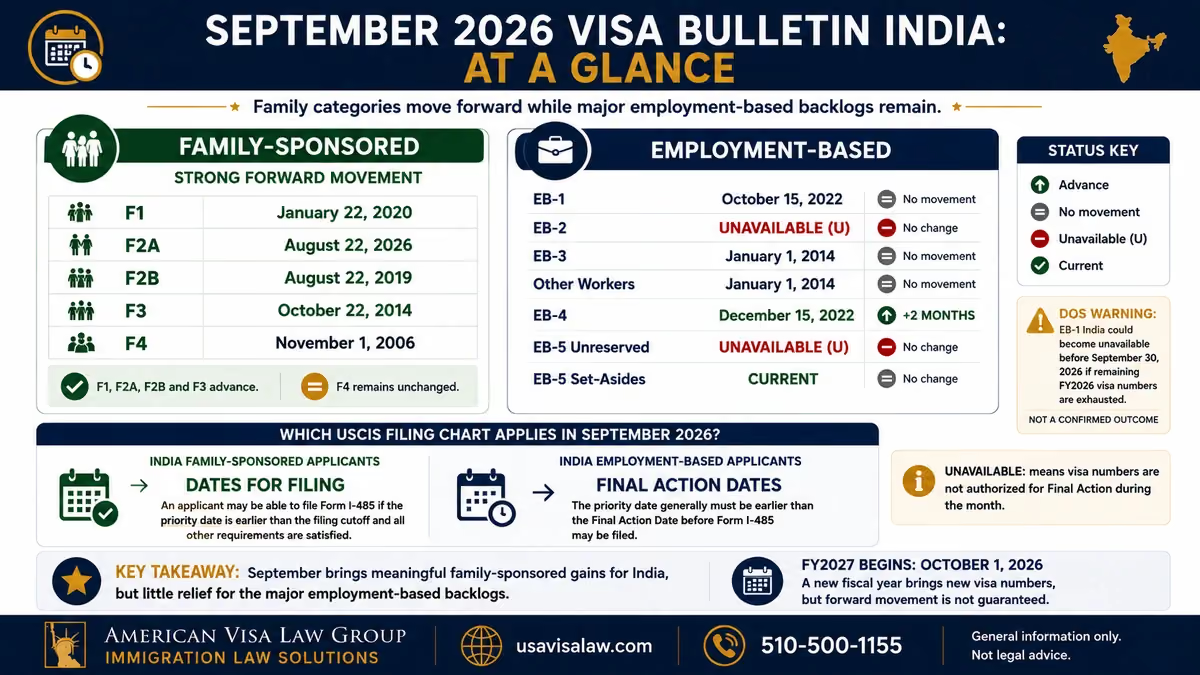
USCIS selects the chart adjustment-of-status applicants may use each month. The correct chart depends on whether the underlying immigrant petition is family-sponsored or employment-based.
Dates for Filing may allow an eligible applicant to submit Form I-485 before a green card can receive final approval. Final approval still depends on visa availability under the Final Action Dates chart.
For employment-based applicants, the September chart selection is particularly restrictive. EB-2 India and EB-5 Unreserved India are unavailable, while EB-1, EB-3, Other Workers and EB-4 have published cutoff dates. A priority date that falls exactly on a cutoff date is not yet current because it generally must be earlier than the listed date.
Applicants with an already pending Form I-485 generally do not need to file a new application merely because their category retrogresses or becomes unavailable. USCIS may continue processing the case, but final approval usually must wait until an immigrant visa is available again.
The EB-1 India Final Action Date remains October 15, 2022, in the September 2026 Visa Bulletin. There is no movement from August 2026, so an applicant generally needs a priority date earlier than October 15, 2022, to be current under the September chart.
Although the month-to-month cutoff is unchanged, EB-1 India remains ahead of its September 2025 date of February 15, 2022. This represents approximately eight months of year-over-year progress, even though recent movement has stalled.
The Department of State warns that EB-1 India could become unavailable before September 30 if demand exhausts the remaining fiscal-year visa numbers. This is a caution rather than a guaranteed outcome. Applicants whose priority dates are current should review their filing readiness promptly, while those with pending cases should continue monitoring official updates for any change in visa availability.
EB-2 India remains unavailable in the September 2026 Visa Bulletin, with no change from August. An unavailable designation means the Department of State is not authorizing immigrant visa numbers in that category during the month.
The Department of State previously announced that the India EB-2 per-country limit had been reached for fiscal year 2026. Because employment-based applicants must use Final Action Dates in September, an applicant relying on India chargeability generally cannot file Form I-485 through EB-2 while the category is unavailable.
This is a less favorable position than September 2025, when the EB-2 India Final Action Date was January 1, 2013. Applicants with pending Form I-485 cases generally do not need to submit new applications, but USCIS normally cannot approve those cases until visa numbers become available again.
Annual visa limits reset when fiscal year 2027 begins on October 1, 2026. That reset may allow EB-2 India to become available again, but it does not guarantee substantial forward movement or immediate approval of pending cases.
The September 2026 Final Action Date for both EB-3 India and India Other Workers remains January 1, 2014. Neither category moves from August.
An applicant generally needs a priority date earlier than January 1, 2014, to be current under the September chart. A priority date that falls exactly on January 1, 2014, is not yet current. Because USCIS requires employment-based applicants to use Final Action Dates this month, eligible applicants with earlier priority dates may be able to file Form I-485.
Both categories show some year-over-year improvement. In September 2025, the Final Action Date was May 22, 2013, meaning the current cutoff is approximately seven months further ahead. However, the lack of recent movement demonstrates that both India categories remain heavily backlogged.
EB-3 and Other Workers are separate classifications even though they share the same cutoff date. Many employer-sponsored EB-2 and EB-3 cases also involve the PERM labor-certification process, so applicants should confirm their classification, priority date and underlying petition records before relying on the chart.
EB-4 India is the only major Indian employment-based category to move forward in September 2026. Its Final Action Date advances by two months, from October 15, 2022, in August to December 15, 2022.
An EB-4 applicant generally needs a priority date earlier than December 15, 2022, to be current under the September chart. The same cutoff applies to Certain Religious Workers.
The year-over-year comparison is also more favorable. EB-4 was unavailable for all countries in September 2025, while September 2026 provides a published cutoff date. This allows some qualifying special immigrants with sufficiently early priority dates to move forward, although final eligibility depends on the specific EB-4 classification and the applicant’s individual case.
The EB-5 Unreserved category for India remains unavailable in September 2026. No visa numbers are currently authorized for Indian applicants in the unreserved category, and there is no improvement from August.
This represents a less favorable position than September 2025, when the EB-5 Unreserved India Final Action Date was November 15, 2019. The fiscal-year reset on October 1 may allow the category to become available again, but it does not guarantee a particular cutoff date or immediate approval of pending cases.
The three EB-5 set-aside categories remain current:
A current set-aside category does not mean every Indian EB-5 investor can use it. The investor and project must satisfy the requirements of the applicable reserved category. An existing unreserved case does not automatically convert into a set-aside case merely because the reserved category is current.
Applicants with pending EB-5 Unreserved adjustment applications generally remain in the queue, but USCIS normally cannot grant final approval until a visa number becomes available.
Family-sponsored applicants receive the strongest positive developments in the September 2026 Visa Bulletin India update. F1, F2A, F2B and F3 all advance, while F4 India remains unchanged.
F1 covers unmarried adult sons and daughters of U.S. citizens. F2A applies to spouses and unmarried children under 21 of permanent residents, while F2B covers their unmarried adult sons and daughters. F3 applies to married sons and daughters of U.S. citizens, and F4 covers siblings of adult U.S. citizens.
The advances are meaningful, particularly in F2B and F3, but they do not eliminate the underlying backlogs. F4 India remains especially delayed, with no movement from August.
These are Final Action Dates, which determine when final approval may generally occur. Family-sponsored adjustment applicants may use the more favorable Dates for Filing chart in September, which is discussed in the next section. Applicants can also review the available family-based immigration options for additional information about preference classifications and the green card process.
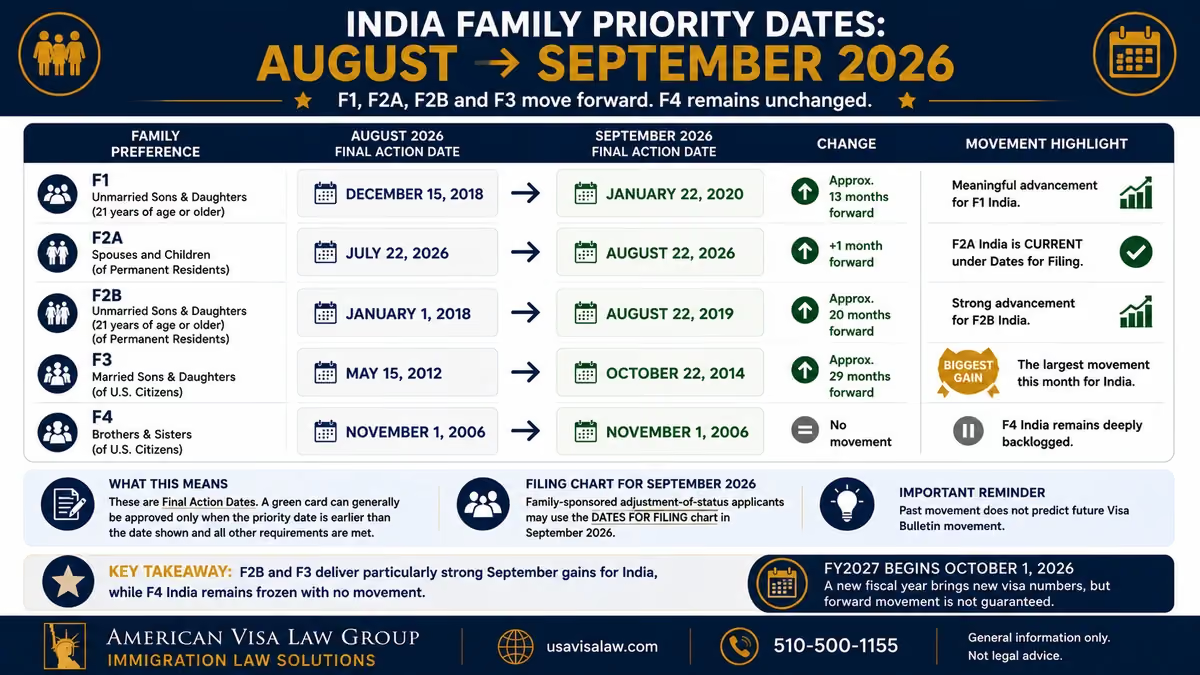
USCIS permits family-sponsored applicants to use the Dates for Filing chart in September 2026. This chart is therefore the relevant starting point for determining whether an eligible Indian family-preference applicant may submit Form I-485.
An applicant generally needs a priority date earlier than the applicable filing date. F2A is current under the Dates for Filing chart, meaning no priority-date cutoff is published for filing purposes in that category.
Eligibility under the Dates for Filing chart does not mean a green card can immediately be approved. Final approval generally must wait until the applicant’s priority date is current under the applicable Final Action Date and a visa number is available.
Applicants should also confirm that they satisfy every other adjustment-of-status requirement before filing. A favorable priority date alone does not establish complete eligibility for Form I-485.
Comparing the current bulletin with the official September 2025 Visa Bulletin shows strong year-over-year family movement but mixed employment-based results.
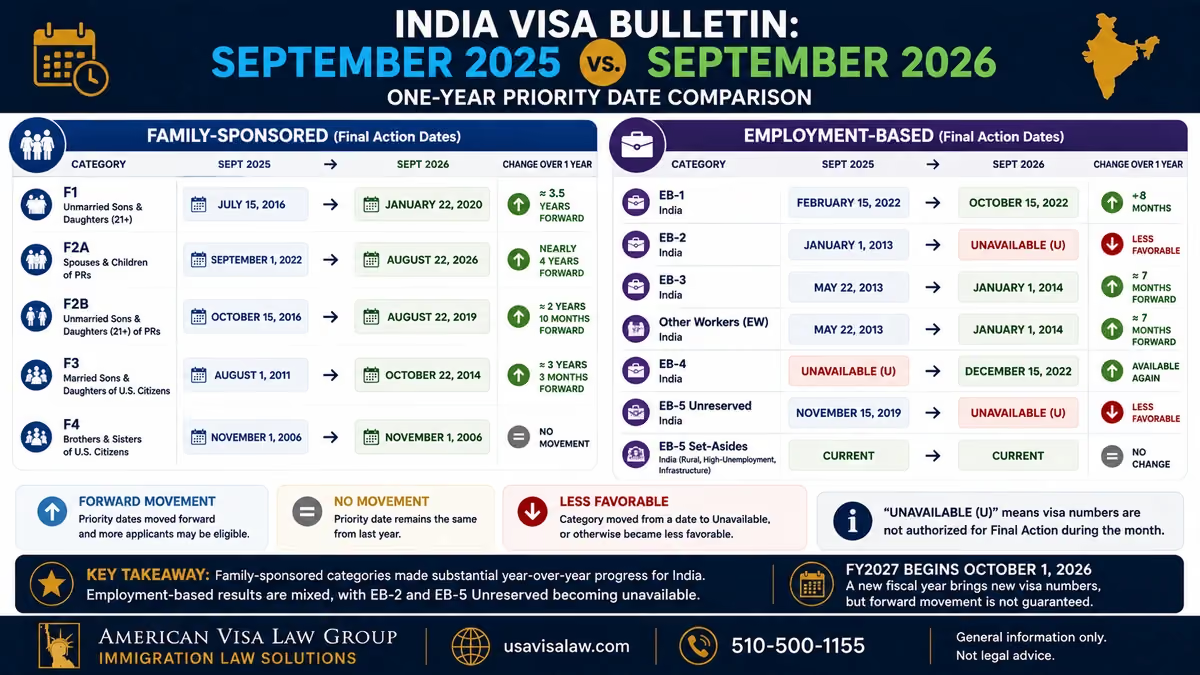
EB-1 and EB-3 show measurable year-over-year progress, while EB-4 has returned from unavailable status. However, EB-2 and EB-5 Unreserved are in a more restrictive position than they were one year earlier.
The family-sponsored comparison is broadly positive, but F4 India remains the major exception. Even substantial year-over-year advancement does not guarantee that future bulletins will continue moving at the same pace, because cutoff dates respond to visa availability and applicant demand.
Fiscal year 2027 begins on October 1, 2026, when new annual employment-based visa allocations become available. This may allow EB-2 India and EB-5 Unreserved India to return from unavailable status, but applicants should not assume that either category will advance substantially.
EB-1 India may also receive new visa availability in October. However, the Department of State’s warning about high demand suggests that any movement could remain limited. EB-3 India may advance, remain unchanged or move conservatively depending on demand and the number of pending cases.
Family-sponsored categories made significant progress in September. Those advances are encouraging, but they should not be treated as a reliable prediction of similar movement in October. DOS may hold dates while it evaluates demand generated by the newer cutoffs.
Applicants should monitor the October 2026 Visa Bulletin and USCIS filing-chart announcement rather than making filing decisions based solely on projections.
Indian applicants should take a few practical steps before relying on the September cutoff dates:
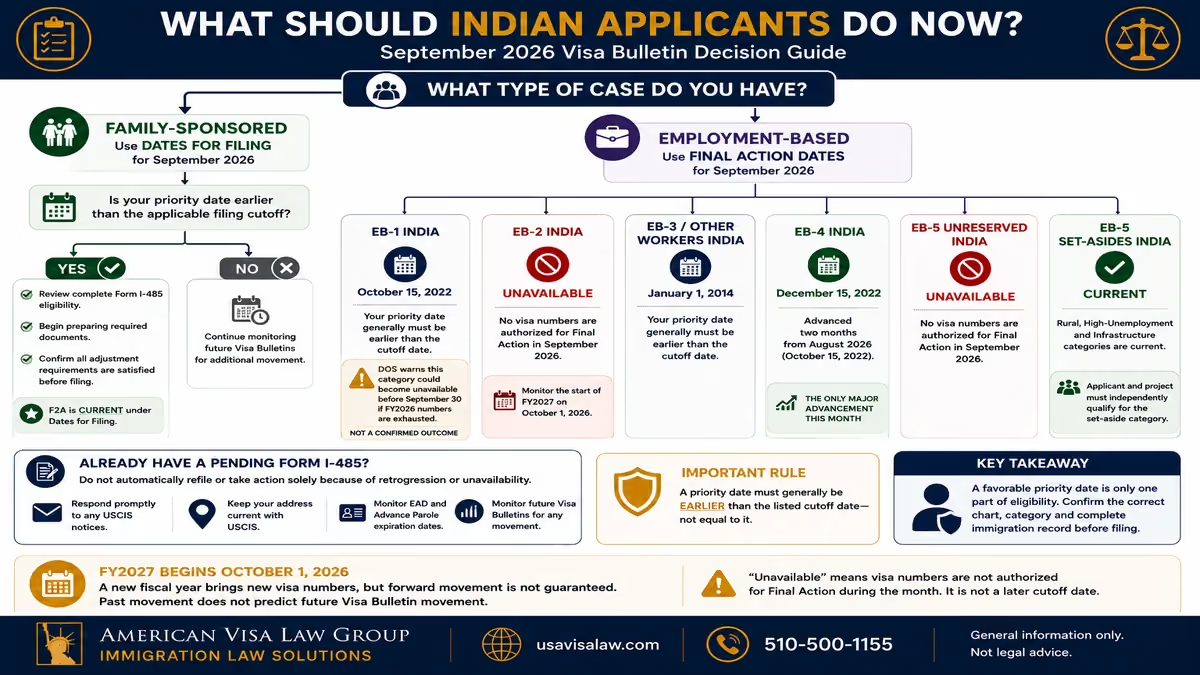
Applicants with questions about cross-chargeability, changing employment categories, job changes, dependent children or maintaining lawful status may need an individualized case review. A current priority date does not by itself establish eligibility for adjustment of status or guarantee approval.
No. EB-2 India is unavailable, meaning no immigrant visa numbers are authorized in the category during September.
The EB-3 India Final Action Date is January 1, 2014. A priority date generally must be earlier than that cutoff to be current.
No. USCIS requires employment-based applicants to use Final Action Dates for adjustment-of-status filings in September 2026.
A pending application is not generally denied solely because visa availability changes. USCIS may continue processing it, but final approval normally must wait until a visa number becomes available.
The annual allocation resets on October 1, which may allow the category to become available again. However, no specific cutoff date or amount of movement is guaranteed.
September 2026 Visa Bulletin — U.S. Department of State
Review the official September cutoff dates, visa availability notes and Department of State warnings.
USCIS September 2026 Adjustment of Status Filing Charts
Confirm which chart family-sponsored and employment-based applicants may use for Form I-485 filings.
India Per-Country Limit Reached in the EB-2 Category
Read the Department of State’s explanation of why EB-2 India became unavailable during fiscal year 2026.
USCIS Visa Availability and Priority Dates
Learn how priority dates, country of chargeability and visa availability affect adjustment-of-status eligibility.
August 2026 Visa Bulletin — U.S. Department of State
Compare India’s September priority dates with the preceding month’s official charts.
September 2025 Visa Bulletin — U.S. Department of State
Review the official dates used for the article’s year-over-year comparison.
August 2026 Visa Bulletin India: EB-1, EB-2, EB-3 and EB-5
See how India’s priority dates and filing rules changed between August and September 2026.
Green Card Priority Date Explained: How to Read the Visa Bulletin
Learn how to identify a priority date, choose the correct chart and determine whether a cutoff date is current.

Hasan Abdullah, Esq. is the Founder and Managing Attorney of American Visa Law Group. His practice focuses on U.S. immigration law, including family-based immigration, employment-based immigration, adjustment of status, consular processing, waivers, PERM labor certification, NIW, EB-1, H-1B, O-1, and complex immigration strategy.
Through American Visa Law Group, Mr. Abdullah helps individuals, families, professionals, investors, and employers understand their immigration options and plan around changing government policies, USCIS procedures, and Visa Bulletin movement. His work emphasizes practical legal analysis, realistic expectations, and strategy tailored to each applicant’s immigration history and long-term goals.


