Author: Hasan Abdullah, Esq.
The August 2026 Visa Bulletin for India brings a mixed update for Indian green card applicants. Several family-sponsored categories move forward, but the employment-based outlook remains restrictive. EB-1 India stays at October 15, 2022, EB-3 remains at January 1, 2014, and both EB-2 India and EB-5 Unreserved India remain unavailable.
Compared with the July 2026 Visa Bulletin for India, August provides little relief in the major employment-based categories. The Department of State also warns that high demand could cause EB-1 India to become unavailable before fiscal year 2026 ends. For applicants with pending adjustment-of-status cases, unavailability does not normally mean the application has been denied, but it may prevent final green card approval until a visa number becomes available.
This article explains the August 2026 India priority dates, which USCIS filing chart applies, what changed from July 2026, and how the current dates compare with August 2025. It also discusses what Indian applicants should monitor as the government approaches the end of the fiscal year on September 30.
The August 2026 Visa Bulletin provides little month-to-month relief for Indian employment-based applicants. EB-1, EB-3 and Other Workers remain unchanged, while EB-2 and EB-5 Unreserved continue to be unavailable. EB-4 is the only major India employment category that moves forward.
Applicants must qualify for the applicable set-aside category
“Unavailable” is different from a normal cutoff date. It means immigrant visa numbers are not authorized for that category during the month. “Current” means no priority-date cutoff applies, although the applicant must still meet every other eligibility requirement.
The family-sponsored picture is more favorable. India receives forward movement in F1, F2A, F2B and F3, while F4 remains unchanged. The most significant advance is in F2A for spouses and unmarried children under 21 of permanent residents.
The India EB-1 Final Action Date remains October 15, 2022, in the August 2026 Visa Bulletin. There is no change from July, when the category retrogressed to the same cutoff date. An Indian EB-1 applicant generally needs a priority date earlier than October 15, 2022, to be current under the August chart. A priority date that falls exactly on the cutoff is not yet current.
The longer-term comparison is more favorable. In August 2025, the India EB-1 Final Action Date was February 15, 2022. This means EB-1 India is eight months further ahead than it was one year ago, even though the category has not recovered from its July 2026 retrogression.
The Department of State also warns that continued demand could cause India EB-1 to become unavailable before fiscal year 2026 ends. This is not a confirmed outcome. It means DOS is monitoring visa use and may stop authorizing additional EB-1 India numbers if the applicable per-country limit is reached.
Applicants with current priority dates should not assume the category will remain available through September. Those with pending Form I-485 applications should also prepare for the possibility of a longer wait for final approval. The warning affects visa availability, but it does not ordinarily cancel a properly filed application or invalidate an approved EB-1 petition.
Applicants considering EB-1A, EB-1B or EB-1C can review AVLG’s overview of employment-based green card options. Eligibility for an EB-1 classification and visa-number availability are separate issues, and both must be satisfied before a green card can be approved.
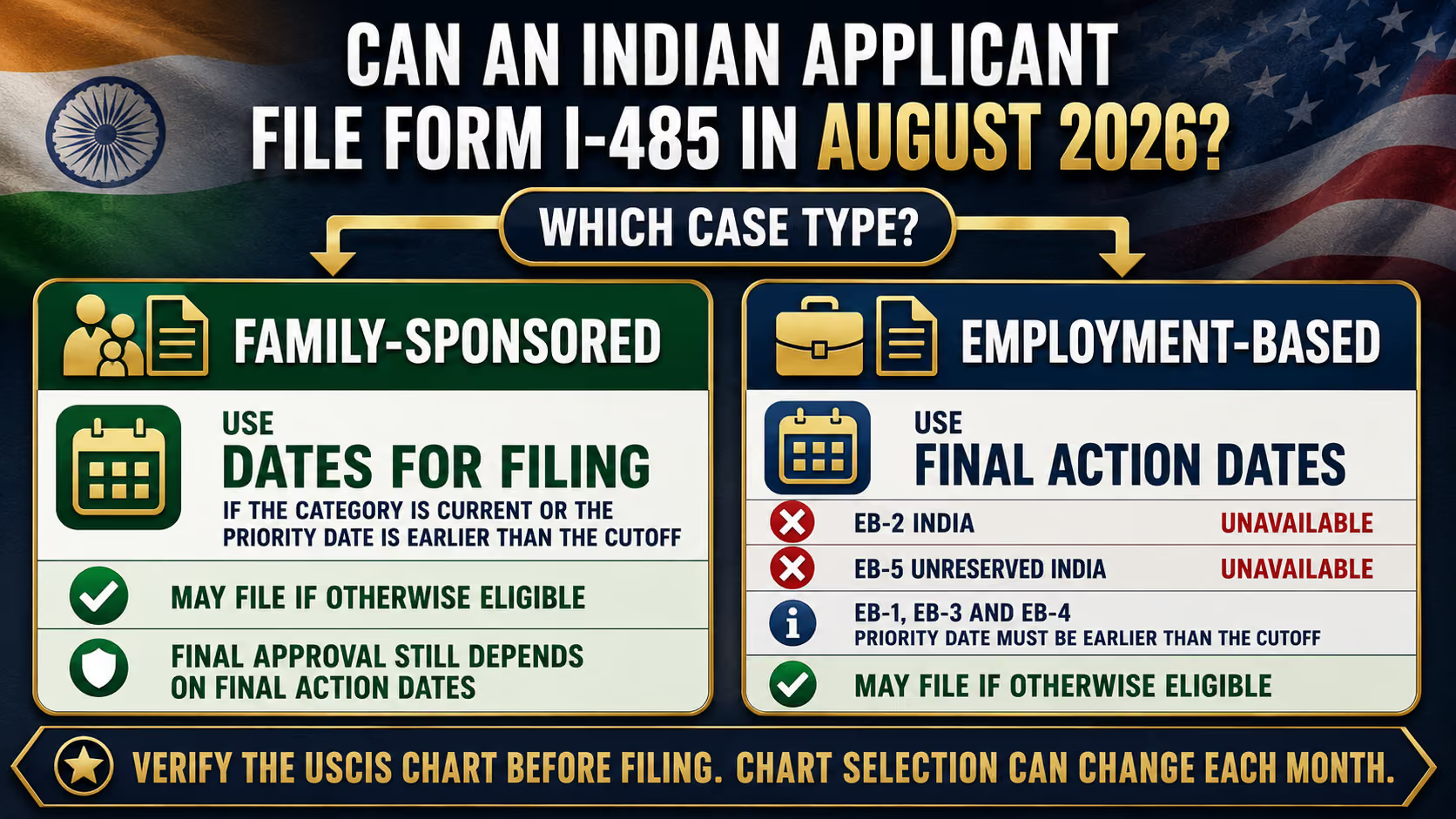
India EB-2 remains unavailable in the August 2026 Visa Bulletin. The category was also unavailable in July after the Department of State confirmed that India’s pro-rated EB-2 limit had been reached for fiscal year 2026.
An unavailable category does not have a cutoff date that applicants can compare with their priority dates. Instead, it means immigrant visa numbers are not currently authorized for final action. USCIS generally cannot approve an EB-2 India green card while the category remains unavailable.
The August bulletin lists January 15, 2015, as the India EB-2 Date for Filing. However, Indian employment-based applicants cannot use that date to file Form I-485 this month because USCIS requires employment-based applicants to use the Final Action Dates chart. Under that chart, EB-2 India is unavailable.
Applicants with properly filed I-485 applications are in a different position. Unavailability does not ordinarily cancel the application or invalidate an approved I-140 petition. The I-485 may remain pending, but final approval generally must wait until an immigrant visa number becomes available again. During that period, applicants should continue monitoring work authorization, Advance Parole, USCIS notices and any changes affecting the underlying employment.
The year-over-year comparison shows how quickly visa availability can change. India EB-2 had a Final Action Date of January 1, 2013, in August 2025 but is unavailable one year later. Applicants seeking more background can review AVLG’s guide to the EB-2 priority date for India.
DOS previously indicated that EB-2 India would likely receive a cutoff date again when fiscal year 2027 begins in October. The exact date will depend on demand and the new annual visa allocation, so applicants should not assume that substantial forward movement is guaranteed.
The India EB-3 Final Action Date remains January 1, 2014, in the August 2026 Visa Bulletin. The Other Workers category uses the same cutoff date. Neither category moves forward from July.
An applicant’s priority date generally must be earlier than January 1, 2014, to be current under the August employment-based chart. A priority date that falls on January 1, 2014, is not yet current. Because USCIS requires employment-based applicants to use Final Action Dates this month, the later January 15, 2015, Dates for Filing cutoff cannot be used to submit a new Form I-485.
The year-over-year comparison shows limited improvement. In August 2025, both India EB-3 and Other Workers had a Final Action Date of May 22, 2013. The categories have therefore advanced by slightly more than seven months over the past year, but the overall backlog remains substantial.
EB-3 includes professionals whose positions require at least a bachelor’s degree and skilled workers whose positions require at least two years of training or experience. The Other Workers classification generally covers permanent jobs requiring less than two years of training or experience. The applicable category depends on the position described in the labor certification and the worker’s qualifications, not simply on which cutoff date appears more favorable.
Applicants should be cautious about assuming that an EB-3 case is automatically a faster alternative to EB-2. Any strategy involving a different classification may depend on the approved I-140, the underlying PERM position, priority-date retention and continued employer sponsorship. AVLG’s guide to EB-2 and EB-3 PERM labor certification explains how these employer-sponsored categories are structured.
India EB-4 is one of the few employment-based categories to move forward in the August 2026 Visa Bulletin. The Final Action Date advances from September 15, 2022, in July to October 15, 2022, in August. The Certain Religious Workers category uses the same cutoff.
An applicant’s priority date generally must be earlier than October 15, 2022, to be current. Because USCIS requires employment-based applicants to use Final Action Dates in August, this is also the relevant cutoff for determining adjustment-of-status filing eligibility.
The year-over-year comparison is notable. India EB-4 was unavailable in August 2025, meaning visa numbers were not authorized at that time. The category is available again in August 2026, although the October 15, 2022, cutoff continues to limit which cases may receive final action.
This movement is positive, but applicants should not assume that EB-4 will continue advancing at the same pace. The fiscal year ends on September 30, and DOS may adjust cutoff dates if demand or visa use approaches the applicable annual limit.
India EB-5 Unreserved remains unavailable in the August 2026 Visa Bulletin. The category became unavailable in July after India’s pro-rated EB-5 Unreserved limit was reached, and DOS indicated that it would remain unavailable for the rest of fiscal year 2026.
This means immigrant visa numbers are not currently authorized for final action in the India EB-5 Unreserved category. USCIS generally cannot approve a green card in this classification while it remains unavailable. Applicants also cannot use the more favorable May 1, 2024, employment-based Date for Filing to submit Form I-485 in August because USCIS requires employment-based applicants to use Final Action Dates.
The year-over-year comparison shows a less favorable position. India EB-5 Unreserved had a Final Action Date of November 15, 2019, in August 2025. One year later, the category has no authorized visa numbers for final action.
A properly filed I-485 or approved EB-5 petition is not ordinarily canceled because the category becomes unavailable. However, final green card approval may have to wait until visa numbers become available again.
The three EB-5 set-aside categories remain current for India:
These categories have separate visa allocations from EB-5 Unreserved. An Unreserved applicant cannot automatically rely on a current set-aside category. The petition and underlying investment must qualify for the specific set-aside classification.
Indian investors can review AVLG’s overview of EB-5 visa requirements and classifications for additional information about the program. Visa availability is only one part of the analysis; the investment, source of funds, job creation and petition requirements must also be satisfied.
Indian family-sponsored applicants receive considerably more forward movement than employment-based applicants in August. F1, F2A, F2B and F3 advance under both major charts, while F4 remains unchanged.
Final Action Dates determine when an immigrant visa may be available for final green card approval.
F2A, which covers spouses and unmarried children under 21 of permanent residents, receives the largest improvement. Its Final Action Date advances by more than 18 months. F1 also makes substantial progress, while movement in F2B and F3 is more limited.
F4 India remains at November 1, 2006. This is significant because F4 advances by eight months for the Rest of the World and China but does not move for India.
USCIS allows family-sponsored adjustment applicants to use Dates for Filing in August 2026.
F2A remains current under the Dates for Filing chart. This may allow an otherwise eligible F2A applicant to submit Form I-485 regardless of the priority date. However, filing eligibility does not mean the green card can be approved immediately. Final approval generally depends on the priority date becoming current under the Final Action Dates chart.
Applicants should identify the correct family preference category before comparing dates. AVLG’s family-based immigration overview explains how the qualifying relationship, petitioner’s immigration status and beneficiary’s eligibility affect the process.
Comparing the current dates with the official August 2025 Visa Bulletin shows strong family-sponsored progress but a more complicated employment-based picture. The table below compares India Final Action Dates.
The clearest progress appears in the family-sponsored categories. F2A advances by nearly four years, while F1, F2B and F3 also move meaningfully. F4 is the exception, remaining at November 1, 2006, for the entire one-year comparison.
Employment-based results are mixed. EB-1 advances by eight months year over year, and EB-3 moves forward by slightly more than seven months. EB-4 also becomes available again after being unavailable in August 2025.
The situation is less favorable for EB-2 India and EB-5 Unreserved India. Both categories had cutoff dates in August 2025 but are unavailable in August 2026. This should not be read as an ordinary retrogression to a later date. “Unavailable” means visa numbers are not presently authorized for final action.
The comparison also shows why Visa Bulletin movement should not be treated as a straight-line forecast. A category may advance over time and later become unavailable when demand or visa use reaches an annual or per-country limit.
The August 2026 Visa Bulletin affects applicants differently depending on their category, priority date and stage of processing. Before taking action, applicants should confirm the correct country of chargeability, identify the applicable preference category and compare the priority date with the chart USCIS selected for August.
Retrogression or unavailability does not ordinarily cancel a properly filed Form I-485. The application may remain pending while USCIS waits for an immigrant visa number to become available. However, the agency generally cannot grant final approval unless the priority date is current under the Final Action Dates chart.
Applicants should continue responding to Requests for Evidence, interview notices and other USCIS correspondence. They should also monitor Employment Authorization Document and Advance Parole expiration dates, report address changes and review international travel plans carefully.
Employment changes require particular attention in employer-sponsored cases. AC21 portability may provide flexibility when an I-485 has been pending for at least 180 days and the new position is in the same or a similar occupational classification, but the analysis is case-specific. Applicants considering a move can review what happens when changing jobs during the green card process.
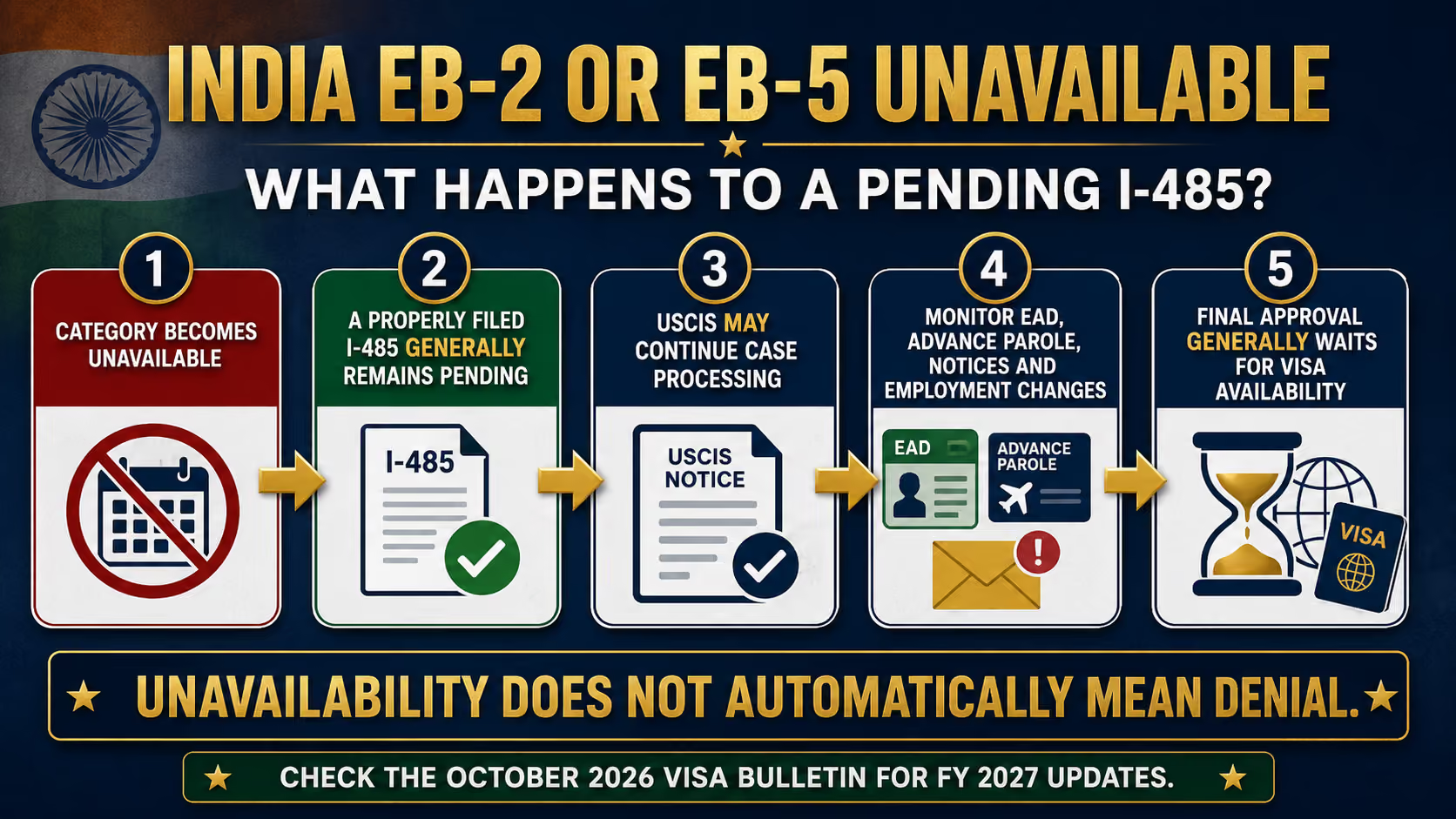
Applicants should not submit Form I-485 simply because a more favorable date appears in the DOS Dates for Filing chart. Indian employment-based applicants must use Final Action Dates in August.
Those who are not yet eligible to file can use the waiting period to organize immigration records, civil documents and petition materials. Applicants should also maintain an appropriate immigration status where required and discuss continued employer sponsorship before making a major career change.
A favorable Visa Bulletin date is only one requirement. The applicant must still qualify for adjustment of status, have a valid underlying petition and address any issues involving immigration status, admissibility or the continuing job offer.
Applicants completing consular processing should follow instructions from the National Visa Center and the relevant U.S. embassy or consulate. USCIS chart selection applies to adjustment of status inside the United States and does not replace the procedures used for consular cases.
Submitting documents to the NVC or becoming documentarily complete does not necessarily mean an interview can be scheduled immediately. Final immigrant visa issuance still depends on visa availability, the applicable Final Action Date and completion of all consular requirements.
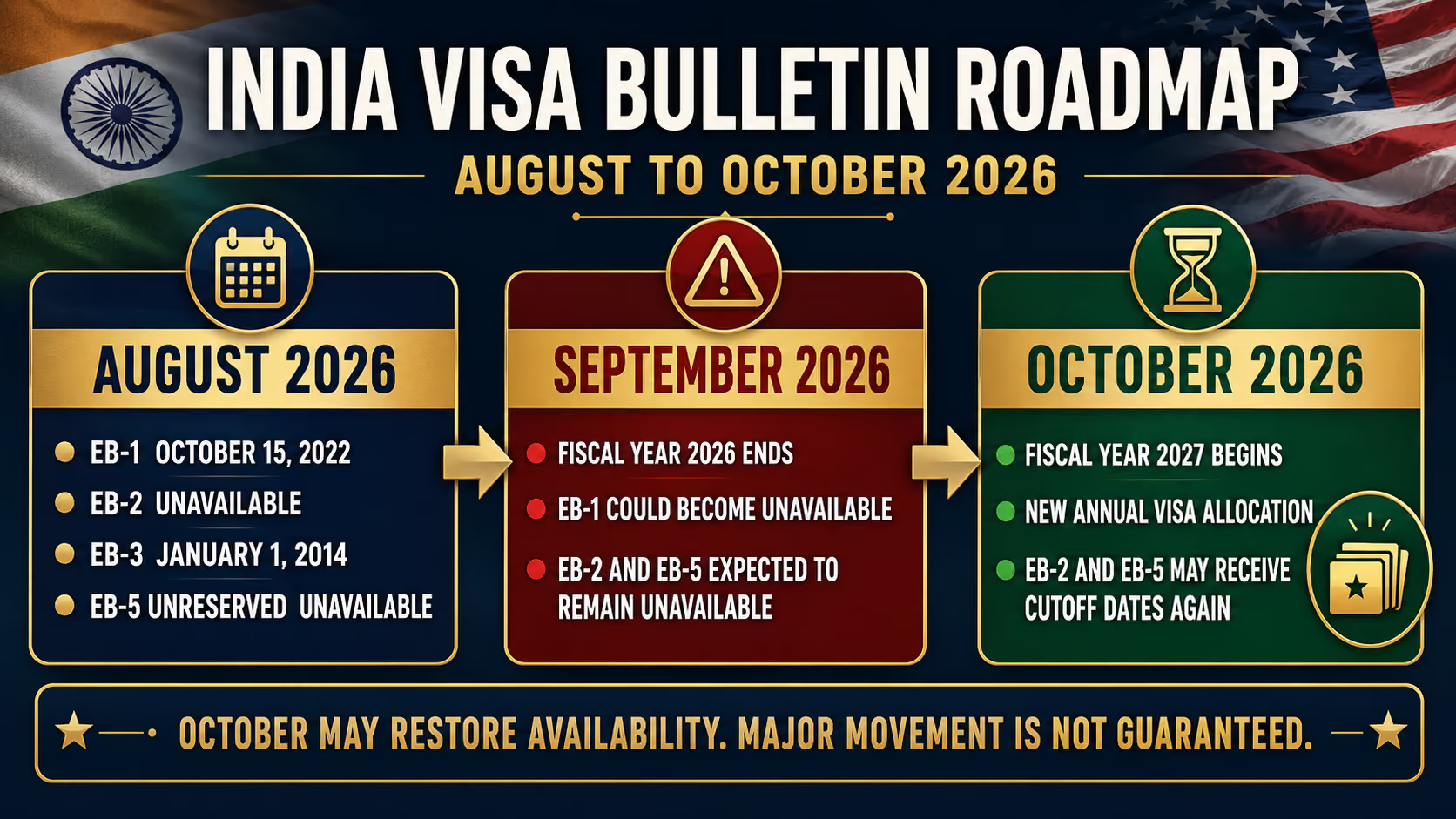
The safest short-term prediction is continued caution. Fiscal year 2026 ends on September 30, and DOS must keep visa issuance within annual category and per-country limits. This makes major employment-based advancement unlikely during the final weeks of the fiscal year.
India EB-1 is the category facing the clearest immediate risk. DOS warns that high demand could require the category to become unavailable if India’s pro-rated EB-1 limit is reached before the fiscal year ends. This is not confirmation that EB-1 will become unavailable, but applicants should not assume that the October 15, 2022, cutoff will remain available throughout September.
India EB-2 and EB-5 Unreserved are expected to remain unavailable for the rest of fiscal year 2026. Applicants with pending cases may continue waiting, but final approval generally cannot occur until visa numbers become available again.
DOS has not announced a specific prediction for India EB-3 or Other Workers. Both remain at January 1, 2014, in August. Without official guidance, applicants should not assume that either category will advance in September.
Recent family-sponsored movement is encouraging, particularly in F1 and F2A. However, the size of the August advances does not guarantee that similar movement will continue next month.
October begins fiscal year 2027 and introduces a new annual allocation of immigrant visa numbers. This may allow India EB-2 and EB-5 Unreserved to receive Final Action Dates again.
In the official July 2026 Visa Bulletin, DOS indicated that India EB-2 would likely return to at least the Final Action Date announced in the May 2026 bulletin. DOS gave similar guidance for EB-5 Unreserved India, stating that the category would likely return to at least its June 2026 Final Action Date.
These statements are helpful, but they are not guarantees. The actual October dates will depend on demand from Indian applicants, the fiscal year 2027 employment-based limit and how DOS distributes available numbers across categories and countries.
A new fiscal year may restore visa availability, but it does not necessarily produce dramatic advancement. Applicants should rely on the official October bulletin before making filing, employment or travel decisions.
r becoming documentarily complete does not necessarily mean an interview can be scheduled immediately. Final immigrant visa issuance still depends on visa availability, the applicable Final Action Date and completion of all consular requirements.
Family-sponsored adjustment applicants may use Dates for Filing. Employment-based applicants must use Final Action Dates. USCIS can change the selected charts each month.
The India EB-1 Final Action Date is October 15, 2022. An applicant’s priority date generally must be earlier than that date to be current. The cutoff does not move from July.
No. India EB-2 remains unavailable because India’s pro-rated EB-2 limit for fiscal year 2026 has been reached. USCIS generally cannot grant final approval until visa numbers become available again.
Not for an adjustment-of-status filing in August. Although DOS lists January 15, 2015, under Dates for Filing, USCIS requires employment-based applicants to use Final Action Dates. Under that chart, EB-2 India is unavailable.
The India EB-3 Final Action Date is January 1, 2014. The date does not change from July. A priority date equal to January 1, 2014, is not yet current because the priority date generally must be earlier than the cutoff.
No. India EB-5 Unreserved remains unavailable. However, the rural, high-unemployment and infrastructure set-aside categories remain current for applicants who qualify for those specific classifications.
Retrogression or unavailability does not ordinarily cancel a properly filed Form I-485. The application may remain pending, but USCIS generally cannot grant final green card approval until the priority date is current and a visa number is available.
F2A is current under the Dates for Filing chart, which family-sponsored applicants may use in August. However, the India F2A Final Action Date is July 22, 2026. This means filing may be permitted before the case is eligible for final approval.
Yes, it is possible. DOS warns that India EB-1 may become unavailable if the applicable per-country limit is reached before the fiscal year ends. The warning does not confirm that unavailability will occur.
The August 2026 Visa Bulletin brings stronger family-sponsored movement but continued restrictions for Indian employment-based applicants.
Applicants should confirm their category, priority date, country of chargeability and processing method before filing Form I-485 or making significant employment, travel or immigration decisions.
Visa Bulletin movement can affect when an applicant may file Form I-485 and when USCIS can grant final green card approval. However, the correct analysis depends on more than the published cutoff date. The applicant’s immigration category, priority date, country of chargeability, underlying petition, current status and processing method may all affect the next step.
American Visa Law Group can review how the August 2026 Visa Bulletin may affect your case, including a pending I-485, employment changes, EAD or Advance Parole planning, consular processing, and possible employment-based strategies.
To discuss your situation with an immigration attorney, schedule a consultation with American Visa Law Group.
Department of State August 2026 Visa Bulletin
The official source for August 2026 India priority dates, visa availability and DOS warnings.
USCIS August 2026 Adjustment of Status Filing Charts
Confirms that family-sponsored applicants may use Dates for Filing while employment-based applicants must use Final Action Dates.
Department of State July 2026 Visa Bulletin
Provides the official dates and India-specific announcements used for the month-to-month comparison.
Department of State August 2025 Visa Bulletin
Supports the article’s year-over-year comparison of India family-sponsored and employment-based dates.
USCIS Visa Availability and Priority Dates
Explains how priority dates, visa availability and the Visa Bulletin affect adjustment-of-status cases.
July 2026 Visa Bulletin for India
Provides additional background on the EB-1 retrogression and the initial unavailability of India EB-2 and EB-5 Unreserved.
Explains the India EB-2 backlog, priority-date movement and practical considerations for applicants waiting in the category.

Hasan Abdullah, Esq. is the Founder and Managing Attorney of American Visa Law Group. His practice focuses on U.S. immigration law, including family-based immigration, employment-based immigration, adjustment of status, consular processing, waivers, PERM labor certification, NIW, EB-1, H-1B, O-1, and complex immigration strategy.
Through American Visa Law Group, Mr. Abdullah helps individuals, families, professionals, investors, and employers understand their immigration options and plan around changing government policies, USCIS procedures, and Visa Bulletin movement. His work emphasizes practical legal analysis, realistic expectations, and strategy tailored to each applicant’s immigration history and long-term goals.


