Author: Hasan Abdullah, Esq.
The August 2026 Visa Bulletin brings major forward movement in several family-sponsored categories, while the employment-based picture remains more limited and uneven. The most significant family development is the substantial advancement of the F2A Final Action Date for spouses and children of permanent residents. F1, F2B, F3, and F4 also move forward in selected countries, although the gains are not uniform.
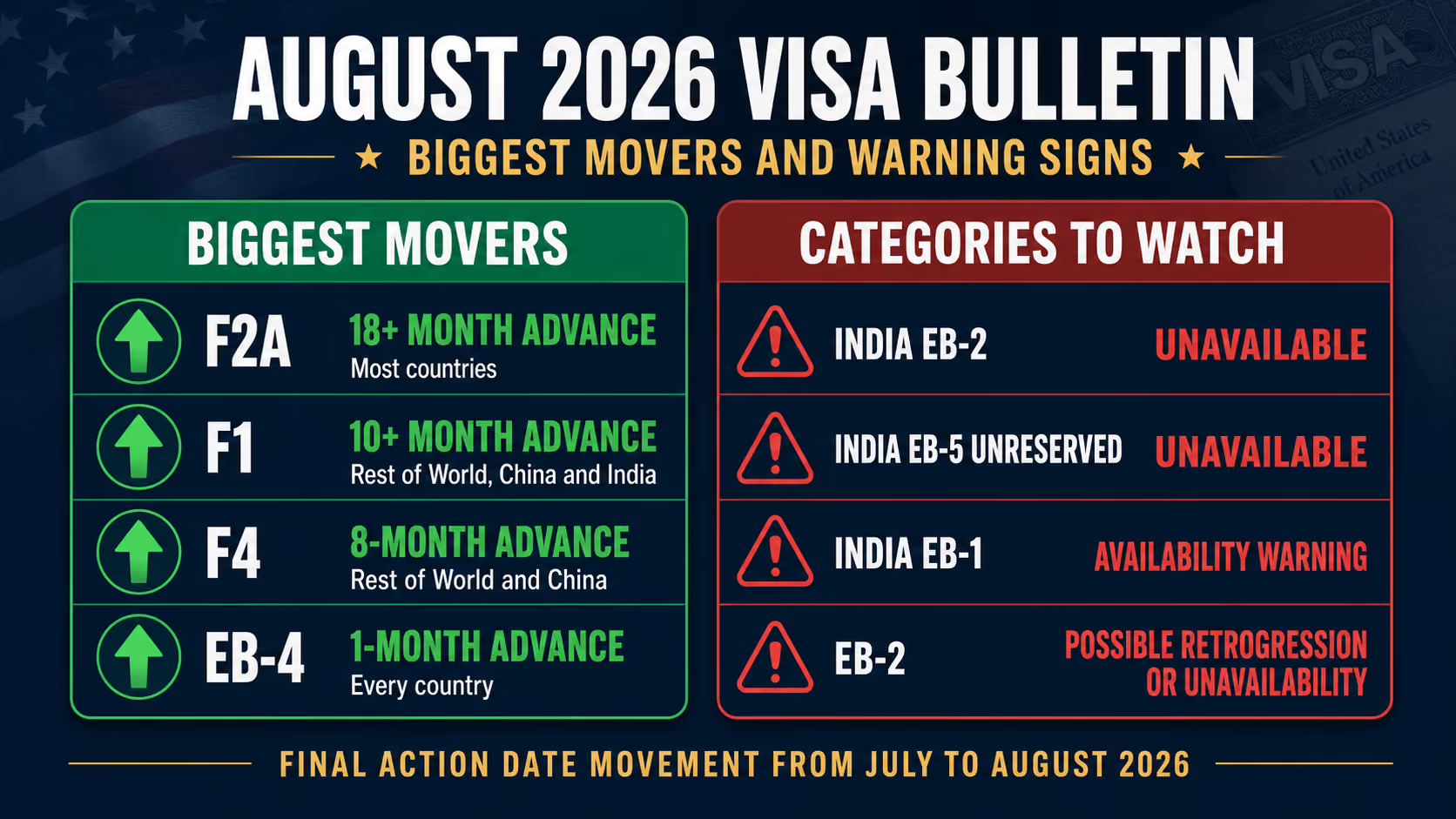
Employment-based applicants face a more cautious outlook. EB-1 China advances by one month, and several EB-3, Other Worker, and EB-4 dates move forward modestly. India EB-2 and EB-5 Unreserved, however, remain unavailable. The Department of State also warns that India EB-1 could become unavailable before the fiscal year ends if demand reaches the applicable annual limit.
For adjustment-of-status applicants, the chart selection is especially important. USCIS allows family-sponsored applicants to use the Dates for Filing chart in August 2026. Employment-based applicants must use the more restrictive Final Action Dates chart.
This article explains the August 2026 priority dates, compares them with July 2026 and August 2025, and examines the practical impact on applicants from India, China, Mexico, the Philippines, and the Rest of the World. It also explains what applicants should monitor as fiscal year 2026 approaches its final months.
The official August 2026 Visa Bulletin delivers substantial family-sponsored advancement but only modest employment-based movement. The most dramatic change affects F2A applicants, while India continues to face serious employment-based restrictions.
Compared with the firm’s July 2026 Visa Bulletin analysis, family-sponsored applicants receive the strongest gains. Beyond F2A, several F1, F2B, F3, and F4 dates move forward. F4 advances by eight months for the Rest of the World and China, although India, Mexico, and the Philippines remain unchanged in that category.
Employment-based movement is narrower. China EB-1, selected EB-3 dates, Other Workers, and EB-4 advance, but India EB-2 and EB-5 Unreserved remain unavailable. The Department of State also warns that India EB-1 could become unavailable if its annual limit is reached before the end of fiscal year 2026. Applicants affected by these restrictions can review the firm’s detailed analysis of the July 2026 Visa Bulletin for India.
USCIS confirms that family-sponsored applicants may use the Dates for Filing chart in August, while employment-based applicants must use the Final Action Dates chart. Because the selected chart can change each month, applicants should always verify the current USCIS adjustment-of-status filing charts before filing Form I-485. Readers who need additional context can also review how the Visa Bulletin and priority dates work.
For August 2026, USCIS selected different charts for family-sponsored and employment-based adjustment-of-status applicants:
Applicants should verify this information on the official USCIS adjustment-of-status filing charts page before submitting Form I-485. USCIS can change its chart selection each month.
Family-sponsored applicants may use the Dates for Filing chart in the August 2026 Visa Bulletin.
This chart generally provides later cutoff dates than the Final Action Dates chart. As a result, some applicants may be allowed to file Form I-485 before an immigrant visa number is available for final green card approval.
The F2A category is especially important in August. F2A, which covers spouses and unmarried children under 21 of permanent residents, is current under the Dates for Filing chart for every country. An otherwise eligible F2A applicant may therefore be able to file Form I-485 regardless of the priority date.
However, a current Dates for Filing chart does not necessarily mean USCIS can approve the green card immediately. Final approval generally depends on the priority date becoming current under the Final Action Dates chart.
Employment-based applicants must use the Final Action Dates chart in August 2026. They cannot rely on the more favorable employment-based Dates for Filing chart when determining whether they may submit Form I-485.
This distinction matters for applicants in backlogged EB-1, EB-2, EB-3, EB-4, and EB-5 categories. The applicant’s priority date generally must be earlier than the listed Final Action Date for the appropriate category and country of chargeability.
For example, India EB-2 and India EB-5 Unreserved are marked unavailable in August. Applicants in those categories generally cannot file a new Form I-485 based on the August employment chart, and USCIS cannot grant final approval while immigrant visa numbers remain unavailable.
Applicants with an I-485 that is already pending are in a different position. Unavailability does not ordinarily cancel a properly filed application, but final approval may be delayed until a visa number becomes available again.
The two Visa Bulletin charts serve different purposes:
Dates for Filing indicate when applicants may be permitted to submit documents or file Form I-485 before a visa number is available for final approval. Adjustment-of-status applicants may use this chart only when USCIS specifically authorizes it for that month.
Final Action Dates determine when an immigrant visa number may be available and when a green card case may receive final approval. When USCIS requires applicants to use this chart for filing, the priority date must generally be earlier than the listed cutoff date.
The USCIS chart selection applies to people seeking adjustment of status from inside the United States. Applicants completing consular processing should follow instructions from the National Visa Center and the applicable Department of State chart.
Readers unfamiliar with these concepts can review the firm’s guide explaining how the Visa Bulletin and priority dates work. Before filing, applicants should confirm their preference category, country of chargeability, priority date, current immigration status, and the chart USCIS selected for that month.
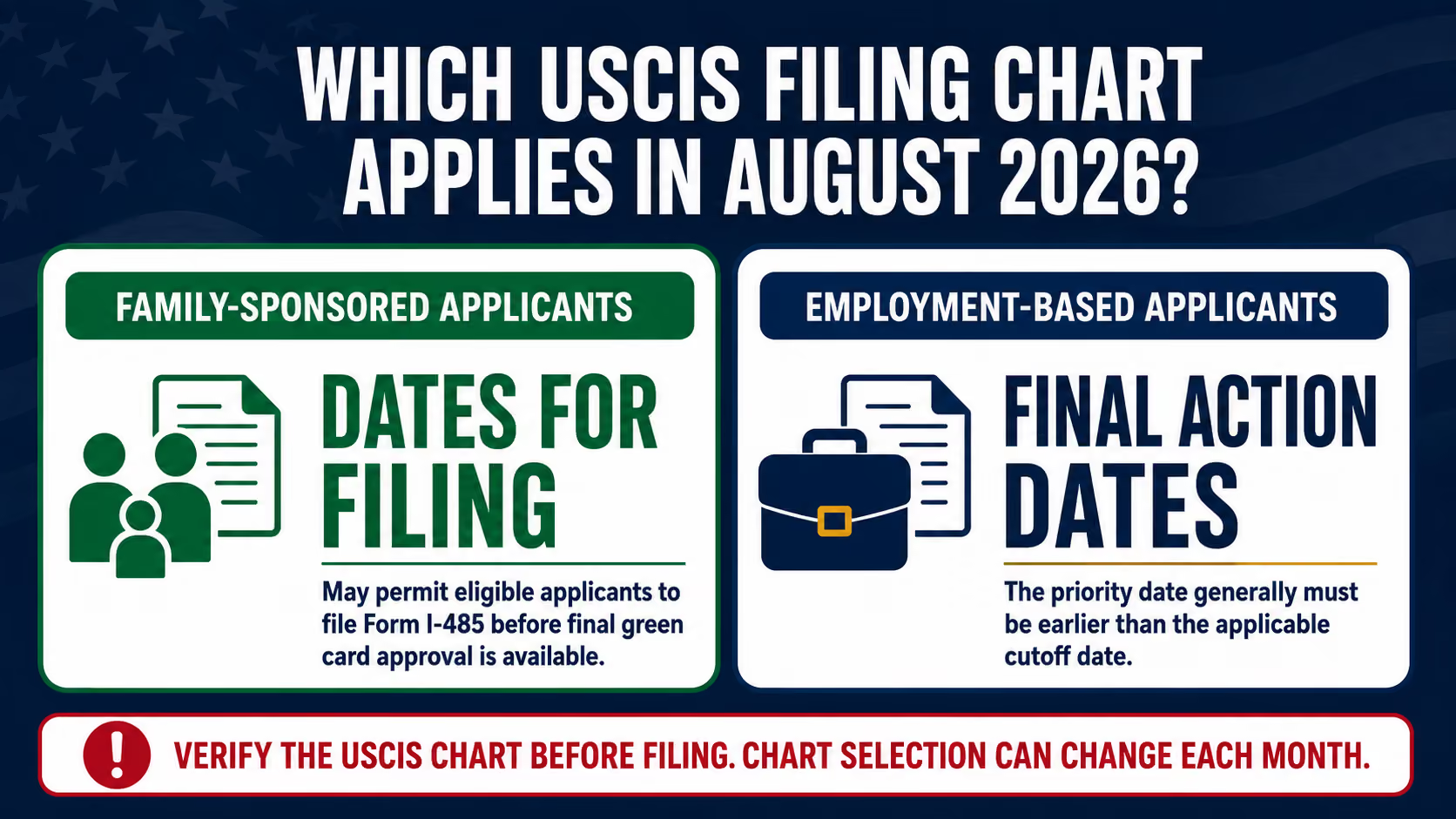
USCIS allows family-sponsored applicants to use the Dates for Filing chart in August 2026. This means an otherwise eligible applicant may submit Form I-485 when the priority date is earlier than the listed filing date, even if the case is not yet eligible for final green card approval.
The strongest movement appears in F2B, which advances by nearly seven months for the Rest of World, China and India. F1, F3 and F4 also move forward, allowing additional applicants with priority dates near the previous cutoffs to potentially become eligible to file.
F2A remains current under the Dates for Filing chart for every country. This may allow eligible spouses and children of permanent residents to file Form I-485 regardless of their priority date. However, the F2A Final Action Date is not current, so filing eligibility does not guarantee immediate green card approval.
Applicants should confirm the monthly chart selection through the official USCIS adjustment-of-status filing charts. Those who become eligible to file may also want to understand when an immigrant petition and Form I-485 can be submitted together through concurrent filing.
Employment-based movement is limited in the August 2026 Visa Bulletin. China receives modest movement in EB-1 and EB-3, while India EB-2 and EB-5 Unreserved remain unavailable.
EB-1 China advances by one month to July 1, 2023. India remains at October 15, 2022, while the Rest of World, Mexico and the Philippines remain current.
The Department of State warns that high demand could cause India EB-1 to become unavailable before fiscal year 2026 ends. This is not a confirmed outcome, but applicants close to the cutoff should monitor future updates carefully.
EB-2 India remains unavailable because its fiscal year 2026 limit has been reached. USCIS therefore cannot grant final approval in this category while immigrant visa numbers are unavailable.
China remains at September 1, 2021. The Rest of World, Mexico and the Philippines remain current, but DOS warns that increased EB-2 demand could require future retrogression or unavailability. Applicants can review how priority dates affect the broader EB-2 green card process.
EB-3 advances by one month for the Rest of World and Mexico, reaching September 1, 2024. China moves from December 22, 2021, to January 1, 2022. India remains at January 1, 2014, and the Philippines remains at August 1, 2023.
The Other Workers category advances by one month for the Rest of World, China and Mexico. India remains at January 1, 2014, while the Philippines remains at December 1, 2021.
EB-4 and Certain Religious Workers advance by one month for every country, moving from September 15, 2022, to October 15, 2022.
This represents a notable year-over-year improvement because both categories were unavailable in the August 2025 Visa Bulletin. However, the August 2026 cutoff date still limits which applicants may receive final action.
India EB-5 Unreserved remains unavailable, while China remains at December 1, 2016. The Rest of World, Mexico and the Philippines remain current.
The three EB-5 set-aside categories—rural areas, high-unemployment areas and infrastructure projects—also remain current for every country. Applicants should still distinguish carefully between the Unreserved and set-aside categories because they have separate visa allocations and availability rules.
Note: Unless otherwise stated, the family-sponsored movements discussed below refer to the Final Action Dates chart. Filing eligibility for adjustment of status depends on the chart selected by USCIS for August 2026.
The August bulletin affects each country differently. Family-sponsored categories generally show stronger movement, while employment-based progress remains uneven.
India receives meaningful family-sponsored advancement, particularly in F1 and F2A. However, its employment-based outlook remains difficult.
EB-1 stays at October 15, 2022, and the Department of State warns that the category could become unavailable before the fiscal year ends. EB-2 and EB-5 Unreserved remain unavailable, while EB-3 remains at January 1, 2014. The EB-5 rural, high-unemployment and infrastructure set-aside categories remain current.
China benefits from family-sponsored movement across several categories, including an eight-month F4 advance.
Employment-based progress is modest. EB-1 advances by one month to July 1, 2023, while EB-3 moves to January 1, 2022. EB-2 remains at September 1, 2021, and EB-5 Unreserved remains at December 1, 2016. The EB-5 set-aside categories remain current.
Mexico’s largest family-sponsored change is in F2A, which advances by more than 18 months. F1 and F3 also move forward, while F2B and F4 remain unchanged.
The employment-based outlook is more favorable. EB-1 and EB-2 remain current, while EB-3 and Other Workers each advance by one month. EB-5 remains current, and EB-4 moves forward to October 15, 2022.
F2A makes significant progress for the Philippines, while F2B advances by 17 days. Most other family-sponsored cutoff dates remain unchanged.
EB-1 and EB-2 remain current. EB-3 stays at August 1, 2023, and Other Workers remains at December 1, 2021. EB-4 advances by one month, while EB-5 remains current.
The Rest of World column receives broad family-sponsored movement. F2A makes the largest advance, while F1, F2B, F3 and F4 also move forward.
Most major employment-based categories remain favorable. EB-1, EB-2 and EB-5 are current. EB-3 advances to September 1, 2024, Other Workers moves to April 1, 2022, and EB-4 advances to October 15, 2022. Applicants should still monitor September because annual limits can cause late-fiscal-year retrogression or unavailability.

Comparing August 2026 with the official August 2025 Visa Bulletin reveals substantial family-sponsored progress but a more complicated employment-based picture.
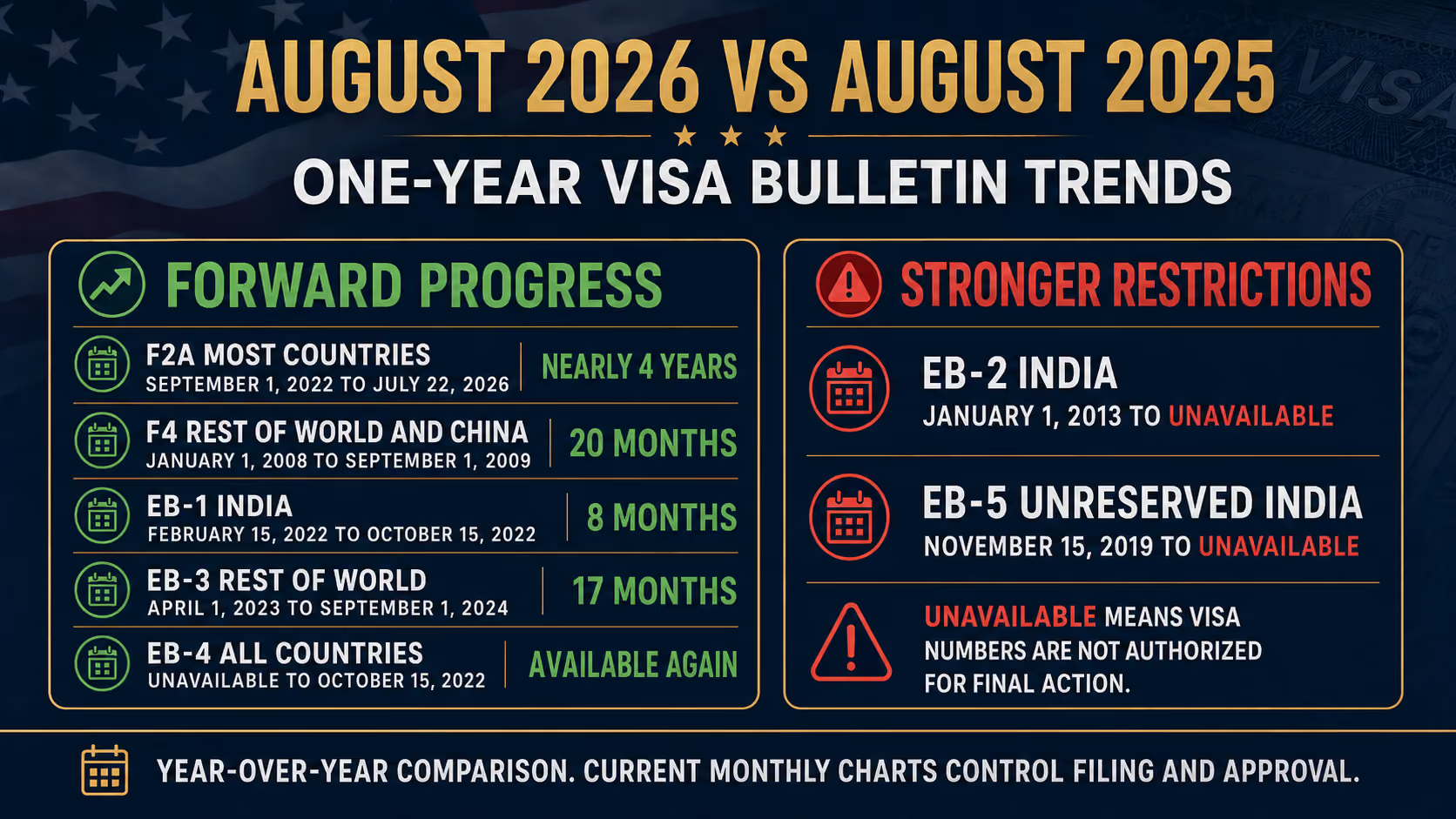
Most family-sponsored categories are further ahead than they were in August 2025. F2A records the largest improvement, advancing by nearly four years for the Rest of World, China, India and the Philippines.
F1, F2B, F3 and F4 also show meaningful year-over-year progress in several country columns. However, the gains remain uneven. F4 India, for example, remains at November 1, 2006, despite movement in other countries.
Several employment categories are more favorable than they were one year ago. EB-1 India advances by eight months, EB-3 moves forward across every country column, and EB-4 is available again after being unavailable in August 2025.
The picture is less favorable for India EB-2 and EB-5 Unreserved. Both categories had cutoff dates in August 2025 but are unavailable in August 2026 because their applicable fiscal-year limits have been reached.
An unavailable category should not be interpreted as having a later cutoff date. It means immigrant visa numbers are not presently authorized for final action in that category.
Visa Bulletin movement rarely follows a straight line. A category can advance substantially over one year and still retrogress or become unavailable when demand increases or an annual limit is reached.
The August comparison therefore provides useful context, but it should not be treated as a prediction. Applicants should base filing, travel, employment and status decisions on the current chart—not only on long-term movement.
The most realistic short-term outlook is increased caution rather than broad forward movement. Fiscal year 2026 ends on September 30, and several employment-based categories are approaching their annual or per-country limits.
India EB-1 remains at October 15, 2022, in August, but the Department of State warns that high demand could cause the category to become unavailable before the fiscal year ends.
This is a formal warning, not a confirmed prediction. If the applicable India EB-1 limit is reached, DOS may stop authorizing additional immigrant visa numbers for the remainder of fiscal year 2026. Pending cases could remain open, but final approval would generally have to wait until visa numbers become available again.
Applicants should therefore avoid assuming that the October 15, 2022, cutoff will remain available through September.
India EB-2 is already unavailable, but DOS has issued a broader warning about demand across the EB-2 category. Increased visa use may require additional retrogression or unavailability to prevent the government from exceeding the annual limit.
This means currently favorable EB-2 countries are not automatically protected from late-fiscal-year restrictions. Rest of World, Mexico and the Philippines are current in August, while China remains at September 1, 2021. Those dates could remain unchanged, move backward or become unavailable if demand exceeds the remaining supply.
No specific retrogression date has been announced. Applicants should treat the warning as a reason to monitor the September bulletin, not as proof that a particular change will occur.
September is the final month of fiscal year 2026. Historically, this is when annual limits become especially important because the government must keep total visa issuance within the numbers authorized by law.
The September bulletin could therefore bring:
October begins fiscal year 2027 and introduces a new annual allocation of immigrant visa numbers. Categories that became unavailable may receive cutoff dates again, but the arrival of new numbers does not guarantee dramatic advancement.
Demand, unused numbers from other categories, per-country limits and government processing levels will all influence October movement. Applicants should rely on the official monthly chart rather than making major decisions based solely on predictions.
The August 2026 Visa Bulletin can change when a case may be filed or approved, but the correct response depends on the applicant’s category, priority date and processing method. Applicants should verify the facts before making immigration, employment or travel decisions.
Start by identifying the exact preference category and country of chargeability. Then compare the priority date with the chart USCIS selected for August:
A favorable cutoff date does not automatically establish eligibility. Applicants must also satisfy the requirements for adjustment of status, including any rules related to immigration status, admissibility and the underlying petition.
Applicants whose priority dates are approaching the cutoff may benefit from preparing documents early. This could include civil documents, immigration records, financial evidence and the required medical examination.
However, Form I-485 should not be submitted only because a date appears favorable in the Visa Bulletin. Applicants should first review the official Form I-485 instructions and filing requirements and confirm that the correct monthly chart permits filing.
Filing prematurely or under the wrong chart may lead to rejection and unnecessary delay.
Retrogression or unavailability does not normally cancel a properly filed I-485. The application may remain pending until an immigrant visa number becomes available again.
During that period, applicants should monitor:
USCIS may continue processing parts of the case, but final green card approval generally requires the priority date to be current under the Final Action Dates chart.
Applicants completing consular processing should follow instructions from the National Visa Center rather than relying only on the USCIS adjustment-of-status chart selection.
Being eligible to submit documents does not necessarily mean an interview can be scheduled or an immigrant visa can be issued immediately. Applicants should monitor their CEAC account and follow the official National Visa Center processing instructions.
The safest approach is to treat the Visa Bulletin as one part of the case—not as the only factor determining the next step.
Family-sponsored adjustment applicants may use the Dates for Filing chart. Employment-based applicants must use the Final Action Dates chart. USCIS can change these selections each month.
F2A is current under the Dates for Filing chart for every country. However, it is not current under the Final Action Dates chart. This means an otherwise eligible applicant may be able to file Form I-485, but final approval may still depend on the priority date.
No. India EB-2 remains unavailable because the applicable fiscal year 2026 limit has been reached. USCIS cannot grant final green card approval in this category until immigrant visa numbers become available again.
The India EB-1 Final Action Date is October 15, 2022. It does not move between July and August. DOS also warns that India EB-1 could become unavailable if its annual limit is reached before the fiscal year ends.
EB-3 advances by one month for the Rest of World and Mexico, reaching September 1, 2024. China advances to January 1, 2022. India and the Philippines remain unchanged.
No. India EB-5 Unreserved remains unavailable. The EB-5 rural, high-unemployment and infrastructure set-aside categories remain current, but applicants must qualify for the specific set-aside category.
Retrogression or unavailability does not normally cancel a properly filed I-485. The application may remain pending, but USCIS generally cannot approve it until the priority date is current and an immigrant visa number is available.
Yes. September is the final month of fiscal year 2026, and DOS has warned that annual or per-country limits may require additional retrogression or unavailability. No specific additional category has been confirmed as unavailable yet.
Visa Bulletin movement can affect when an applicant may file Form I-485 and when a green card can receive final approval. The correct analysis depends on the immigration category, country of chargeability, priority date, processing method and whether an application is already pending.
American Visa Law Group can review how the August 2026 Visa Bulletin may affect your case and help identify practical next steps. To discuss your immigration strategy, schedule a consultation.

Hasan Abdullah, Esq. is the Founder and Managing Attorney of American Visa Law Group. His practice focuses on U.S. immigration law, including family-based immigration, employment-based immigration, adjustment of status, consular processing, waivers, PERM labor certification, NIW, EB-1, H-1B, O-1, and complex immigration strategy.
Through American Visa Law Group, Mr. Abdullah helps individuals, families, professionals, investors, and employers understand their immigration options and plan around changing government policies, USCIS procedures, and Visa Bulletin movement. His work emphasizes practical legal analysis, realistic expectations, and strategy tailored to each applicant’s immigration history and long-term goals.


