Author: Hasan Abdullah, Esq.
The June 2026 Visa Bulletin is especially important for Indian green card applicants because it brings a clear warning sign in the employment-based categories.
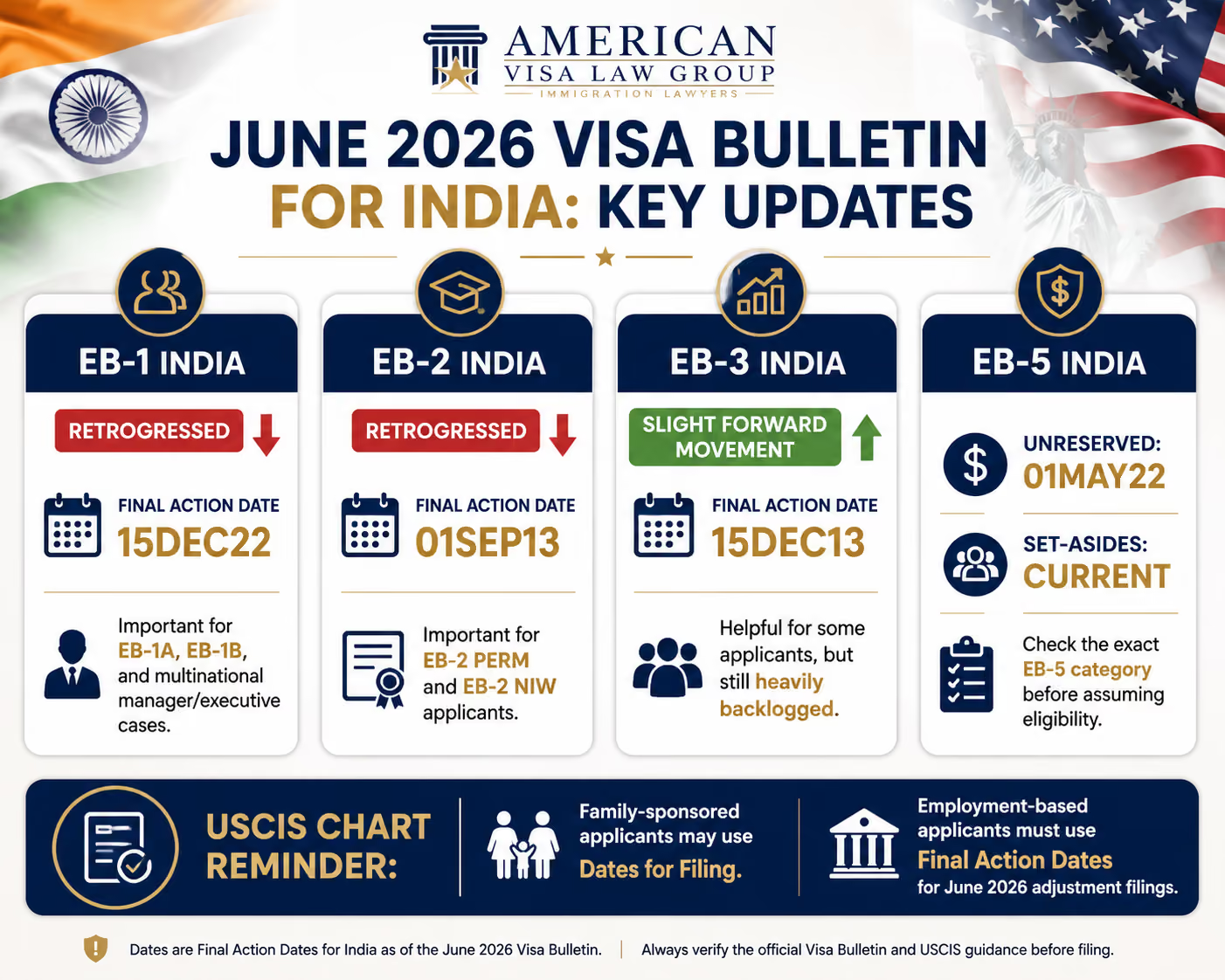
EB-1 India and EB-2 India both retrogressed in June 2026, while EB-3 India moved forward only slightly. For many Indian professionals, including H-1B workers waiting for green card availability, this month’s bulletin may affect expectations around Form I-485 filing, adjustment of status timing, travel planning, and long-term immigration strategy.
The key issue is not only where the Department of State placed the priority dates. Indian applicants also need to know which chart USCIS allows for adjustment of status filings in June 2026. That chart can determine whether an applicant may file Form I-485 in the United States or must continue waiting.
This article focuses specifically on what changed for India in the June 2026 Visa Bulletin, including EB-1, EB-2, EB-3, EB-5, family preference categories, USCIS filing chart guidance, and what Indian applicants should watch next.
The biggest India-specific update in the June 2026 Visa Bulletin is employment-based retrogression.
EB-1 India and EB-2 India both moved backward, which may affect applicants who were close to the listed dates or waiting for adjustment of status timing to improve. EB-3 India moved forward slightly, but the movement was limited and does not change the broader backlog problem for many Indian applicants.
For Indian applicants, the main takeaways are:
This month is also a reminder that Visa Bulletin movement is not guaranteed to keep moving forward. When demand is high or annual limits are being reached, dates can stop, move backward, or even become unavailable.
For Indian applicants, especially those in EB-1, EB-2, EB-3, or EB-5 Unreserved, June 2026 should be treated as a planning month. Applicants should review their priority date, category, country of chargeability, and the correct USCIS filing chart before making decisions about Form I-485, travel, job changes, or long-term green card strategy.
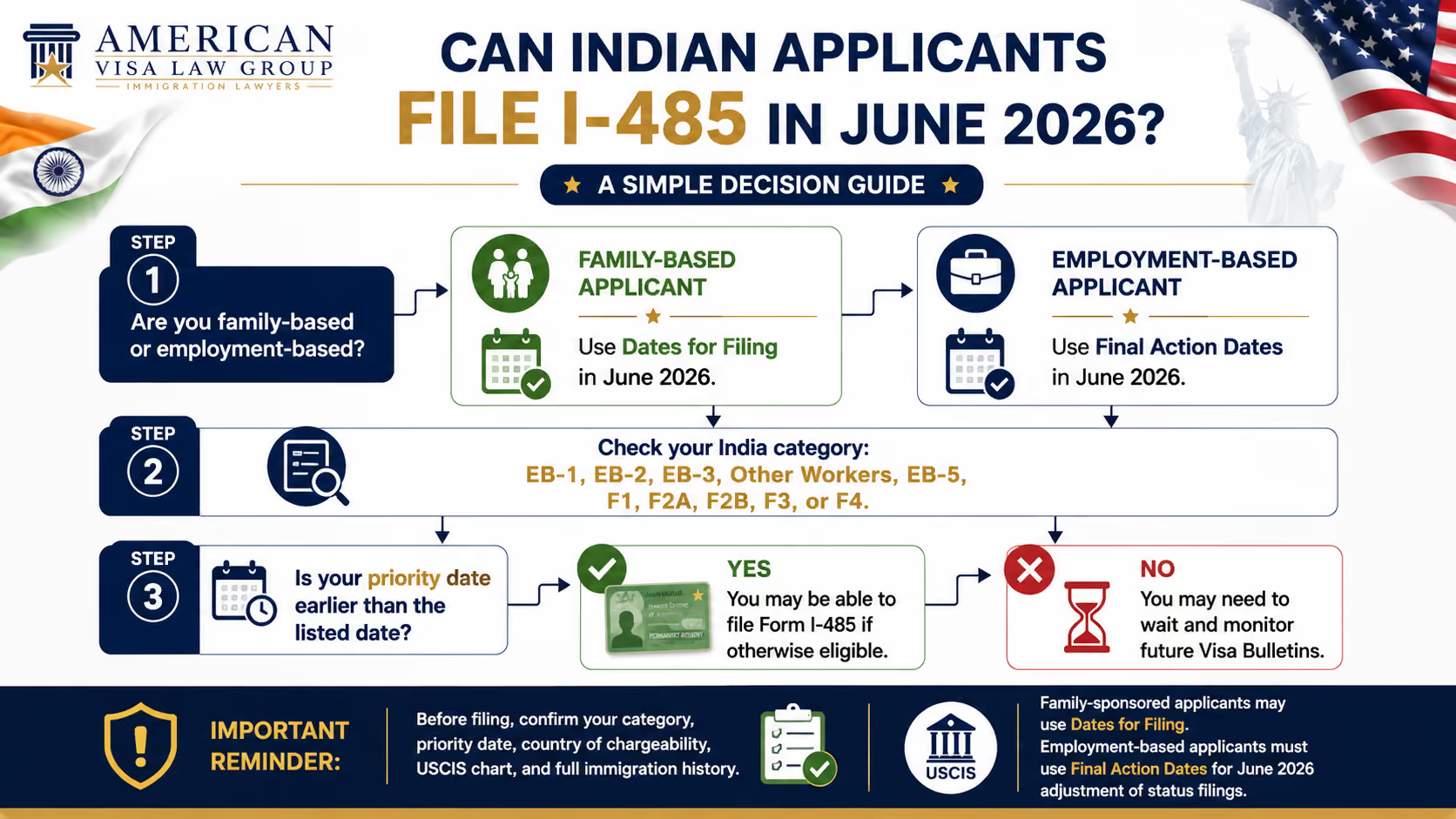
For June 2026, Indian applicants need to look carefully at the USCIS adjustment of status filing chart before deciding whether they may file Form I-485.
USCIS is allowing family-sponsored applicants to use the Dates for Filing chart. This may help some Indian family-based applicants file earlier if their priority date is before the listed date. For F2A, which covers spouses and children of lawful permanent residents, the June 2026 USCIS chart shows the category as current.
For employment-based applicants, USCIS is using the Final Action Dates chart. This is especially important for Indian applicants because EB-1 India and EB-2 India retrogressed in June 2026. Employment-based applicants cannot rely only on the more favorable Dates for Filing chart if USCIS is not allowing that chart for filing.
In simple terms, Indian applicants should not just ask, “What does the Visa Bulletin say?” They should ask, “Which chart does USCIS allow me to use this month?”
Before filing Form I-485, Indian applicants should confirm four things: their visa category, their country of chargeability, their priority date, and the USCIS-approved chart for June 2026.
Decision guide explaining whether Indian applicants may file Form I-485 in June 2026 based on USCIS filing chart guidance, priority date, and visa category.
EB-1 India is one of the most important updates in the June 2026 Visa Bulletin.
In June 2026, EB-1 India moved backward. This is known as retrogression. For Indian applicants, this matters because EB-1 is often viewed as a faster employment-based green card category compared with EB-2 or EB-3. But the June 2026 bulletin shows that EB-1 India can still be affected by high demand and annual visa number limits.
EB-1 may include extraordinary ability applicants, outstanding professors and researchers, and certain multinational managers or executives. For Indian applicants in these categories, retrogression can affect when a green card may be approved and whether adjustment of status can move forward.
Retrogression does not mean the underlying petition is denied. It usually means the applicant may need to wait until the priority date becomes current again before the case can move to final green card approval.
Indian EB-1 applicants with priority dates close to the June 2026 date should be careful with timing decisions, especially around Form I-485, travel, job changes, and long-term immigration planning.
EB-2 India also retrogressed in the June 2026 Visa Bulletin, making this one of the most important updates for Indian employment-based applicants.
EB-2 includes many advanced degree professionals, persons of exceptional ability, PERM-based applicants, and EB-2 NIW applicants. Because many Indian professionals are waiting in EB-2, even one bulletin change can affect expectations around green card timing, adjustment of status, and long-term immigration planning.
For Indian applicants, EB-2 retrogression does not mean the I-140 petition is denied or canceled. It usually means that the applicant’s priority date is no longer current for final action, so the case may have to wait until the Visa Bulletin moves forward again.
This is especially important for Indian H-1B workers who are watching EB-2 movement closely. If a priority date is near the listed date, the applicant should be careful before making major decisions about Form I-485, job changes, travel, or EAD and advance parole planning.
The main takeaway is simple: EB-2 India became more restricted in June 2026. Applicants should not assume that EB-2 movement will continue forward every month, especially when demand remains high.
For readers searching the visa bulletin EB2 India update, the June 2026 bulletin is important because EB-2 India retrogressed and may affect adjustment of status timing for applicants with priority dates near the listed date.
EB-3 India moved forward slightly in the June 2026 Visa Bulletin.
This is a positive update, but the movement is limited. EB-3 India remains heavily backlogged, so applicants should not treat one month of forward movement as a major change in the overall waiting time.
The Other Workers category for India also moved forward slightly. Like EB-3, this is helpful for applicants near the listed date, but it does not remove the larger backlog.
Some Indian applicants may compare EB-2 and EB-3 movement when thinking about downgrade or interfiling strategy. That type of decision should be reviewed carefully because it depends on the full case history, the approved petition, the pending application, and the applicant’s long-term immigration goals.
The practical takeaway is simple: EB-3 India improved slightly in June 2026, but applicants should still be cautious. Small movement can help some cases, but it does not guarantee faster green card approval.
EB-5 India also needs careful attention in the June 2026 Visa Bulletin.
For June 2026, EB-5 Unreserved India remains subject to a final action date. This means it is not current for all Indian applicants in that category.
At the same time, the EB-5 set-aside categories remain current. These include rural, high-unemployment, and infrastructure set-aside categories. That distinction matters because “EB-5” is not treated as one single category in the Visa Bulletin.
China and India are both separately tracked in the EB-5 Unreserved category, which is why Indian EB-5 applicants should avoid relying on general EB-5 summaries and should check the India-specific date carefully.
The Department of State also warned that EB-5 Unreserved India may retrogress or become unavailable if demand and number use require it.
For Indian EB-5 applicants, the practical point is to check the exact EB-5 category before making assumptions. An applicant in EB-5 Unreserved may face a different timing issue than an applicant in a set-aside category.
The family-based side of the June 2026 Visa Bulletin is less dramatic for India than the employment-based side.
For Indian family-sponsored applicants, the key categories to watch are F1, F2A, F2B, F3, and F4. These categories cover different family relationships, including unmarried sons and daughters of U.S. citizens, spouses and children of lawful permanent residents, married sons and daughters of U.S. citizens, and siblings of adult U.S. citizens.
F2A is especially important because it covers spouses and children of lawful permanent residents. For June 2026, F2A is current on the USCIS filing chart, which may help eligible Indian applicants who are preparing to file adjustment of status.
Other India family-based categories remain backlogged. This means that even if a category moves forward, many applicants may still have to wait before their priority date becomes usable.
For Indian family-based applicants, the practical point is to check both the category and the correct chart. A person should not assume they can file or move forward only because one family category looks more favorable than another.
For applicants searching the F4 visa bulletin India date, the key point is that F4 India remains one of the longest family-based backlogs. F4 covers brothers and sisters of adult U.S. citizens, and Indian applicants in this category should compare their priority date with the correct Visa Bulletin chart before assuming the case can move forward.
From May 2026 to June 2026, the biggest change for Indian applicants was in the employment-based categories.
EB-1 India moved backward, and EB-2 India also retrogressed. This is important because many Indian professionals rely on these categories for long-term green card planning, especially if they are working in the United States on H-1B status.
EB-3 India moved forward slightly, and Other Workers India also moved forward slightly. That is a positive update for applicants near the listed date, but the movement is still limited.
For EB-5, India Unreserved stayed subject to a final action date, while the EB-5 set-aside categories remained current.
The family-based India categories were more stable than the employment-based categories. F2A remains especially important because it is current on the USCIS filing chart for June 2026.
The practical takeaway is that June 2026 was not a simple “good” or “bad” month for India. It was a caution month. EB-1 and EB-2 became more restricted, while EB-3 showed only modest improvement.
Compared with June 2025, several India categories are in a better position in the June 2026 Visa Bulletin.
EB-1 India, EB-2 India, and EB-3 India are all ahead of where they were one year earlier. EB-5 Unreserved India is also better than it was in June 2025. That year-over-year progress is important, especially for applicants who have been watching priority dates for a long time.
But the comparison should not be misunderstood. Even though some dates are better than they were in June 2025, EB-1 India and EB-2 India still retrogressed from May 2026 to June 2026. That means the long-term picture may show improvement, while the short-term movement can still be negative.
Family-based India categories also show some year-over-year improvement, especially F2A. However, several family preference categories remain backlogged, so applicants still need to check the exact category and priority date.
The main takeaway is that Visa Bulletin movement is not a straight line. A category can improve compared with last year and still move backward this month. For Indian applicants, that is why monthly chart review matters.
For many Indian H-1B workers, the June 2026 Visa Bulletin is not just a monthly update. It can affect long-term planning.
If an Indian applicant is waiting in EB-1, EB-2, or EB-3, the priority date should be reviewed carefully against the correct USCIS filing chart. This is especially important in June 2026 because EB-1 India and EB-2 India moved backward, while EB-3 India moved forward only slightly.
H-1B workers should also be careful before making major decisions such as changing jobs, traveling internationally, relying on EAD or advance parole, or planning an adjustment of status filing. A small change in the Visa Bulletin can affect timing, but it does not always answer the full strategy question.
Retrogression does not mean the green card case is over. It usually means the applicant may need to wait longer before the case can move forward to final approval or before adjustment of status becomes available.
For Indian H-1B workers with priority dates close to the June 2026 chart dates, it may be helpful to review the full case before making filing, travel, or job-change decisions.
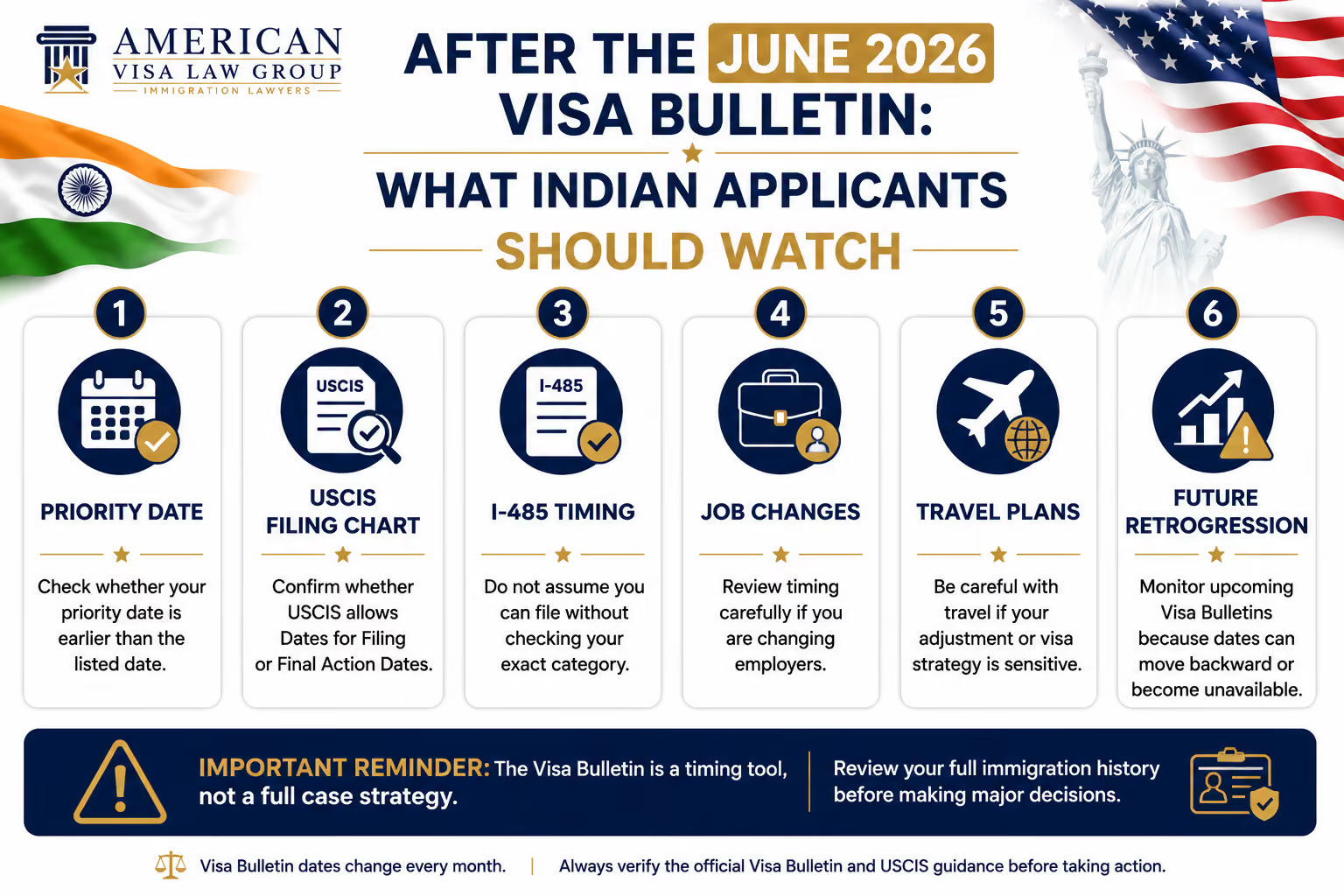
Indian applicants should be careful not to read too much certainty into one Visa Bulletin.
First, do not assume that dates will keep moving forward. June 2026 shows the opposite for EB-1 India and EB-2 India. Even categories that looked more favorable in prior months can retrogress when demand is high.
Second, do not assume that EB-1 is always protected from backlog issues. EB-1 is often seen as a stronger or faster category, but EB-1 India still moved backward in June 2026.
Third, do not assume that a close priority date means approval is guaranteed. The Visa Bulletin helps show visa availability, but it does not decide whether USCIS will approve the underlying petition or adjustment application.
Indian applicants should also avoid filing Form I-485 based only on a general Visa Bulletin summary. For adjustment of status, the USCIS filing chart matters. If USCIS is not allowing a certain chart for employment-based filings, relying on the wrong chart can create serious timing problems.
The safest approach is to treat the June 2026 Visa Bulletin as a planning tool, not a final answer. Before making decisions about filing, travel, job changes, EAD, advance parole, or downgrade/interfiling strategy, applicants should review their full immigration situation.
Next section: FAQ About the June 2026 Visa Bulletin for India. Keep it useful, not too long. The key facts are EB-1 India 15DEC22, EB-2 India 01SEP13, EB-3 India 15DEC13, and EB-5 Unreserved India 01MAY22 in June 2026.
Yes. EB-1 India moved backward in the June 2026 Visa Bulletin. This may affect Indian applicants whose priority dates were close to the previous EB-1 India date or who were expecting their case to move forward soon.
Yes. EB-2 India also retrogressed in June 2026. This is important for many Indian professionals, including EB-2 PERM and EB-2 NIW applicants, because EB-2 movement can affect adjustment of status timing and final green card availability.
Yes, but only slightly. EB-3 India moved forward in June 2026, but the category remains heavily backlogged. Applicants should not assume that small forward movement means the backlog problem has been resolved.
It depends on the applicant’s category, priority date, country of chargeability, and the USCIS filing chart for June 2026. Family-sponsored applicants may have a different filing chart than employment-based applicants, so the correct USCIS chart should be checked before filing.
For Indian H-1B workers, the June 2026 Visa Bulletin is mainly a timing and planning issue. EB-1 and EB-2 retrogression may affect when adjustment of status can move forward, while EB-3 movement remains limited. H-1B workers should be careful with job changes, travel, EAD/AP planning, and I-485 timing.
Not completely. EB-5 Unreserved India is not current in June 2026, but EB-5 set-aside categories remain current. Indian EB-5 applicants should check whether their case is in the Unreserved category or a set-aside category before making assumptions.
In the June 2026 Visa Bulletin, F4 India remains heavily backlogged. F4 is the family-based category for brothers and sisters of adult U.S. citizens. Indian applicants in this category should compare their priority date with the correct Visa Bulletin chart before assuming their case can move forward.
The June 2026 Visa Bulletin does not guarantee what will happen next for EB-1 India. EB-1 India retrogressed in June 2026, and future movement will depend on visa demand, number use, and annual limits. Indian applicants should monitor each monthly Visa Bulletin instead of assuming EB-1 India will automatically move forward again.
No. Retrogression does not mean the underlying petition has been denied. It usually means that a visa number is not currently available based on the applicant’s category, country, and priority date. The case may need to wait until the priority date becomes current again.
The June 2026 Visa Bulletin is an important caution month for Indian green card applicants.
EB-1 India and EB-2 India both retrogressed, while EB-3 India moved forward only slightly. EB-5 Unreserved India also remains a category to watch, especially because future movement may depend on demand and annual visa number limits.
For Indian applicants, the most important step is to compare the priority date with the correct visa category and the USCIS filing chart for June 2026. This is especially important before filing Form I-485 or making major decisions about travel, job changes, EAD, advance parole, or long-term green card strategy.
A retrogression does not mean the case is over. But it does mean timing should be reviewed carefully. If your priority date is close to the listed date, or if your case involves EB-1, EB-2, EB-3, EB-5, or H-1B planning, it may be worth getting case-specific immigration guidance before making the next move.
Hasan Abdullah is the Founder and Managing Attorney of American Visa Law Group, a U.S. immigration law firm focused on helping individuals, families, professionals, entrepreneurs, and employers navigate complex immigration matters. He has experience with employment-based and family-based immigration, including H-1B, PERM, NIW, EB-1, adjustment of status, consular processing, waivers, and complex USCIS strategy matters.
Through AVLG, Hasan focuses on practical immigration strategy, realistic case planning, and clear legal guidance for applicants dealing with priority dates, USCIS filings, RFEs, visa backlogs, and long-term green card planning.


